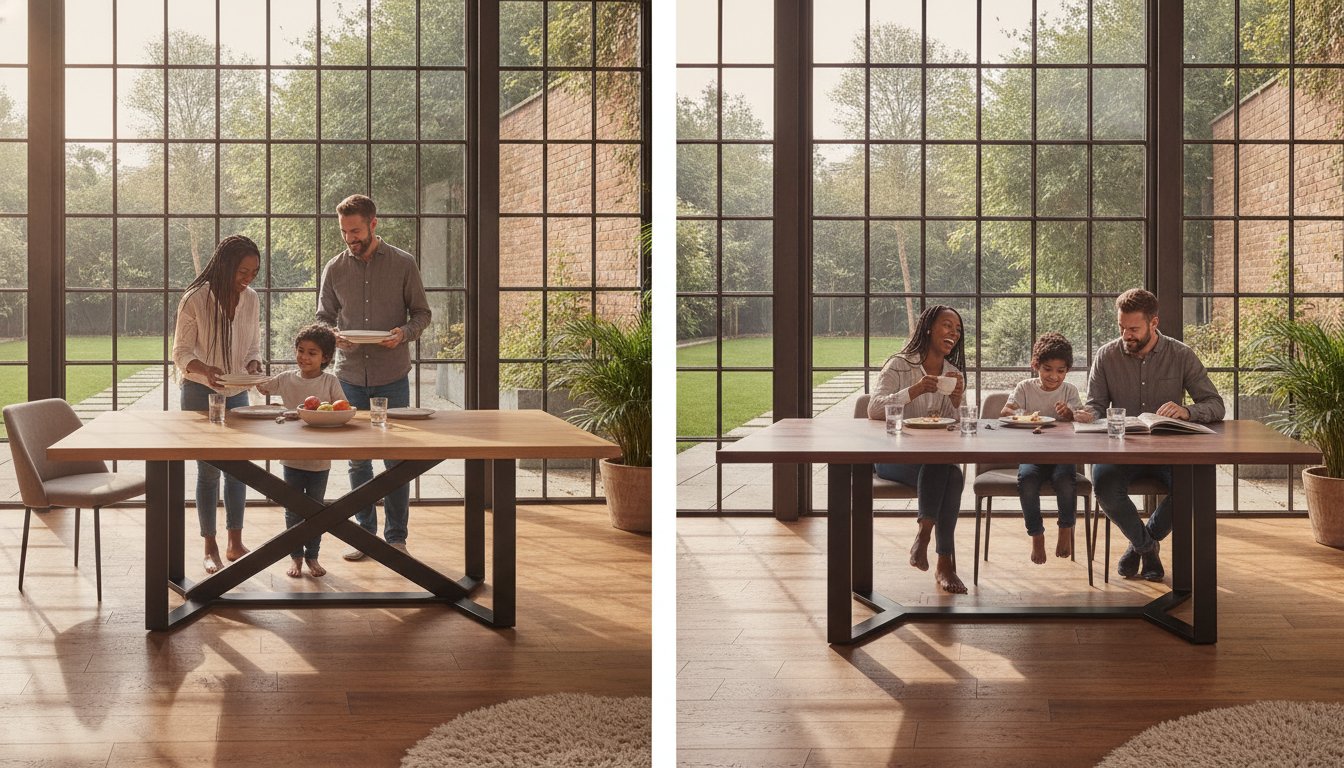
Could the very legs supporting your Sunday roast be the secret reason your guests feel cramped or your room feels cluttered? It’s a common frustration to fall in love with a beautiful solid oak top only to find that, once it’s in your home, the base makes sitting down feel like a clumsy game of musical chairs. We believe a dining table is the heart of the home, a place where generations connect over shared meals and quiet morning coffees, so the way it stands matters just as much as the timber itself.
Choosing between an x-frame vs a-frame dining table is about more than just a visual preference; it’s a balance of social flow and architectural grounding. You likely want a stable, heritage-quality centrepiece that doesn’t wobble or leave your guests knocking knees against the legs. This guide explores the structural and aesthetic differences between these two iconic designs to help you find the perfect handcrafted fit. We will look at how each frame impacts seating capacity and ergonomics, ensuring your choice supports both your interior style and the practical needs of your daily life.
Key Takeaways
- Discover how to choose between the modern, open silhouette of an X-frame and the grounded, architectural strength of an A-frame to complement your interior style.
- Compare the ergonomics of an x-frame vs a-frame dining table to ensure every guest enjoys ample leg room and a comfortable seat at the head of the table.
- Understand the “End-Cap” advantage and how specific leg placements can help you maximize seating capacity without compromising on stability.
- Explore how solid European Oak and Black Walnut interact with different frame styles to create a tactile, heritage-quality centrepiece built to last generations.
- Learn the essential measurements for your space, including the “3-foot rule,” to guarantee your table fits perfectly and allows for a natural flow of conversation.
X-Frame vs A-Frame Dining Table: Understanding the Aesthetic Heritage
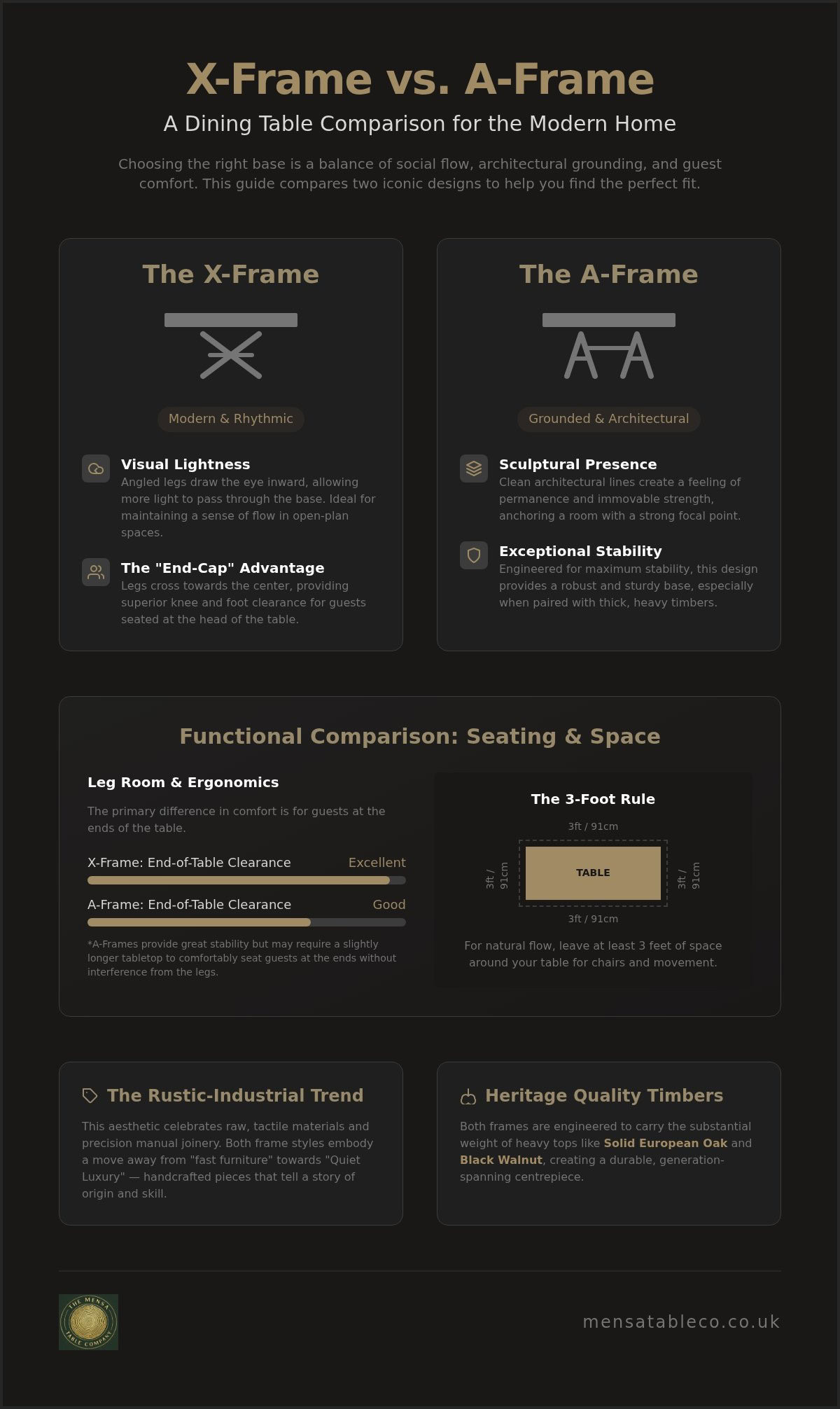
Both the X-frame and A-frame are robust structural support systems specifically engineered to carry the substantial weight of heavy solid European Oak or walnut tops. Choosing between an x-frame vs a-frame dining table often begins with an appreciation for their distinct silhouettes. The X-frame offers a reimagined take on the historical trestle, providing a sense of rhythmic movement that suits modern, open-plan UK homes. In contrast, the A-frame utilises clean, architectural lines to evoke a feeling of permanence and immovable strength. It’s about finding the shape that resonates with the rhythm of your own household.
In 2026, the “Rustic-Industrial” trend continues to hold a firm grip on UK interior design. This aesthetic celebrates the raw, tactile nature of natural materials while embracing the precision of manual joinery. Homeowners are increasingly moving away from the “fast furniture” culture, seeking instead the “Quiet Luxury” of a handcrafted dining table that tells a story of origin and skill. Whether you prefer the crossing angles of the X or the steady stance of the A, both designs represent a commitment to furniture that doesn’t just fill a room, but defines it.
The Origins of the Cross-Leg and Trestle Styles
The history of these designs stretches back to medieval communal halls, where large groups gathered for shared rituals. Historically, the Trestle table design consisted of loose boards placed upon folding supports, allowing furniture to be cleared away quickly. Over centuries, these temporary workbenches evolved into permanent family heirlooms. A central stretcher bar became a hallmark of heritage construction, acting as a structural anchor that prevents the timber from shifting. This manual approach to joinery ensures that the table remains stable through generations of use, turning a simple piece of wood into a site for human connection.
Visual Impact in Your Living Space
While both designs are incredibly strong, they interact with light and space in very different ways. The X-frame creates a sense of visual lightness; the angled legs draw the eye inward and allow more light to pass through the base. This makes it an excellent choice for smaller dining areas or rooms where you want to maintain a sense of flow. The A-frame feels more grounded and architectural. It provides a heavy, sculptural presence that anchors a large dining room, especially when paired with thick timber. We find that balancing these heavy tops with the geometric precision of the legs creates a focal point that’s both functional and deeply evocative.
Structural Integrity and Ergonomics: The Functional Comparison
When we think about the perfect table, we often focus on the natural beauty of the grain, but the way your legs interact with the base is what determines the true comfort of a long dinner party. Comparing an x-frame vs a-frame dining table reveals significant differences in how guests occupy the space. Traditional four-leg tables often suffer from the “corner-leg” problem, where the supports obstruct the knees of those seated at the ends. By moving the supports inward, both the X and A designs eliminate this obstacle, allowing for a more fluid and inclusive seating arrangement. Our recessed leg designs facilitate better chair and matching bench “tuck-in,” keeping your dining area tidy and accessible when the meal is finished.
Maximising Seating and Leg Room
The “End-Cap” advantage is a specific benefit of the X-frame. Because the legs cross toward the centre, there’s more clearance for feet and knees at the head of the table. This makes the X-frame particularly effective for large family gatherings where you might need to squeeze in an extra guest without them feeling like an afterthought. A-frames, while incredibly stable, require more deliberate placement. Guests on the long sides might find the sloping legs dictate where their feet can comfortably rest. To get the best out of an A-frame, we often recommend sizing the top slightly longer to ensure the “squeezed-in” guest isn’t fighting for floor space with the timber base.
- X-frame: Offers superior knee clearance at the table ends, perfect for hosting from the head.
- A-frame: Provides a sturdy, architectural look but requires careful chair spacing on the long sides.
- Benches: Both styles work beautifully with benches, allowing for flexible seating numbers.
Stability for Heavy Solid Wood Tops
Stability is non-negotiable when dealing with 40mm+ solid European Oak tops. The physics of the cross and the triangle provide superior lateral stability compared to standard vertical legs. A well-constructed X-frame distributes weight evenly across the floor, while the A-frame’s wide base offers an architectural anchor that resists any side-to-side “racking” movement. This is where heritage joinery shines. Mass-produced tables often wobble because they rely on simple bolts rather than the structural integrity of the frame itself. The gauge of the leg is equally important; a thicker leg gauge provides the necessary ballast to keep the piece steady for decades. If you’re unsure which configuration fits your room’s dimensions, we’re always happy to discuss bespoke sizing to ensure your table is as functional as it is beautiful.
Selecting the Perfect Timber for Your Frame Style
The choice of timber is the final layer of soul you breathe into your home’s centrepiece. While the structural decision between an x-frame vs a-frame dining table dictates the room’s geometry, the wood species determines its tactile presence and how it will age alongside your family. We work with materials that have their own histories, from the dense, reliable grain of oak to the dark, liquid-like depth of walnut. Each species reacts differently to the light in a room, and selecting the right one ensures your table feels like a natural extension of your space rather than a fleeting addition.
Solid European Oak remains the gold standard for durability. Its heritage grain patterns offer a timeless look that complements both the rhythmic X-frame and the steady A-frame. For those seeking a more dramatic statement, solid Black Walnut provides a sophisticated, dark aesthetic with rich, oily textures that feel incredibly smooth to the touch. If you prefer a lighter, more rustic feel, solid Swedish Pine is a wonderful option; it’s a characterful timber that develops a beautiful character patina over years of use. You can explore our solid European Oak collection to see how these natural patterns bring life to our designs.
The Characteristics of Premium Hardwoods
Black Walnut is often the specialist’s choice for architectural A-frames. Its structural density allows us to maintain clean, sharp lines that highlight the frame’s strength. If you desire a light-coloured alternative with a more striking, energetic grain, European Ash is exceptionally resilient and brings a bright, modern energy to a kitchen. It’s vital to understand timber movement when choosing solid wood. In the UK climate, wood needs room to breathe as humidity levels shift throughout the seasons. Our heritage joinery techniques account for this natural expansion and contraction, ensuring the frame and top remain in perfect harmony without the cracking often seen in mass-produced alternatives.
Sustainability and Longevity
We believe in the environmental importance of choosing handcrafted solid wood over thin veneers. A veneered table is a temporary item, destined for a landfill once the surface is chipped or worn. In contrast, our tables are built for generational durability. We reject the flat-pack mentality because we value substance over convenience. By choosing a manual production process, we ensure that every joint is secure and every surface is finished with care. You can view our handcrafted Black Walnut range to witness the difference that honest, sustainably sourced timber makes to the focal point of your home.
Sizing and Styling Your Table for the Modern Home
A dining table is more than just a surface; it’s a stage for the rituals of daily life. To ensure it performs its role perfectly, we must consider the physical space it occupies. For a comfortable flow, we recommend the “3-foot rule,” which translates to approximately 90cm of clearance between the table edge and the nearest wall or piece of furniture. This allows guests to pull back their chairs and move around the room without feeling restricted. When weighing up an x-frame vs a-frame dining table, this clearance is vital. The X-frame’s open ends often make a room feel airier, while the A-frame’s solid stance requires a bit more visual “breathing room” to truly appreciate its architectural lines.
Whether you’re designing for intimate 4-seater breakfasts or grand 12-seater banquets, the length of the timber top must be balanced with the frame’s footprint. We find that styling is most effective when you play with contrasting textures. Mixing the rugged, natural grain of a solid oak top with the tactile softness of velvet or leather chairs creates a sophisticated, multi-layered look. Alternatively, keeping everything in the family with solid wood seating reinforces that sense of heritage and permanence we strive for in every piece.
Finding the Perfect Dimensions
Standard widths, usually around 900mm to 1000mm, facilitate a communal feel by allowing plenty of space for shared platters in the centre. However, bespoke sizing is where we truly find the right fit for your home. If off-the-shelf furniture doesn’t respect the unique proportions of your dining room, we can adjust the dimensions to ensure the table length accommodates your daily needs while remaining ready for the occasional festive crowd. It’s about creating a balance where the table feels substantial but never overwhelming.
Completing the Look
We often find that benches are the natural partner for these designs. They offer a versatile seating solution that can be tucked away completely, maintaining the clean lines of your interior when the table isn’t in use. You can pair your table with our matching benches to create a seamless look that celebrates the raw beauty of the wood. To create a truly cohesive environment, you might also browse our handcrafted coffee tables or breakfast bars, which carry the same heritage joinery throughout your living areas. If you’re ready to start planning your space and need advice on dimensions, please get in touch with our team to discuss your specific requirements.
The Mensa Difference: Heritage Craftsmanship in the UK
At The Mensa Table Company, we view each commission as more than a simple transaction. Our philosophy is rooted in the belief that a dining table serves as the soul of the home, a backdrop for shared experiences and the social rituals that bind families together. We move away from the impersonal nature of mass-produced furniture, focusing instead on creating bespoke focal points that carry a sense of history and permanence. Whether you have settled on an x-frame vs a-frame dining table, our commitment is to provide a piece that values substance over flashy marketing, built with a quiet confidence in the quality of our trade.
We reject the flat-pack mentality and the fragility of veneers. Instead, we embrace a manual production process that places the physical output and its natural origins at the forefront. Every joint is cut with precision, and every surface is hand-finished to highlight the unique characteristics of the timber. This artisanal approach ensures that our tables aren’t just objects for today, but heritage items designed to endure the passage of time across multiple generations. By choosing a manual, personal approach in every interaction, we offer a thoughtful alternative to the disposable culture of modern retail.
Our Commitment to Quality
The “Mensa” way is defined by a meticulous attention to detail that is often lost in industrial settings. We work as a tight-knit team of dedicated specialists, where every member takes immense pride in their manual skills. We lead with the raw materials, respecting the natural history of the European Oak or Black Walnut we use. This deep respect for natural elements allows us to create items that feel grounded and honest. You won’t find shortcuts here; only the steady, deliberate rhythm of heritage joinery that ensures your centrepiece remains stable and beautiful for decades.
Your Journey from Workshop to Home
Commissioning a bespoke table is a personal journey. We guide you through the selection process, helping you navigate the nuances of timber species and frame geometry to ensure the final piece fits the rhythm of your life. While we are proud to offer national delivery across the UK, our service remains personal and inviting. We ensure your centrepiece arrives safely, ready to take its place as the heart of your home. You can browse our full range of handcrafted dining tables to find the design that speaks to your interior style and your family’s needs.
Crafting Your Home’s New Focal Point
Choosing between an x-frame vs a-frame dining table is the first step in creating a space where your family will gather for decades. We’ve explored how the X-frame prioritises social flow and legroom, while the A-frame offers a sense of architectural permanence that anchors a room. Whether you select the golden hues of solid European Oak, the bright energy of Ash, or the rich, oily textures of Black Walnut, your choice represents an investment in heritage quality that mass-produced furniture simply cannot match.
Since 2018, our tight-knit team has been dedicated to this manual approach, ensuring every joint is a testament to UK craftsmanship. We handle every step of the process, from selecting the raw timber to providing national UK delivery on all our furniture. If you’re ready to move away from the transactional and toward a piece with real soul, we’re here to help you find the perfect fit. Contact our craftsmen to discuss your bespoke table and let’s begin the journey of bringing your vision to life.
Frequently Asked Questions
Is an X-frame dining table more stable than a standard table?
An X-frame design provides exceptional stability because the crossing legs act as a natural brace against lateral movement. Unlike mass-produced tables that rely on simple corner bolts, our handcrafted frames are engineered to support the substantial weight of 40mm solid timber. This structural geometry eliminates the side-to-side wobble often found in lighter furniture. It ensures your table remains a steady, reliable centrepiece for family meals and shared rituals for years to come.
How much leg room do you get with an X-frame design compared to an A-frame?
Choosing between an x-frame vs a-frame dining table often comes down to seating flexibility. The X-frame offers superior legroom at the table ends, as the legs taper inward toward the centre. This “End-Cap” advantage allows guests at the head of the table to sit comfortably without knocking their knees. In contrast, an A-frame provides a wider, more architectural base that offers excellent stability but requires more deliberate chair placement along the long sides.
Can I get a custom size X-frame or A-frame dining table for my home?
We believe your furniture should respect the unique proportions of your home, so we offer bespoke sizing for all our designs. Whether you need a narrow breakfast bar or a grand banquet table, our craftsmen can adjust the dimensions to fit your space perfectly. We move away from the limitations of off-the-shelf furniture, allowing you to choose the exact length and width that supports your daily life and specific hosting requirements.
Does an X-frame table work well with benches?
Benches are a natural partner for the X-frame design because they allow for a clean, uncluttered aesthetic. The recessed nature of the cross-legs means that our matching benches can be tucked fully under the table when they aren’t in use. This is particularly useful in open-plan UK homes where maintaining floor space is a priority. It creates a versatile seating arrangement that easily accommodates extra guests during busy social gatherings and festive meals.
What is the best wood species for a handcrafted dining table?
The “best” species depends on the atmosphere you wish to create. Solid European Oak is the gold standard for heritage durability and timeless grain patterns. For a more sophisticated, dark aesthetic, Black Walnut offers rich, oily textures that feel incredibly smooth. If you prefer a lighter, modern energy, European Ash provides striking character grain and exceptional resilience. Each timber is sustainably sourced and selected for its unique physical characteristics and tactile qualities.
How do I care for a solid wood dining table to ensure it lasts?
Caring for solid wood involves respecting the natural history of the material. Since timber is a living element, it needs room to breathe as humidity levels shift in the UK climate. We recommend avoiding direct heat sources and using coasters to protect the hand-finished surface from moisture. Periodically applying a high-quality wax or oil will nourish the grain, ensuring your table develops a beautiful character patina that tells the story of your family.
Do your tables come flat-packed or pre-assembled?
We firmly reject the flat-pack mentality because we value generational durability and the integrity of heritage joinery. Our tables are delivered as solid, pre-assembled pieces or are expertly installed by our team to ensure the frame and top are perfectly aligned. This manual approach guarantees a level of stability and strength that simply cannot be achieved with the thin materials and temporary fixings used in mass-produced, self-assembly furniture found elsewhere.
How many people can comfortably sit at a 2-metre X-frame table?
A 2-metre table typically accommodates six to eight people comfortably. You can easily seat three guests along each long side, and the ergonomic clearance of the X-frame often allows for an additional person at each end. This flexibility makes it an ideal choice for those who enjoy hosting larger groups. When paired with our matching benches, you can often accommodate a few extra little ones during those busy, festive family celebrations.

Leave a Reply