
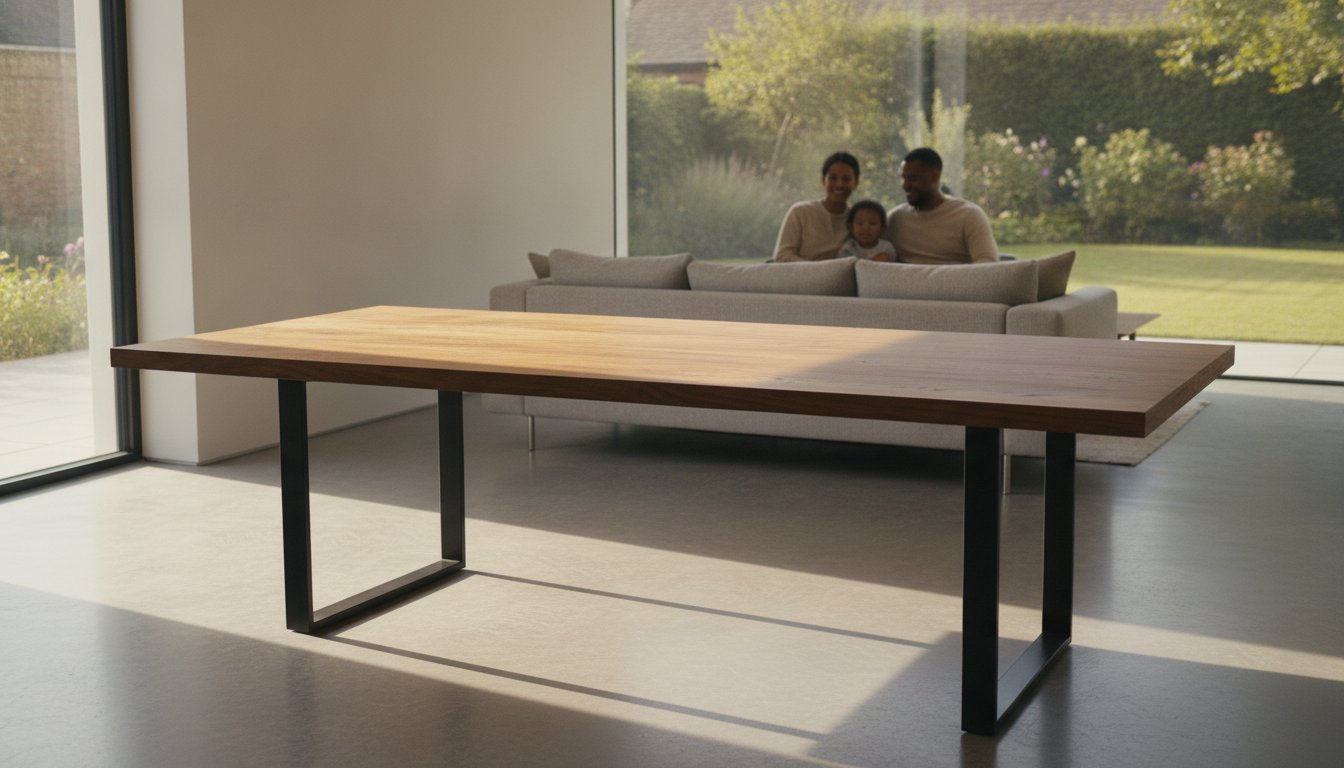
What if the golden glow streaming through your window isn’t a threat, but a partner in your furniture’s journey? Many homeowners hesitate to place a handcrafted piece in a bright room, asking themselves: will a wood table get damaged by sunlight? It’s a valid worry. You don’t want to see a rich walnut or a bright oak lose its character to irreversible fading. We understand that a table is more than just wood and joinery; it’s the heart of your home where stories are shared and memories are made.
You’re right to be cautious, as UV rays can certainly alter the chemistry of natural fibers over time. However, there’s a beautiful distinction between destructive damage and a graceful patina. In this guide, we’ll show you how to protect your investment using modern, low-VOC finishes that meet the latest 2026 environmental standards without hiding the grain under a heavy cloth. You’ll discover how different species react to light and learn practical ways to manage this evolution. By the end, you’ll feel confident placing your Mensa or X-Frame table exactly where the light hits best, knowing how to balance protection with the wood’s natural aging process.
Key Takeaways
- Learn why light isn’t just a surface issue. It’s a deep chemical interaction with the wood’s inner structure that creates a unique story over time.
- Discover why “fading” is often a misnomer. Different species like oak and walnut react in opposite ways when they’re exposed to the sun.
- Understand the subtle difference between natural maturation and structural risks. This helps you answer the question: will a wood table get damaged by sunlight?
- Master simple, professional techniques to ensure your tabletop matures evenly. You won’t need to hide its beauty under a heavy cloth.
- Find out why longevity starts with the maker’s touch. We’ll share how our specific approach to sourcing and hand-finishing creates a piece built for generations.
The Science of Sun and Timber: Understanding Photodegradation
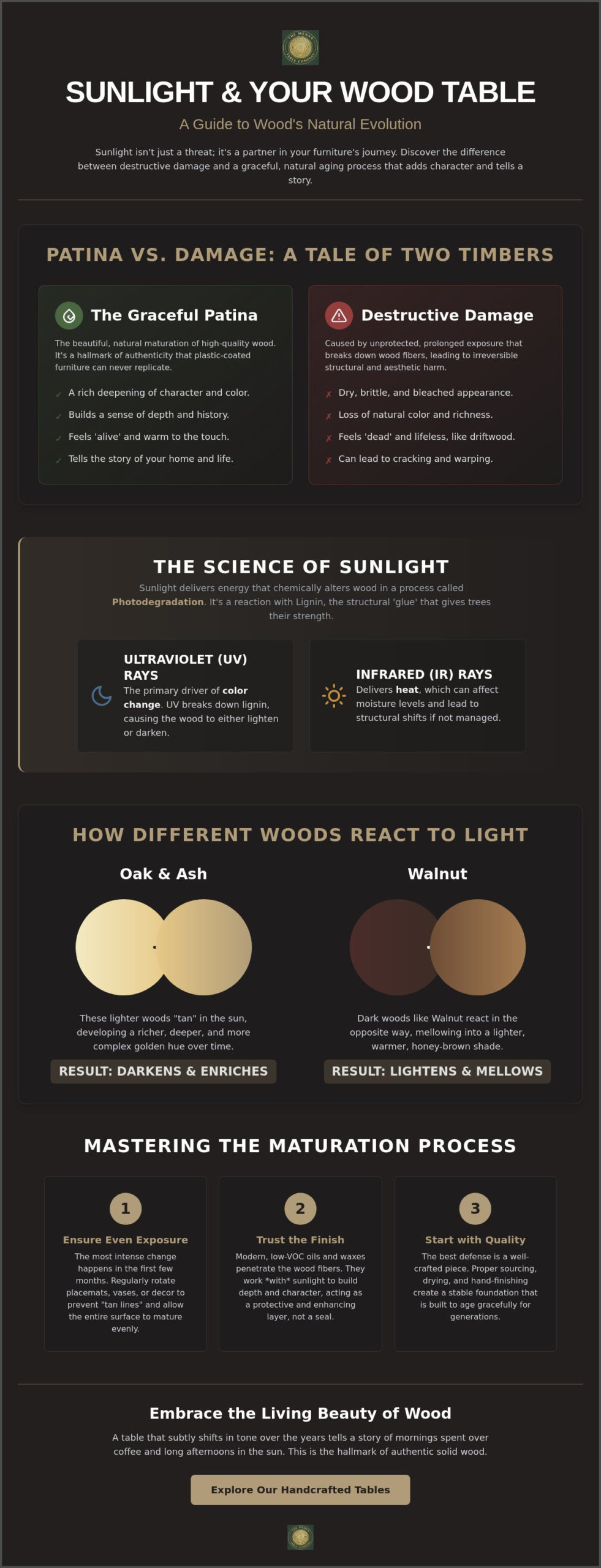
Sunlight is a living force. It touches everything in your home, but its effect on timber is particularly profound. People often ask us, will a wood table get damaged by sunlight? To understand this, we have to look beneath the surface finish. Wood is composed of complex organic polymers, primarily cellulose and lignin. Lignin is the structural “glue” that gives trees their strength, and it’s incredibly sensitive to light. When sunlight strikes the wood, it delivers two types of energy: Ultraviolet (UV) and Infrared (IR) light.
UV light is responsible for the chemical shifts that change the colour of your tabletop. IR light, on the other hand, carries heat. While UV changes the aesthetic, heat can affect the moisture levels within the timber, potentially leading to structural shifts if not managed correctly. Understanding how these forces interact with your furniture is the first step in moving from a place of worry to one of appreciation for the natural evolution of your piece.
How UV Rays Interact with Natural Fibres
The science of photodegradation is the process where light energy alters the chemical structure of organic materials like timber. When UV radiation hits the surface, it breaks down the molecular bonds in the lignin, causing it to decompose and change colour. This reaction is most intense during the first few months after a table is crafted. During this period, the wood is settling into its new environment, and its response to light is at its most transformative. Whether it’s a piece of solid European oak or solid black walnut, the timber is essentially “tanning” as it reacts to its surroundings.
Patina vs. Damage: When Change is a Good Thing
There’s a vital distinction between a table that’s being destroyed and one that’s maturing. Damage looks like the dry, brittle, and bleached surface of a piece of driftwood. It feels “dead” to the touch. A patina, however, is a rich deepening of character. High-quality oils and waxes don’t just sit on top of the wood; they soak into the fibres and interact with the light to build a sense of depth and history over time. This is how we answer the question: will a wood table get damaged by sunlight? It depends on whether you’re seeing the light as a destroyer or a finisher.
We believe a table should be a witness to your life. A table that subtly shifts in tone over the years tells a story of mornings spent over coffee and long afternoons in the sun. This natural evolution isn’t something to fear. It’s a hallmark of authentic, solid wood that mass-produced, plastic-coated furniture can never replicate. When you embrace the patina, you aren’t just owning a piece of furniture; you’re participating in the ongoing life of the tree. It’s a connection that grows stronger with every passing season.
Species-Specific Reactions: How Oak, Walnut, and Pine Respond to Light
When you bring a handcrafted piece into your home, you’re introducing a living material that continues to respond to its environment. One of the most common misconceptions we hear is that all wood simply “fades” in the sun. In reality, the answer to the question, will a wood table get damaged by sunlight, depends entirely on the species of tree from which it was born. Some timbers drink in the light and grow darker, while others mellow into lighter, softer tones. This isn’t damage; it’s a signature of authenticity that tells the story of your home’s unique light profile.
The speed of this transition is often dictated by the density of the grain. Denser hardwoods tend to evolve more slowly, allowing the change to feel like a gradual, almost imperceptible maturation. Scientific research into wood weathering and protection shows that the extractives within the wood react differently to UV exposure. This means that choosing the right species for a sun-drenched room is a key part of the design process. You aren’t just choosing a colour for today; you’re choosing a palette that will evolve over the next decade.
Solid European Oak and Ash: The Darkening Effect
If you’ve chosen a piece crafted from Solid European Oak or Ash, you can expect a beautiful deepening of tone. Oak is famous for its “ambering” quality. Over time, the cool, pale tans of the fresh timber shift toward a rich, golden hue that feels warm and established. Ash follows a similar path, moving from a bright, almost white cream to a warmer, straw-like tone. When people worry about whether will a wood table get damaged by sunlight, they often overlook how these light-coloured species actually thrive and gain character in bright settings. These species are incredibly resilient, making them perfect candidates for bright, airy dining rooms.
Solid Black Walnut: The Mellowing Process
In contrast, Solid Black Walnut possesses a unique trait that sets it apart from many other hardwoods. While its initial appearance is a deep, dark chocolate, UV exposure causes it to “honey” or mellow. This transition results in a lustrous, lighter brown that reveals more of the intricate grain patterns hidden within the darker tones. To maintain the depth of Walnut, we recommend specific oil-based finishes that nourish the fibres while allowing this graceful transition to occur. It’s a sophisticated evolution that many of our clients find adds a sense of heritage and light to their living spaces.
Choosing the right timber for your space involves understanding how the light in your room will interact with the wood’s natural chemistry. If you’re currently planning a new addition to your home and feel unsure about which species will best suit your sun-filled kitchen or lounge, get in touch with our workshop. We’re always happy to discuss how our different timbers age and help you select the perfect match for your home’s natural light.
Heat and Humidity: The Hidden Dangers of Direct Sunlight
While the visual shift in tone is the most obvious sign of a sun-drenched life, the true test of a table’s endurance happens beneath the surface. When people ask will a wood table get damaged by sunlight, they often focus on the aesthetic maturation we discussed earlier. However, the infrared energy carried by the sun introduces a physical challenge: heat. This warmth can be a catalyst for structural change if the timber hasn’t been prepared with the patience and expertise it deserves. A table sitting in a direct beam of light is essentially a living organism undergoing a localized climate shift.
Wood is hygroscopic, meaning it naturally absorbs and releases moisture to stay in balance with its environment. When one side of a tabletop is heated by the sun, it loses moisture more rapidly than the underside. This imbalance can lead to “cupping,” where the edges of the board curve upward, or “crowning,” where the centre rises. To prevent this, the journey of our timber begins long before it reaches our workshop. We ensure all our materials undergo a rigorous kiln-drying process to reach a stable moisture content. This foundation is what allows a solid wood dining table to withstand the daily cycle of sun and shade without failing.
Thermal Expansion and Moisture Balance
The sun’s heat causes wood fibres to contract as they dry out. In extremely sunny, low-humidity environments, this rapid drying can lead to “checking,” which are small surface cracks that appear as the wood’s internal tension reaches a breaking point. Scientific reviews on structural changes in wood from UV and heat indicate that these stresses are most prevalent when the relative humidity of a room fluctuates wildly. By maintaining a consistent environment and choosing a well-finished piece, you provide the wood with the stability it needs to remain flat and beautiful for decades.
Why Joinery Matters in Sunny Spaces
Handcrafted furniture is built to move. Unlike mass-produced items that often rely on rigid glues and thin veneers, our designs prioritise the natural breathability of the material. In a sunny spot, a veneer is at high risk of delamination because the heat can cause the underlying glue to fail. Our solid timber pieces, such as the Mensa or the Spider Leg designs, are assembled using techniques that allow for the wood’s natural expansion. Bespoke furniture is designed with breathing room to accommodate seasonal expansion and contraction. This intentional “play” in the joinery ensures that even when the sun beats down, the table has the flexibility to adapt without cracking or warping. It’s a thoughtful approach to construction that values the long-term life of the piece over the convenience of fast production.
If you’re curious about how our specific joinery methods protect your investment, feel free to explore our full collection of handcrafted tables to see the care we put into every joint and surface.
Practical Protection: Managing Sunlight Without Hiding Your Table
You shouldn’t feel the need to hide your table under a heavy cloth just because your dining room is blessed with natural light. While people often worry will a wood table get damaged by sunlight, the secret to a beautiful piece isn’t avoiding the sun entirely. It’s about ensuring the light is distributed evenly across the surface. Think of it as a natural tan; you want a consistent glow rather than stark lines where objects have blocked the rays. By following a few simple routines during the first year of the table’s life, you can guide its maturation into something truly spectacular.
Managing the light in your home is a balance between protection and appreciation. We believe that a table should be used and enjoyed, not treated like a museum piece. However, a little foresight in the early months goes a long way in preserving the integrity of the timber. This proactive approach ensures that the natural evolution of the wood grain remains a source of pride rather than a cause for concern.
The Shadow Effect: Preventing Uneven Fading
One of the most common issues we see isn’t damage from the sun itself, but the “shadow” left behind by stationary objects. If you leave a runner, a large vase, or a set of placemats in the same position for the first six months, the wood underneath will remain its original colour while the surrounding timber matures. This creates a permanent “tan line” that can be difficult to blend later. To ensure a uniform finish, we recommend a simple rotation schedule during the initial settling period:
- First 3 Months: Keep the tabletop as clear as possible. If you use placemats for meals, remove them immediately afterward.
- Months 3 to 6: Rotate centrepieces and decorative items every few days. Move them to different sections of the table to let the light reach every fibre.
- After 6 Months: The wood’s initial “tanning” phase has slowed down, and you can be more relaxed with your decor placement.
If you already notice a shadow, don’t panic. Simply leave the table clear for a few weeks. The lighter area will eventually catch up as it is exposed to the same UV levels as the rest of the surface. It’s a testament to the wood’s living nature that it can often correct itself over time.
UV Filtering and Room Management
Modern solutions allow you to protect your handcrafted dining table without sacrificing the view from your window. Clear UV-filtering window films are an excellent investment. They block up to 99% of harmful radiation without changing the quality or colour of the light entering your room. This allows your table to mature at a much slower, more controlled pace. During the peak UV hours between 11 am and 3 pm, drawing a sheer curtain can also soften the direct intensity of the rays. Even small adjustments, like positioning your table at a slight angle to the window rather than directly parallel, can help diffuse the light across the grain more naturally.
Regular maintenance is also key to keeping the wood resilient. Applying a fresh coat of high-quality oil every few months replenishes the natural moisture that the sun’s heat can draw out. This keeps the surface supple and prevents the “checking” we discussed in previous sections. If you have questions about the best maintenance products for your specific timber, reach out to our specialist team for a personal recommendation.
Crafted for Longevity: Why Quality is the Best Defence
A handcrafted table is a significant investment in the narrative of your home. It’s meant to be lived on, shared over, and bathed in the natural light of a sunny morning. We often hear the question, will a wood table get damaged by sunlight, but the truth is that when a piece is built with artisanal integrity, the sun becomes a partner in its beauty. Our approach at The Mensa Table Company centres on the marriage of ethically sourced materials and manual production techniques. We don’t just build furniture; we create the backdrop for your family’s most meaningful rituals. Quality isn’t just about the first day it arrives. It’s about how the piece stands up to the passage of time across multiple generations.
A table built with care is designed to handle the environment of a real home. This means selecting timber that has been properly seasoned and using joinery that understands the living nature of wood. When you choose a piece with this level of substance, you aren’t just buying a commodity. You’re bringing home a specialist’s dedication to the trade. This foundation of quality is what allows a table to age with grace rather than failing under the stress of environmental changes.
The Finish: A Shield for Your Timber
We choose hard-wax oils for our dining tables because they respect the wood’s nature. Unlike industrial lacquers that create a brittle, plastic-like shell, these oils penetrate deep into the grain. This creates a breathable barrier that moves with the timber. There is a profound tactile difference here. When you run your hand across the surface, you feel the raw honesty of the wood rather than a cold chemical coating. Maintaining this shield is straightforward. A light top-up of oil once or twice a year maintains the UV resistance and keeps the fibres supple. This manual approach puts the power of preservation in your hands, allowing you to care for the piece as it matures.
Choosing Your Centrepiece
Selecting the right species for your space is a personal journey. As we’ve explored, the way light interacts with oak or walnut creates a distinct mood in a room. You might consider matching benches or coffee tables to create a cohesive environment where the light is managed across every surface. This harmony ensures that the question of will a wood table get damaged by sunlight is replaced by a sense of confidence. A table from our workshop is built to handle the beautiful, messy reality of a real home. It isn’t a fragile object to be feared. It’s a future heirloom, designed with a quiet confidence to witness decades of shared meals and quiet mornings. Every mark and every shift in tone becomes part of a story that belongs only to you.
Welcoming the Sun into Your Home
Sunlight shouldn’t be a source of anxiety for the modern homeowner. By understanding how different species like Solid European Oak and Black Walnut evolve, you can view the sun as a natural finisher that adds a unique story to your furniture. While it’s natural to wonder, will a wood table get damaged by sunlight, the answer lies in the quality of the craft and the intentional care of the finish. Light is a catalyst for character, turning a new piece of furniture into a seasoned witness to your life.
Our tables are handcrafted in the UK and specifically designed to accommodate the natural movement that heat and light provoke. We use breathable hard-wax oils that protect the grain while allowing it to mature gracefully over the decades. You don’t need to hide your investment; you simply need to guide its journey through the seasons. We invite you to explore our range of handcrafted, solid wood dining tables and find a piece built for a lifetime of bright mornings and shared meals. Choose a centrepiece that values heritage and longevity as much as you do.
Frequently Asked Questions
How long does it take for a wood table to fade in the sun?
The most transformative changes usually happen within the first 3 to 6 months of exposure. During this initial window, many owners ask will a wood table get damaged by sunlight as they notice a visible shift in the timber’s tone. This is a natural settling process where the wood reacts to its new home. The pace eventually slows into a gentle, beautiful maturation that lasts for decades.
Can I reverse sun damage on my wooden table?
You can’t technically reverse the chemical shift of photodegradation, but you can certainly restore the wood’s appearance. If you have uneven patches, exposing the lighter areas to the sun will help them catch up over time. For more severe surface drying, a gentle sanding followed by a fresh coat of hard-wax oil can bring back the rich, tactile quality of the original timber.
Is Oak or Walnut better for a very sunny room?
Oak is often the preferred choice for very bright rooms due to its tendency to darken into a rich, golden amber. Walnut reacts by mellowing into a lighter, honeyed tone that reveals more of its intricate grain. Both species are incredibly durable and resilient. Your choice should simply depend on whether you want the wood to deepen in colour or soften as it interacts with the light.
Do window films actually stop furniture from fading?
Modern UV-filtering films are highly effective and can block up to 99% of the most harmful rays. They won’t freeze the wood’s colour forever, but they dramatically slow the pace of change. This allows you to enjoy a sun-filled room while knowing your furniture is maturing at a much more manageable rate. It’s a great investment for protecting handcrafted pieces in south-facing rooms.
Should I use a tablecloth if my table is in direct sunlight?
Using a tablecloth as a permanent shield is rarely necessary and can lead to its own set of issues. If you cover the table only during peak hours, you might end up with uneven maturation or “shadows.” It’s usually better to embrace the natural light and focus on moving your decorative items regularly to ensure the “tan” is consistent across the entire tabletop surface.
Will my table warp if it is near a radiator and a sunny window?
Placing a table near both a radiator and a sunny window creates a high-stress environment for any natural timber. The dual heat sources can dry the wood too quickly, leading to structural shifts like warping or small surface cracks. We build our tables to be resilient, but maintaining a stable moisture balance in the room is key to the long-term health of the joinery.
How often should I oil my table if it sits in the sun?
A table in a sunny spot benefits from being oiled every 3 to 6 months to keep the fibres hydrated. Direct light and heat can deplete the protective oils more quickly than in a shaded corner. Regular maintenance ensures the surface stays resilient against the daily cycle of sun exposure. If the wood begins to look dull, it’s a sign that the barrier needs replenishing.
What is the best finish to protect wood from UV rays?
Hard-wax oils provide a superior, breathable finish that respects the wood’s natural movement. When homeowners ask will a wood table get damaged by sunlight, we highlight these finishes for their ability to be easily refreshed. Unlike brittle lacquers that can peel under heat, an oil finish can be “topped up” by the owner to maintain its resilience and UV protection over many generations.

Leave a Reply