

You finally set the stage for a lifetime of memories, placing a handcrafted piece like a Mensa or X-Frame dining table at the heart of your home. You expect to feel the smooth, cool grain under your palms, but instead, there is a strange, clinging resistance. It is a common frustration that leads many to wonder, why is my new wood table sticky when it should feel pristine? This tactile hurdle can be incredibly disheartening, especially when you fear a single cleaning slip-up might have compromised the integrity of the timber.
We understand that a table is a significant investment in your home’s story, and feeling like you’ve ruined it is a heavy burden. The truth is that stickiness is rarely a sign of a failed product; it’s often just a natural finish that hasn’t quite settled into its environment yet. In this guide, we’ll walk you through the science of curing and the impact of humidity so you can restore that artisanal smoothness. You will discover exactly how to manage your cleaning routine with confidence, ensuring your table remains a beautiful, tactile joy for your family and guests.
Key Takeaways
- Understand the vital difference between a surface that is merely dry and one that is fully cured, a process where natural oils and waxes settle deep into the timber grain over time.
- Identify how environmental shifts like high humidity or radiator heat answer the question of why is my new wood table sticky, allowing you to adjust your home’s conditions for better timber health.
- Master a gentle, step-by-step restoration process that begins with a simple dry wipe to safely reclaim that smooth, artisanal feel without risking the wood’s integrity.
- Learn why high-quality microfibre cloths and a minimalist “less is more” cleaning routine are essential for protecting the unique tactile qualities of your handcrafted furniture.
- Explore the long-term benefits of hand-applied oil finishes, which offer a superior sensory experience and easier maintenance compared to mass-produced, industrial lacquers.
Why is My New Wood Table Sticky? Understanding the Curing Process
The moment a handcrafted piece like the Mensa or an X-Frame dining table arrives, it brings a distinct presence into your home. It’s the scent of the workshop and the weight of the timber. However, that inviting tactile experience can quickly turn to confusion when you find yourself asking, why is my new wood table sticky? This sensation isn’t necessarily a flaw. It’s often the final stage of a journey that began in our workshop, where natural oils and waxes were carefully worked into the grain. Unlike mass-produced furniture that uses thick, plastic-like lacquers, artisanal pieces often use finishes that remain “active” as they settle into their new environment.
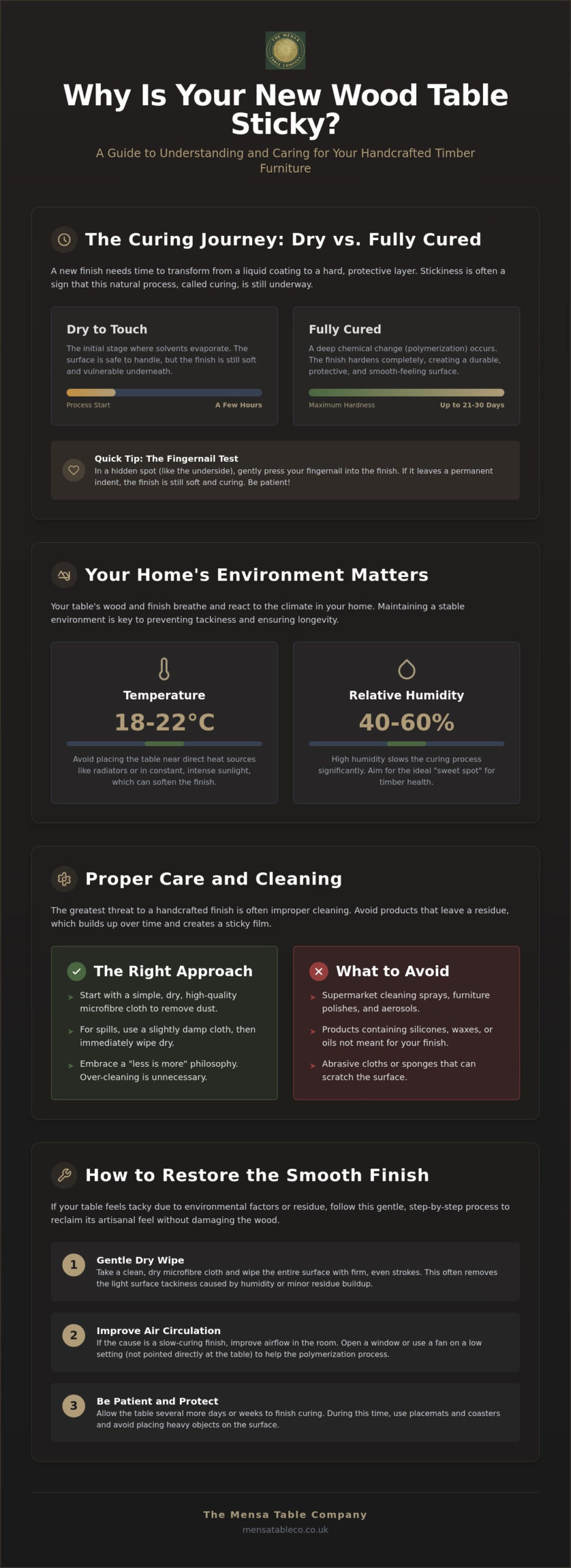
There’s a fundamental difference between a finish being dry and being cured. Drying is the initial stage where the solvents evaporate, leaving the surface safe to touch. Curing is a deeper chemical transformation. During this phase, which can last several weeks, the finish undergoes “off-gassing” as it reaches its maximum hardness. If your table feels slightly tacky, you’re likely feeling the finish in this transitional state. We value the connection between the maker and the user, and part of that bond is understanding the patience required for natural materials to reach their peak durability.
The Science of Finish Polymerisation
Most high-quality timber finishes rely on polymerisation. This is a process where oxygen from the air reacts with the oil molecules to create a hard, protective film. The Varnish curing process requires steady airflow to succeed. If a room is stagnant or if the oil was applied too thickly, the oxygen cannot reach the lower layers effectively. This creates a “skin” on top while the underneath remains soft and tacky. In our workshop, we follow a “less is more” philosophy, applying thin, deliberate coats to ensure every millimetre of the solid wood dining table cures evenly.
Signs Your Table is Simply Curing
How do you know if the stickiness is a natural part of the process? You can perform a simple “fingernail test” in an inconspicuous spot, like the underside of the tabletop. If your nail leaves a permanent indent, the finish is still soft and curing. Freshly oiled timber should also have a pleasant, earthy scent. If the table smells sour or chemically sharp, it might indicate a different issue. Typically, a wax finish might feel slightly “grabby” for a few days, while hard-wax oils can take up to 21 days to fully harden. During this time, the timber is still finding its rhythm within the unique humidity and temperature of your home.
Environmental Factors and Cleaning Mistakes That Cause Tackiness
Your home is a living ecosystem, not a sterile laboratory. It’s a space that breathes, and the timber in a piece like the Mensa Dining Table or a handcrafted coffee table continues to react to its surroundings long after it leaves our workshop. If you find yourself wondering why is my new wood table sticky, the answer often lies in the invisible dance between moisture, temperature, and the products you use for daily care. Timber is a natural, porous material that absorbs and releases moisture, and its finish is equally sensitive to the world around it.
Humidity and Temperature Fluctuations
UK homes often face significant shifts in climate, from damp, rainy winters to the dry heat of summer. High moisture levels in the air act as a physical barrier to the chemical hardening of oils. Scientific research explains how humidity affects wood finishes, often extending the curing time by several weeks if the air is too saturated. Conversely, heat from a nearby radiator or direct sunlight through a window can soften artisanal waxes. This softening makes the surface feel tacky to the touch. We recommend keeping your dining space at a steady 18 to 22 degrees Celsius. Using a simple hygrometer to maintain relative humidity between 40% and 60% provides the ideal “sweet spot” for both the timber and its protective finish.
The Buildup of Improper Cleaning Products
The greatest threat to a handcrafted finish isn’t usually dirt; it’s the wrong kind of care. Many supermarket cleaning sprays and aerosols contain silicone or cheap synthetic waxes. These ingredients don’t nourish the wood. Instead, they create a synthetic film that traps dust and oils from your hands. Over time, this creates a “sticky trap” that feels like a dull, heavy residue on the surface. If you’ve mixed different brands of polish, you might be witnessing a chemical clash where the ingredients refuse to bond, leaving the table feeling perpetually uncleaned. This buildup obscures the vibrant grain of the timber and creates a tactile barrier between you and the wood.
You should also be cautious with PVC-backed placemats or low-quality plastic coasters. These items often contain plasticizers that can migrate into the wood finish, causing a permanent chemical softening that feels like a sticky patch. This is especially common when the finish is still in its early curing weeks. To avoid these unwanted reactions and keep your surface pristine, we suggest using natural materials like cork or felt. If you’re struggling to identify the cause of a specific mark, you can always reach out to our workshop for guidance on how to protect your investment for the long term.
Step-by-Step Guide: How to Fix a Sticky Table Finish Safely
Reclaiming the smooth, tactile surface of your furniture doesn’t require harsh industrial chemicals or aggressive sanding. If you’re still searching for an answer to why is my new wood table sticky, the solution often starts with the gentlest possible touch. Before you begin, always test your chosen method on an inconspicuous area, such as the underside of a solid European oak tabletop. This ensures the treatment won’t react unexpectedly with the specific artisanal finish applied in our workshop. Patience is your most valuable tool during this process.
Start with a simple dry wipe using a high-quality, clean microfibre cloth. Sometimes, what feels like stickiness is merely a layer of fine workshop dust or transit residue that has settled on the surface. Use firm, circular motions to buff the area. If the cloth “drags” or the tackiness remains, you can move on to more targeted cleaning methods. For those interested in the technical nuances of furniture restoration, this guide on how to repair a sticky wood finish offers excellent academic depth on surface issues.
Method 1: The Gentle Soap Solution
This is the safest way to remove surface oils or mild residues. Mix a small bowl of warm water with just one drop of mild, pH-neutral dish soap. Dip a soft cloth into the solution and wring it out until it’s barely damp; you should never soak the timber. Wipe the table in the direction of the grain, focusing on the tacky spots. It’s vital to buff the surface bone-dry immediately with a second, dry cloth to prevent moisture from sitting on the finish.
Method 2: Removing Waxy Buildup with Vinegar
If the stickiness is caused by a buildup of supermarket cleaning sprays, the natural acidity of white vinegar can help break down the synthetic residues. To create an effective cleaning solution for timber, mix one tablespoon of white vinegar with one cup of warm water. This weak acidic solution cuts through grease without harming the underlying wood. Work in small sections and, just like the soap method, ensure you dry the area completely as soon as you’ve finished wiping.
Method 3: Dealing with Un-cured Oil
Sometimes, a new table might “bleed” a little excess oil if the environment is particularly warm. If you see tiny beads of oil or feel a heavy tackiness, use a lint-free cloth to buff the area vigorously. This heat from friction can help the oil penetrate the grain. For severe cases where the oil refuses to harden, a tiny amount of mineral spirits on a cloth can dissolve the excess. Use this sparingly. Always dispose of solvent-soaked rags safely by laying them flat to dry outdoors, as they can be a fire hazard if left in a crumpled heap.
If these gentle methods don’t resolve the issue, it might be time to stop. If the finish feels soft enough to be removed with a fingernail after several weeks of curing, it could indicate a deeper environmental conflict. In these rare cases, reaching out to a specialist is better than risking the integrity of your investment with more aggressive DIY fixes.
Essential Maintenance for Solid Timber Furniture
Caring for a handcrafted table is an act of stewardship rather than a chore. We believe in a “less is more” philosophy, where the goal is to support the timber’s natural resilience rather than overwhelming it with synthetic treatments. Many homeowners find themselves asking why is my new wood table sticky after they have spent weeks diligently polishing it. The irony of timber care is that over-maintenance is often the culprit. By applying too many products too frequently, you create a layer of build-up that never has the chance to bond with the wood grain, resulting in that frustrating tacky sensation.
The tools you choose are just as important as the solutions you apply. We always recommend high-quality microfibre cloths over paper towels or generic sponges. Microfibre is designed to lift dust and oils away from the surface without leaving behind lint or scratching the delicate artisanal finish. Paper towels, by contrast, are surprisingly abrasive and can leave microscopic debris that bonds with the finish, contributing to a dull, “grabby” texture over time. For daily care, a simple wipe with a dry or very slightly damp microfibre cloth is usually all your table requires to maintain its character.
Species-Specific Care: Oak, Ash, and Walnut
Different timbers possess unique physical structures that dictate how they interact with finishes and cleaning agents. For instance, Solid European Oak contains high levels of natural tannins. These tannins can react with certain alkaline cleaners, causing the wood to darken or the finish to become unstable. In contrast, Solid Black Walnut has a much denser grain and a rich, oily heartwood that requires a very light touch to avoid oversaturation. If you are working with Ash, be mindful of its open-pore structure. Residues from heavy waxes can easily become trapped in these deep grains, creating sticky “micro-pockets” that are difficult to remove once they have hardened.
The Right Way to Re-Oil Your Table
Knowing when to re-oil is a vital skill for any timber owner. You don’t need a calendar; you just need a single drop of water. Place a small droplet on the surface. If it beads up and sits proudly on the timber, your finish is still providing ample protection. If the water begins to soak in and darken the wood, it’s time for a fresh coat. To ensure a smooth, non-tacky result, always use the same brand and type of hard-wax oil that was originally applied. Apply a thin, even layer and, most importantly, buff away every bit of excess oil after ten minutes. If you are unsure about the specific finish on your piece, talk to our workshop team before applying new products to ensure a perfect, artisanal result.
The Craftsmanship Difference: Why Professional Finishes Stand the Test of Time
At the Mensa Table Company, we view the finish not as a final step, but as a vital layer of the table’s soul. While industrial factories often coat furniture in thick, plastic-like lacquers that mask the wood’s natural breath, we choose a different path. Hand-applied oils and waxes allow the timber to retain its sensory, artisanal feel. These finishes are designed to age gracefully alongside the wood, offering a level of repairability that mass-produced goods simply cannot match. If you’ve ever scratched a lacquered surface, you know it’s a permanent scar; with our finishes, a simple re-oiling can restore the surface to its original glory.
This commitment to natural finishes is also why we place such emphasis on the curing stage. When people ask, why is my new wood table sticky, it is often because they are comparing a living, breathing oil finish to the sterile, cured-at-the-factory feel of cheap alternatives. We take the time to ensure our pieces are ready for the rhythms of a busy home, valuing the patience required for quality over the speed of a production line. A professional finish is an investment in the future of the timber, ensuring it remains as beautiful in twenty years as it is on the day it arrives.
The Signature Mensa Finish
Every piece, from our Spider Leg Dining Tables to our custom desks, undergoes a rigorous preparation process. We apply our finishes in a controlled environment, allowing the timber to drink in the protection it needs while maintaining that raw, natural texture. This balance ensures your furniture is shielded from daily spills and heat while remaining a tactile delight to touch. We don’t rush this process because we know that the time spent in our workshop dictates the decades the table will spend in your dining room.
Why Quality Materials Prevent Future Issues
The foundation of a lasting finish is the timber itself. We use only premium, ethically sourced timbers that have been kiln-dried to specific moisture levels. This prevents the wood from moving excessively, which is a common cause of finish instability and surface tackiness in lower-quality goods. Expert joinery and precise sanding create a canvas that allows the oils to bond perfectly with the grain. A table from our workshop is more than just furniture. It is a lifetime investment that evolves with your home, becoming the silent witness to generations of shared meals, laughter, and social rituals. By choosing quality from the start, you ensure your home’s focal point remains a source of pride for years to come.
Preserving the Heart of Your Home
Your dining table is far more than a simple surface; it is the silent witness to your family’s most cherished rituals. We’ve explored how the natural curing process and subtle environmental shifts can influence the tactile quality of your timber. By embracing a minimalist cleaning routine and protecting your furniture from harsh chemicals, you ensure the wood continues to breathe and age beautifully. Understanding why is my new wood table sticky is simply the first step in a lifelong journey of stewardship for a piece that truly matters.
Our master craftsmen at the Mensa Table Company are dedicated to this artisanal spirit, hand-finishing every piece using only premium kiln-dried European Oak and Walnut. These tables are built for longevity, offering a soulful alternative to the world of flat-packs and temporary fixes. If you’re ready to find a focal point that will serve your home for generations, we invite you to browse our collection of handcrafted, solid timber dining tables. With the right care and a little patience, your table will remain a smooth, tactile joy for years to come.
Frequently Asked Questions
Is it normal for a brand-new wood table to feel slightly tacky?
Yes, it is perfectly normal for a handcrafted table to have a slight tackiness during its first few weeks. This sensation is often the final stage of the curing process, where natural oils are still reacting with oxygen to form a hard, protective barrier. If you’re wondering why is my new wood table sticky, it is usually just the finish finding its permanent state in your home’s unique environment.
Can I use baby wipes or multi-surface sprays on my handmade table?
You should strictly avoid using baby wipes or generic multi-surface sprays on your artisanal furniture. These products often contain silicones, alcohols, or synthetic fragrances that can chemically react with a high-quality oil finish, leading to permanent surface damage or a dull, gummy residue. A clean, dry microfibre cloth is almost always the safest and most effective tool for daily maintenance and preserving the grain.
How long does it take for a wood finish to fully cure in a UK climate?
In a typical UK climate, a hard-wax oil finish generally requires 14 to 21 days to reach full chemical maturity. However, if your home is particularly damp or if the heating is kept very low, this process can stretch beyond a month. Ensuring steady airflow and maintaining a consistent room temperature will help the timber finish settle and harden more efficiently without leaving a tacky surface.
What is the best way to remove a sticky residue left by a tablecloth?
The most effective way to address residue from a tablecloth is to use a very weak solution of white vinegar and warm water. Mix one tablespoon of vinegar into a cup of water, then use a barely damp cloth to wipe the affected area in the direction of the grain. This mild acidity safely dissolves the “sticky trap” without stripping away the protective artisanal oils that shield the timber underneath.
Why does my table feel stickier in the summer months?
Rising humidity and warmer temperatures during the summer months can cause natural waxes to soften slightly. Since timber is a porous material that reacts to its surroundings, it may absorb more moisture from the air, which can make the surface feel “grabbier” than usual. Keeping your dining space well-ventilated and away from direct, intense sunlight will help maintain the table’s smooth, tactile feel throughout the year.
Will over-cleaning my table make the stickiness worse?
Yes, over-cleaning is a frequent reason why is my new wood table sticky, as it often leads to a buildup of unabsorbed product. Every time you apply a new layer of polish or oil without allowing the previous one to fully cure, you create a thick, tacky film on the surface. We advocate for a “less is more” approach, focusing on dry dusting rather than constant chemical intervention to protect the finish.
When should I contact a professional about a sticky finish?
You should seek professional advice if the finish remains soft enough to be indented with a fingernail after four weeks of curing. While a slight tackiness is normal early on, a finish that feels like it is “melting” or begins to peel indicates a deeper chemical failure or a severe environmental conflict. In these rare cases, it’s better to consult a specialist than to risk the integrity of the timber with aggressive DIY fixes.
How do I know if my table needs to be re-oiled or just cleaned?
The simplest way to tell is by placing a single droplet of water on the surface of the wood. If the water beads up and sits proudly on the grain, the table is well-protected and likely just needs a gentle clean with a damp cloth. If the water begins to soak in and darken the timber, it’s a clear sign that the protective oils have worn thin and a fresh, artisanal coat is required.

Leave a Reply