
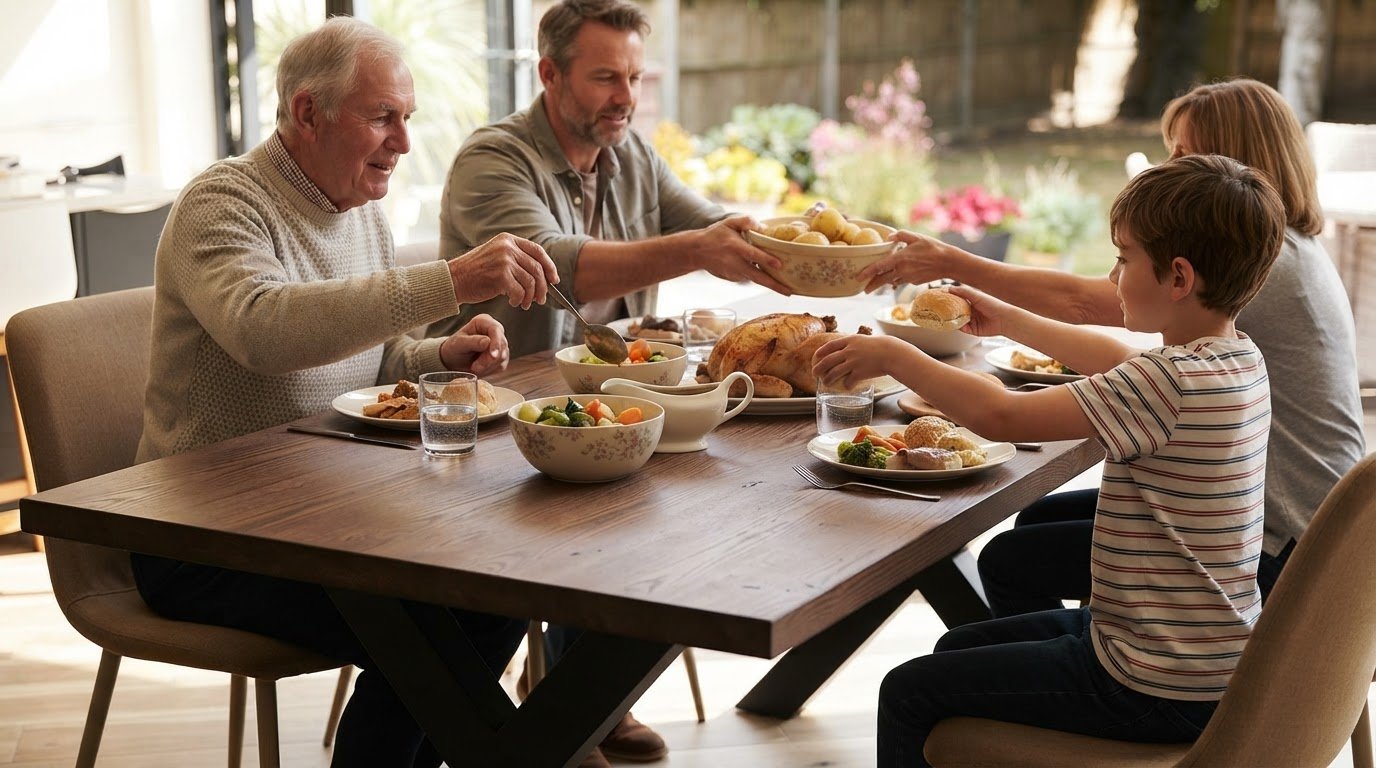
The cheapest table is not always the least expensive choice. Handmade furniture can offer stronger value over time when carefully chosen materials and skilled construction keep it in use for decades. Understanding whether handmade furniture is a better investment means looking beyond its initial cost to the materials, construction and how long it may remain useful.
It’s sensible to weigh the upfront cost carefully. The real question is whether the materials, construction and design suit how you’ll use the piece, and whether it can remain useful as your home and routines change.
This article explains what handmade furniture means, how materials and craftsmanship affect durability, and how to consider lifetime costs rather than purchase price alone. You’ll have a clearer basis for judging whether handmade furniture is a better investment for your home.
Key Takeaways
- Look beyond the purchase price: assess how materials, construction and expected use shape a piece’s value over time.
- Learn how timber choices and responsible sourcing can influence both a furniture’s character and its environmental impact.
- Recognise the details of skilled craftsmanship that can contribute to a sturdy, enduring piece.
- Consider whether a piece can be maintained and kept in use, rather than replaced as your needs change.
- Compare lifetime costs by weighing how long furniture serves your home against the cost of replacing it.
What Does “Handmade Furniture” Really Mean?
Handmade furniture is produced through individual making rather than a single repeated process. That describes how a piece is made, not a guarantee of quality. A handmade table still depends on suitable materials, sound construction and an appropriate finish. Durability comes from those choices working together. To assess value, consider how long the piece could serve your home, not just how it looks.
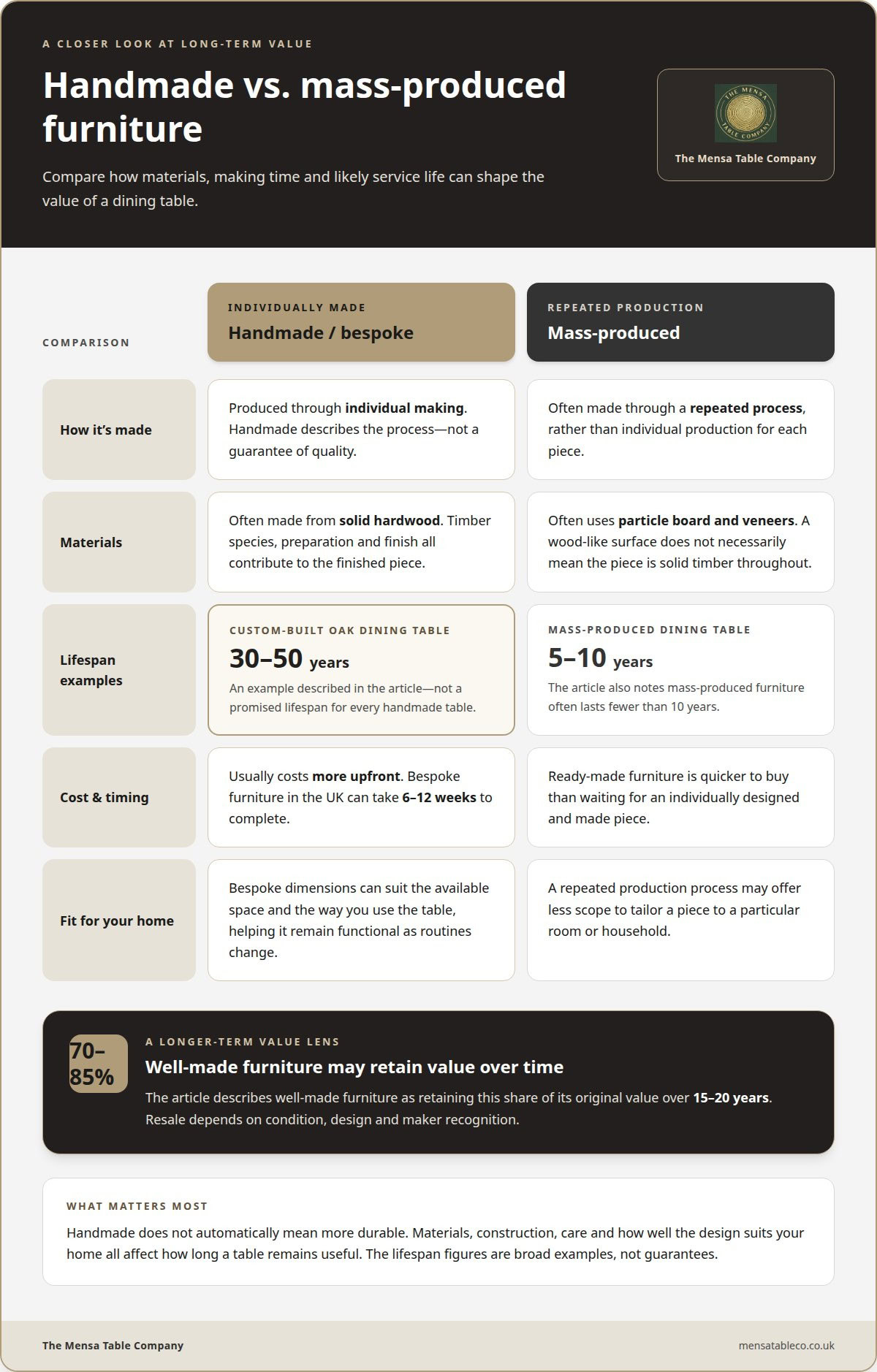
Mass-produced furniture often lasts fewer than 10 years, while a mass-produced dining table may wear out within 5-10 years. These ranges describe broad market examples, not a lifespan promised for every item. Heavy daily use, damp conditions and poor care can shorten service life. A custom-built oak dining table is described as lasting 30-50 years. That longer life can mean fewer replacements, less disruption and a familiar centrepiece for meals and gatherings.
Buying handmade usually means paying more upfront than for fast furniture. The longer-term calculation includes how often a piece needs replacing, how well it suits its purpose and whether it can remain useful as your home changes. Well-made furniture is described as retaining 70-85% of its original value over 15-20 years. Resale depends on condition, design and maker recognition, so lasting usefulness matters even if selling later isn’t part of your plan.
Bespoke furniture can fit a room more closely by matching its dimensions to the available space and the way you use it. A table designed for a narrow dining area, for example, can make better use of the room while accommodating everyday meals and larger gatherings. Its shape and details can also complement existing furniture. A good fit helps a piece remain functional as routines change, rather than becoming awkward or underused.
There are trade-offs. Handmade pieces often cost more upfront, and making them individually takes longer than buying ready-made furniture. Bespoke options also require decisions about dimensions, timber and finish before work begins. Handmade does not automatically mean more durable: materials, construction and care still matter. Even excellent craftsmanship cannot make a design convenient if it does not suit the room or household.
For bespoke furniture in the UK, allow 6-12 weeks for completion. The time required reflects the design and making process, rather than the quicker production of ready-made furniture. Planning ahead helps the finished piece arrive when it can be used, whether it’s a dining table for a planned move or a desk for a newly arranged room.
Long-term value can include the chance to pass a piece on. A timeless design, sound construction and regular care can help furniture remain useful as tastes change. An oak table, for example, might serve for weekday meals and family occasions. Its potential to become an heirloom comes from its lasting usefulness and meaning, not simply from being handmade.
Replacing furniture can mean repeated purchases, disposing of worn pieces and spending time choosing replacements. A table that lasts and continues to suit your needs can reduce how often those decisions arise. That is why handmade furniture is a better investment for people who value durability and continued use over the lowest initial cost. Consider the whole service life: fit, construction, care needs and the piece’s likely role in your home.
Sustainable materials and production
Materials shape furniture’s character, working life and environmental impact. The timber species, its source and the way it is worked all influence the finished piece.
Solid Timber and Material Selection
Solid timber is wood used as the main material, not just as a surface layer over another core. Species matter: oak, ash, walnut and Swedish pine each have their own grain and colour. Appearance can guide the design, while the table’s intended use helps determine suitable construction and finish.
For UK buyers, British-grown, sustainably sourced timber can support responsible woodland management. Asking about timber origin helps connect the finished table with the landscape that supplied its material. Selection also affects how a piece sits in a room: a pronounced grain can become a focal point, while a quieter surface can complement surrounding furniture.
Solid Wood and Engineered Materials
Solid wood is made from timber, while engineered materials use components such as particle board, often covered with veneer. Handmade furniture is often made from solid hardwood; mass-produced furniture often uses particle board and veneers. The distinction helps explain how materials appear and how they contribute to the furniture’s construction.
A veneer can provide a wood-like surface, while the material beneath it remains different from solid timber. That difference matters when considering the whole piece, not just its visible finish. For example, a tabletop’s surface may look like oak, but its underlying construction affects what the table is made from. Material descriptions should therefore distinguish solid wood from veneered or composite parts.
Material Quality
Material quality describes how well the selected wood and other components suit the furniture’s intended use. Species is one part of that judgement; the timber’s appearance, preparation and role in the design also matter. Oak, maple and walnut offer different natural patterns, so selection influences both the look and feel of a finished piece.
Production methods matter, too. A workshop can select and work individual boards to suit a design, while factory production often repeats a standard process. Neither label alone proves quality. What matters is how the materials, construction and finish work together in the finished piece. A suitable finish can complement the grain, but it cannot make unsuitable timber choices irrelevant.
Environmental Benefits
Buying handmade furniture in the UK can support more considered material choices, including British-grown, sustainably sourced timber. Responsible sourcing can support woodland management, while local or reclaimed wood may reduce waste when artisans use it thoughtfully.
Some makers also choose eco-friendly finishes and produce furniture in smaller quantities. These approaches can limit unnecessary material use and connect a piece to its source, whether that is newly harvested timber or wood with an earlier history. Ask what the furniture is made from and how those materials inform its design. The answers help you understand the environmental choices embodied in the finished piece.
Handmade craftsmanship and attention to detail
Handmade furniture involves individual decisions rather than one repeated production process. It can be better made when skilled work, suitable construction and careful finishing come together, but the handmade label alone guarantees nothing.
Skilled Craftsmanship and Labour
Skilled craftsmanship means a maker brings experience and judgement to each stage of producing a piece. A handmade item may involve tens of hours of skilled work, allowing time to shape components and attend to details that affect its finish. Smaller quantities can also give local craftspeople more opportunity to work closely with the wood and design.
That attention matters to the person who lives with the furniture. A dining table needs to work comfortably for everyday use as well as suit the room. Thoughtful proportions and practical details can help it remain useful over time. Buyers may value the care involved, but not every handmade piece is automatically worth the investment.
British manufacturing and local craft are relevant when a piece is made by a craftsperson working nearby. Handmade furniture is often produced in smaller quantities by local craftspeople, but “handmade” alone doesn’t prove where an item was made. Local production can give a piece a clearer connection to its maker and place of origin. That connection may matter to buyers who value the story behind the furniture as much as its appearance.
Construction and Attention to Detail
Construction is the way a piece’s components are shaped and joined to create a stable, usable form. Skilled makers can adapt techniques to the design, rather than relying solely on a standard factory process. For a table, that means considering how the top, base and joints work together. Sound construction matters because details beneath the surface influence everyday use.
Attention is also visible in the finish and in how carefully components meet. Buyers often look for furniture without exposed screws or staples, which can indicate a more considered approach to visible details. Such signs don’t prove how durable the whole piece will be, but they help reveal how its maker has treated the finish and assembly.
Design choices shape the result. Wood type, finish, dimensions and design elements can all be discussed as part of a handmade piece. For example, a table intended for regular family meals may need different proportions from a compact occasional table. Reviewing sketches, models or samples can help clarify how those decisions will look and function before a design is finalised.
Craftsmanship can help a piece feel timeless rather than tied to a short-lived trend. A clear design, carefully made details and a suitable finish can work together to create lasting appeal. The value is practical as well as visual: furniture that fits its purpose and feels right in the room is more likely to remain part of daily life.
Sustainability and reduced replacement waste
A furniture purchase has an environmental story beyond its appearance: timber provenance, production choices and how long the piece stays in use all matter. A dining table kept for decades avoids repeated replacement decisions and keeps usable furniture in the home.
Longevity and Reduced Replacement Waste
Longevity supports sustainability when a well-used piece remains useful instead of being discarded and replaced. Solid wood furniture can last decades or more, and handmade furniture may remain in use for more than 50 years. These are possibilities, not automatic outcomes: construction, everyday care and the conditions around the furniture all affect its working life.
Consider a dining table used for meals, study and family gatherings. If it continues to suit those purposes, it may delay the need for another purchase. A table can be replaced even while structurally sound if it no longer fits the household, so useful proportions and an adaptable design matter alongside material strength.
Solid wood furniture can often be maintained or refinished, offering options beyond disposal when a surface shows wear. For example, a timber tabletop may be refreshed if its finish becomes marked. This can help preserve the materials already used. By contrast, frequent replacement creates a cycle of buying and discarding, even when each individual purchase seems convenient.
Care also helps protect that continued use. Dust with a microfibre cloth, use coasters for everyday protection, and avoid leaving moisture on wooden surfaces. Furniture with an oil finish benefits from annual oiling. These small habits protect the material and finish, helping a piece remain part of daily life rather than becoming waste through preventable wear.
Solid Wood and Sustainability
Solid wood’s sustainability depends on where the timber comes from, how it is used and how long the furniture lasts. British-grown, sustainably sourced timber can support responsible woodland management. Provenance therefore gives buyers a useful way to understand the connection between the finished piece and the woodland that supplied its material.
Check which species the table is made from, then consider whether its appearance and design suit your home. Oak, ash, walnut and Swedish pine each have distinctive grain and colour. A choice that works with your room and needs is more likely to remain useful as your surroundings change.
Handmade production isn’t automatically sustainable. The material’s origin, waste during making, finish and eventual lifespan all contribute to its impact. Some artisans use local or reclaimed wood, reduce waste and choose eco-friendly finishes. Reclaimed timber can also carry a previous history into a new home, making careful material use part of the piece’s character.
Think of sustainability as a chain: responsibly sourced timber, considered production, ongoing care and long service. When these choices align, solid wood furniture can remain useful across generations, with less need to replace the whole piece when its surface needs attention.
Comparing lifetime furniture costs
The upfront price shows what a piece costs to buy. Lifetime cost also reflects how long it remains useful, its care needs and any replacement purchases. A handmade dining table and another table may look similar, yet differ in materials, construction and suitability for repair. Comparing those factors gives a more meaningful picture than the initial price alone.
A useful comparison is the total cost of ownership divided by the years of useful service. Include the purchase price, maintenance, repairs and replacements in your estimate. Then consider whether the furniture still suits your room and routine. A low-cost table that wears out or becomes unsuitable may need replacing, while a well-chosen piece can continue serving meals and gatherings. The result depends on use, care and design, not the label alone.
Resale value can influence the calculation, but it shouldn’t carry the whole decision. Well-made furniture may retain value, particularly when its maker is recognised and the piece remains in good condition. Resale also depends on design, materials and buyer interest. A table bought for its character and daily function may be worth keeping, even if selling it later isn’t part of your plans.
Compare handmade furniture by matching the specifications: wood species, dimensions, finish and design. Read what the price includes, including delivery or assembly, so you can compare the same elements. Clear product details help distinguish a genuine price difference from different specifications.
Read each product description as a guide to the finished piece, not just its price. For a dining table, compare the stated timber, dimensions, finish and construction details. Check whether the design suits your space and whether delivery or assembly is included. This makes potential extra costs easier to identify and helps separate a real price difference from different specifications.
Care should be part of the comparison. A timber table may need appropriate cleaning and, depending on its finish, ongoing maintenance. Consider whether the care suits your household and whether you value the ability to maintain or refinish the piece. A lower upfront price doesn’t necessarily mean lower lifetime cost if replacement becomes necessary sooner. Nor does a higher price alone prove greater durability.
For a fair comparison, match the intended use, materials, dimensions and expected service life. Include possible replacement purchases, then weigh them against the handmade piece’s price and care needs. The aim is not to assume one option always wins. It is to understand what your money buys, how long the furniture may serve you and whether its design will remain useful.
This is why handmade furniture is a better investment for some households: value can come from years of practical use, considered construction and a piece that feels at home. Before deciding, bring together the table’s specifications, care requirements and likely role in your home.
The Mensa Table Company
The Mensa Table Company makes handcrafted dining tables for people weighing design, everyday use and long-term value. Its range includes The Mensa Dining Table, The Spider Leg Dining Table, The X-Frame Dining Table and The U-Frame Dining Table, giving you distinct styles to consider for your home.
Choosing a table means choosing a setting for shared meals and daily routines, not just a short-term fixture. The Mensa Table Company focuses on high-quality craftsmanship, with dining table designs to explore when you are ready to move from comparing costs to choosing a piece. Contact The Mensa Table Company to discuss your furniture needs.
Choose a Piece for the Years Ahead
Start your next furniture decision with a simple question: what would you like this piece to make possible in your home? A table can become the setting for shared meals, conversations and familiar routines. Consider its place in your life alongside its materials and construction, and the decision becomes about more than appearance.
That perspective helps explain why handmade furniture is a better investment for people seeking lasting usefulness and a personal connection to the things they live with. The Mensa Table Company offers The Mensa Dining Table, The Spider Leg Dining Table and The X-Frame Dining Table, with distinct designs to consider for your dining space.
Take the next step by sharing what you have in mind and what role the furniture should play in your home. Contact The Mensa Table Company to start the conversation. A considered choice can become part of the moments you’ll remember.
Frequently Asked Questions
Does Handcrafted Furniture Last Longer?
Handcrafted furniture can last longer when its materials and construction suit regular use. The handmade process itself is no guarantee: a poorly designed piece can still wear or loosen. A dining table used daily, for example, needs stable construction and a finish suited to its setting. Care matters too: protect the surface from heat, avoid prolonged liquid exposure and wipe spills promptly.
What Quality Indicators to Consider?
Look for clear details about the timber, construction, finish and intended use. For a table, check that the top sits evenly, the base feels stable and visible surfaces are finished consistently. Consider whether the design suits daily use, such as pulling chairs in and out. These details help you judge the completed piece as a whole rather than relying on appearance or the word “handmade”.
How long does handmade furniture typically last compared with factory-made furniture?
Handmade solid-wood furniture can remain useful for decades, while factory-made pieces often have shorter working lives. There’s no single lifespan for either category: material, construction, use and maintenance all influence how long furniture lasts. A dining table in a busy household faces different demands from an occasional-use desk. Judge expected longevity by how the piece is built for its purpose and how it will be cared for.
What materials and joinery are used in handmade furniture?
Handmade furniture can use solid timber such as oak, ash, walnut or Swedish pine, depending on the design. Joinery describes how components connect; the method should suit the piece’s structure and use. For a table, consider how the top attaches to the base and how the legs are secured. Timber, construction and finish together affect its appearance, feel and suitability for everyday use.
How much does handmade furniture cost in the UK compared with mass-produced furniture?
Handmade furniture often costs more upfront than other furniture, but the difference varies by piece. Timber species, dimensions, design and labour all affect the price. Compare like with like: tables made from different materials or to different dimensions are not direct comparisons. Then weigh the purchase price against expected use, care and possible replacement over time.
Does handmade furniture retain or increase its resale value?
Handmade furniture may retain value or increase in value, particularly when a skilled or well-known maker made it. Resale depends on the piece’s condition, materials, design and appeal to future buyers, so appreciation isn’t assured. A recognisable maker’s name can help tell the furniture’s story, while damage or a design that suits few homes may limit interest. Consider resale a possible benefit, not the basis of the purchase.
How can buyers assess a furniture maker’s craftsmanship and reputation?
Review examples of the maker’s completed work and look for consistent construction, clean finishing and practical design. Read product descriptions closely to understand the materials and how each piece is made. Clear explanations of design choices help you assess what you are buying. For a dining table, consider how its proportions and construction suit your intended setting, then compare that with the finished examples.

Leave a Reply