
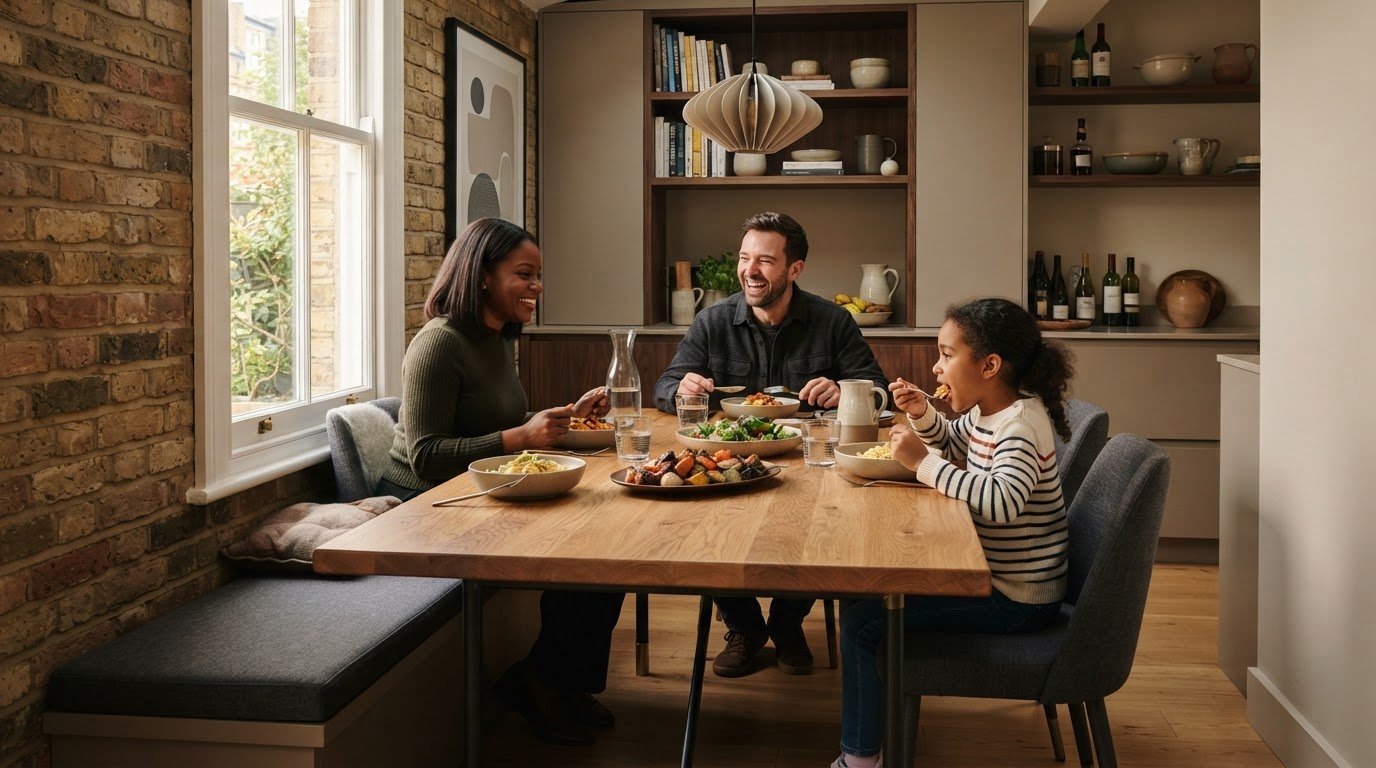
The best reason to choose custom furniture may have little to do with appearance. If a standard table leaves an awkward gap in a narrow dining area, or a desk doesn’t suit the way you work each day, the question becomes practical: when is it worth investing in custom furniture? A piece made around your room and routine can solve a problem that a ready-made option can’t.
It’s reasonable to hesitate. Personalisation can add expense and time, and not every room or household needs something made to measure. When a standard size works, choosing one may be the simpler, more sensible decision.
This article will help you weigh fit, everyday use, design preferences and how long you expect to keep a piece. We’ll look at where custom furniture makes a genuine difference, when a ready-made design is enough, and how handcrafted dining tables, breakfast bars and desks can serve different needs at home.
Key Takeaways
- To judge when is it worth investing in custom furniture, start with the specific room or everyday-use problem a standard piece doesn’t solve.
- Look beyond the initial outlay: fit, construction, regular use and ongoing care all shape a piece’s value over time.
- Compare custom and ready-made options by fit, choice, timing and the effort involved in deciding; the better option depends on your needs.
- List essential requirements separately from optional design preferences to keep practical needs at the centre of your decision.
- See how handcrafted dining tables, matching benches, coffee tables, breakfast bars and desks can support different routines at home.
When is custom furniture worth investing in? Start with the problem it solves
It can be hard to tell whether custom furniture answers a genuine need or simply adds personal touches to a purchase. Start by describing what isn’t working at home, then test whether a ready-made piece could solve it. For example, note if a table would obstruct a route through the room, if seating is difficult to arrange, or if your desk doesn’t support the tasks you do most often. This keeps the decision grounded in daily life rather than appearance alone.
Custom furniture is made to suit a particular brief. That brief might set out a piece’s dimensions, function and appearance, while ready-made furniture is generally offered in established sizes and designs. The concept of studio furniture offers a related perspective: craftspeople create individual or limited-production pieces with both artistic and functional aims. But personal expression alone doesn’t settle whether custom is right for your home.
Custom furniture is worth considering when a clear need for fit, function or design remains unmet by the ready-made options available to you. If you can’t name what the piece needs to do differently, pause before treating personalisation as a reason to invest.
Try putting the problem into one sentence: “We need a table that fits this dining space without blocking the walkway,” or “I need a desk that works for focused tasks in this part of the room.” Then separate essential requirements from preferences. Essential needs determine whether the furniture works; preferences affect how you’d like it to look or feel.
Which everyday problems can custom furniture solve?
Some rooms have sloping walls, alcoves or limited clearance that make standard dimensions awkward. For a dining table, measure the space it will occupy and consider whether people can sit down, pull out chairs and move around it comfortably. Browse dining table designs with those clearances in mind. A breakfast bar may need to fit a particular part of the kitchen, while a desk must support the way you work. A clear brief connects these practical needs to dimensions, function and appearance.
When might a ready-made piece be enough?
If your room has a straightforward layout and a standard dining table fits comfortably, there may be little practical benefit in specifying a one-off design. The same applies to a desk or breakfast bar when an available option already suits its intended role. Personalisation can be appealing, but it isn’t proof of better value. Name the problem first; if there isn’t one, a ready-made piece may be the simpler choice.
- Fit: Is there a particular measurement or clearance that standard options don’t meet?
- Use: Does the piece need to support a specific everyday activity?
- Appearance: Is a preferred detail essential, or simply nice to have?
Your answers create a useful threshold. If fit or function is genuinely unresolved, a custom brief may offer a considered way forward. If the need is already met, choosing a standard piece can be just as thoughtful.
What makes a custom furniture investment valuable over time?
A piece’s initial outlay is only one part of its value. Consider how well it serves its purpose, fits its place in your home and suits the way you use it. A carefully specified piece can still be poor value if its function doesn’t match your routine or its upkeep becomes a burden.
Purchase price tells you what a piece costs today; long-term value reflects how well it continues to meet your needs as you use and care for it. There’s no guaranteed lifespan that applies to every custom piece. Construction, materials, the conditions in your home and day-to-day care all influence how it performs over time.
How do frequency of use and durability affect the decision?
Think about how often the furniture will be used and what that use involves. A dining table used for meals, work and conversation has a different role from an occasional piece brought into use now and then. With frequent use, suitability and practical construction matter more because any inconvenience is repeated. Consider who will use it, what they’ll do at it, and whether the design supports those routines.
Does sustainability make custom furniture worthwhile?
Sustainability can inform your decision, but choosing custom furniture doesn’t automatically make a purchase sustainable. Start with the need: a piece designed around a defined role may reduce the compromises that leave furniture unsuitable for your space or routine. That’s a possibility to weigh, not a guarantee of environmental benefit. Be clear about what you need, which materials and construction matter to you, and how you’ll care for the finished piece.
For a practical comparison, consider a dining table you expect to use every day. Explore dining table designs alongside your requirements, then assess each option for comfortable use, fit and care. A rarely used occasional piece may not justify the same degree of specification. Frequency alone doesn’t determine value, but it helps show how much a mismatch could affect everyday life.
- Use: How often will the piece be used, and by whom?
- Fit: Does it suit the room and its everyday purpose?
- Care: Are the material’s needs manageable for your household?
- Need: Does customisation address a real requirement or mainly add optional detail?
If your answers point to a specific need and a suitable way to meet it, custom furniture may be worth exploring. For a breakfast bar or desk, a clear description of the space and intended use helps shape the brief. You can share your priorities with our team as you consider the options.
Custom versus ready-made furniture: which choice fits your situation?
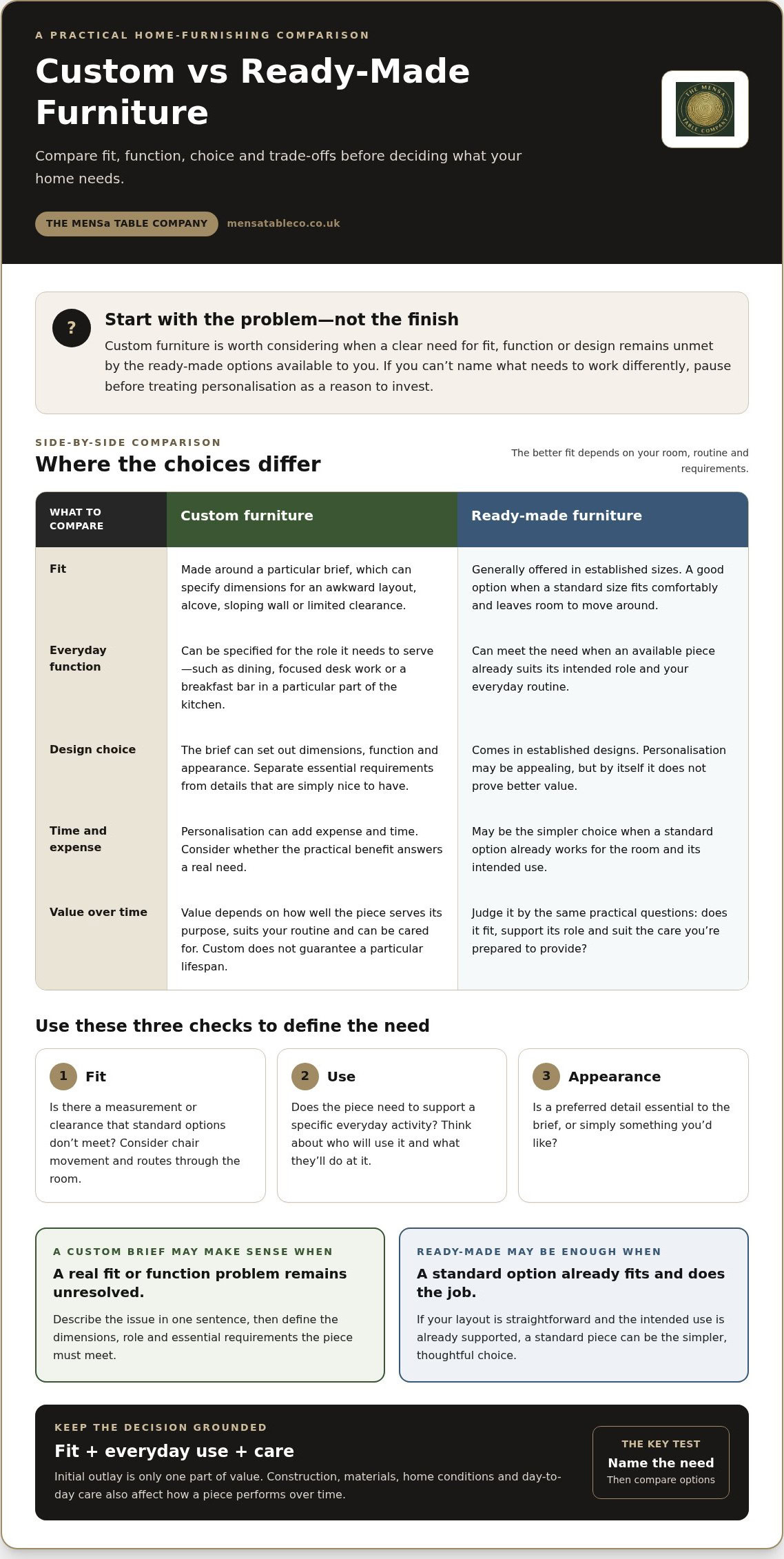
Choosing between custom and ready-made furniture is a question of trade-offs, not a test of taste. A tailored brief can help address a particular room layout or furniture role; a ready-made piece may be a better fit if its available dimensions, style and function already work for you. Compare both against the same priorities before deciding.
| Consideration | Custom furniture | Ready-made furniture |
|---|---|---|
| Fit | Can be shaped around a defined room or use requirement. | Works well when standard dimensions suit the space. |
| Choice | Your brief guides the required function and appearance. | You choose from available sizes, designs and functions. |
| Timing | Requires time to develop and make the piece. | May suit a need where choosing and getting furniture promptly matters. |
| Decision effort | Needs a clear brief and decisions about priorities. | Can be simpler when an available option meets your needs. |
Choose custom when a specific fit or function is essential; choose ready-made when an available piece meets the brief without unnecessary compromise. Neither route is best for every household. The deciding factor is whether the difference between what you need and what’s available affects how the furniture will work in your home.
Choose custom when fit or function is non-negotiable
A desk illustrates the point. If a particular room layout limits where it can sit, or its role calls for a specific working arrangement, a tailored brief can set out those requirements clearly. The same logic applies to a dining table in a defined space. The clearer you are about what the piece must do, the easier it is to assess whether the finished result answers the need.
Write down the essentials before considering optional details. For example, distinguish “must fit this part of the room” from “would prefer a particular appearance”. This keeps design choices connected to the reason for commissioning a piece, rather than allowing small preferences to obscure the practical goal.
Choose ready-made when convenience meets the brief
If a straightforward room has space for a standard desk, and an available design supports your work comfortably, choosing ready-made can be a sensible way to avoid extra decisions. A preference you can happily compromise on isn’t necessarily a mismatch. Ask whether it would affect the furniture’s function or merely make it less exactly as you pictured.
That distinction helps answer when is it worth investing in custom furniture: consider it when the gap between your essential needs and available options is real and consequential. If the gap is only a minor preference, a ready-made piece may be the more fitting choice.
How to decide whether custom furniture is right for your home
A short written brief can turn a vague feeling that furniture “doesn’t quite work” into a useful decision. Before choosing a route, map the room, describe the piece’s everyday role and decide which requirements are essential. Keep those separate from design preferences you’d enjoy but could live without.
Use this checklist to shape your brief and test whether a custom piece answers a real need:
- Define the need. Write down what the furniture must help you do or what problem it needs to solve. Be specific about the inconvenience you’re trying to avoid.
- Measure the space. Note the available floor area, nearby walls and openings, and the routes people need to move through. Measure the area the furniture will occupy, not just the wall it may sit against.
- Prioritise function. Describe how the piece will be used, who will use it and how often. Consider comfort and access as well as what needs to fit on or around it.
- Set preferences. Record the appearance, finish and other details you’d like, but mark them as optional unless they’re essential to the way the piece works in your home.
- Review the trade-offs. Compare your essential requirements with available ready-made choices. Decide whether a compromise would cause a real difficulty or simply mean the piece isn’t exactly as imagined.
What should you clarify before committing to a custom piece?
Start with the room’s practical constraints and the furniture’s intended role. Is there a walkway to keep clear? Will people need to sit comfortably around the piece or move easily past it? For a dining room, look at the handcrafted dining table range with those everyday considerations in mind. A table’s appearance matters, but it needs to work alongside circulation and comfort rather than at their expense.
How can the furniture’s intended role shape your choice?
A dining table often supports shared routines, from everyday meals to longer conversations. A desk, by contrast, may be chosen for focused work and the tasks it needs to accommodate. A breakfast bar has its own role in the kitchen, perhaps providing a place for a quick meal or a spot to sit while someone prepares food. The Mensa Table Company makes custom breakfast bars; consider the room and intended use as you shape the brief.
Be realistic about frequency as well as duration. Will the piece be used daily, occasionally or mainly for a particular gathering? Do you expect its role to stay much the same, or could your household’s needs change? These questions help distinguish a lasting practical requirement from a temporary preference.
There’s no need to force a decision. If your essential requirements are clear and available options don’t meet them, a custom brief may be worth exploring. Details about the room, the furniture’s purpose and your priorities help form a useful starting point for a discussion with our team.
How The Mensa Table Company approaches handcrafted furniture for real homes
Once you’ve weighed the room, the furniture’s role and your essential requirements, it helps to look at real pieces in context. The Mensa Table Company makes handcrafted new furniture for homes, including dining tables, matching benches, coffee tables, breakfast bars and desks. Each category serves a different part of daily life, from gathering around a shared meal to creating a place for focused work.
The Mensa Table Company’s dining tables include the Mensa, Spider Leg, X-Frame, U-Frame, Trapezium, A-Frame and V-Frame designs. The company also makes custom breakfast bars and desks. Use your brief to compare the options: what the room allows, what the furniture needs to do and which design details matter most to you.
From dining tables to furniture for other everyday routines
A dining table may anchor shared meals and conversation, while a matching bench can offer a different seating arrangement. A coffee table has a place in the living room; a desk supports focused tasks, and a breakfast bar serves a particular kitchen routine. Let the intended use guide the furniture category before narrowing down design preferences. That way, the piece is chosen for the life it will hold, not simply for how it looks on its own.
Material is another part of the brief. If timber choice is important to your room, consider how its colour and character will sit alongside existing surfaces and furnishings. You can explore the solid European oak furniture range as one option while thinking through the look and feel you want. Treat appearance as part of the whole room, alongside practical requirements such as placement, movement and everyday use.
Turn your decision into a clear furniture brief
A helpful brief doesn’t need elaborate design language. Describe the space, explain what the furniture is for, and separate must-haves from preferences. For a dining table, note where it will sit and how it fits into shared meals; for a desk, describe the work it needs to support. These details create a grounded starting point for choosing the right kind of piece.
That’s the practical answer to when is it worth investing in custom furniture: when a clear need and a considered brief point towards a piece that fits your home and its routines. Details about your room and requirements can help turn that brief into a useful conversation.
Give your furniture brief a thoughtful next step
The question of when is it worth investing in custom furniture becomes easier to answer when your requirements are clear enough to act on. You don’t need every design detail settled before taking the next step. A room, a purpose and a short list of essential needs are a strong place to begin.
The Mensa Table Company takes a handcrafted approach to furniture for the home. The value of a clear brief is that it keeps the conversation focused on what matters to you, from how a piece fits into your routine to the details that will make it feel at home in your space.
Write down your priorities, even if they’re still taking shape. Then talk to our team about your furniture brief. A clear idea of what you need can turn uncertainty into a confident decision and help you choose a piece that belongs naturally in your home.
Frequently Asked Questions
When is custom furniture worth the investment?
Custom furniture is most worth considering when a ready-made piece would force a meaningful compromise. To answer “when is it worth investing in custom furniture”, identify what that compromise is: perhaps a table would obstruct a doorway, or a desk wouldn’t support the way you work. Then weigh the importance of that need against how often you’ll use the piece. If the difference is only a minor preference, ready-made may be perfectly suitable.
Is custom furniture always more expensive than ready-made furniture?
Not necessarily; there’s no single price comparison that applies to every piece. The brief, materials, construction and design all affect what a custom item involves. Rather than assuming it costs more or less, compare what each option offers for your needs. Consider whether the fit and function justify the initial outlay, and how regularly you expect to use the furniture. Custom isn’t automatically better value simply because it’s made to a personal brief.
Can custom furniture be made for an awkward room?
A custom brief can account for a room’s layout when standard dimensions create a practical problem. Note features that affect placement, such as a door swing, a sloping ceiling or a radiator, and consider how people need to move around the furniture. Include the room’s measurements and describe the piece’s purpose. This gives you a clearer way to judge whether a tailored solution addresses the challenge or whether a different arrangement could work.
How long does custom furniture take to make?
The time depends on the piece and the work involved, so there isn’t one reliable estimate for every project. First, define what you want made and how it will be used. If you have a date in mind, include it when discussing your brief so timing can be considered alongside the design. Avoid planning around an assumed standard lead time: the requirements of one piece may differ considerably from another.
Is handmade furniture better than mass-produced furniture?
Handmade and mass-produced describe different ways of making furniture, not a universal ranking of quality. Judge each piece by its construction, suitability for your intended use and how well it meets your priorities. Handcrafted furniture may appeal if you value the maker’s considered approach and a clearly defined brief. A mass-produced piece can be a sensible choice too, particularly if its design, function and dimensions already suit your home.
Does investing in custom furniture add value to a home?
A custom piece can add practical and personal value if it serves your household well and feels at home in its setting. That doesn’t guarantee a higher resale price or a financial return. Consider instead whether it supports the routines you care about, makes good use of the available space and remains useful to you. Keep those everyday benefits separate from assumptions about what a future buyer might pay.

Leave a Reply