

A furniture upgrade is only worthwhile when its practical benefit justifies its cost. For landlords, maximising the return on your furniture investment means assessing whether a change can improve a property’s condition or help attract tenants, then calculating return on investment as net benefit divided by total costs, multiplied by 100. That gives you a clearer basis for comparing options than appearance alone.
It’s natural to focus on the initial cost, but furniture also shapes how a room works and how well it stands up to everyday use. A suitable finish, a piece that fits the space and a budget that accounts for the whole project can all support lasting value.
This guide explains how to assess upgrades, choose durable finishes and plan furnishing budgets. You’ll also learn to consider who will use the space, what an upgrade could achieve and which ongoing costs it may help you avoid.
Key Takeaways
- Compare an upgrade’s likely benefits with its full cost, using net benefit divided by total costs and multiplied by 100 to calculate return on investment.
- Choose furniture and finishes for the demands of the space, since durability and ease of care can influence replacement needs over time.
- Prioritise furnishing decisions around the people who will use the property and the practical improvements most likely to matter to them.
- Look beyond brand names when considering lasting value: fit, function, materials and a style that works with the space all deserve attention.
- Simple, consistent care can help furniture stay in use longer; learn which maintenance choices protect its finish and structure.
1. Assessing upgrades by return on investment
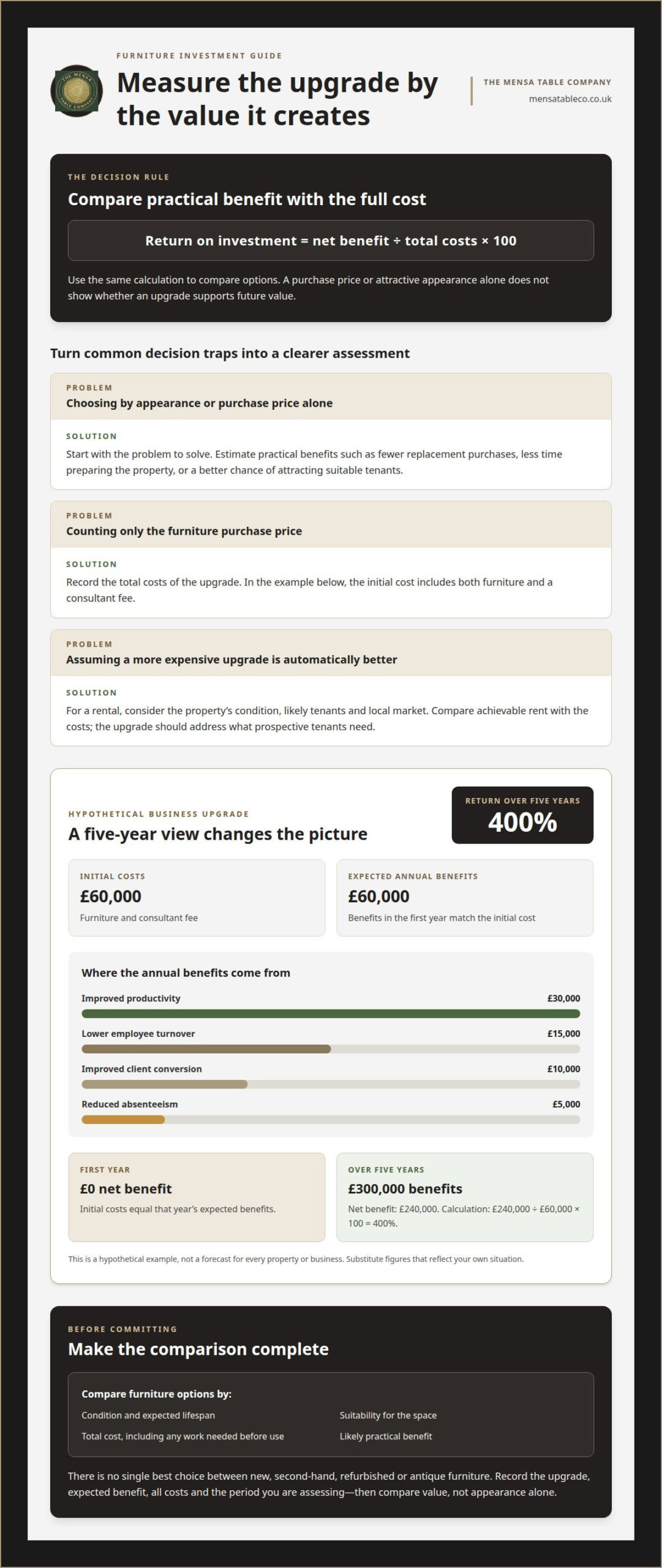
For landlords, maximising the return on your furniture investment starts with comparing an upgrade’s likely benefit against its full cost. Use this formula: return on investment = net benefit ÷ total costs × 100. It gives you a consistent way to compare options, rather than choosing by appearance or purchase price alone.
Begin with the problem you want to solve. A worn dining table might make a furnished property feel neglected, while poorly planned seating may not suit the likely tenants. Estimate the benefit in practical terms, such as fewer replacement purchases, less time preparing the property, or a better chance of attracting suitable tenants. Then include the total costs of the upgrade, not only the furniture itself.
Consider a hypothetical business upgrade with £60,000 in initial costs, including furniture and a consultant fee. Its expected annual benefits total £60,000: £30,000 from improved productivity, £5,000 from reduced absenteeism, £15,000 from lower employee turnover and £10,000 from improved client conversion. In the first year, the net benefit is £0 because the initial costs equal that year’s benefits. Over five years, total benefits reach £300,000 and net benefit reaches £240,000. The calculation is £240,000 ÷ £60,000 × 100, giving a 400% return over five years. Treat this as an example, then substitute figures that reflect your own property or business.
For a rental property, consider whether an upgrade could improve its condition, appeal to likely tenants or reduce vacancy time. A well-designed, furnished home may support higher rent and attract tenants, but the rent still needs to suit the local market. Compare the likely achievable rent with the costs and the property’s position. A more expensive upgrade isn’t automatically better value if it doesn’t address what prospective tenants need.
Is it better value to buy new, second-hand, refurbished or antique furniture? There’s no single best option. Compare condition, expected lifespan, suitability and total cost, including any work needed before use. Second-hand or antique pieces may add character, while new furniture may suit spaces where consistent condition matters.
In the UK, return options depend on the seller, how you bought the item and its condition. A manufacturer’s guarantee is separate from a returns policy, so read both carefully, particularly for second-hand or antique furniture.
Before committing, record the upgrade, its expected benefit, all costs and the period you’re assessing. This helps landlords and businesses distinguish an appealing purchase from a decision that supports future value. It also clarifies which changes could genuinely improve the outcome.
2. Durable finishes and long-term planning
Choose a finish for the way a piece will be used, not just its first impression. A dining table in a busy rental, for example, faces repeated meals, cleaning and movement. Consider how noticeable marks may be, how manageable routine care will feel and whether the finish will suit the room if its use changes.
Start with the setting. A table used daily needs a different care plan from a desk in a quiet spare room. Consider exposure to food, drink, sunlight and cleaning products, then follow a finish’s care instructions. Where several people share a piece, simple upkeep may be preferable to a delicate surface that needs frequent attention.
Build a practical review around these steps:
- Match finish to use: consider spills and frequent wiping in a dining area, or regular handling on a desk edge.
- Read care guidance: follow the maker’s recommended cleaning method, rather than reaching for a strong cleaner by habit.
- Protect contact points: use coasters or placemats where cups and dishes regularly rest.
- Watch for early changes: notice loose joints, surface marks or wobbling before they affect everyday use.
- Plan the setting: keep furniture away from avoidable knocks and direct sunlight where practical.
These habits matter because replacement costs can change the overall value of a furnishing decision. In a hypothetical example, more durable furniture is expected to save £10,000 in replacement costs over five years. That figure isn’t a forecast for every property. It shows why it’s useful to consider how long furniture may remain serviceable, alongside the finish and care it needs.
Plan beyond the first tenancy or office layout. A neutral, adaptable finish can suit changing décor, while a distinctive colour may work in a carefully designed space. For a holiday let, consider how a table will support shared meals and frequent guest turnover. For a home office, assess whether its surface and finish suit regular use.
Keep the care routine with the furniture. A short note on suitable cleaning and protective measures helps household members, staff or guests look after the piece consistently. Check its condition regularly and address small issues before they spread. Steady care can preserve a useful finish and keep furniture serving its purpose for longer.
Keep your planning horizon in mind when weighing the cost of a durable piece against replacement. The guide states that investing is generally most appropriate for medium- and long-term goals of at least five years. This can help frame decisions about furnishings intended to remain useful as occupants or room layouts change. Consider the expected period of use, care requirements and fit with the property’s priorities. Longevity is one factor, not a promise that a particular purchase will pay off.
3. Managing furnishing budgets
A furnishing budget should cover the whole project, not just the pieces delivered. Set a spending limit, list essential items by room, then allow for delivery, preparation and related refurbishment. For an estate property, this helps prevent one appealing purchase from diverting funds from practical priorities.
Use a simple schedule to compare costs before committing. Include furniture, professional advice, fitting or assembly, disposal of unwanted pieces and work needed to prepare the space. The difference shows why a furniture-only figure can understate the budget.
Divide the plan into priorities. Start with items that affect daily use or the property’s readiness, then identify changes that can wait. A rental home, for example, may need a sound dining area before decorative additions. If a complete kitchen replacement is too expensive, replacing cupboard doors or worktops can refresh the room without the full project.
- Set a ceiling: record the maximum available spend before comparing furniture choices.
- Separate essentials: distinguish necessary pieces from optional additions in each room.
- Keep a contingency: allow for unexpected preparation or delivery needs within the agreed budget.
- Review in stages: compare actual spending with the plan before approving the next purchase.
How can you sell used furniture in the UK, and what resale prices can you expect? Create a clear listing with accurate measurements, condition details and photographs, then choose a local selling platform, auction or private sale. Resale value depends on condition, age, material, demand and collection arrangements. Compare similar pieces and set a realistic asking price.
What are the risks of buying furniture online or second-hand, and how can you avoid them? Images can conceal wear, damage or colour differences, and dimensions may not suit your room. Read descriptions closely, compare measurements with your available space, and agree collection, delivery and payment details before buying.
Budget decisions also involve time and disruption. A fit-out specialist can guide refurbishment choices and help manage disruption while improving the value of those decisions. For a business, phased work may make it easier to keep operating. For a landlord, coordinating purchases and preparation can help keep a property ready to let.
Keep a running record of planned and actual spending. Note each purchase, its room, why you chose it and any remaining work. This makes it easier to spot cost increases early, protect funds for essentials and assess whether the furnishing plan succeeded.
Set an overall spending limit, list essential furniture for each room and prioritise pieces needed for daily use or the property’s readiness. Keep delivery, fitting, preparation and related costs within the total.
5. Which furniture brands and styles retain their value best?
No brand or style guarantees strong resale value. A recognisable name may attract buyers, but condition, materials, design, provenance and demand all affect what someone will pay. A well-kept oak dining table in a practical size, for example, may appeal to more households than an unusual piece suited to only one room. Assess each item on its own merits.
Start with the furniture’s construction and material. Solid timber may need different care from a veneered surface, so identify what a piece is made of before assessing its value. Check the joints, legs, drawer runners and underside, not just the visible top. A stable table with a clean surface is easier to evaluate than one with loose joints or hidden damage.
Style matters because buyers need to picture a piece in their own space. Simple shapes and restrained colours can suit changing interiors, while a distinctive finish may appeal to a narrower audience. For a compact dining table, useful dimensions may matter more than a fashionable detail. Choose for function, not just current trends.
Brand names can help buyers identify a maker, model or period, but evidence matters. Keep receipts, maker’s marks, care information and records of previous ownership together. For a vintage chair, clear photographs of labels, joints and wear can help explain its history. Don’t call an item rare or antique without evidence. Accurate details build confidence and distinguish provenance from guesswork.
Before buying with future resale in mind, use this practical assessment:
- Inspect condition: look for repairs, stains, wobbling and missing parts.
- Identify materials: check whether timber, veneer, metal or upholstery suits expected use.
- Consider versatility: assess whether its size and shape fit common room layouts.
- Keep records: save purchase documents and care instructions with the piece.
- Compare carefully: use similar items in similar condition, rather than relying on asking prices alone.
Resale value isn’t the only measure of a successful furniture purchase. A sturdy table used for daily meals may serve you for years, even if its eventual selling price is modest. In a rental property, a practical, durable design may be more valuable overall than a collectible piece that needs delicate handling. Match furniture to its users and treat resale potential as one factor among several.
When comparing two choices, record what supports each item’s value: material, condition, maker, adaptability and documented history. This helps separate lasting qualities from short-lived fashion and grounds your decision in evidence, not a brand name alone.
5. How can you maintain and repair furniture to extend its lifespan?
Regular care helps furniture stay useful and presentable for longer. Identify its material and finish, then follow the maker’s care instructions. A solid timber dining table, for example, may need different cleaning products from a painted cabinet or upholstered chair. Don’t assume one cleaner suits every surface: the wrong product can mark or damage a finish.
Make simple checks part of your regular room care. Wipe spills promptly with a suitable cloth, keep hot dishes off bare surfaces and lift furniture instead of dragging it across the floor. Check that dining-chair joints feel firm before continued use. With a desk, notice whether screws have loosened or the top has started to wobble.
Use a repeatable routine for each piece:
- Dust gently: use a soft cloth that won’t scratch the surface.
- Clean appropriately: match the method to the material and its care guidance.
- Reduce avoidable wear: use coasters, placemats or protective pads where they suit the item.
- Inspect joints and fittings: look for movement, loose fasteners or damage during regular cleaning.
- Record changes: note recurring marks or faults so you can address their cause.
Small faults can worsen if furniture stays in use without attention. A wobbly table may need its joints or fasteners inspected; a sticking drawer may have obstructed or worn runners. Tightening a suitable screw can be straightforward, but don’t force a fitting that resists or risks splitting the material. Identify the cause before attempting a repair.
For a scratch on wood, first establish whether it affects the finish or the timber beneath. Follow the maker’s recommended method and test any suitable product in an inconspicuous area. A deep gouge, unstable joint or damaged structural part needs careful assessment, as an unsuitable repair can make things worse. Keep photographs of the damage and repair details with the furniture’s records.
Placement matters, too. Keep favourite furniture away from repeated knocks and avoid prolonged direct sunlight on one area. In a busy household, move frequently used pieces carefully, and don’t overload shelves or drawers. These small steps help reduce strain on surfaces, joints and fittings.
Choose a dining table for everyday use, shared meals and the room it must serve, then care for it according to its materials. If you’re considering a new table for your space, get in touch to discuss your requirements.
The Mensa Table Company: The Mensa Dining Table
The Mensa Table Company makes dining tables for shared meals and everyday use. The Mensa Dining Table is one option when planning a dining area around function, fit and the way people gather.
For a different look, compare the Spider Leg Dining Table, X-Frame Dining Table and U-Frame Dining Table. Start with the room: consider the space available, how you’ll use the table and which design suits your existing furniture. A considered choice can make a dining table both practical and a welcoming setting for conversation.
Explore the table options at mensatableco.co.uk, or contact The Mensa Table Company to discuss your requirements.
Choose the next piece with care
Your next furniture decision can shape how a room works long after the initial change. Picture the everyday moments the space needs to support, from family meals to conversations around the table. That practical purpose gives you a useful basis for comparing designs and fit.
For anyone focused on maximising the return on your furniture investment, a considered dining table can bring lasting function to the home. The Mensa Table Company offers the Mensa Dining Table, Spider Leg Dining Table and X-Frame Dining Table, with distinct designs to consider for your dining space. Choose with the room, its users and your priorities in mind.
If you’re ready to explore a dining table for your home, contact The Mensa Table Company. A thoughtful choice can make everyday gatherings feel a little more special.
Frequently Asked Questions
What does furniture investment mean and how can you maximise its value?
A furniture investment is a purchase chosen for the use and enjoyment it can provide over time, not appearance alone. Get more value from a piece by matching it to its everyday purpose, choosing a size that fits the room and caring for it according to its materials. A dining table used for meals and work, for example, should suit both activities so it remains useful as household needs change.
Which furniture materials and construction offer the best durability and value?
There’s no single best material for every room; choose according to use, care needs and construction. The Mensa Table Company’s dining tables are made from 100% solid ash, walnut, oak or Swedish pine, with no MDF or veneers. Ash, oak and walnut tabletops are 45 mm thick; Swedish pine tops are 40 mm thick. Their steel legs are engineered to support up to 200 kg, offering concrete construction details to weigh against your needs.

Leave a Reply