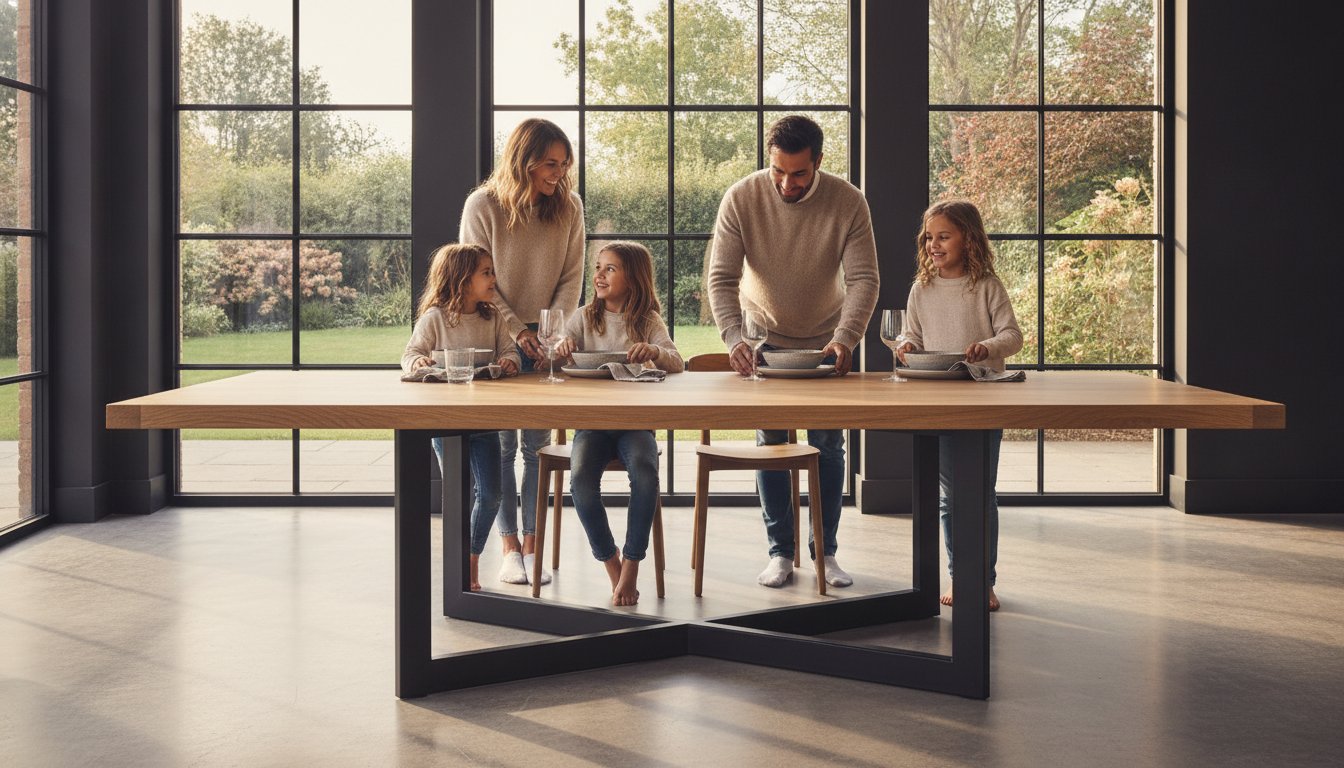
What if the most important piece of furniture in your home didn’t just hold your plates, but actually invited your guests to stay a little longer? Many of us have felt the frustration of a table that looks beautiful but leaves someone’s knees knocking against a bulky leg at the end of a Sunday roast. Choosing a v-frame dining table is a deliberate move away from the clunky, mass-produced designs that often dominate the high street. It’s an investment in architectural geometry that feels light and airy, yet remains anchored by the undeniable strength of solid, hand-finished timber.
You likely want a space that feels contemporary without losing that sense of organic warmth, and you’re right to be cautious about trends that might feel dated by next season. In this guide, we’ll show you how the minimalist V-frame design solves the age-old problem of leg room while providing a rock-solid foundation for a lifetime of memories. We’ll explore the tactile differences between hardwoods like European Oak and Black Walnut, explain why our no flat-pack rule is essential for structural integrity, and help you select the perfect grain to suit your home’s unique character.
Key Takeaways
- Explore how the architectural V-frame structure creates a “floating” aesthetic that introduces a sense of light and space into your dining area.
- Understand the tactile and structural differences between hardwoods like Oak and Walnut to ensure your table withstands the rigours of daily life.
- Discover why a v-frame dining table offers superior leg room and seating flexibility compared to traditional trestle designs.
- Learn to style your centrepiece by balancing minimalist Scandinavian influences with the raw, industrial textures of hand-finished timber.
- Realise the importance of permanent joinery and why avoiding flat-pack compromises is the key to a stable, multi-generational investment.
What defines a V-Frame Dining Table?
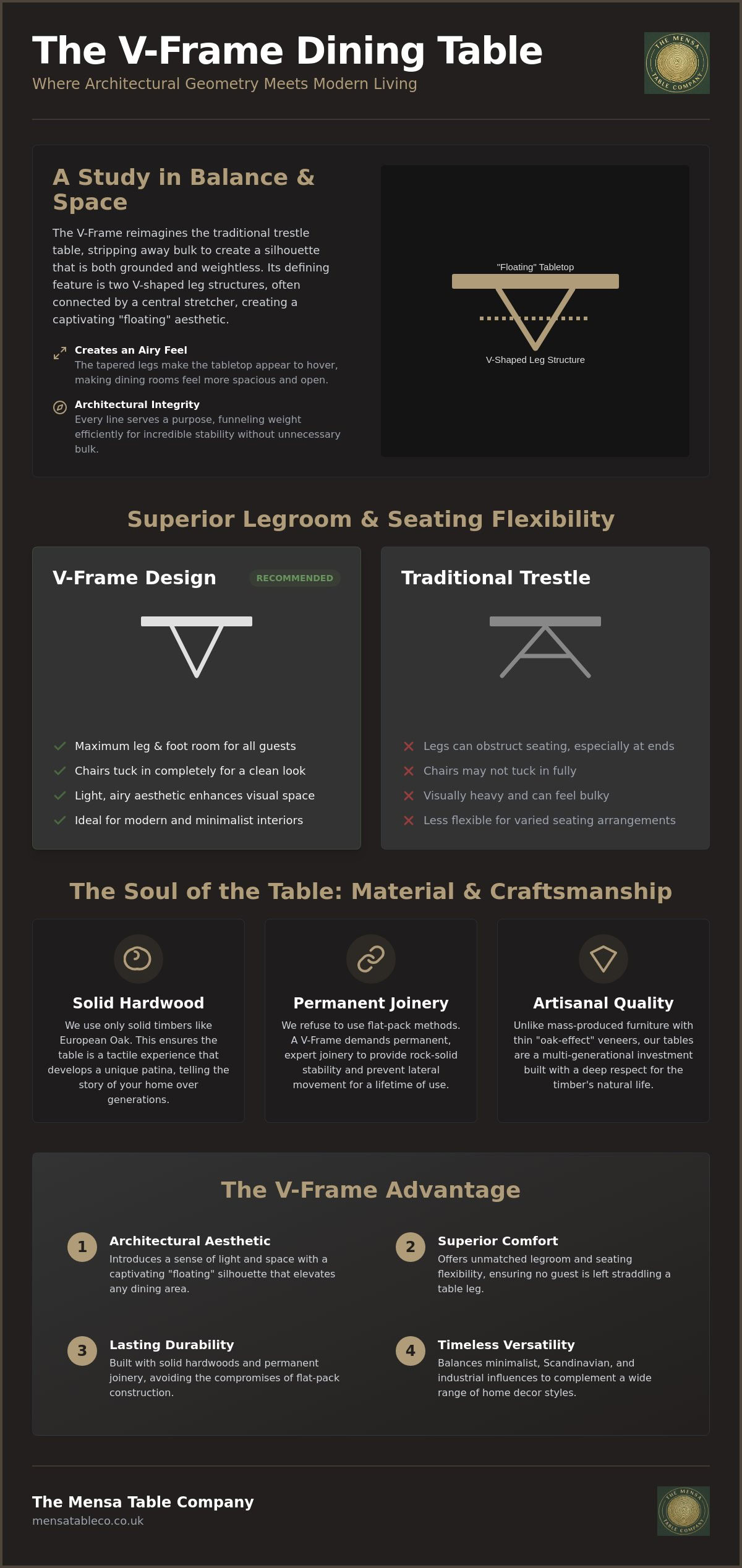
At its heart, the v-frame dining table is a study in balance. It reimagines the traditional Trestle table, stripping away the bulk to reveal a silhouette that feels both grounded and weightless. This design is defined by two V-shaped leg structures that support the tabletop, often anchored by a central stretcher bar that runs the length of the piece. It is a piece of architectural geometry that speaks to the soul of minimalist and mid-century modern design, where every line serves a purpose and nothing is wasted.
The “floating” aesthetic is what makes this style so captivating. Because the legs taper inward toward the floor, the table appears to hover, creating an airy feel that can make a smaller dining room feel significantly more spacious. By July 2026, the wooden furniture market is projected to reach $434.7 billion, and we’re seeing a clear shift in consumer preference. People are moving away from heavy, blocky frames in favour of sleek, structural silhouettes that offer a sense of light and movement. It is a trend driven by a desire for furniture that feels intentional and handcrafted rather than mass-produced.
This desire for architectural clarity and premium materials often extends beyond the dining room to the very boundaries of the home. For those looking to integrate similar “floating” aesthetics into their exterior, you can learn more about Muskokify and their bespoke glass railings and sunrooms that prioritize light and structural beauty.
The Structural Integrity of the V-Design
Stability is the foundation of our work. The V-base funnels the weight of a heavy Solid European Oak or Walnut top down into a concentrated point, providing incredible stability when executed with precision. We refuse to use flat-pack methods because a v-frame dining table demands permanent, expert joinery to withstand the rigours of daily life. A central stretcher bar isn’t just a design choice; it’s the backbone that prevents lateral movement and ensures the frame remains rigid for generations. When you sit at one of our dining tables, you feel that quiet confidence in the craftsmanship.
V-Frame vs. A-Frame: Key Differences
While the A-frame is a beloved classic, the V-frame is its more sophisticated, airy cousin. The inverted “A” offers a completely different visual weight. Because the base narrows as it reaches the floor, it creates more visual space around the feet, making it the perfect choice for a contemporary interior where you want to highlight a beautiful rug or floor texture. This design also improves chair tuck-in capabilities. It allows for more flexible foot placement for your guests, ensuring that nobody is left straddling a table leg during a long, comfortable evening of shared stories and good food.
Selecting the Right Timber: The Soul of Your Table
The choice of timber is the most personal decision you’ll make when commissioning a v-frame dining table. While the silhouette provides the architectural structure, the wood species dictates the personality of the piece. A table isn’t just a surface; it’s a tactile experience. When you run your hand across the grain, you should feel the history of the tree and the care of the hands that finished it. Unlike mass-produced alternatives that rely on “oak-effect” veneers, our commitment to solid timber ensures that your table develops a unique patina as it ages, becoming a storied part of your home.
Working with solid wood requires a deep understanding of its natural life. Timber is a hygroscopic material, meaning it continues to breathe, expanding and contracting with the changing seasons and humidity levels in your home. Many retailers ignore this “timber movement,” leading to cracks or warping over time. We account for this by using traditional joinery techniques and specific mounting hardware that allows the wood room to breathe without compromising the table’s structural integrity. This respect for the material is what separates a piece of furniture that lasts a few years from one that serves your family for generations.
The physical properties of the wood also play a vital role in the longevity of your investment. Understanding the characteristics of hardwoods is essential before making your selection. Hardwoods are generally denser and more resistant to the dents and scratches of a busy household, whereas softwoods, while charming and rustic, may require a more delicate touch in a high-use dining environment. If you’re unsure which grain will best suit your home’s natural light, we invite you to speak with our workshop team for personal guidance.
Solid European Oak: A Timeless Choice
There is an enduring appeal to solid European oak that makes it our most requested material. Its prominent, sweeping grain and honeyed tones bring a sense of grounded warmth to the minimalist V-frame design. Oak’s natural density is a perfect match for the structural demands of this style, providing a heavy, stable top that feels incredibly secure. To keep your Oak table looking pristine, we recommend a simple routine of occasional oiling, which nourishes the fibres and protects the surface from the spills of daily life.
Black Walnut and European Ash
For those seeking a statement of modern luxury, solid black walnut offers deep, chocolate tones and a sophisticated finish that feels velvety to the touch. Renowned for its exceptional strength and dimensional stability, solid black walnut stands as a premier furniture hardwood that resists the wear of daily life while maintaining its refined character. Conversely, solid European ash is the ideal choice for a lighter, Scandi-inspired aesthetic. Its pale, creamy hues and bold grain patterns create a bright, energetic feel that perfectly complements a minimalist interior.
Practicality and Seating: Maximising Your Space
One of the most common concerns we hear in the workshop is whether the angled base of a v-frame dining table will interfere with guest seating. It is a valid worry, especially if you’re used to the predictable corners of a traditional four-legged table. In reality, the V-frame is remarkably guest-friendly. Because the legs taper inward as they meet the floor, they actually clear more space for feet and knees than a standard trestle design. This architectural choice allows your guests to settle in comfortably without the “knee-knock” factor that often plagues bulkier frames.
The secret to this accessibility lies in the inset nature of the legs. By positioning the base further back from the edge of the tabletop, we create a generous “lap gap” for those sitting along the sides. Selecting a dining table made of sturdy stuff is about more than just the material; it’s about how that structure facilitates human connection. For larger banquet tables designed to seat 10 or 12 people, the V-frame provides a central anchor that supports a massive span of timber without the need for intrusive perimeter legs, making it the ideal choice for big families and social rituals.
To ensure total comfort at the table ends, we always recommend calculating a specific overhang. A distance of 30cm to 40cm from the leg to the end of the table is usually the “sweet spot.” This provides enough room for a chair to be tucked in fully and for a person to sit without feeling restricted by the frame. It’s these small, manual adjustments in the design phase that transform a piece of furniture into a functional centrepiece.
The Bench Solution
We often find that matching benches are the most natural partner for this architectural style. To achieve a clean look, follow the “tuck-under” rule: size your bench so it sits perfectly between the V-legs when not in use. This not only saves floor space in narrower UK dining rooms but also creates a communal, relaxed atmosphere. There’s something inherently inviting about a bench; it encourages people to squeeze in together, fostering a sense of shared experience that individual chairs sometimes lack.
Sizing Guide for Modern Homes
When planning your space, aim for a 90cm clearance between the table edge and the nearest wall or piece of furniture. This allows for easy movement even when the dining tables are fully occupied. In the UK, standard table heights hover around 75cm to 77cm, which pairs perfectly with most standard dining chairs. For visual balance, we typically suggest a top thickness of 35mm to 40mm. This provides the necessary heft to complement the structural steel or timber of the V-frame without making the piece feel overly dominant in the room.
Design Versatility: Styling Your V-Frame Centrepiece
The v-frame dining table acts as a structural chameleon in the modern home. It isn’t just a piece of furniture; it’s a foundation for your interior style that bridges the gap between different design philosophies. For those who lean toward a Scandi-Minimalist aesthetic, we recommend pairing the frame with light timbers like solid European ash. When combined with a neutral palette of soft greys and whites, the clean lines of the V-base provide architectural interest without cluttering the visual field. It creates a space that feels calm, light, and intentionally curated.
If your home leans toward an Industrial Edge, the v-frame dining table finds its strength in contrast. Pairing the natural, honeyed warmth of solid European oak with darker waxes or black metal accents creates a striking, masculine silhouette. Alternatively, you can soften the sharp geometric legs to suit a Modern Farmhouse look. By introducing tactile textiles like linen runners and clusters of greenery, you balance the industrial geometry with organic softness. This handmade piece eventually becomes a backdrop for your family history, evolving alongside your home as it absorbs the marks and memories of shared experiences.
Finishes and Daily Protection
Choosing the right finish is about balancing the wood’s natural beauty with the practicalities of a busy household. We often guide our clients through the choice between wax and varnish. While a varnish offers a robust shield against the inevitable spills of a Sunday roast, a natural oil or wax finish provides a superior sensory experience. It allows you to feel the true, raw texture of the grain under your fingertips. Maintaining this solid wood investment is straightforward. A simple routine of using coasters and a periodic re-application of nourishing oil will ensure the timber remains vibrant for decades. If you have questions about which finish suits your lifestyle, reach out to our workshop team for a personal recommendation.
Lighting and Decor
To truly frame the table as the focal point of a multi-functional room, consider the role of lighting. Linear pendant lights are particularly effective as they echo the table’s geometric silhouette, drawing the eye downward to the craftsmanship of the top. During social rituals and dinner parties, the right lighting creates an intimate pool of warmth that encourages guests to linger. Whether it serves as a creative workspace during the day or a site for celebration at night, the V-frame remains the grounded heart of the home, adaptable to every rhythm of life.
The Mensa Difference: Artisanal Quality vs. Mass Production
The modern furniture industry often prioritises speed over substance, promising “easy assembly” that rarely stands the test of time. The Mensa Table Company has always believed that a home’s focal point deserves better than a box of screws and a set of instructions. This is why The Mensa Table Company refuses to build flat-pack furniture. For a v-frame dining table, the structural integrity relies on permanent, durable joinery that only a manual, artisanal approach can provide. When you sit at one of The Mensa Table Company’s tables, you aren’t just using a piece of furniture; you’re connecting with a legacy of UK craftsmanship that began in its workshop in 2018.
The Mensa Table Company’s process is a steady, calm journey from raw timber to a finished masterpiece. It starts with the natural origins of the wood, selecting each piece for its unique character and tactile quality. There is a quiet confidence in knowing exactly where your table came from and the hands that shaped it. Investing in a handmade dining table isn’t a transactional exchange; it’s a lifetime purchase designed to serve as the backdrop for decades of shared meals and social rituals. It is a piece built to be passed down, carrying the stories of your family within its grain.
The Mensa Table Company’s Commitment to Quality
The Mensa Table Company takes immense pride in its material selection, sourcing only the finest solid Swedish pine alongside its signature European hardwoods. Its focus remains strictly on new furniture production rather than restoration, as this allows it to ensure every joint and finish meets its exacting standards from the very first cut. This dedication creates a personal connection between the maker and the end user. You don’t just buy a table from The Mensa Table Company; you become part of a story that values substance over flashy marketing and environmental responsibility over mass-produced waste.
Beyond the Dining Room
The architectural beauty of the V-frame doesn’t have to be confined to the dining area. The Mensa Table Company has extended this modern silhouette to its range of coffee tables and desks, allowing you to carry a cohesive, artisanal aesthetic throughout your home. Every piece The Mensa Table Company creates is eligible for its national delivery service, ensuring that your handcrafted investment arrives in perfect condition, ready to play its role in your daily life. If you’re ready to move away from disposable design, <a href=”https://mensatableco.co
Bring Your Vision to Life with Handcrafted Design
Choosing a v-frame dining table is a deliberate step away from the temporary and toward the timeless. We’ve explored how this architectural silhouette provides a sense of lightness in your room while offering the heavy-duty stability that only permanent, expert joinery can achieve. By selecting solid European hardwoods and refusing to settle for flat-pack compromises, you’re investing in a piece that values the tactile beauty of natural grain and the quiet strength of manual production. This isn’t just a surface for meals; it’s a site for human connection that will grow more beautiful with every passing generation.
Every table we build is handcrafted in the UK, ensuring that the unique history of the timber is preserved in the finished masterpiece. If you’re ready to create a striking centrepiece that reflects your personal style and stands as a testament to authentic craftsmanship, we invite you to take the next step. Contact Us to Start Your Bespoke V-Frame Table Project and let’s discuss how we can bring the warmth and soul of artisanal furniture into your home.
Frequently Asked Questions
Are V-frame dining tables stable?
Yes, a v-frame dining table is exceptionally stable when built with the proper structural supports. We use a central stretcher bar to anchor the two V-shaped bases, which prevents any lateral swaying. Because we avoid the compromises of flat-pack construction, the permanent joinery ensures the frame remains rigid and dependable for years of family gatherings.
Do V-frame legs get in the way of chairs?
Not at all. The V-shaped legs are deliberately inset from the edge of the tabletop, which creates a generous amount of room for chairs to be tucked in fully. This design actually offers more flexibility for chair placement than a traditional four-legged table, as there are no perimeter legs to navigate when you’re sliding into your seat.
What is the best wood for a modern V-frame table?
Solid European Oak and Black Walnut are the premier choices for this architectural style. Oak offers a timeless, sweeping grain and immense density, while Walnut provides a deep, luxurious tone that complements the sharp geometry of the frame. Both hardwoods are durable enough to handle the daily rhythms of a busy household while maintaining their refined character.
How do I clean a solid wood V-frame table?
Cleaning your table requires nothing more than a soft, slightly damp cloth to wipe away crumbs and spills. Avoid harsh chemical cleaners that can strip the natural oils from the timber. To maintain the wood’s tactile beauty and protect it from drying out, we recommend a periodic application of high-quality furniture oil or wax every six to twelve months.
Can I use a bench with a V-frame table?
Yes, matching benches are a perfect companion for the V-frame aesthetic. We often craft bespoke benches that are sized to tuck perfectly between the legs, which is a fantastic way to save space in narrower rooms. This combination encourages a communal dining experience and creates a clean, minimalist silhouette when the table isn’t in use.
How much leg room is there at the ends of a V-frame table?
We typically design our tables with a 30cm to 40cm overhang at each end to ensure ample leg room for those sitting at the head of the table. This specific measurement allows a guest to sit comfortably without their knees coming into contact with the base. It ensures the table remains a functional site for connection rather than a source of frustration.
Does the table come assembled or flat-pack?
Every piece we create arrives as a fully realised masterpiece, as we never use flat-pack methods. Our team handles the national delivery and ensures the v-frame dining table is situated exactly where you want it in your home. This commitment to permanent joinery is essential for the structural integrity and longevity of a handcrafted investment.
Is a V-frame table suitable for a small dining room?
Yes, the V-frame is an excellent choice for smaller spaces because of its “floating” aesthetic. The way the legs taper inward toward the floor creates more visual floor space, which prevents the room from feeling cramped. By pairing it with a tuck-under bench, you can maximise your seating capacity without overwhelming the footprint of your dining area.

Leave a Reply