
What if the headline inflation rate tells you less about your next dining table than you think? UK furniture price trends 2026 reflect a market where household budgets are under pressure, but broad economic figures do not tell you what a particular table is worth or whether it suits your home.
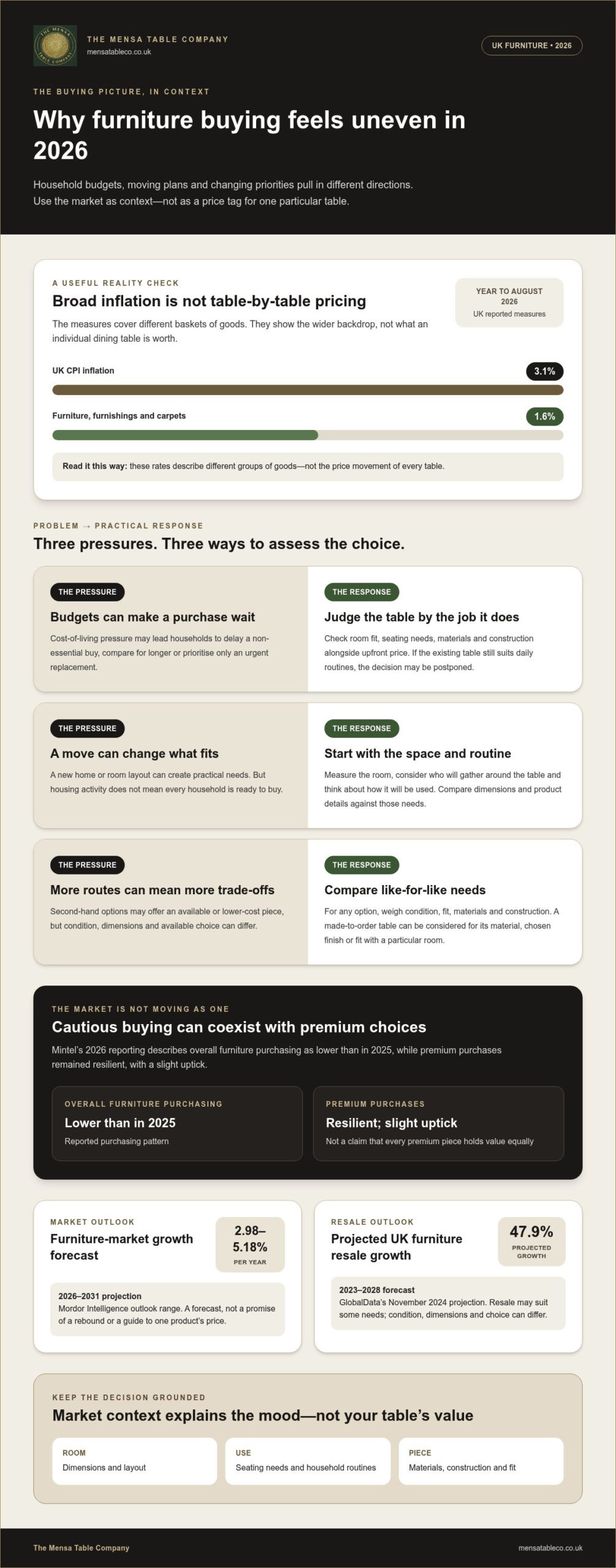
The Office for National Statistics reported that UK CPI inflation was 3.1% in the year to August 2026, while furniture, furnishings and carpets rose by 1.6% over the same period. These figures describe different baskets of goods, not the price movement of every table. They help explain why buyers are weighing big purchases carefully and looking beyond the ticket price.
This guide unpacks the forces shaping the market and shows how to judge a table using details you can check: its material, construction, size, fit and price. It also looks at made-to-order solid-wood furniture, including tables handcrafted from ash, walnut, oak or Swedish pine. The aim is to help you compare options against your needs, rather than chase a headline bargain.
Key Takeaways
- UK furniture price trends 2026 point to an uneven market, with cautious buyers and shoppers choosing premium pieces moving in different directions.
- Housing activity can prompt furnishing and replacement purchases, while household budget pressures may lead people to delay non-essential buys.
- Compare new and second-hand furniture by condition, fit, materials and customisation, not just the upfront price.
- Before choosing a table, consider your room, seating needs and household routines, then assess how its materials and construction suit everyday use.
- Compare made-to-order dining tables in 100% solid ash, walnut, oak or Swedish pine against your home, budget and priorities.
UK furniture price trends in 2026: a cautious market, not a simple boom
The UK furniture market is uneven, not moving as one. A forecast for sector growth can sit alongside fewer overall purchases, while some shoppers continue to choose premium pieces. Market headlines offer context, but they cannot tell you what a particular dining table should cost or whether it works for your home.
Mintel’s 2026 reporting describes overall furniture purchasing as lower than in 2025, while premium purchases have remained resilient, with a slight uptick. That points to a split in behaviour: some households are holding back, while others are prioritising fewer, higher-value purchases. It does not mean every category is booming or that every premium item will hold its value equally well.
What does the 2026 furniture market outlook actually say?
Consumer behaviour and market forecasts measure different things. Mintel’s 2026 findings describe reported purchasing patterns. By contrast, Mordor Intelligence’s July and August 2026 outlook projects UK furniture-market growth, with forecasts ranging from 2.98% to 5.18% a year for 2026-2031. That range is a projection, not a promise of a rebound or a guide to any one product’s price.
There are signs of activity alongside caution. The Office for National Statistics reported that inflation-adjusted spending on furnishings, household equipment and routine household maintenance contributed to growth in the first quarter of 2026. It also reported that overall household spending rose by 0.3% in the second quarter compared with the previous quarter. These broad measures cover household spending, not guaranteed increases in furniture purchases.
Why furniture headlines do not tell the whole story
Furniture covers many categories, from dining tables and desks to beds and sofas. Each has different reasons and rhythms for buying. A table may be replaced because it no longer fits a household’s needs, while a sofa or bed may follow a different replacement cycle. These purchases do not necessarily respond alike to the same economic conditions.
Moving home can prompt people to furnish a new space, while buyers who are not moving may postpone a non-essential purchase when budgets feel tight. Housing activity can support demand without making every household ready to buy. Broader context, including the Economy of the United Kingdom, helps explain the backdrop, but cannot predict an individual buyer’s priorities.
Broad market direction describes the conditions around furniture buying; the price of a specific table depends on the piece and the value it offers you. Trends can help explain why people are cautious or choosing carefully, but your decision comes down to how a table is made, whether it fits your space and how it will serve everyday life. Compare the materials, dimensions and product details of solid-wood dining tables against those practical questions.
What is driving UK furniture price trends in 2026?
Furniture demand is shaped by several forces at once: people moving into new homes, existing households replacing worn or unsuitable pieces, tighter budgets and more ways to browse and buy. Together, these factors help explain why UK furniture price trends 2026 are not simply a story of prices rising or falling across the board.
Housing activity and replacement demand
A move can bring a practical list of new needs. A dining table may be the wrong size for a different room, a desk may be needed for a new working space, or a household may want furniture that better suits its layout. These are purchases linked to making a newly occupied home work.
Replacement demand is different. A household that is not moving might replace a table because it no longer suits daily routines, or delay the decision if the existing one still does the job. Housing activity can support furniture demand, but it does not mean every new home triggers the same purchases. Housing activity can prompt furniture buying, while household confidence helps determine whether people go ahead.
Household caution, resale and changing ways to shop
Cost-of-living pressure can make a large household purchase easier to postpone. Shoppers may take longer to compare options, prioritise an urgent replacement or wait before buying a piece that is still usable. That caution does not mean people stop furnishing their homes. It can mean the decision becomes more deliberate, with fit, materials and intended use weighed alongside the upfront price.
Second-hand furniture offers another route, particularly for buyers seeking an available piece or a lower-cost option. GlobalData’s November 2024 forecast projected UK furniture resale-market growth of 47.9% between 2023 and 2028. That forecast signals growing competition for new-furniture retailers, but resale does not suit every need. Condition, dimensions and available choice can differ. A made-to-order new table, by comparison, can be considered for its material, chosen finish or fit with a particular room.
Shopping routes are changing too. Online browsing makes it easier to discover designs and compare options from home; physical retail lets shoppers inspect pieces in person. Many retailers combine these touchpoints, but convenience does not automatically mean a lower price. Compare pieces that meet the same needs, accounting for construction, materials and how well each suits your household.
If you are planning a move or considering a replacement, start by measuring the room and thinking about who will gather around the table and how it will be used. You can discuss a table suited to your home while weighing those priorities.
Premiumisation, resale and the real meaning of furniture value
Premiumisation describes a market split: some shoppers are choosing higher-value furniture, while others are staying cautious and prioritising affordability. Neither approach is automatically wiser. A higher price or a premium-market trend does not prove that a particular piece is worth the commitment. Value depends on whether its materials, construction and design answer needs that matter in your home.
For a dining table, those needs might include fitting a particular space, working with household routines or serving as a lasting focal point for shared meals. Ask not just, “Is this premium?” but “What am I paying for, and will it make a meaningful difference to how I use it?”
How to assess value beyond the headline price
Look past appearance and consider the whole piece: the material, construction, intended use and how it will sit in the room. A table for everyday family meals has different demands from one used occasionally. Measure the space, including room for chairs and movement around the table. If standard dimensions do not suit, custom sizing is another practical factor to compare.
The Mensa Table Company makes dining tables to order from 100% solid ash, walnut, oak or Swedish pine, with custom sizes, finishes and leg styles available on request. The listed starting prices are £750.00 for the Solid Ash Dining Table, £1,197.00 for the Solid Walnut Dining Table, £990.00 for the Solid Oak Dining Table and £604.00 for the Swedish Pine Dining Table. Compare the price and specifications of the particular table you are considering, rather than assuming that one material or method is best for everyone.
New furniture versus second-hand: which suits your priorities?
Second-hand furniture can offer individuality and the chance to find a piece with an existing story. New furniture offers a different kind of choice, including the opportunity to select materials or tailor details. Either route can be right. Check a second-hand item’s condition and dimensions against your room, then consider whether its construction and practical fit meet your needs.
Use this comparison to focus on priorities, not assumptions about which option is cheaper or better:
| Purchase priority | Questions to consider |
|---|---|
| Condition and construction | For a second-hand piece, what wear is visible? For a new one, what materials and construction are specified? |
| Fit and function | Will it suit the room, seating needs and everyday routines? |
| Choice and personalisation | Does an existing piece meet your requirements, or would made-to-order sizing or finish be useful? |
| Purchase priorities | Are you prioritising immediate availability, a particular character or choices tailored to your home? |
A higher upfront commitment deserves clear reasons. It may make sense if the materials, construction, fit or available customisation matter to you. It may not if those qualities do not address your priorities. UK furniture price trends 2026 can describe broad buying patterns, but they cannot assign value to an individual table. Compare the details that matter in your home, such as material, size and construction, without assuming a market trend guarantees lasting value or a future return.
How to make a considered furniture purchase in 2026
A clear buying process can turn broad market headlines into a decision grounded in your own home. Rather than starting with a trend or a particular table shape, work through what the room needs, how the furniture will be used and which qualities matter most to your household.
Start with the room and how the table will be used
Measure the available floor space and think about how people move around the table, including when chairs are pulled out. Consider how many people you usually seat and whether you need extra room for occasional guests. Everyday meals, working from home and family gatherings can all shape the size and layout that feel practical.
Separate essential requirements from preferences. Enough room to sit comfortably is essential; a particular shape or leg style may be a preference. This distinction helps you compare options without letting an attractive detail distract from the way the table needs to function.
Compare materials, sizing and construction
Once the room’s needs are clear, consider the material and how the table is made. The Mensa Table Company makes its dining tables to order from 100% solid ash, walnut, oak or Swedish pine, with custom sizes, finishes and leg styles available on request. These are useful criteria to compare against your priorities, rather than assuming one wood or design will suit every household.
Browse solid wood dining tables with your measurements and preferred seating arrangement in mind. If oak is your preferred material, compare solid oak dining tables as part of that decision. Check construction and product details alongside appearance, so you know what the piece is made from and whether its design suits your intended use.
- Define the room’s needs. Measure the space, allow for movement around the table and identify how many people it should seat.
- Set your priorities. Note which requirements are essential, such as a particular size, and which are preferences, such as a chosen finish or leg style.
- Compare materials and construction. Consider the wood, how the table is made and whether those details suit the way your household will use it.
- Review the product information. Before completing a purchase, read the current details and terms so your decision reflects the specific table and buying conditions.
Made-to-order choices can be especially useful when a standard size or finish does not suit your room. Customisation will not be necessary for everyone, but it can address a real constraint, such as a narrow dining area or a particular interior. That gives you a concrete factor to weigh when assessing value, rather than relying on UK furniture price trends 2026 alone to decide what makes sense for your home.
If you are weighing up materials, size or finish for a dining table, talk with us about your table requirements.
What 2026 furniture trends mean when choosing The Mensa Table Company table
A cautious market can make a large furniture decision feel weighty. The practical response is not to chase a supposed bargain or assume that a higher price guarantees better value. Look closely at what a table is made from, how it is produced and whether its design fits the way you live. These are tangible considerations you can weigh for yourself.
Craftsmanship and material choices in a cautious market
The Mensa Table Company makes dining tables to order in the UK, using 100% solid ash, walnut, oak or Swedish pine. The listed tables are made entirely from solid wood, without veneers or MDF. Each is handcrafted, and natural grain varies, making every table one of a kind. These details explain the materials and process behind a piece, but they do not make one wood universally right for every home.
Think about the character you want in the room and how the table will be used. Grain, finish and leg style contribute to the feel of a dining space, while construction and suitability for everyday routines matter just as much. Solid ash is one material option to consider alongside walnut, oak and Swedish pine. A trend towards premium purchases cannot decide whether any of these choices is worth the commitment for you.
Explore a table suited to your home
Made-to-order production allows for custom sizes, finishes and leg styles on request. That can be useful if your room has particular proportions or you have a clear idea of how a table should sit with the rest of your furniture. The Mensa Dining Table, Spider Leg Dining Table and X-Frame Dining Table offer different leg-style options to consider. Choose according to your practical needs and what feels at home in your space.
Think about how the table will work as part of the room, not just as a standalone purchase. Matching benches may suit the seating arrangement you have in mind; coffee tables, breakfast bars and desks serve different spaces and routines. If you plan to protect wood surfaces against heavy daily use or weathering, custom toughened glass covers from Glass Mirror House can also be a practical consideration. Choose complementary pieces where they answer a real need, rather than treating a coordinated set as the default.
Before deciding, bring together your room measurements, seating requirements and preferences for wood and finish. Then compare those needs with the current product details. This keeps the decision grounded in your household, rather than in broad UK furniture price trends 2026 or assumptions about what counts as a premium purchase.
If you have a particular room, size or finish in mind, contact us to discuss your dining-table requirements. Thinking through how you will use the table helps focus your comparison on the details that matter.
Choose a table around the life you want to live
Market headlines can help explain the mood of furniture buying, but they cannot decide what belongs in your home. Treat UK furniture price trends 2026 as context, not a countdown to buy or a reason to settle for a piece that does not fit. Start by noting what the room needs, how you will use the table and which details will make it feel right for your home.
A dining table is more than a line in a household budget. It is where everyday meals, conversations and gatherings find their place. Taking time to define your requirements can turn broad preferences into a clearer direction for a handcrafted table, with choices shaped around your home.
Discuss a handcrafted dining table for your home and take the next step towards a considered choice.
Frequently Asked Questions
Are UK furniture price trends the same for every type of furniture?
No. UK furniture price trends 2026 describe broad market movement, not a uniform change across every product. A dining table, sofa and bedroom set can have different materials, production methods and buying cycles, so their prices may respond differently to costs and demand. Treat category-wide figures as background. For a specific table, compare its materials, construction and details with other options that meet the same needs.
How can I tell whether a furniture market forecast is current?
Check the publication date, the period the forecast covers and whether it refers specifically to the UK. Also note whether it reports observed sales or predicts future growth, as these are different kinds of evidence. A forecast can change as economic conditions shift, so avoid treating an older projection as a current guarantee. Use market reports for context, then assess the product information available when you are choosing.
Does a made-to-order dining table follow the same trends as mass-market furniture?
Not necessarily. A made-to-order table is shaped by its own material, design and customisation choices, while market reports often group together a broad range of furniture and retailers. The Mensa Table Company handcrafts its dining tables to order, with custom sizes, finishes and leg styles available on request. Those details give shoppers specific points to consider, but do not make a table immune to wider economic conditions or establish a particular price trend.
Why can two solid wood dining tables offer different value?
“Solid wood” describes the material, not every detail of the finished table. Timber species, tabletop dimensions, leg design, finish and how the piece suits your room can all differ. The listed ash, oak and walnut tables have 45 mm tabletops, while Swedish pine tables have 40 mm tabletops. All dining tables are 75 cm high. Natural grain also varies, so each table is one of a kind. Compare the full specifications against your needs.
Is 2026 a sensible time to buy a dining table?
It can be, if you have a clear need and have found an option that suits your room and budget. No market forecast can guarantee whether a particular table will become cheaper later. Consider whether your current table works for daily meals, seating and available space. If it does not, base your decision on the product’s current details and your household priorities, rather than trying to predict the whole market.
How should I compare new and second-hand furniture?
Start with practical checks: inspect the condition of a second-hand table, measure it against your room and consider whether its shape and seating arrangement work for you. For a new table, compare the specified materials, finish and construction, and consider whether size or design choices can be tailored. Include condition and fit in your decision, not just the asking price. Either route may suit, depending on what you value.
What should I consider before choosing a custom-size dining table?
Measure the room and account for space to move around chairs. Allow at least 90 cm of clearance around the table. Think about how many people you usually seat: the size guide indicates 120-140 cm for four, 160-180 cm for six, and 200-240 cm for eight to ten. Treat these as planning guidance, then consider your room shape and everyday seating needs.

Leave a Reply