
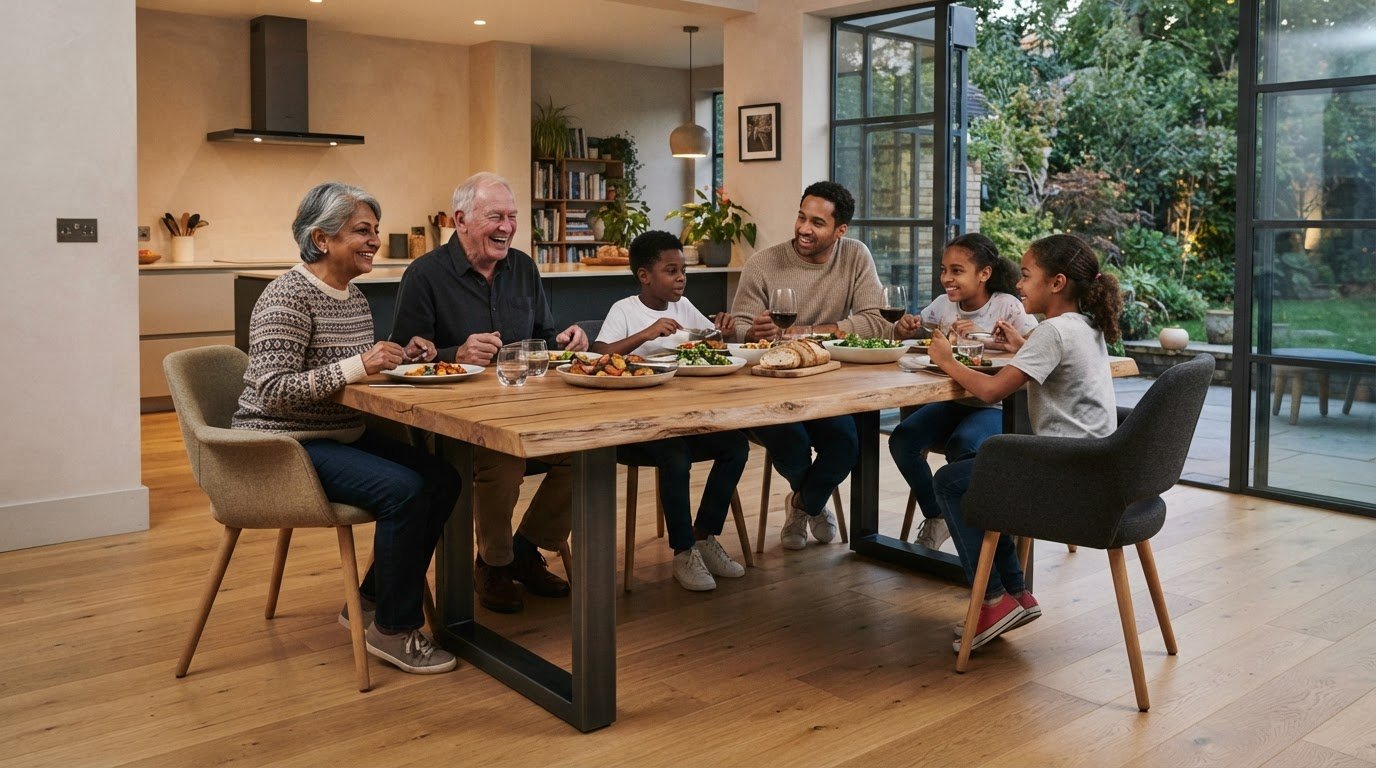
What if a dining table’s base mattered as much as its top? A u-frame dining table makes its support part of the room’s character. The squared U shape gives the table a distinct outline and can affect where chairs and benches fit. For a table to work well, though, its design also needs to suit the space and the way you use it.
It’s easy to focus first on the tabletop, but the base affects the table’s appearance, legroom and relationship with nearby furniture. A good choice should feel balanced in the room and suit the meals, conversations and everyday tasks that happen around it.
This guide explains what defines a U-frame base and how it differs visually from styles such as X-frame tables. It also covers how to assess the shape for different room layouts, what to measure before choosing, and which product details to confirm when considering a handcrafted table. The Mensa Table Company makes a U-Frame Dining Table as part of its handcrafted dining-table range. Use the checks below to decide whether this shape could work in your home.
Key Takeaways
- Recognise the U-shaped support and check the specific frame design rather than assuming every base is configured alike.
- Assess how a u-frame dining table may affect seating and legroom by comparing the frame position with the tabletop and chair sizes.
- Picture the table in your room by matching the layout to its everyday use and checking the space available.
- Measure the room, plan chair positions and compare table shapes before deciding which design suits your needs.
- Before considering a handcrafted U-Frame Dining Table, confirm its available dimensions, materials, finishes and frame details.
What Is a U-Frame Dining Table? Understand Its Defining Shape
A U-frame dining table is supported by a base shaped like the letter U. In simple terms, the support has two upright sections joined by a horizontal section, creating a recognisable open outline beneath the tabletop.
The shape gives the base a clear presence, but it doesn’t define the table’s entire look. U-frame describes the support, not the tabletop material, finish, dimensions or interior style it will suit. To assess a particular design, look closely at its product imagery and confirm its construction details rather than assuming every U-frame is built in the same way.
How to Recognise the U-Frame Table Base
Look for the U-shaped outline, then note where its upright sections meet the floor and connect beneath the tabletop. The orientation and construction can vary, so treat the illustration below as a simple visual guide, not a technical drawing of a specific table.
Illustrative outline, not to scale:
Tabletop
│ │
└────────┘
The drawing shows the basic U profile. A product image can help you see how that shape appears in a finished design and how the base sits in relation to the top. For historical context, a trestle table uses supports connected by a stretcher, offering a point of comparison for how table bases can be formed.
What the Frame Shape Does, and Does Not, Tell You
The frame tells you about the table’s silhouette. It doesn’t, by itself, reveal the frame or tabletop materials, the finish, or how much room chairs will have. Check those details for the specific table you’re considering.
Appearance and practical fit are related, but they’re separate considerations. A base may look open from one angle yet still affect where chairs can sit or how comfortably people can tuck in. Compare the support positions with the tabletop dimensions, chair sizes and seating plan. Stability also depends on the construction as a whole, not simply the U-shaped outline.
The Mensa Table Company offers a handcrafted U-Frame Dining Table within its dining-table range. Before deciding whether it suits your home, check the product imagery and confirm the available frame details, materials, finishes and dimensions. This helps you assess the actual table rather than relying on what its name suggests.
How U-Frame Legs Affect Seating, Legroom, and Everyday Use
The outline of a U-frame may be distinctive, but day-to-day comfort depends on how the base sits beneath the tabletop. Its position, the table’s dimensions, chair sizes and seating arrangement all affect whether people can settle in easily or find their knees close to a support.
Start by checking the space around the table and how chairs move in the room. There isn’t one clearance figure that suits every room and chair, so assess the arrangement you’ll actually use instead of relying on the frame shape alone.
Will U-Frame Legs Get in the Way of Chairs?
It depends on the specific base layout. Supports near the ends may affect where end chairs can be pulled in, while the frame’s position along the sides can influence how easily chairs tuck beneath the table. Neither outcome applies to every U-frame design.
Compare the frame position with the width and depth of your chairs. If possible, mark the table footprint and support locations on the floor, then move the chairs through their usual positions. For a particular u-frame dining table, confirm any product-specific seating or clearance details rather than trying to infer them from a photograph.
Balancing a Distinctive Base with Daily Comfort
A sculptural base can make the dining area a focal point. Think, too, about how you’ll use the table after the first impression: it might host family meals, double as a place to work or need to accommodate different chairs and guests. A design that appeals visually should also let people sit down, get up and move around without constant adjustments.
Try this simple check in your room:
- Place each chair where someone would sit, including at the ends if you plan to use them.
- Pull the chairs back as people would when sitting down, then check the space near walls and furniture.
- Notice whether the frame interrupts a preferred seating position or a regular route through the room.
- Repeat the check with the chairs you use most, since their proportions can change the fit.
These steps help you weigh visual character against your household’s routines. For the Mensa Table Company’s handcrafted U-Frame Dining Table, check the available frame details and dimensions before drawing conclusions about seating. If you have questions about how the design could fit your layout, contact the team.
U-Frame Dining Table Examples for Different Rooms and Routines
A U-frame can read as a strong architectural detail or a quieter part of the room, depending on its proportions and surroundings. The settings below are illustrative ideas, not customer projects or confirmed installations. In each case, consider how the table will be used as well as how its base looks.
A Shared Family Dining Space
Imagine a dining area where the table is used for weekday meals, homework and longer weekend conversations. A U-frame base could give the centre of the room a clear outline, while the tabletop provides a shared surface for everyday activities. Before choosing a design, map chair positions, doorways and the routes people take through the room. Check that the frame won’t conflict with the seats you expect to use most.
A Compact Dining Area or Flexible Open-Plan Room
In a smaller dining zone or an open-plan space, a defined base may help the table feel like a deliberate part of the layout. That doesn’t mean a U-frame saves space or suits every compact room. Mark the table footprint, include chairs in their pulled-out positions, then check nearby furniture and walking routes. In a flexible room, consider whether the table’s placement still works when the area is used for other routines.
These ideas can help you picture the style in everyday settings, but the best fit depends on the specific table and your room. Use this comparison to focus your checks:
| Setting | Potential benefit | Question to consider |
|---|---|---|
| Shared family dining space | A defined centre for meals and conversation | Can chairs be positioned without interrupting walkways? |
| Compact dining area | A distinct table silhouette within a smaller zone | Does the table footprint leave room to move around it? |
| Flexible open-plan room | A visual anchor between dining and other activities | Will its placement work for the room’s different uses? |
For another practical comparison, consider whether chairs or a bench suit your usual seating arrangement, and check how each would sit against the base. The Mensa Table Company’s handcrafted range includes its U-Frame Dining Table alongside other table designs. Browse the dining table range to compare available options, then confirm the dimensions and frame details of any table you’re considering.
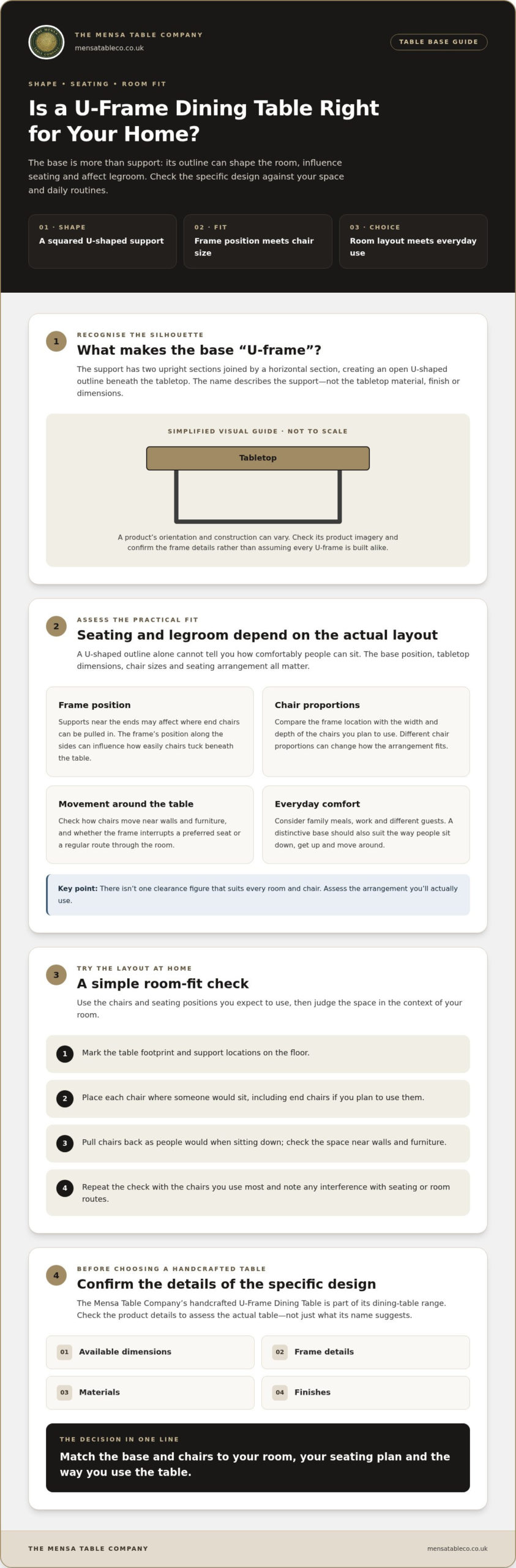
How to Decide Whether a U-Frame Dining Table Suits Your Home
A table can look right in a photograph and feel different once chairs, walkways and daily routines come into play. Use this checklist to test whether a U-frame dining table suits your space instead of choosing by appearance alone.
- 1. Measure the room and consider everyday use. Mark out the area available for the table, then consider what happens there: regular meals, occasional gatherings, work or a mix of activities. Include the routes people need to move through the room.
- 2. Check the tabletop dimensions. Compare the actual length and width with your marked footprint. Consider how many people you expect to seat regularly and whether the table’s proportions leave enough room for other furniture.
- 3. Plan chair placement. Mark where each chair will sit, including any at the ends. Allow for chairs to be pulled back as people sit down, and check that seats won’t obstruct doors, walkways or one another.
- 4. Check the frame clearance. Find out where the U-frame supports sit in relation to the tabletop edges and planned seats. Confirm the specific frame dimensions and construction instead of assuming the outline alone tells you how much room chairs will have.
- 5. Consider the visual balance. Think about how the base’s shape and visual weight will sit alongside your chairs, lighting and other furniture. Decide whether you want the table to make a strong statement or contribute more quietly to the room.
- 6. Confirm the product details. Ask the maker which dimensions, materials and finishes are available for the table you’re considering, along with relevant construction details. Don’t assume a material or finish from a general description or another table in the range.
Match the Base, Tabletop and Room’s Character
Picture the table from across the room, then from the seat where you’ll spend the most time. Does the base feel balanced beneath the top? Does its outline sit comfortably with the surrounding shapes? A bold frame might bring definition to a simple dining area. In a room with several strong features, you may prefer a more restrained arrangement. These are questions of proportion and personal taste, not rules about which interior style a U-frame belongs to.
Material matters too, but confirm the available choices for the specific table with the maker. The Mensa Table Company offers a handcrafted U-Frame Dining Table, but its materials, finishes and dimensions shouldn’t be assumed. If you have measurements or questions about the construction, contact the team with your table enquiry before making your decision.
Explore the Handcrafted U-Frame Dining Table and Plan Your Next Step
A table becomes part of a home through more than its outline. It needs to fit the room, work with the chairs you use and suit the meals and conversations that gather around it. The Mensa Table Company makes a handcrafted U-Frame Dining Table as part of its dining-table range. Consider this specific design against your everyday needs and the measurements of your space.
What to Ask Before Choosing a U-Frame Table
Clarify the details of the particular table rather than relying on its name or a general description. Have your room measurements and seating plan to hand so you can compare the answers with your intended layout.
- Which tabletop dimensions are available, and how are they measured?
- What materials and finishes are currently offered for this table?
- How is the frame constructed, and where are its supports positioned beneath the tabletop?
- What product details, availability and purchasing information should you confirm before proceeding?
These questions help separate confirmed specifications from assumptions. A photo, for example, can show the base’s appearance but may not make its exact position in relation to the tabletop edges or planned chairs clear. Ask the maker to confirm those details before judging fit and clearance.
From Design Inspiration to a Considered Choice
Bring your decision back to four checks: the table’s footprint in your room, how your chairs will fit around it, the visual balance of the base and top, and the product specifications confirmed by the maker. If those checks align with your home and daily routines, you’ll have a clearer basis for choosing.
Handcrafted production is the Mensa Table Company’s approach, and its U-Frame Dining Table is one of several designs. Browse the dining-table range to compare available styles. For the U-frame model, confirm its current dimensions, materials, finishes, frame construction and purchasing details directly with the company rather than assuming they’re the same as those of another design.
Once you’ve gathered your measurements and questions, contact the company to discuss the table details that matter to your decision. Careful checking can help you choose a piece that feels considered in the room and works for the moments shared around it.
Choose a Table That Feels Right at Home
A u-frame dining table is defined by its base, but whether it suits your home depends on more than its distinctive outline. Consider how the supports relate to chair positions, how much room people need to move around the table, and whether its visual character feels at ease with the rest of your space.
Measure the intended footprint and picture the table in use, from everyday meals to occasions when everyone gathers. Then confirm the specific table’s dimensions, materials, finishes and frame construction rather than relying on assumptions about the design.
The Mensa Table Company specialises in handcrafted furniture and offers a U-Frame Dining Table in its range. If you’d like to clarify details as you consider whether it’s right for your room, Ask us about our U-Frame Dining Table.
With careful measuring and the right product information, you can choose a table that brings considered design and a welcoming place to share time together.
Frequently Asked Questions
What is a U-frame dining table?
A U-frame dining table is supported by a base with a U-shaped outline. Typically, it has two upright supports joined by a horizontal section, although the arrangement and construction can vary between designs. The name describes the base, not the tabletop material, finish or overall interior style. Check the specific table’s product details and imagery to understand how its frame is made and positioned.
Are U-frame dining tables comfortable to sit at?
A U-frame dining table can be comfortable, but the base shape alone can’t guarantee that. Comfort depends on the frame’s position, tabletop dimensions, chair size and where each person sits. Consider your usual seating arrangement and whether guests can sit down, tuck in and move their chairs without the supports getting in the way. If possible, compare your chairs with the table’s confirmed dimensions and frame layout.
Do U-frame dining table legs get in the way of chairs?
They may, depending on where the supports sit in relation to the seats. A frame close to a table end could affect an end chair, while its position along the sides may influence how chairs fit beneath the tabletop. Designs differ, so don’t assume every U-frame provides the same clearance. Check the particular table’s frame layout and dimensions against your chair measurements and intended seating positions.
How do I choose the right size U-frame dining table?
Start by measuring the space available, then consider how many people you need to seat regularly and how you’ll use the table. Check the tabletop dimensions and mark its footprint on the floor. Include chairs in their pulled-out positions, as well as the walkways around them. Before deciding, confirm the table’s actual dimensions and frame position so you can judge the fit in your room.
Can a U-frame dining table work in a small dining room?
It can work in a small dining room if the specific table, chairs and surrounding routes fit comfortably, but the U-frame shape doesn’t automatically save space. Mark the table footprint, then allow for chairs to move back and people to pass through. Consider doors, nearby furniture and the room’s other uses, too. Comparing your floor layout with the table’s confirmed dimensions can reveal potential pinch points.
What should I ask a maker before buying a U-frame dining table?
Ask which tabletop dimensions, materials and finishes are available, and how the frame is constructed and positioned beneath the top. Confirm the details that affect your room, including measurements relevant to chair placement and clearance. You can also ask about current availability, lead times and other purchasing details rather than assuming them. The Mensa Table Company makes a U-Frame Dining Table as part of its handcrafted dining-table range.

Leave a Reply