
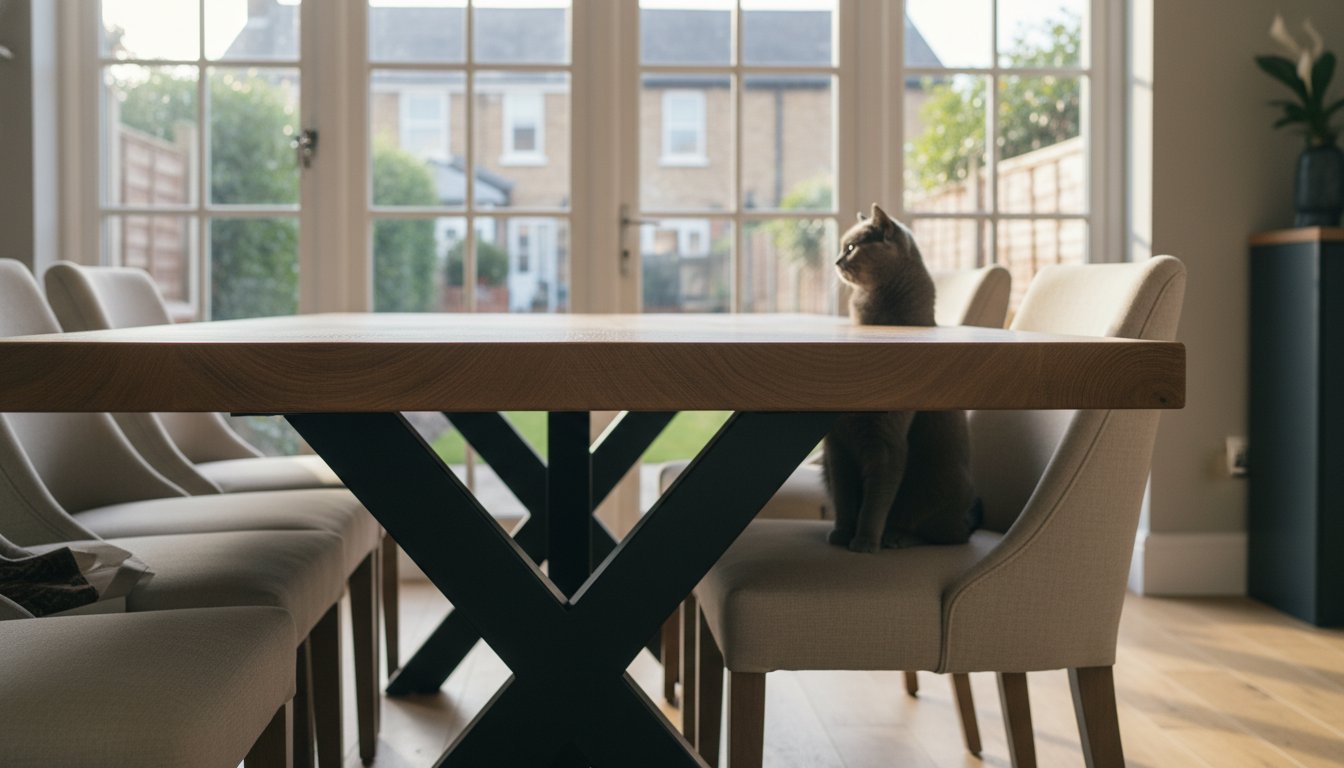
Did you know that 16% of cat owners recently reported their most expensive household mishap involved replacing or repairing furniture? It’s a quiet heartbreak to watch the sharp claws of a beloved pet turn a cherished family heirloom into a shredded mess. Finding a truly scratch resistant dining table for cats often feels like a choice between a home you love and a pet you adore. You shouldn’t have to settle for ugly plastic guards or cold, industrial materials just to keep your living space intact.
We believe that a dining table is more than just a surface; it’s the warm, wooden heart of your home where stories are shared and memories are made. This guide will show you how to choose a handcrafted centerpiece that balances artisanal beauty with the rugged durability needed for a pet-centric household. We’ll explore the natural resilience of specific hardwoods, the importance of repairable finishes, and how a thoughtfully designed table can withstand the test of time and paws alike.
Key Takeaways
- Understand the biological reasons cats target furniture and why mass-produced soft pieces are particularly vulnerable to their claws.
- Learn how to use the Janka Hardness Scale to select a scratch resistant dining table for cats by choosing dense, durable hardwoods.
- Discover why natural oil finishes are superior to hard lacquers because they allow for simple, seamless repairs of surface marks at home.
- Explore how industrial designs like the Spider Leg or X-Frame use metal bases to remove traditional vertical scratching surfaces.
- See how manual production and expert timber selection create a centerpiece that stands up to the realities of life with pets.
Understanding Why Cats Scratch and How It Affects Your Furniture
Cats don’t view your home as a curated showroom. To them, the living space is a landscape of textures, heights, and sensory markers. Scratching is a deeply ingrained biological drive, essential for shedding old nail sheaths and marking territory through scent glands in their paws. When we look at a table, we see a beautiful centerpiece; a cat sees a sturdy, vertical opportunity to claim their space. Understanding this instinct is the first step toward choosing a home for both your family and your pets.
There is a distinct difference between a light surface scuff and deep structural gouging. Mass-produced furniture often relies on soft cores like MDF or particle board. These materials lack the density to resist a sharp claw, leading to shredded edges that are impossible to repair once the outer layer is breached. A scratch resistant dining table for cats isn’t a magical force field, but rather a choice of material that prioritizes density and a finish that doesn’t flake or peel under pressure. When selecting these materials, we often refer to the Janka Hardness Scale to determine which species can best withstand the physical pressure of a domestic environment.
The Psychology of the Scratch
Verticality is the primary reason table legs are such frequent targets. A cat wants to stretch its entire body while digging in, using the weight of the furniture as an anchor. The tactile response of the wood grain also plays a role. If the wood is too soft, the claw sinks in easily, providing a satisfying “grip” that encourages repeat behavior. We find that high-traffic zones usually include the corners of the tabletop and the lower third of the legs where the cat can gain the most leverage for a full-body stretch.
Mass-Produced vs. Handcrafted Durability
Most high-street furniture uses a thin veneer, which is essentially a paper-thin layer of wood glued over a pulp base. Once a cat breaks that surface, the piece is effectively ruined because there is nothing but compressed dust underneath. In our workshop, we focus on solid timber dining tables because they offer a “sand-out” insurance policy. If a persistent feline manages to mark the wood, you have the physical depth to gently smooth the surface and re-apply a natural finish. Solid timber is the only viable choice for long-term cat owners because it allows the furniture to be restored and maintained rather than being replaced at the first sign of a claw mark.
Selecting the Toughest Timbers: The Janka Scale for Pet Owners
Selecting the right material for your home is a balance between soul and strength. When we talk about finding a scratch resistant dining table for cats, we often turn to the Janka Hardness Scale. This industry standard measures the force required to embed a small steel ball halfway into a piece of wood. It provides a clear, data driven look at how different species will react to the daily pressure of life. While softwoods like Swedish Pine offer a rustic, warm charm, they sit lower on this scale. Their fibers are more pliable, meaning a determined cat can leave a lasting impression much easier than they could on a denser hardwood.
Density isn’t just about resisting the initial mark. It’s about how the wood grain carries those marks over time. A tighter grain structure, found in high quality hardwoods, doesn’t just resist penetration; it also hides minor imperfections within its natural patterns. Understanding Scratching Behavior helps us realize that cats often seek out surfaces that provide a specific tactile feedback. By choosing a timber that feels “unyielding” to their claws, you often discourage the behavior before it becomes a habit. The goal is to find that sweet spot where the timber is tough enough to endure, yet remains a beautiful, tactile addition to your dining room.
The Resilience of Solid European Oak
There is a reason oak has remained a staple of the workshop for centuries. Sitting comfortably high on the hardness scale, solid European oak is incredibly dense and naturally rich in tannins. These characteristics make it difficult for claws to find a deep purchase. Its prominent, swirling grain is also a natural camouflage, ensuring that the tiny, inevitable signs of a lived in home blend seamlessly into the wood’s character rather than standing out as damage.
Black Walnut and Ash: Premium Performance
If you’re looking for a marriage of luxury and resilience, solid black walnut offers a deep, sophisticated aesthetic with a density that surprises many. It’s a wood that ages with a certain grace, developing a patina that tells the story of your home. On the other hand, European Ash is the underrated champion of the workshop. It’s exceptionally shock resistant and holds its own against impact, making it a fantastic choice for active households where the dining table is the center of all activity. Both timbers offer a superior foundation for a scratch resistant dining table for cats, though ash tends to have a more uniform, modern feel compared to the traditional weight of walnut.
If you’re unsure which timber grain would best suit your specific space and feline friends, feel free to reach out to our team for a personal recommendation.

The Secret to Longevity: Why the Finish is Your Best Defence
Many online guides suggest covering your furniture in unsightly plastic films or adhesive guards, but we believe those solutions hide the true soul of the wood. A truly scratch resistant dining table for cats relies on a finish that works in harmony with the timber rather than sitting on top of it as a brittle shell. While a thick, high-gloss lacquer might seem like a tough shield, it often becomes a cat owner’s nightmare. When a sharp claw catches a lacquered surface, it doesn’t just mark the wood; it shatters the finish. This creates white, visible cracks or peeling edges that are impossible to fix without stripping the entire table back to its raw state.
We prefer a more intentional approach using high quality natural oils. These oils don’t just sit on the surface. They penetrate deep into the fibers, nourishing the wood and creating a resilient barrier from within. This allows the table to breathe and age naturally. If a mark does occur, the “buff-out” method allows you to gently sand the specific area and re-apply a small amount of oil. Within five minutes, the blemish disappears, blending perfectly with the surrounding grain. This makes the table a living part of your home that can be maintained rather than a precious object that must be protected at all costs.
Oil vs. Lacquer: A Cat Owner’s Comparison
The choice between oil and lacquer is often a choice between longevity and temporary perfection. Lacquer is essentially a layer of plastic. It looks pristine on day one, but it’s vulnerable to the daily rituals of a curious cat. Once the seal is broken, moisture can get under the coating, leading to discoloration. In contrast, natural oils maintain the tactile connection to the timber. For those deeper gouges that might happen during a particularly active “zoomie,” a simple wax stick in a matching tone can fill the mark before you re-oil the surface. This artisanal approach ensures that a scratch resistant dining table for cats remains a beautiful focal point regardless of feline antics.
Maintaining the Protective Barrier
Texture is your greatest ally in a pet-centric household. A matte finish is far more forgiving than high-gloss alternatives because it doesn’t reflect light in a way that highlights every tiny scuff. Instead, the light is diffused across the natural ridges and valleys of the grain. Regular maintenance is a simple, rewarding ritual. Applying a fresh coat of oil every six to twelve months keeps the timber supple and prevents it from becoming brittle or prone to splintering. This steady, deliberate care preserves the heritage of the piece. Spot repairability is the ultimate goal for pet-friendly furniture because it ensures your investment remains a beautiful centerpiece for generations.
If you’re looking for a piece that balances this durability with timeless design, our range of handcrafted dining tables is built to be lived with and loved.
Design Features That Discourage Scratching
While timber density and repairable finishes provide a vital safety net, the physical architecture of your furniture plays an equally significant role in managing feline behavior. A scratch resistant dining table for cats isn’t just a surface; it’s a structure that can either invite or discourage a cat’s natural instincts. Most traditional tables feature four vertical wooden legs, which essentially act as perfect scratching posts. By rethinking the geometry of the base, we can remove the temptation entirely. When a cat can’t find a comfortable, vertical wooden surface to grip, they’re far more likely to return to their designated scratching posts.
Metal legs are often described as the “cheat code” for cat owners. Smooth, powder coated steel offers no purchase for a claw and lacks the organic, fibrous texture that cats find so satisfying. This contrast in texture is a powerful deterrent. While wood feels like something that can be marked and claimed, metal feels unyielding and indifferent. Furthermore, the height and overhang of a handcrafted tabletop can limit a cat’s leverage. If the table is designed with a significant overhang, it becomes much harder for a cat to reach the top edge from the floor, reducing the chance of them using the table as a climbing frame.
The Rise of the Industrial Style
Industrial design has evolved from a workshop necessity into a sophisticated home aesthetic that happens to be incredibly pet-friendly. Our Spider Leg Dining Table is a prime example of how form meets function. The intricate, angled steel base provides immense stability while offering almost no vertical surface for a cat to grip. Unlike a thick wooden pillar, these slender steel frames don’t provide the leverage a cat needs for a full body stretch. This makes the industrial style a virtually indestructible choice for anyone seeking a scratch resistant dining table for cats.
Strategic Seating: Benches vs. Chairs
The surrounding furniture often acts as a ladder, giving cats easy access to the tabletop and providing even more vertical surfaces to mark. Switching to matching benches is a clever way to minimize this “ladder effect.” Benches can be tucked completely under the table when not in use, removing the backs of chairs that often serve as climbing frames. From a practical perspective, solid wood benches are also much easier to maintain. You can simply wipe away dander and fur, avoiding the trapped hair and shredded fabric common with upholstered seating. This small change in seating can significantly alter how your cat interacts with the dining area.
If you’re designing a space for a particularly adventurous cat, we can help you choose the right frame geometry for your home. Get in touch with us to discuss which leg style will best suit your lifestyle.
The Mensa Approach: Handcrafted Furniture Built for Real Life
At The Mensa Table Company, our philosophy is rooted in the belief that a home’s centerpiece shouldn’t be a fragile museum piece. We see the dining table as the backdrop for shared experiences, where the rhythmic purr of a cat is part of the daily ritual. When we create a scratch resistant dining table for cats, we aren’t just looking for industrial hardness. We’re seeking a material that carries a soul and a history, one that can handle the occasional mark while continuing to tell your family’s story. This approach transforms a simple purchase into a meaningful investment in your home’s character.
Our manual production process begins long before a saw touches the timber. We hand-select every plank, looking for specific grain patterns that offer the best natural resilience and visual depth. This deliberate, steady pace allows us to respect the natural origin of the material. Unlike mass-produced furniture that often ends up in a landfill after a few years of pet-related wear, our tables are designed for a lifetime of use. They develop a beautiful patina over time, turning those minor signs of life into a badge of heritage rather than a reason for replacement.
Craftsmanship You Can Trust
Knowing the history of your timber is vital for a piece meant to last generations. Our tight-knit team of craftsmen works in a localized workshop, ensuring every edge and corner is finished with the utmost care. We pay particular attention to the lower sections of the frame and the density of the edges where a cat might be tempted to mark territory. By finishing these sections to a professional, artisanal standard, we ensure the wood is as resistant to wear as possible. This commitment to national UK quality is something mass-produced brands simply can’t replicate.
Your Next Steps to a Feline-Friendly Home
Every home has its own unique rhythm and space requirements. Beyond our standard dining sets, we can consult on custom needs like handcrafted breakfast bars or bespoke sizes for tighter corners. Choosing the right combination of timber species and frame style is the final step in creating a space that welcomes your pets without sacrificing your style. Whether you prefer the industrial weight of a steel frame or the traditional warmth of solid oak, we’re here to guide you through the creative process to find a truly scratch resistant dining table for cats.
Explore our full range of handcrafted dining tables to find the perfect centerpiece for your pet-centric home.
Creating a Shared Sanctuary for You and Your Pet
Choosing the right furniture is a journey toward finding harmony in your home. We’ve explored how the natural density of solid European hardwoods and the strategic geometry of industrial frame designs can redirect feline instincts. By prioritizing repairable natural oil finishes over brittle, cracking lacquers, you ensure your dining table remains a beautiful focal point rather than a source of frustration. A scratch resistant dining table for cats is more than just a durable surface; it’s an investment in a space where memories are made without fear of damage.
Every piece we produce is handcrafted by UK artisans who understand that a home must be lived in. We believe in using only the finest solid European hardwoods that celebrate the passage of time and the presence of our beloved pets. Your home deserves a centerpiece that welcomes every member of the family, paws and all. It’s time to stop settling for temporary fixes and embrace a handcrafted legacy that grows more beautiful with age.
Discover the durability of The Mensa Dining Table and let us help you select a species and style that truly stands the test of time. We look forward to crafting something special for your home.
Frequently Asked Questions
Which wood is most resistant to cat scratches?
Dense hardwoods like European Oak and Ash are the most naturally resistant to feline claws due to their high Janka hardness ratings. These timbers possess a tight grain structure that makes it difficult for sharp nails to penetrate the surface. While no wood is entirely scratch-proof, these species provide a sturdy foundation that withstands daily life much better than softwoods like pine or cedar.
Can I repair a scratch on a solid wood table myself?
Yes, one of the greatest benefits of a solid wood table is that it can be easily repaired at home with minimal tools. If your cat leaves a mark, you can gently sand the affected area with fine-grit sandpaper and re-apply a small amount of natural furniture oil. This process blends the repair seamlessly into the surrounding grain, a feat that is impossible with veneered or mass-produced furniture.
Is an oiled finish better than a lacquered one for pets?
An oiled finish is the superior choice for maintaining a scratch resistant dining table for cats because it allows for localized spot repairs. Unlike lacquer, which forms a brittle plastic-like shell that cracks and peels when damaged, oil penetrates deep into the timber fibers. This keeps the wood supple and resilient, ensuring that minor scuffs can be buffed out in minutes rather than requiring a full professional restoration.
Do cats like to scratch oak or walnut more?
Cats generally prefer softer, more fibrous surfaces where they can easily sink their claws to mark territory. Both European Oak and Black Walnut are dense enough to be unappealing to most cats, as they don’t provide the satisfying “grip” found in softer materials. Between the two, oak’s prominent grain pattern is particularly effective at camouflaging any tiny marks that might occur over years of use.
Are metal table legs better for households with cats?
Metal legs are an excellent choice for cat owners because they offer no purchase for claws and are completely immune to scratching. Designs like our Spider Leg or X-Frame tables utilize powder-coated steel, which lacks the organic scent and texture that often draws a cat’s attention. By removing the traditional vertical wooden leg, you effectively eliminate one of the most common targets for feline scratching behavior.
How can I discourage my cat from jumping on the dining table?
Providing alternative vertical spaces like cat trees or wall shelves is the most effective way to keep paws off your furniture. You can also influence their behavior through furniture design by choosing matching benches that tuck completely under the table. This removes the “ladder effect” created by chair backs, making the tabletop less accessible and less enticing as a lookout point.
Does the wood grain pattern help hide claw marks?
Yes, a vibrant and varied grain pattern acts as a natural camouflage for the minor imperfections of a lived-in home. Timbers with a lot of character, such as oak, hide small indentations far better than smooth, uniform surfaces like painted MDF. The swirling patterns and natural color variations ensure that any slight marks become part of the table’s unique patina rather than standing out as damage.
Should I use a tablecloth to protect my handmade table from cats?
We generally advise against using tablecloths because the dangling fabric can actually entice cats to jump up and play. A loose cloth provides a tempting target for snagging and climbing, which can lead to more accidents than it prevents. It is much better to trust in the durability of a well-finished solid wood surface that is designed to be a functional, beautiful part of your daily life.

Leave a Reply