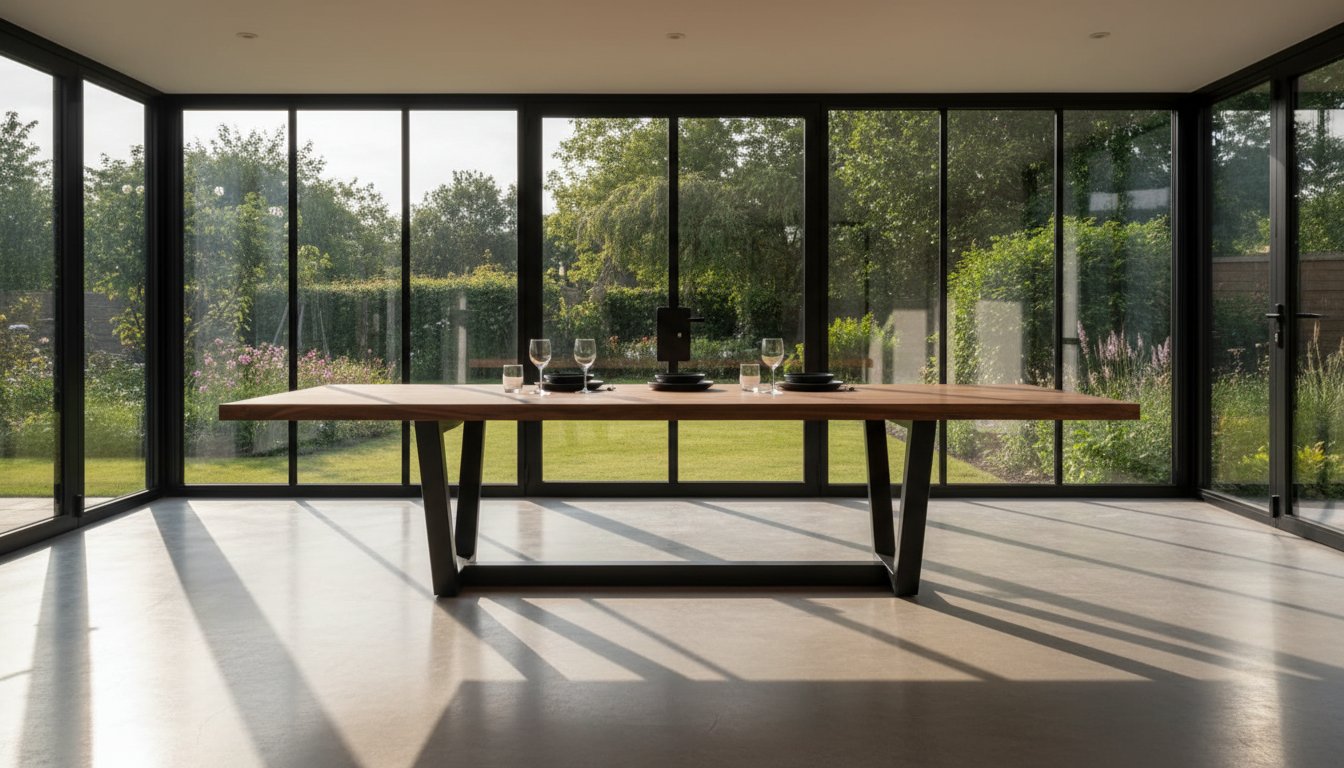
What if your conservatory’s greatest challenge, the relentless flood of natural light and shifting temperatures, became the very reason your furniture looked more beautiful with every passing year? It’s a common fear that the heat will cause expensive wood to warp or split, leaving many to settle for mass-produced rattan that feels more like a garden afterthought than a permanent piece of your home. We understand that frustration. You want a space that feels grounded and intentional, not a collection of flimsy furniture that lacks a sense of history.
We believe choosing a dining table for conservatory living should be an investment in heritage, not a gamble against the elements. In this guide, you’ll discover how to select handcrafted timber that meets the rigorous 2026 UK quality standards for wood preservation, ensuring your table remains a stunning, durable centrepiece for generations of family gatherings. We’ll walk you through the nuances of timber selection, the rise of biophilic design, and how to find the perfect frame, from the sculptural Mensa to the classic A-Frame, to fit your unique layout and create a space that feels like a permanent piece of architecture.
Key Takeaways
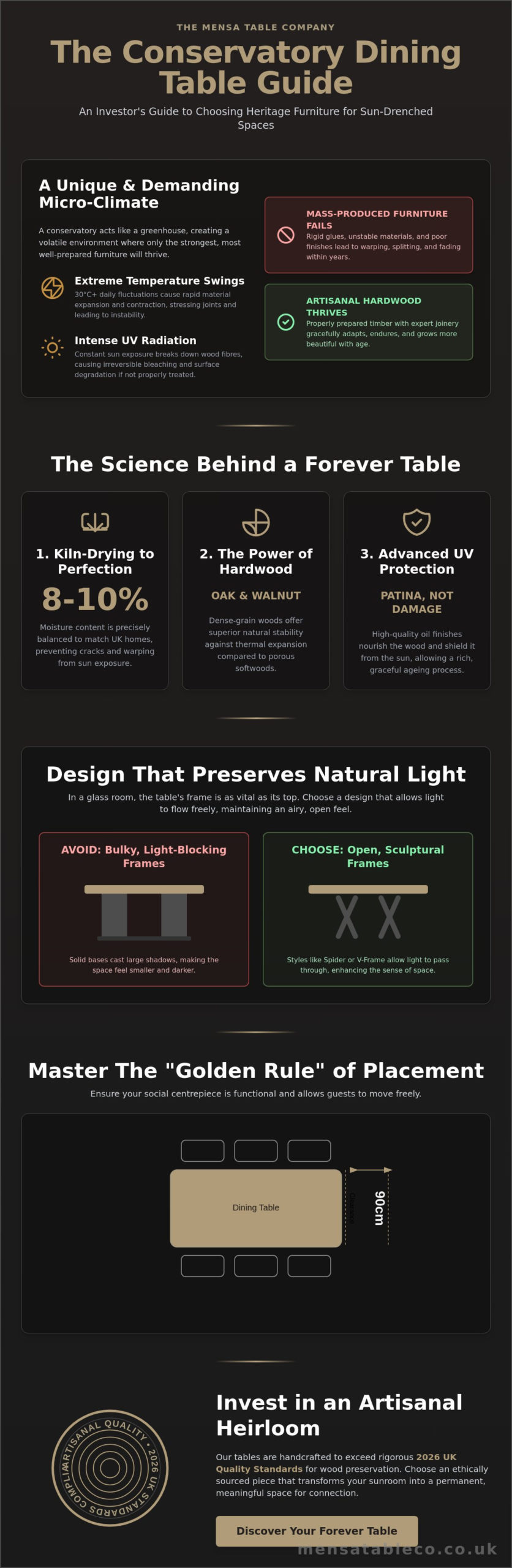
- Understand why kiln-dried hardwoods like oak and walnut are essential for maintaining structural integrity against the intense UV radiation found in glass-walled rooms.
- Discover how to select a dining table for conservatory spaces that preserves natural light flow by pairing solid timber tops with open frame designs like our Spider or V-Frame styles.
- Master the “Golden Rule” of spatial planning to ensure your social centrepiece allows for a comfortable 90cm clearance for guests to move freely throughout the room.
- Explore the lasting value of choosing an artisanal, ethically sourced piece that transforms a transitional sunroom into a permanent, meaningful site for human connection.
Understanding the Conservatory Environment: More Than Just a Sunroom
A conservatory is a unique bridge between the sanctuary of your home and the wildness of the garden. While it offers a stunning backdrop for a morning coffee or a late dinner, it’s an environment that demands respect. Unlike a standard dining room, this space acts as a solar collector. To understand why your furniture choice matters, we first have to look at what is a conservatory in terms of its architecture. Essentially, it’s a high-glazing environment that creates a micro-climate that is significantly more volatile than the rest of your house.
Standard indoor furniture is designed for the static, climate-controlled heart of a home. When you place a generic dining table for conservatory use, you’re exposing it to conditions it wasn’t built to handle. The “greenhouse effect” traps thermal energy, leading to rapid temperature spikes that can stress the structural integrity of lesser materials. This is why mass-produced items often fail; they lack the inherent resilience required to thrive in such a dynamic space. Choosing the right material is about more than aesthetics; it’s about structural survival—a principle that applies to everything from your table to your door hardware, where you might explore Euro Cylinders from Door-Tech Services to ensure your space remains secure and functional.
The Challenge of Temperature Fluctuations
On a bright spring day, it’s common to see 30-degree temperature swings between a chilly dawn and a sun-soaked afternoon. These shifts cause materials to expand and contract at an accelerated rate. Timber is a living, breathing material. It responds to the humidity in the air by swelling and shrinking. Mass-produced flat-pack furniture often relies on rigid glues and cam-locks that can’t accommodate this natural movement. Over time, these joints simply fail, leading to a table that feels unstable or begins to pull apart at the seams. Our artisanal approach focuses on joinery that respects this movement, ensuring longevity despite the weather.
UV Exposure and Natural Light
Sunlight is both the greatest gift and the biggest threat to your furniture. Constant UV radiation acts on natural wood fibres, breaking down the pigments that give timber its rich, deep hue. This can lead to bleaching, where once-vibrant walnut or oak turns a ghost-like grey. It’s vital to distinguish between a “patina,” which is the graceful ageing of a well-crafted piece, and “damage,” which is the structural breakdown of the wood’s surface. UV degradation is a manageable factor through proper finishing. By selecting a dining table for conservatory life that has been treated with high-quality oils, you allow the wood to age with character rather than succumb to the sun.
The Science of Timber in Sun-Drenched Spaces
Timber is an organic archive of its environment. When you bring a piece of the forest into a high-glazing room, the wood’s biological history meets the modern challenges of 2026 climate standards. Selecting a dining table for conservatory use isn’t merely about picking a style; it’s about understanding the cellular response of the wood to intense light. Hardwoods like oak and walnut are the champions of these sun-soaked spaces. Their high grain density acts as a natural buffer against thermal expansion. Unlike softwoods, which have larger, more porous cells that gulp down humidity and swell rapidly, hardwoods move with a slow, deliberate grace. This stability is why we prioritise these species in our workshop. They possess the structural memory to return to their original shape even after a day of intense heat.
Recent updates to the UK’s Benchmark Quality Approval Scheme in May 2026 have raised the bar for how we treat and prepare wood for domestic use. These new standards focus on the depth of preservative penetration, ensuring that timber used in demanding environments like sunrooms is truly fit for purpose. We align our artisanal methods with these rigorous benchmarks, ensuring every plank we select is prepared to withstand the specific atmospheric pressures of a glass-walled room.
Kiln-Drying: The Secret to Stability
The journey of a stable table begins long before the first cut. Proper kiln-drying is the foundation of every piece we create. We reduce the moisture content of our timber to a precise 8-10%, which aligns with the average atmospheric conditions of a modern UK home. This careful reduction prevents “checking,” those small, unsightly cracks that appear when wood dries too quickly in the sun. While factory-line furniture often uses wood dried to inconsistent levels, we monitor our timber with a specialist’s eye. This ensures the internal tension of the wood is balanced. When the sun beats down through your conservatory glass, a properly dried table won’t split or warp; it will stand firm as a reliable site for your family’s daily rituals.
Protective Finishes and UV Inhibitors
A table’s finish is its first line of defence against the elements. In the past, simple waxes were often enough for indoor use, but the intense UV exposure of a sunroom requires a more sophisticated approach. We utilise modern, UV-stable lacquers and high-quality oils that act as a barrier against both moisture and light. These finishes contain inhibitors that slow down the degradation of natural pigments, helping your oak or walnut retain its warmth. For ongoing care, a light re-treatment every twelve to eighteen months keeps the barrier intact. This manual touch ensures your investment ages into a beautiful heirloom. Our collection of handcrafted dining tables is designed to embody this marriage of science and soul, providing a durable focal point for your home.
Design Styles That Suit Glass-Walled Spaces
Designing a space wrapped in glass requires a delicate balance of form and transparency. When you select a dining table for conservatory use, you aren’t just choosing a surface; you’re placing a sculptural element into a field of light. A heavy, closed-off design can often feel like a barricade, disrupting the seamless transition from your interior to the garden beyond. We look for silhouettes that invite the sun to pass through, maintaining that airy, expansive feel that makes a conservatory so special. It’s about ensuring the furniture feels like an extension of the architecture rather than an intrusion upon it.
The choice between industrial metal frames and solid wood legs often dictates the room’s entire personality. Steel frames, such as our Trapezium or V-Frame designs, offer a slender but incredibly strong foundation. These materials reflect the architectural lines of modern conservatory frames, creating a sense of visual cohesion. In contrast, solid timber legs like those on our A-Frame Dining Table bring a grounded, tactile warmth that softens the abundance of glass. To keep smaller spaces feeling open, we often suggest pairing your table with matching benches. Unlike chairs with high backs, benches slide neatly underneath the table top when not in use. This preserves the sightlines to the lawn and sky, keeping the focus on the natural world outside.
The Spider Leg: Elegance Meets Engineering
The Spider Leg Dining Table is a testament to the harmony of elegance and engineering. Its central base is particularly effective in circular or square conservatories where floor space is often at a premium. By drawing the support to the middle, it maximises legroom and allows for a more flexible seating arrangement in tight corners. It’s a design that feels light on its feet, ensuring the social centrepiece of your home never feels cumbersome or intrusive. The way the light catches the angles of the steel base creates a changing display of shadows throughout the day, adding a quiet, artistic energy to your meals.
X-Frame and U-Frame: The Industrial Rustic Look
For those seeking a bolder statement, the X-Frame and U-Frame Dining Tables offer a striking industrial rustic aesthetic. These frames provide exceptional stability for high-traffic family rooms where the table serves as a hub for everything from morning crafts to evening celebrations. When we pair these heavy steel bases with live-edge walnut or oak tops, the result is a piece that feels truly organic. It bridges the gap between the structured garden and the comforts of home, creating a dining table for conservatory life that feels both permanent and deeply connected to its origins. These designs celebrate the raw beauty of the materials, making every knot and grain pattern a topic of conversation.
Practical Considerations: Size, Seating, and Placement
Finding the right fit for your conservatory is a lesson in spatial geometry. These rooms often feature unique footprints, from narrow lean-tos to expansive octagonal extensions. When you’re choosing a dining table for conservatory use, the first step is to measure the floor space, leaving a generous margin for life to happen around the edges. We always recommend the “Golden Rule” of 90cm clearance between the table edge and the nearest wall or glass pane. This isn’t just about comfort; it’s about safety. In a room made of glass, you want to ensure guests can move freely without the risk of bumping into the structure. Balancing your desired seating capacity with the need for light and air circulation ensures the room remains a sanctuary rather than a cluttered corridor.
The physical position of your table dictates its long-term health. While it’s tempting to push a table into a corner to save space, central placement is far better for timber. This allows air to circulate evenly around all sides of the wood, preventing localized heat stress that can lead to warping. Placing solid wood directly against a radiator or flush against a sun-baked pane is a recipe for trouble. To find the perfect dimensions for your space, you can view our range of handcrafted dining tables and matching benches.
Seating Solutions: Chairs vs. Benches
We often find that matching benches are the unsung heroes of the conservatory. Because they tuck neatly under the table top when not in use, they preserve the visual flow of the room and keep the view of the garden unobstructed. Benches also encourage a more social, relaxed dining atmosphere, allowing children and adults to squeeze in together during busy family gatherings. If you prefer chairs, look for designs with open backs to let light pass through. It’s also wise to choose materials that won’t fade or crack under the intense heat of a summer afternoon.
Placement and Airflow
Maintaining good ventilation is essential, especially during the peak of July. A 10cm gap from glass can significantly reduce heat absorption, protecting the grain from the most intense solar gain. This small pocket of air acts as a buffer, preventing the timber from reaching extreme temperatures that might stress the protective finish. We encourage you to think of your table as a breathing part of the room. By prioritising airflow and thoughtful placement, you ensure that the handcrafted details of your table remain as crisp and beautiful as the day they left our workshop.
Investing in Artisanal Quality: The Mensa Table Difference
A dining table for conservatory living should be more than a transactional purchase; it’s a commitment to the heart of your home. In a world increasingly filled with mass-produced, temporary fixtures, we choose a different path. We believe that the objects surrounding us should possess a soul, a tactile history that resonates with the people who use them. When you commission a handcrafted piece, you’re not just buying furniture. You’re entering into a partnership with a dedicated specialist who values substance over flashy marketing. Every joint is a promise of longevity, and every hand-applied finish is a tribute to the raw beauty of the timber.
The structural integrity of a bespoke table far surpasses that of factory-line alternatives. While mass-market retailers often rely on flimsy cam-lock connectors and particle boards that crumble under the stress of heat, our tables are built using time-honoured manual techniques. We use solid, ethically sourced hardwoods that move and breathe naturally. This artisanal approach is particularly vital in 2026, as the UK government pushes toward increasing woodland cover to 16.5% by 2050. We take our environmental responsibility seriously, ensuring that the timber we use is as sustainable as it is beautiful. By choosing quality over quantity, you’re participating in a more intentional, low-carbon way of living.
A Legacy Piece for Your Home
We view the table as a site for human connection and social rituals. It’s the backdrop for Sunday roasts, the surface for late-night conversations, and the foundation for family celebrations that span generations. Because our tables are built to endure, they don’t just survive the passage of time; they thrive. They gain a unique character and a rich patina that reflects the life lived around them. Buying once and buying well is the ultimate act of sustainability. It’s an investment in an heirloom that will feel like a permanent piece of your home’s architecture, standing firm while the garden outside changes through the seasons.
The Bespoke Process
The journey from raw timber to a finished social centrepiece is a guided tour through a creative space. We work closely with you to understand the specific demands of your room, allowing for custom dimensions that fit your unique layout perfectly. Whether you require a narrow breakfast bar or a grand Spider Leg Dining Table, the process is steady, calm, and deliberate. We don’t rush the work because high-quality output requires patience. From the initial selection of the grain to the final hand-buffed oil, every step is given its due respect. We invite you to explore our signature range of handcrafted dining tables and discover how a bespoke piece can transform your conservatory into a meaningful life investment.
Transforming Your Conservatory into a Lifelong Gathering Space
Your conservatory shouldn’t be a room that’s only comfortable for half the year. By understanding the science of kiln-dried timber and the importance of air circulation, you can place a solid wood centerpiece in this sun-drenched space with total confidence. We’ve explored how artisanal designs like the Spider or X-frame maintain the flow of natural light; these choices ensure your room remains airy while the 90cm clearance rule keeps the layout functional.
Selecting a dining table for conservatory use is about more than just aesthetics. It’s about choosing a piece that’s built to withstand the unique atmospheric shifts of 2026. Every table we create is handcrafted in the UK using traditional joinery and is custom-built to your exact size specifications. We use only premium kiln-dried timber to ensure maximum stability in garden rooms. View our collection of handcrafted dining tables for your home and find the piece that will anchor your family’s rituals for generations. We look forward to helping you create a space where memories are made under the light of the sun.
Frequently Asked Questions
Will a solid wood table warp in my conservatory?
A solid wood table won’t warp if the timber has been kiln-dried to a moisture content of 8-10% before construction begins. This precise drying process balances the wood’s internal tension, allowing it to withstand the rapid temperature swings common in high-glazing rooms. We monitor our timber closely throughout the workshop process to ensure it has the structural integrity to remain flat and stable across every season.
What is the best wood for a conservatory dining table?
Dense hardwoods like European Oak and American Black Walnut are the superior choices for these sun-drenched environments. Their tight grain structure makes them naturally resistant to the thermal expansion caused by direct sunlight. These species provide a durable, heavy foundation that feels like a permanent part of your home’s architecture, unlike lighter softwoods that can react more volatilely to intense heat.
How do I protect my table from fading in direct sunlight?
You can protect your dining table for conservatory use by choosing a piece finished with UV-stable lacquers or high-quality oils. These treatments act as a barrier that slows the natural bleaching process caused by solar radiation. We recommend a simple re-treatment every twelve to eighteen months to keep this protective layer intact and maintain the wood’s rich, original pigment over the generations.
Can I use a reclaimed wood table in a sunroom?
Reclaimed wood is a beautiful option, provided the timber has been professionally dried to modern standards before being crafted. Older timber often carries a unique history and character, but it must be prepared to handle the specific humidity levels of a contemporary home. We ensure all our repurposed elements are stable and resilient before they’re transformed into a social centrepiece for your family rituals.
What size dining table fits in a standard UK conservatory?
The ideal size depends on your specific footprint, but you should always allow for at least 90cm of clearance around all sides of the table. This ensures guests can move comfortably without feeling cramped against the glass walls or furniture. For many standard UK layouts, a table measuring 180cm to 200cm in length offers a generous dining area without overwhelming the room’s essential sense of light and space.
Is a metal-legged table better for a conservatory than all-wood?
Metal-legged designs, such as our Spider Leg or V-Frame tables, are often preferred in conservatories because their slender profiles allow more natural light to flow through the room. The steel provides a sturdy, industrial contrast to the organic warmth of the timber top. While all-wood tables offer a beautiful traditional feel, metal frames help a smaller glass-walled space feel more open and expansive.
How do I clean a handcrafted wooden table in a high-light area?
Cleaning a dining table for conservatory life requires only a soft, damp cloth and a gentle touch. You should avoid harsh chemical cleaners or abrasive sprays, as these can strip away the protective UV-stable oils over time. Simply wiping the surface with the grain will remove dust and spills while preserving the tactile quality of the wood that makes handcrafted furniture such a meaningful investment.
Do I need to use a tablecloth to prevent heat damage?
You don’t need a tablecloth for daily use if your table is finished with professional-grade lacquers designed to resist ambient heat. The timber itself is a natural insulator and handles the warmth of a sunroom well. However, we always recommend using coasters or heat mats for items taken directly from the oven to prevent localized scorching on the hand-applied finish of your table.

Leave a Reply