
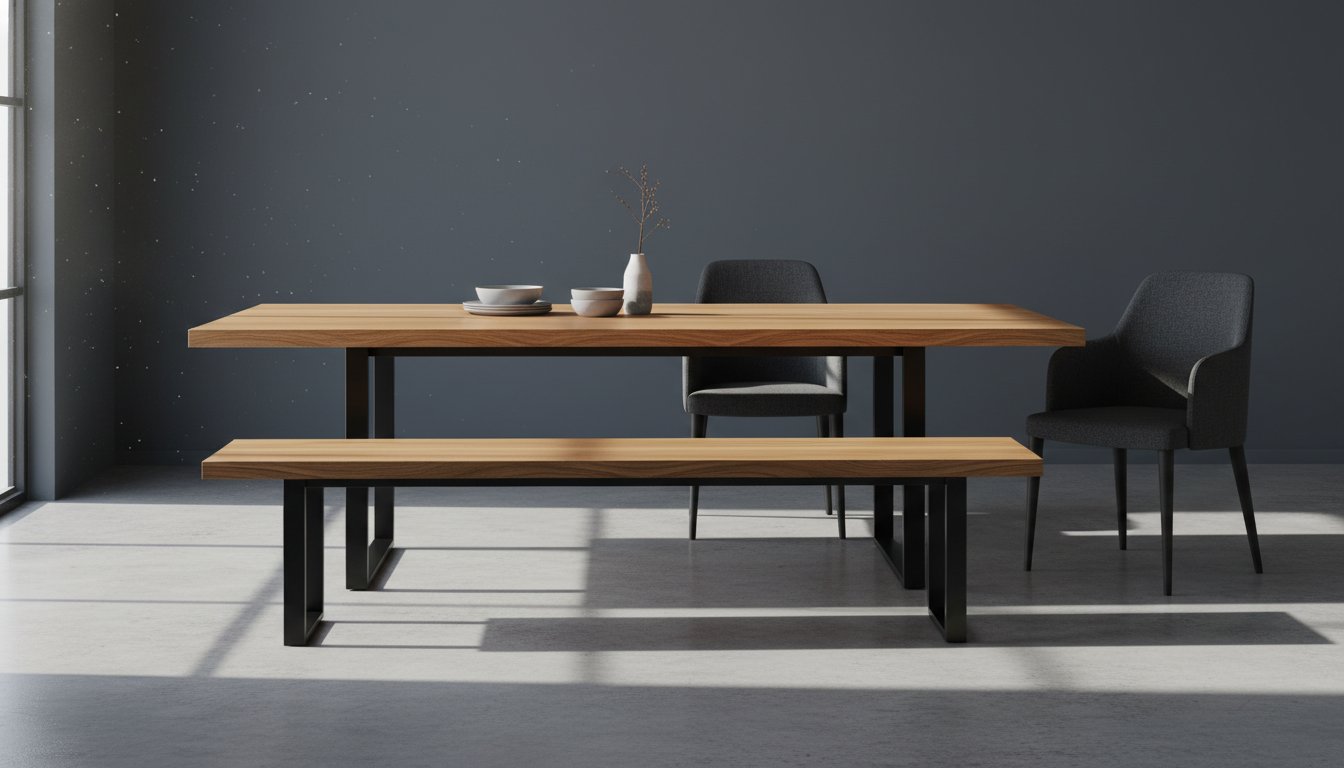
The most beautiful dining rooms in 2026 aren’t the ones with perfectly matched sets, but those that embrace the curated, lived-in feel of mixed seating. We understand the frustration of falling in love with a handcrafted bench only to realize it won’t slide between the table legs, or worse, finding your guests’ knees constantly clashing with solid oak supports. Selecting a dining table suitable for bench and chair mix requires a thoughtful look at the architecture beneath the surface. It’s about finding that delicate balance where the raw beauty of the wood meets the practical needs of a busy home.
You’re likely looking for a way to maximize your space while keeping the atmosphere warm and inviting for everyone who sits down. In this guide, you’ll discover how to choose a centerpiece that offers the informal comfort of a bench alongside the classic support of chairs without sacrificing movement or ease. We’ll walk you through the structural secrets of frames like our Mensa or Trapezium designs, showing you how the right leg placement can transform your dining area into a versatile hub for everything from quiet morning coffees to grand family celebrations.
Key Takeaways
- Understand how a curated mix of seating softens the atmosphere of your home, bridging the gap between formal dining and casual socialising.
- Identify the specific leg frames, such as the Spider or Trapezium designs, that make a dining table suitable for bench and chair mix by allowing benches to tuck in fully.
- Master the essential “20cm Rule” for seating proportions to ensure every guest enjoys comfortable knee clearance and perfectly aligned heights.
- Discover how selecting the right solid timber ensures your table becomes a durable, tactile centerpiece that handles the beautiful chaos of daily life.
- Learn why bespoke craftsmanship offers the unique opportunity to tailor your table’s dimensions to your specific seating and space requirements.
Why the Bench and Chair Mix is the Modern Home’s Secret Weapon
The way we inhabit our homes has shifted profoundly over the last few years. We’ve moved away from isolated, formal dining rooms toward “broken-plan” spaces where the kitchen, lounge, and eating areas bleed into one another. This evolution demands a centerpiece that feels fluid and adaptable. Choosing a dining table suitable for bench and chair mix isn’t just a design trend; it’s a response to how we actually live. While a uniform set of chairs can feel stiff and prescriptive, a mixed arrangement invites people to linger. It suggests that while there’s a place for everyone, the rules of the house are relaxed and welcoming.
Understanding the history and design of tables reveals that these objects have always been sites of human connection. Modern design simply takes that heritage and applies it to the multifunctional needs of a contemporary household. By blending the structured support of chairs with the communal ease of a bench, you create a space that feels curated rather than bought from a catalogue.
On a practical level, the bench and chair combination offers several distinct advantages for the daily rhythm of a home:
- Increased capacity: Benches easily accommodate three or four children, making them ideal for playdates or growing families.
- Adult comfort: Keeping chairs on one side ensures that adults have the back support they need for long, lingering dinners and deep conversation.
- Enhanced flow: Removing chair backs from one side of the table opens up sightlines toward garden views or architectural features, making the room feel more breathable.
The Aesthetic Appeal of Asymmetry
There’s a quiet beauty in things that don’t match perfectly. Breaking away from the rigid “showroom” look allows the natural character of your furniture to speak for itself. When we craft a solid European oak top, we want its unique grain and tactile presence to be the star. Pairing that organic warmth with industrial steel legs or a contrasting timber bench creates a sense of intentional, artisanal design. It’s a way to frame a garden view or a feature wall without the visual clutter of multiple chair silhouettes competing for attention.
Versatility for Modern Family Life
Life moves fast, and your furniture should keep up. A mixed seating arrangement transitions effortlessly from a quick breakfast spot to a formal dinner setting. One of the greatest advantages is the “tuck-away” factor. In high-traffic areas, being able to slide a bench completely under the table clears the path for daily movement. Investing in a dining table suitable for bench and chair mix means your furniture can grow with your family. Whether you’re hosting a boisterous birthday party or working from home, a bespoke dining table designed for this mix ensures your home remains as functional as it is beautiful.
The Anatomy of a Versatile Table: Choosing the Right Leg Frame
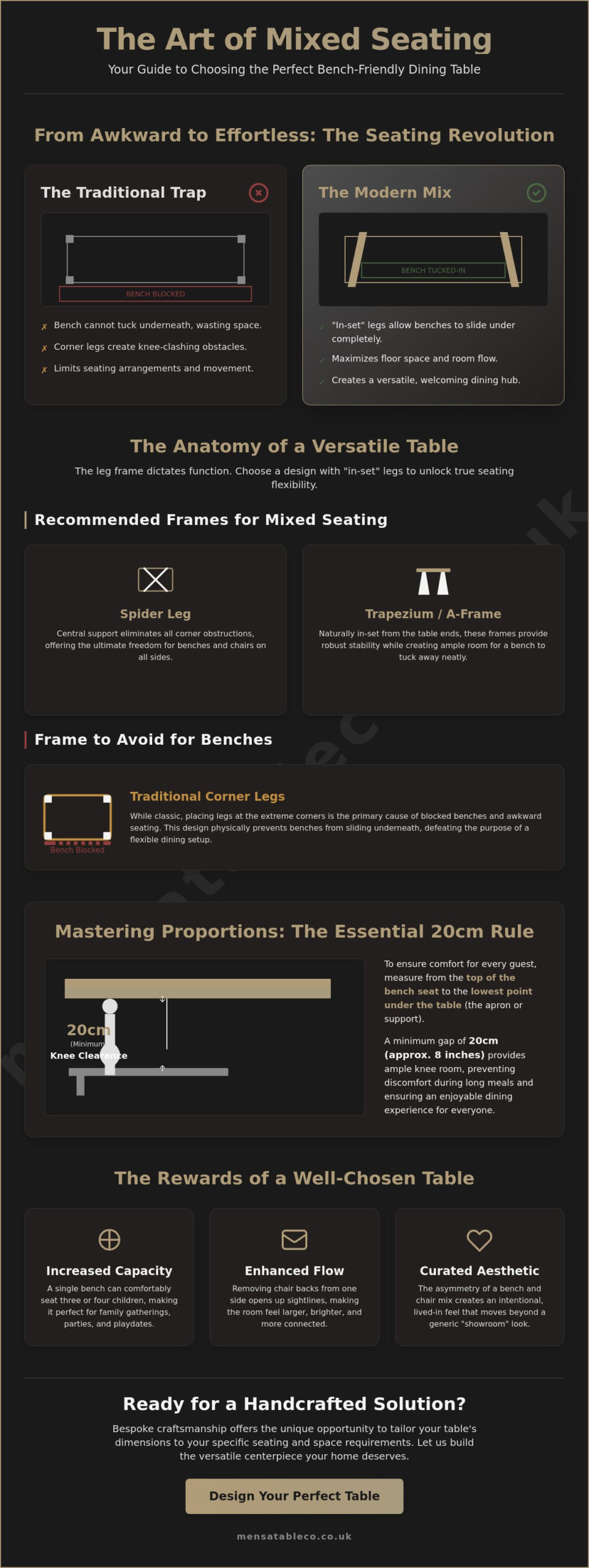
The soul of a great table lies beneath the timber surface. While the natural grain of the wood captures the eye, the leg frame dictates how you’ll actually move around the piece each day. To find a dining table suitable for bench and chair mix, you must first understand the “In-set” rule. This is the structural practice of positioning the legs slightly inward from the table’s edge. It’s a small detail that makes a world of difference. It allows a matching bench to tuck completely under the table when not in use, preserving your floor space and keeping the room’s flow unobstructed. Without this careful placement, a bench often sits awkwardly in the middle of a walkway, creating a constant trip hazard.
Choosing the right frame is a balance of aesthetics and geometry. If you’re unsure which frame suits your specific floor plan, you can always speak with our workshop team for tailored advice on dimensions and seating layouts.
The Spider Leg Advantage
The Spider Leg Dining Table is often our first recommendation for those seeking total seating flexibility. By concentrating the support in the center of the table, we eliminate the traditional corner leg obstructions that can make sliding onto a bench feel like an obstacle course. This central architecture is particularly brilliant for mixing corner benches with chairs, as guests can pivot and settle in from any angle. Despite its elegant, spindly appearance, the heavy-duty steel construction easily supports the substantial weight of our solid wood tops without adding unnecessary bulk to the room.
X-Frame and U-Frame Considerations
For those drawn to a more architectural or rustic aesthetic, the X-Frame and U-Frame Dining Tables offer a timeless appeal. When selecting a dining table suitable for bench and chair mix in an X or U configuration, precision in measurement becomes your best friend. These designs sit closer to the table ends, which means the internal distance between the legs determines your bench length. A U-Frame provides a clean, modern silhouette that works beautifully in minimalist spaces, while the X-Frame carries a sense of heritage and strength. Both frames provide exceptional stability, ensuring that even when a bench is full of energetic children, the table remains perfectly still.
If you prefer a more contemporary, geometric look, the Trapezium and A-Frame frames provide a wide, sturdy base. These silhouettes are designed to ground the piece, offering a sense of permanence and reliability. They work exceptionally well when you want to create a bold statement in a larger dining area, providing the structural integrity needed for a long, heavy solid European oak surface. Each frame we create is a testament to the marriage of manual skill and thoughtful engineering, ensuring your table serves as a reliable backdrop for years of shared meals.
Finding the Balance: How to Proportion Your Seating Mix
Creating a dining area that feels both balanced and functional requires more than just picking a beautiful tabletop. To truly master a dining table suitable for bench and chair mix, you must consider the invisible geometry of the room. Height harmony is the foundation of comfort. When you sit, your eyes should naturally align with those across the table, regardless of whether you’re on a bench or a chair. We pay close attention to the 20cm Rule. This ideal gap between the top of the seating surface and the underside of the table ensures plenty of legroom for guests of all sizes. If your bench is too high, guests will feel pinched; if it’s too low, the table will feel imposing.
Proportion also extends to the length of your furniture. While the eye is drawn to the sweeping grain of a handmade top, the physical experience of the meal is defined by the relationship between the seat and the floor. A common mistake is choosing a bench that matches the exact length of the table. While this looks symmetrical in a photograph, it often lacks the practical ease needed for daily life. A well-proportioned mix uses the chairs as anchors, often placed at the ends of the table to provide a sense of structure and permanence to the more fluid bench seating.
Sizing Your Bench for Total Tucking
To ensure your space remains breathable, your bench should typically be 10cm to 20cm shorter than the internal distance between the table legs. This allows for total tucking, moving the seating entirely out of the way when the meal is over. You should also consider the table top overhang. A generous overhang past the legs provides extra room for those sitting at the ends, ensuring they don’t feel crowded by the leg frame. For guests with limited mobility, this extra clearance makes the “slide-in” process much smoother and more dignified.
Choosing Complementary Chairs
The beauty of a mix-and-match approach is the ability to play with textures and silhouettes. Pairing minimalist, slimline chairs with a heavy solid European oak table creates a striking visual contrast that feels modern and intentional. To maintain style cohesion, look for shared details. You might match the black steel of a Spider Leg frame with chairs that feature similar industrial accents. Using “end chairs” with armrests can anchor a bench arrangement, giving the table a formal finishing touch while keeping the long sides of the table open and inviting. This thoughtful layering of different seating styles ensures your dining table suitable for bench and chair mix feels like a curated collection rather than a temporary solution.
Timber Choice and Durability: Matching Your Table to Your Life
The choice of timber is perhaps the most personal decision you’ll make when commissioning your furniture. It’s the physical foundation of every meal and the tactile surface your family will touch every single day. While mass-produced veneers often peel at the edges or feel hollow to the tap, the sensory experience of solid black walnut is incomparable. Its deep, chocolate tones and intricate grain patterns offer a sense of permanence that simply can’t be replicated in a factory. Choosing a dining table suitable for bench and chair mix means selecting a material that can handle the shifting weight and movement of various seating styles without losing its structural integrity.
Durability is often misunderstood in the world of modern furniture. Some retailers claim ceramic or concrete effects are the most resilient choices, but these materials lack the generational longevity of solid wood. Ceramic can chip or crack under impact, and once it’s damaged, it’s nearly impossible to repair. Solid timber is different. It lives with you, absorbing the stories of your life. A small dent from a dropped toy or a scratch from a festive celebration can be sanded away and refinished, allowing the piece to age gracefully across multiple generations. If you’re looking for a warm, rustic entry point that feels immediately at home, solid Swedish pine offers an inviting glow that perfectly complements the informal nature of bench seating.
If you’re unsure which species will best suit the natural light and daily traffic of your home, reach out to our workshop team for a personal recommendation based on your lifestyle.
Oak vs. Ash: A Character Comparison
For those seeking a dining table suitable for bench and chair mix that feels timeless, solid European oak remains the gold standard. It’s celebrated for its immense strength and the classic, tight grain that has defined fine furniture for centuries. If you prefer a more contemporary aesthetic, solid European ash provides a lighter, more modern alternative. Ash features bold, sweeping patterns that create a striking visual landscape across the table top. Both timbers are exceptionally stable, which is critical when you’re mixing seating types that require guests to slide and move across the surface.
The Artisanal Difference
We believe that furniture should be an investment, not a disposable commodity. Unlike flat-pack alternatives that rely on cam-locks and thin boards, our handcrafted tables are built using traditional joinery that respects the natural movement of the wood. We source our timber ethically, ensuring that the history of the tree is preserved in the final piece. This manual approach allows for complete customization. A bespoke size is often essential for a perfect seating mix, ensuring your bench fits exactly between the legs of your chosen frame while leaving just enough space for your chairs to sit comfortably at the ends.
Handcrafted Excellence: Why a Mensa Table is Built for Versatility
At the heart of our workshop is a belief that furniture should be as resilient as the bonds formed around it. When we design a dining table suitable for bench and chair mix, we aren’t just thinking about dimensions; we’re thinking about the Sunday roasts and late-night conversations it will witness. Our Mensa signature design is the result of years spent refining the balance between artisanal beauty and the practical physics of a busy home. Every piece starts as raw timber, selected for its unique character, before being transformed by our hands into a centerpiece that feels both personal and professional. We take pride in the quiet confidence that our work brings to your space.
Creating a cohesive look doesn’t mean everything has to be identical. Pairing one of our bespoke dining tables with our matching benches creates a seamless, grounded aesthetic that chairs alone cannot achieve. Because we build every item to order, we can adjust the proportions to fit your specific seating requirements perfectly. The journey of a Mensa table from our workshop to your home is a deliberate, careful process. It’s a transition from raw material to a site of human connection, ensuring you have a dining table suitable for bench and chair mix that performs as well as it looks.
Our Signature Leg Designs
Legroom is the silent hero of a comfortable meal. Our Spider, X-Frame, and Trapezium frames are specifically engineered to maximize the space beneath the table, ensuring that even when a bench is fully occupied, no one feels crowded. We hand-finish every steel and timber leg to achieve that perfect industrial or rustic edge that defines our aesthetic. Unlike mass-market alternatives, we never offer flat-pack furniture. We believe in the strength and longevity that only a pre-assembled, welded or heavy-duty bolted frame can provide. It’s a level of stability you can feel the moment you lean into the table.
Start Your Dining Room Transformation
Your home is an ever-evolving space, and we’re here to help you shape it. Whether you are ready to shop our full range or wish to consult with our craftsmen on custom breakfast bars or desks, we treat every project with the same artisanal pride. The Mensa promise is simple. We provide furniture that isn’t just a commodity, but a backdrop for your most cherished shared experiences. It’s an investment in quality that your family will appreciate for decades to come, rooted in heritage and built for the future.
Create a Centerpiece for Generations
Your dining room is the heartbeat of your home, a place where quiet morning coffees meet boisterous evening celebrations. Choosing a dining table suitable for bench and chair mix allows you to bridge the gap between formal elegance and everyday comfort. By prioritizing the geometry of your leg frame and following the essential 20cm rule for clearance, you ensure every guest feels truly welcome. We take immense pride in our UK workshop, where our tight-knit team transforms solid European Oak, Walnut, and Ash into furniture that tells a story. We don’t just build tables; we create the backdrop for your family’s most cherished rituals.
Whether you need a specific length to fit a narrow kitchen or a custom leg design to accommodate a corner bench, we are here to help. Our manual approach means every detail is considered, from the natural movement of the timber to the hand-finished steel of the frames. It’s time to move away from the disposable and invest in a piece that ages as gracefully as your home. Explore our handcrafted dining tables and matching benches to begin your dining room transformation. We look forward to crafting something beautiful for your space.
Frequently Asked Questions
Can any dining table be used with a bench?
Not every table design is compatible with bench seating. Traditional tables with corner legs or deep aprons often prevent a bench from sliding underneath, which can lead to a cluttered and cramped room. A dining table suitable for bench and chair mix requires specific leg placement, such as an in-set frame, to allow for seamless tucking and easy access for your guests.
How much space do I need behind a dining bench?
You should aim for approximately 60cm to 90cm of clearance behind a bench to allow people to move comfortably through the room. If your bench is positioned against a wall, ensure there is enough space at the ends for guests to slide in easily. For freestanding benches, a more generous gap helps maintain a breathable, open flow in the heart of your home.
Is a dining bench as comfortable as a chair?
Comfort is subjective and often depends on how you use your space. Benches offer a sense of informal community and shared experience, making them perfect for casual family meals or children’s playdates. While they lack the individual back support of a chair, many homeowners find that a mix provides the best of both worlds: communal ease on one side and structured support on the other.
What is the best table leg style for a bench and chair mix?
Centralized supports like the Spider Leg or in-set frames like our Trapezium design are the most effective choices. These architectural shapes remove the obstruction of corner legs, allowing guests to pivot and slide onto the bench without catching their knees. A dining table suitable for bench and chair mix should always prioritize these designs to maximize the usable space beneath the timber surface.
Should a dining bench be shorter than the table?
A bench should typically be 10cm to 20cm shorter than the internal distance between the table legs. This specific measurement is vital because it allows the bench to be tucked away completely when the meal is finished. If the bench matches the full length of the table top, it will strike the leg frame and sit awkwardly in your walkway.
How do I stop a dining bench from scratching my floor?
High-quality felt pads or dedicated floor protectors attached to the base of the steel or timber legs are the most reliable solution. Because benches are often moved to accommodate multiple people, these protectors act as a soft buffer between the heavy solid wood and your flooring. We recommend checking these pads every few months to ensure they remain in good condition.
Can I mix different styles of chairs with a bench?
Mixing different seating styles is a wonderful way to create a curated, eclectic atmosphere that feels personal rather than mass-produced. You might pair minimalist, modern chairs with a rustic timber bench to create a striking visual contrast. To keep the look cohesive, try to find a shared element, such as matching the black steel of the table legs with the accents on your chairs.
Is a bench and chair mix suitable for a formal dining room?
This combination can feel incredibly sophisticated when you choose high-quality, artisanal materials. Using a solid walnut or oak table with elegant chairs at the ends and a matching handcrafted bench creates a balanced, intentional look. It’s a design choice that softens the rigid feel of traditional formal rooms, making the space feel more inviting for long, lingering evening conversations.

Leave a Reply