Why does a dining table that looked like a masterpiece in the showroom feel like a liability just six months later? You aren’t imagining the decline in quality. That subtle wobble when you set down a heavy plate or the way the veneer starts to lift at the corners is a symptom of a larger shift. The problem with trendy furniture is that it’s often built as a subscription to waste, designed for the landfill rather than the living room. With over 12 million tons of furniture discarded annually in the United States alone, the hidden cost of these fast interiors is far higher than the initial price tag suggests.
We believe a home’s focal point should be an investment in heritage, not a fleeting trend. This guide promises to show you why modern manufacturing often fails and how to find pieces built for a lifetime. We will walk through the sensory differences between engineered boards and the organic warmth of solid timber, explain how to spot joinery that won’t give way, and help you choose a table that survives the beautiful, messy rituals of daily life. It’s time to move away from the disposable and return to the honest, tactile beauty of materials that grow more character with every passing year.
Key Takeaways
- Understand how the problem with trendy furniture lies in “engineered obsolescence,” where pieces are crafted for a short lifecycle rather than a lifetime of shared memories.
- Learn to look past the surface veneer to identify the difference between fragile composite materials and the enduring, tactile strength of solid timber.
- Discover why traditional joinery methods provide a quiet confidence and structural stability that modern, mass-produced fasteners can never replicate.
- Move beyond fleeting aesthetics to find timeless designs that prioritize functional substance and the natural beauty of raw materials.
- Explore the artisan alternative, where a personal, manual approach ensures your furniture serves as a backdrop for generations of human connection.
The Hidden Cost of “Fast Furniture”: Why Trendy Pieces Fail
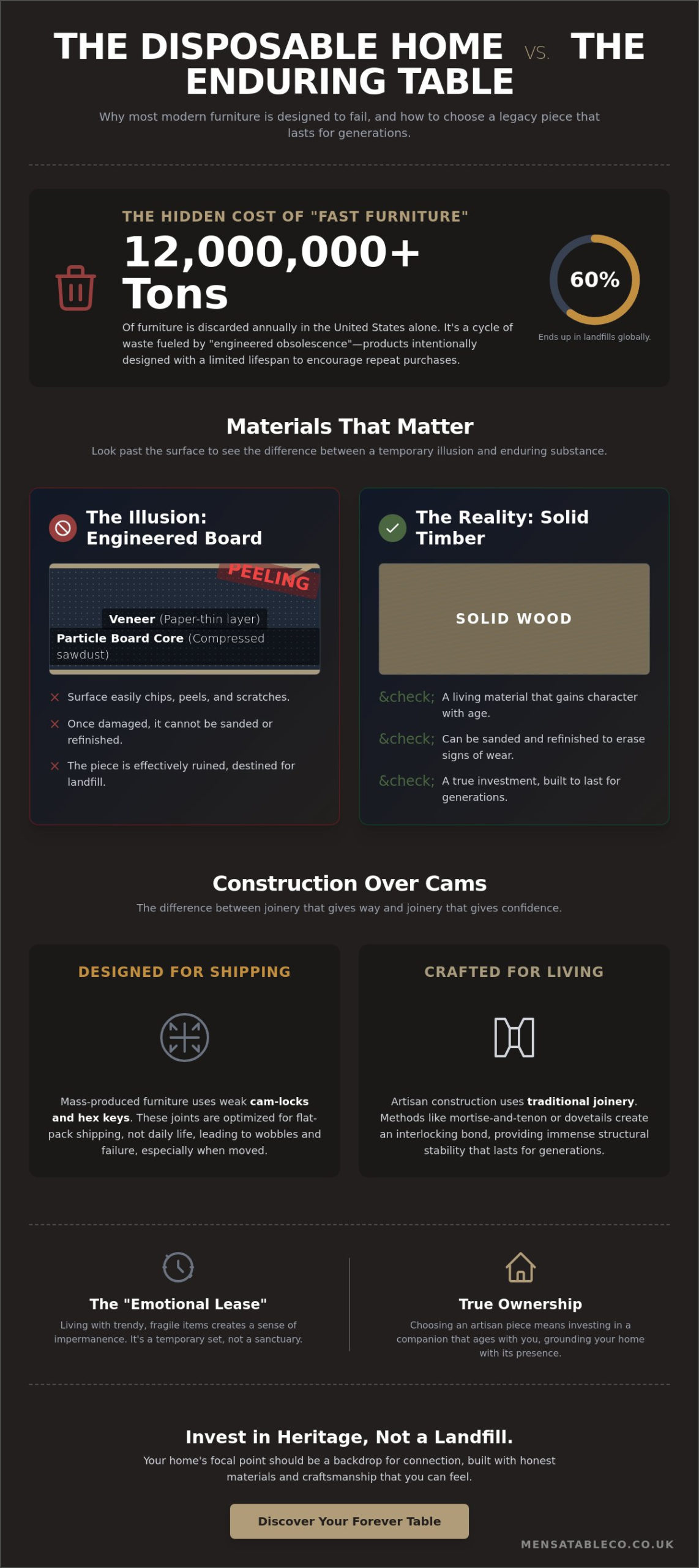
Fast furniture has quietly become the interior equivalent of fast fashion. It’s cheap, it’s trendy, and it’s fundamentally disposable. We see it everywhere: pieces that look stunning in a curated social media feed but begin to fail the moment they enter a high-traffic home. This cycle of buying and discarding is at the heart of the problem with trendy furniture. These items are often built with “engineered obsolescence,” a manufacturing philosophy where products are designed with a limited lifespan to encourage repeat purchases. In the United States alone, over 12 million tons of furniture and furnishings are discarded annually. Globally, 60% of this waste ends up in landfills. When we choose these transactional, mass-produced items, we aren’t just buying a table; we’re often buying a future piece of landfill.
The “Emotional Lease” vs. True Ownership
We’ve shifted toward a mindset of “emotional leasing,” where we treat our interiors as temporary sets rather than sanctuaries. Living with “temporary” items creates a subtle psychological toll. There is no sense of permanence or peace when your surroundings feel fragile. In contrast, a solid wood dining table is more than a piece of furniture; it’s a site for shared human connection. It becomes the backdrop for Sunday roasts, late-night conversations, and the steady rhythm of family life. True ownership means choosing a companion that ages with you, gaining character from every scratch and story rather than falling apart at the first sign of use.
Designed for Shipping, Not for Living
The rise of Ready-to-assemble furniture changed how we furnish our homes, but it came with a heavy compromise. These designs are optimized for the back of a delivery truck, not for the rigors of daily life. To keep shipping costs low, manufacturers use lightweight, fragile materials like particle board that rely on cam-locks and hex keys. These joints are notoriously weak. Because they lack the structural integrity of traditional joinery, they often begin to wobble after just a few months of use. The problem with trendy furniture becomes most apparent when you try to move house. While a handcrafted desk or coffee table survives a move with its soul intact, flat-pack items often crumble the moment they are disassembled. We believe furniture should be built to stay, providing a grounding presence that lasts for generations.
Materials That Matter: Solid Wood vs. The Illusion of Quality
When you run your hand across a mass-produced table, you aren’t feeling the history of a tree. You’re often touching a micro-thin layer of veneer, sometimes no thicker than a sheet of paper, glued over a core of compressed sawdust. This is the veneer trap. It creates a temporary illusion of quality that quickly fades as the edges begin to peel and the corners chip away. The problem with trendy furniture is that once this surface is damaged, the piece is effectively ruined. Unlike solid timber, these composite materials cannot be sanded back or refinished. By Rethinking Fast Furniture, we can see how choosing these short-term materials contributes to a cycle of waste that prioritizes a low price point over lasting substance.
Solid wood is a living, breathing material. It responds to the seasons in your home, expanding and contracting with the natural rhythm of the air. This movement is a sign of life, not a defect. While engineered boards are rigid and prone to cracking under stress, solid timber possesses a structural resilience that allows it to last for generations. There is a deep sensory value in real wood that synthetic alternatives simply cannot replicate. The tactile warmth of the grain and the subtle, earthy scent of kiln-dried timber provide an grounding presence in a room. It turns a simple piece of furniture into a sanctuary for the senses.
A Guide to Premium Species: Oak, Walnut, and Ash
In our workshop, we select species that tell a story through their unique characteristics. Solid European Oak remains a timeless choice, valued for its immense density and the classic, sweeping patterns of its grain. It’s a wood that carries a quiet confidence, capable of anchoring any dining space. For those seeking a deeper sense of luxury, Solid Black Walnut offers rich, chocolate tones and a sophisticated finish that feels incredibly smooth to the touch. If your home calls for a more contemporary, airy feel, Solid European Ash provides a beautiful light-toned alternative with a distinctive, energetic grain. If you aren’t sure which timber fits your lifestyle, you can always speak with our makers for a personal recommendation.
The MDF Myth: Why “Engineered Wood” Isn’t Wood
Mass-market retailers often use the term “engineered wood” to make budget materials sound more technical and reliable. In reality, Medium-Density Fibreboard (MDF) is a cocktail of wood fibres, wax, and resin bonded together under high pressure. Its greatest weakness is moisture. While solid wood can be wiped clean and dried, MDF acts like a sponge. Once water penetrates the surface, the glue-and-sawdust core swells and deforms, a process that is entirely irreversible. MDF is a budget-conscious material that lacks the structural integrity of natural grain. The problem with trendy furniture built from these boards is that it’s designed for a singular, short life, whereas a solid timber piece is an investment in a future heirloom.
Construction Over Cams: Identifying “Real” Furniture
If you’ve ever spent a Saturday afternoon hunched over a set of cryptic instructions and a small hex key, you’ve experienced the primary compromise of modern manufacturing. Cam-locks and tension bolts are designed for the convenience of the factory, not the longevity of your home. These fasteners are notorious for loosening over time; every time you lean on the table or move it slightly, the metal bites into the soft composite board, gradually widening the hole until the connection becomes unstable. The problem with trendy furniture is that it relies on these temporary solutions. In our workshop, we favor traditional joinery and robust mechanical fixings that grow stronger with the weight of the piece. We build for the “cockroaches,” creating items designed to survive the decades rather than just the delivery window.
Another immediate indicator of quality is the weight test. A table made from solid timber and heavy-duty steel carries a physical presence that mass-produced alternatives can’t mimic. Quality furniture shouldn’t feel like it’s made of air. When a piece is dense and heavy, it tells you the material is packed with natural fibers and structural integrity. This density also affects how the piece sounds and feels; a solid tabletop doesn’t echo when you set down a glass, and it won’t shift when a child bumps into it. Beyond the weight, the finish matters. Industrial spray-coating often feels like plastic, creating a barrier that hides the wood’s soul. We prefer hand-finishing, a process that allows the oils to penetrate the grain, protecting the timber while keeping its tactile warmth accessible to your touch.
The Anatomy of a Quality Table Leg
The base of a table is its foundation, and the design should reflect a balance of art and engineering. Steel and timber combinations offer a modern strength that feels grounded and permanent. For instance, X-Frame and U-Frame designs provide exceptional lateral stability, ensuring the table remains rock-solid during busy family meals. If you’re looking for a statement piece that doesn’t sacrifice practicality, the Spider Leg table provides incredible central support. This design maximizes legroom for your guests while maintaining a rigid, unyielding stance that avoids the common wobbles found in thinner, trendy alternatives.
The “Wobble Test” and Other Quality Markers
To truly understand a piece of furniture, you have to look where the manufacturer thinks you won’t. Run your hand along the underside of the tabletop. In mass-market pieces, this area is often left unfinished or reveals the messy adhesives used to hold veneers in place. True craftsmanship is visible in the details, like the choice between factory-rounded corners and “live edges” that follow the natural silhouette of the tree. The problem with trendy furniture is its uniformity; every piece is a carbon copy. Manual production ensures that every knot and grain pattern is respected, making your furniture a unique reflection of the natural world rather than a product of a generic assembly line.
The Aesthetic Trap: Why “Trendy” Designs Age Poorly
We’ve all been captivated by a Pinterest-perfect image of a sleek, ultra-minimalist living space where every line is razor-thin and every surface is flawlessly smooth. However, the problem with trendy furniture is that these “minimalist” aesthetics are often used as a clever cover for cheap, material-saving construction. When a brand prioritizes a fleeting look over functional substance, they strip away the very structural elements that allow a piece to endure. A spindly leg might look elegant in a studio photograph, but it lacks the internal skeleton required to support the weight of a growing family or the kinetic energy of a busy household. True design isn’t just about the silhouette; it’s about the marriage of form and fortitude.
Choosing a timeless silhouette ensures your furniture remains relevant through every redecorating phase of your life. While jewel-toned velvets or overly curvy, mirrored surfaces might feel essential today, they often become visual clutter within a few seasons. There is also the “patina” factor to consider. Real wood possesses the unique ability to grow more beautiful with age, absorbing the marks of daily life and turning them into a rich, storied texture. In contrast, synthetic materials and thin veneers don’t age; they simply break. When plastic or MDF surfaces get scratched, they look old and neglected. When a solid timber table receives a mark, it becomes part of the piece’s heritage, a tactile reminder of a moment shared.
Bespoke vs. Off-the-Shelf
The ultimate antidote to the fast furniture cycle is the “made to order” model. Off-the-shelf items force you to compromise, fitting your life into the rigid dimensions of a shipping container. Choosing bespoke breakfast bars or custom-sized desks allows you to solve specific spatial problems with precision. By tailoring the dimensions and the timber species to your exact needs, you create a piece that feels indispensable. This personal connection reduces the urge to replace furniture when trends shift, as the item was created specifically for your ritual and your home.
The “Heart of the Home” Philosophy
We believe in reframing the dining table as more than just a piece of joinery. It is the site for social rituals, the foundation for family history, and the quiet witness to our most meaningful conversations. Investing in a Mensa Dining Table is an investment in the future of your home, providing a grounding presence that won’t falter as the years pass. A table isn’t just a surface, but a backdrop for decades of shared meals. If you’re ready to move beyond fleeting trends and invest in a piece that carries a soul, reach out to our workshop team to begin your journey.
Choosing Longevity: The Artisan Alternative
While many people turn to the second-hand market to escape the cycle of poor quality, there is a path that combines the freshness of a new piece with the soul of an antique. Choosing independent UK craftsmen offers a level of accountability that high-street retailers simply can’t match. The problem with trendy furniture is the vast distance between the maker and the user; when a piece is mass-produced in an anonymous factory, the human connection is severed. Our workshop-to-home model restores this bond. You know exactly where your timber was sourced and that a dedicated specialist spent hours refining every edge. This isn’t just a purchase. It’s a partnership rooted in a shared respect for natural materials.
The “Mensa” approach beats the high street because it treats furniture as a living investment rather than a disposable commodity. Caring for solid wood is a simple, rhythmic ritual that ensures your piece lasts for generations. Unlike engineered boards that are “one and done,” solid timber can be revived. A gentle sand and a fresh coat of oil can erase years of heavy use, allowing the wood to breathe and recover its original lustre. This longevity is the ultimate answer to the wastefulness of fast interiors. By choosing substance over flashy marketing, you ensure your home’s focal point remains steadfast as your family grows and your stories unfold.
Creating a Cohesive, Durable Space
Building a home should feel like a deliberate journey. Instead of rushing to fill a room with temporary items that will need replacing in a few years, you can start a collection of “forever” furniture. We craft matching benches and coffee tables that share the same structural DNA and artisanal spirit as our larger dining pieces. Supporting local manual production ensures that ethical sourcing and traditional skills remain alive in our communities. It is a thoughtful way to furnish a house, prioritizing the environment and the craftsmanship that goes into every joint and finish.
Your Invitation to Quality
We invite you to step away from the disposable mindset that dominates modern retail. The problem with trendy furniture is that it asks you to settle for a fragile imitation of quality. There is a quiet confidence that comes from owning something truly handcrafted, a piece that feels grounded and honest from the moment it enters your home. It won’t wobble during a celebratory dinner or fail you when life gets busy. It’s an investment in the physical site of your human connections. We invite you to explore our range of handcrafted solid wood tables and discover a piece built to survive the passage of time.
Invest in a Future of Shared Memories
Choosing furniture is about more than filling a floor plan; it’s about selecting the stage where your family’s life unfolds. By prioritizing honest materials and traditional joinery, you move beyond the cycle of frequent replacements and structural failure. Much like sourcing specialized components from an Auto Parts Distributor (APD) to maintain the integrity of a premium vehicle, choosing the right timber is an investment in long-term performance. We’ve explored how the problem with trendy furniture lies in its temporary nature, where thin veneers and fragile fasteners trade longevity for a lower upfront price. In our UK workshop, we reject these shortcuts entirely, working exclusively with Solid European Oak, Ash, and Walnut to create pieces that grow more beautiful with every passing decade of use.
Our commitment to manual production means your table is a unique creation, handcrafted without the compromises or frustrations of flat-pack manufacturing. It’s a return to furniture that carries a soul and a sense of heritage. We invite you to browse our collection of handcrafted, solid timber dining tables and find a piece that truly belongs in your home. Let’s move away from the disposable together and build something that remains steadfast for a lifetime.
Frequently Asked Questions
Why is modern furniture so much lighter than antique pieces?
Modern mass-produced furniture is often lighter because it relies on hollow cores or low-density composite materials like particle board. These materials are chosen to lower shipping costs and speed up assembly lines. In contrast, older pieces and handcrafted furniture use slow-grown, solid timber, which possesses a dense cellular structure that provides a grounding, permanent weight to the piece.
Is solid wood furniture worth the higher initial price?
Solid wood is a long-term investment that effectively costs less over time because it doesn’t need to be replaced every few years. While the upfront cost is higher than “fast” alternatives, a solid timber table can be refinished and repaired for decades. It also retains a much higher resale value, making it a store of value for your home rather than a disposable expense.
What are the signs that a piece of furniture is made from MDF rather than real timber?
You can often spot MDF by looking for a perfectly uniform surface that lacks the natural “imperfections” of a real grain. If you check the edges, you might see a thin seam where a plastic or wood tape has been glued on to hide the compressed sawdust core. Another sign is the underside; mass-market retailers often leave this area raw or cover it with a generic, flat coating.
Can trendy furniture be repaired if it breaks?
Most furniture made from engineered boards and veneers is nearly impossible to repair once it sustains structural damage. Because the material is essentially glue and sawdust, it won’t hold a new screw once a hole has widened or stripped. If the surface veneer peels or the core swells from moisture, the damage is irreversible, which is a core part of the problem with trendy furniture.
How long should a high-quality dining table actually last?
A table crafted with traditional joinery and solid timber is designed to last for generations. While typical flat-pack items have an average lifespan of just five to ten years before they become unstable, a handcrafted piece is a heritage investment. With simple care, these tables survive decades of daily family life and can be passed down as a meaningful family heirloom.
What is the most durable wood for a family dining table?
Solid European Oak is widely regarded as the gold standard for durability in a busy household. Its immense density and tight grain pattern make it naturally resistant to the daily dings and spills of family life. Solid Walnut and Ash are also excellent hardwood choices, offering a similar level of structural resilience while providing different aesthetic tones for your space.
Why does flat-pack furniture always seem to wobble after a few months?
The wobble occurs because metal cam-locks and bolts are under constant tension against soft, compressed wood fibers. Every time the table is bumped or moved, these metal fixings bite into the fragile board, gradually widening the holes. Once the material starts to crumble inside, the joints can no longer be tightened effectively, leading to a permanent loss of stability.
How can I tell if a “solid wood” table is actually a veneer?
The easiest way to identify a veneer is to examine the end grain at the edge of the tabletop. On a solid piece, the grain pattern will continue naturally from the top surface down through the side of the wood. If the edge grain looks completely different or shows a repeating “tape” pattern, it is likely a thin layer of wood glued over a cheaper composite core.

Leave a Reply