Your dining table shouldn’t be a temporary fixture that ends up in a landfill when the trends shift or the veneer begins to peel. It’s a common struggle to find furniture that doesn’t wobble after two years or feel like a hollow imitation of quality. You likely want a piece that fits your specific room dimensions and reflects your personal values, yet mass-produced options often leave your home feeling a bit empty of character. It’s frustrating when the heart of your home lacks the substance and history it deserves.
Understanding the benefits of a handcrafted dining table means seeing it as more than just a surface; it’s an investment in a durable, soulful centrepiece that celebrates ethically sourced materials and manual skill. By choosing artisanal craftsmanship, you’re securing an heirloom that grows more beautiful with the passage of time. This article will explore why investing in a bespoke piece creates a more sustainable and meaningful foundation for your family life, moving from the history of the raw timber to the functional role it plays in your daily rituals.
Key Takeaways
- Understand the vital distinction between disposable furniture and pieces built with traditional joinery that’s designed to endure for decades.
- Discover the specific benefits of a handcrafted dining table by exploring the natural durability and sensory appeal of solid oak and walnut.
- Learn how bespoke customisation allows you to move beyond standard sizes to find a perfect fit for your home’s unique architectural layout.
- Explore the ethical impact of choosing furniture made in national workshops using timber sourced from responsibly managed European forests.
- See how artisanal designs like the Mensa table act as a backdrop for shared social rituals and the creation of lasting family memories.
What defines a handcrafted dining table in the modern age?
In a world that often prioritises speed over substance, a handcrafted dining table stands as a defiant testament to time. It’s not merely a product of a factory line; it’s a structural narrative built by a single artisan using traditional joinery and solid, honest timber. To understand what defines a handcrafted dining table, one must look past the surface and consider the manual intent behind every cut. This process marks a significant departure from the disposable furniture culture that has dominated mass-market retailers for decades. Instead of hollow cores and printed veneers, we find the weight and warmth of real wood, chosen for its strength and unique story.
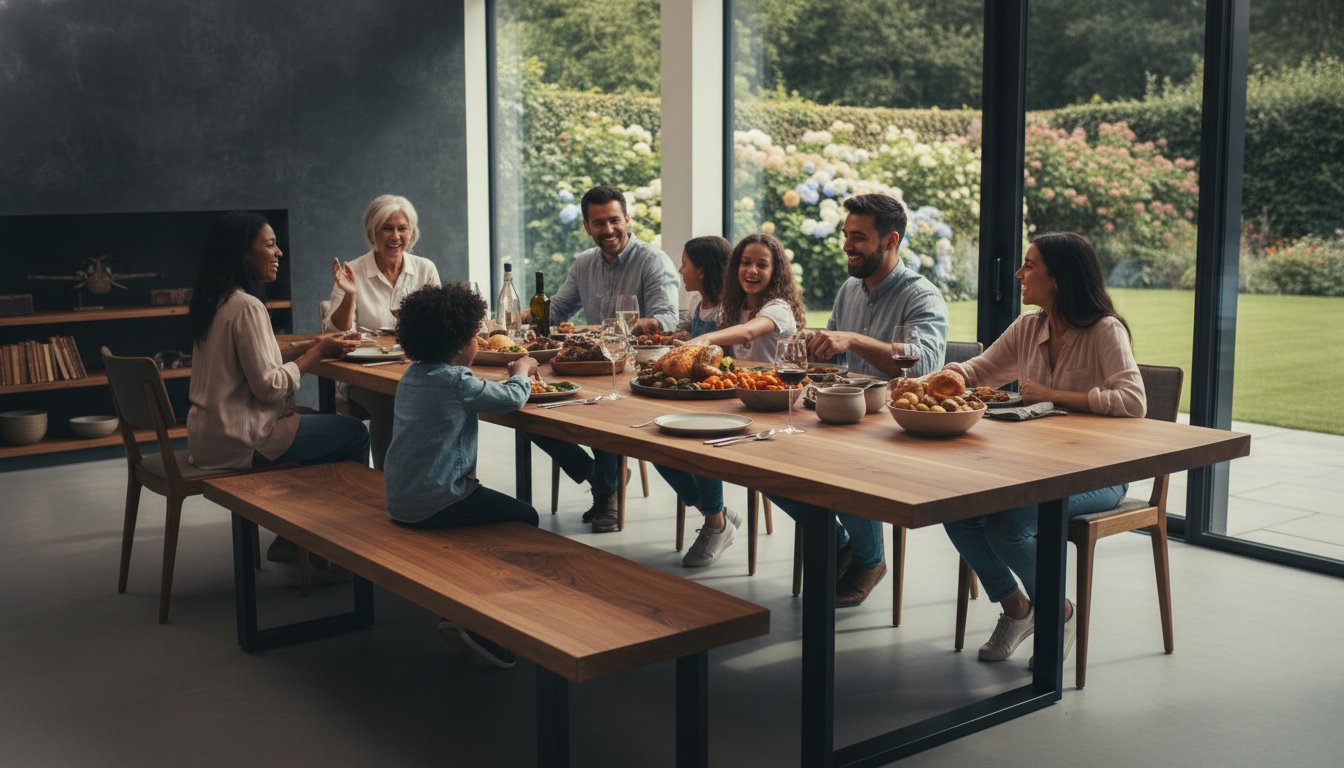
When you bring an artisanal piece into your space, you’re inviting a relationship between the timber, the maker, and your home. The table becomes a functional site for human connection, serving as the backdrop for Sunday roasts, late-night conversations, and the quiet rituals of daily life. One of the primary benefits of a handcrafted dining table is this inherent soulfulness, which elevates the object from a mere commodity to a meaningful life investment. It isn’t just about furniture; it’s about creating a permanent anchor for your family’s history.
Handcrafted vs. Mass-Produced: The hidden differences
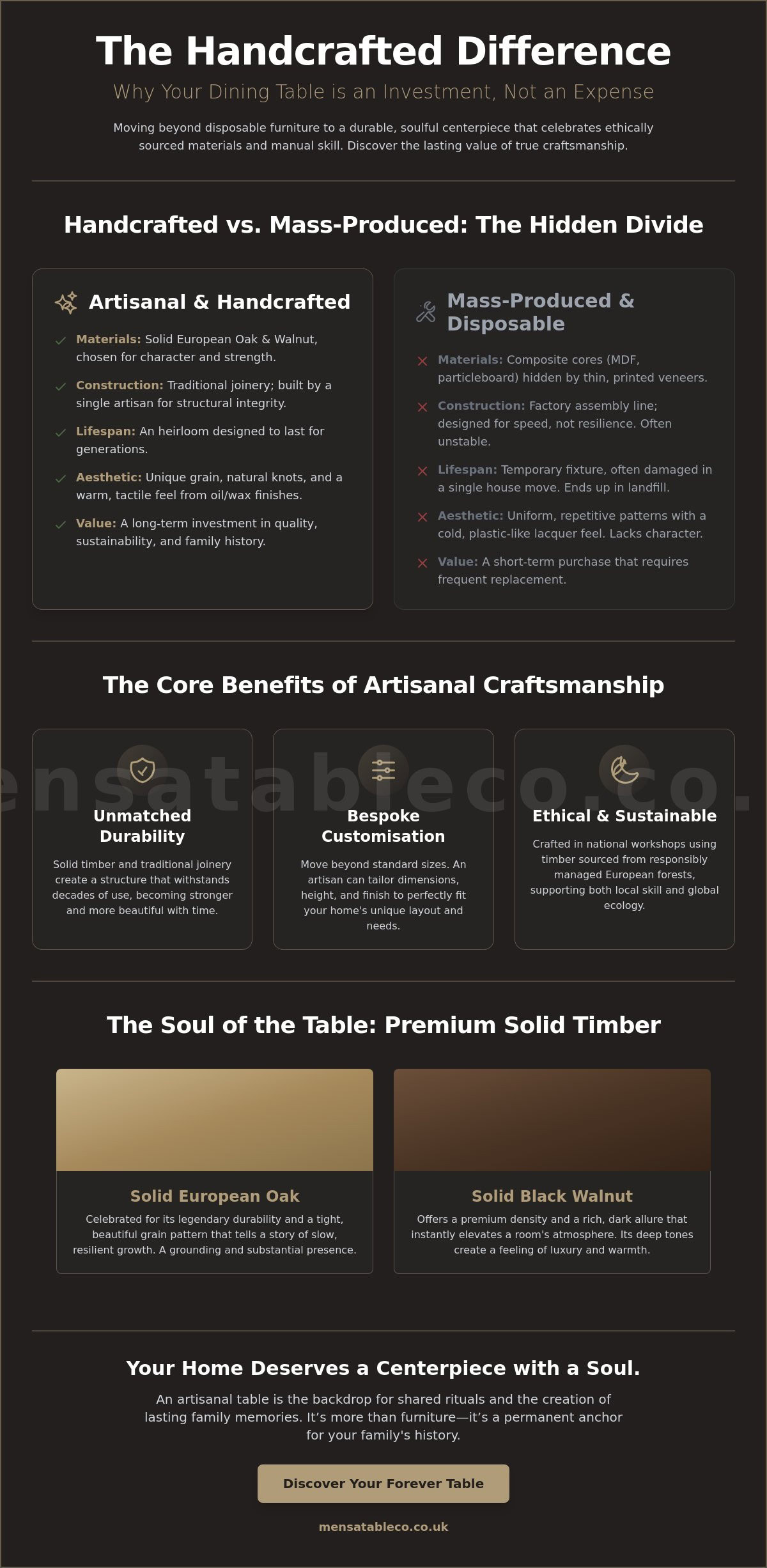
Mass production relies on uniformity and the rapid application of thin veneers to hide inferior composite materials. These pieces are designed for the moment, not the generation; they often lack the structural integrity to survive even a single house move. Handcrafting is different. It allows us to slow down and select specific grain patterns that flow naturally across the tabletop. An artisan identifies the unique stresses within each timber slab, working with the natural movement of the wood rather than against it. This careful selection ensures that the character of the tree is preserved, celebrating the knots and swirls that a machine would simply discard.
The role of the artisan in the design process
Personal oversight is the heartbeat of our workshop. Every joint is checked by hand to ensure it’s flush, and every surface is sanded until it invites a tactile response. This manual approach means we can tweak handcrafted dining tables to suit the specific functional needs of your household, whether that’s a slightly taller clearance for comfort or a unique width for a narrow room. We believe the maker’s pride is the most reliable guarantee of quality. When a specialist puts their name to a piece, they aren’t just selling a table; they’re offering a promise of longevity and heritage that mass-produced goods simply cannot match.
The structural integrity of solid timber and artisanal joinery
The heart of any exceptional piece of furniture lies in the raw material chosen to bring it to life. When we select solid European oak, we’re choosing a timber celebrated for its legendary durability and a grain pattern that tells a story of decades of slow, resilient growth. It feels substantial and grounding under your palms. Alternatively, the solid black walnut offers a premium density and a rich, dark allure that instantly elevates a room’s atmosphere. These aren’t just surfaces; they’re thick, living slabs of nature that provide the structural integrity of solid timber required for a table that truly serves a home.
One of the most significant benefits of a handcrafted dining table is the tactile experience it offers. Unlike mass-market furniture coated in thick, plastic-like lacquers that mask the wood’s natural feel, artisanal pieces are finished with natural oils and waxes. This allows your hand to meet the actual grain. It’s a sensory connection that matures over time, developing a soft patina that records the history of your family’s gatherings. It’s the difference between a cold, synthetic object and a piece of furniture that feels warm and alive.
Understanding timber movement and longevity
Solid wood is a living material that breathes. It expands and contracts with the changing seasons and shifting humidity levels in your home. This movement is a sign of authenticity, not a defect. To account for this, we use “floating” tops and specific mechanical fixings that allow the timber to move without cracking or warping. This level of foresight is something you won’t find in factory-built units, which are often glued rigidly until the internal stresses cause them to fail. We design our tables to live in harmony with your environment.
Joinery that survives generations
Traditional joinery is the silent hero of a long-lasting table. While flat-pack furniture relies on flimsy cam-locks and staples, handcrafted pieces use interlocking wood-to-wood connections. These joints are engineered to handle the daily stresses of a busy household, ensuring the table remains stable for fifty years or more. Buying once and buying well is perhaps the greatest environmental contribution you can make for your home. If you have questions about which timber species best suits your lifestyle, our team is always here to chat about your project.
Bespoke customisation: Tailoring the heart of your home
Standard retail stores often present a “one size fits most” reality that rarely suits the nuances of a real home. One of the most practical benefits of a handcrafted dining table is the ability to move beyond these rigid constraints to find a fit that feels intentional. Whether you’re working with a compact apartment or a sprawling open-plan space, the proportions of your furniture should serve the room rather than fight against it. By opting for handcrafted dining tables, you gain the agency to specify every millimetre, ensuring your table feels like it was always meant to be there.
The silhouette of the table is defined as much by its base as its top. We view the leg design as the architectural foundation of the piece, dictating both the aesthetic style and the functional seating capacity. To create a cohesive look across your dining area, we often suggest coordinating your table with matching benches. This pairing not only streamlines the visual flow of the room but also offers a versatile seating solution that can be tucked away when not in use. It’s a thoughtful way to maximise space while maintaining a high-end, artisanal feel.
Architectural leg styles: From Spider to X-Frame
The Spider Leg frame is a masterclass in functional design, featuring a central support structure that radiates outward. This configuration is ideal for those who value maximum legroom, as it removes corner obstructions and allows chairs to be placed anywhere around the perimeter. For those seeking a bolder statement, the X-Frame and Trapezium designs offer structural drama, acting as a rustic or industrial focal point that commands attention. If your home leans toward a modern or Scandinavian-inspired aesthetic, the clean, minimalist lines of the U-Frame or A-Frame legs provide a sense of steady, quiet balance without overwhelming the surrounding decor.
The “Perfect Fit” philosophy
Finding the right size for your lifestyle requires a careful calculation of guest capacity and movement space. A table for 6 typically requires a length of at least 150cm, while hosting 10 guests comfortably often demands 240cm or more to prevent elbow-to-elbow overcrowding. Customisation allows us to adjust the width as well, which is a game-changer for narrow kitchen-diners where every centimetre counts. This bespoke approach extends to height as well; we can tailor the build to align with existing breakfast bars or custom seating heights, ensuring that the ergonomics of your home are as refined as the timber itself.
Sustainability and the ethics of the artisanal workshop
Choosing a table crafted within a national workshop significantly reduces the environmental impact compared to mass-market pieces shipped across oceans. The benefits of a handcrafted dining table extend far beyond the walls of your home, touching the very soil where the timber first grew. We’re proud participants in the “Slow Furniture” movement, a philosophy that prioritises quality over quantity. By creating items that are built to endure, we directly challenge the culture of disposable goods that currently fills our landfills. Every piece we build is a deliberate act of environmental responsibility.
Supporting local craftsmen also ensures that traditional woodworking skills remain a vibrant, living part of our modern economy. There is a profound sense of connection when you know the hands that planed the wood and the specific workshop where your furniture came to life. This personal, manual approach ensures that substance is always valued over flashy marketing. It’s an investment in a local legacy that keeps artisanal heritage alive for future generations.
The lifespan of a handcrafted piece
Think about your furniture through a cost-per-year lens. While a mass-produced table might seem like a bargain initially, it often requires replacement every few years as joints loosen or veneers begin to peel. A solid timber table is built to last fifty years or more, making it a far more economical choice over a lifetime. If life happens—a deep scratch from a child’s toy or a mark from a hot dish—solid wood can be sanded back and refinished to its original glory. Truly sustainable furniture is that which never needs replacing. This inherent longevity is one of the most practical benefits of a handcrafted dining table.
Ethical sourcing and provenance
Knowing the origin of your materials is essential for a conscious home. We ensure our timber is sourced from managed, sustainable European forests where growth rates are carefully monitored to exceed harvest levels. This commitment to provenance means you can trace the history of your table back to responsibly harvested species like solid European oak. Beyond the forest, this choice protects your indoor air quality. Many mass-market alternatives rely on MDF and toxic glues that can off-gas chemicals into your living space. Our manual process uses honest, natural materials, keeping your home environment healthy and clean.
If you’re ready to invest in a piece with true provenance and ethical soul, get in touch with our workshop to discuss your requirements.
The Mensa Table Company: Where heritage meets modern design
The air in our workshop carries the heavy, sweet scent of sawdust and natural oils. It’s a place where the rhythmic sound of the hand plane meets the steady focus of a tight-knit team dedicated to manual production. At The Mensa Table Company, we’ve spent over 25 years refining our trade, moving away from flashy marketing to focus on the tactile details that truly matter. We believe that the real benefits of a handcrafted dining table are found in the quiet confidence of its build and the way it anchors a room. Every piece that leaves our floor is a reflection of our pride and a testament to the relationship between the maker and the end user.
Our signature piece, The Mensa Dining Table, perfectly encapsulates this philosophy. It represents a thoughtful blend of industrial strength and natural warmth, pairing robust steel frames with the organic character of solid timber. This design isn’t just about aesthetics; it’s about creating a site for human connection that feels both grounded and modern. By placing the physical output and its natural origins at the forefront, we ensure that every table we create is more than a commodity. It’s a meaningful life investment designed to serve as the backdrop for your family’s social rituals for generations.
Our commitment to the artisanal spirit
Step into our creative space and you’ll find a team that values substance over speed. We work with a palette of premium materials, including the light, resilient grain of solid European ash and the deep, reliable tones of oak and walnut. There is a sense of calm and deliberate pace here, dictated by the time required for high-quality output. We don’t rush the timber, and we don’t rush the process. Instead, we invite you to appreciate the intricate details, from the history of the repurposed elements we sometimes use to the specific physical characteristics of each plank. We view every build as an opportunity to keep traditional skills alive in a localized setting.
Starting your journey with a bespoke piece
When you choose to commission a table from our workshop, you’re becoming part of the timber’s ongoing history. The process is collaborative and personal, beginning with a guided tour through our offerings to select the species and frame that best suits your life. One of the greatest benefits of a handcrafted dining table is this personal connection to the journey, from the forest to your home’s focal point. Whether you’re drawn to the minimalist lines of a U-Frame or the structural drama of a Spider Leg, we ensure every joint is flush and every surface is finished to a tactile perfection. We invite you to explore our full collection and discover a piece that brings an unmistakable sense of warmth and authenticity to your home.
Secure a Centrepiece for Your Future
Choosing a table built by hand is a decision to value substance over the fleeting trends of mass-market furniture. We’ve explored how traditional joinery and the selection of premium species like European Oak, Ash, and Black Walnut create a structural foundation that survives generations. You now understand that the benefits of a handcrafted dining table lie in its ability to adapt to your specific room dimensions while offering a tactile, sensory connection that synthetic alternatives can’t match. It’s an intentional choice that prioritises the “Slow Furniture” movement, ensuring your home remains free from the cycle of disposable goods.
Founded in 2018, our workshop remains dedicated to the artisanal spirit, ensuring every piece acts as a backdrop for your family’s shared rituals. We’re proud to offer national UK delivery on all our furniture, bringing the warmth of our craftsmanship directly to your home. It’s time to invest in an heirloom that reflects your values and grows more beautiful with each passing year. We invite you to explore our range of handcrafted dining tables and benches and begin the journey toward your perfect home centrepiece.
Frequently Asked Questions
Are handcrafted dining tables more durable than mass-produced ones?
Yes, handcrafted tables are significantly more durable because they utilise traditional joinery instead of the flimsy cam-locks found in factory-made units. This structural integrity ensures the table remains stable for decades. While mass-produced items are often designed for a short lifecycle, an artisanal piece is engineered to withstand the weight of family life and the stresses of daily use without developing a wobble.
How do I maintain a solid wood handcrafted table?
Maintaining your table involves simple, regular care to preserve the natural oil or wax finish. We recommend wiping the surface with a soft, damp cloth and avoiding harsh chemical cleaners that strip the protective layer. Every few months, applying a fresh coat of wax or oil helps the timber retain its moisture and develop a soft patina that records your home’s history.
Why is solid oak a popular choice for handcrafted furniture?
Solid oak remains a favourite in our workshop due to its exceptional density and slow-grown resilience. It offers a prominent grain pattern that provides a beautiful tactile experience while being naturally resistant to dents. One of the key benefits of a handcrafted dining table made from oak is its ability to handle heavy use while remaining a timeless, grounding focal point in any room.
Can I customise the size and leg style of my table?
You can customise almost every element of your piece, from the exact millimetre of the tabletop to the architectural leg style. Whether you need a Spider Leg for maximum chair flexibility or an X-Frame for industrial drama, we tailor the build to your needs. This bespoke approach ensures your furniture fits your room dimensions perfectly, moving beyond the limitations of standard retail sizes.
Is handcrafted furniture more sustainable for the environment?
Artisanal furniture is inherently more sustainable because it prioritises longevity and ethical sourcing over mass consumption. By using timber from managed European forests and building pieces that last a lifetime, we help reduce the volume of furniture ending up in landfills. The lower carbon footprint of local production also means your table doesn’t travel across oceans before arriving at your home.
How long does it typically take to build a bespoke dining table?
The creation of a bespoke piece is a steady, deliberate process that typically takes several weeks. This timeline allows us to select the finest timber, ensure it is properly acclimatised to our workshop, and execute the joinery with precision. We don’t rush the work because high-quality output requires time. This patience ensures the benefits of a handcrafted dining table are evident in every flush joint and sanded surface.
What is the difference between solid wood and wood veneer?
Solid wood is comprised of thick, honest slabs of natural timber, while wood veneer is a paper-thin layer glued over a core of MDF. The primary difference lies in longevity and repairability. Solid wood can be sanded back and refinished to erase years of family use. Veneer is fragile and often impossible to repair once the surface is scratched or the glue begins to peel away.
Will a handcrafted table survive being moved between different houses?
A handcrafted table is specifically engineered to survive multiple house moves without losing its stability. Because we use robust joinery and high-quality mechanical fixings, the table remains as steady in your third home as it was in your first. This is a significant advantage over flat-pack alternatives, which often become loose and structurally compromised once they are disassembled and moved.

Leave a Reply