

A solid wood dining table isn’t just a static piece of furniture; it’s a living, breathing witness to your family’s history that requires a partnership rather than just a cleaning schedule. We know the sinking feeling when a stray water glass leaves a stubborn white ring or the quiet anxiety of watching the grain react to the first dry cold snap of winter. It’s natural to feel protective of such a central investment, especially when you’re looking for reliable solid wood dining table care but find only conflicting advice. You want to see your table age with grace, gathering stories in its grain without succumbing to cracks or dullness.
This guide will demystify the maintenance process, providing you with the professional expertise needed to protect, clean, and preserve your handcrafted timber. Whether you’re curious about the benefits of silicone-free polishes like Guardsman Anytime or need to understand how humidity affects your European Oak or Black Walnut, we have you covered. We’ll walk you through daily maintenance routines, explain which oils actually nourish the wood, and give you the confidence to handle minor repairs yourself. By the end, you’ll see your table not as a fragile object to be feared, but as a resilient centrepiece built to last for generations.
Key Takeaways
- Learn why viewing your table as a living partner that reacts to its environment is the essential first step in professional solid wood dining table care.
- Identify the hidden dangers of silicone-based supermarket sprays and replace them with a gentle daily cleaning ritual that preserves the timber’s tactile quality.
- Discover how to position your furniture to avoid the structural risks of radiator heat and the aesthetic fading caused by direct sunlight.
- Gain the confidence to differentiate between a beautiful developing patina and actual damage, ensuring you have the right tools ready for minor spills.
- Explore how handcrafted construction and heavy-duty frames work in harmony with the natural movement of premium timbers like European Oak and Black Walnut.
Understanding Your Timber: Why Handcrafted Wood Needs Partnership
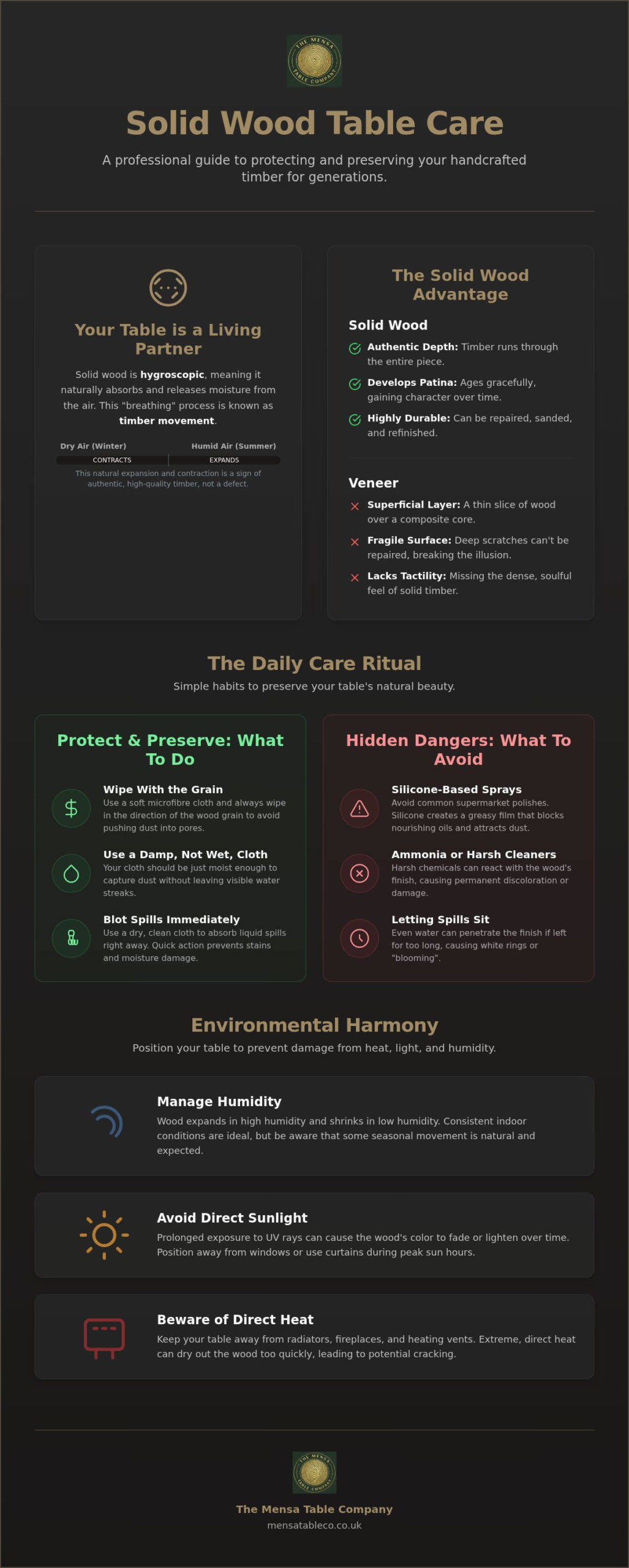
To truly master solid wood dining table care, you must first accept that your table isn’t a static object. It’s a living, hygroscopic material. This means it possesses a cellular structure that continues to interact with the air in your dining room, absorbing and releasing moisture as the seasons shift. While mass-produced alternatives attempt to freeze wood in time, handcrafted furniture embraces this vitality. We view our work as a partnership with the tree; we shape the wood, but we don’t silence its natural instincts.
Solid Wood vs. Veneer: The Structural Difference
When you sit at a Mensa Dining Table, you’re touching timber that runs through the entire piece. Unlike a thin veneer glued over a sterile composite core, solid European Oak or Black Walnut has a tactile density you can feel. It carries a weight and a soul that mass-produced items lack. This structural depth is what allows for the conservation and restoration of wooden furniture over many decades. If a veneer is scratched, the illusion is broken. If solid wood is marked, it simply begins its journey toward a unique patina, a soft glow and deepening of colour that turns furniture into a family heirloom.
The Science of Timber Movement
Humidity affects wood fibres on a microscopic level. When the air is damp, the fibres swell; when the central heating kicks in during winter, they contract. This is known as timber movement. You might notice tiny gaps appearing or a slight shift in the surface across the year. These aren’t defects. They’re the physical evidence of a natural, honest product reacting to its environment. Understanding this cycle is the foundation of effective solid wood dining table care.
Timber movement is not a defect, but the breath of the tree continuing in your home. By acknowledging this movement, you move away from the fear of change and toward a deeper appreciation for the material. A handcrafted table doesn’t just sit in your room; it lives there with you, evolving alongside your family while maintaining its structural integrity for generations to come.
The Daily Ritual: Cleaning and Protecting the Surface
Maintaining the beauty of your furniture shouldn’t feel like a chore. It’s a quiet moment of connection with a piece that serves your home every day. Effective solid wood dining table care begins with a simple, non-invasive routine. We always advise our clients to steer clear of common supermarket sprays. These products often rely on silicone or ammonia to provide a temporary shine. Silicone is particularly problematic; it leaves a stubborn, greasy residue that accumulates in the grain, eventually preventing the wood from accepting new protective oils. Ammonia can be just as harsh, potentially reacting with the timber’s natural chemistry to cause permanent discolouration.
Accidents are part of a well-loved home. When a glass tips or a sauce boat drips, take immediate action. Use a clean, dry cloth to blot the liquid immediately. If you act quickly, the finish will do its job and keep the moisture on the surface. If left to sit, even the most durable solid wood dining table care routine can’t prevent the liquid from penetrating the fibres and causing a stain or “bloom.”
The Correct Way to Dust and Wipe
For daily maintenance, microfibre cloths are the gold standard. They’re soft enough to protect the artisanal finish while effectively lifting away debris. Follow the “damp, not wet” rule religiously. A cloth should be just moist enough to pick up dust without leaving visible trails of water behind. Always wipe in the direction of the grain. This simple habit preserves the timber’s natural appearance and ensures you aren’t pushing particles into the wood’s pores.
Tailored Care for Oak, Walnut, and Ash
Each timber species has its own personality. When cleaning solid European oak, pay attention to its distinctive open grain. This texture is a hallmark of quality, but it can catch fine dust that a quick wipe might miss. For those who cherish the pale, modern aesthetic of solid European ash, avoid any cleaning products that might cause yellowing over time. If your home features the dramatic, dark tones of solid black walnut, regular dry buffing will help maintain its deep, chocolatey lustre.
If you’re still deciding which timber species is right for your space, you can browse our collection to see how these natural materials look in different settings.
Environmental Harmony: Managing Light, Heat, and Humidity
Your dining room is more than just a space for meals; it’s a micro-ecosystem that directly influences the health of your furniture. For effective solid wood dining table care, you must consider the atmosphere of your home as carefully as you choose your cleaning cloths. Timber remains sensitive to its surroundings throughout its life. It thrives when the indoor humidity stays within the sweet spot of 40% to 60%. When levels drop too low, such as during the peak of winter heating, the wood may contract. Conversely, high summer humidity can cause it to expand. Maintaining a steady environment is the kindest thing you can do for your table’s structural integrity.
Positioning is equally vital. We often see tables placed directly against large radiators, which is a recipe for distress. Intense, localized heat sources draw moisture out of the timber far too rapidly, potentially leading to the movement or small gaps mentioned earlier. Keeping a respectful distance between your dining tables and heat sources ensures the wood breathes at a natural, healthy pace.
Shielding from Heat and Moisture
Coasters and trivets are your first line of defence against the daily rigours of a busy home. While our finishes are durable, a boiling pot or a sweating cold glass can still test the surface. We recommend using breathable placemats made from natural fibres like linen or cork. Avoid plastic-backed versions, as these can trap moisture and heat against the timber, potentially clouding the finish. Preventing moisture rings is simple: catch the sweat from cold drinks before it has a chance to settle into the grain.
Managing Sunlight and Colour Maturity
Sunlight acts as a slow, natural catalyst for change. Over the first 6 to 12 months, UV light will gently mature the hue of your timber, a process often called mellowing. To ensure this happens evenly, we suggest rotating your decorative items, such as vases or centrepieces, every few weeks. If a heavy bowl stays in one spot for a year, you may find a ghost of the wood’s original shade underneath. Using curtains or blinds during the hours of peak sun intensity will protect the richness of the grain and prevent the timber from becoming overly parched.
Repair and Renewal: Handling Scratches, Rings, and Spills
A well-used table inevitably gathers the marks of a life well-lived. We believe there is a profound difference between surface character and structural damage. The light scratches from a teenager’s homework or the soft rounding of an edge after years of family dinners contribute to a table’s unique patina. However, when an accident goes beyond character and threatens the timber’s integrity, having a “First Aid” kit in your cupboard is essential for effective solid wood dining table care. This kit should include high-quality microfibre cloths, a 0% VOC refresh oil like Rubio Monocoat Universal Maintenance Oil, and a few wax filler sticks matched to your timber species.
While we don’t offer a formal restoration service, we always encourage our clients to embrace the renewable nature of solid wood. Unlike mass-produced furniture that must be discarded when damaged, a handcrafted piece can almost always be brought back to life. Knowing when to attempt a DIY fix and when to seek advice is the key to maintaining your investment for the next generation.
Removing Water Marks and Heat Rings
Trapped moisture often manifests as a cloudy white ring on the surface. While white rings represent moisture caught within the finish, black spots indicate that liquid has travelled deep into the fibres and reacted with the wood’s natural tannins. For those stubborn white rings, some owners find success using a dry, lint-free cloth and a clothes iron on its lowest heat setting, moving it constantly to gently draw out the moisture. You must be incredibly cautious; too much heat can damage the protective oils. Once the mark is gone, applying a specialized wood balm or maintenance oil will restore the protective barrier and bring back the timber’s natural lustre.
Addressing Scratches and Dents
Solid wood possesses a remarkable memory. If you discover a minor dent, you can often “steam” it out by placing a damp cloth over the area and applying a warm iron for a few seconds. The heat and moisture cause the crushed wood fibres to swell back to their original position. For deeper gouges, particularly in softer timbers like Swedish Pine, wax filler sticks can be used to level the surface. The beauty of solid wood dining table care is that for more significant wear, the surface can be lightly sanded with fine-grit paper and re-oiled, a process that completely refreshes the piece without losing its soul. If you are unsure about the best approach for your specific table, please reach out to our workshop team for guidance on preserving your timber.
The Mensa Philosophy: Built for Life, Cared for with Love
At the Mensa Table Company, we believe that the journey of solid wood dining table care begins long before the first meal is served. It starts in our workshop, where we select slow-grown European Oak and Black Walnut for their inherent stability. A table that is designed with an understanding of natural forces requires far less intervention from you over the years. By choosing a Mensa Dining Table, you’re investing in a piece where every joint and surface is engineered to respect the timber’s vitality.
The structural health of our furniture is anchored by our heavy-duty steel frames. Whether you choose the intricate geometry of a Spider Leg, the industrial strength of an X-Frame, or the clean lines of a U-Frame, these bases do more than just support weight. They provide the necessary tension to guide the timber’s natural movement. This ensures that while the wood “breathes” with the seasons, it never loses its structural truth. This level of craftsmanship significantly reduces the long-term care burden, as the table is built to resist the warping that often plagues mass-produced alternatives.
Matching Benches and Complementary Pieces
The same principles of longevity apply to our handcrafted benches and coffee tables. Because these items often sit in high-traffic living areas or serve as the primary seating for busy families, we ensure a total consistency of finish across the entire collection. This means your daily cleaning ritual remains identical whether you’re wiping down a breakfast bar or a side table. By maintaining a unified solid wood dining table care routine, you preserve the visual harmony of your home while protecting the tactile quality of the natural grain.
A Legacy in Your Home
Choosing durable, UK-made furniture is a quiet act of environmental responsibility. In a world of disposable goods, a solid wood table stands as a defiant alternative that values substance over speed. It’s a site for human connection, a backdrop for the social rituals and quiet morning coffees that define our lives. We take immense pride in knowing that the items we build today will be the heirlooms of tomorrow, gathering a history of laughter and shared meals. We invite you to explore our full range of handcrafted dining tables and find the piece that will tell your family’s story for generations to come.
Preserving Your Legacy for the Years Ahead
Mastering solid wood dining table care is less about following rigid rules and more about nurturing a relationship with a living material. By embracing a gentle daily cleaning ritual and shielding your table from the extremes of heat and direct sunlight, you ensure the timber remains as vibrant as the day it left our workshop. We’ve explored how handcrafted construction and heavy-duty steel frames, like our signature Mensa and Spider Leg designs, provide the structural foundation needed for a lifetime of shared experiences.
Whether you’ve chosen the deep character of solid European timber species or the rich elegance of Black Walnut, your table is destined to become a repository for your family’s history. It’s a site for human connection that only grows more beautiful with age. If you’re ready to bring a piece handcrafted in the UK into your home, our team is here to guide you through the process of selecting and maintaining your perfect focal point.
Invest in a centrepiece built for a lifetime: Browse The Mensa Collection
Your table is more than just furniture; it’s a meaningful investment in the social rituals that define a home and the generations that will gather there.
Caring for Your Timber: Common Questions
How often should I oil or wax my solid wood dining table?
You should typically refresh the protective finish every 6 to 12 months, though this frequency depends on how often your family gathers around the table. A simple way to check is the water bead test; if a drop of water no longer beads on the surface but starts to soak in, it’s time for another coat. Regular maintenance with high-quality oils preserves the tactile quality of the grain and ensures the protective barrier remains effective against daily spills.
Can I use multi-purpose cleaning sprays on my oak table?
We strongly recommend avoiding standard multi-purpose sprays as they often contain silicone or harsh chemicals like ammonia. These ingredients can strip away the natural oils and leave a sticky residue that attracts dust and prevents future maintenance treatments from bonding correctly. For the best solid wood dining table care, stick to a lint-free cloth dampened slightly with plain water or a specialized, pH-neutral wood cleaner that respects the artisanal finish of the timber.
What should I do if I spill red wine or oil on the wood?
Blot the spill immediately with a clean, dry cloth to prevent the liquid from penetrating the wood fibres. Avoid rubbing, as this can push the pigment or oil deeper into the grain. If a mark remains after blotting, you can use a damp cloth with a tiny amount of mild, clear soap. For stubborn oil stains, a light application of a specialized degreaser designed for wood may be necessary before re-applying a maintenance oil.
Is it normal for my wooden table to make “cracking” sounds in winter?
It’s completely normal for handcrafted furniture to make occasional sounds as it adjusts to the dry air of winter heating. These sounds are simply the result of the timber fibres contracting as they release moisture. Because our designs, such as the X-Frame and Spider Leg models, allow for natural movement, these shifts are rarely a cause for concern. Maintaining a stable environment will help minimize these audible reminders that your table is a living, breathing material.
Do I really need to use a tablecloth on a handmade table?
You don’t need a tablecloth for daily life, as our finishes are designed to be durable and tactile. We believe the grain should be felt and seen, as it’s the heart of the piece. However, using a tablecloth during large gatherings can provide extra peace of mind against heavy impact or extensive spills. For everyday protection, high-quality coasters and breathable placemats are usually sufficient to keep the surface looking beautiful without hiding its natural soul.
How do I prevent my laptop or hot plates from marking the timber?
Always use a heat-resistant mat or trivet under hot plates and laptops to prevent heat transfer. Laptops can generate significant localized heat that parches the wood fibres, potentially causing the finish to cloud or the timber to move. Similarly, hot plates can leave permanent rings if placed directly on the surface. Simple barriers like cork or felt-backed mats are excellent tools for solid wood dining table care, ensuring heat never reaches the delicate fibres.
Can direct sunlight actually damage the wood or just change the colour?
While colour change is a natural part of the “mellowing” process, prolonged exposure to intense, direct sunlight can eventually cause structural damage. Over time, UV rays can dry out the timber excessively, leading to fine surface cracks or “checking.” Using blinds or curtains during the brightest parts of the day protects the moisture balance within the wood. This simple precaution ensures your table retains its structural integrity while developing its beautiful, natural patina over many years.
What is the best humidity level for a dining room with solid wood furniture?
The ideal humidity level for preserving solid wood furniture is between 40% and 60%. This range keeps the moisture content of the timber stable, preventing the excessive expansion or contraction that leads to warping. You can easily monitor this with a simple hygrometer. If your home becomes particularly dry in winter, using a humidifier can help maintain this balance, protecting the intricate craftsmanship of your table and ensuring it remains a legacy piece for generations.

Leave a Reply