
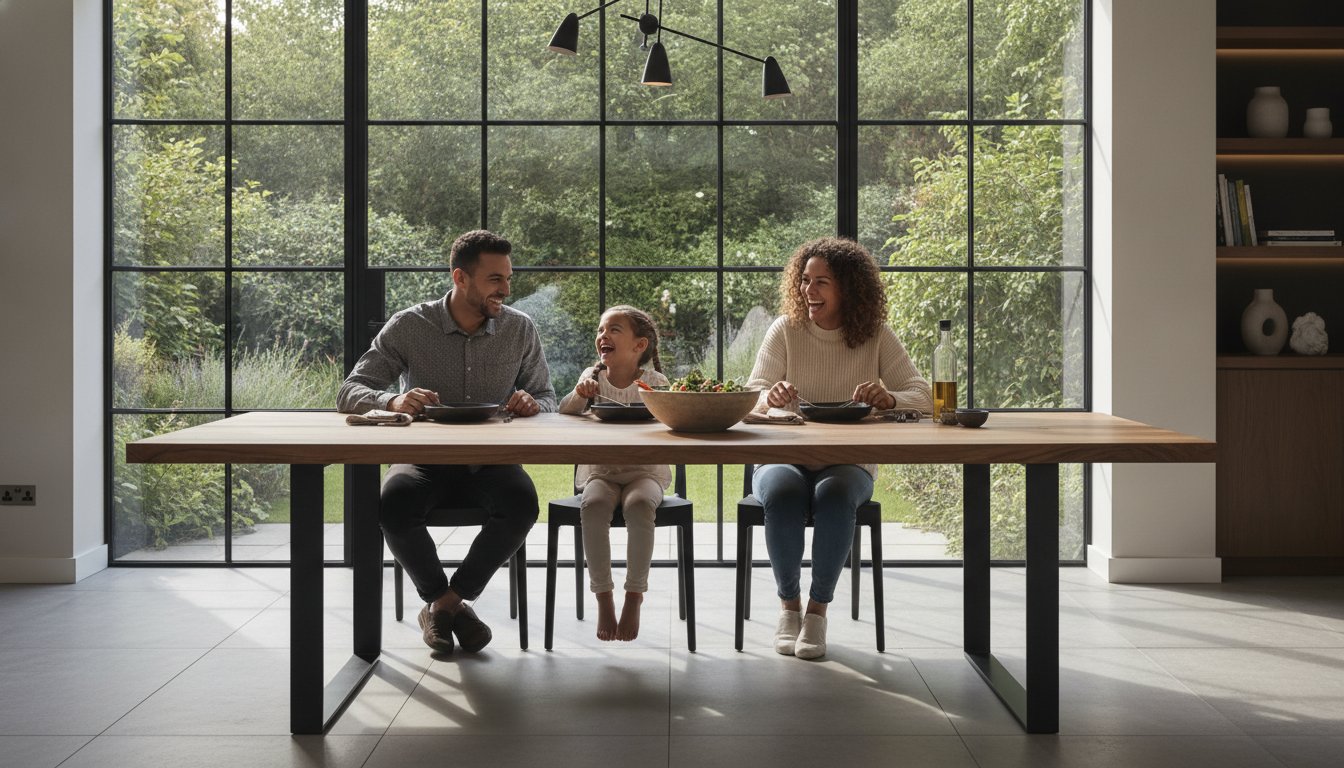
A dining table is rarely just a piece of furniture; it is the architectural anchor of the home and the silent witness to a lifetime of shared stories. Making the right dining table selection requires more than just measuring a floor plan. It’s about finding that rare balance between raw, natural beauty and structural integrity. We understand the hesitation that comes with such a significant investment. You want to avoid the disappointment of a table that feels hollow or lacks the soul of true craftsmanship.
Your journey toward a confident choice starts with understanding how tactile materials and thoughtful design intersect. This guide explores how to harmonise architectural leg profiles, such as the sculptural Spider or the industrial X-frame, with the distinct characters of solid European Oak, Black Walnut, and Ash. We will walk through the nuances of spatial flow and material durability to ensure your table becomes a cherished heirloom. By the end, you will have the clarity to select a handcrafted focal point that reflects your personal style and facilitates deep human connection for generations to come.
Key Takeaways
- Understand why choosing a handcrafted social anchor over disposable alternatives creates a lasting foundation for your family’s rituals and stories.
- Discover how architectural leg profiles, from the space-saving Spider design to the geometric X-frame, influence both the visual weight and the physical flow of your room.
- Learn to distinguish between the tactile characters of solid European Oak, Black Walnut, and Ash to ensure your timber choice meets your durability and aesthetic needs.
- Gain confidence in your dining table selection by mastering the essential measurements required for comfortable seating and effortless movement within your home.
- Explore the bespoke advantage of custom-made furniture, ensuring your piece fits the unique dimensions of your space perfectly rather than settling for standard sizes.
The Philosophy of Dining Table Selection: Beyond Mere Function
The dining table stands as the quiet heart of a home. It’s where morning coffee meets the newspaper and where evening celebrations stretch long into the night. When you approach dining table selection, you’re choosing more than a functional object; you’re selecting a stage for your family’s most meaningful rituals. This piece of furniture acts as a social anchor, grounding the room and inviting connection through its physical presence. It’s a place where stories are told and memories are slowly etched into the grain, much like the shared experiences and authentic atmosphere found at Gio’s Deli.
Defining your aesthetic is the next step in this journey. Many of our clients find their perfect match at the intersection of rustic warmth and modern industrial lines. A thick, tactile timber top paired with a clean, architectural base creates a welcoming environment that feels both grounded and contemporary. This balance ensures the table doesn’t just fill a space; it defines it. The right choice reflects your personal style while remaining timeless enough to evolve with your home.
The Emotional Value of a Handcrafted Focal Point
There is a profound difference between a mass-produced item and one shaped by human hands. Our process is deliberate and personal. We believe that the history of the dining table shows it has always been a site of community, and we honour that heritage by focusing on the maker’s connection to the wood. Every knot and swirl in the timber tells a story of the forest it came from, bringing a piece of the natural world indoors.
Investing in a handcrafted piece means moving away from the cycle of disposable living. You aren’t just buying furniture. You’re commissioning a family heirloom. This shift from transactional to intentional ownership changes the final atmosphere of the room, making it feel curated rather than merely furnished. The knowledge that your table was built with care adds a layer of warmth that flat-pack alternatives simply cannot provide.
Durability vs. Convenience: The Case for Solid Wood
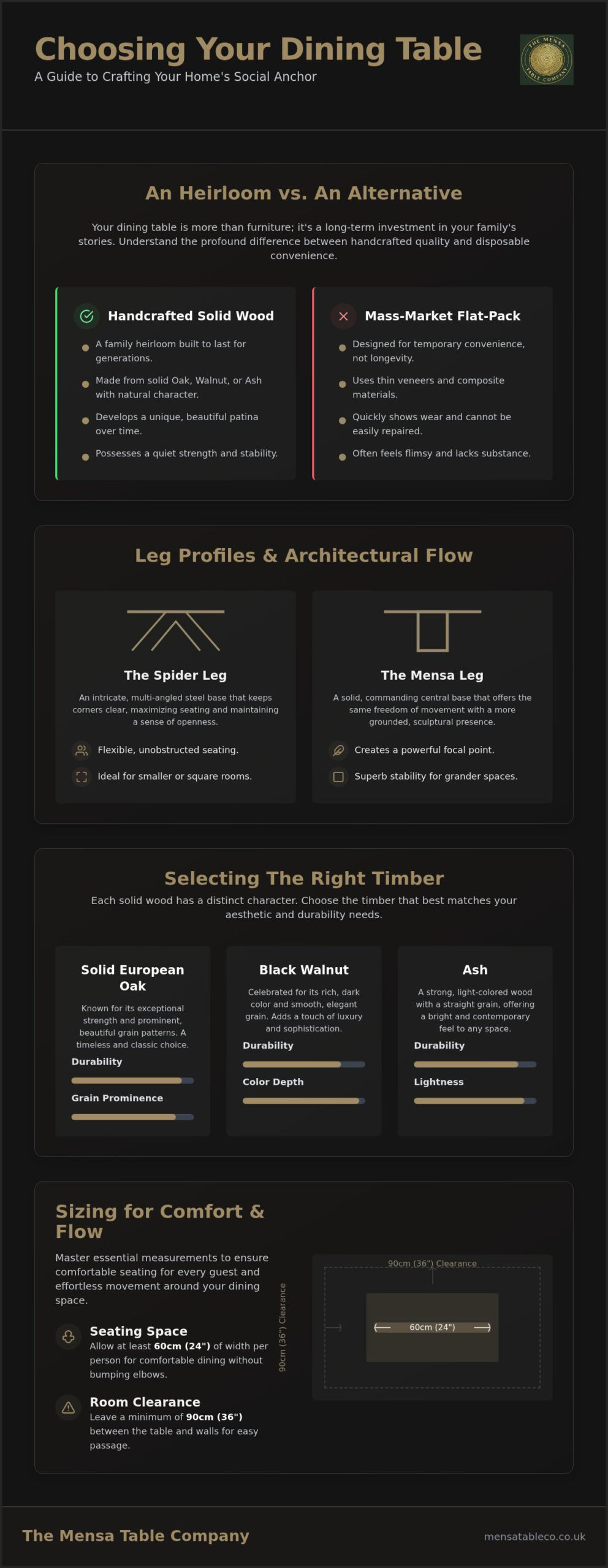
Mass-market flat-pack furniture often relies on thin veneers and composite materials that hide a lack of substance. These pieces are designed for temporary convenience, not longevity. They often feel flimsy and lack the weight required for a truly stable dining experience. In contrast, choosing a table made from solid European Oak or Black Walnut offers a tactile depth that cannot be replicated by machines.
Solid wood develops a unique patina over decades. It records the passage of time through its grain and texture, becoming more beautiful as it ages. While cheap alternatives might look pristine for a few months, they quickly succumb to wear and cannot be easily repaired. A handcrafted frame, built with traditional joinery, possesses a quiet strength. It doesn’t wobble or fail under the weight of daily life. It’s a bridge between generations, built to last far longer than any flat-pack box.
Leg Profiles and Architectural Flow: Choosing Your Base
While the timber surface often captures the first glance, the architecture of the base truly defines how a room functions. Your dining table selection shouldn’t just be about aesthetics; it’s about the physical flow of your home. The choice between a central pedestal and perimeter legs dictates everything from where your guests can sit to how easily you can tuck in your chairs after a meal.
The Mensa and Spider Leg: Centralised Support
Central leg designs are the champions of flexibility. The Spider Leg Dining Table is a particular favourite for those who love to entertain. Its intricate, multi-angled steel base provides incredible stability while keeping the corners of the table completely clear. This means you can squeeze in an extra guest without anyone having to straddle a wooden post. It feels visually light, making it a superb choice for smaller, square rooms where you want to maintain a sense of openness.
In contrast, The Mensa Dining Table offers a more solid, commanding presence. It provides that same freedom of movement but with a grounded feel that suits grander spaces. These centralised frames work beautifully with both rectangular and round tops, acting as a sculptural focal point that draws the eye toward the middle of the room. If you aren’t sure which profile suits your space, you can always speak with our team for a bit of guidance on your specific room layout.
Industrial Frames: X, U, and Trapezium Styles
For those seeking a bolder, more structural look, industrial-inspired frames offer a sense of permanent stability. The X-Frame Dining Table is a classic choice for large, farmhouse-style dining rooms. Its heavy-duty geometry provides a rustic charm that feels incredibly secure, even on extra-long tables. Similarly, The Trapezium Dining Table and The V-Frame Dining Table designs introduce modern architectural lines that add a touch of sophistication to a room. These styles are particularly effective at anchoring long, open-plan spaces.
If your style leans more toward a minimalist or Scandi-inspired aesthetic, the The U-Frame Dining Table and The A-Frame Dining Table profiles provide clean, uncluttered lines. These designs place the support at the ends of the table, creating a frame that highlights the natural beauty of the timber above. When selecting these styles, it’s vital to consider the distance between the legs. This measurement determines your daily seating capacity and ensures that your chairs fit comfortably between the supports without feeling cramped. You can explore our full range of handcrafted dining tables to see how these different profiles change the character of each piece.
Selecting the Right Timber: European Oak, Walnut, and Ash
While the leg profile provides the structural foundation, the timber surface is the part of the table you will interact with every single day. Sourced from sustainably managed forests, the species you choose dictates the tactile warmth, the visual weight, and the long-term durability of your piece. Your dining table selection should be a sensory experience, where the natural variations of the wood grain tell a story of growth and heritage. Unlike mass-produced furniture that relies on thin veneers, we work exclusively with solid timbers that offer a depth of character only nature can provide.
The Character of Solid European Oak
For many British homes, Solid European Oak remains the gold standard for investment furniture. It is a remarkably dense and resilient hardwood, capable of withstanding the rigours of family life for decades. You can identify high-quality oak by its tight, intricate grain patterns and the presence of medullary rays, those beautiful silvery flecks that appear when the wood is quarter-sawn. These natural markers aren’t defects; they’re the fingerprints of a slow-growing, ancient species.
Oak possesses a versatile honey-toned palette that complements both rustic farmhouse settings and clean, contemporary interiors. It takes finishes beautifully, allowing the natural texture to remain the star of the show. Whether you prefer a raw, matte look or a deeper oil that highlights the golden hues, oak provides a reassuringly solid presence in any dining space.
Luxury and Depth with Black Walnut and Ash
If your interior style leans toward the sophisticated and modern, Solid Black Walnut offers an unparalleled sense of luxury. It is prized for its deep, chocolate-brown tones and swirling grain patterns that often feature hints of purple or grey. Walnut is a softer wood to the touch than oak, yet it remains incredibly stable and durable. It creates a bold, dark focal point that grounds a room, especially when paired with minimalist architectural legs.
For a brighter, more contemporary feel, European Ash is an exceptional alternative. It is often lighter than oak, with a creamy white to pale tan colour that helps to enhance natural light in a room. Ash is famous for its striking grain movement, which can be far more dramatic than other hardwoods. It’s a resilient wood, traditionally used for tool handles because of its shock-absorbing qualities, making it a perfect candidate for a hard-working family dining table.
It’s vital to understand that solid wood is a living material. Unlike static, plastic-coated boards, solid timber needs room to breathe. It reacts to the humidity and temperature of your home, expanding and contracting slightly with the changing seasons. This “timber movement” is a sign of authenticity. We craft our tables with specific joinery techniques that allow for this natural respiration, ensuring the wood remains stable without cracking or warping over time. Choosing a natural oil or wax finish protects the wood while allowing you to still feel the grain beneath your fingertips, preserving the sensory connection between the forest and your home.
Sizing and Seating: Measuring for Comfort and Conversation
Finding the perfect fit for your home involves a delicate dance between the physical dimensions of your room and the social atmosphere you wish to create. A successful dining table selection prioritises the flow of movement. We recommend leaving at least 90cm of “walkway” space between the edge of the table and the nearest wall or piece of furniture. This allows guests to pull out their chairs and circulate comfortably without the room feeling congested. It transforms a cramped corner into a breathable, inviting space for connection.
Next, consider your daily reality versus your entertaining aspirations. While a ten-seater table looks magnificent, it may overwhelm your space if you usually dine as a family of four. Think about the ideal length based on your chosen leg profile. As discussed earlier, a central Spider leg allows for more flexible seating, whereas an A-frame or X-frame requires you to calculate the distance between the legs to ensure chairs can be tucked away neatly. If you need help with these technical details, you can request a bespoke sizing consultation to ensure a perfect fit.
The Bench Revolution: Versatile Seating Solutions
We’ve seen a significant shift toward matching benches as a thoughtful alternative to traditional chairs. Benches foster a more informal, communal dining experience, reminiscent of shared feasts and rustic gatherings. They are particularly brilliant for smaller UK homes. When dinner is over, you can simply tuck the bench under the table to reclaim valuable floor space. Choosing benches that match our dining tables creates a unified, architectural look that feels intentional and curated.
Standard Heights and Ergonomic Considerations
Comfort is as much about height as it is about width. The standard UK dining height is typically around 75cm to 77cm, which provides the best posture for most adults. When we craft thick-topped solid wood tables, we pay close attention to “knee room”. A tabletop that is 40mm or 50mm thick requires a frame that doesn’t sit too low, ensuring your legs have plenty of space to move. For those with open-plan kitchen-diners, you might also consider how breakfast bars can complement your main dining area, providing a secondary site for casual rituals like a quick morning tea or a child’s homework station.
The Bespoke Advantage: Crafting Your Vision with The Mensa Table Company
Standard off-the-shelf furniture often forces a compromise between size and style. When you’re making a final dining table selection, you shouldn’t have to settle for a piece that almost fits your home. Modern UK living spaces frequently feature unique alcoves or open-plan layouts that demand specific dimensions. Choosing the bespoke route ensures that your table isn’t just an addition to the room, but a piece designed specifically for the life that happens around it. It’s the difference between a temporary fixture and a forever piece.
Our bespoke process starts with the raw material. We select high-quality European timber, focusing on the natural character of each plank before it ever reaches the workshop floor. From the initial timber selection to the final hand-finished surface, every step is deliberate. We don’t believe in the rushed nature of mass production. Instead, our team of makers takes the time required to ensure every joint is precise and every surface is tactile and inviting. This manual approach results in a table that possesses a quiet confidence and a soul that flat-pack alternatives simply cannot replicate.
Customisation extends beyond the tabletop to the very foundation of the piece. You can tailor the leg finishes to match your existing decor, whether that means the industrial edge of powder-coated steel or the organic warmth of matching natural wood. By choosing the specific profile and finish of your frame, you create a cohesive look that feels intentional. This level of detail ensures your table reflects your personal style, whether you lean toward a rustic farmhouse aesthetic or a sharp, modern industrial vibe. If you are also looking to extend this curated aesthetic to your workspace, read more about sourcing authentic mid-century office chairs.
Beyond the Dining Room: Cohesive Home Design
The philosophy of quality craftsmanship shouldn’t stop at the edge of the dining area. We often help clients extend this aesthetic throughout their homes, creating a furniture narrative that flows naturally from one space to the next. By matching the timber species and leg designs of your dining table to your coffee tables or desks, you establish a sense of harmony. This consistency in craftsmanship across your living and working spaces reinforces the feeling of a home that is curated with care and built to last across generations.
Ready to Begin? Your Bespoke Consultation
Starting your journey toward a handcrafted piece is a collaborative experience. Before you reach out, it helps to have a rough idea of your room’s dimensions and how many people you wish to seat daily. Because we specialise in non-flat-pack, artisanal furniture, our lead times reflect the manual care put into every order. We don’t rush the process because high-quality output requires patience. When you’re ready to move away from disposable furniture and invest in a site for human connection, we’re here to guide you. Contact The Mensa Table Company for a bespoke quote and let’s begin crafting your vision together.
Bringing Your Forever Piece to Life
Your journey through the nuances of dining table selection is about more than finding a flat surface; it’s about anchoring your home with a piece that invites connection. By harmonising signature architectural leg designs with the natural resilience of solid European hardwood species, you create a foundation for decades of shared meals and quiet morning rituals. Whether you’ve chosen the sculptural lightness of a Spider leg or the grounded strength of an X-frame, your choice reflects a commitment to quality that mass-produced alternatives simply cannot match.
We take immense pride in our trade, ensuring every table is handcrafted in the UK to your specific dimensions. This bespoke approach allows the unique, tactile grain of European Oak or Black Walnut to become the true focal point of your room, evolving with your family as a cherished heirloom. It’s a privilege to create furniture that facilitates human connection and honours the natural history of the timber used.
Contact our craftsmen today to discuss your bespoke dining table and take the first step toward a home centrepiece that truly belongs. We look forward to helping you craft a space where stories are told and memories are made for generations to come.
Frequently Asked Questions
What is the most durable wood for a dining table?
Solid European Oak is widely considered the gold standard for durability. Its dense grain structure resists dents and scratches, making it ideal for high-traffic dining areas. While Black Walnut is also resilient, Oak’s sheer hardness provides a reassuring longevity that lasts for generations with minimal maintenance. It remains our most requested species for those seeking a true investment piece.
How much space should I leave around my dining table?
You should leave at least 90cm of clearance between the table edge and any walls or furniture. This measurement ensures that guests can pull out their chairs and move around the room without feeling restricted. Prioritising this walkway space is a crucial step in successful dining table selection, as it maintains a comfortable social flow throughout your home.
Why should I choose a bespoke table over a mass-produced one?
Choosing a bespoke table allows you to tailor the dimensions and materials to your specific living environment. Unlike mass-produced flat-pack furniture, our handcrafted pieces are built using traditional joinery and solid hardwoods. This artisanal approach results in a unique focal point that possesses structural integrity and a personal connection to the maker, rather than being a disposable commodity.
How do I care for a solid oak dining table to prevent timber movement?
Preventing timber movement involves maintaining a consistent indoor environment and using natural oil finishes. Solid wood is a living material that expands and contracts with humidity; however, keeping your home at a steady temperature helps minimise this. We recommend reapplying a high-quality wood oil once or twice a year to nourish the grain and protect the surface from moisture.
Can I customise the leg style and finish of my table?
Yes, you can fully customise both the architectural profile and the finish of your table legs. We offer a range of signature designs including the Spider, X-Frame, and Trapezium styles. These can be finished in various powder-coated steel colours or natural wood to match your interior decor. This flexibility ensures your table feels like a deliberate part of your home’s design narrative.
What is the difference between European Oak and Swedish Pine for furniture?
The primary difference lies in density and character. European Oak is a dense hardwood with a complex grain, offering superior resistance to wear and a sophisticated aesthetic. Swedish Pine is a softer wood with a more rustic, knotty appearance. While Pine is a beautiful and more affordable option, Oak is the preferred choice for those seeking a forever piece with maximum durability.
How many people can comfortably sit at a 2-metre dining table?
A 2-metre table comfortably seats six to eight people depending on the leg design you choose. A central Spider leg allows for more flexibility at the corners, potentially accommodating eight guests for social gatherings. If you prefer traditional end-placed legs like the U-Frame, six people can dine with ample elbow room, ensuring everyone feels connected without being crowded during a meal.
Do benches really save more space than dining chairs?
Benches are significantly more space-efficient because they can be tucked completely under the table when not in use. This clears the walkway and opens up the room’s floor plan. While chairs often protrude into the living space, matching benches provide a clean, architectural silhouette that is perfect for smaller UK dining rooms or open-plan kitchens where floor space is at a premium.

Leave a Reply