
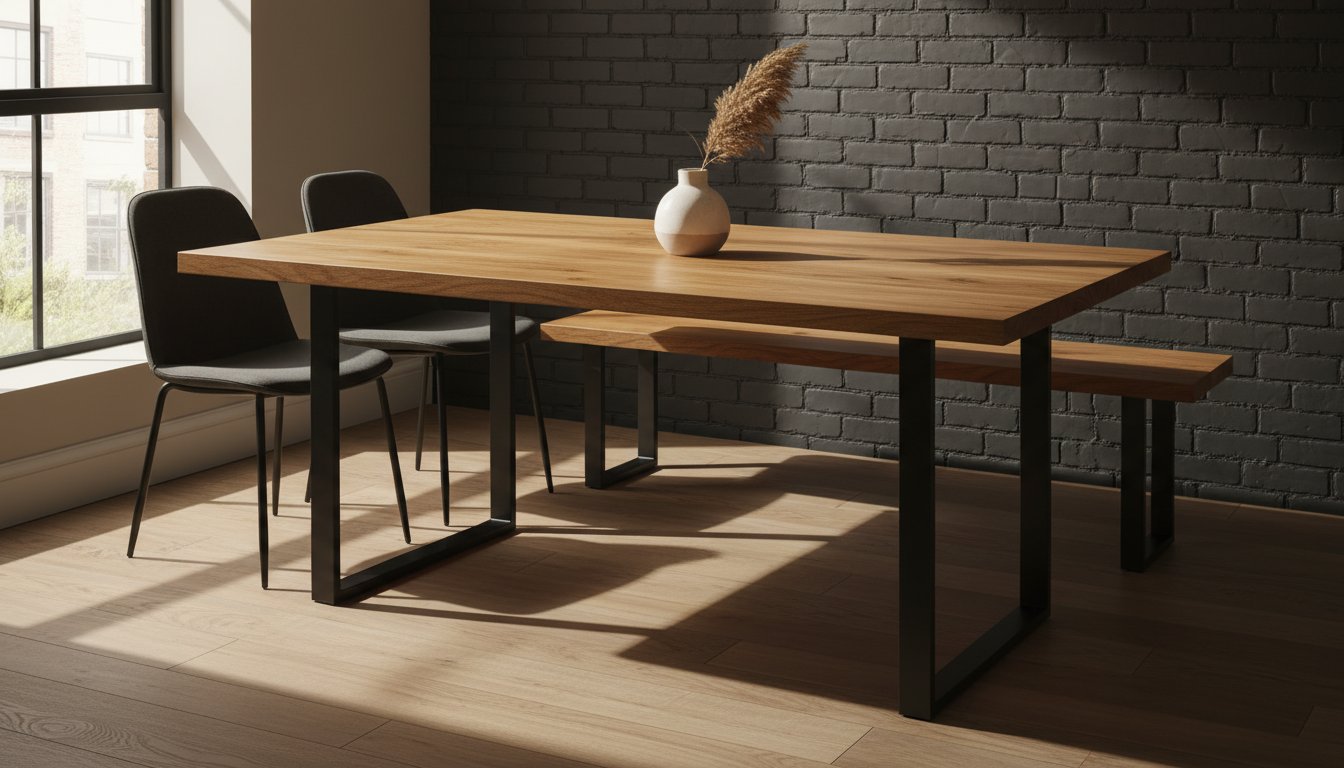
The belief that a compact home requires a compromise on quality is perhaps the greatest myth in modern interior design. Many of us fall into the trap of buying “temporary” furniture that lacks soul and inevitably fails, yet the alternative often feels like a bulky intrusion that leaves no room for movement. Finding the perfect solid wood dining table for small spaces UK is about more than just measurements; it’s about finding a piece that breathes life into a room without stealing its air. We understand the frustration of cramped knees and cluttered aesthetics, and we believe your home deserves a focal point that offers both durability and grace.
In this guide, we’ll show you how to select a handcrafted table that maximizes every square inch of your floor plan. You’ll discover how specific leg profiles, such as our V-Frame or Spider Leg designs, can create an illusion of space while providing rock-solid stability. We’ll explore the tactile beauty of sustainably sourced timber and how a single, well-chosen investment can transform your daily rituals into meaningful experiences. From understanding the impact of new safety regulations to picking the right timber for longevity, we’re inviting you to see how your small space can finally feel like home.
Key Takeaways
- Understand why investing in a handcrafted piece avoids the cycle of “fast furniture” and how real timber develops a unique character that laminate simply can’t match.
- Learn how to select a solid wood dining table for small spaces UK by focusing on open leg designs like the Spider or V-Frame to keep your floor plan feeling airy.
- Master the “90cm rule” for comfortable movement and discover why a slightly narrower table width often provides a more functional flow in compact dining rooms.
- Explore the “tuck-away” advantage of matching benches and breakfast bars to reduce visual clutter and reclaim valuable floor space when they aren’t in use.
- Get a glimpse into the artisanal process that turns raw timber into a “forever” centrepiece designed specifically for the unique dimensions of UK homes.
The Small Space Dilemma: Why Solid Wood Outlasts Flat-Pack in UK Homes
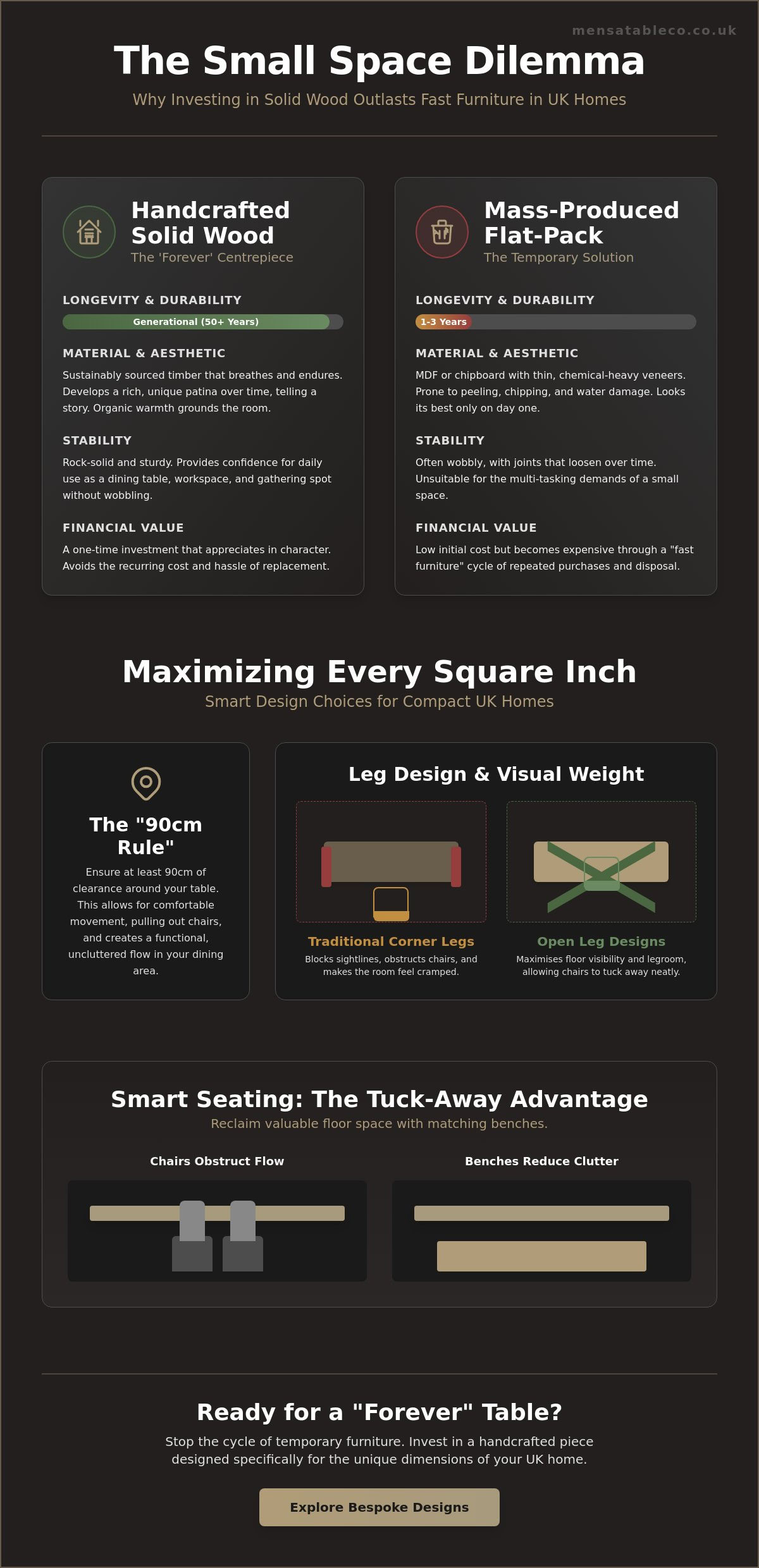
Living in a compact UK home often feels like a constant negotiation with square footage. We often settle for flat-pack solutions because they seem convenient, yet these pieces rarely survive a second house move or even a few years of rigorous daily use. Choosing a solid wood dining table for small spaces UK isn’t just a design choice; it’s a decision to break the cycle of disposable living. While mass-produced furniture fills landfills, a handcrafted timber piece offers a quiet permanence that anchors a room.
There is a persistent myth that solid timber is too “heavy” or “clunky” for a small apartment. In reality, the weight of the material provides the very stability that small-scale furniture often lacks. A sturdy table doesn’t wobble when you’re working from home or sharing a meal, giving you confidence in your environment. Beyond the physical, there is an emotional weight to consider. Your table serves as the backdrop for shared rituals, from the first quiet morning tea to late-night gatherings with friends. It’s a site for human connection, evolving from a mere commodity into a meaningful life investment.
The Hidden Cost of Temporary Furniture
Mass-produced MDF and chipboard rely on chemical glues and thin veneers that inevitably peel when exposed to the heat of a coffee cup or the humidity of a small kitchen. These materials fail under the daily pressure of small-space multi-tasking, where a dining surface often doubles as a desk or a prep area. In contrast, Solid wood is a resilient, living material that breathes and endures. Handcrafted furniture is a thoughtful alternative to mass-produced goods, offering a generational investment that survives the rigours of modern life.
While a laminate table looks its best on the day it arrives, a piece made from solid oak or walnut only improves with age. It develops a rich patina, telling the story of every meal and conversation held around it. This longevity makes it a financially sound choice over time, as you won’t find yourself replacing it every few years when the edges begin to fray or the joints start to give way.
Balancing Function with Artisanal Aesthetic
The organic warmth of natural grain patterns softens the sharp lines often found in modern UK interiors. It brings a sense of the outdoors in, grounding a room with a tactile presence that cold, synthetic materials can’t replicate. We believe the centrepiece of your home shouldn’t be a mere transactional purchase. An artisanal spirit ensures that even in a restricted floor plan, your furniture feels intentional and personal. By selecting a table with a unique history and manual craftsmanship, you’re choosing substance over flashy marketing, creating a home that feels both sophisticated and deeply inviting.
Leg Design and Visual Weight: Keeping Your Compact Dining Area Airy
The physical footprint of a table tells only half the story. In a restricted room, the concept of visual weight determines whether the space feels like a sanctuary or a corridor. A solid wood dining table for small spaces UK often fails not because the top is too large, but because the legs are too thick. When you block the line of sight under a table, the floor appears to stop at the edge of the timber, effectively shrinking the room. By choosing industrial-style steel legs, you maximise floor visibility, tricking the eye into perceiving a more expansive area.
Visual transparency in furniture design refers to the amount of light and floor space visible through and around a piece, directly influencing how “heavy” an object feels within a room. This is why the Mensa style has become a gold standard for small-room flow. Its structure provides the necessary support for a heavy timber top while maintaining a minimalist silhouette that doesn’t dominate the visual field.
Spider Legs and X-Frames: The Legroom Revolution
Traditional corner legs are the enemies of the compact dining room. They dictate exactly where chairs must sit and often lead to bruised shins. Our Spider Leg Dining Table and X-Frame designs solve this by moving the support structure toward the centre. This central-pedestal approach eliminates corner obstructions, allowing you to tuck chairs completely under the table when they aren’t in use. The geometry of the X-Frame is particularly clever; it provides unwavering stability while leaving the corners open for extra guests. This focus on longevity and functional design reflects the principles found in the Government Buying Standards (GBS) for furniture, which prioritise durability and the reuse of high-quality materials.
U-Frames and Trapeziums: Sleek Lines for Modern Lofts
For those who prefer a more structured, industrial aesthetic, the U-Frame and Trapezium designs offer a perfect middle ground. These sleek metal frames complement the raw, natural textures of our timber tops without the bulk of traditional timber posts. Trapezium legs, in particular, angle inward to provide a wide, stable base while maintaining a slim profile at the top. This minimalist approach works beautifully in modern UK lofts where every inch of “air” counts. If you’re looking for a design that balances presence with lightness, you might find that our Mensa Dining Table provides the ideal flow for your home’s layout. It’s about creating a centrepiece that feels grounded yet allows the room to breathe, ensuring your furniture serves your life rather than obstructing it.
Choosing Dimensions: Standard UK Sizes vs. Bespoke Small-Space Solutions
Measuring your room is the first step in a journey toward a more intentional home. While many retailers categorise furniture by the number of seats, this rigid approach often ignores the unique geometry of UK terraced houses or modern apartments. To truly fit a solid wood dining table for small spaces UK, you must look beyond the timber top and consider the “90cm rule.” This guideline suggests leaving 90cm of clearance between the table edge and the nearest wall or piece of furniture. It ensures that guests can pull out chairs and move freely without feeling trapped or causing a bottleneck in a high-traffic area, which is also a vital consideration for households that accommodate an electric wheelchair UK.
In a narrow room, the width of the table is often more critical than its length. While 90cm is the industry standard for dining, we’ve found that reducing the width to 80cm or even 75cm can dramatically improve the flow of a room without sacrificing the dining experience. A 120cm x 75cm table offers a compact footprint for four, whereas a 140cm x 80cm piece provides a bit more breathing room for social rituals. These subtle shifts in dimension are what separate a cramped kitchen from a curated dining space. It’s about finding the balance where the furniture feels present but never intrusive.
Oak vs. Walnut: Selecting the Right Tone for Your Light
The species of wood you choose influences the perceived size of your room as much as the dimensions do. Light oak, with its honeyed tones and prominent grain, reflects natural light and helps a dark corner feel more open and airy. Walnut, on the other hand, offers a sophisticated depth that brings warmth and a sense of heritage to a space. Beyond the visual, the tactile quality of these timbers is central to our process. We source our materials with a deep respect for natural elements, aligning our workshop practices with the UK Government Buying Standards for furniture. This commitment to ethical sourcing ensures that the history of your timber is as rich as its appearance.
Bespoke Sizing: Every Millimetre Matters
Standard sizes often fail when faced with non-standard UK room layouts, such as awkward alcoves, chimney breasts, or bay windows. This is where the advantage of handcrafted production becomes clear. Unlike mass-produced alternatives, our manual approach allows us to adjust the millimetres to suit your specific constraints. When you communicate your space needs to a master craftsman, you aren’t just buying a product; you’re participating in a creative collaboration. We take the raw components and shape them to fit your life, ensuring that every inch of your floor plan is respected and utilised. This bespoke flexibility is often the only way to solve the puzzle of a truly unique home layout.
Seating Strategies: Why Benches and Breakfast Bars Save Space
Once you’ve selected the perfect solid wood dining table for small spaces UK, the focus shifts to how you’ll inhabit the area around it. Traditional chairs, while familiar, often pose a challenge in narrow rooms because their backs and legs create a lot of visual noise. Even when pushed in, they still occupy significant floor space. We’ve found that the right seating strategy is what truly unlocks the potential of a compact floor plan, allowing the room to feel open and purposeful rather than cluttered.
Modern UK living often demands that our furniture performs multiple roles throughout the day. A dining surface isn’t just for meals; it’s a home office, a craft station, and a social hub. By choosing seating that complements the table’s geometry, you ensure that these transitions feel effortless. It’s about creating a setting where the furniture supports your daily life without becoming a physical obstacle in your home.
The Magic of Tucking: Benches vs. Chairs
Benches are the unsung heroes of small-space design. Their primary advantage is the “tuck-away” factor; a bench can be slid completely under the table when it isn’t in use, instantly reclaiming valuable floor space for movement. This creates a clean, minimalist silhouette that reduces the visual clutter of multiple chair backs. Benches frame the table as a backdrop for shared experiences, offering a sense of communal warmth that individual chairs sometimes lack. They also provide incredible social flexibility, as it’s much easier to squeeze an extra guest onto a bench than it is to find another matching chair. We craft our Matching Benches to mirror the timber and finish of your table, ensuring a cohesive look that feels intentional and calm.
Breakfast Bars and High-Level Dining
In homes where a traditional dining room isn’t an option, breakfast bars offer a sophisticated alternative. These taller surfaces allow you to utilise transitions between kitchens and living areas, turning a “dead” corner into a casual dining spot. By raising the height of the surface, you create the illusion of more floor space, as the eye can see further under the piece. Many of our customers also use our breakfast bars or industrial-style desks as a bridge between work and leisure. A solid timber desk provides a tactile, grounding surface for the work-day, then transitions seamlessly into a space for an evening meal. This manual approach to multi-functional design ensures that your furniture works as hard as you do, providing a “forever” piece that adapts to your changing needs.
Investing in a Handcrafted Mensa Table for Your Home
Our workshop is a space where raw timber and manual skill meet to create something truly enduring. When you choose a solid wood dining table for small spaces UK, you’re looking for more than just a surface; you’re seeking a piece of furniture that respects the specific rhythm and constraints of your home. We don’t believe in the transactional nature of mass production or the fleeting appeal of trend-driven design. Instead, we focus on the quiet confidence of quality, ensuring every joint and grain pattern is given the attention it deserves. This artisanal approach is what makes our tables a site for human connection, serving as a backdrop for shared rituals across multiple generations.
The journey from a raw slab of timber to a finished centrepiece is a deliberate and steady process. We lead with the materials, allowing the natural origins and unique physical characteristics of the wood to dictate the final form. This methodology ensures that no two tables are ever exactly alike, providing you with a piece of heritage that is uniquely yours. It’s a grounded and honest way of working that values substance over flashy marketing, reflecting our deep respect for the natural elements we use every day.
The Mensa Signature: Form Meets Function
Our design philosophy is rooted in the belief that furniture should serve your life without obstructing it. We understand that UK homes often present unique challenges, from narrow galley kitchens to modern open-plan living areas where every millimetre is vital. Our tight-knit team of craftsmen takes the time to get it right, moving carefully through every stage of production. Whether it’s the architectural strength of our signature Mensa design or the airy geometry of our Spider Leg tables, each piece is built to provide unwavering stability. These designs are specifically curated to offer the “tuck-away” flexibility needed in compact rooms, ensuring that your home feels spacious even when the table is fully set.
Ordering Your Bespoke Table Today
Finding the right fit for an awkward alcove or a non-standard room layout shouldn’t be a struggle. We’ve designed our process to be as personal and inviting as the furniture itself, inviting you to participate in the creation of your table. You can explore our diverse range of base designs on our website, including the structural elegance of our X-Frame, U-Frame, and A-Frame options. Each design offers a different way to frame your space, allowing you to choose the specific level of visual weight that feels right for your interior aesthetic. If you have specific dimensions in mind or want to discuss the tactile qualities of different timber choices, we encourage you to get in touch. We invite you to explore our range of handcrafted dining tables and discover a “forever” piece that truly belongs in your home.
Transform Your Small Space with Timeless Craftsmanship
Your home’s footprint doesn’t have to limit its character or the quality of the moments you share within it. We’ve explored how the right leg geometry can reclaim visual space and why choosing bespoke dimensions often solves the puzzle of a non-standard room layout. By moving away from disposable alternatives and toward a solid wood dining table for small spaces UK, you’re investing in a piece that matures alongside your family. Since we were founded in 2018 by local craftsmen, our mission has been to provide an intentional alternative to mass-produced goods.
Our signature Spider Leg and Mensa designs are born from a deep respect for natural elements and a commitment to using sustainably sourced, high-quality timber. Every table we create is a testament to the belief that even the smallest dining area deserves a focal point with heart and heritage. We invite you to view our collection of handcrafted solid wood dining tables and discover how our manual approach can elevate your daily rituals. Your perfect “forever” piece is ready to be shaped for your home.
Frequently Asked Questions
What is the best shape dining table for a very small room?
A rectangular or square table is often the most efficient choice because it can be placed flush against a wall when it isn’t in use. While round tables are often suggested for flow, they can’t be tucked away as easily, which often wastes valuable floor area. A slim rectangular solid wood dining table for small spaces UK provides a generous surface for dining or working without obstructing the natural movement through a compact room.
How much space do you need around a dining table in the UK?
You should aim for a clearance of 90cm between the table edge and your walls or other furniture. This distance is the standard for allowing guests to pull out chairs and move comfortably without feeling trapped. In particularly tight spots, you can reduce this to 60cm, though it’s best to use benches in these areas so the seating can be tucked entirely out of the way when the meal is finished.
Is solid wood better than glass for a small dining area?
Solid wood is a superior choice because it brings a tactile warmth and organic soul to a home that glass simply cannot replicate. While glass is transparent, it often feels cold and requires constant cleaning to remove smudges and dust. Timber is a living material that develops a beautiful patina over time, making it a durable, “forever” investment that feels personal and inviting rather than clinical.
Can I get a solid wood table that is only 100cm or 120cm long?
We frequently handcraft tables at 100cm and 120cm lengths to meet the needs of modern UK apartments and terraced houses. Since our process is manual and artisanal, we aren’t bound by the rigid size categories of mass-market retailers. A 120cm table is an ideal size for seating four people comfortably, providing a substantial centrepiece that doesn’t overwhelm the limited square footage of a smaller room.
How do I stop a solid wood table from looking too “heavy” in a small flat?
Selecting a light timber like oak and pairing it with a minimalist leg design will keep your dining area feeling airy. Leg styles such as our V-Frame or Spider Leg designs create visual transparency, allowing light to pass through the structure and keeping the floor visible. This prevents the furniture from becoming a solid block in the room, ensuring it feels grounded yet light enough to maintain a sense of space.
What is the difference between a pedestal leg and a spider leg for space-saving?
Spider legs offer more flexibility for seating than a traditional central pedestal because they provide more room to tuck chairs in at the corners. While both designs eliminate the obstruction of standard corner legs, the splayed geometry of the spider leg offers better stability for heavy timber tops. It’s a clever design solution that maximises both your physical legroom and the available floor space around the table.
Do solid wood tables require a lot of maintenance in small, humid kitchens?
Modern, high-quality finishes protect solid timber from the humidity and temperature shifts common in small UK kitchens. Our tables are treated to be resilient, so they don’t require intensive care beyond a simple wipe with a damp cloth after use. This protection ensures the wood won’t warp or degrade, allowing the table to remain a functional and beautiful part of your home for many years.
Are matching benches more space-efficient than dining chairs?
Matching benches are far more efficient because they can be slid completely under the table when they aren’t being used. This removes the visual clutter of chair backs and instantly opens up the floor for other activities. Benches also offer better social flexibility, as you can easily fit an extra guest onto a bench without the need to find and store an additional matching chair.

Leave a Reply