

What if a longer furniture warranty offers less reassurance than a shorter one? The headline period matters, but it doesn’t tell you which parts are covered, what’s excluded or what happens if a claim is accepted. The questions to ask about furniture warranty are the ones that reveal those details before you buy.
It’s sensible to want clear protection for a piece that will become part of everyday life. Yet warranty wording can be difficult to compare, and natural materials may vary or change with their surroundings. That can leave room for uncertainty about what counts as a fault. Reading the terms carefully helps you understand where coverage begins and ends.
This checklist explains how to compare coverage, exclusions, remedies and claim steps using consistent questions. It also covers the records worth keeping, from the warranty document to proof of purchase. If you’re choosing a handmade table, consider its materials and intended use alongside the written terms. That way, your decision rests on more than the number of years in a headline.
Key Takeaways
- Look beyond a warranty’s headline duration to understand what the written terms cover.
- Use the questions to ask about furniture warranty to compare coverage, exclusions and remedies consistently.
- Compare like with like, including the claim steps and evidence each warranty requires.
- Consider how the furniture’s materials and intended everyday use relate to the terms.
- When choosing handcrafted furniture, discuss the piece you have in mind and keep warranty expectations grounded in writing.
Questions to Ask About a Furniture Warranty Before You Buy
Read warranty wording before choosing a piece that may be part of daily life for years. A furniture warranty is a promise made by a maker or seller, with written terms explaining what it covers and how it applies. The details matter more than a reassuring headline or a general statement about quality.
Warranty value depends on the problems covered, the remedies offered and the requirements for making a claim. A warranty is also distinct from your statutory consumer rights in the UK. Its terms describe the additional promise being offered; they don’t replace or fully explain the legal protections that may apply to your purchase. For a general overview of warranty concepts, see Understanding the legal definition of a warranty.
What does a furniture warranty actually promise?
The written terms should identify eligible products, covered faults and the remedy that may be available if a claim is accepted. That might be a repair, replacement or another response, but the terms determine what applies. Don’t assume that warranties for different pieces cover the same components, faults or period.
A maker’s description of careful workmanship or an expectation that furniture will last is not the same as a specific warranty promise. Such descriptions may help you understand a piece, but only the warranty terms explain its stated coverage. Read them alongside any care instructions. If phrases such as “manufacturing fault” or “normal use” are unclear, ask what they mean in the context of the written terms.
Why should you ask before ordering?
Asking before you commit gives you a consistent basis for comparison. A longer stated period doesn’t tell you whether the issue you’re concerned about is covered, what response the seller may offer or what evidence you’ll need. Compare the same points across the written terms instead of relying on broad phrases such as “built to last”.
The right questions depend on the piece, its materials and how you expect to use it. A dining table used for family meals every day has a different role from a desk in a little-used room. If you’re exploring handcrafted dining tables, consider the table’s intended setting and how the written terms relate to it. For natural materials, ask how the terms distinguish a covered fault from expected variation or change, and whether care instructions affect coverage.
Keep questions specific: “Which parts are covered?”, “What situations are excluded?” and “What would I need to provide if I made a claim?” The answers help you judge whether the written promise fits the furniture you’re choosing. Keep a copy of the terms that apply to your order so you can refer to the exact wording later.
Ask What the Furniture Warranty Covers, and What It Excludes
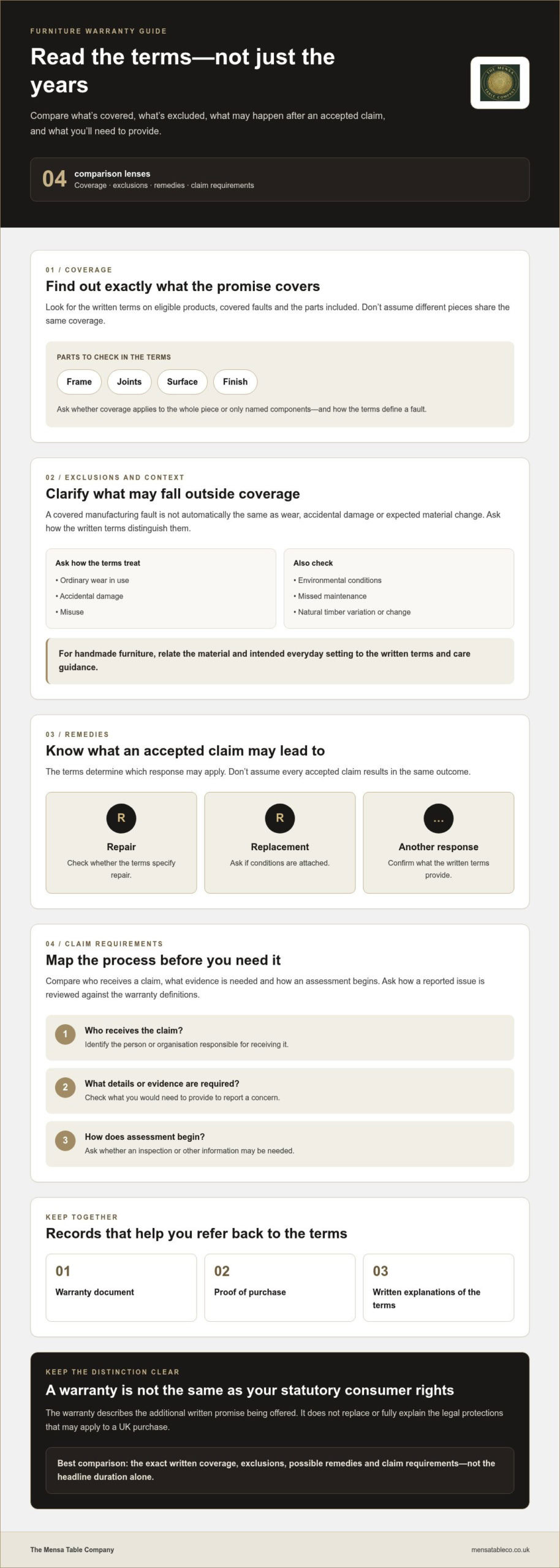
Start with specifics. Ask which parts, materials and types of fault the written terms address, then look for the same detail in the document you receive. A broad phrase such as “quality guaranteed” doesn’t explain whether the terms cover a particular joint, finish or component, or what happens if you report a fault.
A covered manufacturing fault is different from ordinary wear in use or damage caused by an accident. The distinction may sound simple, but the wording and circumstances matter. Ask how a reported issue is assessed against the warranty’s definitions, and what information or inspection may be needed to decide whether it falls within the stated coverage.
Which faults and furniture parts are included?
Check whether the terms treat the frame, joints, surface, finish and other components separately. Ask whether coverage applies to the whole piece or only named parts, and how the terms define a fault. This distinction is especially evident when evaluating technical or specialised seating, where retailers such as Elite Massage Chairs outline multi-part warranty terms distinguishing structural frames from internal components and motors. It’s useful to know who reviews a reported issue and how the written coverage is applied, rather than assume what a warranty usually includes.
How do materials and everyday use affect coverage?
Materials have their own character, and timber can show natural variation or change over time. Ask how the terms distinguish those changes from a fault, and whether the answer differs by material. If you’re considering a particular type of timber, check how the written terms describe its natural variation and what care guidance applies to the finished piece.
Clarify how the warranty treats ordinary wear, accidental damage, misuse, environmental conditions and missed maintenance. These may be handled differently or excluded, depending on the written terms. This is especially relevant when assessing items exposed to weather, where outdoor living retailers such as Top Tier Patio Gear specify terms tailored to elements like sun and moisture. Ask for examples relevant to the furniture’s intended setting: a dining table used for everyday meals may encounter different conditions from a desk in a quieter room. Make sure any explanation is consistent with the document.
Then ask what remedy may follow if a fault is accepted. Do the terms specify repair, replacement or another outcome? Is there a process for choosing between those options, and are conditions attached? A clear answer helps you understand the promise without assuming every accepted claim leads to the same result.
Ask who receives a claim, what details or evidence they’ll need and how an assessment begins. Keep the warranty document and purchase records together, along with any written explanation of the terms. These practical details can help you follow the stated process if a concern arises, without implying how a claim will be decided.
If you’re weighing up a handmade table, discussing its materials and intended everyday use can help put the written terms in context. The contact page is a place to discuss the piece you have in mind. Keep any warranty expectations tied to what the terms actually state.
Compare Furniture Warranty Terms, Remedies and Claim Requirements
A side-by-side comparison makes differences easier to spot, provided you’re comparing like with like. Set the written terms for equivalent furniture types next to each other, rather than weighing a detailed warranty against a broad advertising phrase. The questions to ask about furniture warranty should clarify what happens in a relevant situation, not just how reassuring the wording sounds.
Compare warranty terms by the problem covered and the remedy promised. A longer stated period alone doesn’t show whether a warranty is more useful. Its value also depends on which faults are included, what is excluded and what you’d need to do to make a claim. Use a simple table to record the exact wording or note where you need clarification.
| Compare | What to record |
|---|---|
| Coverage | Which products, parts, materials and faults are covered? |
| Exclusions | What situations, types of damage or care issues are excluded? |
| Duration | How long does coverage last, and what date starts the period? |
| Remedy | What outcome do the terms describe if a claim is accepted? |
| Claim steps | Who receives the claim, what evidence is needed and how does assessment begin? |
Fill in each row from the warranty document, not memory. If the wording is unclear, note the precise point you want explained and compare the answer with the written terms. This can reveal meaningful differences, such as one warranty naming a specific remedy while another describes only a general process.
How long does coverage last, and when does it begin?
Ask whether the period starts on the purchase date, delivery date or another date stated in the document. Record the exact wording, including any conditions that affect the start or end of coverage, rather than relying on a verbal summary. A warranty period is separate from statutory consumer rights; don’t assume changing its length changes those rights. For UK guidance, refer to current information from an official consumer advice source.
What happens when you need to make a claim?
Find out who receives a claim, how to begin and what details are required, such as order information, a description of the issue or photographs. Check whether the terms explain how an item will be assessed, whether transport may be needed and who is responsible for arranging or covering related steps. Don’t infer details that the document doesn’t provide.
Keep the order confirmation, the warranty terms supplied for that purchase and relevant correspondence together. If you need to explain a concern later, the exact document and a clear record of the conversation can help you describe the issue in relation to the terms. Comparing claim steps alongside coverage and duration gives you a fuller picture than a headline period alone.
Use This Furniture Warranty Checklist Before You Commit
Before placing an order, use the same questions to ask about furniture warranty for each option you’re comparing. Consistent questions make differences easier to spot and keep the decision grounded in written terms rather than a reassuring summary or headline duration.
Questions to put to the maker or seller
Ask for the complete warranty wording and make sure it applies to the specific furniture piece and order you’re considering. If an answer is given in conversation, ask where the same point appears in the document or request written clarification so you can refer to it later.
- Coverage: Which parts, materials and types of fault are included? Does the wording apply to this exact product?
- Exclusions: How do the terms treat ordinary wear, accidental damage, misuse, environmental conditions and care or maintenance?
- Duration: How long does coverage last, and what event starts the period, such as purchase or delivery?
- Remedies: If a claim is accepted, what outcome do the written terms describe? How is the appropriate remedy decided?
- Claim steps: Who should receive a claim, how does the process begin and what information or evidence should you provide? How is a reported issue assessed?
- Written evidence: Can you have the full terms that apply to your order? What records or photographs would be useful if a concern arises later?
Use the answers as a comparison tool, not a substitute for reading the warranty itself. If two explanations sound alike, check whether the written coverage, exclusions and claim requirements match. If they differ, note the precise wording so you can make a considered comparison before committing.
What should you save after purchase?
Keep a simple digital or paper folder with the receipt or order confirmation, product description and version of the warranty supplied for your purchase. Add care instructions and any messages that explain the terms. If a concern comes up later, save related correspondence in the same place so the timeline and details are easy to follow.
It can also help to record delivery details and take clear photographs of the furniture’s condition when it arrives, if documenting it is useful. Keep images with the order information rather than relying on memory alone. These records don’t determine what a warranty covers, but they can help you describe the piece and refer to the relevant documents accurately.
Choosing a table is about more than appearance; it’s also about how it will serve everyday meals, work and time together at home. The team’s contact page provides a way to discuss the table you have in mind and the details that matter to your choice.
Choose Handmade Furniture with Clear Expectations and a Personal Conversation
A well-chosen piece should suit both the room and the people who use it. Before ordering, consider how the furniture will serve you: a dining table may host everyday meals and long conversations, while a desk has a different role in the home. Warranty questions belong in that decision alongside the piece’s materials, construction and intended use.
The Mensa Table Company makes handcrafted tables and complementary furniture, including matching benches, coffee tables, breakfast bars and desks. The range includes Mensa, Spider Leg, X-Frame, U-Frame, Trapezium, A-Frame and V-Frame dining tables. A conversation about the piece can help you identify which details matter in your home. Keep that discussion grounded in the written warranty: handmade quality and warranty coverage are not interchangeable promises.
Bring the right questions into a furniture conversation
Describe the piece you’re considering and how you expect to use it. A table for frequent family meals, for example, may prompt different practical questions from a desk intended for occasional use. Share relevant details about the setting, then ask about the materials and construction in clear, specific terms.
Discuss those details separately from warranty coverage. Ask where the written terms explain covered faults, exclusions, any remedy and the steps for raising a concern. If an answer is given verbally, refer back to the document and request clarification of its wording. This keeps the conversation useful without assuming that a particular material, method of making or expected lifespan guarantees specific coverage.
Make a confident decision with the details in writing
Before committing, compare the written terms for the options you’re considering. Look at the same details in each document, note any points that remain unclear and save the answers alongside the applicable warranty. Check that you’re reading the terms for the furniture piece and order in question, rather than relying on a general description or a recollection of what was discussed.
Clear expectations help you choose with care. Weigh how a piece fits your home, the materials and workmanship that shape it, and the precise promise set out in writing. Once you’ve reviewed those details, you’ll have a more informed basis for choosing furniture intended to be part of everyday life.
The contact page is where you can discuss a handmade table that could suit your home.
Let Clear Terms Support a Confident Choice
Before you place an order, picture the piece in your home and the everyday moments it will be part of. If any warranty wording feels uncertain, write down the point you want clarified and keep the answer with the terms. That small step helps you make a decision based on what’s actually promised, rather than assumptions about what a warranty ought to cover.
The questions to ask about furniture warranty aren’t there to take the pleasure out of choosing a table. They bring practical expectations into line with the written agreement, leaving you free to focus on finding a piece that feels right for your home and the people who gather there.
Explore the Mensa Table Company’s contact page to discuss choosing a handmade table.
Frequently Asked Questions
Is a furniture warranty the same as my statutory rights?
No. A warranty is a promise with terms set by the maker or seller, while statutory consumer rights arise separately under applicable law. A warranty shouldn’t be treated as replacing those rights. The exact position depends on the circumstances and current law, so consult GOV.UK consumer rights guidance or seek advice for your situation. Questions about a furniture warranty can clarify the written promise, but they can’t determine your legal position.
Can a furniture warranty be transferred to someone else?
It depends on the wording of the specific warranty. Some terms may limit cover to the original purchaser or a particular address, while others may describe a transfer process. If you’re buying a used table or passing yours to someone else, look for conditions about eligibility, proof of purchase and notifying the seller. Don’t assume the warranty follows the furniture automatically. Read the document before relying on continued cover.
Does a furniture warranty cover natural changes in solid wood?
Not automatically. Timber is a natural material and its appearance can vary, but the written warranty determines how a particular concern is treated. Ask how the terms distinguish a covered fault from natural characteristics or changes that may relate to the room environment, care or use. Note what you’ve observed and when it appeared, then compare that description with the warranty wording rather than assuming every change is covered.
Can I make a furniture warranty claim without a receipt?
Possibly, but the warranty’s claim instructions determine what proof is accepted. A receipt or order confirmation can connect the furniture to its purchase, while an invoice, payment record or email correspondence may provide useful context if the original receipt is missing. Check the written requirements before submitting a claim, and gather the product details and relevant messages. Missing one document doesn’t by itself establish whether a claim will be accepted or refused.
What happens if a furniture problem appears after the warranty ends?
The end of a warranty period may mean that its specific cover has ended, but it doesn’t automatically resolve every question about your purchase or statutory rights. The circumstances, timing and applicable law can matter. Keep your purchase records and note when you first noticed the issue. For guidance relevant to your situation, consult current UK consumer advice rather than treating the warranty end date as a final ruling.
Does a furniture warranty cover accidental damage?
Don’t assume it does. Accidental damage may be treated differently from a fault covered by a furniture warranty, and the written terms determine the distinction. For instance, damage caused by a spill or an impact may be handled differently from a fault arising in the product. Before buying, read the exclusions and ask how the terms address accidental damage. Keep any explanation with the warranty so you can refer to the wording later.

Leave a Reply