
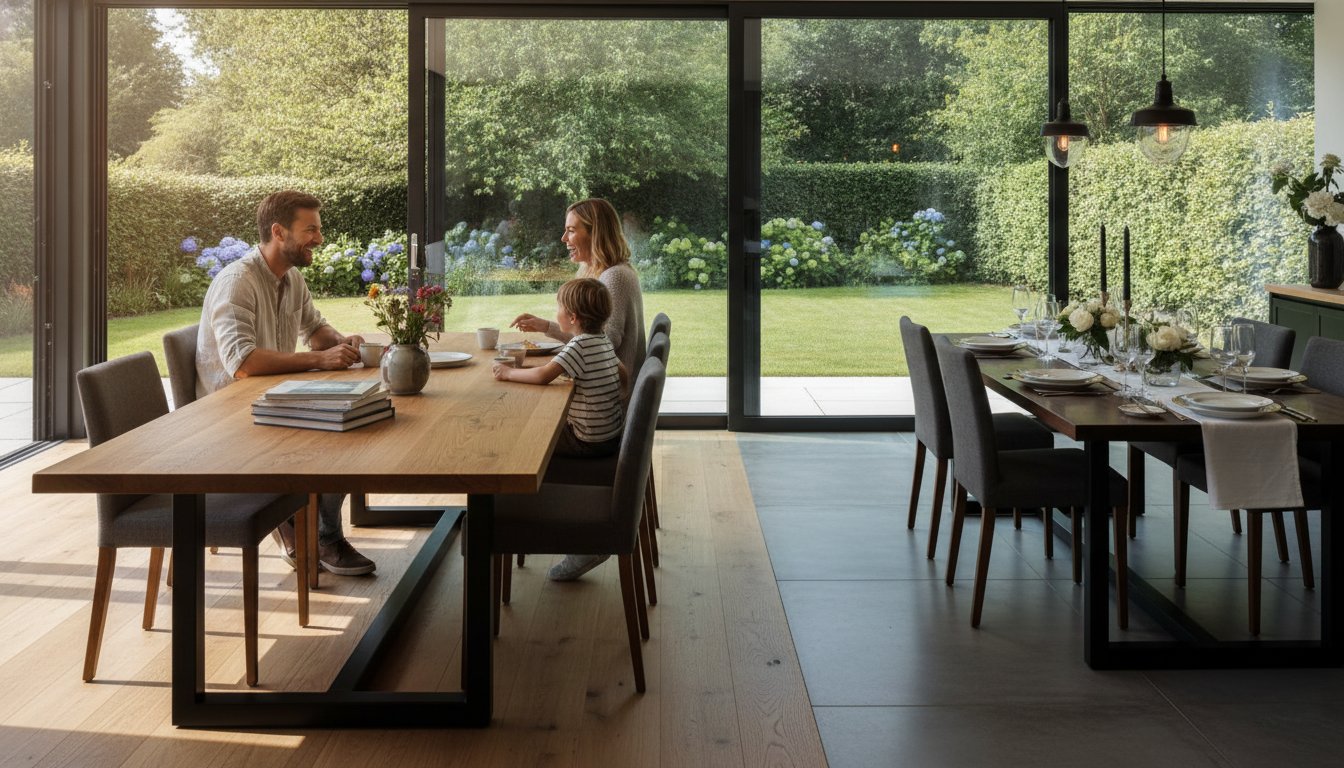
The most expensive timber isn’t always the right choice for your home; the best wood is the one that handles your family’s daily life while growing more beautiful with every passing decade. When you are caught in the debate of an oak vs walnut dining table, it’s easy to get lost in price tags and grain patterns. You might worry that a darker wood will overwhelm your light-filled kitchen, or that a softer grain will succumb to the energetic play of children and pets. It’s a significant decision because this piece isn’t just furniture. It is the site of future celebrations, quiet morning coffees, and a lifetime of shared stories.
We understand that you want a centerpiece that feels as good as it looks, balancing organic resilience with a sophisticated narrative. This guide will help you discover the tactile differences, structural durability, and unique design impact of these two exceptional hardwoods. You’ll gain the confidence to choose a timber that ages gracefully, whether you’re drawn to the rugged, honey-toned strength of European Oak or the luxurious, chocolate depths of Solid Black Walnut. We will explore everything from specific maintenance requirements to why these materials vary so significantly in cost, ensuring your selection becomes a cherished multi-generational investment.
Key Takeaways
- Contrast the golden warmth of oak with the sophisticated, deep chocolate tones of walnut to see how each timber interacts with the natural light in your home.
- Understand the technical resilience of an oak vs walnut dining table by comparing their density and Janka hardness ratings for daily family use.
- Learn the “Three Wood Limit” rule to confidently mix timber textures and ensure your new centerpiece anchors your existing interior design without clashing.
- Discover why choosing solid, hand-finished timber over mass-produced alternatives offers a lower “cost per year” and serves as a multi-generational investment.
- Explore how signature leg designs pair with specific grain patterns to create a unique focal point for shared experiences and social rituals.
Aesthetics and Atmosphere: The Visual Impact of Oak vs Walnut
Selecting the timber for your home is an act of storytelling. The surface you choose for your oak vs walnut dining table dictates the rhythm of your morning coffee and the mood of your evening meals. It is a tactile experience where the fingertips meet the natural history of a living tree. When we select timber in our workshop, we aren’t just looking for boards; we’re looking for the character that will anchor your room. Understanding What is a hardwood helps explain why these specific species provide such a rich sensory backdrop. Hardwoods come from deciduous trees, offering a density that allows for intricate grain patterns and a weight that feels permanent.
Oak carries a golden warmth. By contrast, walnut offers a cool, chocolate sophistication that feels grounded and intimate. This underlying hue becomes the foundation for your entire interior palette, influencing your choice of wall colors, textiles, and even the lighting you install above the table. A solid oak vs walnut dining table decision isn’t just about color; it is about the story the wood tells as it ages.
The Airy Versatility of Solid European Oak
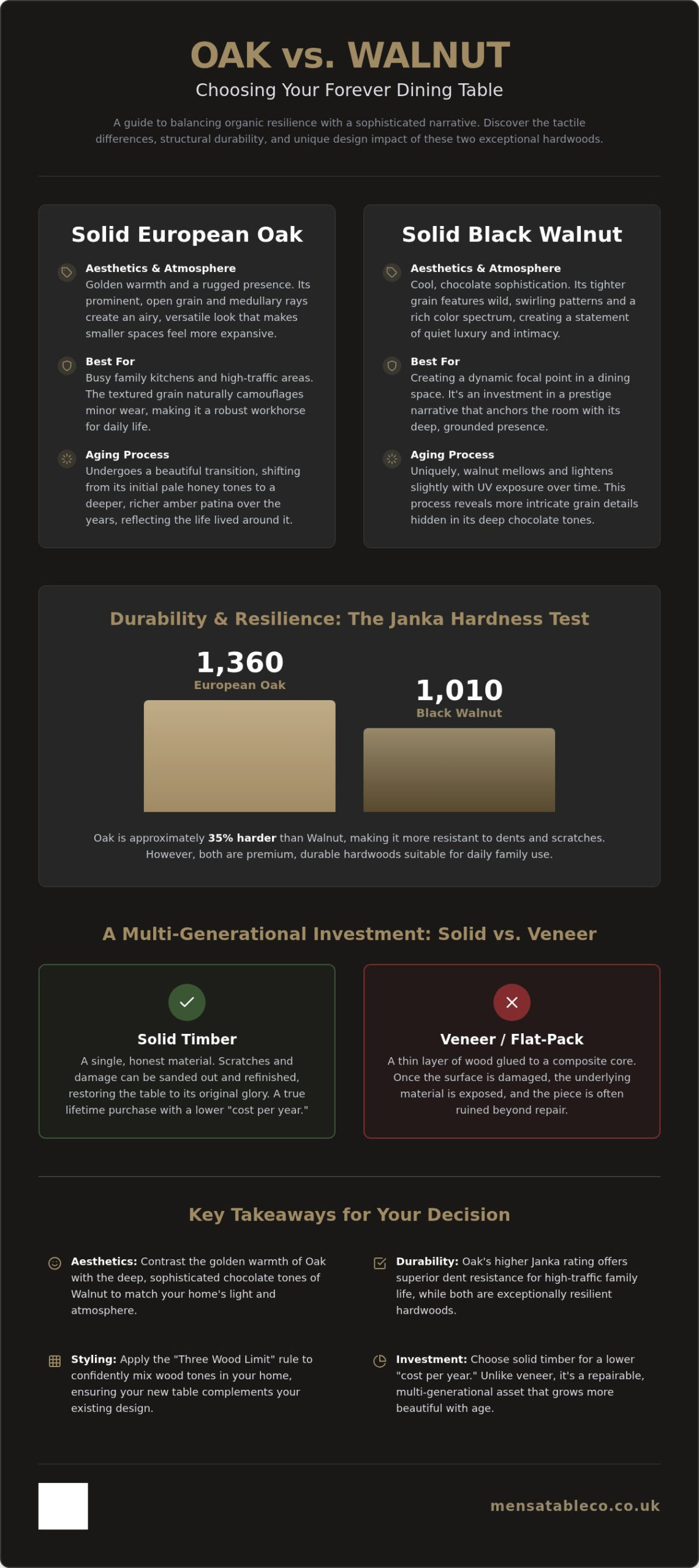
Solid European Oak is defined by its prominent, open grain and the presence of medullary rays. These silver, ribbon-like streaks are a hallmark of quality, appearing when the wood is quarter-sawn. In smaller dining spaces, oak creates a sense of organic calm and helps the room feel more expansive. It doesn’t demand attention through darkness but rather through its dependable, rugged presence. Over the years, oak undergoes a beautiful transition, shifting from its initial pale honey tones to a deeper, richer amber patina that reflects the life lived around it.
The Sophisticated Narrative of Solid Black Walnut
Choosing Solid Black Walnut is an investment in a prestige narrative. The grain is tighter than oak, often featuring wild, swirling patterns and a diverse color spectrum that ranges from creamy sapwood to deep, espresso browns. It is a statement of quiet luxury. Unlike most timbers that darken with age, walnut has a unique relationship with natural light. Over time, UV exposure causes the deep chocolate tones to mellow and lighten slightly, revealing more of the intricate grain details that were hidden in the shadows. This evolving character ensures your table remains a dynamic focal point for generations.
Durability and Resilience: Which Hardwood Wins the Daily Battle?
Your dining table is a high-traffic surface that must withstand heat, spills, and the physical impact of daily life. The choice between an oak vs walnut dining table is often framed as a simple battle of durability, but the reality is more nuanced. Both are premium hardwoods, yet they respond to the daily battle in distinct ways. Craftsmen rely on the Janka Hardness Scale to guide our understanding of timber density. The mechanical properties of wood dictate that White Oak, with a rating of 1,360, is significantly harder than Black Walnut, which sits at 1,010. This makes oak about 35% more resistant to denting and scratches.
Choosing solid timber over veneer or flat-pack alternatives is the first step toward true resilience. A solid wood table is a single, honest material from surface to core. If a solid table suffers a deep scratch, it can be sanded back and refinished to its original glory. Veneer is merely a thin layer of wood glued to a composite board. Once it is damaged, the underlying material is exposed and the piece is often ruined beyond repair. In the UK’s shifting humidity, our solid planks are carefully dried and joined to minimize movement, ensuring your investment remains stable for decades.
Oak: The Robust Workhorse
Oak is the ultimate choice for a busy family kitchen. Its high density makes it incredibly resistant to dents from dropped cutlery or heavy mugs. The prominent, textured grain of oak acts as a natural camouflage, hiding light scratches and the general wear and tear that comes with hosting large gatherings. It is a heavy, grounding material. This physical weight provides an unmatched stability that makes an oak vs walnut dining table comparison lean toward oak for those with energetic households or young children.
Walnut: The Resilient Icon
There is a common misconception that walnut is a soft wood. While it is softer than oak, it remains a high-density hardwood that is vastly superior to softwoods like pine. Walnut is prized for its natural oils, which give the finished surface a smooth, buttery feel that is a joy to touch. Because the grain is tighter and the color is darker, dings may be slightly more visible than on oak. However, this species is still remarkably resilient. If you’re willing to be a little more mindful of how you treat the surface, walnut offers a luxurious resilience that few other materials can match. If you’re unsure which timber suits your lifestyle best, feel free to reach out to our team for personalized advice.
Styling Your Space: Matching Wood to Interior Design
Your dining table is the primary texture that anchors your home’s aesthetic. It sets a visual rhythm for every other design choice in the room, from the curtains to the cabinetry. When you are deciding between an oak vs walnut dining table, you’re choosing the foundation of your interior’s personality. We often suggest following the Three Wood Limit as a rule of thumb. This means keeping the different timber species in a single room to three or fewer. It prevents the space from feeling cluttered and ensures your centerpiece remains the focal point. If your flooring is a pale timber, an oak table offers a harmonious, layered feel. Conversely, a walnut table against light floors creates a bold, sophisticated contrast that draws the eye.
Pairing these hardwoods with our signature steel legs, such as the Spider Leg or Trapezium designs, adds a contemporary edge to the natural material. The cold, industrial weight of the metal provides a beautiful counterpoint to the organic warmth of the wood. This combination allows the table to bridge the gap between different styles, making it easier to integrate into your existing decor without the fear of clashing.
Oak for Scandi, Rustic, and Coastal Styles
Pairing solid European oak with neutral palettes and soft textiles creates an atmosphere of organic calm. It’s the most dependable choice for period properties or traditional homes where you want the furniture to feel like it has always belonged. The Hardness of wood provides the physical reassurance that your table can handle the clatter of a busy household. When you combine oak with industrial black steel, it achieves a modern-rustic vibe that is both timeless and incredibly versatile for coastal or farmhouse interiors.
Walnut for Mid-Century, Industrial, and Glamour
There’s a storied historical link between solid black walnut and the iconic, tapered designs of the mid-century era. Its deep, swirling grain allows you to create high-contrast drama against light walls. Walnut has a natural ability to elevate a room, making even a casual breakfast feel like a formal dining experience. It works perfectly in industrial spaces where the dark wood adds a layer of luxury to raw elements like exposed brick or concrete. Choosing an oak vs walnut dining table for these environments often comes down to how much visual weight you want the piece to carry; walnut is the definitive choice for a bold, prestige statement.
Investment and Longevity: Maintenance and Cost
Viewing your furniture through a “cost per year” mindset changes the nature of the purchase. A mass-produced alternative might seem affordable today, but it often ends its life in a landfill within a decade. By contrast, an oak vs walnut dining table represents a multi-generational investment. With proper care, an oak table has an expected lifespan of thirty to fifty years, while walnut is expected to last twenty to forty years or more. This longevity is rooted in the physical substance of the timber and our manual approach to production. Every hand-finished surface we create is designed to be lived on, not just looked at.
The joy of owning solid wood comes from its ability to age alongside your family. Unlike synthetic surfaces that degrade, natural timber develops a patina that tells the story of your home. If life happens and a spill occurs, our hand-finished surfaces are resilient. Dealing with heat and liquids simply requires a calm, consistent approach to maintenance that preserves the integrity of the grain for the decades to come.
The Price of Prestige: Why Walnut Costs More
The significant price difference between these two hardwoods is a reflection of ecological reality. European Oak is relatively abundant and grows with a reliable yield. Solid Black Walnut trees grow much more slowly and the lumber supply is smaller, which naturally increases the cost of the raw material. Finding the wide, clear planks required for a seamless table top is a labor-intensive process that requires patience and expertise. While walnut is a larger initial investment, its resale and heritage value is unmatched.
Caring for Your Handcrafted Piece
Daily cleaning is a simple ritual. A damp, lint-free cloth is all you need to remove dust and debris without stripping the natural finish. We always recommend the use of coasters and heat mats. These small additions protect the natural oils from being compromised by high temperatures or standing liquid. It is also important to consider the seasons. During the winter, when central heating can dry out the indoor air, your wood needs to “breathe.” Maintaining a steady environment in your dining room helps the timber remain stable and prevents it from becoming brittle over time.
If you are ready to begin the journey of selecting your timber, speak with our craftsmen to discuss current lead times for our bespoke walnut orders.
The Mensa Choice: Crafting Your Perfect Table
The selection of raw timber is where our process truly begins. We spend hours examining the unique characteristics of each plank to ensure the grain patterns complement the final form of your piece. When you choose between an oak vs walnut dining table, you’re selecting more than just a species; you’re inviting the result of our manual, intentional approach into your home. The tactile difference is immediate. A table hand-finished by a master craftsman feels alive, with a texture that invites touch and a surface that honors the natural origins of the wood. To create a cohesive narrative throughout your living space, we often suggest extending the aesthetic with matching benches or coffee tables that mirror the species and finish of your primary centerpiece.
This attention to detail ensures that the oak vs walnut dining table you select isn’t just a commodity but a site for human connection. Every knot and swirl in the grain is a marker of its history. We believe that the furniture you gather around should be as authentic as the conversations held there. By focusing on the unique physical characteristics of each board, we ensure that no two tables leaving our workshop are ever exactly alike.
Pairing Wood with the Mensa Leg Styles
The architecture of the base is as vital as the timber itself. Our X-Frame Dining Table looks spectacular when paired with the rugged, honey-toned character of rustic oak. The heavy, geometric steel base provides a grounded stability that echoes the strength of the wood. In contrast, the intricate, industrial curves of the Spider Leg Dining Table offer a sense of architectural elegance that perfectly balances the deep, swirling mystery of solid walnut. Because every home is different, we specialize in customizing your bespoke dining table to fit your specific dimensions, ensuring the piece fits your life as perfectly as it fits your room.
From Workshop to Home: Our Commitment to Quality
Our philosophy is simple: buy once, buy well. This belief guides every cut of the saw and every stroke of the sander in our workshop. Unlike high-street alternatives that rely on veneers or hidden composites, our solid wood construction is honest and enduring. We’re a tight-knit team working in a localized setting, and we take immense pride in creating items that serve as meaningful life investments. Whether you’re drawn to the A-Frame or the Trapezium design, each piece is built to withstand the passage of time. We invite you to explore our full shop to see both species in action and find the enduring centerpiece your dining room deserves.
Creating an Enduring Centerpiece for Your Home
Choosing between an oak vs walnut dining table is a decision that shapes the atmosphere of your home for decades. Whether you’re drawn to the airy, honey-toned strength of European Oak or the deep, swirling prestige of Black Walnut, you’re selecting a material that will age beautifully alongside your family. These aren’t just surfaces for dining; they’re the backdrop for a lifetime of shared stories and social rituals. A table should be as honest and grounded as the home it inhabits.
Every piece we create is handcrafted in our UK workshop using only the finest solid timber. We offer bespoke sizes to ensure your table fits your space exactly, pairing the natural grain of your chosen species with our signature steel leg designs. This manual, intentional approach guarantees a level of quality and tactile warmth that mass-produced furniture simply cannot replicate. It’s about investing in a piece that carries a sense of heritage from the moment it enters your room.
We invite you to explore our handcrafted Dining Tables and find your perfect wood by speaking with our specialists today. We’re here to help you select an enduring centerpiece that your family will cherish for generations to come.
Frequently Asked Questions
Which wood is more durable, oak or walnut?
Oak is the more durable choice for high-traffic areas because it sits higher on the Janka hardness scale. With a rating of 1,360 compared to walnut’s 1,010, oak is approximately 35% harder and more resistant to dents. While both are premium hardwoods, oak is better suited to families with children or pets who need a surface that camouflages daily wear and tear through its prominent grain.
Does walnut wood get darker or lighter over time?
Walnut wood actually lightens slightly over time rather than getting darker. While most timbers deepen with age, consistent exposure to UV light causes the deep chocolate tones of walnut to mellow and reveal hidden grain details. This natural evolution is part of its charm. It ensures your oak vs walnut dining table choice remains a dynamic and living part of your home’s narrative for years.
Can I have an oak table with walnut chairs?
You can certainly pair an oak table with walnut chairs to create a sophisticated, high-contrast look. Mixing timber species adds depth to a room and prevents the space from feeling like a showroom set. We suggest following the Three Wood Limit to keep the aesthetic intentional. The contrast between the golden oak and dark walnut creates a beautiful visual rhythm that anchors your dining area.
Is walnut wood worth the extra cost?
Walnut is worth the extra investment if you’re looking for a prestige statement piece with a unique, swirling grain. The higher price reflects the scarcity of the material and the slower growth rate of the trees. While oak is a versatile workhorse, walnut offers a level of quiet luxury and heritage value that few other timbers can match. It is a true multi-generational investment for your oak vs walnut dining table selection.
Which wood is better for a small dining room?
European Oak is generally the better choice for smaller dining rooms because its lighter, honey-toned palette helps the space feel airy and expansive. Darker woods like walnut can sometimes feel visually heavy in tight quarters, potentially making the room feel smaller. The golden hues of oak interact beautifully with natural light to create an organic sense of calm and openness in compact living areas.
How do I prevent my oak table from turning yellow?
To prevent an oak table from turning excessively yellow, you should keep it away from direct, harsh sunlight and use a finish with UV inhibitors. All natural wood undergoes a color shift as it matures, but high-quality oils can slow this process. Regular maintenance with the right products ensures the honey tones of your table remain balanced rather than shifting into a brassy yellow over the decades.
Is European oak the same as American oak?
European oak is distinct from American oak, offering a denser structure and a more refined, tighter grain pattern. We prefer European oak for our workshop because it features beautiful medullary rays that add a unique silver ribboning to the surface. It tends to have a more neutral, tan color palette compared to the slightly more reddish undertones often found in American Red Oak varieties.
Can solid wood tables be used in rooms with underfloor heating?
Solid wood tables can be used in rooms with underfloor heating as long as the timber has been properly dried and the home maintains stable humidity. While wood is a living material that reacts to temperature, our construction methods allow for natural movement. It’s vital to avoid sudden temperature spikes and to use a hygrometer to ensure the air doesn’t become too dry during the winter months.

Leave a Reply