Knots are often the quickest clue: pine usually shows them more clearly, while oak is recognised by its prominent grain. To learn how to tell the difference between oak and pine, look at the wood’s knots, colour and grain, then consider how it will stand up to daily use. Oak is a hardwood and generally resists dents, scratches and moisture better; pine is a softer wood with a lighter, often knotty appearance.
Both oak and pine have character, and knots can be part of pine’s appeal rather than a flaw. The right choice depends on the look you want and how the furniture will be used. This guide explains how to tell the difference between oak and pine by comparing visible features and practical qualities, so you can choose with a clearer sense of how each wood may look and wear at home.
Key Takeaways
- Use knots, colour and grain together to distinguish pine from oak; one visual feature alone can be misleading.
- Oak is generally harder and more resistant to dents, scratches and moisture, making it a strong choice for furniture used often.
- Pine’s lighter tone and visible knots create a more rustic look, while its softer surface can show wear sooner.
- Compare the timber’s stability and care needs with where the furniture will sit and how it will be used.
- Choose the wood that suits both your preferred appearance and the demands of everyday life in your home.
Differences in durability and stability
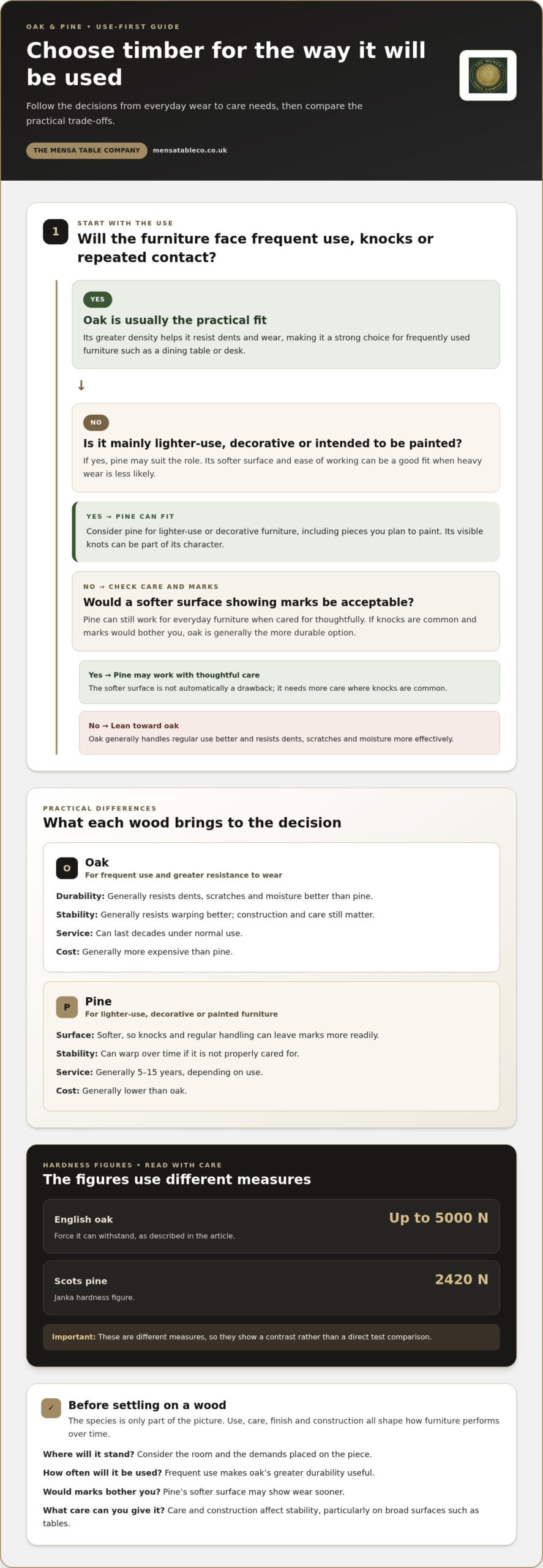
Oak generally lasts longer under everyday use, while pine suits lighter-use furniture and decorative pieces. English oak can withstand a force of up to 5000 N; Scots pine, the UK’s most common pine species, has a Janka hardness of 2420 N. These figures describe different measures, so they show a contrast rather than a direct test comparison.
Hardness matters when furniture faces knocks, pressure and repeated contact. Oak’s greater density helps it resist dents and wear, making it a practical choice for a dining table used every day. Pine is softer and easier to work, so chair impacts, dropped items and regular handling can leave marks more readily. Pine can still work well for everyday furniture when cared for thoughtfully.
Stability depends on construction and care as well as wood species. Pine can warp over time if it isn’t properly cared for, while oak generally resists warping better. The way the timber is cut and the piece is built also matter, particularly on broad surfaces such as tables, where wood movement is more noticeable.
| Wood | Hardness and strength | Stability and typical use | Expected service |
|---|---|---|---|
| Oak | English oak withstands force up to 5000 N | Resists warping; suits frequently used furniture | Can last decades under normal use |
| Scots pine | Janka hardness of 2420 N | Needs care to limit warping; suits lighter-use or painted furniture | Generally 5-15 years, depending on use |
Choose oak for furniture expected to handle regular use, such as a dining table or desk. Pine can suit decorative furniture, children’s pieces or a project you plan to paint. Its softer surface isn’t necessarily a drawback; it simply needs more care where knocks are common.
Species alone doesn’t determine how long furniture stays sound. Use, care, finish and construction all shape its working life. For a closer look at oak’s natural appearance, explore examples of solid European oak.
In short, oak usually offers greater hardness and durability, while pine is lighter and easier to work. Match the timber to the demands of the room and the level of care you’re prepared to give it.
Cost is another consideration. Oak is generally more expensive than pine because of its hardness, durability and longer growth period. That makes the intended use important when comparing the two. Oak may suit furniture expected to see frequent use over time, while pine can work for a gentler role if you’re comfortable with its softer surface and need for care. The decision is not just about choosing the tougher timber; it’s about matching the furniture’s demands to your budget.
Before deciding, think about where the piece will stand, how often it will be used and whether marks would bother you. A higher price doesn’t make oak the right fit for every room, just as pine’s lower durability doesn’t rule it out for lighter use. Pine remains practical for painted or decorative furniture; oak’s greater durability may suit a piece expected to handle regular use.
Oak vs Pine: What’s the Difference?
Oak is hardwood from a deciduous tree, while pine is softwood from an evergreen conifer. These tree groups offer useful clues, but identifying timber takes more than remembering the labels.
Hardwood and Softwood Properties
Oak trees shed their leaves in winter; pine trees retain their needles year-round. Oak seeds have a hard covering, while pine seeds are exposed on cones. These botanical differences explain the terms hardwood and softwood. They don’t mean every hardwood is automatically better for every project: appearance, working properties and intended use matter too.
Pine is less dense and easier to cut, shape and sand, which can make detailed work easier. Oak generally takes sharper tools and more effort to shape. Pine trees grow faster than oak trees, contributing to pine’s lower cost. Both species grow in the UK, and their contrasting qualities suit different designs. To learn how to tell the difference between oak and pine, combine clues about the trees with the timber’s visible features.
Oak and Pine Wood Grain
Oak commonly has a straight, prominent grain and a medium-coarse texture. Its open grain creates strong lines, while quarter-sawn oak can show naturally occurring medullary rays across the grain. Pine can have striped or wavy patterns, with texture varying by species. When examining a board, compare several areas rather than judging one patch.
End grain provides another clue. Oak’s pores and medullary rays may be visible on a cut end, particularly in quarter-sawn timber. Pine doesn’t show oak’s characteristic ray pattern. The direction of the cut affects what appears on each face, so examine the end grain alongside the long surface. If you’re learning how to tell the difference between oak and pine, look for several clues that point to the same answer instead of relying on one mark.
Oak and Pine Colour, Texture, and Smell
Oak ranges from light beige to warm golden tones and richer browns. Pine is often pale yellow to light brown; its sapwood can look yellow-white, while its heartwood is reddish-yellow and may darken towards reddish-brown. Compare both woods in similar light, since a finish can change their apparent colour.
Oak’s open grain can feel coarse; pine often feels smoother, though texture varies. Fresh pine may have a resinous scent, but furniture finishes can mask wood smells, so don’t rely on scent alone. For a more considered identification, combine colour, grain, end grain and texture.
Knots as a clue to pine
Knots can offer a useful visual clue: pine often shows more noticeable knots than oak, particularly in flooring. Look for rounded or irregular marks that interrupt the grain, then compare how prominent they are across the surface. Oak can have knots too, so a knot alone doesn’t prove the timber is pine. Identification is more dependable when several clues, including grain and colour, agree.
On an unpainted pine board, knots may stand out against the surrounding wood. They can give furniture a rustic character, especially when visible beneath a clear finish. Oak usually draws the eye through its stronger grain pattern rather than prominent knots. Check several areas, since one knot or smooth patch won’t represent the whole piece.
Finished furniture takes a little more care to identify. Paint can conceal the natural colour and grain, so inspect places the coating doesn’t reach, such as an underside, rear edge or drawer interior. If the timber is visible there, compare its knots and grain with the painted surface. Don’t scrape or damage the finish to expose the wood.
Clear varnish or oil can leave more of the timber’s character visible than opaque paint. Examine the surface in steady light for knots beneath the finish, then follow the grain around them. Pine’s knots may remain a strong visual feature, while oak’s prominent grain can be easier to trace. Because finishes can alter appearance, use more than one clue.
For a practical check, work through these steps:
- Look at several surfaces. Compare the top, side and underside instead of judging one knot.
- Find an exposed edge. Check a rear or lower edge for visible grain and natural colour.
- Compare the pattern. Notice whether knots dominate, or the grain forms the stronger feature.
- Account for the finish. Treat opaque paint as a barrier to visual clues, not evidence of a particular species.
These checks can help identify painted or finished tables, chairs and cabinets without disturbing the surface. If the visible details are hidden, appearance alone may not settle the question; a wood expert can analyse a small sample under a microscope. For most furniture, several visible knots together with the grain pattern provide a sensible starting point. Pine’s knots add warmth and variation, while oak often has a more continuous, pronounced grain.
Pine is naturally light-coloured, strong, and has a distinctive grain and knots. When examining exposed wood, consider its light colour, grain and knots together rather than treating any single mark as decisive. These characteristics provide a broader visual reference for assessing a piece where the timber is visible.
Resistance to wear, scratches, dents and moisture
Oak usually handles daily wear better than pine. Its denser grain makes it less prone to scratches and dents, so a dining table used for meals, work and family gatherings may keep its surface in better condition. Pine is softer and may show marks sooner, especially where chairs, toys or frequently handled objects meet the wood. Those marks can become part of pine’s lived-in character, but they change its appearance.
Moisture is another difference. Oak’s dense grain makes it more resistant to moisture than pine, and it generally resists warping and dents better. That doesn’t make oak waterproof: standing water can still affect a wooden surface. Pine needs more care around spills and damp conditions, since moisture and poor care can contribute to movement or warping over time.
For a busy household, the room and routine matter as much as the wood’s appearance. Oak is well suited to frequently used furniture, including dining tables and desks, and to commercial or hospitality settings. Pine can handle everyday furniture use when properly cared for and protected with varnish. It’s generally a better match for lighter-use furniture or decorative pieces than for heavy daily use.
Consider the kind of contact a piece is likely to face. A desk used for writing and working may have repeated contact from books, equipment and hands. Pine can handle that use with suitable care, but its softer wood is more likely to show dents. An oak tabletop offers greater resistance to knocks. Neither species is immune to damage.
- For frequent use: Oak’s greater resistance to dents and scratches suits a dining table that sees everyday meals.
- For lighter use: Pine works well for decorative furniture or pieces that won’t face constant knocks.
- For spill-prone rooms: Oak has the advantage in moisture resistance, but wipe spills rather than leaving water on either wood.
- For pine furniture: Care and varnish help it stand up to ordinary use; avoid treating the finish as protection against every impact.
Choose according to the room’s demands, not colour alone. For a table used every day, oak generally offers greater resistance to wear and moisture. For lighter use, pine remains a practical, characterful option when cared for thoughtfully.
What are the visual differences between oak and pine wood grain?
Oak usually has a prominent grain, while pine tends to have a more understated pattern with knots. Compare the lines, texture and variation across the whole board, not just one small patch. The cut also affects the appearance: two pieces of oak can display different grain patterns because they were sawn differently.
Oak commonly has a straight grain and medium-coarse texture. Its open grain creates distinct lines, and quarter-sawn oak can reveal naturally occurring medullary rays. These markings appear across the grain and offer another visual clue. On a finished table, follow the grain along the top and side; differences between surfaces can reflect how the timber was cut and assembled.
Pine can show striped or wavy grain, with texture ranging from fine to fairly rough depending on the species. Knots often stand out against its lighter wood, giving the board a more rustic appearance. Rather than expecting every pine board to look the same, look for a combination of visible knots and a less prominent grain pattern. One smooth area doesn’t rule out pine.
Use these practical checks when comparing two boards or pieces of furniture:
- Follow the lines: Oak often has stronger, straighter grain; pine may show stripes or waves.
- Look across the surface: Oak’s open grain creates a more pronounced texture than pine’s generally subtler pattern.
- Check for medullary rays: Their presence can help identify quarter-sawn oak.
- Compare more than one face: A top, side and exposed edge may show different patterns because of the timber’s cut.
Finishes can make the distinction less obvious. Oil or varnish changes the wood’s appearance and can make colour differences harder to judge, but the grain may remain visible. Inspect an unfinished or less-coated area, such as an underside, then compare its lines with the main surface. On pine, knots may be the clearest feature; on oak, look for bolder grain and possible rays.
For a reliable visual identification, combine several clues: grain prominence, texture, knots and the way the board was cut. Don’t base your decision on a single marking, since oak and pine both vary naturally. Looking closely at solid timber examples can also help you recognise how individual grain patterns appear in finished furniture.
If you’re choosing a table and want to discuss how oak’s grain will shape its appearance, talk with us about your table plans.
The Mensa Table Company: The Mensa Dining Table
The Mensa Table Company makes dining tables for homes where meals, conversations and daily routines come together. If you’ve weighed oak’s durability against pine’s lighter, knotty character, that choice can help guide the look and practical role you want your table to have.
The Mensa Dining Table, Spider Leg Dining Table, X-Frame Dining Table and U-Frame Dining Table offer different designs for your dining space. Consider the wood’s appearance alongside how often you’ll use the table and which design feels right for your home.
For a dining table that becomes part of everyday life, give the material and design equal thought. Contact The Mensa Table Company to discuss your table plans.
Choose a Table That Feels at Home
Let the wood you’re drawn to guide the atmosphere you want to create. The right table becomes part of everyday rituals, from a quiet morning coffee to a long evening shared with family. If you’re still considering how to tell the difference between oak and pine, focus on the surface and character you want to live with, then picture how it will look in your room.
The Mensa Table Company offers The Mensa Dining Table, The Spider Leg Dining Table and The X-Frame Dining Table, each giving your dining space a different design direction. Consider which shape feels right for your home and how the table will be used day to day. Contact The Mensa Table Company to discuss your table plans, and take the next step towards a welcoming centrepiece for shared moments.
Frequently Asked Questions
Which is Stronger, Oak or Pine?
Oak is generally stronger and harder than pine, making it better suited to furniture that faces frequent knocks or heavy daily use. “Stronger” can mean different things, though: resistance to bending, impact and surface dents are not the same measure. For a household dining table, consider how often it will be used and what it needs to withstand. Pine can still work well in lighter-use furniture when properly cared for.
How to distinguish oak and pine by weight and hardness?
Oak usually feels denser and heavier than pine when comparing pieces of similar size and construction. Scots pine has a Janka hardness of 2420 N, while English oak can withstand a force of up to 5000 N; these are different measures, so don’t treat them as a direct comparison. Finished furniture can’t be identified by weight alone, since dimensions, joinery and added components affect how heavy it feels.
What are the differences between oak and pine knots?
Pine commonly has more noticeable knots, which can create a rustic, varied pattern across a board. Oak can also contain knots, so their presence alone doesn’t establish the species. Look at how the knots sit within the surrounding grain and compare several parts of the piece. On a painted surface, inspect an exposed edge or underside where the timber is visible, rather than disturbing the finish.
Can a scratch or water test identify oak versus pine?
A scratch or water test isn’t a reliable way to identify finished oak or pine. The finish can affect how a scratch feels, and a coating can change how water behaves on the surface. Either test may damage furniture or leave a mark, so avoid trying them on a valued piece. Instead, inspect visible grain and knots; if those clues remain unclear, a wood expert can examine a small sample under a microscope.

Leave a Reply