
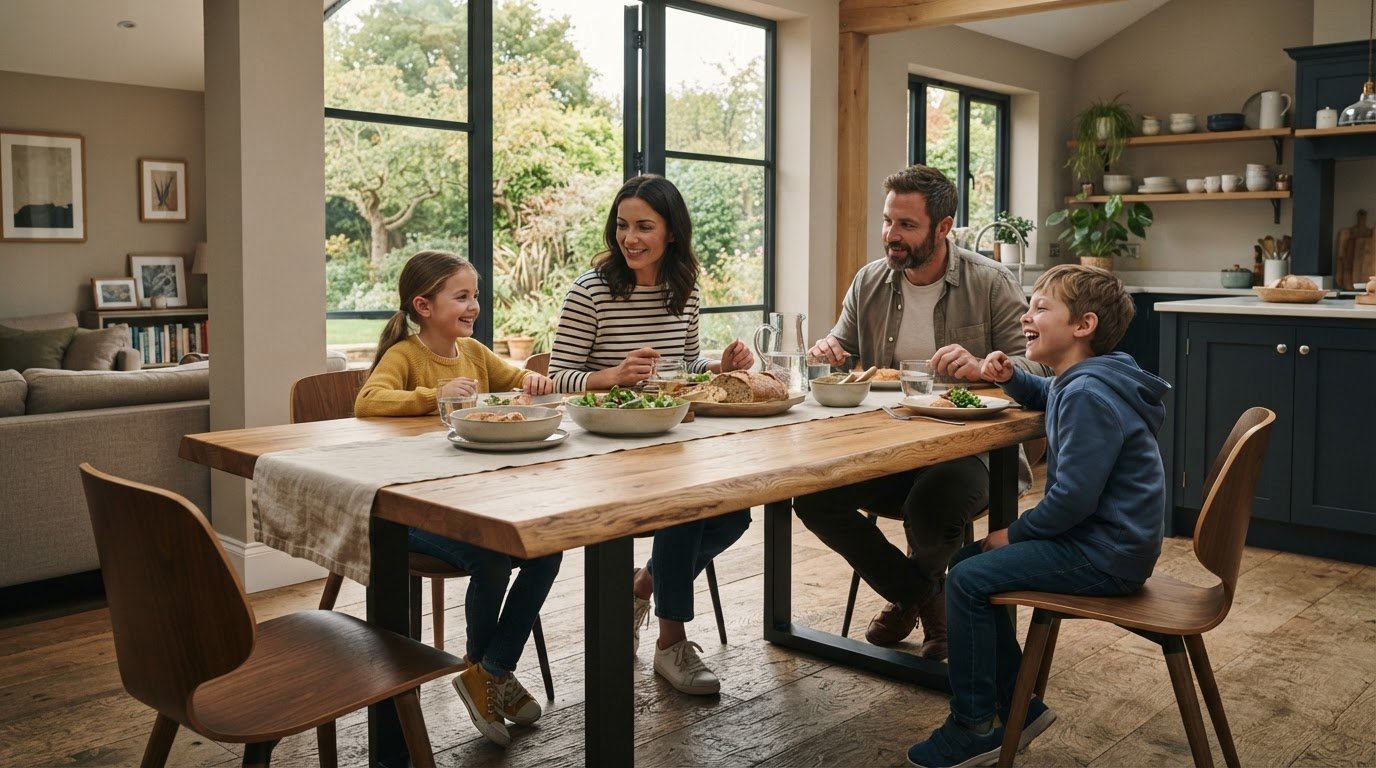
What if the oak furniture that looks most convincing isn’t the piece that works best in your home? A substantial appearance alone can’t tell you whether a table is solid oak, whether it will fit comfortably in your room, or how its natural grain will look.
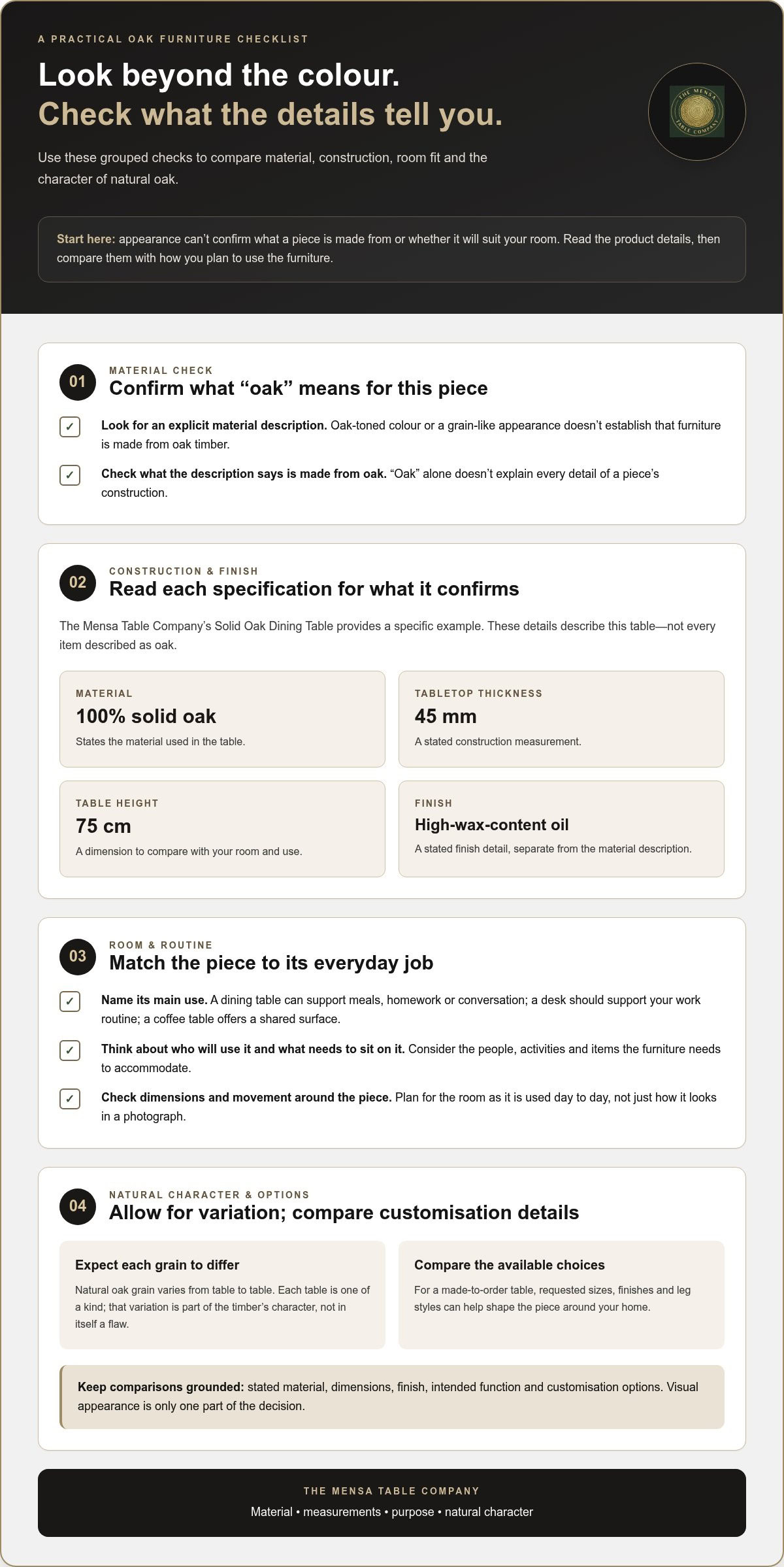
Before choosing a piece you’ll use every day, look for clear material and size details. The Mensa Table Company’s made-to-order Solid Oak Dining Table is crafted from 100% solid oak, with a 45 mm-thick tabletop and a height of 75 cm. Because natural grain varies, each table is one of a kind. That variation is part of the timber’s character, not a flaw.
This guide explains what to look for when assessing solid oak furniture, how to match dimensions and function to your room and routines, and what to expect from a handcrafted oak dining table made to order. It also covers how matching furniture can help create a dining space that feels considered, welcoming and ready for everyday life.
Key Takeaways
- Assess oak furniture by looking beyond its appearance. Compare the stated material and construction details before choosing.
- Plan for the room as it’s used each day, including how many people usually dine and the space needed to move around comfortably.
- Compare pieces by intended use, room fit and customisation, rather than relying on looks alone.
- Requested sizes, finishes and leg styles can help shape a made-to-order oak dining table around your home.
What Does Oak Furniture Mean for a Home?
Oak furniture is made using oak timber. The term describes a material, not a particular colour or design: a piece with an oak-toned finish isn’t necessarily made from oak. Oak grain gives furniture a distinctive appearance, but the look and construction can vary from one piece to another. For a useful overview of the properties of oak wood, it helps to consider both the tree and the material used in furniture making.
Choosing well means weighing three things together: what the piece is made from, what you’ll use it for, and how it will fit the room. A dining table needs to serve meals and conversation; a desk has to support your work routine without crowding the space. Material descriptions matter because the word “oak” on its own doesn’t explain how a piece is made. Read the details, then consider the furniture’s role in your home.
What counts as oak furniture?
In plain terms, oak furniture is made with oak timber. Look for a product description that identifies the material so you can compare like with like instead of relying on colour or surface appearance. Oak furniture can vary in construction, finish and proportions, so don’t assume that every piece described as oak is the same.
The Mensa Table Company’s Solid Oak Dining Table is made from 100% solid oak. Its tabletop is 45 mm thick and finished with high-wax-content oil. These details describe this table, rather than setting rules for every item sold as oak furniture. Explore the solid European oak furniture range to see how oak is used in the company’s tables.
Which rooms can oak furniture serve?
Start with the everyday activity the furniture needs to support. In a dining room, a table can be the gathering point for meals, homework or a conversation after dinner. Matching benches provide an alternative to individual chairs. In a living room, a coffee table gives people a shared surface for drinks, books or board games.
A kitchen or open-plan space can also benefit from a breakfast bar, creating a spot for a quick meal or a morning chat. The Mensa Table Company makes matching benches and coffee tables, as well as custom-made breakfast bars and desks. Choose a piece according to its intended use, then check that its dimensions and design suit the room.
Before settling on a piece, picture the room in use. Consider who will use it, what needs to sit on it, and whether its size and shape leave enough room for daily movement. The right choice brings material, construction and purpose together, so the furniture feels at home rather than simply filling a space.
How to Recognise Solid Oak Furniture and Its Natural Character
Colour can catch your eye, but it can’t establish what a piece is made from. Oak may show warm tones and a distinctive grain, yet appearance alone isn’t a reliable guide to the material. Look for a clear description of the timber, then consider the piece’s construction and intended use. Separate what the maker states from what you can see in a photograph or showroom.
Solid oak furniture is made from oak timber, not simply finished to look oak-coloured. That’s a useful first check when comparing pieces. Read each product description carefully, because a broad category label doesn’t explain every detail of a particular item’s construction.
What does 100% solid oak construction tell you?
A claim of 100% solid oak tells you what material is used in the table. The Mensa Table Company’s Solid Oak Dining Table is made from 100% solid oak, with a 45 mm-thick tabletop and a high-wax-content oil finish. These are specific facts about this dining table, not assumptions to apply to every piece described as oak. The USDA Forest Service also discusses oak as a furniture wood, including its use in furniture and cabinets.
When comparing oak furniture, look for explicit material wording rather than relying on a brown hue, a grain-like pattern or a product name. Check what the description confirms: does it identify oak timber, and does it explain which parts of the item are made from it? Separating these details from visual impressions makes comparisons more meaningful.
The company’s solid European oak tables offer a concrete example of furniture described by its material. The 45 mm tabletop and oil finish explain the table’s specified form, while the material statement tells you what the table is made from. Each detail answers a different question.
Why does oak grain vary from table to table?
Oak grows with its own natural pattern, so the grain in one tabletop won’t be a precise copy of another. That variation gives each table its own character and means every table is one of a kind. Differences in grain are part of working with natural timber, not in themselves a sign of a flaw.
Colour and grain can also look different across separate tables, so don’t expect two pieces to match exactly, even if they share the same material and finish description. If you’re planning a dining space with a table and other furnishings, allow for natural variation rather than treating an exact visual match as a measure of quality.
For a table shaped around your home, discuss your oak table requirements with the team. Knowing what the material description confirms, and what natural grain can’t promise, helps set clear expectations before choosing a piece that will become part of everyday life.
How to Compare Oak Furniture Before You Choose
A useful comparison starts with the job the furniture needs to do, not with which photograph catches your eye. For each piece on your shortlist, record the stated material, dimensions, finish, intended function and any customisation options. Then compare those details against your room and routines. Decorative descriptions can help you picture a piece, but they don’t replace practical specifications.
Compare the material, measurements, finish, everyday purpose and customisation options before deciding which piece belongs in your home.
Which details are useful in an oak furniture comparison?
Make a simple record for each option. Note what the maker says about the wood, the overall measurements, the finish and the kind of use the piece is designed for. Keep factual specifications separate from style language such as “warm”, “rustic” or “contemporary”. Those words describe an impression, not the size or material of the furniture.
Use the same questions for every item. If one description gives exact dimensions and another doesn’t, don’t treat them as directly comparable on room fit. Instead, note the missing detail and compare what each description actually tells you.
- Dining table: Record the stated wood, dimensions and finish. Consider whether it suits mealtimes and your usual number of diners, then compare the size, finish and leg-style options.
- Matching bench: Note the material description and measurements. Consider whether it would work as shared seating beside the dining table, and record any options stated for the piece.
- Coffee table: Compare the stated wood, surface dimensions and finish. Think about whether its size suits the way you use the seating area, and note any listed customisation.
- Desk or breakfast bar: Check the material, dimensions and finish against its intended role. Consider whether it will suit the planned work area or informal dining spot, then compare the details provided.
How should the furniture’s purpose shape your shortlist?
Let your daily routine guide your choice. A dining table is for gathering over meals, while a bench can offer shared seating alongside it. Compare dining tables by looking at each table’s material description, measurements and leg style together, rather than judging its shape alone.
A coffee table serves a different purpose, keeping drinks, books or games within reach in a living space. A desk needs to fit the way you work, while a breakfast bar can create a practical place for a quick meal. These pieces aren’t interchangeable, even if their materials or finishes appear similar.
Before choosing, shortlist the furniture that answers a real need, then check its measurements against the intended space. This makes the comparison less about a perfect-looking image and more about whether the piece will earn its place in everyday life.
How to Plan Oak Furniture Around Your Room
A table can look right on its own and still make a room awkward to use. Plan from the space outwards: first establish where furniture can go, then decide what size and seating will support the way your household gathers. This is especially useful for a dining area, where people need room not only to sit but also to move around the table.
What should you measure before choosing oak furniture?
Work through these steps in order, keeping your measurements together so you can compare them with the dimensions of each piece:
- Measure the usable floor area. Note the length and width of the space available for furniture, rather than relying on the room’s overall dimensions.
- Mark fixed features. Include door swings, radiators, fireplaces, kitchen units or other features that affect where a table or desk can sit.
- Check the route into the room. Measure doorways and consider turns along the way, so the intended piece can reach its position.
- Allow for seating and circulation. Picture chairs or a bench pulled out, someone sitting down, and another person passing through. Allow at least 90 cm of clearance around a dining table. A layout that only works when nobody is using the furniture is too tight for everyday life.
- Compare with the furniture dimensions. Use the maker’s stated measurements to shortlist pieces that fit both the room and its route of access.
The Mensa Table Company’s dining tables have a specified height of 75 cm. Custom sizes can be requested to suit the area you’ve measured. Think about the shape of the room as well as its floor area: a long, narrow space may call for a different arrangement from a more open dining area.
How can you match oak pieces to everyday routines?
Consider how many people usually use the dining space, then think about how often you host additional family or friends. Your regular routine should guide the shortlist; occasional larger gatherings may be a separate consideration. Matching benches can support a shared dining arrangement, while the table’s dimensions and seating plan help determine whether people can sit and move comfortably.
Imagine a household that usually eats together on weekday evenings but sometimes welcomes guests at the weekend. Rather than choosing the largest table that will fit, they could start with their usual number of diners, test the space needed for seating and movement, then consider whether a requested size and matching bench suit those less frequent gatherings. There’s no single ideal layout; the best plan reflects how the room is actually used.
Explore the solid European oak furniture collection with your room measurements in mind. If you’re planning a made-to-order dining table, share your room requirements with the team as you consider its size, finish and leg style.
What to Expect from a Made-to-Order Solid Oak Dining Table
A made-to-order dining table starts with the needs of your room, rather than asking you to fit your home around a fixed size or design. The Solid Oak Dining Table from The Mensa Table Company is handcrafted to order from 100% solid oak. You can request a size, finish and leg style to suit your dining space and the way you use it.
That flexibility is practical as well as personal. Your measurements can guide the table size, while the choice of leg style helps shape its appearance in the room. Before deciding, think about the usual number of diners, how much space you need to move around the table, and whether you’d like to add a bench. These details help turn a broad preference for oak furniture into a piece planned for everyday meals and gatherings.
Which oak table specifications can help you decide?
Specifications give you a clear picture of the table beyond its appearance. The oak tabletop is 45 mm thick, the dining table height is 75 cm, and the oak has a high-wax-content oil finish. Its heavy-duty steel legs support up to 200 kg and have a black matte powder-coat finish as standard. Custom RAL powder-coat finishes are available on request. Consider these details alongside your room measurements and the table’s intended use.
Because the table is handcrafted to order, it requires minimal assembly, with leg attachment. Full instructions are provided, and an optional assembly service can be selected at checkout. Keep the details that matter to you together, such as your preferred dimensions, finish and leg style. This gives you a clear starting point for shaping an oak table around your space.
How can matching pieces complete a dining space?
A bench can complement a dining table by creating shared seating and giving the setting a considered, cohesive feel. It may suit households who like to sit together along one side of the table, or who want flexible seating for everyday meals. The aim isn’t to match every item in the room exactly, but to choose pieces that work well together and support how people gather.
As you consider seating, allow for the bench’s position and the space needed to sit down and move around it. Matching dining benches offer a coordinated option alongside the table. Think about how many people usually share the dining space, then let that routine guide your choice.
A made-to-order piece gives you a chance to bring together room dimensions, practical use and the details you prefer. To discuss what would suit your home, talk to us about your oak table.
Choose a Table That Feels at Home
The best oak furniture choice is one that belongs naturally in your room and supports the moments that matter there, from everyday meals to celebrations shared around the table. As you take the next step, think about the space you’ve measured and the details that will make the table feel like yours.
The Mensa Table Company’s Solid Oak Dining Table is made to order from 100% solid oak, with requested sizes, finishes and leg styles shaping the piece around your home. It comes with the manufacturer’s guarantee against workmanship defects.
Bring your room requirements and ideas together, then talk to us about a handcrafted oak dining table. A thoughtful choice can become more than a place to eat: it can be the welcoming centre of conversations, shared meals and familiar routines.
Frequently Asked Questions
How many people can an oak dining table seat?
As a practical guide, a table measuring 120-140 cm seats 4, 160-180 cm seats 6, and 200-240 cm seats 8-10. These are helpful starting points, not a promise that every arrangement will feel equally spacious. Chair width affects how many people fit comfortably, and diners may prefer more elbow room. If you often host, consider your usual setup as well as occasional extra guests.
How thick is the Solid Oak Dining Table top?
The Solid Oak Dining Table has a 45 mm-thick oak tabletop. This measurement applies to the oak table, not to every wood type in the range. The dining table height is a separate specification: it is 75 cm. Thickness is one detail to understand when comparing tables, but it alone doesn’t determine overall quality or performance. Consider it alongside the table’s dimensions, material and intended place in your home.
Does solid oak furniture change colour over time?
Yes, wood may develop slight colour changes over time, which is a natural characteristic. The exact appearance can vary, so don’t rely on a particular shade emerging or assume every table will change in the same way. Each table is one of a kind because of its natural grain. This variation is part of the character of solid oak furniture, and it means separate pieces shouldn’t be expected to look identical.
Is an oak dining table waterproof?
No, an oak dining table isn’t waterproof. Its resistance to heat and stains is limited, and prolonged exposure to liquid should be avoided. Wipe spills promptly rather than leaving moisture on the surface, and use coasters for drinks and placemats for meals. These simple habits help protect the tabletop during everyday use, but the oil finish doesn’t make the surface impervious to liquid or heat.
How should I care for an oak table with a high-wax-content oil finish?
Wipe spills as soon as they happen, and use coasters and placemats to help protect the surface from drinks, dishes and heat. For routine cleaning, use a damp cloth with mild soap; avoid harsh chemicals. Re-oil the table periodically as part of its care. These habits help look after the finish, but they can’t guarantee stain prevention or make the surface waterproof.
Can I request a custom size for a solid oak dining table?
Yes, solid oak dining tables are made to order, and you can request custom sizes, finishes and leg styles. Before settling on a size, measure the available floor area and think about where chairs or a bench will sit when people are using the table. Your usual number of diners and preferred elbow room can help you choose dimensions that suit both the layout and everyday meals.

Leave a Reply