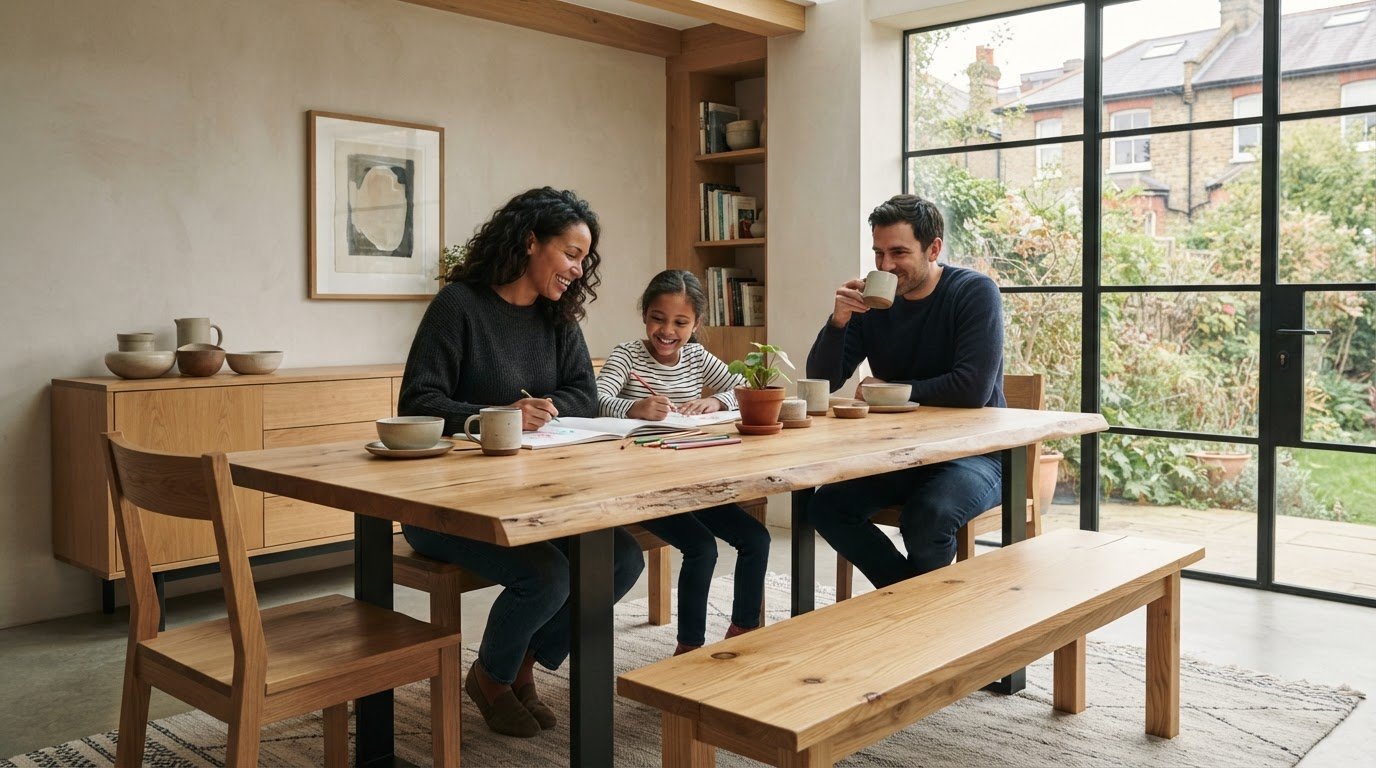
Minimalist wood furniture doesn’t have to look pale or stark. For a minimalist solid wood furniture scheme in the UK, choose between lighter Swedish pine, ash or oak and the deeper tones of walnut. A thoughtfully matched dining table and bench can keep the room composed without making it feel bare.
It’s understandable to want clean lines and an uncluttered look while still choosing furniture with warmth, character and natural grain. Solid wood brings those details into view, so consider the finish and how each piece sits with the rest of the room as carefully as its shape.
This guide compares light and dark finishes, explores the different feel of handcrafted pine and oak, and explains how to bring matching solid wood pieces into a minimalist home. You’ll also find practical ways to think about proportion and everyday use, and how a dining table, bench or other focal piece can feel at home in your space for years to come.
Key Takeaways
- Choose lighter or darker wood tones by considering how each finish will sit alongside your room’s existing colours and natural light.
- Compare pine and oak by their grain, visual character and the atmosphere you want your furniture to create.
- Build a coordinated look by matching key pieces thoughtfully, without making every item identical.
- Look at edges, surfaces and construction details to help distinguish solid wood from wood veneer.
- Weigh the character and practical trade-offs of oak, walnut, ash and pine before choosing furniture for your home.
Dark and light wood finishes
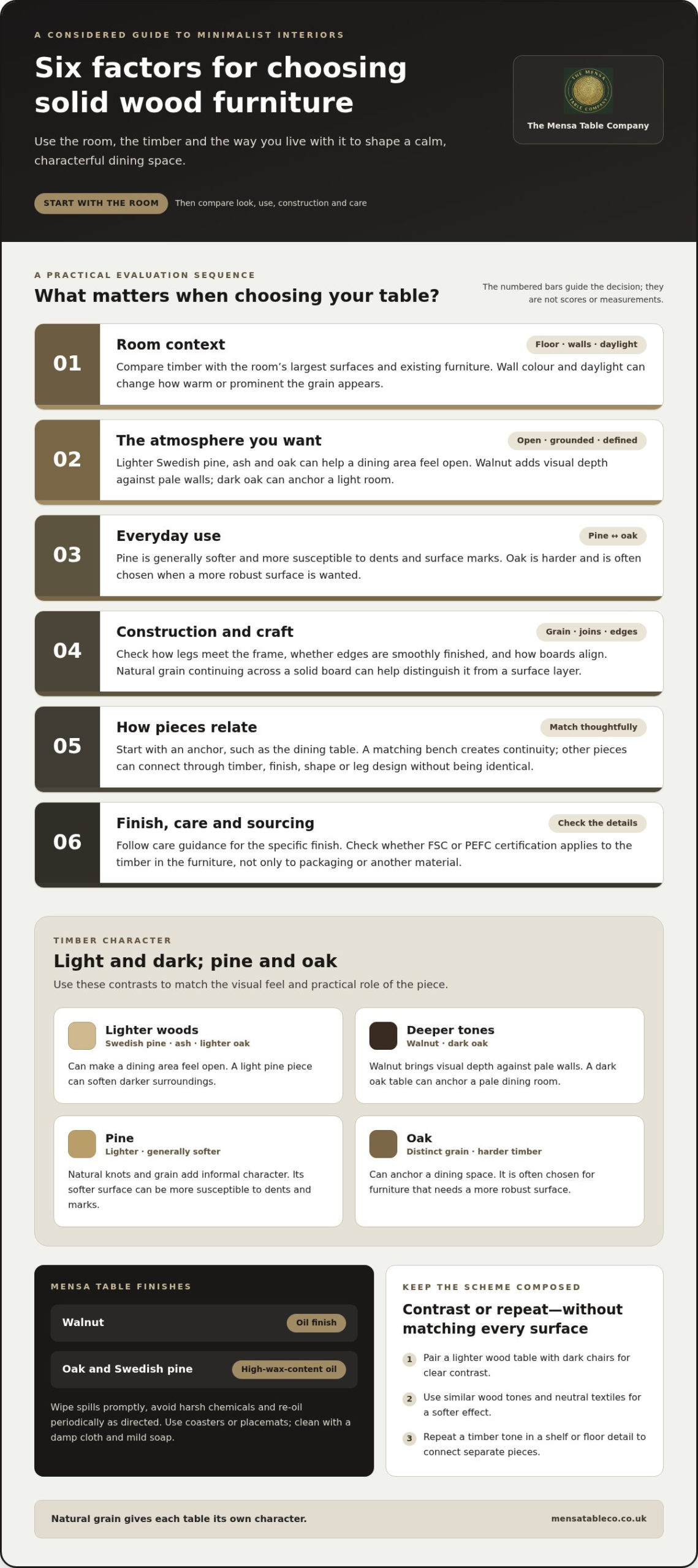
Light and dark woods create different effects in a minimalist room. Swedish pine, ash and lighter oak can help a dining area feel open, while walnut brings more visual depth against pale walls. Natural grain remains part of the design, so every table has its own character. Consider the flooring, wall colour and existing furniture together when choosing a timber.
Before choosing a timber, picture it in the room where it will live. Wall colours and daylight can affect how warm or prominent the grain appears. Compare the wood with large surfaces such as the floor rather than judging it in isolation. If the dining table is the focal point, a simple frame and natural grain can give it presence without extra decoration.
Contrast can help define a simple scheme. A lighter wood table beside dark chairs creates a clear difference without adding decoration. For a softer effect, pair similar wood tones with neutral textiles. Matching every surface isn’t essential: repeating a timber tone in a shelf or floor detail can connect separate pieces. Keep the palette restrained for a calmer result.
When assessing timber sourcing, look for FSC or PEFC certification and relevant chain-of-custody information. These are recognised certification schemes; check whether the claim applies to the timber in the furniture, rather than only to packaging or another material.
A wood finish affects both appearance and care. The Mensa Table Company’s walnut tables have an oil finish, while its oak and Swedish pine tables use high-wax-content oil. Follow the care instructions for the specific finish: wipe spills promptly, avoid harsh chemicals and re-oil periodically as directed. Wood grain remains visible, giving each table its own natural character.
Which UK furniture makers offer custom sizes or finishes? Look for makers who explain how pieces can be tailored, not just those offering a choice of standard colours. The Mensa Table Company makes dining tables to order, with custom sizes, finishes and leg styles available on request. This can help you choose a piece suited to your room, such as a narrower top for a compact kitchen.
For a considered choice, compare samples against the room’s largest surfaces, such as the floor and walls. Then decide whether the furniture should blend in or become a focal point. A dark oak table can anchor a pale dining room; a light pine piece can soften darker surroundings. In either case, a finish that suits the wood’s grain helps preserve the material’s character and keeps the overall scheme composed.
Handcrafted solid pine and oak furniture
Handcrafted furniture shows the natural variation in its timber. Swedish pine, ash and oak have their own grain patterns and colour, and walnut brings deeper tones. No two tables are exactly alike: each is one of a kind because of its natural grain. In a minimalist room, that variation gives a clean silhouette a distinct identity without adding ornament.
Craftsmanship is visible in practical details. Look closely at how the legs meet the frame, whether edges feel smoothly finished, and how the tabletop’s boards align. A carefully made oak table, for example, should have considered joins and an even surface, rather than relying on decorative details to appear finished. On pine furniture, examine knots for sound, stable integration into the board, rather than assuming every mark is a flaw.
Handmade doesn’t automatically mean solid wood, and solid timber doesn’t explain every construction choice. Identify which parts use solid pine or oak, and whether the top, legs and frame share that material. A table can combine different components, so describe the construction precisely. This helps you compare pieces by substance, not simply by the maker’s use of words such as “artisan” or “crafted”.
- Inspect the grain: natural grain continues across a solid board, while repeated patterns can suggest a surface layer.
- Check the joins: look for clean meeting points at the legs, rails and tabletop.
- Notice the edges: the edge can reveal whether the visible timber continues through the board.
- Consider the room: a pine desk can bring a lighter, more informal presence; an oak table can anchor a dining space.
Pine is generally softer than oak, which can make it more susceptible to dents and surface marks during daily use. Oak is a harder timber, often chosen for furniture that needs a more robust surface. Neither choice suits every household equally. A busy dining table may need different priorities from a side table used mainly for books or a lamp. Think about the item’s role before weighing its appearance.
Care depends on the surface treatment as well as the timber. Follow the maker’s instructions, wipe spills promptly and avoid harsh chemicals. For Mensa tables, walnut has an oil finish, while oak and Swedish pine use high-wax-content oil. Use coasters or placemats, clean with a damp cloth and mild soap, and re-oil periodically as directed.
For a well-balanced minimalist interior, start with one handcrafted focal piece, such as an oak dining table, then let its grain guide the remaining choices. Pine can complement it through contrast, while repeated shapes and restrained accessories keep the room composed. The result is simple in outline, yet grounded in the natural character and careful making of the wood.
Matching solid wood furniture sets
A matching set can make a minimalist room feel deliberate, but matching doesn’t require every piece to be identical. Start with an anchor, such as a dining table, then relate other pieces through timber, finish, shape or leg design. A matching bench creates continuity, while a different base shape adds subtle contrast. This keeps the room cohesive without making it feel like a showroom.
Use a simple sequence to plan the combination. First, decide which piece the room needs most, such as a table for shared meals. Next, choose a feature to repeat, perhaps a similar wood tone or clean, squared edges. Finally, leave some visual space between matching details. If the tabletop and bench share a finish, chairs with a quieter silhouette can keep the dining area from feeling too uniform.
Scale matters as much as appearance. Measure the floor area and the routes people use around the furniture before settling on a layout. A bench can tuck beneath a table when it isn’t in use, while separate chairs may be easier to move around a compact kitchen. Consider how many people regularly gather and leave room for doors, drawers and comfortable movement.
A matching solid wood bench can extend a dining table’s material and finish into the seating, creating a linked look with fewer separate shapes. It also gives a room a different visual rhythm from a row of individual chairs. To keep the composition balanced, repeat one or two features rather than copying every detail. A shared timber tone paired with a contrasting frame, for instance, can unite the pieces while allowing each to stand on its own.
- Match the material: use the same wood species when a close, consistent appearance matters most.
- Coordinate the finish: compare tones in the room, especially beside existing floors and cabinets.
- Repeat a shape: echo straight edges or a frame style without duplicating every feature.
- Keep the layout practical: allow clear routes around the table and seating.
Delivery, assembly and returns policies vary between retailers and products. Before buying, read the information about delivery access, assembly, returns and any conditions for made-to-order furniture. The Mensa Table Company’s dining tables require minimal assembly, with the legs attached and full instructions provided. Optional assembly services are available at checkout.
For a calm scheme, think beyond the dining area. A coffee table in a related wood tone can connect the living room to the dining space, while a different shape keeps the rooms from feeling copied. Choose each piece for its role first, then use timber and restrained design details to tie the home together. This creates a considered look while allowing solid wood’s character to show.
How can I tell whether furniture is solid wood or wood veneer?
Start with the product description, then inspect the construction details. “Solid oak” should describe the timber used, not merely the colour or visible surface. Veneer is a thin layer of real wood applied over a core, which may use engineered board or another material. Since veneer can show genuine oak grain, appearance alone doesn’t settle the question.
Check the less visible areas, such as the underside of a tabletop, the back of a cabinet, or the edge beneath a drawer. Solid timber usually shows grain and colour variations across the exposed surface and edge. Veneered furniture may show a surface layer ending at an edge, sometimes covered by a separate edging strip. Look for continuity between the top face and the edge, rather than relying on one feature.
Inspect the grain pattern across broad surfaces. On a solid wood tabletop, grain and colour vary naturally. Veneer may have a repeating pattern or appear unusually uniform across separate panels. This clue isn’t conclusive on its own, because veneer is real wood and can vary naturally. Combine it with the edges and the written product specification.
- Read the material wording: distinguish “solid oak” from “oak veneer” or “oak finish”.
- Look at exposed edges: check whether the visible grain appears to continue through the board.
- Examine hidden faces: compare the underside with the tabletop’s visible surface.
- Check component details: find out whether the top, legs and frame use the same material.
Weight can offer a clue, but it isn’t proof. A solid oak tabletop may feel substantial, while a hollow or engineered core can feel different. However, dimensions, frame construction and other materials also affect weight. Don’t lift a large table to test it. Instead, use the maker’s material description and compare the stated construction with visible edges and undersides.
Solid wood furniture can also contain joined boards. A tabletop made from several timber boards is still solid wood when those boards form its full thickness. Seams between boards don’t mean the surface is veneer. Look at the end grain or side edge: separate boards may be visible, while a thin face layer over another core suggests veneer construction.
Veneer isn’t automatically a sign of poor quality. It can provide a real-wood surface, while solid timber displays natural variation throughout its thickness. The right choice depends on your priorities, such as visible grain, construction, maintenance and intended use. If you’re comparing a minimalist dining table, check the top and supporting frame separately so the material description matches the parts that matter to you.
What are the benefits and drawbacks of oak, walnut, ash and pine furniture?
Oak, walnut, ash and pine each bring a different balance of colour, grain and everyday practicality. Oak offers a pronounced grain and a sturdy feel, making it a considered choice for a dining table used regularly. Its visual weight can dominate a compact room, so a simpler shape and open space around it help maintain a restrained look.
Walnut is known for its naturally deep brown tones and distinctive grain. It can bring warmth and become a focal point without relying on decorative details. Consider the available daylight and surrounding colours when choosing a darker timber. Walnut’s character can stand out against lighter flooring or walls.
Ash usually has a lighter appearance and visible grain, making it useful where you want natural texture without a dark finish. Its clean, pale tone can sit comfortably alongside neutral colours and uncluttered forms. However, ash may not provide the same depth as walnut or the traditional visual weight associated with oak. Compare samples with the room’s flooring before choosing a matching set.
Pine brings a lighter, more relaxed character, often with knots that make each surface feel individual. It can work well in a modestly styled room where the timber itself adds interest. Pine is softer than oak, so its surface can be more prone to dents and marks from everyday knocks. For a busy dining area, consider how much visible wear you’re comfortable with.
- Choose oak for a pronounced grain and substantial presence, while allowing for its strong visual character.
- Choose walnut for darker colour and a focal point, especially in a room with lighter surroundings.
- Choose ash for a pale, clear look that brings grain into a lighter scheme.
- Choose pine for a relaxed, knotty appearance, while accounting for its softer surface.
Practical use should guide the decision as much as appearance. An oak tabletop may suit frequent meals and gatherings, while a walnut coffee table can add depth without filling a whole room with dark timber. Ash can coordinate with pale furnishings, and pine can bring a casual note to a study. Compare the full piece, including legs and edges, rather than judging the species from a small colour sample alone.
Finish also affects the way each wood looks and feels, so compare the actual surface treatment alongside the timber. For a dining table, consider where plates, cups and daily activity will meet the surface. For a desk, think about the visual tone you’ll see throughout the working day. If you’re choosing a solid wood table, talk with us about your preferred timber and room to take the next step.
The Mensa Table Company: The Mensa Dining Table
The Mensa Table Company offers dining tables for homes where a solid wood table should be both a useful surface and a focal point. If you’re choosing a minimalist dining table, compare the distinct forms of The Mensa Dining Table, The Spider Leg Dining Table, The X-Frame Dining Table and The U-Frame Dining Table. Their names reflect different frame designs, giving you a starting point for considering how a table’s base will sit within your room.
Think about your existing layout, preferred wood tone and how you’ll use the table, from everyday meals to shared gatherings. These priorities can help you choose a design that feels right for your home.
Contact The Mensa Table Company to discuss your dining table choice.
Make room for a table that feels like yours
The right dining table should suit the way you live, not simply fill an empty space. Picture where everyday meals happen, how people gather around the table, and what you want the room to feel like. Those details can guide your choice of timber and frame, helping minimalist solid wood furniture in the UK feel personal rather than prescribed.
The Mensa Table Company offers The Mensa Dining Table, The Spider Leg Dining Table and The X-Frame Dining Table. Each provides a different design direction for a dining space shaped around natural wood and simple lines. Let your room and routines guide your choice.
Contact The Mensa Table Company to discuss your dining table and take the next step towards a space made for sharing.
Frequently Asked Questions
What types of solid wood are used in minimalist furniture sold in the UK?
Oak, walnut, ash and pine are used for minimalist solid wood furniture in the UK. The Mensa Table Company’s dining tables use these four timber types, with Swedish pine specified for its pine tables. Its tables are made from solid wood, not veneer or MDF. The species you choose affects the piece’s colour, grain and feel, so consider how it will sit alongside your room’s existing materials.
How should I care for and maintain solid wood furniture?
Follow the care instructions for your furniture’s finish, and deal with spills promptly. For Mensa dining tables, use coasters or placemats, wipe the surface with a damp cloth and mild soap, and avoid harsh chemicals. Protect the tabletop from heat and prolonged contact with liquid. Walnut tables have an oil finish, while oak and pine tables use high-wax-content oil; re-oil periodically as directed for the surface.
How much does minimalist solid wood furniture cost in the UK?
Which UK retailers sell minimalist solid wood furniture?
The Mensa Table Company offers its signature Mensa Dining Table.

Leave a Reply