
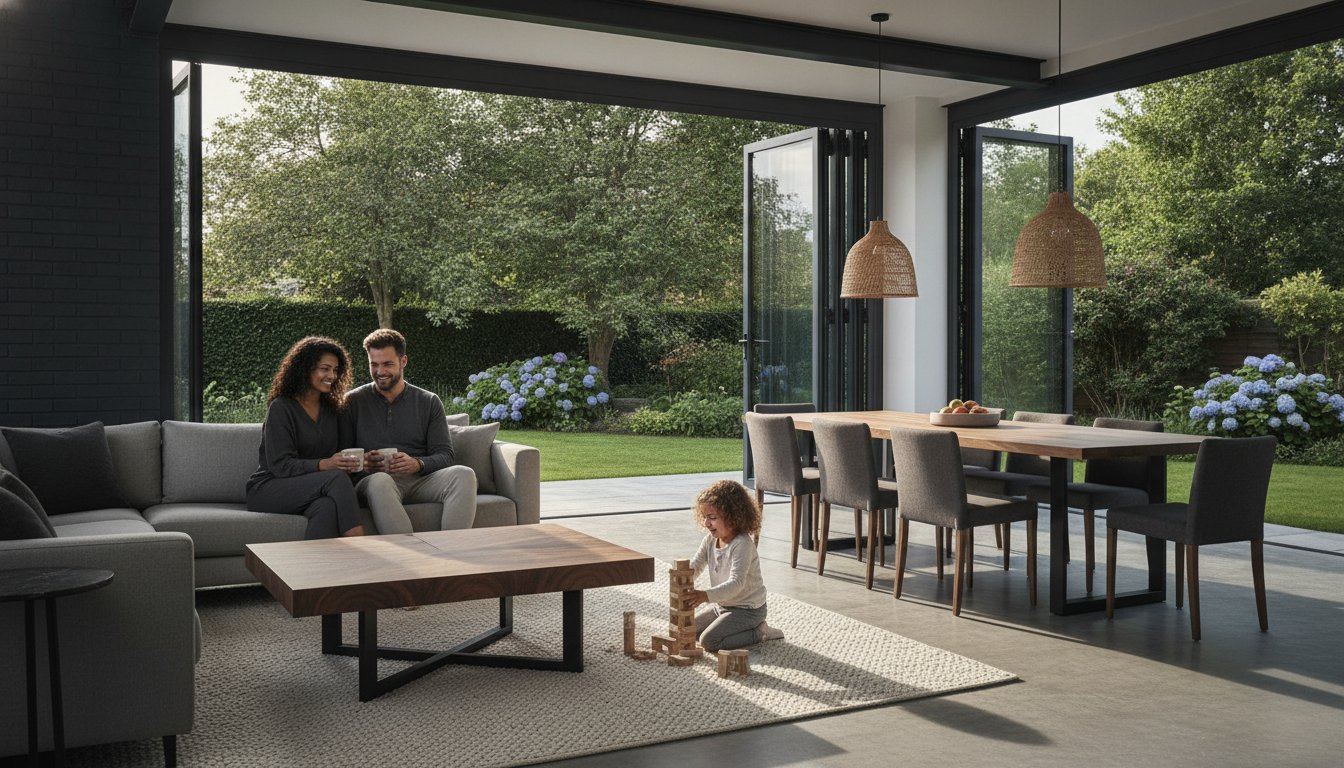
What if the secret to a calm, intentional home isn’t found in a catalog of identical finishes, but in the silent conversation between the pieces of wood you bring into your space? Many of us have felt the frustration of a living area that feels cluttered rather than curated, where a peeling veneer table sits awkwardly beside a mismatched dining set. Finding high-quality matching dining and coffee table sets often feels like a search for a ghost, especially when mass-produced options fail to meet the specific dimensions of your life. We believe your home is more than a transaction; it’s a sanctuary built for shared rituals and quiet moments.
You deserve furniture that carries a sense of heritage and survives the passage of time across generations. In this guide, we’ll show you how to move beyond surface-level coordination to achieve true harmony through shared structural geometry and material integrity. You’ll discover a clear framework for selecting wood species and leg styles, from the architectural strength of a V-Frame to the organic flow of solid timber. By focusing on handcrafted pieces that share a common design DNA, you can transform your space into an authentic environment where every element feels grounded, honest, and deeply personal.
Key Takeaways
- Learn how to anchor open-plan living areas by creating a seamless visual flow between your dining and relaxation zones.
- Understand why selecting the right wood species is the foundation of your design and how to allow solid timber the natural room it needs to breathe.
- Discover how to use shared leg geometry and structural signatures to curate matching dining and coffee table sets that feel intentional rather than repetitive.
- Master the practical art of scale and proportion, ensuring your tables fit both your guest requirements and the physical dimensions of your room.
- Explore the long-term value of choosing handcrafted, artisanal furniture over mass-produced alternatives to ensure your home’s focal points last for generations.
The Art of Cohesive Furniture: Why Matching Sets Matter
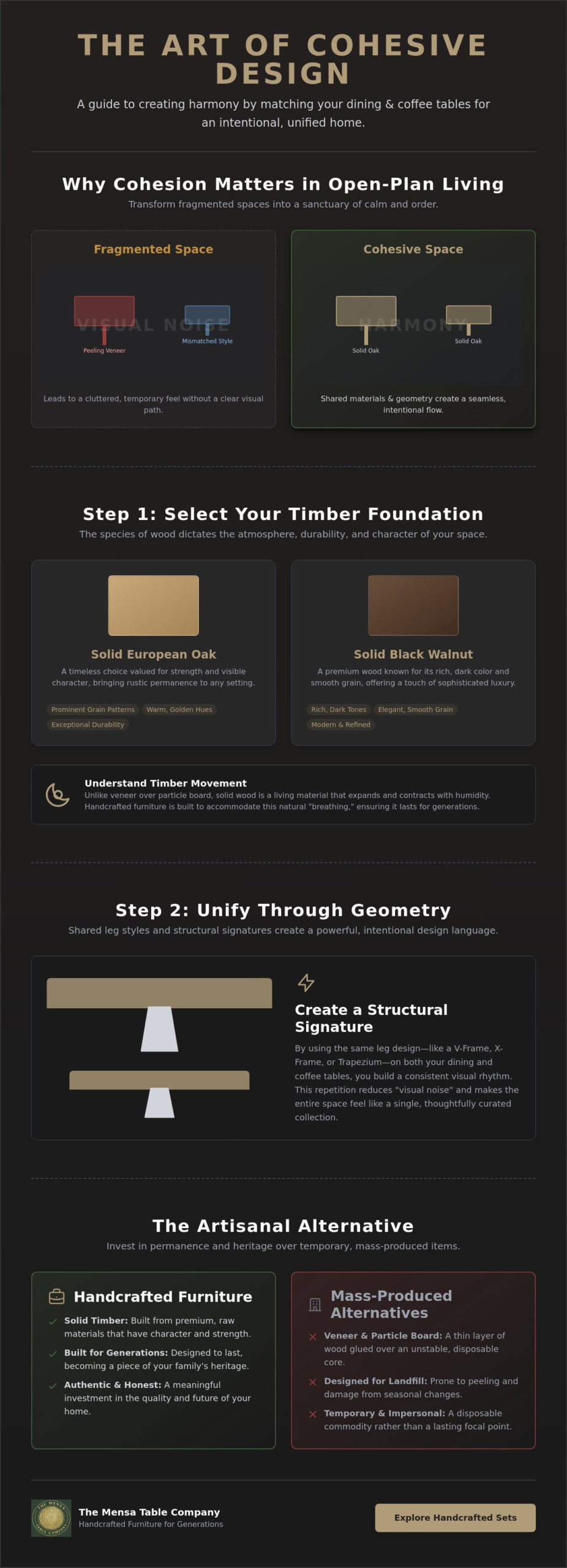
Modern architecture often revolves around the “Great Room,” a concept that removes the physical barriers between our kitchens, dining areas, and lounges. While this creates a sense of airy freedom, it also presents a unique design challenge. Without the right anchors, these open spaces can feel fragmented or cluttered. The solution lies in The Art of Cohesive Furniture, which uses shared materials and geometries to create a seamless visual flow. By selecting matching dining and coffee table sets, you provide your home with a consistent design language that guides the eye effortlessly through the space.
Interior design isn’t just about what looks good in a photograph; it’s about how a room feels when you’re standing in it. There is a deep psychological comfort in repetition. When the grain patterns and the weight of the timber in your living room mirror those in your dining area, the mind perceives order and calm. This approach moves away from the sterile, temporary feel of a showroom and toward a space that feels intentionally built for longevity. We believe that furniture should act as a grounding force, turning a wide-open floor plan into a series of inviting, connected zones.
Bridging the Gap Between Living and Dining Areas
Think of your furniture as a narrative thread that weaves through your home. By limiting the palette of textures, you significantly reduce visual noise. Instead of competing for attention, your dining tables and coffee tables work in concert. This material consistency allows you to create distinct zones without the need for restrictive walls. A well-placed bench or a shared timber species can define the transition from a bustling mealtime to a quiet evening on the sofa, maintaining harmony throughout the day. It’s about creating a home that feels like a single, unified thought.
The Emotional Value of Handcrafted Sets
There is a stark contrast between furniture that is simply bought and pieces that feel commissioned for a specific life. Solid wood evokes a sense of heritage and permanence that mass-produced alternatives simply cannot replicate. When we work with raw materials like solid European oak, we aren’t just making a surface; we are creating a backdrop for life’s most important rituals. These sets become the site for shared social connection, from the first cup of coffee in the morning to the final conversation of a dinner party. They aren’t just commodities. They are meaningful investments in the future of your home.
Selecting Your Timber: The Foundation of Coordination
The journey of creating a cohesive home begins long before the first tool touches the wood. It starts with the selection of the raw material. When you are looking for matching dining and coffee table sets, the choice of species is the most critical decision you will make. It dictates the atmosphere, the durability, and the long-term character of your living space. Wood is a living, breathing material; it carries its own history and responds to the environment of your home in a way that synthetic alternatives never can.
One of the most misunderstood aspects of high-quality furniture is timber movement. Solid wood needs room to breathe. Unlike mass-produced veneer furniture, which often uses a thin layer of wood glued over unstable particle board, solid timber expands and contracts with changes in humidity and temperature. Our workshop uses traditional techniques to ensure that every piece has the structural integrity to handle these natural shifts. This focus on material health is what allows a table to last for generations rather than ending up in a landfill after a few years of seasonal changes. This physical presence also influences the Scale, Proportion, and Layout of your room, as the visual weight of different timbers can make a space feel either grounded or airy.
Exploring Premium Wood Species
- Solid European Oak: This is the timeless choice for those who value strength and visible character. Its prominent grain patterns and golden hues bring a sense of rustic permanence to any setting.
- Solid Black Walnut: If you desire a sophisticated and dark aesthetic, Walnut offers rich, chocolatey tones and a smooth, elegant finish that elevates the room’s mood.
- Solid European Ash: For a more modern, light-filled environment, Ash is exceptionally durable and features a stunning, pale grain that brightens up smaller spaces.
Matching Grain and Finish Across Pieces
Cohesion is achieved when your coffee table and dining table feel like they were born from the same forest. By using the same species across your furniture, you ensure that the grain “talks” to each other across the room. We use natural oils and waxes to highlight the unique history of the timber, protecting the surface while allowing the tactile quality of the wood to remain accessible. The way light interacts with these finishes changes throughout the day, revealing deep textures in the morning sun and a warm glow in the evening. If you are unsure which species would best suit your lifestyle, you might find it helpful to reach out for a personal consultation to discuss your vision.
Unifying Your Space Through Leg Design and Geometry
While the timber provides the soul of a piece, the leg geometry serves as its structural signature. It’s the element that bridges the gap between the raw, organic beauty of the wood and the architectural lines of your home. When you’re curating matching dining and coffee table sets, selecting a consistent leg style is what transforms a group of individual objects into a unified collection. This isn’t just about simple repetition; it’s about a shared design DNA that anchors each zone of your living space with quiet, artisanal confidence.
Industrial steel frames bring a unique tension to a room, offering a lean, modern silhouette that contrasts beautifully with the thick, textured planks of a solid wood top. In an open-plan Great Room, the primary challenge is often balancing the sheer visual weight of a large dining table with the smaller, more intimate presence of a coffee table. By maintaining the same leg geometry, you create a visual rhythm that makes even pieces of different scales feel like they belong together. This approach avoids the mechanical, cold feel of mass-produced sets and instead highlights the manual production and thoughtful design that goes into every frame we weld.
Signature Leg Styles for Cohesive Sets
Each leg design offers a different emotional resonance for your space. The Spider Leg Dining Table and its coffee table counterpart act as bold, architectural statements, drawing the eye with their complex, intersecting steel. For those who prefer a more traditional industrial aesthetic, the X-Frame Dining Table and U-Frame Dining Table bridge the gap between rustic warmth and modern precision. If your home leans toward a minimalist contemporary flow, the Trapezium Dining Table or A-Frame Dining Table provides a clean, unobstructed silhouette that allows the natural grain of the wood to remain the primary focus.
Coordinating Benches and Seating
One of the most effective ways to reinforce this design language is through the use of matching benches. Choosing a bench that mirrors the leg profile of your dining table creates a clean, streamlined look that mismatched chairs often disrupt. Benches offer a sense of communal warmth, inviting guests to sit closer and share in the ritual of a meal. From a practical standpoint, “tuck-away” benches are a revelation for smaller homes. They can be stored neatly under the table when not in use, which maintains the spatial flow and ensures that the structural signature remains visible without cluttering the room’s footprint.
Practical Considerations: Scale, Proportion, and Layout
While the beauty of the grain and the strength of the steel frame provide the character of your home, the physical dimensions determine how you actually live within it. A room that looks beautiful but feels cramped fails its primary purpose as a sanctuary. When coordinating matching dining and coffee table sets, the relationship between the pieces and the surrounding architecture is paramount. You aren’t just placing objects; you’re designing the flow of human movement and conversation. Achieving this balance requires a move away from the “one-size-fits-all” approach of mass retailers toward a more considered, bespoke methodology.
Interior design often leans on the “Golden Ratio” to find the perfect balance between furniture and negative space. Overcrowding a room is the fastest way to lose the artisanal charm of your pieces. By opting for bespoke sizing, you can fit tables into specific alcoves or odd-shaped corners without creating a cluttered atmosphere. This precision ensures that every piece has enough “air” around it to be appreciated as a work of craft. It’s about respecting the boundaries of your room while maximizing the utility of the furniture.
Sizing Your Dining Table for Connection
In the UK, the standard dining table height is typically around 75cm to 76cm. This provides the ideal ergonomic balance for most chairs and body types, ensuring comfort during long, lingering dinner parties. However, length is where true personalization happens. Whether you need an intimate 4-seater for quiet family meals or a grand 12-seater centrepiece for hosting, bespoke lengths allow you to tailor the furniture to your lifestyle. We recommend allowing at least 60cm of “elbow room” per person and a walkway clearance of 90cm to ensure the space remains inviting rather than restricted. This prevents the room from feeling like a storage space for furniture and instead keeps it as a site for connection.
Proportioning the Coffee Table
The coffee table serves as the anchor of the lounge, but its effectiveness depends on its relationship to the sofa. A common design rule is that the table should be approximately two-thirds the length of your sofa. This creates a balanced visual weight that feels intentional. To further unify your space, matching the top thickness of your handcrafted coffee tables to your dining table reinforces that shared design DNA we’ve discussed. Height is equally crucial; the surface should be roughly level with or slightly lower than the sofa cushions to keep the line of sight clear and the reach comfortable. If you’re struggling to calculate the perfect dimensions for your specific room layout, contact our workshop for a direct consultation to ensure your furniture fits your life perfectly.
The Artisanal Alternative: Why Handcrafted Beats Flat-Pack
The allure of a flat-pack box often fades the moment the first cam-lock fails or the thin veneer begins to peel at the edges. While mass-produced furniture offers a quick fix, it carries hidden costs that only reveal themselves over time. These pieces are frequently caught in a cycle of replacement that ends in a landfill, lacking the structural integrity to survive a house move or the natural shifts of the seasons. Choosing handcrafted matching dining and coffee table sets is an investment in the future of your home. It’s a deliberate shift from disposable consumption to a philosophy of permanence. Every piece we create celebrates the beauty of imperfection, from the unique swirl of a grain pattern to the natural knots and live edges that tell the story of a tree’s decades-long history.
Commissioning a set from a dedicated workshop is a journey that begins with a raw timber plank and ends with a finished masterpiece in your living room. This process isn’t just a transaction; it’s a connection between the creator and the person who will eventually gather their family around the table. You aren’t just buying a surface. You’re bringing a piece of the natural world into your sanctuary, shaped by hands that respect the material. This manual approach ensures that your furniture isn’t just a commodity but a site for human connection and shared rituals.
Quality Indicators in Solid Wood Furniture
The difference between artisanal work and factory-line goods is often found in the details you can’t see at a distance. Superior joinery techniques provide a level of stability that cam-locks and screws simply cannot match. When you run your hand across a hand-sanded surface, the tactile warmth is immediate and inviting, a stark contrast to the cold, mechanical feel of industrial finishes. The Mensa Dining Table represents a pinnacle of this structural design, where we blend architectural steel with timber that has been carefully selected for its character. These pieces are built to remain the focal point of your home for generations.
Sustainability and Ethical Sourcing
In a world of global mass-production, knowing exactly where your timber comes from is a vital part of responsible ownership. We believe in the importance of ethical sourcing and supporting the skill of local craftsmen who take immense pride in their trade. By choosing “forever furniture,” you’re actively avoiding the cycle of disposable consumption that defines modern retail. This intentional choice creates a home environment rooted in substance and environmental responsibility. It’s about valuing the passage of time and the heritage of the materials, ensuring that the furniture you buy today becomes a cherished heirloom for tomorrow.
Transforming Your Space Into a Sanctuary
Building a home that feels truly unified requires more than just filling a room; it’s about selecting pieces that share a common design language. By choosing matching dining and coffee table sets, you create a seamless narrative that flows from your morning coffee to your evening meals. We’ve explored how the foundation of premium timber and the signature of architectural leg geometry work together to anchor an open-plan living space with quiet, artisanal confidence.
Since 2018, our workshop has been dedicated to the quiet art of traditional craftsmanship. We specialize in the rich textures of Solid European Oak, Ash, and Black Walnut, ensuring every piece we create is built to last for generations. With national delivery across the United Kingdom, we’re proud to bring our manual approach and environmental responsibility into homes far and wide. It’s a journey that begins with raw timber and ends with a site for human connection.
Ready to start your journey from raw timber to a finished masterpiece? Explore our handcrafted Dining and Coffee Table collections and let’s discuss how we can bring your vision to life. Your home is the backdrop for your life’s most meaningful rituals, and it’s time it felt like one.
Frequently Asked Questions
Is it better to have a matching dining and coffee table set or mix styles?
Matching provides a visual anchor that stabilizes open-plan living spaces and creates a sense of order. While mixing styles can work for some, matching dining and coffee table sets reduce visual noise and create a calming sense of repetition. This shared design DNA ensures your home feels like a single, unified thought rather than a collection of unrelated objects. It’s about creating a sanctuary where every piece feels intentional.
How do I choose the right wood species for a matching set?
Choosing the right species depends on the atmosphere you wish to evoke and the natural light available in your room. Solid European Oak is the timeless choice for character and strength, fitting almost any decor. If you prefer a lighter, modern feel, Solid European Ash is exceptionally durable and bright. For those seeking a dark, sophisticated aesthetic, Solid Black Walnut offers rich, chocolatey tones that elevate the mood of any space.
What are the benefits of choosing a bespoke dining table over a standard size?
Bespoke sizing allows you to tailor your furniture to the specific dimensions of your life and your architecture. Standard sizes often ignore the unique alcoves or walkway requirements of modern homes, leading to a cramped feel. By commissioning a custom length, you ensure your table provides enough “elbow room” for guests while maintaining a comfortable flow throughout the room. It transforms a piece of furniture into a perfect fit for your lifestyle.
Can I match a dining table with a breakfast bar?
You can absolutely match your dining table with a breakfast bar to create a consistent narrative thread through your home. Using the same timber species and leg geometry, such as the V-Frame or Trapezium style, bridges the gap between the kitchen and dining areas. This material consistency reduces visual clutter and makes the transition between functional zones feel intentional. It’s an effective way to unify a Great Room without building physical walls.
How do I care for a solid oak matching furniture set?
Caring for a solid oak set involves protecting the natural oils and allowing the timber room to breathe. Use coasters for drinks and avoid placing hot items directly on the surface to prevent marking the finish. Regularly dusting with a soft cloth and occasionally reapplying a high-quality wax will maintain the tactile quality of the wood. Since wood is a living material, keeping your home at a steady humidity helps prevent excessive movement over time.
What leg style is best for a modern industrial look?
The Spider Leg Dining Table and the X-Frame are the most effective styles for achieving a bold, modern industrial look. These architectural steel frames provide a lean silhouette that contrasts beautifully with the organic texture of a solid wood top. If you prefer a more minimalist contemporary flow, the Trapezium or U-Frame offers clean lines that bridge the gap between rustic warmth and industrial precision. Each style serves as a structural signature for your home.
Is solid black walnut worth the extra investment for a matching set?
Solid Black Walnut is a significant investment in the heritage and sophistication of your home. Its deep, rich tones and smooth finish offer an emotional resonance that mass-produced alternatives can’t replicate. When used for matching dining and coffee table sets, Walnut acts as a luxurious focal point that draws the eye. It is a choice for those who value the unique history found in dark grain patterns and want furniture that lasts for generations.
How long does it typically take to manufacture a handcrafted furniture set?
The journey from raw timber to a finished masterpiece typically takes several weeks because we respect the time required for high-quality manual production. Each piece is hand-sanded and finished with care in our workshop to ensure structural integrity and a perfect tactile finish. This deliberate pace allows us to focus on the intricate details of joinery and timber selection. We don’t rush the process, ensuring your investment is built to survive the passage of time.

Leave a Reply