What if the most cherished object in your home was also the one you worried about the least? Many of us crave the tactile warmth of natural grain but hesitate because we fear the inevitable water rings, heat marks, and the chore of constant waxing. You don’t have to choose between a cold, mass-produced veneer and a fragile heirloom. Finding the right low maintenance wood dining table means looking past the surface to understand how dense, sustainably sourced timber and modern finishing techniques work together to protect the heart of the wood.
At our workshop, we believe a table should be a site for human connection, not a source of stress. You’ll discover how to select the toughest species like White Oak or Ash and why the shift toward low-VOC finishes is making furniture safer and more durable than ever. We’ll guide you through the industry’s transition away from traditional lacquers toward breathable finishes that meet the strict new 2026 standards for formaldehyde emissions. By the end, you’ll know exactly how to choose a piece that feels artisanal and soulful yet stands up to the beautiful chaos of daily life.
Key Takeaways
- Learn how a low maintenance wood dining table relies on the natural density of the timber rather than thick plastic coatings to resist daily spills and impacts.
- Discover why European Oak remains the gold standard for busy family homes and how it compares to Walnut and Pine on the Janka hardness scale.
- Understand the science behind modern finishes that allow wood to breathe, providing a wipe-clean surface that avoids the cracking and yellowing seen in traditional varnishes.
- Master the 30-second daily cleaning routine and learn the simple truth about when you actually need to use a coaster on high-quality solid timber.
- Explore how signature frame designs like the Spider Leg and X-Frame offer the enduring stability required for a piece that serves as your home’s emotional anchor.
What Actually Makes a Wood Dining Table “Low Maintenance”?
A table is more than a surface; it is the silent witness to your family’s history. When we talk about a low maintenance wood dining table, we aren’t suggesting a piece of furniture that never needs a wipe. True low maintenance is defined by a table’s resilience against liquids, heat, and the inevitable impacts of a busy household. Many people carry the myth that real wood is too delicate for daily life, but the opposite is true. High-quality timber, properly seasoned and dried to the correct moisture content, provides a stable foundation that resists warping and splitting. It is the structural integrity of the wood that determines how much work you have to do to keep it beautiful.
The secret lies in the density of the raw material. Selecting dense hardwoods naturally resists the dents and dings that would ruin softer, cheaper materials. When a table is built with this level of artisanal care, it stops being a fragile object and becomes a functional tool for living. It is about choosing a piece that works for you, rather than you working for the piece.
Solid Wood vs. Veneers: The Longevity Gap
Mass-produced furniture often relies on “oak effect” finishes or thin veneers glued over unstable cores like chipboard or MDF. While these might look clean on a showroom floor, they are the antithesis of low maintenance. If moisture seeps into a veneer seam, the material bubbles and peels. This type of damage is usually terminal. You cannot sand back a veneer without destroying the thin layer of wood entirely. In contrast, our solid wood dining tables offer a depth of material that veneers simply cannot match. Choosing solid timber is an investment in longevity that saves you the maintenance and cost of replacing your furniture every few years.
The Repairability Factor
The most profound advantage of solid wood is its capacity for renewal. We like to think of it as “infinite maintenance” because, unlike plastic-coated alternatives, a solid surface can be sanded and refinished to look brand new decades later. The art of wood finishing has evolved to provide protection that lives within the grain rather than sitting on top of it. Natural grain patterns are also remarkably forgiving. The organic swirls and knots found in Solid European Oak naturally disguise minor scratches and daily wear. This creates a table that ages gracefully, gaining a unique patina that tells the story of your family’s shared meals and celebrations. It is a focal point that rewards your care with a lifetime of service.
Choosing the Right Species: Oak, Walnut, and Pine
The soul of a low maintenance wood dining table lies in the cellular structure of the timber we select. In our workshop, we favor species that offer a natural defense against the rigors of a lively home. Understanding the Janka hardness scale is essential here; it measures the force required to embed a steel ball into the wood. While a higher number usually indicates better dent resistance, the density and porosity of the grain also determine how wood properties affect finish absorption and long-term durability. By choosing a wood that is naturally resilient, you reduce the effort required to keep it looking pristine.
Solid European Oak: The Busy Home Professional
For most of our clients, Solid European Oak is the undisputed champion. It sits high on the durability rankings with a Janka rating that comfortably handles heavy daily use. Beyond its physical hardness, oak possesses a high concentration of natural tannins. These compounds act as a biological shield, helping the timber resist decay and moisture ingress over generations. Its grain is remarkably tight, which means liquids tend to sit on the surface longer rather than soaking into the fibers. This gives you those vital extra seconds to grab a cloth after a spill during a busy family dinner.
Solid Black Walnut: Elegance Without the Effort
There is a common misconception that darker woods require more fuss. In reality, Solid Black Walnut is one of the most dimensionally stable hardwoods available. It doesn’t expand or contract as aggressively as other species when humidity shifts, which prevents the structural stresses that often lead to maintenance issues. The deep, chocolatey tones of walnut are excellent at masking the minor imperfections that occur over time. While it’s slightly softer than oak, its complex grain patterns provide a visual depth that makes a stray scratch almost invisible to the naked eye. It offers a tactile luxury that feels soft to the touch but remains resilient under pressure.
If you prefer a softer, more rustic aesthetic, Solid Swedish Pine provides a characterful alternative. While it requires a bit more mindfulness regarding heavy impacts, its open grain takes finishes beautifully and develops a rich honey-toned patina that hides the marks of a life well-lived. If you’re unsure which timber suits your lifestyle best, feel free to speak with our team about your space. Every piece of timber has a different story to tell, and we’re here to help you find the one that fits your family’s rhythm.

The Secret is the Finish: Hard-Wax Oil vs. Lacquer
The final stage in our workshop is perhaps the most critical for ensuring your furniture survives the rigors of home life. While we’ve discussed how the density of the timber provides a foundation, the finish is what stands between your morning coffee and the raw grain. For a low maintenance wood dining table, the choice of protection dictates whether you’ll be stressing over every glass of water or relaxing into the meal. Traditional lacquers and varnishes create a hard, plastic-like film over the wood. While initially tough, these coatings are brittle; they don’t move with the natural expansion and contraction of the timber. Over time, micro-cracks appear, allowing moisture to seep underneath, which leads to the unsightly yellowing and peeling that many homeowners dread.
We’ve spent years refining our process to move away from these restrictive skins. Scientific research into how finishes protect wood shows that a successful barrier must manage moisture while resisting abrasion. This is why we exclusively use modern hard-wax oils. Unlike lacquer, these oils penetrate deep into the wood fibers to nourish them from within, while the wax components harden on the surface to create a resilient, liquid-repellent shield. Whether it’s a splash of red wine or a ring from a damp mug, the liquids bead on the surface, giving you ample time to wipe them away without a trace.
Why We Favour Hard-Wax Oils
Our preference for hard-wax oils isn’t just about durability; it’s about the tactile soul of the piece. These finishes preserve the matte, organic feel of the timber, ensuring your solid wood dining table still feels like wood rather than a synthetic imitation. We also value the health of your home. These oils are food-safe and non-toxic once cured, making them the ideal choice for families with young children who might be in direct contact with the table surface every day.
Maintenance Schedules Compared
The true “low maintenance” win comes down to repairability. A lacquered table requires zero effort until the day it fails, at which point the entire piece must be professionally stripped and refinished. With our oiled finishes, you have the “spot-repair” advantage. If a deep scratch occurs, you can simply sand that small area and reapply a dab of oil; it blends seamlessly with the surrounding grain. For general upkeep, refreshing your table is a simple task. To refresh an oiled table, you simply wipe on a specialized maintenance oil and buff it off, a process that takes less than ten minutes and keeps your coffee tables or dining surfaces looking vibrant for decades.
Practical Daily Care for Your Solid Wood Table
Owning a piece of artisanal furniture should bring peace, not a list of chores. Once you have selected a low maintenance wood dining table crafted from dense hardwoods like oak or walnut, the daily upkeep is remarkably straightforward. We believe your table should be the backdrop for your life, not a museum piece you’re afraid to touch. Most days, a simple thirty-second wipe with a soft, lint-free cloth is all that’s required to keep the surface clear of crumbs and dust. If you encounter a sticky spill, a slightly damp cloth will lift the residue without harming the protective hard-wax oil we’ve carefully applied in our workshop.
Heat management is another common concern for families. While our modern finishes are designed to withstand the warmth of a morning coffee mug or a plate of hot food, we always recommend using a trivet for anything taken directly from the oven or stovetop. This simple habit prevents the localized “heat shock” that can occasionally cause the wood fibers to expand too rapidly. By treating the timber with a small amount of mindfulness, you ensure that your solid wood dining table remains a beautiful focal point for decades.
The “No-No” List for Wood Surfaces
The biggest threat to a natural finish isn’t daily use; it’s the chemicals found in modern cleaning cupboards. You should never use bleach, ammonia, or abrasive scouring pads on your timber. These harsh substances can strip away the protective wax layer, leaving the raw grain vulnerable to moisture. Similarly, avoid silicone-based polishes and generic “dusting” sprays. These often leave a greasy film that attracts more dust and makes the wood look dull over time. A simple solution of warm water and a single drop of pH-neutral soap is the only “cleaner” you’ll ever truly need for your coffee tables and dining surfaces.
Seasonal Care and Movement
Solid timber is a living, breathing material that reacts to the environment around it. As the seasons shift, the humidity in your home will fluctuate, causing the wood to expand and contract ever so slightly. This is a natural process and a sign of the wood’s authenticity. To minimize excessive movement, try to position your table away from direct heat sources like radiators or wood-burning stoves. Rapid temperature changes can dry out the timber too quickly, leading to small cracks. If you have specific questions about how our furniture will settle into your unique home environment, please get in touch with our specialist team for advice. We take great pride in ensuring every piece we build is prepared for the specific rhythm of your household.
The Mensa Collection: Built for Real Life
The search for a low maintenance wood dining table often begins with a worry about spills, but it ends with a desire for a piece that stays structurally sound for a lifetime. We don’t believe in the disposable nature of mass-produced, flat-pack furniture. Instead, our workshop focuses on creating pieces that act as the emotional anchor of your home. The Mensa Collection is the result of years spent refining how timber and steel interact to provide a foundation that is as beautiful as it is unbreakable. By choosing a handcrafted approach, you’re investing in a table that avoids the structural fatigue common in cheaper alternatives.
Our team takes great pride in the manual assembly of every frame. We ensure that the weight of the solid timber is perfectly distributed, preventing the wobbles that can lead to frustration and unnecessary maintenance. This isn’t just furniture; it’s a site for human connection that is designed to endure the shifting rhythms of your family life. The grain matters. So does the frame.
Industrial Strength Frames
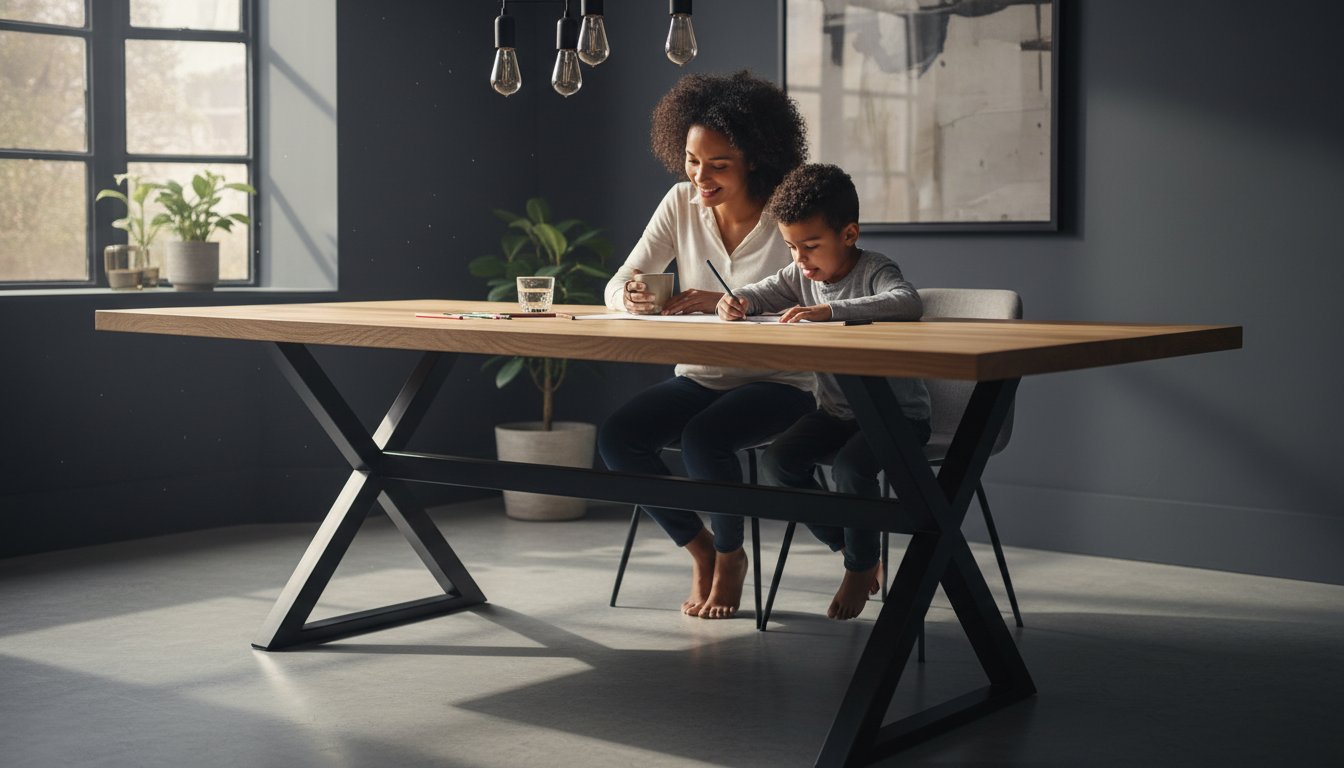
Stability is a core component of a truly low maintenance wood dining table. Our signature X-Frame Dining Table is a testament to this philosophy, utilizing heavy-duty steel to create a base that simply does not move. For those seeking a more contemporary aesthetic, the iconic Spider Leg design offers a striking visual focal point without compromising on the load-bearing capacity required for thick, solid oak or walnut tops. We also offer U-Frame and Trapezium designs, each built to ensure your table remains level and secure, regardless of how many guests gather around it.
The Complete Dining Solution
To truly simplify your home life, we often suggest looking beyond the table itself. Incorporating Matching Benches into your dining space is a clever way to reduce visual clutter and maintenance. Benches are incredibly practical for families; they tuck away neatly under the table when not in use and lack the intricate joints and spindles of traditional chairs that often collect dust. This cohesive look creates a calm, inviting atmosphere that celebrates the natural origins of the materials. If you’re ready to find the perfect centerpiece for your home, you can explore our full range of handcrafted dining tables and see how artisanal quality can transform your daily experience.
Bringing Artisanal Soul Into Your Daily Rhythm
A home’s focal point should be a source of connection, not a list of chores. By selecting a low maintenance wood dining table crafted from dense timber and finished with breathable oils, you choose a piece that thrives alongside your family. We’ve explored how the structural integrity of Solid European Oak and the stability of Black Walnut provide a foundation that resists the dings and spills of real life. Unlike mass-produced alternatives, these tables don’t just sit in your room; they age gracefully, gaining character with every shared meal.
Since 2018, our close-knit team has been handcrafted in the UK, using traditional methods and premium, food-safe hard-wax oils to protect the raw beauty of the grain. We believe in substance over flashy marketing, focusing on the tactile quality and longevity of every piece that leaves our workshop. It’s an investment in a heritage that can be refreshed and renewed for generations to come.
Browse our collection of durable, handcrafted dining tables and discover a centerpiece that values both form and function. We’re here to help you find a table that feels personal, inviting, and entirely ready for the years ahead.
Frequently Asked Questions
Are wood dining tables high maintenance for families with children?
Solid wood tables aren’t high maintenance for families if you select dense hardwoods like oak or walnut. These materials naturally resist the dents and scratches that come with play and daily meals. Unlike fragile veneers, solid timber is robust enough to handle the beautiful chaos of childhood. It’s a surface that invites connection rather than anxiety, allowing you to relax while your family gathers around it.
What is the best finish for a low maintenance wood table?
A premium hard-wax oil is the superior choice for a low maintenance wood dining table. Unlike traditional lacquers that sit on the surface and crack, these oils penetrate the fibers while the wax creates a liquid-repellent shield. This dual-action protection ensures that spills bead up rather than soaking in. It preserves the matte, organic feel of the timber while providing a wipe-clean surface that is easy to manage.
Can I put hot plates directly on a solid oak dining table?
You should use a trivet or coaster for items taken directly from the oven or stovetop. While solid oak is remarkably resilient and our finishes handle the warmth of a standard dinner plate, extreme heat can cause localized heat shock. This rapid temperature change might stress the wood fibers or cloud the finish. Using simple protection for piping hot dishes ensures the timber remains stable and beautiful for generations.
How do I remove water rings from a hard-wax oiled table?
Removing a water ring from an oiled surface is a simple task that doesn’t require professional help. You can gently sand the affected area with fine-grit sandpaper and apply a small amount of matching maintenance oil with a lint-free cloth. Because the finish lives within the grain, the new oil will blend seamlessly with the surrounding wood. This spot-repair capability is one of the greatest advantages of our handcrafted pieces.
How often do I need to re-oil my dining table?
Most families find that a quick refresh every two to five years is sufficient to keep their table in peak condition. You’ll know it’s time when the wood begins to look slightly dull or if water stops beading on the surface. The process is straightforward and takes less than ten minutes. Simply wipe on a specialized maintenance oil and buff it dry to restore the timber’s natural luster and protection.
Is reclaimed wood lower maintenance than new timber?
Reclaimed wood is often considered lower maintenance because its existing character, knots, and history naturally disguise new marks. While the daily cleaning routine remains the same as new timber, the aged aesthetic is incredibly forgiving of life’s little accidents. It’s an excellent choice for those who value a lived-in look. However, the density of the species still dictates the overall durability of the piece.
Do I need to use a tablecloth on a handmade wooden table?
You don’t need a tablecloth to protect a well-finished solid wood table. In fact, we encourage our clients to leave the timber exposed so they can enjoy the tactile warmth and unique grain patterns of the wood. Our hard-wax oil finishes provide enough protection for daily dining. Save the tablecloth for special decorative occasions or when you’re doing particularly messy craft projects with the children.
What cleaning products are safe for solid wood furniture?
The safest way to clean your table is with a soft cloth dampened with warm water and a drop of pH-neutral soap. You should avoid any products containing bleach, ammonia, or silicone, as these can degrade the protective wax layer over time. Stick to simple, gentle solutions to maintain the health of the timber. This approach keeps your home free of harsh chemicals while preserving the artisanal finish of your furniture.

Leave a Reply