
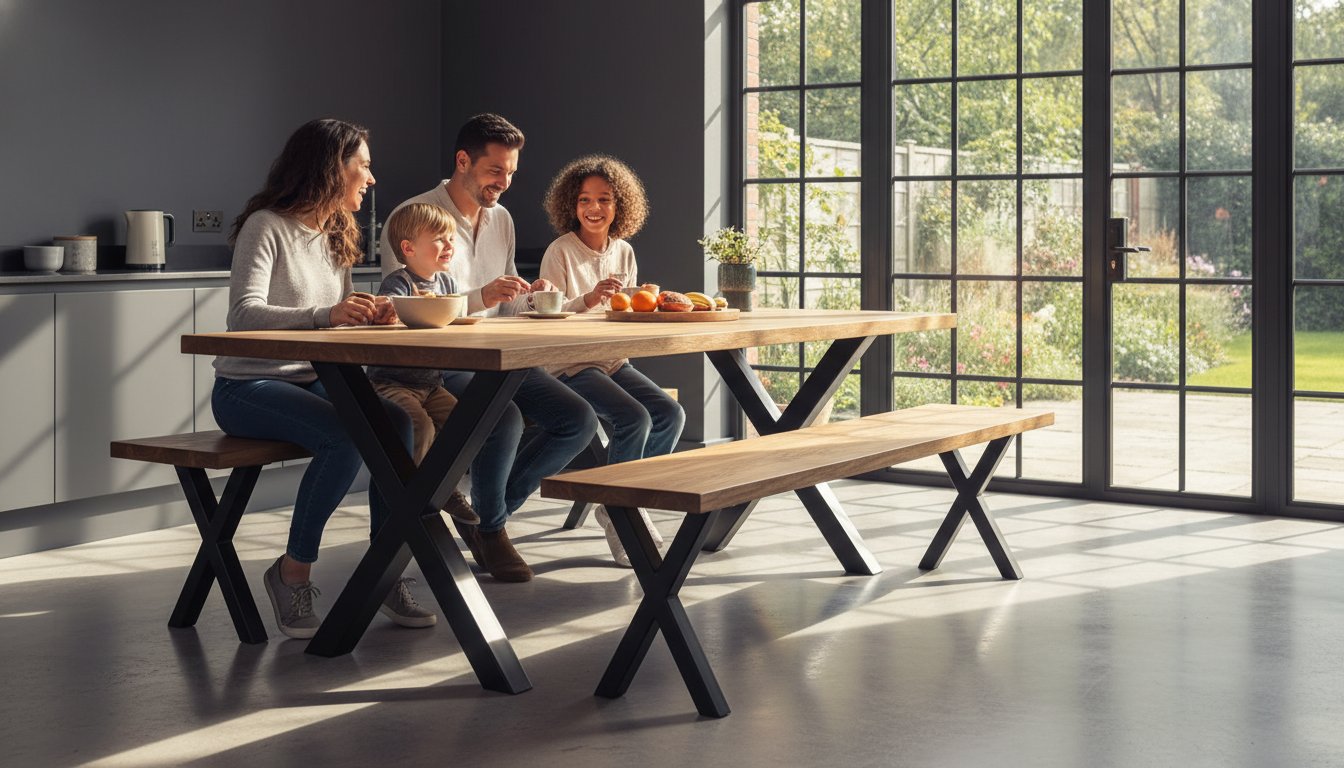
A dining chair is a solitary seat, yet a bench is a quiet invitation for the family to gather closer and share the day’s weight. Many homeowners across the country find themselves frustrated by cramped kitchens cluttered with a forest of chair legs or furniture that feels hollow and temporary. You likely want a space that breathes, where the furniture doesn’t just fill a room but anchors it. Choosing a kitchen dining table with bench seating UK families can truly rely on means moving away from mass-produced convenience toward something with a genuine soul.
In this guide, you’ll discover how a handcrafted set, built with the honest texture of solid oak, ash, or walnut, transforms your dining area into a space-efficient social hub. We will explore how to select the perfect foundation, whether it’s the architectural Spider Leg or the timeless X-Frame, to create a “forever” piece that ages gracefully with your home. You’ll learn why authentic British craftsmanship turns raw timber into a meaningful site for human connection, ensuring your table remains the heart of your household for generations to come.
Key Takeaways
- Understand how the shared seat of a bench fosters a sense of togetherness, turning every meal into a meaningful moment of human connection.
- Learn to distinguish between high-quality solid timber and mass-produced veneers to ensure your kitchen dining table with bench seating UK investment serves as a durable family heirloom.
- Discover which frame design—from the architectural Spider Leg to the industrial X-Frame—best suits your lifestyle and provides the most comfortable legroom for your guests.
- Master the “Golden Rule” of clearance and learn how to measure your kitchen to ensure your table and matching benches fit comfortably without crowding the room.
- Explore the artisanal process of crafting a bespoke focal point that balances industrial strength with the natural beauty of ethically sourced wood.
Why Kitchen Dining Tables with Bench Seating are the Heart of the Modern UK Home
The modern British kitchen has shed its skin as a purely utilitarian space. It’s now the engine room of the household, a vibrant kitchen-diner where the boundaries between cooking, working, and socialising have blissfully blurred. When you introduce a kitchen dining table with bench seating UK families find that the room’s energy shifts. It stops being a transit zone and starts being a destination. Throughout the history of the dining table, this piece of furniture has served as the anchor of the home, but the contemporary move toward benches reflects a deeper desire for communal living and shared warmth.
Benches foster a unique sense of togetherness that individual chairs simply cannot replicate. There is a tactile, informal joy in “squeezing in” an extra guest, a gesture that immediately dissolves formality and invites laughter. While chairs create boundaries, a bench acts as a bridge. It encourages people to linger over a second cup of tea or stay late into the evening for a long-forgotten board game. This is the table as a site for human connection; it’s a backdrop for the shared rituals and social rhythms that define a family’s history over decades.
The Aesthetic Advantage: Minimalist Lines and Industrial Charm
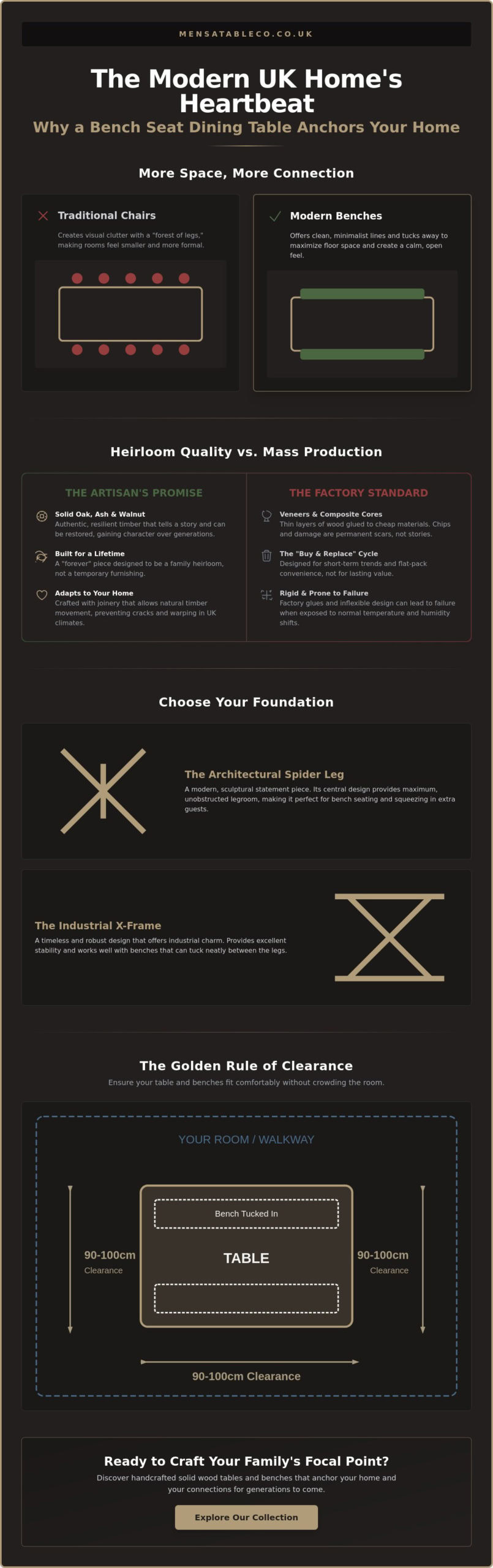
Visually, the impact of a bench is one of quietude. Where a set of six or eight chairs creates a frantic “noise” of legs and spindles, a bench offers a clean, singular line that grounds the room. This minimalist approach is a hallmark of the modern rustic aesthetic currently sweeping through UK interiors. It allows the raw, honest beauty of the timber grain to take centre stage without obstruction. When the meal is over, the ability to tuck a bench completely beneath the table creates an unobstructed view, making even the busiest open-plan kitchen feel calm and intentional.
Maximising Space Without Compromising Style
UK homes are often defined by their characterful but compact footprints. In narrower kitchen-diners or sun-drenched breakfast nooks, every centimetre of floor space is precious. A bench is a master of efficiency. It provides generous seating capacity without the physical bulk of traditional backrests or the swing-space required for chairs. This versatility extends beyond the dining room too. A handcrafted bench can easily migrate to a hallway or a window bay when you need extra seating elsewhere. Choosing a compact layout doesn’t mean you have to settle for something small; it’s about optimizing the area so the room feels expansive, functional, and welcoming.
Handcrafted Quality vs. Mass-Produced Sets: What to Look For
In an era of disposable convenience, the choice of a kitchen dining table with bench seating UK families will use daily is often reduced to a transaction of clicks and flat-pack boxes. However, the true value of a table lies in its ability to witness decades of an intimate history of home life without faltering. Mass-produced sets frequently rely on thin veneers and composite cores that mimic the look of wood but lack its resilience. When a veneer chips, it’s a permanent scar. When solid timber is marked by a stray pen or a hot cup, it’s a chapter of your story that can be sanded, oiled, and restored to its original glory. This longevity is what transforms a piece of furniture into a family heirloom.
Manual production prioritises the unique character of the raw material over the rigid uniformity of a factory line. Our craftsmen select each plank for its grain pattern and strength, ensuring that the final piece is as structurally sound as it is beautiful. This personal approach ensures that every joint is precise and every surface is finished with care. It’s a slow, intentional process that stands in direct opposition to the “buy-and-replace” culture of modern retail.
Understanding Timber Movement and Durability
Timber movement is the natural expansion and contraction of wood cells. Wood remains a living, breathing material even after it has been crafted into a table. In the UK, our homes swing between the damp chill of autumn and the parched heat of winter central heating. Solid ash, oak, and walnut respond to these shifts. A mass-produced table, bound by rigid factory glues and a lack of foresight, might crack or warp under this pressure. We employ traditional joinery techniques that provide the wood “room to breathe,” allowing for these seasonal changes while maintaining the table’s structural integrity for generations.
The Artisanal Touch: Beyond the Flat-Pack
There is a weight and a stillness to a hand-finished surface that you can feel beneath your palms. Unlike bolt-together alternatives that may develop a wobble over time, our pre-assembled frames offer superior stability. Whether you are considering the architectural lines of a Mensa Dining Table or a more industrial frame, the strength comes from the manual precision of the build. This tactile quality is matched by a commitment to ethical sourcing. Choosing slow furniture means respecting the natural origins of the timber and the environment it came from, creating a home focal point that is as responsible as it is elegant.
Choosing the Right Frame: Spider Legs, X-Frames, and Bench Compatibility
The foundation of a handcrafted set is where engineering meets artistry. While the timber top provides the tactile soul of the piece, the frame dictates the rhythm of the room and how people move within it. When selecting a kitchen dining table with bench seating UK homeowners often overlook how the steel skeleton interacts with the human form. The right frame doesn’t just hold the weight; it creates a dance of space and accessibility. Whether you lean toward the intricate geometry of an industrial base or the grounded stability of a classic frame, the choice of legs will define the social ease of your kitchen-diner.
A cohesive look is achieved when the bench and table exist in visual harmony. We often recommend that the bench frame mirrors the table’s design to create a sense of intentionality and balance. This symmetry anchors the furniture as a singular unit, turning it into a purposeful focal point rather than a collection of disparate parts. From the sharp angles of a V-Frame to the soft strength of an A-Frame, each design choice influences the tactile and visual “weight” of your home’s most important gathering spot.
The Spider Leg: The Ultimate Social Table
The Spider Leg Dining Table serves as an architectural marvel of efficiency. Its central convergence of steel legs allows guests to slide onto a bench from any angle without the frustration of knocking knees against corner supports. This design is particularly effective for large families or those who love to host, as it removes the physical barriers to entry. This design pairs beautifully with thick slabs of timber, reinforcing the modern desire for sustainable and eco-friendly materials that feel grounded in nature. When paired with a live edge top, the industrial steel creates a striking contrast against the warm, organic curves of the wood.
X-Frames and U-Frames: Robust Foundations
For those who prefer a more traditional industrial aesthetic, the X-Frame Dining Table and U-Frame Dining Table offer unmatched stability. The X-Frame draws upon a heritage of artisanal strength, providing a rustic charm that feels both historic and contemporary. Alternatively, the U-Frame and Trapezium Dining Table designs offer cleaner, more minimalist silhouettes that suit modern UK kitchens. When choosing these frames, it’s vital to ensure your Matching Benches are crafted with the same robust foundations. This ensures that the heavy industrial steel of the bench complements the table, creating a sturdy, reliable environment for everything from Tuesday night homework to Sunday roasts.
Sizing Guide: How to Measure Your Kitchen for Table and Bench Seating
Creating a functional dining area is a delicate balance of geometry and comfort. When you’re planning for a kitchen dining table with bench seating UK homes often present unique challenges, from narrow galley layouts to sprawling open-plan extensions. The secret to a successful installation lies in the “walk-around” space. We always recommend the Golden Rule of clearance: aim for 90cm to 100cm of open floor between the table edge and any walls or permanent fixtures. This allows for effortless movement and prevents the room from feeling hemmed in by its own furniture.
Seating capacity is another area where benches truly shine. While a standard chair takes up a fixed amount of space, a bench is far more accommodating. A 2-metre bench, for example, comfortably seats three adults or can easily host four children during a busy family lunch. This flexibility is what makes the bench such a social asset. It adapts to your guest list in real-time, ensuring nobody is ever left standing. To find the right match for your home’s dimensions, you can browse our bespoke Matching Benches designed to complement every frame style.
The “Tuck-In” vs. The Full-Length Bench
Deciding on the length of your bench depends heavily on your daily routine. A “tuck-in” bench is designed to be slightly shorter than the distance between the table legs, allowing it to slide completely underneath the tabletop when not in use. This is a masterstroke for saving floor space in busier kitchens. Conversely, a full-length bench matches the table’s total length, offering a more imposing and grand aesthetic. This choice creates a powerful visual statement in larger rooms, though it requires a more permanent footprint on your floor. Always measure the internal distance between the table legs to ensure your chosen bench can glide home without catching.
Height and Ergonomics for Comfortable Dining
Comfort isn’t just about the softness of a seat; it’s about the relationship between heights. The standard UK dining table height is 75cm-76cm. To maintain a natural posture, the bench seat should typically sit around 45cm from the floor. We’ve found that a slightly wider seat, between 35cm and 40cm, is the key to long-term comfort, providing enough support for those long evening conversations that stretch far past the final course. By respecting these ergonomic standards, your handcrafted set becomes a place where people truly want to stay and connect.
The Mensa Table Co: Crafting Your Bespoke Kitchen Focal Point
At The Mensa Table Company, we are a tight-knit team of specialists dedicated to the honest art of the handmade. We don’t believe in the hollow uniformity of factory lines or the fleeting nature of disposable furniture. Instead, we see every kitchen dining table with bench seating UK families bring into their homes as a unique opportunity for storytelling. Our workshop is a space where industrial steel meets the ancient, tactile character of solid timber. We aim to create a focal point that is built to endure the beautiful, messy chaos of daily life for generations.
The journey of your furniture begins with the raw material. Each plank of ash, oak, or walnut is selected for its individual spirit, ensuring the grain flows naturally across the surface. We understand that your kitchen isn’t a standard box, so “near enough” measurements simply won’t do for a home’s heart. Custom sizing is at the core of our process. We craft each piece to your specific requirements, ensuring the final set fits your space with intentional precision rather than compromise.
Our Signature Designs: From the Mensa to the V-Frame
Our collection reflects a deep respect for both architectural form and daily function. From the intricate geometry of the Spider Leg Dining Table to the grounded, heritage feel of the X-Frame Dining Table, each model is a testament to the pride of British manufacturing. We extend this same manual care to our complementary pieces. Whether you require Matching Benches to complete your social hub, Coffee Tables for a quiet corner, or Breakfast Bars for the morning rush, every item shares the same DNA of quality. We never employ flat-pack methods. Our furniture arrives as a solid, permanent addition to your household, reflecting a quiet confidence in the durability of our joinery.
Starting Your Commission: A Personal Journey
Commissioning a piece from our workshop is an invitation to a personal experience. It is a guided tour through the creative process where we help you choose the right timber, the perfect finish, and a frame that speaks to your style. You aren’t just making a transaction; you’re partnering with an artisanal workshop that values your investment as much as you do. This reassurance comes from knowing that a human hand has guided every step of the production. We invite you to move away from mass-market goods and embrace a more thoughtful, intentional way of furnishing your home.
Explore our handcrafted dining sets and benches
Creating Your Forever Home Focal Point
Your kitchen diner is more than just a room; it’s the site of your family’s most cherished social rituals. By choosing a kitchen dining table with bench seating UK families can move beyond the clutter of individual chairs and embrace a space designed for togetherness. You now understand how to balance the architectural lines of a Spider Leg or X-Frame with the practical “Golden Rule” of clearance to ensure your home breathes. These decisions transform a simple furniture purchase into a meaningful investment in your daily life.
Since 2018, our tight-knit team has been handcrafting these pieces in our UK workshop. We use only solid wood construction, completely rejecting the hollow convenience of flat-pack alternatives. Because every home has its own unique rhythm, we offer bespoke sizing to ensure your table and matching benches fit your layout with absolute precision. This is an investment in a piece of furniture that doesn’t just fill a space but anchors it for generations to come.
View our range of handcrafted dining tables and matching benches
We look forward to helping you create a focal point that reflects the warmth and history of your home.
Frequently Asked Questions
Is bench seating more space-efficient than chairs in a kitchen?
Bench seating is significantly more space-efficient because it eliminates the forest of chair legs that often clutters a room. A bench can be tucked completely beneath the tabletop when it’s not in use, which opens up vital floor space in narrower UK kitchens. This streamlined profile creates a calmer visual environment while allowing you to seat more people than individual chairs would typically permit in the same footprint.
How long should a bench be for a 6-foot dining table?
The ideal length depends on whether you want the bench to tuck between the table legs or sit flush with the ends. For a 6-foot (approximately 183cm) table where the bench must slide underneath, you should choose a bench that’s roughly 20cm to 30cm shorter than the table length. If you prefer a grander look, a full-length 183cm bench provides a striking, symmetrical silhouette that matches the table edge perfectly.
Are dining benches comfortable for older guests or long periods?
Benches offer excellent comfort for long social gatherings when they’re crafted with a generous seat depth of 35cm to 40cm. While they lack a backrest, placing a bench against a kitchen wall can provide extra support for those who need it. Many families find that a kitchen dining table with bench seating UK sets provide a versatile mix by using a bench on one side and chairs on the other to accommodate every guest’s needs.
Can I mix a bench on one side and chairs on the other?
Mixing a bench with chairs is a brilliant way to create a flexible and visually interesting dining area. This arrangement offers the best of both worlds: the space-saving, social nature of a bench and the individual lumbar support of traditional seating. It’s a popular choice for families who want a relaxed, modern rustic aesthetic without sacrificing the formality that individual chairs can provide at the head of the table.
What is the best wood for a kitchen dining table with bench seating?
Solid Oak and Walnut are the premier choices for a kitchen dining table with bench seating UK families intend to keep for generations. These hardwoods are incredibly dense and resilient, making them capable of withstanding the daily knocks of a busy household. In addition to timber, some families choose to explore the unique textures of natural stone, with specialists like Granit-Discount.com GmbH offering granite and marble tops that provide a different kind of lifelong resilience. While Swedish Pine offers a beautiful, lighter grain and excellent value, the tighter grain patterns of Oak and Walnut provide a superior tactile experience and a timeless, heirloom quality.
Do benches need to tuck under the table when not in use?
Benches don’t have to tuck under the table, but the option to do so is one of their most practical features. In smaller homes, the ability to slide the seating away keeps walkways clear and makes the kitchen feel more expansive. However, in larger open-plan spaces, leaving the benches out creates a permanent, inviting focal point that signals the table is always ready for a conversation or a shared meal.
How do I care for a solid wood table and bench set?
Caring for your set is a simple process of respecting the natural life of the timber. You should dust the surfaces regularly with a soft cloth and apply a fresh coat of high-quality furniture oil or wax every few months to maintain the wood’s protective barrier. We recommend avoiding harsh chemical cleaners and keeping the furniture away from direct heat sources, like radiators, to prevent the wood from drying out or moving excessively.
Are your tables and benches delivered fully assembled?
We deliver our furniture in a way that prioritises structural integrity while ensuring we can safely navigate the piece into your home. Our frames are expertly joined and pre-assembled in our workshop, so you won’t ever have to deal with the flimsy components found in flat-pack furniture. This manual approach to assembly ensures that your table and bench set arrives with the strength and stability required to serve as the heart of your home.

Leave a Reply