
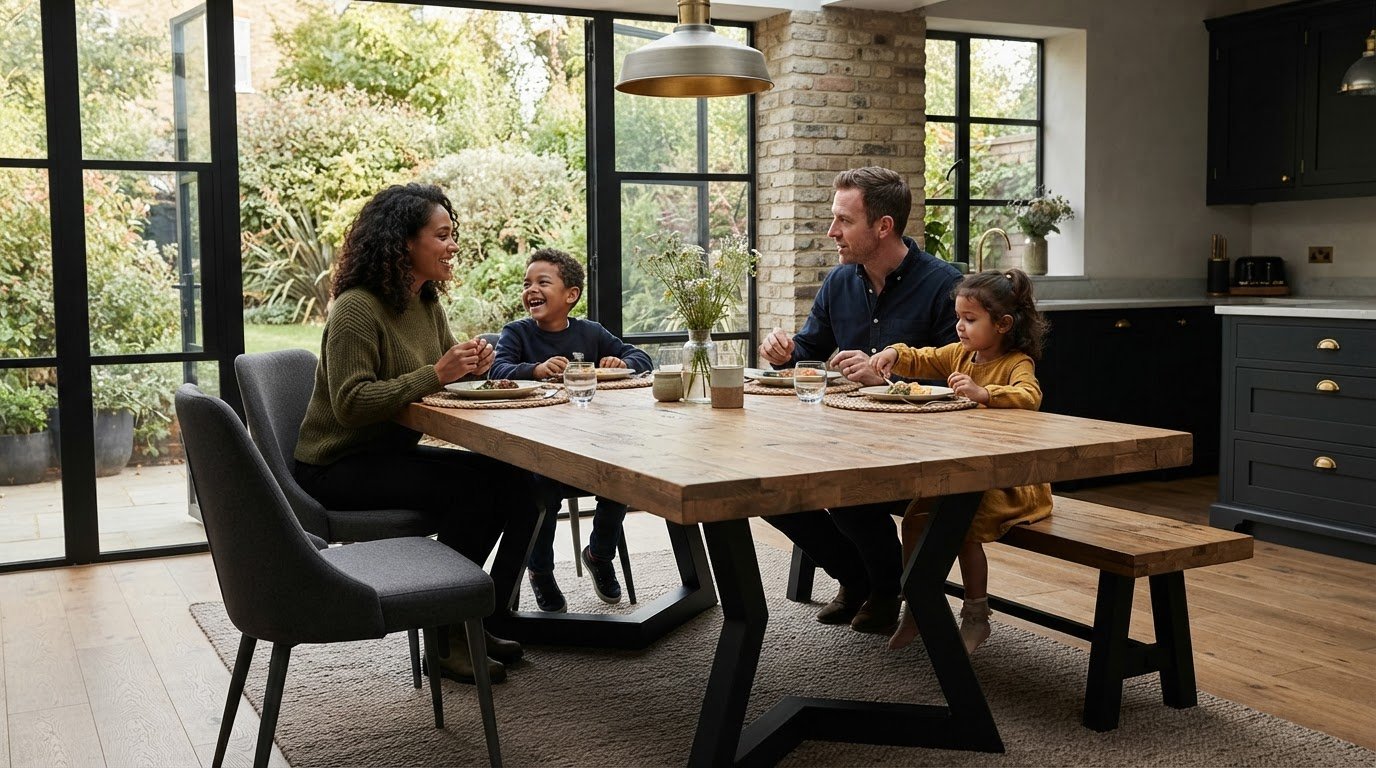
What if the most striking table in the room isn’t the one that works best around it? When choosing an industrial dining table with metal legs uk shoppers need to look beyond the bold silhouette. The frame can affect where chairs fit, how easily people move around the table and how comfortable everyday meals feel.
The contrast of metal and timber can be compelling, but a dining table also has to earn its place through daily use. The right choice should suit your room, accommodate the people who gather around it and feel thoughtfully made. Details such as leg shape, seating space and construction deserve as much attention as appearance.
In this guide, we compare industrial-inspired designs, outline what to consider before buying and explain how to match a table to your room and routine. We also introduce the Mensa Table Company’s distinct frame designs, so you can explore options for a characterful centrepiece at home.
Key Takeaways
- Industrial style is a design direction, not one fixed specification. Look for a table whose character feels at home in your room.
- Before choosing an industrial dining table with metal legs uk, measure the room and map chair positions, walkways and everyday movement around the table.
- Compare Spider Leg, X-Frame, U-Frame, Trapezium, A-Frame and V-Frame silhouettes to see how each might shape the room and influence seating.
- Match the table and seating plan to your household’s usual meals and gatherings, considering comfort as well as appearance.
- Consider how skilled making can bring lasting character to a dining table, and explore the Mensa Table Company’s handcrafted designs.
What makes an industrial dining table with metal legs right for your home?
An industrial dining table often pairs a timber surface with a clearly expressed, workshop-inspired base. Its appeal comes from the contrast between natural texture and purposeful structure. But “industrial” describes a design direction, not one fixed specification. Tables in this style can vary in their proportions, frame silhouettes and visual weight.
In brief: industrial style is the visual language of robust-looking surfaces and practical forms; a frame design is the particular shape used to create that look. An X-shaped base is one frame design, for example, while industrial style is the broader impression it may help create. Keeping the two ideas separate makes it easier to compare tables for both appearance and suitability.
The phrase “industrial dining table with metal legs uk” points to a popular design combination, but appearance is only part of the decision. A dining table has a daily role, from quick breakfasts and weeknight suppers to longer meals with family or friends. Its proportions should suit the room, and its layout should make it easy for people to sit down and stay awhile. Explore the range of handcrafted dining tables with both your space and its routines in mind.
Which details create an industrial look?
Start with the relationship between the top and the base. A timber surface with visible grain can soften a strong frame, while clear lines below give the table a grounded, purposeful feel. Exposed construction and simple geometry, such as intersecting lines or open shapes, make the structure part of the design rather than something hidden from view.
Industrial design brings together function and form. The Wikipedia overview of Industrial Design Principles and History offers further context. At home, there’s no need to recreate a workshop. Look for a balance of surface, shape and structure that feels considered rather than stark.
Will an industrial table suit your room?
Consider visual weight as well as floor space. In a compact dining area, a strongly defined base and substantial-looking top may become the room’s main feature. That can feel purposeful, but if you want a calmer look, compare designs with more open lines alongside your chairs and other furniture.
In a larger kitchen-diner or dining room, a pronounced silhouette can anchor the eating area. View the table from the doorway and from a seat: does it draw the eye in a way you enjoy, or dominate the surrounding furniture? You can embrace the industrial look fully or use it as a quieter accent. Choose the balance that feels natural in your home.
How to assess an industrial dining table before you buy
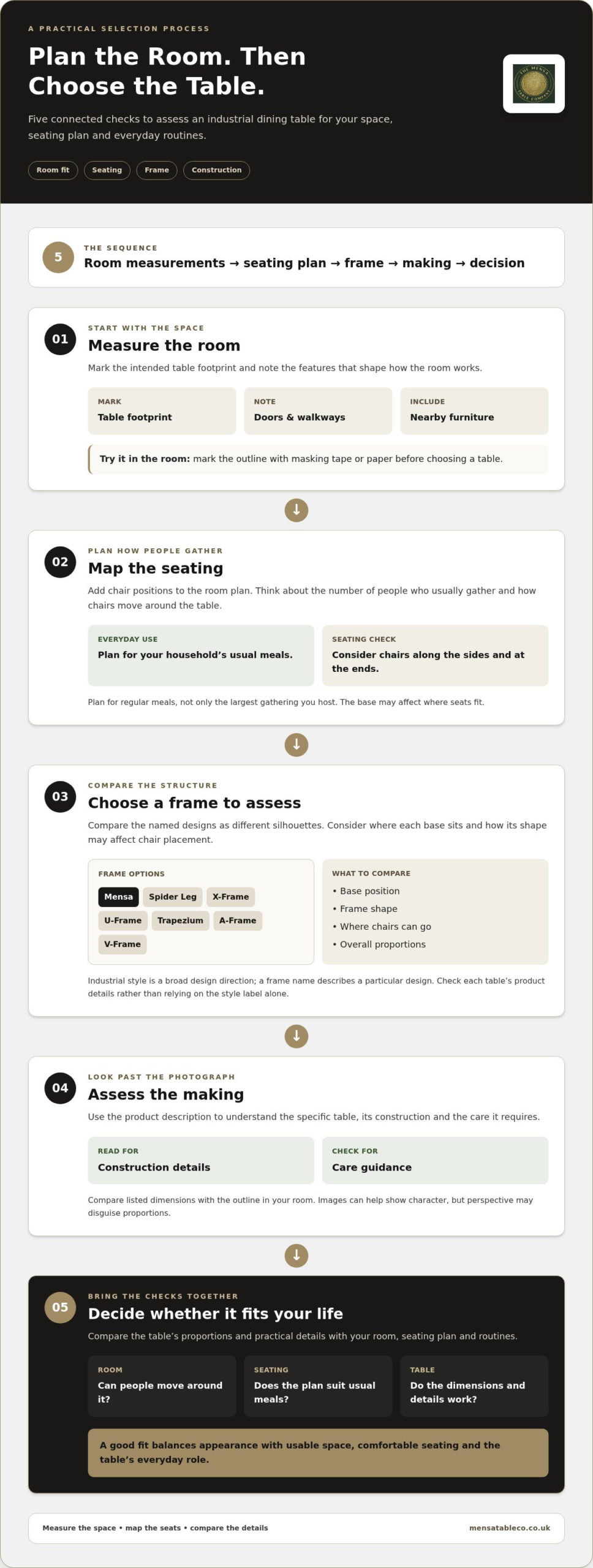
A table can look perfectly proportioned online and feel different once chairs are pulled out and people are moving around it. Assess the whole dining area, not just the tabletop. This sequence helps you weigh up practical fit, frame design and making before deciding whether a table will work for everyday meals and larger gatherings.
- Measure the room. Mark the intended footprint and note doors, walkways and nearby furniture.
- Map the seating. Allow space for chairs to move back and consider how many people usually gather.
- Choose a frame. Think about how its position and shape may affect where seats can go.
- Assess the making. Read the product description for construction details and care guidance.
- Decide. Compare the table’s proportions and practical details with your room and routines.
Measure the room and plan seating first
Measure the floor area the table will occupy, then mark its outline with masking tape or paper. Add nearby chairs and furniture, and check that doors and everyday routes through the room remain usable. This simple floor plan can reveal awkward pinch points before you choose a table.
Plan for the meals your household has most often, not only the largest gathering you host. Chair positions matter because the frame may affect where seats fit along the sides or ends. Consider the tabletop’s length and width alongside the base, so the seating plan reflects the usable space rather than an assumption about capacity.
Look beyond the photograph
Images help you judge a table’s character, but perspective can disguise its proportions. Compare the listed dimensions with the taped outline in your room, and read the product description for construction information and care guidance. These details help you assess the table beyond its first impression.
When considering an industrial dining table with metal legs uk shoppers should assess the design and available information about its making, rather than rely on a style label alone. Handcrafted furniture reflects the work involved in making it, so look for clear descriptions of construction and finish. For wider context on the UK furniture trade, the British Furniture Association offers information on UK Furniture Industry Standards and Regulations.
The Mensa Table Company offers named designs including Mensa, Spider Leg, X-Frame, U-Frame, Trapezium, A-Frame and V-Frame. Use those names as a starting point for comparing silhouettes, then read each product description for details of the specific table. Once you have a clearer sense of your room and seating plan, explore the dining table designs that suit them.
A well-chosen table should leave room to move and make sitting down feel easy. To discuss how a design could suit your dining space, talk through your table requirements.
Spider Leg, X-Frame, and other industrial table bases compared
A table base can shape the mood of a room before you notice its finer details. Some silhouettes make a strong visual statement; others feel more restrained. Spider Leg, X-Frame, U-Frame, Trapezium, A-Frame and V-Frame are useful starting points for comparing shapes, but the names don’t tell the whole story. The proportions and placement of each particular base matter, especially when planning where chairs will sit.
Use the comparisons below as a guide to the visual ideas suggested by each name, not as a substitute for viewing the individual design. A bold outline may suit a room where the table is meant to anchor the space, while a simpler form may sit more easily among other strong pieces. Neither is universally best. Choose the shape that balances your room’s character with your seating plan.
| Frame design | Suggested silhouette and room effect | Seating considerations |
|---|---|---|
| Spider Leg | A radiating, multi-directional impression can give the base a sculptural presence. | Look at where the supports sit in relation to chairs, particularly around the sides and ends. |
| X-Frame | Crossing lines suggest a strong, graphic shape that can draw the eye beneath the tabletop. | Check how the crossing form relates to the seats you plan to use. |
| U-Frame | An open, squared outline may read as a clean, grounded shape. | Consider whether the base’s position leaves comfortable places for chairs along the table. |
| Trapezium | The angled outline suggests a more distinctive geometric profile. | Compare the frame’s position with your intended chair locations rather than assuming every side is equally clear. |
| A-Frame | The name evokes a triangular outline, lending the base a defined, architectural feel. | Check how its supports affect seating at the ends and along the sides. |
| V-Frame | Angled lines can create a crisp, directional accent beneath the top. | Consider the relationship between the frame and each planned seat. |
Pair the frame with a tabletop
The tabletop changes how a base reads. A natural timber surface with visible grain can soften a sharply defined outline, while a more even-looking surface may let the frame take greater visual focus. Colour and tabletop shape also affect the overall balance, so picture the complete table rather than choosing a base in isolation. Consider how the surface will sit with the rest of your furniture and the character you want the table to bring to the room.
Before deciding, study the product images and descriptions for the exact design. In an industrial dining table with metal legs uk search, a frame name can help narrow your preferences, but the finished silhouette is what you’ll live with. The Mensa Table Company’s dining table range includes these named designs. Compare their forms with your room and consider whether the base works with the chairs you plan to use.
Make an industrial dining table comfortable for everyday use
A dining table needs to work between special occasions, not just look inviting when it’s set for guests. Think about how your household uses the room through an ordinary week: quick breakfasts, homework, relaxed suppers or a place to gather with friends. These routines help you decide how much seating you need and what arrangement will feel comfortable rather than crowded.
Plan seating, circulation, and shared meals
Sketch the tabletop and mark where each chair or bench would sit. Include the seats you use most often, then picture someone pulling out a chair while another person passes behind. This reveals whether the layout works in motion, not just on a floor plan. Keep routes to doorways and nearby kitchen areas clear so people can move naturally during a meal.
The base matters here. Depending on its shape and position, it may affect where chairs fit along the sides or at the ends. Don’t assume every edge offers the same usable seating: compare the frame layout with your planned chair positions and consider whether a seat would meet a support. A bench can work well along one side if you want a more flexible arrangement for shared meals. Explore matching dining benches as an option, and include the bench in your layout sketch.
Picture the table in use, not only set for dinner. Is there room for plates and serving dishes? Can someone get up without disrupting the whole arrangement? A practical seating plan makes everyday meals easier and gives guests room to settle in.
Balance the table with the rest of the room
Comfort has a visual side, too. Consider how the tabletop’s tone and grain will sit beside your chairs, flooring and cabinetry. A pronounced frame may become a focal point, while a quieter silhouette can complement furniture that already draws the eye. Aim for a combination that feels at home with the pieces you’ll keep around it.
That approach is more dependable than choosing a table simply because a particular look is in fashion. An industrial dining table with metal legs uk households can live with comfortably should suit the room’s character as well as its daily rhythms. Look at the whole arrangement: tabletop, base, chairs and walking routes. A coherent design can feel distinctive without making the room harder to use.
Once you’ve considered seating, circulation and the look you prefer, bring those details together before choosing. The Mensa Table Company makes handcrafted dining tables with distinct frame designs. Talk through your table requirements with us.
Find a handcrafted industrial-style dining table for your home
Choosing a table is about more than finding a shape you like. It’s about finding a piece that belongs in your room and gives everyday meals, celebrations and long conversations a place to gather. The Mensa Table Company makes handcrafted dining tables and offers a range of distinct designs.
Explore the company’s dining table designs
The range includes the Mensa Dining Table and several named frame designs: Spider Leg, X-Frame, U-Frame, Trapezium, A-Frame and V-Frame. Each gives you a different design to explore as you compare tables. Rather than assuming a name guarantees a particular practical feature, use the product descriptions to understand the details of each table and how it might suit your home.
Explore the handcrafted dining tables and compare the published details with the decisions you’ve already made: how the table will fit, where people will sit and which silhouette feels right among your existing furniture. If your search for an industrial dining table with metal legs uk has led you here, focus on the specific product information rather than relying on a style label alone.
Handcraft is part of a table’s story, but the piece also becomes part of yours. It may hold everyday breakfasts and suppers, then make room for a birthday meal or an unplanned evening with friends. The right choice brings those moments together with a design you’ll be glad to live with.
Take the next step towards your table
Before deciding, bring four things into focus: the table’s fit in your room, the seating arrangement you need, the frame silhouette you prefer and the product details that explain the particular design. Taking time to weigh up those details can help you settle on a table that feels considered and welcoming.
We make handcrafted tables for the rhythms and gatherings of home. If you’ve considered your space and seating plan, discuss your dining table with our team.
Choose a table that makes room for what matters
The right table isn’t simply a finishing touch. It becomes part of the rhythm of home: a place for morning coffee, a meal at the end of the day or one more chair pulled close when company arrives. Let that picture guide your choice. An industrial dining table with metal legs uk homes can enjoy should feel at ease in the room and support the way you want to gather.
Picture your preferred design in daily use, not just as a striking object. Consider the light around it, the seats nearby and how the room will feel when everyone is gathered. Those details can help turn a shortlist into a choice that feels truly yours.
Have a particular room, seating plan or frame in mind? Share your dining table ideas with our team and take the next step towards a welcoming centrepiece for home.
Frequently Asked Questions
What should I look for when buying an industrial dining table?
Look for a table that suits your room, seating needs and expectations for upkeep, not just one with a striking base. When comparing an industrial dining table with metal legs uk shoppers should read the product description for dimensions, construction information and care guidance. Check that the table feels visually balanced with your chairs and other furniture, and consider whether its design will still appeal when current interior trends change.
Are industrial dining tables suitable for everyday family use?
Yes, an industrial-style table can suit family life if its size and layout work for the household’s routine. Think about what happens at the table beyond meals: children may draw there, someone may work from home, and cups or serving dishes may be set down throughout the day. Choose a design whose care guidance suits your habits, and use placemats or coasters if you want to help protect the surface from everyday marks.
How do I choose between Spider Leg and X-Frame table designs?
Compare the complete table designs in the product images and descriptions, then consider how each fits your room and seating plan. The names indicate different frame silhouettes, but the appearance and layout of the specific table are what matter. View each design from the sides where chairs will go, and consider whether you prefer a more prominent base or a quieter presence beneath the tabletop.
Can dining table leg placement affect how many chairs fit?
Yes. A support positioned near a potential seat can limit where a chair can go or make that position uncomfortable. Compare the frame layout with the table’s dimensions and your preferred chair arrangement. If you’re planning seats at the ends as well as along the sides, look closely at both areas in the product images and description rather than judging capacity by tabletop length alone.
What size industrial dining table should I choose for my room?
Choose a size that accommodates your usual diners while leaving the room workable around it. Mark the proposed tabletop dimensions on the floor with paper or masking tape, then place your chairs around the outline. Try pulling them out and walking past as you would on an ordinary day. This helps reveal whether the table fits your routine, not just the empty floor area.
Are matching benches a practical alternative to dining chairs?
They can be, particularly if you like a shared, informal seating arrangement or want to tuck seating away when it’s not in use. A bench may make it easier to adjust how people sit along one side, though it won’t offer the same individual positioning as separate chairs. Consider who uses the table regularly and whether everyone will find the bench comfortable for the length of your usual meals.
How do I care for a handcrafted wooden dining table?
Follow the care guidance supplied for the particular table, as the right approach depends on its materials and finish. In general, deal with spills promptly and avoid leaving wet or hot items directly on the surface. Use a clean, soft cloth for routine dusting, and take care not to drag rough or gritty objects across the top. If you’re unsure about a cleaning product, avoid applying it until you’ve checked the table’s care instructions.

Leave a Reply