
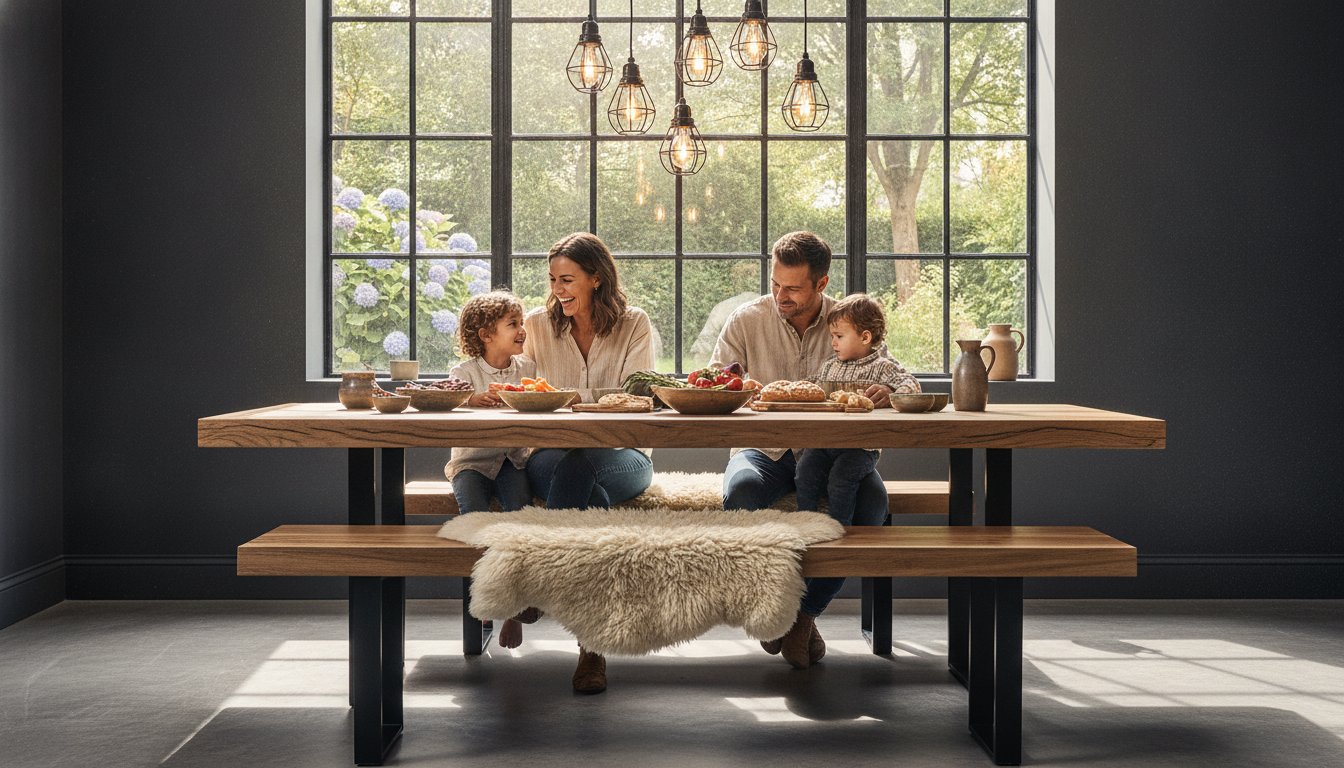
What if the most inviting seat in your home isn’t a traditional chair, but a solid timber bench built for shared stories and long evenings? Many people worry that a bench might feel like a cold, school canteen or lack the comfort needed for a slow, three-course meal. We understand that concern, as the focal point of your home should feel intentional rather than just functional. Learning how to style a dining table with a bench is an exercise in structural softening, where you use organic layers to balance the bold, architectural lines of handcrafted furniture.
Discover how to balance the structural beauty of handcrafted timber with soft layers and smart proportions to create a welcoming, communal dining space. This guide explores the practicalities of sizing and tucking, especially when matching benches with complex frames like our Mensa or Spider leg designs. You will gain the inspiration needed to layer tactile soft goods onto raw timber, ensuring your dining area feels like a curated, artisanal retreat for every guest who gathers at your table.
Key Takeaways
- Embrace the shift from formal seating to a communal hub that encourages shared experiences and meaningful connection at the heart of your home.
- Master the technical side of how to style a dining table with a bench by applying the 15-20cm sizing rule for a perfect tuck-under fit.
- Use structural softening techniques to contrast the raw, architectural lines of timber with tactile layers like organic fabrics and sheepskin.
- Achieve a balanced, asymmetric aesthetic by pairing a single bench with traditional chairs to create a modern and flexible dining layout.
- Learn why investing in handcrafted solid wood over mass-produced alternatives is essential for creating a durable space that lasts for generations.
The Philosophy of the Dining Bench: Creating a Communal Centrepiece
The dining table is more than a surface for meals; it’s the site of our most cherished social rituals. It’s where we share the stories of our day and break bread with those who matter most. Understanding how to style a dining table with a bench begins with shifting our perspective from individual seating to a collective experience. A bench isn’t merely a space-saving solution for a narrow room. It is a deliberate design choice that transforms your dining area into an inviting, informal hub. It acts as a grounding force, offering a sense of stability and permanence that individual chairs often struggle to provide.
Choosing a bench is a quiet statement of confidence in the beauty of raw materials. It allows the character of a solid European oak top to remain the undisputed protagonist of the room. This concept of “uninterrupted timber” creates a visual harmony, where the horizontal lines of the seating mirror the expanse of the table. When you remove the staccato rhythm of multiple chair backs, you create a singular, bold design statement that celebrates the natural origins of the wood.
Benches as a Tool for Social Connection
There is a distinct intimacy in shared seating. When guests slide onto a bench, the physical boundaries of individual chairs disappear, making the atmosphere feel instantly more relaxed. This proximity encourages closer conversation and a sense of togetherness that is hard to replicate with traditional furniture. The history of the dining bench reveals its long-standing role as a fixture of communal living, from medieval feasting halls to the rustic farmhouses of our ancestors.
This communal spirit is particularly valuable for growing families and those who love to host. A bench offers flexible seating capacity, allowing children to squeeze in or extra guests to find a spot without the need for folding chairs. It’s a versatile foundation for life’s unpredictable moments, ensuring that there is always room for one more at the table.
Visual Weight and Room Flow
A bench acts as a low-profile anchor in your interior. Unlike a row of high-backed chairs that can create a visual wall, a bench keeps the sightlines clear across the room. This “low profile” aesthetic is a hallmark of modern and Scandi-industrial interiors, where the goal is to create a sense of breathability and light. It’s an effective way to “open up” a dining room, making the space feel larger and more fluid.
By removing the clutter of chair legs, you allow the intricate craftsmanship of your handcrafted furniture to shine. Whether your table features a complex Spider frame or a minimalist X-frame, a bench provides the necessary visual breathing room for these structural elements to be fully appreciated. It’s about creating a balance between the weight of the timber and the flow of the surrounding space.
Mastering Proportions: Sizing Your Bench for Style and Function
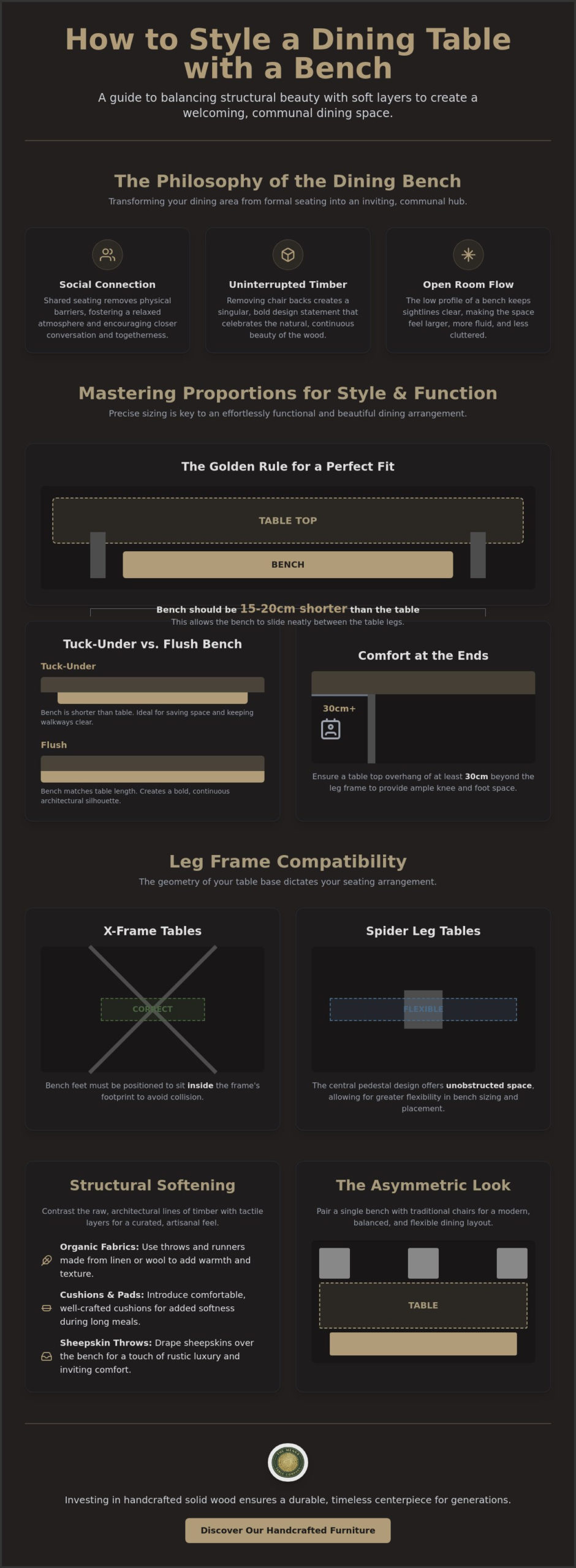
Precision in sizing is where the quiet beauty of a dining room becomes effortlessly functional. When considering how to style a dining table with a bench, the most critical measurement is the length of the seat relative to the table legs. We often recommend the “Golden Rule” of proportions: your bench should typically be 15 to 20cm shorter than the total length of the table. This specific clearance isn’t just about aesthetics; it’s a practical necessity that allows the bench to slide neatly between the table legs when the meal is finished.
Choosing between a “tuck-under” and a “flush” look depends entirely on the rhythm of your home. A tuck-under bench is the ultimate space-saver for smaller rooms, disappearing beneath the timber surface to keep walkways clear. Conversely, a flush bench matches the table length exactly, creating a bold, architectural silhouette that celebrates the continuity of the wood. To ensure comfort for those seated at the table ends, the table top should ideally overhang the leg frame by at least 30cm to accommodate knees and feet without obstruction.
Leg Frame Compatibility: X-Frame vs. Spider Legs
The geometry of your table base dictates the soul of your seating arrangement. Styling a bench with an X-Frame Dining Table requires careful attention to the “timber cross” where the legs meet. You must ensure the bench feet are positioned to sit inside the frame’s footprint to avoid a clumsy clash of materials. For those who have chosen the intricate, central-pedestal design of a Spider Leg Dining Table, a slightly shorter bench is essential. This ensures the seat doesn’t strike the diagonal steel or timber supports as you slide it inward. We often find that using matching benches with identical leg finishes creates a sense of curated harmony, though contrasting metal frames can add a touch of industrial edge to a traditional room.
The Depth Dimension: Comfort and Clearance
While length defines the look, depth defines the experience. A standard bench depth usually sits around 35 to 40cm, providing a stable foundation for communal dining. If your evenings tend to linger over wine and conversation, bespoke wider-seat options offer a more relaxed, lounge-like feel. You should aim for a “slide-in” clearance of at least 10 to 15cm between the table edge and the bench seat to allow guests to sit down without feeling restricted. Beyond the table, remember to leave approximately 90cm of floor space behind the bench for easy walkway access. If you are unsure about the specific dimensions of your space, our team is always happy to discuss bespoke sizing to ensure a perfect fit for your home.
Layering and Softening: How to Style Solid Wood Surfaces
The tactile experience of a dining room is defined by the interplay between the cool, steady strength of wood and the yielding warmth of textiles. Mastering how to style a dining table with a bench requires a technique we call “structural softening,” where organic fabrics are used to contrast the architectural lines of the timber. This approach doesn’t hide the wood’s character; instead, it highlights the deep, chocolate tones of solid black walnut or the delicate, creamy grain of ash by providing a soft visual foil. By layering materials, you transform a sturdy piece of furniture into a sanctuary of comfort.
One of the most effective ways to invite guests to linger is by using individual sheepskins to define “zones” along the length of the seat. Rather than a single long cushion, which can sometimes feel like a commercial waiting room, separate pelts create a sense of personal space for each diner. If your bench sits flush against a wall, incorporating bolster cushions provides essential lumbar support, turning a simple wooden seat into a comfortable banquette. To tie the entire look together, a linen table runner can act as a bridge, drawing the eye from the textured bench up to the curated tabletop, creating a cohesive narrative across the entire set.
Textile Choices for Artisanal Timber
We always advocate for natural fibers like linen and heavy cotton weaves because they share the same honest, raw origins as our timber. Synthetic fabrics often feel jarring against the authentic texture of a hand-finished surface. A casually draped wool throw can break up the long horizontal lines of a three-meter bench, adding a sense of lived-in luxury. When selecting a colour palette, look to the earth for inspiration. Muted tones like terracotta, sage, and slate complement the natural warmth of the wood without competing for attention, ensuring the grain remains the star of the show.
Seasonal Styling Transitions
As the light changes throughout the year, so should your styling. During the winter months, layering thick wools and faux furs creates a “hygge” cabin atmosphere that feels protective and warm. When summer arrives, we recommend stripping back to bare timber or using light cotton seat pads to keep the space feeling airy and fresh. Between meals, your matching bench can serve as a decorative shelf. Placing a stack of art books or a hand-thrown ceramic vase on one end keeps the dining area feeling curated and intentional, even when it isn’t in active use for communal dining.
The Asymmetric Look: Mixing Benches with Dining Chairs
There is a quiet sophistication in asymmetry. While a full set of chairs feels formal and traditional, the “bench on one side, chairs on the other” layout has become the gold standard for modern, artisanal homes. This arrangement offers the best of both worlds: the communal, grounded feel of a bench and the individual support of a chair. When you’re learning how to style a dining table with a bench, this mixed approach allows you to showcase the raw beauty of your table from multiple angles without cluttering the room’s visual field.
To keep the set from feeling lopsided, you must pay close attention to the heights of your seating. If your chairs have high, imposing backs, they can dwarf the low profile of the bench, making the table look unbalanced. Framing the ends of the table with “Captain’s Chairs”, which are slightly larger or upholstered seats, can provide a definitive border to the arrangement. This anchors the bench and standard chairs within a cohesive frame. For those with smaller kitchens, pushing the bench against a wall or beneath a window creates a cozy dining nook vibe that maximizes floor space while maintaining a sense of curated style.
Balancing the Visual Horizon
Maintaining transparency in a room is essential for a sense of calm. Low-profile chairs work best opposite a bench because they don’t block the view of the table’s surface or the room beyond. We often suggest the “Rule of Three” for standard-length tables; pairing two individual chairs against one long bench creates a balanced silhouette that feels intentional rather than accidental. You don’t need to be “matchy-matchy” with your materials. Coordinating a matching bench in the same timber species with chairs in a complementary metal or woven finish adds depth and texture to the space.
Functional Flexibility
The beauty of a bench lies in its versatility beyond the dining room. Because it lacks a backrest, it can easily transition to a hallway or living area as extra seating during larger gatherings. During the holidays, a bench facilitates bench-end seating, where guests can comfortably sit at the corner of the table without a chair frame getting in the way. From a practical standpoint, benches are far easier to clean around than a forest of chair legs. This makes them a superior choice for high-traffic family kitchens where life happens at a faster pace. If you’re ready to create a bespoke seating plan for your home, please get in touch with our workshop to discuss your requirements.
Investing in Longevity: The Mensa Approach to Handcrafted Seating
Choosing furniture that stands the test of time is a commitment to both quality and the environment. When you consider how to style a dining table with a bench, the material integrity of the piece is just as important as its aesthetic. Unlike mass-produced alternatives that often rely on veneers and composite materials, our handcrafted furniture is built from solid timber designed to endure for generations. We believe that the items at the heart of your home should be as resilient as the memories created around them.
Solid oak, ash, and walnut are the superior choices for high-pressure seating. These species possess a natural density and strength that withstand the daily rhythm of a busy household. We embrace the natural movement of the timber, as every piece is built to breathe and age alongside your home. Over the years, the wood will develop a unique patina, a visual history of every shared meal and late-night conversation. Our benches are meticulously designed to integrate with our signature frames, including the Spider, X-Frame, and Trapezium models, ensuring a unified look that feels grounded and intentional.
Species and Grain: Choosing Your Timber
The character of your dining space is often dictated by the species of wood you choose. The golden warmth of solid European ash is a wonderful choice for bright, airy kitchens where you want to maximize the sense of light. Its prominent grain adds a tactile, organic energy to the room. For those seeking a more formal or dramatic atmosphere, the sophisticated, dark character of Black Walnut provides a rich, chocolatey depth that commands attention. We offer a variety of bespoke finishes, from natural oils that celebrate the wood’s raw texture to matte lacquers that offer a protective, durable shield for the grain.
From Workshop to Home: A Personal Connection
Every bench that leaves our workshop is the result of a deliberate, manual process rooted in ethical sourcing within the UK. We don’t believe in disposable trends; we focus on creating meaningful life investments that serve as a backdrop for human connection. Our team takes immense pride in the quiet confidence of our work, knowing that each piece will play a functional role in your life for decades to come. When you choose an artisanal bench, you aren’t just buying a seat. You’re supporting a legacy of traditional craftsmanship. Explore our range of matching benches to complete your dining space and create a lasting hub for your home.
Crafting Your Artisanal Dining Sanctuary
Mastering how to style a dining table with a bench is about more than just finding a place to sit; it’s about curating a space where raw, natural materials meet the soft warmth of human connection. By respecting the golden rules of proportion and layering tactile textiles over solid timber, you transform a simple piece of furniture into a welcoming hub for your family. This approach allows the honest beauty of the grain to shine while ensuring every guest feels invited to linger long after the meal has ended.
We take immense pride in our UK workshop, where our tight-knit team handcrafts each piece from solid European Oak, Walnut, and Ash to ensure it lasts for generations. Whether you need a specific length to fit an X-frame table or a deeper seat for long dinners, we offer bespoke sizing for every frame style to suit the unique rhythm of your home. We invite you to invest in a piece that values substance over fleeting trends and creates a backdrop for a lifetime of shared rituals.
Browse our handcrafted dining benches and find your perfect match
Frequently Asked Questions
Is a dining table bench more space-efficient than chairs?
Yes, benches are significantly more space-efficient because they can be tucked completely under the table when not in use. This clears walkways and makes your dining area feel much larger. Unlike a row of chairs, a bench also lacks high backs, which helps maintain a clear visual horizon and an open, airy atmosphere in smaller rooms or open-plan kitchens.
How long should a bench be for a 6-foot dining table?
For a standard 6-foot table, which is approximately 183cm, your bench should ideally be between 160cm and 165cm long. This follows the rule of leaving a 15 to 20cm gap to ensure the seat slides neatly between the table legs. If you prefer a flush look where the bench matches the table length exactly, ensure you have enough floor space to navigate around the ends.
Are dining benches actually comfortable for long periods?
Dining benches are remarkably comfortable when you incorporate structural softening elements like sheepskins or organic linen cushions. These layers provide the necessary padding for long, communal meals. If you enjoy lingering over conversation, placing your bench against a wall and adding bolster cushions for back support creates a cozy, banquette-style experience that rivals any traditional chair.
Should a dining bench match the table exactly?
A bench doesn’t have to match the table exactly, but choosing the same timber species creates a calm, curated aesthetic. The secret to how to style a dining table with a bench while mixing styles is to find a common thread, such as matching the metal finish of the legs. Mixing a raw timber seat with a different frame style can add a sophisticated, industrial edge to your home.
Can I use a dining bench with an X-frame or Spider leg table?
Yes, you can certainly use a bench with these complex frames, provided you measure the clearance between the legs carefully. For an X-frame, the bench needs to sit within the narrowest point of the timber cross. When considering how to style a dining table with a bench on a Spider leg model, a slightly shorter seat is essential to avoid hitting the central diagonal supports.
How do I stop a dining bench from scratching my floor?
The most reliable way to protect your flooring is by applying heavy-duty felt pads or rubber floor protectors to the base of the bench legs. Because benches are often moved to accommodate multiple guests, these buffers prevent friction on hardwood or stone surfaces. We ensure our handcrafted frames are finished with care, but adding a dedicated protector offers peace of mind for high-traffic areas.
What is the standard height for a dining table bench in the UK?
The standard height for a dining bench in the UK typically ranges between 45cm and 48cm. This height is specifically designed to pair with standard dining tables that sit at 75cm. This creates a comfortable 30cm gap for legroom, ensuring that adults can sit naturally without their knees feeling cramped against the underside of the timber tabletop.
How many people can comfortably sit on a 150cm dining bench?
A 150cm bench comfortably accommodates three adults or four children with ease. This length provides enough personal space for each diner to move their arms without bumping into their neighbor. It is a versatile size for medium households, offering the flexibility to squeeze in an extra guest during festive gatherings or busy family Sunday roasts.

Leave a Reply