
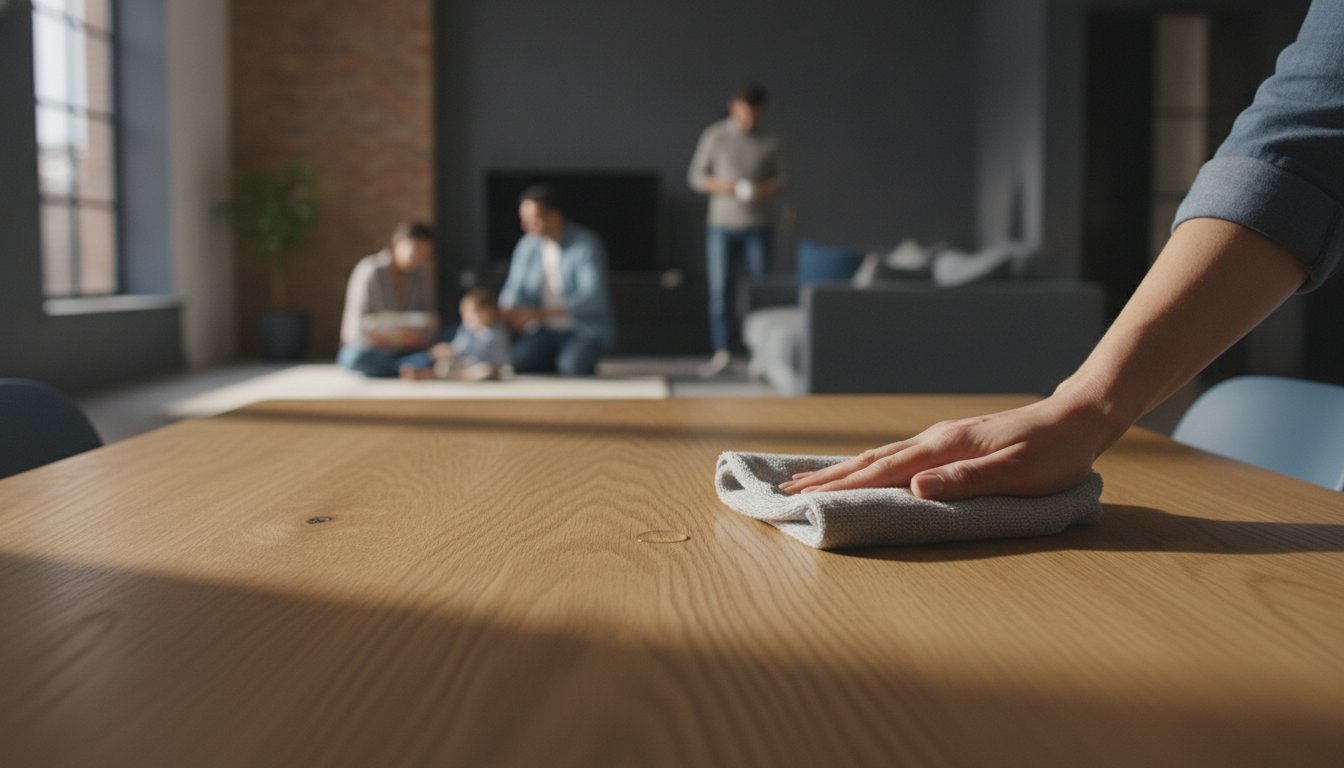
You’ve just welcomed a handcrafted solid wood table into your home, feeling the smooth grain under your fingertips and imagining the decades of dinners to come. Then, during the very first Sunday roast, a splash of gravy lands on the surface, and that initial spark of joy instantly turns into a cold knot of panic. Learning how to prevent food stains on a new table is about more than just avoiding messes. It’s about honoring the life of the timber and the quiet dedication that went into every join. We believe the heart of your home shouldn’t be hidden away or treated like a fragile museum piece.
We understand the hesitation to use your new piece for fear of ruining it, especially when the only suggested solution is an unsightly plastic cover. You deserve a surface that stands up to daily life while remaining a tactile, beautiful focal point. This guide shares professional techniques to protect your solid wood investment from spills and stains while preserving its natural, breathable finish. We will walk you through the nuances of different protective coatings and establish a simple routine that ensures your table ages gracefully alongside your family.
Key Takeaways
- Identify the specific role of hard-wax oils and lacquers in creating a resilient barrier that shields delicate wood fibres from organic spills.
- Master the essential ‘blot, don’t rub’ rule and learn how to prevent food stains on a new table by protecting the surface from heat-induced pore opening.
- Follow a calm, two-step protocol for immediate accidents using dry and slightly damp microfibre cloths to lift residues without damaging the grain.
- Explore invisible or tactile physical shields, such as custom glass tops or felt-backed mats, that offer peace of mind during lively family gatherings.
- Gain confidence in the longevity of your investment by understanding how natural timber density and artisanal finishes allow for local maintenance over decades.
Understanding Your Table’s Finish: The First Line of Defence
A finish is far more than a cosmetic choice. It serves as a dedicated guardian, acting as a microscopic barrier between organic matter and the vulnerable wood fibres underneath. When you are looking at how to prevent food stains on a new table, you must first respect the chemistry of the surface. Understanding wood finishing allows you to work with the material rather than against it, ensuring that spills remain on the surface rather than becoming a permanent part of the wood’s history.
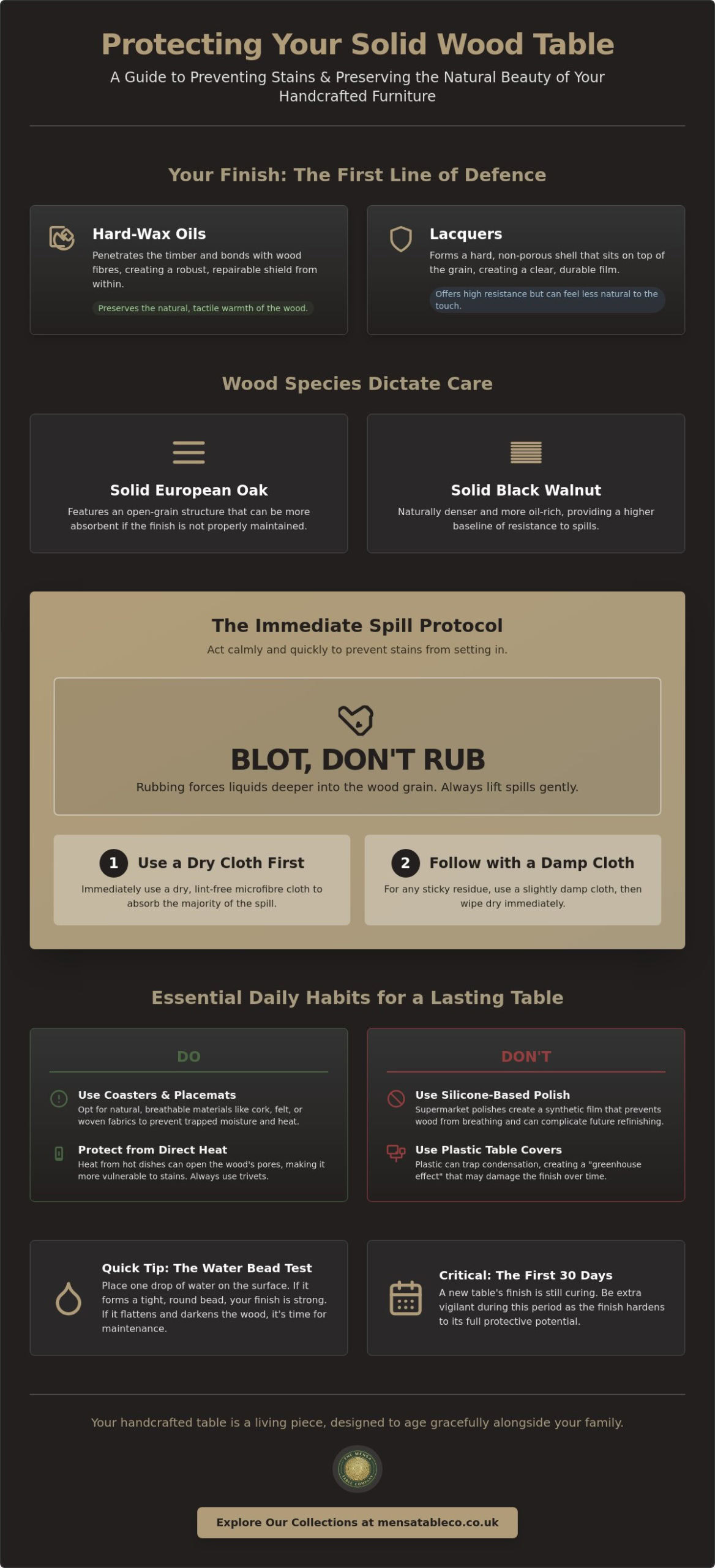
Different finishes offer varying levels of protection and tactile experiences. Hard-wax oils are a favourite in our workshop because they penetrate the timber and bond with the fibres, preserving the tactile warmth of the wood while providing a robust shield. Lacquers, by contrast, form a hard, non-porous shell that sits on top of the grain, creating a clear film. Traditional waxes offer a soft, lustrous glow, though they often require more frequent maintenance to keep their protective qualities intact. Finish saturation represents the point at which the wood’s pores are so thoroughly treated that they effectively repel liquids rather than absorbing them.
The species of your table also dictates its initial thirst and care requirements. Solid European Oak features an open-grain structure that can act like a series of tiny straws if the finish isn’t maintained. In comparison, Solid Black Walnut is naturally denser and more oil-rich, providing a different baseline of resistance. Understanding these natural characteristics helps you tailor your cleaning routine to the specific needs of the timber.
Identifying Your Table’s Protection
Knowing your finish is vital before you reach for any cleaning product. You can perform a simple water bead test by placing a single drop of water on an inconspicuous area. If it sits as a tight, rounded sphere, your protection is intact. If the water flattens and begins to darken the wood, the finish has worn thin and requires attention. Modern matte lacquers often look like bare wood, but they feel cooler and smoother to the touch than a naturally oiled surface, which retains the wood’s organic, textured feel.
Why Real Timber Breathes and Absorbs
Solid wood is a living material with a cellular structure that naturally mimics a sponge. This means that environmental factors, such as the rising heat from a steaming bowl of soup, can actually open the wood’s pores and make it more susceptible to deep-set marks. When you bring home a new piece, the first 30 days are a critical curing period. During this time, the finish is still hardening and reaching its full protective potential. Taking extra care during these early stages is the best way to learn how to prevent food stains on a new table while the timber settles into its new environment.
Essential Daily Habits to Prevent Food Stains
Protecting a handcrafted surface begins with a psychological shift. Rather than viewing your piece as a purely utilitarian object, consider it a functional work of art that responds to its environment. When you approach your furniture with this artisanal mindset, the daily rituals of care become second nature. The most effective strategy for how to prevent food stains on a new table is a simple one: blot, don’t rub. Rubbing a spill, even with a soft cloth, can force liquids and pigments deeper into the grain. By gently blotting with a dry, lint-free cloth, you lift the substance away before it has the chance to settle into the wood’s pores.
You should also be wary of “supermarket” furniture polishes. These products often contain silicone, which creates a synthetic, smeary film over the timber. This coating might offer a temporary shine, but it eventually builds up and prevents natural oils from reaching and nourishing the wood. It can even make future professional refinishing significantly more difficult. If you have questions about the specific care requirements for your timber, feel free to reach out to our team for guidance.
The Role of Coasters and Placemats
Choosing the right barriers is about more than just aesthetics. Natural materials like cork or woven fabric are superior to plastic because they don’t trap moisture or heat against the wood. Plastic mats can sometimes cause a “greenhouse effect,” where condensation is held captive, potentially clouding the finish. A well-placed table runner is another excellent way to protect the high-traffic centre of your dining table from communal serving dishes. It allows you to host with confidence, knowing the most vulnerable areas are shielded without the need for a full, grain-hiding tablecloth.
Managing Heat and Condensation
Heat is the secret accomplice of food stains. A steaming hot plate can soften the protective finish, effectively opening the wood’s pores and inviting oils or dyes inside. This is often the cause of the dreaded “white ring,” which is actually moisture trapped within the finish itself. While a placemat provides a basic layer of protection, a sturdy trivet is essential for serving dishes or teapots. Cold drinks present their own challenge through “sweat” or condensation. Using coasters for every glass ensures that water doesn’t pool and sit on the surface, which is a vital part of how to prevent food stains on a new table and maintain its pristine, natural beauty for years.
The Immediate Spill Protocol: How to React to Accidents
Even with a deep understanding of how to prevent food stains on a new table, life happens. A glass tips, a ladle drips, or a child’s juice box finds the grain. When these moments occur, your reaction time and method are just as important as the finish itself. We always advise our clients to keep a dedicated “spill kit” nearby so that a minor accident doesn’t become a permanent mark on the timber’s story. A calm, methodical approach ensures that the wood’s natural beauty remains unblemished by the rigours of a busy home.
The first step is always immediate blotting using a dry, lint-free microfibre cloth. As we mentioned previously, rubbing is the enemy; you want to lift the liquid vertically out of the grain rather than pushing it horizontally into the fibres. If the spill leaves behind a sticky residue, follow up with a second cloth that is slightly damp with lukewarm water. It should never be dripping wet. For acidic spills like citrus juice or red wine, use a pH-neutral wood cleaner to neutralise the acid before it can etch into the finish. Finally, buff the area completely dry with a fresh cloth. Leaving even a hint of moisture can cause “ghosting,” where water becomes trapped under the surface and creates a faint, cloudy patch.
Handling Common Culprits: Wine, Oil, and Curry
Red wine is particularly challenging because the tannins in the grape can react with the natural iron content in certain wood species, potentially creating dark, indelible marks. If wine hits the surface, neutralise it quickly. Grease stains from butter or cooking oils require a different logic. You want to lift the external grease without stripping away the table’s own protective oils. A tiny drop of mild, eco-friendly dish soap on a damp cloth is usually enough to break down the surface tension of the grease. Turmeric deserves a special warning. This vibrant spice acts more like a dye than a food. If turmeric lands on your table, blot it instantly and avoid using any heat during the cleanup, as heat will only help the pigment bond with the wood.
What to Avoid in Your Cleaning Cupboard
Many common household “hacks” are actually detrimental to artisanal furniture. Vinegar and lemon juice are highly acidic and will gradually eat away at the protective layers of your finish. Similarly, “all-purpose” kitchen sprays often contain harsh degreasers or bleaching agents that are far too aggressive for a solid European oak table. These chemicals can leave the wood looking parched and dull. Always stick to lint-free cloths. Traditional paper towels or old rags with seams can cause micro-scratches that, over time, trap dirt and make the surface look aged. By avoiding these harsh shortcuts, you are choosing a path of longevity and respect for the raw materials.
Choosing Physical Barriers Without Hiding the Grain
While the artisanal finish we apply in our workshop provides a robust foundation, some homes require a secondary layer of security. Deciding how to prevent food stains on a new table often involves a balance between absolute protection and the desire to see the raw, natural grain. For households with young children or those who host frequent, lively gatherings, a custom-cut glass top acts as a permanent, nearly invisible shield. It allows the character of the timber to shine through while providing a surface that is entirely impervious to spills.
If you prefer a more tactile connection with the wood, a ‘zoned’ approach to protection is often the most elegant solution. Using felt-backed leather or heavy fabric mats provides a soft, sophisticated barrier exactly where plates and glasses are placed. We strongly advise against leaving plastic oilcloths or vinyl covers on your table for extended periods. These materials aren’t breathable and can trap ambient moisture against the wood, which may eventually lead to clouding or even mould growth in the finish. If you are unsure which barrier suits your lifestyle, please speak with our craftsmen for a personal recommendation.
The Tablecloth Debate
There are moments when a full cover is simply practical. A large Sunday roast or a messy afternoon of children’s crafts calls for the total protection of a tablecloth. When choosing a cover, breathable natural fibres like heavy linen or cotton are always preferable to synthetic, waterproof barriers. These fabrics protect against splashes while allowing the timber to stay at a consistent humidity. Once the meal is finished and the risks have passed, removing the cloth to reveal the ‘naked’ table returns the room to its natural, artisanal state.
Felt Pads and Underside Protection
Stains aren’t the only threat to a new surface; mechanical damage from abrasive items can be just as problematic. The unglazed bottom of a ceramic plate or a heavy salt shaker can act like sandpaper on a fine finish. Applying small felt pads to the base of centrepieces and frequently used items is a simple habit that preserves the surface. This attention to detail should extend to the base of your furniture as well. Whether your piece features the intricate geometry of The Spider Leg Dining Table or the industrial lines of The X-Frame Dining Table, keeping the metalwork clean and dry ensures the entire structure remains a lasting investment. This holistic approach is the ultimate secret of how to prevent food stains on a new table and keeping it looking as beautiful as the day it left our workshop.
Investing in Quality: How Handcrafted Finishes Endure
The foundation of a stain-resistant surface is laid long before the first meal is served. We begin by selecting timber for its natural density and inherent resilience, ensuring each piece has the structural integrity to withstand the demands of a busy home. Choosing a handcrafted piece is the most sustainable way to learn how to prevent food stains on a new table, as the quality of the timber provides a natural resilience that mass-produced alternatives lack. While softer woods might require more vigilant care, a species like Solid Black Walnut offers a different ageing process altogether. Its dense grain and rich natural oils mean it develops a deep, lustrous patina over time, becoming more beautiful as it matures.
We view the maintenance of your table not as a chore, but as a seasonal ritual. Re-oiling your table every six to twelve months is a tactile act of care that strengthens the protective barrier and restores the wood’s natural glow. This process ensures the timber remains saturated, which is the ultimate secret to long-term stain resistance. Unlike factory-made furniture that is designed to be replaced at the first sign of wear, our pieces are built to be maintained and cherished. A locally crafted table can be refreshed and restored in your own dining room, preserving its history for the next generation.
The Longevity of Solid Timber vs. Veneer
The difference between solid wood and veneer becomes clear when the first major accident happens. When food stains penetrate a thin veneer, the damage is often permanent because there is no depth of material to work with. Solid wood is different. It’s a forgiving, honest material. If a mark does occur, the surface can be lightly sanded and re-finished, returning it to its original glory. This restorative quality makes it a “generational” investment. Over the decades, small marks and subtle changes in the grain become part of the table’s story, reflecting the shared meals and social rituals that have taken place around it. Natural oil finishes support this life, allowing the wood to breathe in a way that synthetic, plastic-heavy coatings never can.
Maintaining Your Mensa Table for Decades
Keeping your furniture pristine doesn’t require complex chemistry. A simple refresh of the protective barrier once or twice a year is all that’s needed to keep the grain sealed against moisture. We apply this same philosophy of durability to our entire range, including our matching benches and accessories. By choosing pieces that share the same high-quality finish, you create a cohesive environment that is easy to care for. Embracing the life of the wood means accepting that it is a natural, evolving element in your home. With the right habits and a commitment to quality materials, you can host with confidence, knowing you’ve mastered how to prevent food stains on a new table while honouring the artisanal spirit of the timber.
Embracing the Life of Your Solid Wood Table
Taking the time to understand your table’s finish and adopting a few simple daily habits ensures that your furniture remains a beautiful backdrop for life’s most meaningful moments. By mastering the art of immediate blotting and choosing the right physical barriers, you’ve learned how to prevent food stains on a new table while letting its natural character shine. These small acts of care protect the intricate grain and maintain the resilience of the timber for years to come.
At Mensa Table Co, we take immense pride in every piece we create. Our furniture is handcrafted in the UK using responsibly sourced materials, including Solid European Oak and Black Walnut options that are designed to age gracefully. We build our tables for generations, not just for Christmas, ensuring they remain a steadfast focal point in your home through every spill and celebration. If you’re ready to find a piece that combines artisanal beauty with lasting durability, we invite you to explore our range of handcrafted, durable dining tables today. We’re here to help you choose a surface that you’ll love living with every single day.
Frequently Asked Questions
Can I use a steam cleaner on my new wooden dining table?
You should never use a steam cleaner on a solid wood surface. The combination of high heat and concentrated moisture is the exact opposite of how to prevent food stains on a new table. Steam forces water into the timber’s grain and can cause the protective finish to peel or cloud. It’s much safer to use a slightly damp, soft microfibre cloth for regular cleaning tasks.
How do I remove a white heat mark from my table without sanding it?
You can often lift a white heat mark by using a hairdryer on a medium setting. These marks are typically just moisture trapped within the wax or oil finish. By gently warming the area, you encourage the moisture to evaporate. Keep the dryer moving to avoid overheating one spot, and once the mark fades, apply a small amount of fresh furniture oil to restore the protective barrier.
Is it safe to use antibacterial wipes on a solid oak table?
Avoid using standard antibacterial wipes on your handcrafted table. Many of these wipes contain alcohol or harsh bleaching agents that strip away the natural oils we use to seal the timber. Over time, this leaves the wood parched and vulnerable to liquid penetration. Instead, use a pH-neutral wood soap or a very dilute solution of eco-friendly dish soap to keep the surface hygienic without damaging the finish.
What is the best way to clean up a red wine spill on wood?
The most effective method is to blot the spill immediately with a dry, lint-free cloth. Do not rub the wine, as this can push the dark pigments into the wood’s cellular structure. If a faint mark remains, use a damp cloth with a touch of pH-neutral cleaner to lift the residue. This quick response is a vital part of how to prevent food stains on a new table, especially with tannin-rich liquids.
Do I need to oil my table as soon as it arrives from the workshop?
Your table arrives fully finished and protected, so there is no need to oil it immediately. We apply several coats of high-quality hard-wax oil before it leaves our workshop. However, remember that the finish takes about 30 days to fully cure and reach its maximum hardness. During this first month, be extra vigilant with coasters and placemats while the protective layers settle into the timber.
How can I protect my table from children’s art supplies like markers or glue?
Using a physical barrier like a heavy felt-backed mat or a custom-cut glass top is the best defence against creative messes. Markers and glues can be particularly aggressive, often containing solvents that bond with the table’s finish. If an accident does happen, try to lift the substance while it is still wet. For dried glue, a plastic scraper used very gently can often pop the residue off without scratching the grain.
Will sunlight affect how my table resists stains over time?
Prolonged exposure to direct sunlight will gradually dry out the timber and degrade the protective finish. As the oils in the wood evaporate, the surface becomes more porous and more likely to absorb liquids. To maintain stain resistance, consider using curtains during the brightest part of the day or rotating your table occasionally. Regularly re-oiling your piece every six to twelve months will also help replenish the wood’s natural defences against UV damage.
What should I do if a stain has already soaked into the wood grain?
One of the greatest benefits of solid wood is that it can be restored. If a stain has moved past the surface, you may need to lightly sand the affected area in the direction of the grain. Once the mark is removed, you can re-apply a matching hard-wax oil to blend the repair with the rest of the table. This ability to refresh the timber ensures your investment remains beautiful for decades.

Leave a Reply