
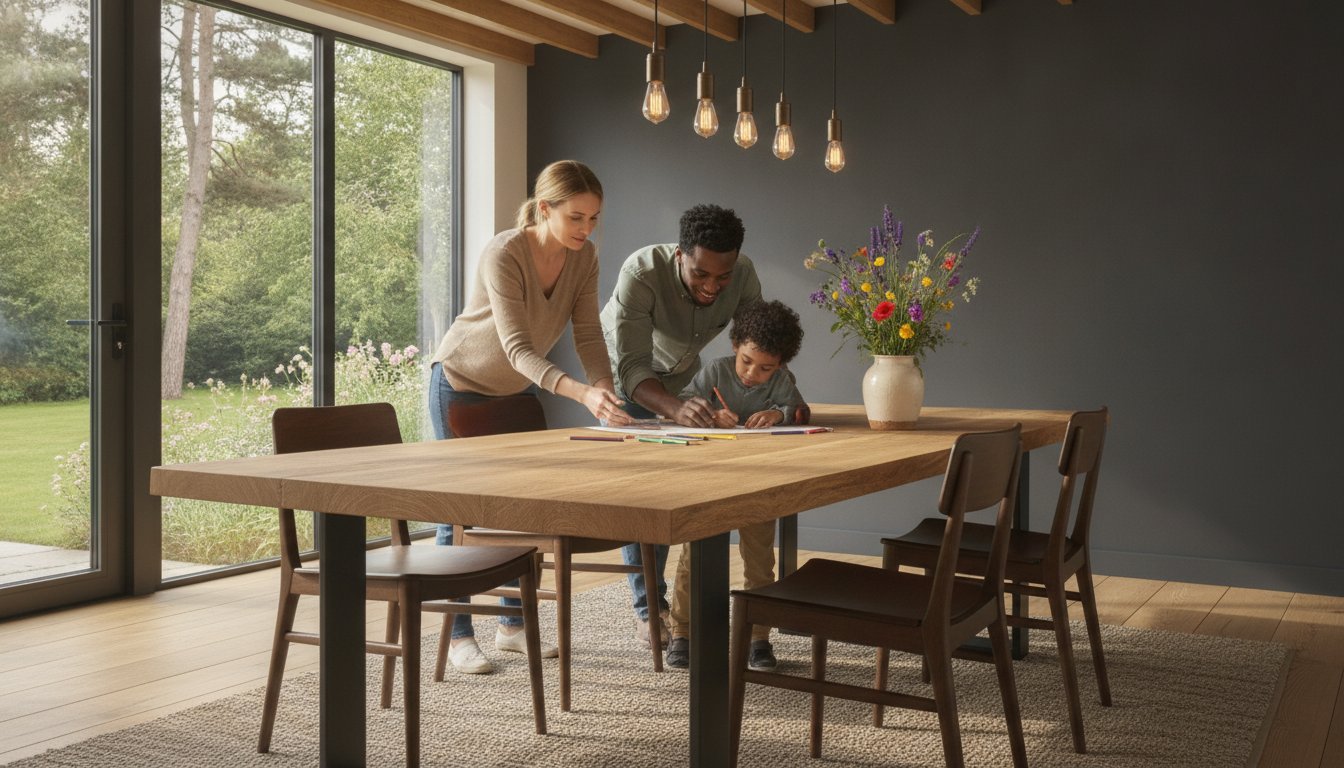
Have you ever walked through your front door only to feel like a guest in a silent, high-end furniture showroom? It’s a common frustration for many new homeowners who find that crisp white walls and perfect architecture often lack the warmth of a lived-in space. You want a sanctuary that breathes with life, yet the sheer number of empty rooms feels overwhelming. Learning how to make a new house feel homely isn’t about rushing to buy generic accessories; it’s about slow, intentional choices that value the raw grain of wood and the history of a well-made piece over fleeting trends.
We understand that a home is more than a transaction. It’s a site for human connection and shared rituals. In this guide, we’ll help you move past the sterile feeling of new-build design by focusing on sensory layers and social anchors. You’ll discover how to prioritize your furniture needs and choose artisanal quality that reflects your personal journey. By the end, you’ll have a clear plan to transform your house into a soulful, inviting retreat that feels as though it has been part of your family for generations.
Key Takeaways
- Understand why new-build architecture often feels sterile and how to introduce natural imperfections to create an immediate sense of warmth.
- Master the art of sensory layering by using texture and light to dampen echoes and soften the hard angles of modern construction.
- Learn how to make a new house feel homely by positioning a high-quality dining table as a social anchor for family rituals and connection.
- Discover the “Social Node” concept for zoning open-plan spaces, turning vast rooms into intimate pockets designed for specific human interactions.
- Build a lasting legacy by choosing artisanal furniture that reflects your values and offers a soulful alternative to mass-produced goods.
The New House Paradox: Why Your Space Feels Sterile
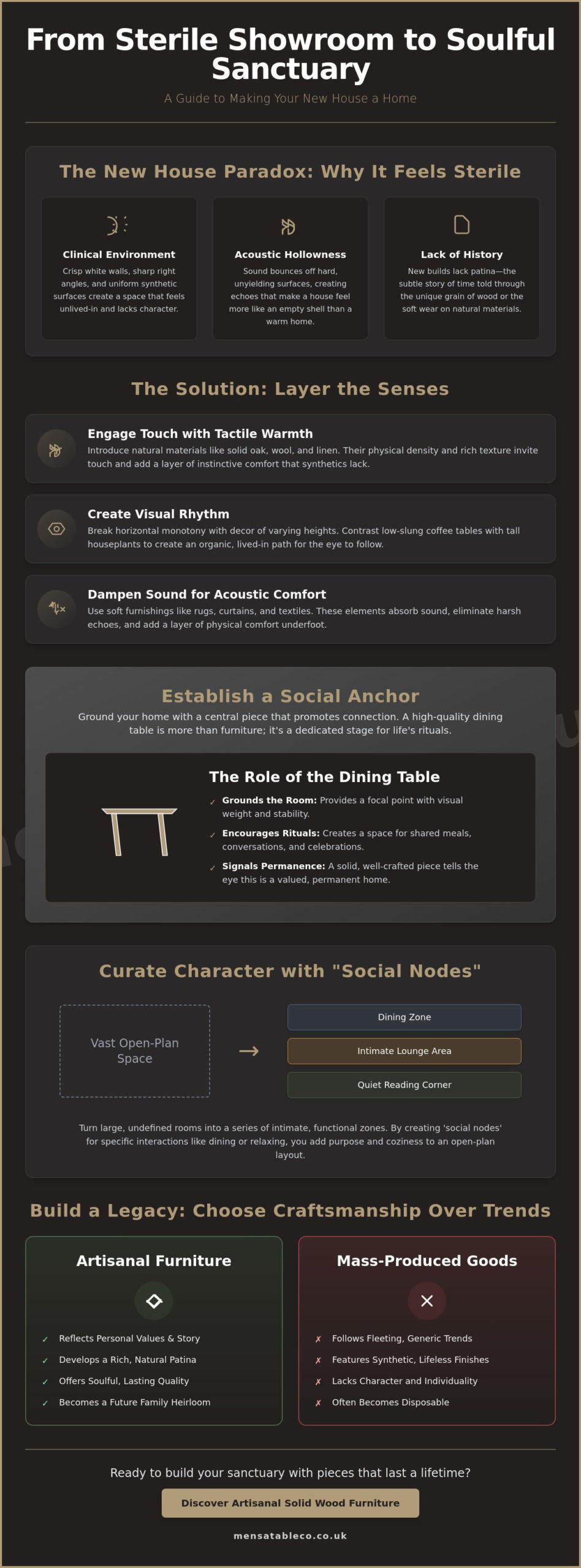
Walking into a brand-new house often feels like stepping into the pages of a high-end catalog. Everything is perfect, yet something essential is missing. This “sterile showroom” effect is a common hurdle for new-build owners who wonder how to make a new house feel homely when every surface is impeccably flat and every corner is a sharp, clinical right angle. It’s natural to feel a sense of “unsettledness” during this transition. Your mind is searching for the comfort of history and those soft, tactile imperfections that define a true home rather than a construction project.
Natural materials, such as solid European oak or deeply figured black walnut, bring a necessary sense of patina that new-build architecture simply cannot replicate. Patina is the subtle story of time told through the unique grain of wood, the slight variation in timber tones, or the soft wear on a natural stone floor. Without these sensory markers, a space can feel temporary and unrooted. To combat this, we often suggest “anchoring” a room with intentionality. By introducing a piece with significant visual weight and artisanal quality, such as a hand-crafted dining table, you provide a focal point that grounds the room and offers immediate visual stability. It tells the eye that this space is permanent, valued, and ready for life to happen.
The Impact of “Newness” on Wellbeing
The clinical environment of a new property, characterized by flat surfaces and uniform finishes, can actually trigger a subtle stress response in our daily lives. Insights from environmental psychology highlight how our surroundings dictate our sense of peace. Flat, white walls and synthetic materials lack the visual “weight” our brains instinctively seek to feel secure. This feeling is often compounded by acoustic hollowness. The way sound bounces off hard, unyielding surfaces creates an echo that feels more like an empty shell than a home. By introducing organic textures and heavy, solid furniture, you begin to dampen these harsh reflections and soften the clinical angles of the architecture.
The Deep Clean Ritual
Layering the Senses: Softening Architecture with Texture and Light
Creating a soulful space requires a move beyond visual aesthetics. When you consider how to make a new house feel homely, you must engage the tactile and olfactory senses to counter the rigidity of modern construction. A new-build often feels cold because of its hard surfaces and echoing halls. Sensory layering is the intentional process of introducing materials that absorb sound and invite touch. By varying the heights of your decor, from a low-slung coffee table to tall, leafy houseplants, you create a visual rhythm that feels organic rather than manufactured. This variation breaks the horizontal monotony of a room, providing the eye with a “lived-in” path to follow.
Tactile Warmth and Biophilic Design
Natural materials like solid European oak or wool feel instinctively warmer than synthetics. They possess a physical density and texture that mass-produced items lack. Houseplants add a necessary layer of life, breaking up the static lines of a room with unpredictable, organic movement. Rugs do more than just protect the floor; they define zones and provide physical comfort underfoot, effectively dampening the acoustic hollowness of a large, empty space. Integrating scent is a final, subtle tool. Whether it’s the earthy aroma of beeswax or the clean scent of linen, fragrance creates an immediate emotional anchor that bridges the gap between a new building and a cherished home.
Lighting: Beyond the “Big Light”
One of the most common errors in new properties is a total reliance on overhead LED spotlights. These clinical beams can make a room feel like a workspace rather than a retreat. Instead, focus on layering light with floor lamps, table lamps, and candles to create a golden glow. Using warm-toned bulbs, specifically around 2700K, transforms the atmosphere by mimicking the soft light of sunset. This approach softens the sharp architecture and invites a sense of calm as evening falls. If you’re looking for guidance on how to pair lighting with specific timber finishes to enhance the grain, you can always reach out to our team for a personal perspective.
By focusing on how a room feels and smells, rather than just how it looks in a photograph, you begin to dissolve the clinical “newness” of the architecture. It’s these layers of texture and light that turn a house into a sanctuary that truly welcomes you back at the end of the day.
Creating a Social Anchor: The Role of the Dining Table
While cushions and rugs provide a soft touch, they cannot ground a room the way a substantial piece of furniture does. If you are wondering how to make a new house feel homely, look to the space where your family gathers most. In the British home, the kitchen hub or dining room serves as the true soul of the house. It’s a site for social rituals that define our lives, from the shared laughter of a Sunday roast to the quiet focus of evening homework. A mass-produced table often feels disposable, contributing to the “temporary” atmosphere of a new-build. In contrast, a solid wood centerpiece provides an immediate sense of permanence. It acts as a visual anchor, holding the room together and signaling that this is a place where history will be made.
The natural grain of the timber adds much-needed “visual noise” to a plain room. New properties often suffer from a lack of character in the walls and floors. The intricate patterns found in raw wood provide a complexity that the eye craves. This organic detail breaks up the sterile uniformity of modern architecture, offering a tactile connection to the natural world that feels both grounding and reassuring. It’s a deliberate choice that moves the home away from the generic showroom look and toward a space with real substance.
Choosing Your Timber for Warmth
The species of wood you choose dictates the emotional temperature of the room. For formal spaces that require a sense of quiet luxury, the deep, inviting tones of solid black walnut offer a sophisticated backdrop for evening gatherings. If you prefer a more timeless, heritage feel for a busy kitchen, the golden hues of solid European oak provide a resilient and welcoming surface. The natural grain of handcrafted dining tables tells a story of longevity, ensuring your home feels established rather than just recently finished.
The Psychology of the Circular vs. Rectangular Table
Table shape significantly influences the flow and homeliness of a room. Rectangular tables are ideal for traditional family structures, offering a sense of visual grounding that mirrors the linear architecture of many new-builds. They define the dining zone clearly, especially when paired with a matching bench. The choice of base is equally important. Matching the leg style, such as the industrial strength of an X-Frame or the clean minimalism of a U-Frame, allows you to harmonize the furniture with the house’s structural lines. This intentional pairing ensures the table feels like a built-in part of the home’s character rather than an afterthought.
Curating Character: Zoning Your Space for Human Connection
Modern new-build properties often favor vast, open-plan layouts that look stunning on a floor plan but can feel like acoustic echo chambers once you move in. If you are exploring how to make a new house feel homely, the solution is not simply to buy more accessories, but to rethink the geography of your rooms. We encourage the use of “Social Nodes.” These are intentional pockets within a larger space designed for specific human interactions. By defining these zones, you transform a sterile hall into a series of intimate destinations, each with its own purpose and warmth.
A frequent error is falling into the “perimeter furniture” trap. Many homeowners instinctively push every sofa, bookshelf, and cabinet against the walls to maximize floor space. This often leaves a hollow, clinical void in the center of the room that feels unsettled and exposed. By pulling your furniture away from the walls, you create natural pathways and cozy conversation circles. The placement of a piece dictates the flow of energy and connection. A well-positioned sofa or a solid timber bench can act as a subtle boundary, signaling where one zone ends and another begins without the need for restrictive walls.
The Breakfast Bar: The Casual Heart
The kitchen is frequently the most used room in the house, yet it can also be the most clinical. Creating a dedicated morning ritual space with bespoke breakfast bars allows you to reclaim this area as a social hub. These elevated surfaces provide a place for family members to sit and chat while meals are prepared, fostering a sense of togetherness that a formal dining room might lack during the week. This transition from a workspace to a communal hub is essential for softening the industrial feel of a new kitchen. If you are looking to create a specific node for your morning coffee, contact our team to discuss how we can tailor a piece to your space.
Personal Curation vs. Showroom Styling
To truly breathe life into a new space, we suggest following the “70/30” rule. This involves balancing 70% functional, high-quality furniture with 30% personal history and meaningful artifacts. While the larger pieces provide the structural quality, it is the photos, heirlooms, and well-read books that provide the soul. Displaying “imperfect” objects or building a gallery wall that reflects your personal journey breaks the sterile precision of new architecture. It moves the home away from a generic catalogue aesthetic and toward a lived-in sanctuary that values substance over fleeting trends. This intentional layering ensures your environment feels collected over time rather than purchased in a single afternoon.
Building a Legacy: Why Quality Craftsmanship Outlasts Trends
A house becomes a home when it begins to hold the weight of your history. While new-build architecture offers a clean slate, it often lacks the emotional gravity that only time and quality can provide. When you consider how to make a new house feel homely, the choice of materials is your most powerful tool. Flat-pack furniture, while convenient, often contributes to a “temporary” atmosphere because it lacks the physical presence of something built to last. In contrast, a single piece of artisanal furniture can level up an entire room, acting as a statement of intent that values longevity over fleeting fashion.
The sensory difference of solid wood is unmistakable. There is a specific comfort in the cool temperature of a thick timber top, the earthy scent of a natural finish, and the reassuring weight of a piece that doesn’t shift when you lean against it. Unlike synthetic veneers that peel and fade, solid wood possesses a soul. It reacts to the environment, breathing and settling just as you do. This physical substance provides the visual and emotional grounding that a sterile space desperately needs. It turns a hollow room into a sanctuary that feels established and secure.
Handcrafted vs. Mass-Produced
The human touch is what truly separates a house from a home. Knowing your furniture was shaped by the hands of a dedicated specialist, rather than a machine in a distant factory, adds a layer of connection to your environment. Solid wood develops a beautiful patina as it ages, recording the small marks of daily life as a badge of honor. This is the essence of legacy. By choosing furniture with a clear provenance and ethical sourcing, you aren’t just buying an object. You are investing in a sustainable alternative to mass production, ensuring your home reflects a commitment to quality that will serve multiple generations.
Completing the Look with Purpose
Once you’ve anchored your space with a central piece, completing the look requires a focus on purposeful, social items. The understated charm of matching benches creates a rustic, communal feel that invites guests to linger longer. In the lounge, a well-placed coffee table serves as a vital landing spot for relaxation, bridging the gap between seating and providing a surface for the artifacts of your life. Making a home is a slow, intentional process. It isn’t a race to fill every corner, but a journey of selecting items that resonate with your values. By choosing craftsmanship over convenience, you create a sanctuary that feels deeply rooted and authentically yours.
Begin Your Journey Toward a Soulful Home
Transforming a modern new-build into a sanctuary isn’t a task completed in a single weekend. It’s a slow, deliberate evolution that values the raw beauty of natural materials over the convenience of flat-pack alternatives. By focusing on sensory layers and establishing social anchors like a substantial dining table, you move beyond the sterile showroom look. You’ve discovered how to make a new house feel homely by prioritizing quality and zoning your open-plan spaces for real human connection. These choices ensure your environment feels collected and intentional rather than just recently furnished.
Our team has been handcrafting furniture in the UK since 2018, working with solid wood species like Oak, Ash, and Walnut to create focal points built for generations. We believe that the items you bring into your home should be meaningful investments that grow more beautiful with age. If you’re ready to anchor your space with a piece that reflects your values and your history, we invite you to take that first step. Explore our range of handcrafted dining tables and start building your home. Your house is ready to become a warm, inviting backdrop for a lifetime of shared stories.
Frequently Asked Questions
Why does my new house feel so cold and uninviting?
New properties often feel cold because they lack the organic imperfections and visual weight found in older homes. The crisp architecture and hard surfaces create acoustic echoes that can feel clinical and unsettled. By introducing natural materials and soft sensory layers, you begin to dampen these sounds and soften the sharp angles of the building. This transition is about moving from a construction site to a personal sanctuary by replacing industrial scents with the familiar aromas of your own life.
How can I make a large open-plan living room feel more homely?
You can break up a large open-plan space by creating dedicated “Social Nodes” for specific family interactions. Instead of pushing all your furniture against the walls, pull pieces into the center to create intimate conversation circles and clear pathways. Using a solid wood coffee table or a strategically placed bench helps define these zones without the need for restrictive walls. This approach turns a vast echo chamber into a series of warm, purposeful destinations that invite human connection.
What is the most important piece of furniture for a homely feel?
The dining table is widely considered the most important piece of furniture for creating a soulful home. It serves as a permanent social anchor where family rituals and daily connections happen, from Sunday roasts to evening homework. Investing in a solid wood centerpiece provides an immediate sense of stability that mass-produced items lack. Whether it’s for shared meals or quiet focus, this focal point signals that the house is a site for long-term living rather than just a temporary stop.
How do I add personality to a new-build house without painting?
Adding personality without paint involves focusing on sensory layering through textiles, lighting, and natural materials. Introduce rugs with deep textures and use warm-toned lamps to create a golden glow that softens white walls. Learning how to make a new house feel homely often starts with the “70/30” rule: balance high-quality functional furniture with personal heirlooms and books. These items provide the visual noise and history that new architecture typically lacks, making the space feel uniquely yours.
Is solid wood furniture better for a “homely” feel than modern materials?
Solid wood furniture is superior for creating warmth because it possesses a natural patina and physical density that synthetic materials cannot replicate. Unlike cold plastic or thin veneers, timber has a tactile temperature and an organic scent that grounds a room. It reacts to its environment and settles over time, recording the marks of your family’s life as a badge of honor. This sense of longevity and heritage is essential for making a sterile space feel established and welcoming.
How long does it typically take for a house to start feeling like a home?
There is no fixed timeline, but a house typically starts feeling like a home once you’ve established your own social rituals within the space. This transformation is a slow, intentional process rather than a race to finish decorating. By choosing artisanal pieces and focusing on how you use each room, you create emotional anchors. Most homeowners find that the feeling of unsettledness fades as they replace industrial newness with items that reflect their personal history and values.
What are the best colours to make a room feel warm and cosy?
Warmth is best achieved through earthy, nature-inspired palettes such as terracotta, deep forest green, and chocolate brown. These moodier tones provide a sense of being enveloped and secure, which contrasts beautifully with the light oak or ash of handcrafted furniture. Even if you don’t paint, you can introduce these colors through heavy linens, velvet cushions, and natural wood grains. These shades absorb light and create the cozy atmosphere that clinical whites and grays often repel.
How can I make my kitchen feel less like a showroom?
You can soften a clinical kitchen by introducing organic elements and casual seating areas like a breakfast bar. Showrooms feel sterile because they are purely functional; adding a solid timber surface or a set of handcrafted stools invites people to linger and chat. Displaying everyday items like wooden boards or ceramic jars also breaks up the uniform lines of modern cabinetry. This shift from a workspace to a communal hub is vital for making the heart of your home feel lived-in.

Leave a Reply