
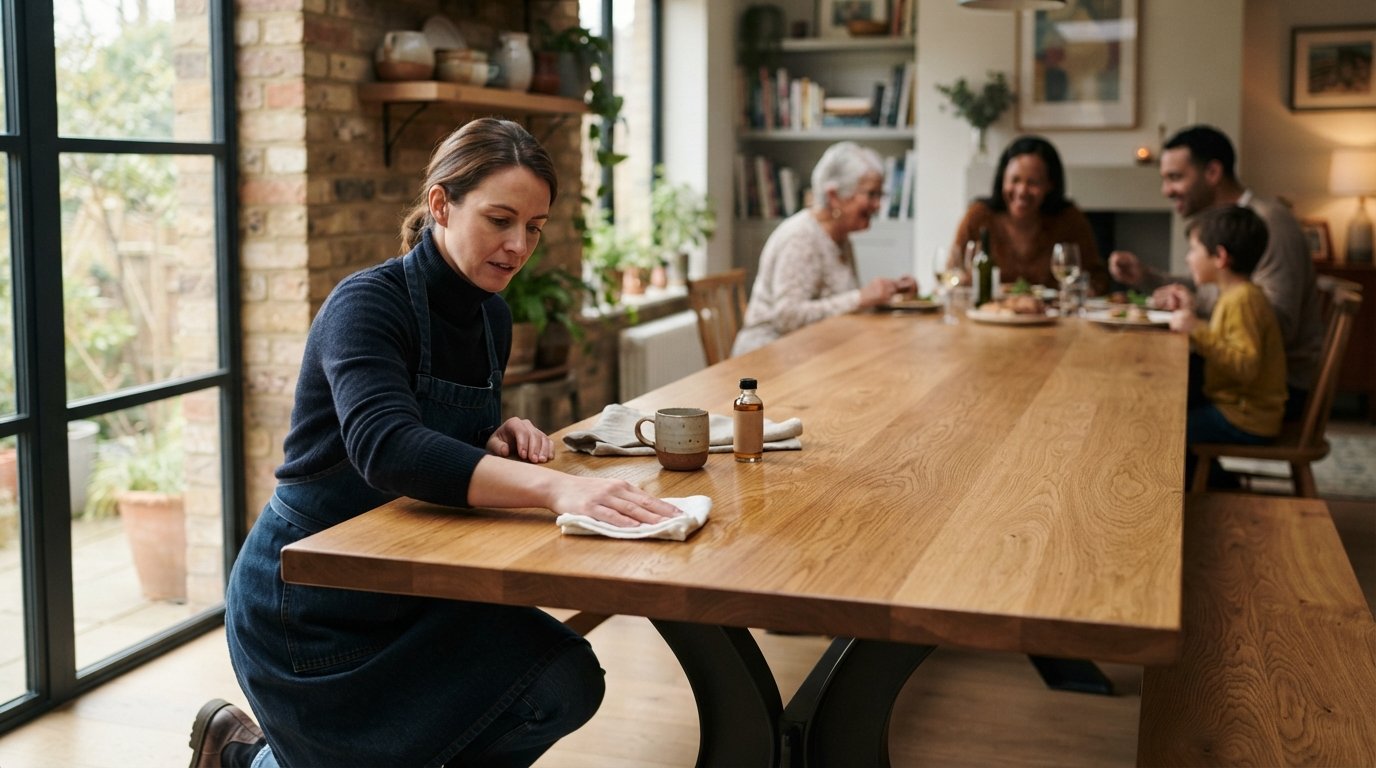
Your solid wood dining table isn’t just a functional surface; it is a living record of every Sunday roast, late-night conversation, and birthday celebration held in your home. We believe that a table should be the quiet heart of the household, absorbing the history of your family within its grain. It is perfectly natural to feel a sense of protectiveness over such a piece. You might worry about the dreaded white heat rings from a tea mug, or perhaps you’re unsure if your central heating is causing the natural European Oak to tighten and crack during the British winter. Understanding how to maintain the finish on a solid wood dining table is the best way to turn that worry into a lasting partnership with the timber.
We’ve spent years honing our craft to ensure that pieces like our signature Mensa or Spider Leg tables endure for generations. In this guide, we’ll share the professional secrets to preserving the lustre and structural integrity of your investment. You’ll discover a gentle daily cleaning routine that respects the wood’s natural oils, learn how to shield your table from environmental changes, and gain the confidence to know exactly when a fresh coat of finish is required to keep the wood glowing for years to come.
Key Takeaways
- Identify whether your table has an oil, wax, or lacquer finish to ensure you’re using the correct care methods for its specific tactile qualities.
- Adopt a “less is more” cleaning ritual that avoids damaging silicone sprays in favour of simple, wood-safe solutions that preserve the timber’s integrity.
- Discover how to maintain the finish on a solid wood dining table by defending against common household threats like central heating, UV sunlight, and moisture-trapping heat.
- Recognise when your table is “thirsty” and needs a seasonal re-oiling to keep the grain supple and the finish looking as vibrant as the day it left the workshop.
- Gain peace of mind by understanding how handcrafted joinery accommodates the natural movement of Solid European Oak and Black Walnut over the passing decades.
Understanding Your Table’s Finish: Oil, Wax, or Lacquer?
Understanding the specific nature of your table’s surface is the first step in learning how to maintain the finish on a solid wood dining table. A finish isn’t merely a decorative choice. It serves as a vital barrier against moisture and heat while drawing out the deep, swirling character of the grain. Different wood finishing techniques offer distinct levels of protection and aesthetic appeal, and identifying which one you have is essential for proper care.
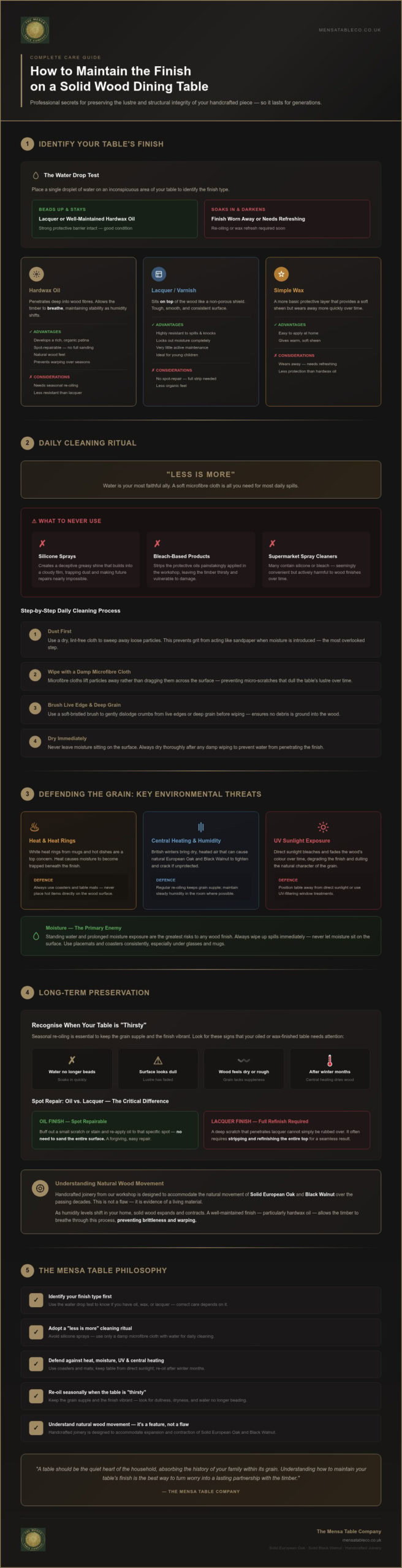
If you’re unsure what’s on your table, try the water drop test. Place a single droplet of water on an inconspicuous area. If it beads up and stays there, you likely have a lacquer or a well-maintained hardwax oil. If it soaks in and darkens the wood within a few minutes, the finish has either worn away or was a simple wax that needs refreshing. Knowing your finish allows you to choose the right products and avoid accidental damage.
The Tactile Appeal of Hardwax Oil
At our workshop, we often favour hardwax oils for our Solid European Oak and Solid Black Walnut pieces. Unlike synthetic coatings that sit on top of the wood like a sheet of plastic, these oils penetrate deep into the fibres. This allows the timber to breathe. This breathability is crucial for maintaining stability as humidity levels shift in your home, preventing the wood from becoming brittle or warping over the seasons.
Over time, an oiled table won’t just age; it’ll evolve. It develops a rich, organic patina that reflects the life lived around it. One of the greatest benefits of this finish is the ease of repair. You can buff out a small scratch or stain and re-apply oil to that specific spot without needing to sand the entire surface. It’s a forgiving choice that celebrates the natural feel of the wood while ensuring the piece remains a living part of your home.
The Resilience of Lacquer and Varnish
For homes with high-traffic demands or young children, a lacquered finish provides a robust, non-porous shield. Modern lacquers are engineered to be incredibly tough, resisting spills and minor knocks with a high-build surface that feels smooth and consistent. It’s a reliable choice for those who want a durable level of protection that requires very little active maintenance beyond basic cleaning. The lacquer acts as a permanent seal, locking out moisture and preventing stains from reaching the timber fibres.
There is a trade-off to consider, though. While lacquer is harder to damage initially, it’s significantly more difficult to spot-repair. If a deep scratch penetrates the lacquer, you can’t simply rub a little more on. It often requires stripping and refinishing the entire top to ensure a seamless look. Choosing lacquer is a commitment to a specific, uniform aesthetic that trades the organic feel of oil for maximum resistance against the chaos of daily life.
The Daily Ritual: Cleaning Your Solid Wood Table Without Damage
Mastering how to maintain the finish on a solid wood dining table begins with a shift in perspective. In a world of “spray and wipe” convenience, it’s tempting to reach for a supermarket bottle to clean up after dinner. However, many of these products contain silicone or bleach. Silicone creates a deceptive, greasy shine that eventually builds up into a cloudy film, trapping dust and making future repairs nearly impossible. Bleach is even more aggressive; it can strip the protective oils we painstakingly apply in our workshop, leaving the timber thirsty and vulnerable.
We advocate for a “less is more” philosophy. Water is your most faithful ally. For most daily spills, a soft microfibre cloth is all you need. These cloths are designed to lift particles away rather than dragging them across the surface, which prevents the micro-scratches that dull a table’s lustre over time. If your table features a live edge or deep grain, use a soft-bristled brush to gently dislodge crumbs before wiping, ensuring no debris is ground into the wood.
Step-by-Step Daily Cleaning Process
Consistency is the secret to a piece that ages with grace. Follow this simple rhythm after every meal to keep the surface pristine:
- Dusting: Begin by using a dry, lint-free cloth to sweep away loose particles. This prevents grit from acting like sandpaper when you introduce moisture.
- The Damp Wipe: If there’s sticky residue, use a cloth that is slightly damp, never soaking. You should be able to wring it out until no more drops fall.
- The Dry-Off Rule: This is the most critical step. Never let moisture sit on the timber for more than a minute. Follow your damp cloth immediately with a dry one to buff the surface.
Craftsman-Approved Cleaning Solutions
Using the right products is a cornerstone of how to maintain the finish on a solid wood dining table without causing long-term damage. When water isn’t enough, you don’t need harsh chemicals. A gentle, pH-neutral solution is easily made at home by adding a single drop of mild dish soap to a bowl of warm water. This is enough to break down grease without damaging the finish. We strongly advise against using abrasive scouring pads or “magic” sponges, as these will instantly mar the surface of your Solid European Oak or Walnut.
For a deeper clean, professional wood soaps are a worthwhile investment. These are specifically formulated to clean while leaving behind a tiny amount of natural oils to nourish the finish. If you’re ever in doubt about a specific cleaning product or have encountered a stubborn stain, ask our craftsmen for a recommendation to ensure your table remains the beautiful focal point of your home.
Defending the Grain: Managing Heat, Moisture, and Sunlight
Solid wood is a dynamic, living material. It reacts to its surroundings in ways that mass-produced alternatives simply cannot. To master how to maintain the finish on a solid wood dining table, you must understand how heat, moisture, and light interact with the timber’s cellular structure. These elements are the primary drivers of change in a piece of furniture, and managing them is less about control and more about creating a stable environment where the wood can thrive.
The “White Ring” is perhaps the most common anxiety for any table owner. It occurs when a hot vessel, like a mug or a serving dish, is placed directly on the surface. The heat causes the finish to expand slightly, allowing ambient moisture or steam to become trapped underneath. When the surface cools and the finish contracts, that moisture is locked in, creating a ghostly white blemish. Similarly, “invisible” heat sources like laptop chargers or hot plates can cause localized drying. This concentrated warmth draws moisture out of the wood too quickly, leading to structural stress.
Sunlight is another silent actor in the life of your furniture. UV radiation naturally matures the timber, a process that is particularly evident in Solid European Oak. Over months, direct exposure can cause the honeyed tones of oak to deepen or bleach, depending on the specific finish. This isn’t a defect, but rather the wood’s natural response to its environment. If you leave a bowl in the same spot for a year, you might find a “shadow” underneath where the wood hasn’t aged at the same rate as the surrounding surface.
The Role of Coasters and Placemats
Prevention is a daily habit. We always recommend using coasters and placemats as a primary line of defence. Natural materials like felt-backed or cork coasters are superior to plastic ones; plastic can sometimes react with the finish or trap heat against the wood. A well-chosen table runner adds a decorative touch while providing a broader protective layer for communal serving dishes. Thermal shock is the physical stress and potential cracking that occurs when wood is subjected to extreme, concentrated temperature changes.
Managing Environmental Stress
Your home’s atmosphere plays a significant role in the longevity of your furniture. Timber is hygroscopic, meaning it absorbs and releases moisture to stay in equilibrium with the air. For optimal stability, aim to keep your home’s relative humidity between 40% and 60%. If the air becomes too dry, particularly during the winter when central heating is at its peak, the wood may shrink, leading to “cupping” where the boards pull at the joints.
Positioning is key to long-term health. Keep your table a safe distance from direct radiator heat or wood-burning stoves to prevent the timber from drying out unevenly. During the height of summer, using curtains or thin blinds during the peak hours of sunlight will significantly mitigate UV-induced colour shifts. These small adjustments ensure that your investment remains as structurally sound as the day it was carefully crafted in our workshop.
Long-Term Preservation: Re-oiling and Structural Integrity
A solid wood table is a living investment that grows more beautiful with age. Unlike mass-produced furniture that relies on thin veneers, a handcrafted piece is built for repairability. Understanding how to maintain the finish on a solid wood dining table involves recognising when the timber is “thirsty”. If the surface feels slightly rough to the touch or looks dull despite your regular cleaning routine, the protective oils have likely depleted. This usually happens every six to twelve months, depending on the warmth and light levels in your dining room.
The beauty of solid timber lies in its ability to be revived. While a deep scratch in a flat-pack table is often permanent, the same mark on a solid oak or walnut surface is merely a temporary blemish. You have the power to restore the lustre of the wood yourself, though a professional refresh is sometimes preferred for a complete overhaul of a well-loved family heirloom. Performing a seasonal check-up ensures that the structural integrity of the piece remains as robust as the day it left our workshop.
The Re-oiling Process for Oiled Tables
For tables finished with hardwax oil, the re-application process is a rewarding ritual. Start with a deep clean using a specialist wood soap to remove any lingering grease. If you notice minor surface scratches, a very light sand with 240-grit sandpaper, always following the direction of the grain, will smooth the fibres. We advocate for a “thin to win” methodology. Apply a small amount of oil with a lint-free cloth, spreading it thinly and evenly across the surface. Don’t allow the oil to pool. Buff the table with a clean cloth after ten minutes to remove any excess. Patience is vital; the oil requires a full 24 hours to cure before you resume your daily use.
Maintaining the Underside and Legs
True craftsmanship considers the parts of the furniture that are rarely seen. We finish both the top and the underside of our table tops to ensure the timber breathes and moves at a consistent rate. If only the top were finished, the wood could bow or warp as it reacts to the humidity in your home. During your seasonal check, take a moment to inspect the fixings. Natural timber movement can occasionally loosen the bolts on a Spider Leg or X-Frame base. A quick tighten with a spanner will keep the table rock-solid. Finally, check your floor protectors. Grit trapped in a felt pad can scratch your flooring and cause the table to sit unevenly.
While most maintenance is straightforward, some deep stains or structural shifts might require a specialist’s eye. If you’re unsure about the best way to care for your specific piece, contact our craftsmen directly for expert advice on keeping your table in peak condition for the next generation.
Investing in Longevity: The Mensa Table Philosophy
At the Mensa Table Company, we don’t just build furniture; we create the foundational setting for your family’s life. Every piece we handcraft in our UK workshop is designed with a profound respect for the timber’s natural history. When you learn how to maintain the finish on a solid wood dining table, you aren’t just performing a chore. You’re participating in a legacy of manual production and ethical sourcing that values substance over the fleeting trends of mass-produced goods. This partnership between the maker and the owner ensures that the table remains a meaningful life investment.
We carefully select species like Solid Black Walnut and Ash for their remarkable durability and unique tactile qualities. These materials are chosen because they respond gracefully to the passage of time. We believe a table should be a site for human connection, acting as the backdrop for social rituals and shared experiences. By choosing a piece built with such intentionality, you’re securing a focal point for your home that will absorb the stories of your household for decades to come.
Built for Generations, Not Seasons
There is a vast difference between artisan joinery and the mass-produced glue-ups found in high-street stores. In our workshop, we use traditional methods that anticipate the natural movement of the wood. We understand that timber is a living material that will breathe and shift. By using high-quality materials and thoughtful construction, we reduce the frequency of maintenance required. A well-built table doesn’t fight against its environment; it adapts to it. This structural integrity provides the emotional value of a piece that ages with your family, becoming more characterful with every passing year.
A Personal Connection to Your Furniture
There is a quiet confidence that comes from knowing the hands that built the heart of your home. We are a tight-knit team of specialists who take immense pride in every grain pattern and joint. This personal, manual approach defines every interaction we have with our customers. We don’t view our tables as mere transactions, but as long-term commitments to your home’s social history. Our expertise is always available to you, long after the sawdust has settled in the workshop.
If you ever feel uncertain about a specific mark or simply want to ensure you’re using the best products for your table’s unique grain, we invite you to reach out. We value the connection between the creator and the end user above all else. You can contact our craftsmen for bespoke care guidance at any time to ensure your investment continues to glow with the same warmth and authenticity as the day it was first delivered.
Preserving Your Family’s Focal Point for the Years Ahead
A solid wood dining table is more than a piece of furniture; it’s a living archive of your home’s most cherished rituals. By understanding whether your surface requires the breathable care of hardwax oil or the resilient seal of lacquer, you’ve taken the first step in ensuring its longevity. Remember that a “less is more” approach to cleaning, combined with a watchful eye on your home’s humidity and heat levels, will prevent the most common forms of wear. Learning how to maintain the finish on a solid wood dining table is a simple act of stewardship that honours the natural history of the timber.
Every piece we create is hand-finished in the UK with a deep respect for the unique character of European Oak and Black Walnut. Our tables are designed for a lifetime of use, built to withstand the beautiful chaos of daily life while developing a richer patina over the decades. If you’re ready to introduce a handcrafted centrepiece into your home, or if you have specific questions about caring for your timber, we’re here to help. Speak with our craftsmen about your bespoke table needs and let us help you choose a piece that will age as gracefully as the memories you create around it.
Frequently Asked Questions
How often should I oil my solid wood dining table?
You should typically re-oil your table every six to twelve months. This frequency depends on your home’s environment and how often you use the surface. If the wood begins to look dull or feels slightly “thirsty” to the touch, it’s time for a refresh. Regular re-oiling is a vital part of how to maintain the finish on a solid wood dining table, as it replenishes the natural oils that protect the timber from within.
Can I use furniture polish or wax on a lacquered table?
We advise against using supermarket furniture polishes or waxes on a lacquered surface. Many of these products contain silicone, which builds up into a cloudy, greasy film that is incredibly difficult to remove. This residue can eventually trap dust and dull the table’s natural lustre. Instead, a simple wipe with a slightly damp microfibre cloth followed by a dry one is all you need to keep a lacquered finish looking pristine.
How do I remove a white heat mark from my wooden table?
White heat marks are caused by moisture becoming trapped beneath the finish. You can often remove them by placing a clean, dry cotton towel over the mark and running a warm, not hot, iron over it for a few seconds. The gentle heat helps release the trapped vapour. If the mark persists, the moisture may have penetrated deeper. In such cases, it’s best to seek advice from a specialist to avoid damaging the wood.
Is it normal for my solid oak table to have small cracks?
Small hairline cracks, often called “checks,” are perfectly normal in solid oak. Timber is a living material that expands and contracts as humidity levels shift in your home. These movements are a natural response to the environment and don’t affect the structural integrity of your piece. We design our furniture to accommodate this breathing process. These small shifts are part of the unique history and character that solid wood brings to a home.
Can I use a steam cleaner on my solid wood floor or table?
You should never use a steam cleaner on your solid wood table or floor. The intense, concentrated heat and moisture will force the wood fibres to swell and can cause the finish to peel or cloud instantly. This can lead to permanent warping or “cupping” of the timber. For safe cleaning, stick to a well-wrung damp cloth. This ensures you protect the delicate balance of moisture within the wood and preserve its handcrafted beauty.
What is the best way to clean a live edge table with natural crevices?
The best way to clean a live edge table is to start with a soft-bristled brush. This allows you to gently dislodge any crumbs or dust trapped in the natural crevices and bark details without scratching the surface. Once the debris is cleared, use a damp microfibre cloth for the flat areas. Be careful not to let water pool in the deeper hollows, as stagnant moisture can eventually soften the finish and damage the timber.
Does sunlight always damage the colour of a walnut table?
Sunlight doesn’t necessarily “damage” walnut, but it does cause it to mellow and lighten over time. While many woods like oak tend to darken, walnut often moves from a deep chocolate brown to a warmer, golden honey tone. This is a natural photo-chemical reaction. To ensure the colour changes evenly across the surface, try to rotate any centrepieces or bowls periodically so the wood ages consistently across the entire table top.
Should I use a tablecloth for every meal on a handmade table?
You don’t need to hide your table under a cloth for every meal. Part of the joy of owning a handmade piece is the tactile connection to the grain. We recommend using high-quality coasters and placemats for daily use to protect against heat and spills. Save the full tablecloth for particularly messy activities or large festive gatherings. This allows you to enjoy the visual warmth and character of the wood during your everyday life.

Leave a Reply