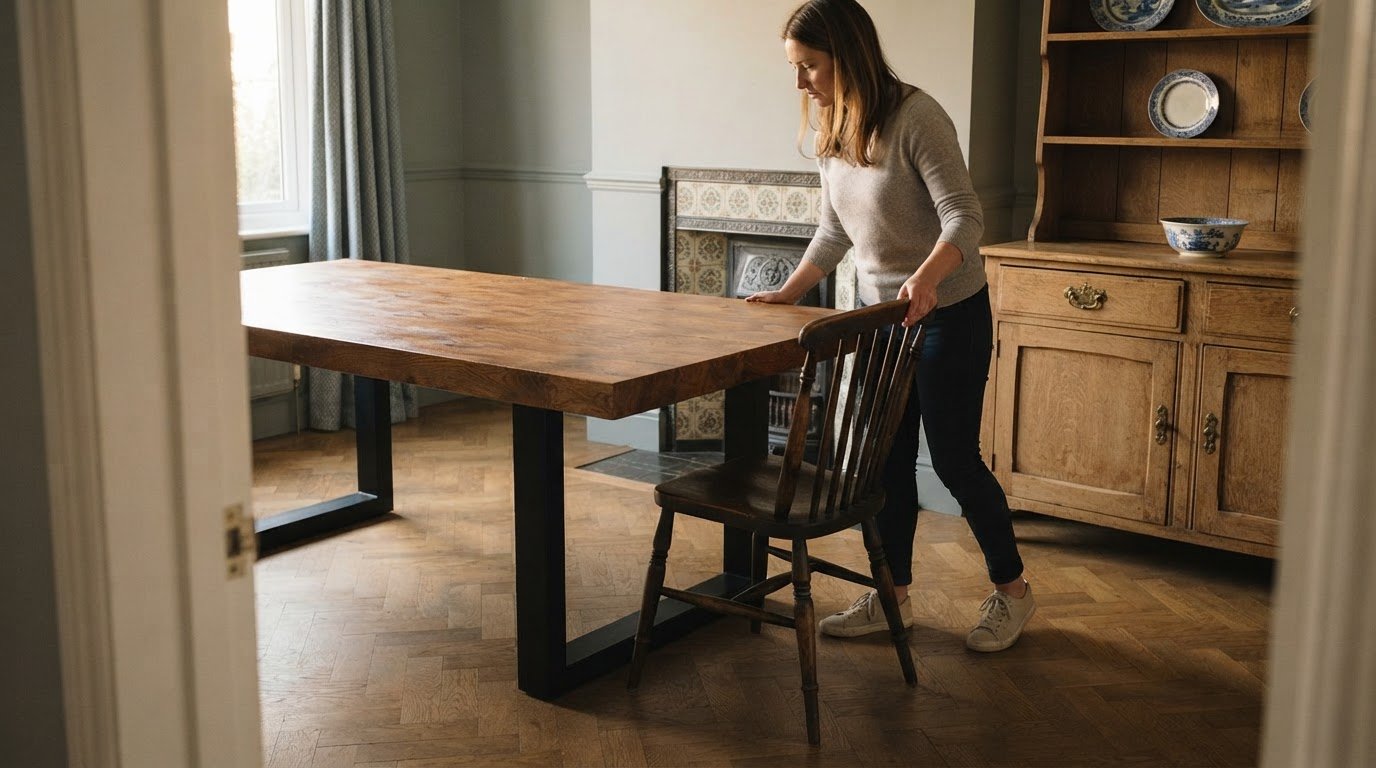
A new table doesn’t need to match your vintage furniture to belong in the room. The key to how to integrate a new table with vintage pieces is to balance proportions, materials and finishes, then create a connection through colour or texture. Let each piece keep its character while giving the room a thoughtful, settled feel.
It’s understandable to worry that a contemporary table might look out of place beside well-loved older furniture. But contrast can bring a room to life when there’s a clear thread running through it, such as a shared wood tone, a repeated colour or a balance of sturdy and delicate forms.
Here, you’ll learn how to assess craftsmanship and condition, choose colours and materials that work together, and make the most of the decor you already have. We’ll also look at when a new table can take centre stage and when a vintage piece should lead, so the result feels personal rather than overly matched.
Key Takeaways
- Pair old and new furniture by comparing craftsmanship, proportions and the character of their finishes, rather than trying to make every piece match.
- Use a restrained colour palette or repeat a colour to help contrasting forms and materials feel connected.
- Mix periods selectively: a single vintage feature can bring warmth to contemporary surroundings without making the room feel crowded.
- Consider a vintage piece’s size, condition and everyday function alongside how it relates to the decor you already have.
- Choose whether the vintage furniture should take the lead or play a quieter supporting role, then give it enough visual space to feel intentional.
1. Balancing quality and craftsmanship across old and new furniture
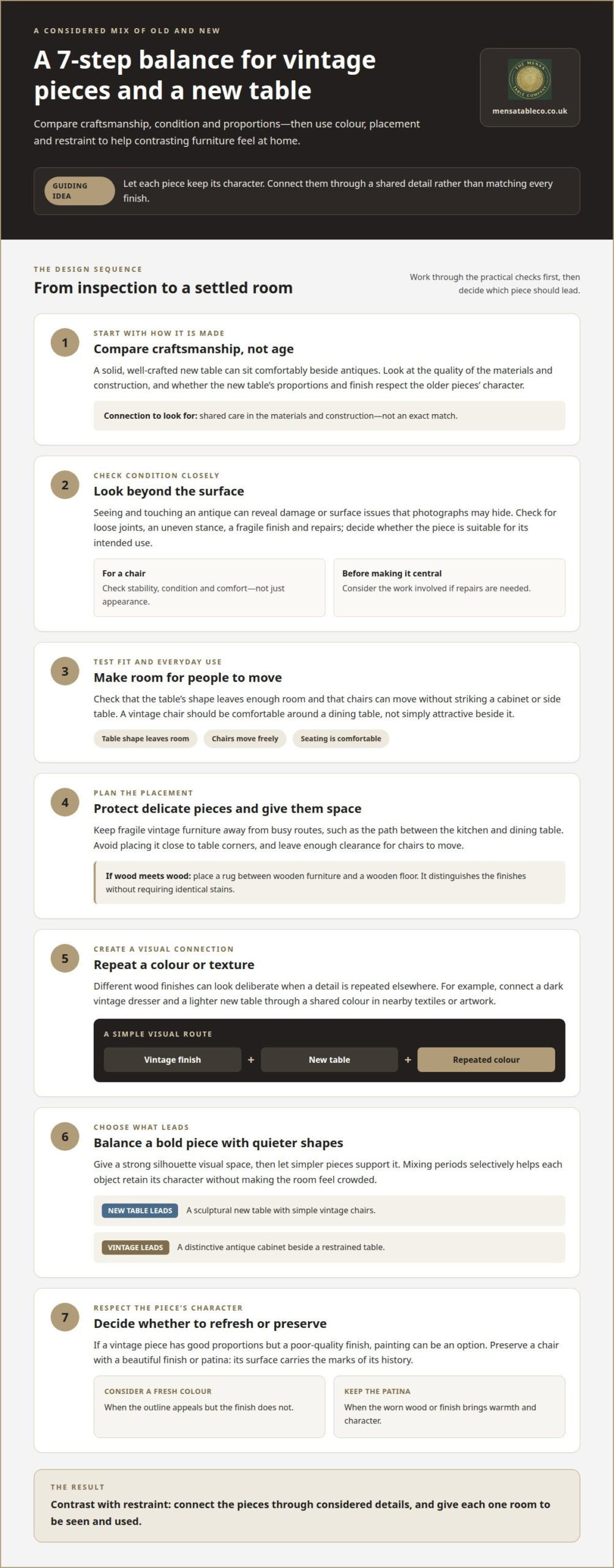
Compare how each piece is made rather than judging furniture by age alone. A solid, well-crafted new table can sit comfortably beside antiques when its proportions and finish respect their character. Check vintage chairs for stability, condition and comfort, then consider whether the table’s shape leaves enough room. An old chair needn’t match a contemporary table: shared care in the materials and construction can create a timeless balance.
Condition matters as much as appearance. Seeing and touching antiques in person can reveal damage, repairs and surface issues that photographs may hide. Look for loose joints, an uneven stance or a fragile finish, and decide whether the piece suits its intended use. A vintage chair, for example, should be comfortable around a dining table, not simply attractive beside it. If repairs are needed, consider the work involved before making the piece central to daily life.
Protect delicate vintage furniture by keeping it away from busy areas, such as the route between the kitchen and dining table. Leave enough space for chairs to move without striking a cabinet or side table, and avoid placing fragile pieces close to table corners. This helps reduce accidental knocks and gives each piece room to be seen.
Different wood finishes can look deliberate when a shared detail balances the contrast. A dark vintage dresser beside a lighter new table, for instance, can feel connected through a repeated colour in nearby textiles or artwork. If wooden furniture sits against a wooden floor, place a rug between them to distinguish the finishes. The rug creates a visual boundary without requiring the table and antiques to have identical stains.
Balance bold furniture with quieter pieces. A sculptural new table can lead the room while simple vintage chairs keep the setting from feeling crowded; alternatively, let a distinctive antique cabinet stand out beside a restrained table. Mid-century modern furniture can also work with a vintage mirror or dresser from the 1920s. The useful principle is contrast with restraint: give a strong silhouette space, then let subtler shapes and finishes support it.
When a vintage piece has good proportions but a poor-quality finish, Bunny Williams advises that painting can be an option. By contrast, preserve a chair with a beautiful finish or patina, since its surface carries the marks of its history. Consider the piece itself before choosing: an appealing outline may suit a fresh colour, while richly worn wood may provide the warmth that balances a new table. That distinction helps old and new furniture feel considered, not forced into a matching set.
2. Creating contrast with modern forms, colours and art
A clear colour scheme lets a new table and vintage pieces sit together without competing. Start with the room’s largest surfaces: neutral walls and substantial furniture can form a calm base, while smaller objects bring in stronger colour. For example, a pale dining room might include a deep green vase and a similar shade in a framed print. Repeating the colour gives the eye a simple route around the space.
Warm antique wood tones pair well with cooler colours, including deeper shades. Try a vintage cabinet with a contemporary table, then echo a cool blue or charcoal detail in artwork or ceramics. The difference in temperature distinguishes each material, while a repeated colour ties the design together. Keep larger elements quieter if the antique has a richly patterned surface or an unusual outline.
Modern forms can also keep a room with antiques from feeling like a museum. Designer Marea Clark notes that contemporary shapes, colours and art can help traditional pieces feel current. In a living room, a brightly coloured retro armchair can enliven neutral surroundings; beside a vintage bookshelf, sleek modern art creates another clear contrast. Let one object provide the stronger visual note, then choose supporting pieces with simpler outlines.
In a dining space, carry the same palette from table to walls and accessories rather than matching every finish. A vintage dining table can sit with retro chairs, while contemporary artwork adds a different period and shape. If the table is new, a vintage mirror or framed print can bring an older note above it. Repeat one or two colours around the room, perhaps in chair upholstery, a bowl and a detail in the artwork.
Vintage accessories work best when they have space around them. Set a distinctive bowl on a table, then repeat its colour in framed art or a smaller ceramic piece elsewhere. For lighting, pair a clean-lined contemporary fitting with a traditional cabinet, or explore handcrafted designs from Tiffany Light House to add warmth near modern artwork. Have vintage or antique lights checked by a lamp shop for their wiring and bulb receptacles.
Art can connect periods without requiring furniture to match. A page from a vintage book or magazine, framed beside a contemporary print, brings together different eras through subject or colour. In a room with a warm timber table, choose artwork with cooler tones; in a restrained scheme, a single vivid print can become the accent. If you’re planning a new dining setting, talk through your table ideas as part of the room’s overall design.
3. Mixing vintage and contemporary styles
Common mistakes include forcing every item into one period or combining so many contrasting shapes that the room feels incoherent. Instead, choose a clear anchor, such as a new dining table, then introduce vintage forms selectively. A contemporary setting can make one antique piece distinctive, while a considered mix lets each object retain its own history.
Think in silhouettes as well as dates. A clean-lined table can sit beside a curved wooden side table, just as a sleek modern sofa can pair with an older side table. Their outlines differ, but each has a defined role. Leave visual breathing space around the more sculptural shape so it reads as a deliberate contrast, not an accidental mismatch.
Pieces from different periods can share a room without turning it into a collection devoted to one era. An antique desk with modern chairs and a contemporary light, for example, brings together varied forms while keeping the room useful and current. A mid-century piece doesn’t require matching furniture throughout the home. Let it be one element in a wider mix, rather than a template for every purchase.
Use texture and material to create a bridge between contrasting styles. A vintage wooden side table beside a contemporary sofa can feel at home with a tactile rug or modern cushions nearby. In a kitchen, retro bar stools can bring warmth to clean-lined cabinetry. Each example introduces a different period, while familiar materials and practical roles help the pieces relate to one another.
Scale matters, too. A low, delicate vintage table can look lost beside a large, weighty contemporary piece, while a bulky antique may crowd a smaller setting. Compare the height, visual weight and footprint of the pieces before arranging them. For instance, place a compact vintage side table beside a modern armchair rather than setting it against a much larger central table.
Keep the overall design clear by repeating a detail, not an entire style. A shared material, finish or shape can link a contemporary table with a vintage cabinet, even when their periods differ. If the room already has a strongly patterned antique, choose quieter forms nearby. Mixing works best when the contrast is intentional: one piece can surprise, while the surrounding furniture gives it context.
Finally, consider how the room will be used. Vintage-inspired glassware or old flatware can bring character to a modern tablescape, while contemporary lighting can make an antique dining setting feel less formal. Hospitality spaces frequently demonstrate this balance—seeing how the best mezcal bar San Francisco pairs reclaimed textures with modern lounge elements can inspire your own entertaining setup. Choose additions that support everyday routines, then remove pieces that compete for attention. The room will feel gathered over time, not assembled around a single period.
4. Choosing vintage pieces that complement existing decor
Choose a new table by comparing its size, colour and shape with the vintage furniture already in the room. If you’re deciding how to integrate a new table with vintage pieces, start with how you use the space: a table for daily meals needs to work with the chairs and leave clear paths through the room. Its outline can echo a nearby piece or create a considered contrast.
Start with the room’s existing character rather than choosing a period and making every decision follow it. If a vintage cabinet already draws the eye, a table with a simpler profile can let it remain prominent. In a room with clean-lined furniture, a vintage mirror or framed print can introduce history without overwhelming the interior. One older piece can be enough to make the space feel personal.
Measure the space before choosing a vintage item or a new table. Compare the furniture’s footprint with the floor plan, and consider how chairs will move and whether doors will open freely nearby. An antique dining table may have different proportions from a modern one, so measurements help you decide whether it will fit the way you intend to use it.
Smaller accents offer a gentle way to test a period or material in your decorating scheme. A vintage lamp on a console, a framed print near the dining area or a ceramic piece on a shelf can introduce age and texture without taking up much floor space. Move the accent around to see where its colour and shape complement the existing furnishings.
Consider materials as well as colour. A glass vase can bring a light touch to a timber table, while woven fabric on a chair can soften the transition between metal and wood. Repeating a material elsewhere in the room helps the arrangement feel connected, even when the furniture comes from different periods.
When selecting a larger vintage piece, consider its structure and everyday purpose as well as its appearance. A chair should suit the table and feel comfortable for the way you plan to use it. If its frame and form work well but the fabric doesn’t suit the room, reupholstery may offer a way to adapt its look.
Keep the room’s routes and busy areas in mind. A delicate antique beside a narrow doorway may be vulnerable to knocks, while a framed print can bring character to the same wall without taking up floor space. A small vintage side table can also give an unused corner a practical role.
To work out how to integrate a new table with vintage pieces, consider the relationship between the table, your existing furniture and the room’s daily routines. A table should feel at home without making every piece match. Choose a form and material that suit the way you live, then let carefully selected vintage accents add their own history.
5. Making a vintage piece the room’s hero or an accent
Choose one vintage piece to lead the room, then let the surrounding furniture support it. A carved antique sideboard, for example, can become the focal point against simpler walls and contemporary seating. Keep nearby objects restrained so its patina, shape and history remain visible. This gives vintage furniture presence without making every surface compete for attention.
For a statement piece, consider what the room needs around it. A distinctive vintage dining table may call for quieter chairs, pared-back lighting and clear space around its outline. In a living room, an ornate cabinet can lead while a modern sofa and plain rug provide a calm setting. A focal point is easier to appreciate when the other large elements don’t demand equal attention.
Placement helps define whether an antique feels like a hero or an accent. Centre a striking cabinet on an uncluttered wall, or position a vintage armchair where its silhouette is visible from the doorway. In a smaller room, leave space around a substantial piece rather than filling every corner. Open floor and wall areas give the eye room to notice its craftsmanship.
A quieter accent can add character without changing the whole room’s direction. Try a vintage lamp on a side table, a framed print above a new table, or an old bowl on a shelf. These smaller pieces are easy to move if the arrangement feels crowded. They can also introduce a colour or material found elsewhere, helping the older detail feel connected to contemporary surroundings.
Use fabric and lighting to support the role you’ve chosen. A vintage chair with patterned upholstery can be the room’s strongest note beside plain cushions and simple curtains. If the chair should remain an accent, let its colour reappear subtly in a rug or artwork. A contemporary light above an antique table can make the contrast clear, while a softer lampshade can create a more intimate corner.
Shopping with a specific role in mind helps avoid collecting pieces that compete. Before choosing an antique mirror or cabinet, decide whether it should draw attention or quietly fill a gap. A large mirror can become a focal point above a console; a small framed print may add a period detail beside a new table. In either case, consider the piece’s condition and how it will function in daily life.
If a vintage find becomes the hero, edit the surrounding decor rather than adding more statement objects. If it’s an accent, repeat one detail elsewhere and let the main furniture remain prominent. For a new table that needs to sit comfortably within that arrangement, discuss your table ideas.
The Mensa Table Company: Coffee Tables
The Mensa Table Company offers coffee tables for living spaces where a new piece needs to sit naturally alongside vintage furniture. A carefully chosen coffee table provides a practical surface and adds a contemporary element to a room shaped by older pieces. Consider its form and finish alongside nearby vintage furniture, so the contrast feels intentional and the room remains comfortable to use.
If you’re also considering a dining table, The Mensa Dining Table, The Spider Leg Dining Table and The X-Frame Dining Table offer further options within the range. Choose the piece that best suits the room’s role, proportions and existing character. For help discussing a table for your space, contact The Mensa Table Company.
Let the room grow into its next chapter
Choosing how to integrate a new table with vintage pieces is also an opportunity to shape how your home feels every day. Imagine the table in use: a place for shared meals, quiet cups of tea or the small rituals that make a room your own. The right pairing needn’t look finished all at once. Live with the arrangement, notice which details draw you in, and let the room develop at its own pace.
As you consider a new table, think beyond its first impression. Picture how its lines and materials will sit alongside the pieces you already value, and how it will serve the people who gather around it. A considered choice can make old and new feel like parts of the same story, while leaving room for your home to keep changing.
If you’re ready to explore a table for your space, contact The Mensa Table Company to start the conversation. Your next well-loved room can begin with one thoughtful choice.
Frequently Asked Questions
Which table shapes and sizes work best with vintage dining chairs?
Choose a table shape that lets your chairs sit comfortably and keeps the layout clear. A rectangular table often suits a row of traditional chairs, while a round or oval top can soften a room filled with angular furniture. Check chair arms and seat height against the table edge, then consider how people will move around it. A striking chair with a broad back may need more visual space than a slim, simple design.
How do you mix wood tones between a new table and vintage pieces?
Use undertones to guide the pairing: woods with warm golden or reddish notes often sit naturally together, while cooler, muted finishes make a quieter combination. The shades don’t need to be identical. For example, set a lighter table beside a darker vintage cabinet, then bring a small detail from each tone into nearby accessories. Look at the wood in daylight and evening light, since changing conditions can affect how finishes appear.
How can you combine modern and vintage styles without making a room feel mismatched?
Give each period a clear role, then connect them through a shared detail. A contemporary table can anchor the room while a vintage chair or framed print adds history; a cushion or piece of artwork can echo a colour found in both. Keep the mix useful, too: each piece should serve the way you live, not simply fill a stylistic gap. This creates a room that feels collected and personal rather than arranged around a single era.
What table materials and finishes pair well with antique furniture?
Solid wood is a natural partner for antique furniture, especially when the grain and finish complement rather than imitate the older piece. A smooth, restrained tabletop can offset carved details, while a more expressive grain can add warmth beside plain antique forms. The Mensa Table Company makes its tables from 100% solid wood, including oak, ash, walnut and Swedish pine. Consider the overall mix of texture, colour and visual weight when choosing.

Leave a Reply