
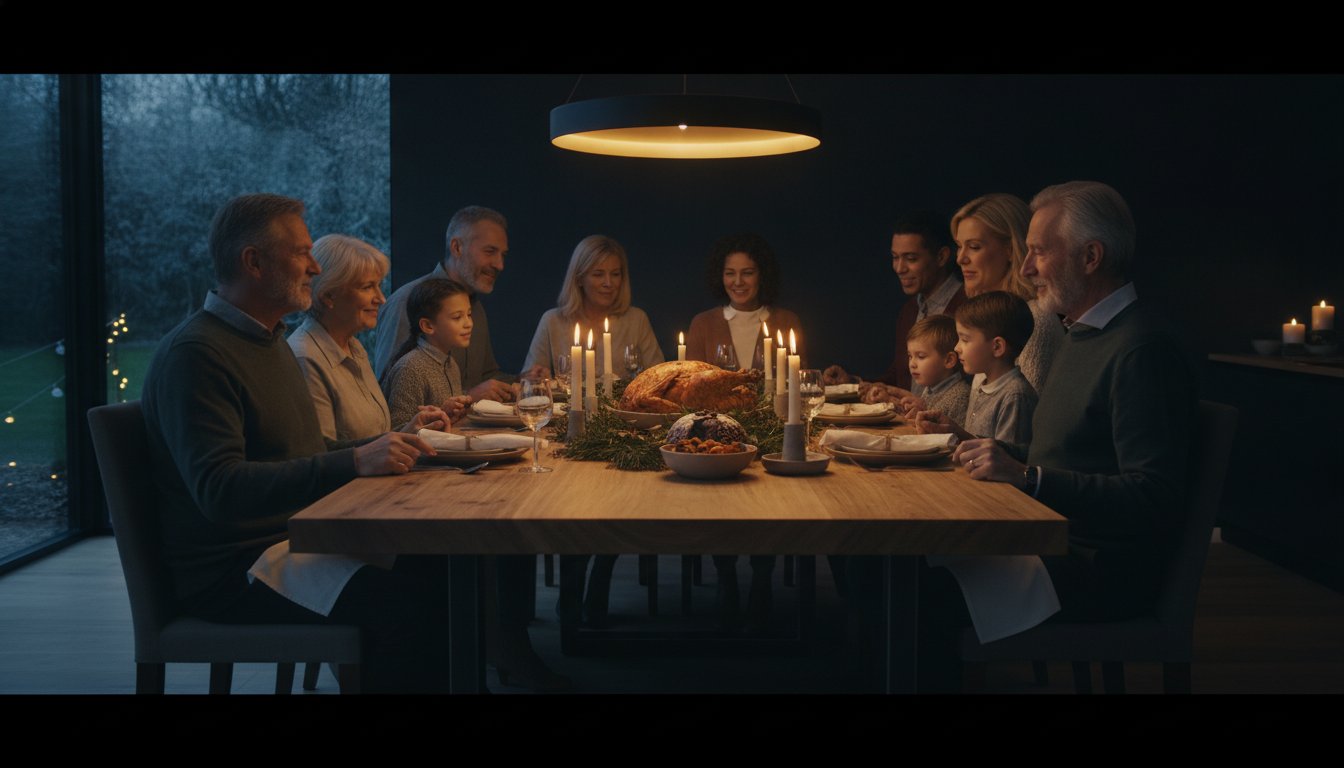
The most memorable holiday meal isn’t defined by the complexity of the menu or the cost of the ingredients, but by the quiet moments of connection that happen when everyone finally sits down together. Knowing how to host the perfect Christmas dinner often feels like a race against the clock, yet the true secret lies in slowing down to appreciate the craftsmanship of the moment. We understand the weight of expectation that comes with the festive season. You want to provide enough seating for the whole family without the room feeling cluttered, and you want every dish to arrive perfectly timed while you actually enjoy the company of your guests.
It’s a delicate balance to strike, but it’s entirely possible to move from frantic preparation to a state of relaxed hospitality. Discover how to orchestrate a stress-free, beautiful Christmas dinner that focuses on connection, craftsmanship, and the art of the table. We will walk you through the logistics of holiday hosting, from managing your kitchen timeline to creating an artisanal tablescape. You’ll learn how to anchor your festive traditions around a sturdy, reliable centrepiece, like one of our handcrafted Mensa or X-Frame Dining Tables, ensuring your home remains a place of warmth and heritage for generations to come.
Key Takeaways
- Shift your mindset from simply serving a meal to hosting a meaningful experience by establishing your guest count and physical space requirements early in the season.
- Learn to create a sensory, natural tablescape that highlights the organic beauty of your furniture using elements like evergreen boughs and beeswax candles.
- Master the logistics of how to host the perfect Christmas dinner by applying the “Elbow Room Rule” to ensure every guest enjoys a relaxed and comfortable seat.
- Reclaim your festive morning by following a deliberate, stress-free run sheet and completing your table arrangements on Christmas Eve.
- Explore the value of investing in a handcrafted, solid wood table that acts as a generational site for human connection and shared social rituals.
Starting with Intent: Planning Your Festive Gathering
Consider the natural movement of your home. Guests often congregate in the kitchen or around a breakfast bar while the final preparations are underway. By identifying these pockets of activity early, you can ensure there is enough space for people to gather comfortably without obstructing the path to the oven. Establishing your guest count at least four weeks in advance provides the clarity needed to assess your physical requirements. It’s about more than just having enough chairs; it’s about ensuring the room feels open and inviting so that the atmosphere remains calm as the house fills with life.
The Guest List and Menu Balance
Refining your menu is an exercise in restraint. While Christmas dinner traditions vary across the globe, the most successful hosts focus on one hero dish, allowing the sides to be simple, high-quality accompaniments. Reach out to your guests early to confirm dietary requirements, as this prevents last-minute pivots that can disrupt your kitchen rhythm. To stay focused, write a single sentence that defines the spirit of your meal. For example: “This dinner is a relaxed celebration of local ingredients shared among old friends.” This anchor will guide every decision you make, helping you avoid unnecessary complexity.
Early Logistical Foundations
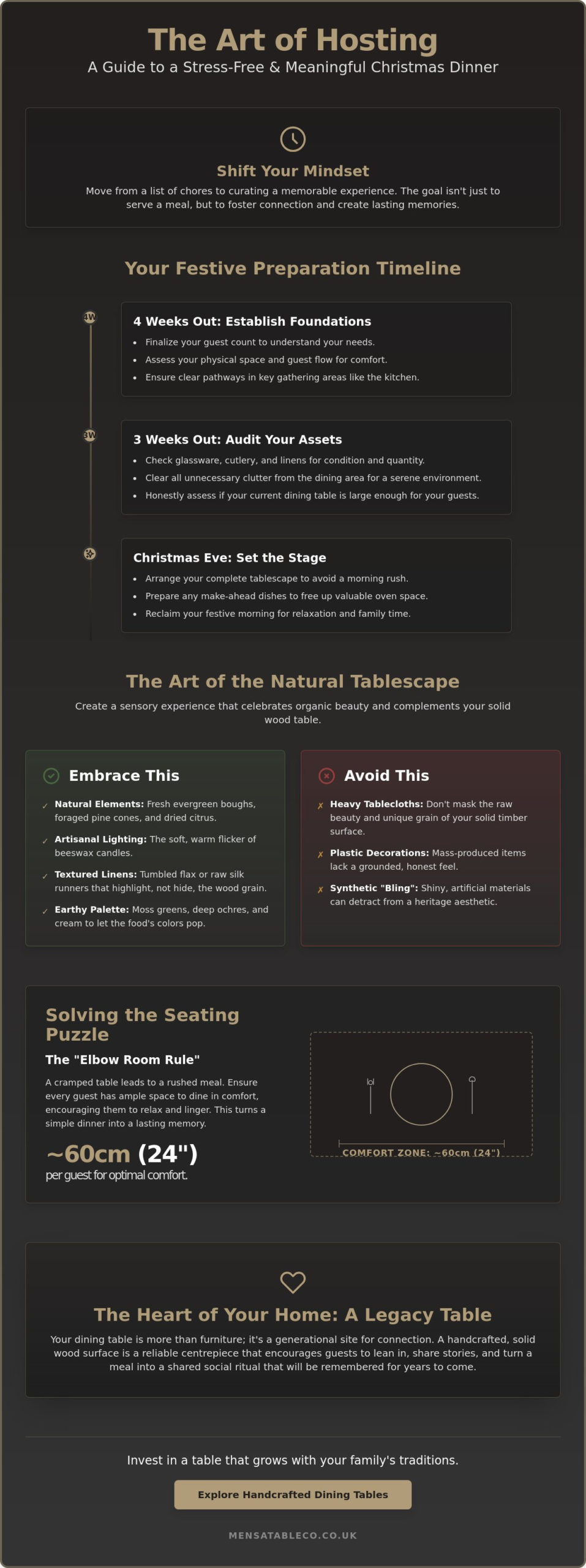
Preparation is the antidote to stress. Three weeks before the big day, perform an audit of your glassware, cutlery, and linens to ensure everything is in good repair. Clearing unnecessary clutter from your dining area allows your furniture to breathe and creates a more serene environment. This is also the time to honestly assess if your current dining table can accommodate your party. A cramped table leads to a rushed meal, whereas a generous, solid surface encourages guests to lean in and stay a while, turning a simple dinner into a lasting memory.
Setting the Stage: The Art of the Christmas Tablescape
The table is the silent protagonist of the holiday season. It is the foundation upon which every plate is rested and every story is told. When you consider how to host the perfect Christmas dinner, the visual and tactile environment you create is just as vital as the menu itself. We believe in an aesthetic that celebrates the raw, natural beauty of the materials, allowing the unique grain of a Solid European Oak or Walnut surface to dictate the tone. Rather than masking the timber with heavy cloths, use linens that run with the grain, layering textures like tumbled flax or raw silk to complement the wood’s organic warmth.
Creating a meaningful atmosphere involves engaging all the senses. The scent of fresh evergreen boughs, the subtle tang of dried citrus wheels, and the soft flicker of beeswax candles create a sanctuary for your guests. These elements feel grounded and honest, far removed from the fleeting nature of mass-produced plastic decorations. A comprehensive Christmas dinner planning guide can help you time the arrival of the bird, but the atmosphere is dictated by these artisanal details. If you are envisioning a specific layout for your holiday gathering, feel free to reach out to our team to discuss how a custom piece could serve your home.
Choosing a Natural Aesthetic
Functional Decor: Less is More
A beautiful table must also be a functional one. Keep your centrepieces low to the surface. This ensures that the eye-line remains clear, allowing conversation to flow across the table without obstruction. Leave plenty of “breathing room” for shared platters and wine bottles, as a cluttered table can lead to a cluttered mind. Simple, hand-written place cards on heavy cardstock add a personal, artisanal touch, making each guest feel truly seen and welcomed into the heart of your home.
Solving the Seating Puzzle: Comfort for Every Guest
The physical layout of your dining room is the silent architecture of a successful evening. When you are learning how to host the perfect Christmas dinner, the way you arrange your guests is just as important as the seasoning of the roast. A common mistake is to prioritise quantity over quality, squeezing in extra chairs that lead to a cramped, uncomfortable experience. Instead, we recommend a more deliberate approach that respects personal space. Position yourself, as the host, at the end of the table closest to the kitchen. This allows you to slip away for service or top up wine glasses without disrupting the flow of conversation or asking guests to move their chairs.
Calculating Space and Elbow Room
Space is the ultimate luxury at a festive gathering. To ensure a relaxed meal, we follow the ‘Elbow Room Rule’, which dictates a minimum of 60cm of width per guest. This measurement allows for the natural movement of dining without the constant fear of knocking a neighbour’s glass. To find your table’s true capacity, measure the length of your large dining table and divide by 60. Beyond the table edge, you should aim for at least 90cm of clearance behind each chair. This provides enough room for guests to pull back comfortably and for others to pass behind them with ease. Don’t forget to consider the depth of your furniture and the placement of the legs; a beautiful design should never come at the cost of your guests’ legroom.
The Benefits of Bench Seating
While traditional chairs offer individual support, there is a certain magic in the communal nature of a bench. Benches provide a flexible seating solution that is particularly well-suited for families and children, allowing for a ‘squeeze-in’ factor that chairs simply cannot accommodate. Choosing matching benches that align with the material of your table creates a cohesive, intentional look that avoids the visual clutter of mismatched chairs. When the meal is over and the room needs more space for games or music, benches can be tucked neatly under the table, clearing the floor and allowing the room to breathe. A handcrafted bench evokes the feeling of a traditional feasting hall, fostering a sense of togetherness that is central to the holiday spirit. Understanding the geometry of your room is a vital part of knowing how to host the perfect Christmas dinner.
The day finally arrives. The house is filled with the scent of pine and roasting bird, yet the true challenge of how to host the perfect Christmas dinner is found in the management of time. It’s easy to get lost in the heat of the oven, but a successful host stays anchored in the room. We suggest designing a ‘run sheet’ that accounts for every major milestone of the morning, ensuring you include generous buffer periods. This isn’t just about the food; it’s about giving yourself the grace to sit down with a glass of wine when the doorbell rings. By setting your table on Christmas Eve, you remove a significant manual task from your morning, allowing you to focus entirely on the culinary rhythm.
To maintain a calm environment, you must manage the flow of people as well as the flow of food. Guests naturally gravitate toward the kitchen, which can hinder your movement during critical plating moments. Utilise a ‘drinks station’ or a breakfast bar to act as a social buffer. By placing glassware, ice, and garnishes in a separate area, you invite guests to serve themselves while keeping the primary workspace clear for the heavy lifting. This simple logistical shift allows the kitchen to remain a place of production rather than a bottleneck of bodies.
The ‘Prep-Ahead’ Philosophy
Stress is often the result of trying to do too much at once. We advocate for a menu that allows for cold starters and desserts, which can be plated hours in advance and stored away. By preparing all vegetables and sauces the day before, you reduce your day-of workload to mere assembly. Implement a ‘clean as you go’ system to prevent the kitchen from becoming a source of anxiety. If the sink is clear, the mind remains clear, and you can return to your guests without the weight of a mountain of washing up looming over the evening.
Creating Flow Between Courses
A great meal shouldn’t feel like a marathon. After the main course is served, allow for 15 to 20 minutes of ‘breathing room’ before introducing the next stage. This pause gives guests time to digest the conversation as much as the food. One of our favourite techniques is the ‘Turkish rest’, where the meat sits for a significant period while you enjoy a light starter with your guests. This ensures the meat is at its most tender and keeps you at the table where you belong. For the final transition, move the party away from the dining table to a coffee table for cheese, port, and coffee. This change of scenery signals a shift to a more relaxed, informal pace. If you’re looking for a bespoke piece to facilitate these social rituals, get in touch with our craftsmen to discuss your vision.
Invest in the Heart of Your Home: The Table as a Legacy
A Christmas dinner is only as strong as the table it is served upon. While the turkey and the trimmings often take the limelight, the surface beneath them provides the essential stability for every shared ritual. As you refine your understanding of how to host the perfect Christmas dinner, you’ll find that the most successful evenings are anchored by furniture that feels as permanent and reliable as the traditions themselves. We believe in moving away from the temporary nature of ‘flat-pack’ culture. Instead, we advocate for pieces that are built with the intention of lasting for generations, absorbing the history of your family with every passing year. Your table shouldn’t be a logistical hurdle to overcome; it should be the site where your family’s story is written.
Why Solid Wood Matters for Hosting
Natural timber possesses a quiet resilience that synthetic materials simply cannot match. A table crafted from Solid European Oak or Ash isn’t just a piece of furniture. It’s a living material that handles the heat of heavy serving platters and the weight of a full festive spread with ease. The tactile quality of real wood creates an immediate sense of warmth, inviting guests to rest their hands on the surface and linger long after the meal has ended. For a host, solid wood offers a unique peace of mind. A spill of red wine or a stray mark from a cracker isn’t a disaster. Because the material is consistent throughout, it can be sympathetically refinished, allowing your table to age beautifully rather than requiring replacement after a few years of use.
Handcrafted Quality vs. Mass-Produced
Artisanal craftsmanship offers a level of support that mass-produced items lack. These tables are built to withstand the rigours of family life, from the quiet morning coffees to the boisterous energy of a holiday feasting hall. Choosing a bespoke size ensures that your table fits the specific proportions of your home, allowing you to accommodate your guests comfortably without compromising the flow of the room. This is an intentional choice for a more sustainable, slow lifestyle. By investing in a handcrafted piece, you’re choosing quality over convenience and substance over flashy marketing. Your table becomes more than a mere commodity; it becomes a legacy. It’s a site of shared history that will see your children and grandchildren through their own festive celebrations, standing as a sturdy witness to the passage of time.
Crafting Your Own Festive Legacy
The true essence of the holiday season isn’t found in the perfection of the roast, but in the warmth of the community gathered around your table. By shifting your focus from logistical chores to intentional experiences, you’ve mastered the quiet art of how to host the perfect Christmas dinner. You now know how to balance a natural, sensory tablescape with the practical needs of seating geometry, ensuring every guest feels both welcomed and comfortable. These moments of connection are the threads that weave together a family’s history, and they deserve a foundation that’s built to last.
We take immense pride in creating these foundations. Each of our pieces is handcrafted in the UK using sustainably sourced Solid European Oak and Walnut, ensuring your table is as resilient as it is beautiful. With bespoke sizing available for national delivery, we can help you design a centrepiece that fits your home perfectly. Discover the perfect centrepiece for your next gathering in our Dining Table collection. We wish you a season filled with slow moments, shared stories, and the enduring beauty of a home at peace.
Frequently Asked Questions
How many people can I realistically fit at my dining table?
Your table capacity is determined by its total length divided by a minimum of 60cm per guest. A 1.8 metre table comfortably seats six people, while a 2.4 metre surface can accommodate eight to ten depending on whether you utilise the ends for seating. Always account for the placement of the table legs; designs like our U-Frame or X-Frame offer different levels of clearance for those sitting at the corners.
What is the best way to set a Christmas table for a formal dinner?
A formal festive setting is best achieved through layering textures rather than adding bulk. Start with a high quality linen runner that allows the timber grain to remain visible, then stack a charger plate beneath your dinner service. Placing cutlery in the order of use from the outside in creates a sense of professional order. This structured approach is a key part of how to host the perfect Christmas dinner without the table feeling overwhelmed.
How can I make my dining room feel more festive without cluttering the table?
Focus on the vertical space and the room’s perimeter to keep the table surface clear for shared platters. Drape evergreen garlands over a sideboard or hang a traditional wreath on the wall behind the host’s chair. Using sensory elements, such as a bowl of spiced pomanders on a nearby coffee table, adds festive scent and colour without taking up valuable space during the main event.
Should I use a tablecloth on a solid wood dining table?
We suggest avoiding full tablecloths in favour of showing off the natural character and history of the wood. Solid timber is a beautiful, tactile material that deserves to be seen, so use individual placemats or a central runner instead. This protects the areas most prone to spills while maintaining the warm, authentic connection between your guests and the artisanal surface of the table.
How do I manage the timing of the turkey and the sides?
Success lies in the resting period of your main protein. A large turkey can rest for up to 90 minutes if wrapped well, which frees up your oven entirely for the roasted vegetables and sides. This buffer time is essential when you are learning how to host the perfect Christmas dinner, as it ensures everything arrives at the table hot and perfectly timed while you remain present with your guests.
What are the best seating options for a small dining room at Christmas?
Matching benches are the most efficient seating solution for smaller spaces. Unlike individual chairs, which require significant clearance to pull back, a bench can be placed closer to the wall and tucked completely under the table when the meal is finished. This creates a communal feasting atmosphere that feels intentional rather than cramped, making the most of every square inch of your dining room.
How can I prevent heat damage to my wooden table during the meal?
Always use thick trivets, cork mats, or heat resistant coasters for any dish coming directly from the oven or hob. While solid wood is incredibly durable, extreme heat can cause the protective finish to cloud or mark. By using natural materials like slate or wool felt for your heat protection, you maintain the artisanal aesthetic of your tablescape while safeguarding your furniture for future generations.
What is the ‘elbow room rule’ for dining?
The elbow room rule suggests providing each guest with 60cm of horizontal space for a comfortable dining experience. This measurement ensures that everyone has enough room to use their cutlery and move naturally without bumping into their neighbour. Adhering to this standard is the best way to prevent your gathering from feeling cluttered, allowing the focus to remain on the conversation and the shared ritual.

Leave a Reply