
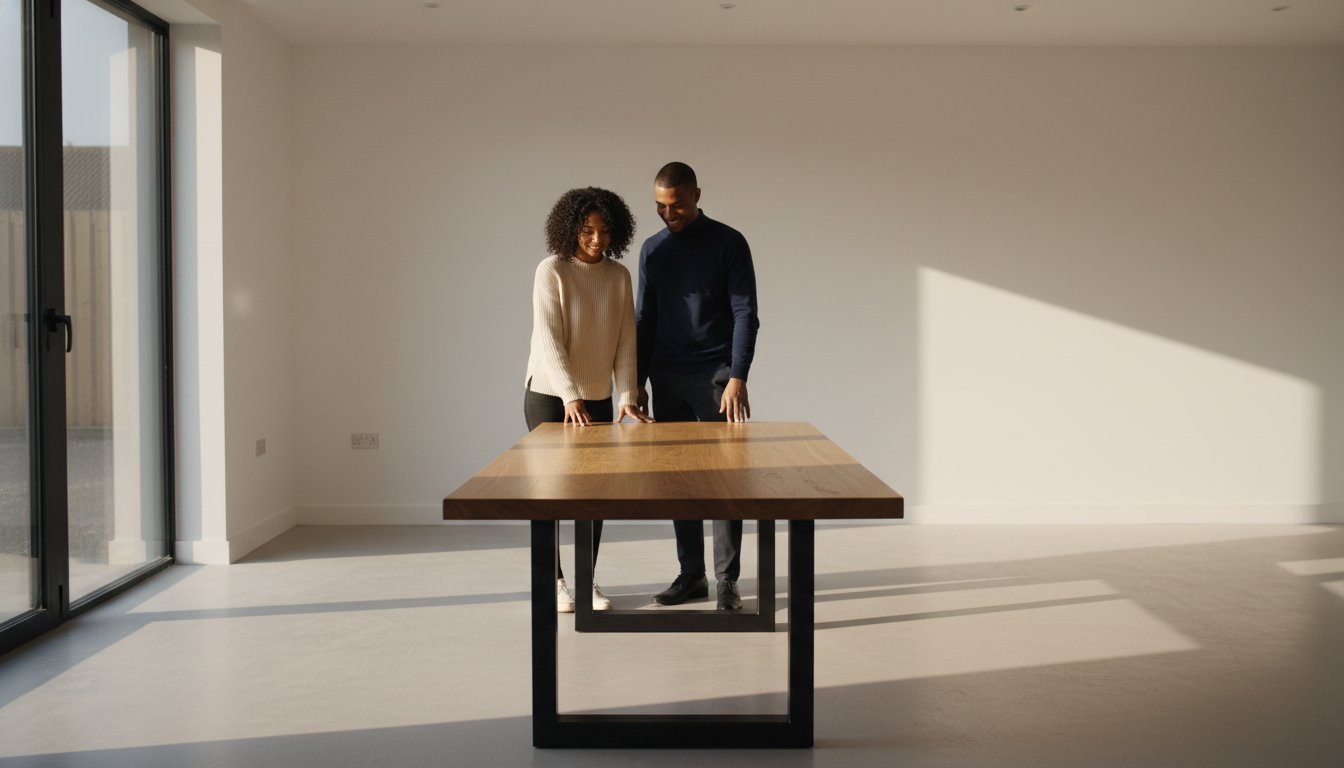
What if the pristine, white canvas of your brand-new property isn’t just an invitation to fill space, but a call to find its soul? Walking through a house that still smells of fresh paint is exhilarating, yet many homeowners quickly realize that those perfect, angular rooms can feel somewhat clinical and detached. You likely feel the weight of an empty floor plan and the pressure to furnish every room at once, often worrying whether mass-produced items will truly fit the unique scales of modern architecture. Learning how to choose furniture for a new build home is about more than just filling a footprint; it’s about anchoring your life in pieces that possess both a history and a future.
We believe a home should be a sanctuary of warmth rather than a showroom of temporary fixes. In this guide, you’ll discover how to transform a quiet house into a soulful home by selecting handcrafted, enduring furniture that stands the test of time. We’ll explore the practical steps of measuring for modern dimensions and the wisdom of a phased approach to decorating. You will learn how to prioritize quality over quantity, ensuring you invest in tactile, artisanal pieces like a solid wood dining table or a bespoke desk that will serve as the backdrop for your family’s stories for decades to come.
Key Takeaways
- Escape the sterile “showroom” trap by learning to blend crisp modern architecture with natural textures that invite warmth and character into every corner.
- Discover how to choose furniture for a new build home by identifying a central ‘anchor piece’ that dictates the atmosphere and serves as the heart of your daily rituals.
- See why the superior insulation of modern properties makes them ideal for solid wood furniture, which thrives in stable, well-regulated indoor climates.
- Apply the 90cm clearance rule to master spatial flow, ensuring your living areas feel open and breathable rather than cluttered by mismatched scales.
- Learn how bespoke customization, from timber selection to leg style, allows you to overcome the limitations of standard sizing in unique modern floor plans.
Understanding the New Build Blank Canvas: Opportunity vs. Overwhelm
Walking into a new build for the first time feels like stepping into a fresh notebook. The walls are impeccably white, the corners are perfectly square, and the light reflects off surfaces that haven’t yet seen a single scratch or spill. This pristine environment is an incredible opportunity, but it often carries a hidden weight. Without the architectural quirks of an older property, these spaces can feel clinical, almost like a hospital wing rather than a family sanctuary. Many homeowners fall into the psychological trap of the ‘showroom’ look, where they try to match the perfection of the walls with generic, catalog-style furniture. This approach often leaves the home feeling hollow and temporary.
To avoid this, we must define the soul of a house through textures rather than just colors. While a paint swatch might change the mood of a wall, a heavy oak table or a tactile breakfast bar changes the mood of the entire room. When you are considering how to choose furniture for a new build home, remember that your first furniture choices are actually more important than your paint choices. The furniture dictates the flow, the function, and the physical warmth of the space. It provides the grounding that a vast, empty room desperately needs.
The ‘Blank Slate’ Mindset
We often encourage our clients to view their new build as a gallery for meaningful objects. It’s tempting to want every corner filled by the end of the first month, but a home grows with you. By resisting the urge to buy everything at once, you allow yourself the time to identify the high-traffic emotional zones where your family will truly spend their time. These are the spaces where a dining table becomes more than a surface; it becomes a site for human connection. Understanding the fundamental principles of interior design helps in recognizing that space planning is about how you feel within the room, not just how much you can fit into it. Focus on the areas where you’ll share coffee in the morning or gather for Sunday lunch. These are the hearts of your home.
Quality vs. Convenience: The Flat-Pack Pitfall
In the rush to make a house liveable, many people turn to temporary, mass-produced solutions. However, there is a hidden cost to choosing disposable furniture for a permanent home. Flat-pack items often lack the physical weight and character needed to ground a modern room. In contrast, a handcrafted piece, such as a solid European oak table, adds immediate architectural interest. The natural variation in the wood grain breaks up the monotony of “perfect” walls. Choosing longevity over disposable trends also honors our environmental responsibility, ensuring that the pieces we bring into our homes are built to last for generations. When you decide how to choose furniture for a new build home, look for materials that have a history and a future. A single, well-made piece of furniture will do more for your room’s atmosphere than a dozen cheap alternatives ever could.
The ‘Anchor Piece’ Philosophy: Why the Dining Table is Your Home’s Heart
Many interior guides suggest checking off a long list of items as soon as you receive your keys. We suggest a different, more intentional path. When you consider how to choose furniture for a new build home, focus on the anchor piece first. This is the single item that dictates the room’s atmosphere, acting as a gravitational pull for all other design choices. In the context of a modern, open-plan property, that anchor is almost always the dining table. It provides a visual weight that grounds the airy, often characterless spaces of a new build, transforming a transition zone into a purposeful room.
In a modern household, the dining table is rarely just for dining. It’s the morning workstation, the evening homework hub, and the weekend gathering site. Because it’s the most used surface in your home, it deserves a level of quality that can withstand daily life while maintaining a quiet, aesthetic presence. Researching the best methods for evaluating furniture quality shows that the integrity of the joints and the density of the timber are what allow a table to age gracefully. A well-crafted table doesn’t just sit in a room; it absorbs the history of your family, from the faint indent of a child’s drawing to the shared laughter of a holiday feast.
Choosing Your Signature Style
In an open-plan new build, the architecture is often linear and sharp. Spider Leg Dining Tables work beautifully here. Their intricate, central base creates a sense of movement and artisanal flair without blocking sightlines or making the room feel cramped. If you prefer a more grounded, traditional feel, X-Frame or U-Frame designs offer a larger visual footprint. These styles act as a sturdy counterpoint to the minimalist lines of a modern interior, providing a sense of permanence that new builds sometimes lack. The choice of leg design isn’t just about support; it’s about defining the ‘visual footprint’ of your home’s most social space.
Investing in the Centrepiece First
It’s a common mistake to prioritize the sofa. While comfort is vital, the table is the true functional center. Build your living area around this surface. When you are deciding how to choose furniture for a new build home, consider how your timber choice interacts with your flooring. A Solid European Oak top brings an organic, golden warmth that softens the cool tones often found in new build tiles or laminates. Walnut, with its deep, chocolatey hues, offers a sophisticated contrast that feels instantly established. If you’re unsure which timber species or frame style will best ground your new space, you can always speak with our workshop team for guidance on creating your perfect anchor.

Selecting Materials for Modern Living: Solid Wood in High-Efficiency Homes
Modern properties are marvels of thermal efficiency, designed to trap heat and maintain a consistent internal temperature. While this is excellent for your energy bills, it creates a specific “dry home” environment that differs significantly from the drafty, fluctuating climates of older houses. Some might assume this makes natural materials a risky choice, but the truth is quite the opposite. High-efficiency homes provide a stable, well-regulated backdrop where premium timber can truly thrive. Unlike synthetic veneers that can peel, blister, or delaminate when exposed to consistent central heating, solid wood is a cohesive, living material that possesses a natural resilience.
When you are deciding how to choose furniture for a new build home, you aren’t just selecting a silhouette; you’re choosing a tactile experience. The sensory depth of a natural grain, with its unique knots and ripples, offers a warmth that synthetic alternatives simply cannot replicate. Quality craftsmanship is what makes this possible in a modern setting. Our workshop uses specific joinery techniques, such as floating tops and traditional tenons, which allow the timber to “breathe.” This intentional design accommodates the microscopic expansion and contraction that occurs as seasons change, ensuring the piece remains structurally sound for decades.
The Beauty of Solid European Ash and Oak
For homeowners aiming to soften the crisp lines of a new build with a lighter, Scandi-inspired aesthetic, Solid European Ash is an exceptional candidate. Its pale, creamy tones and bold, athletic grain patterns bring a sense of airiness to a room. In contrast, Solid European Oak remains the gold standard for durability in high-use family areas. Its dense structure and timeless golden hues provide a grounding presence that feels instantly established. These natural surfaces interact beautifully with modern LED lighting, catching the light in ways that highlight the intricate, organic character of every hand-finished plank.
Maintenance and Longevity
Keeping solid wood healthy in a centrally heated environment is a straightforward process of nourishment. A simple routine of applying high-quality oils or waxes creates a protective barrier that locks in moisture and prevents the fibers from becoming brittle. While mass-produced furniture shows its age through irreparable chips and worn-down plastic edges, handcrafted wood develops a rich patina. Every minor mark from a spilled drink or a slipped pen becomes part of the home’s narrative. By choosing longevity over disposable trends, you’re investing in furniture that won’t need replacing in a few years. Instead, these pieces become heritage items, gaining soul and beauty as they age alongside your family.
Measuring for Flow and Function: Avoiding the ‘Showroom’ Scaling Trap
Every new build comes with its own unique geometry. The “Golden Rule” of clearance is 90cm. This is the minimum distance needed between the edge of a table and a wall or another piece of furniture. It allows for a person to sit comfortably while leaving enough room for someone else to pass behind them. In open-plan designs, these gaps become the invisible hallways that guide movement through your home. Without this breathing room, even the most beautiful room can feel cramped and poorly planned.
Visual weight is just as important as physical dimensions. A heavy table with a thick top and substantial metal legs possesses a significant presence. It needs space to “breathe” so it doesn’t overwhelm the room. Learning how to choose furniture for a new build home requires you to look beyond the numbers on a product page and imagine the physical impact of the piece in your specific light. For narrower dining areas, Matching Benches offer a clever solution. Unlike chairs, benches can be tucked entirely under the table when not in use, instantly clearing the visual path and making a room feel larger.
We always recommend the ‘Tape Measure Test.’ By laying down strips of masking tape to represent the outer edges of your chosen piece, you can physically walk around the footprint. It’s a simple, honest way to see how the piece interacts with your daily life before the delivery truck arrives. It ensures that the scale feels intentional rather than accidental.
Scaling for Open-Plan Living
Open-plan living is about defining zones without the help of walls. The dining table often acts as the boundary between the kitchen and the lounge. When choosing a length, consider how your table interacts with kitchen workflows. For those with islands, getting the height right for Breakfast Bars is equally vital. Standard heights usually sit around 90cm or 104cm; choosing correctly ensures your morning coffee feels relaxed and integrated into the room’s flow.
The Multi-Functional Room
Many modern rooms must serve dual purposes. A dining table often doubles as a home office desk, so choosing a surface with enough depth allows you to work comfortably without sacrificing family space. Interestingly, “oversizing” your table can sometimes make a smaller room feel grander. It suggests a confidence in the space and creates a clear, intentional focal point that anchors the transition zones between the kitchen and the lounge.
If you’re struggling to visualize how a specific size will sit in your new home, get in touch with our workshop team for expert advice on bespoke dimensions and spatial planning.
The Bespoke Advantage: Why Handcrafted Furniture Completes a New Build
While mass-market retailers often prioritize “quick delivery” at the expense of character, we believe the best things are worth the wait. When you understand how to choose furniture for a new build home, you quickly realize that a table arriving in days is often a table that will be replaced in years. Handcrafted furniture is about more than just filling a room; it’s about honoring the space you’ve worked so hard to acquire. By choosing a bespoke piece, you are choosing a story. You are selecting the specific timber, the exact leg style, and the precise edge profile that speaks to your personal aesthetic, bridging the gap between a generic house and a soulful home.
At The Mensa Table Company, our commitment to artisanal quality stands in direct opposition to the frantic speed of the flat-pack industry. We value the slow, deliberate process of the workshop, where every joint is checked by hand and every grain pattern is considered for its visual contribution to the whole. This manual approach creates a physical and emotional connection between the creator and the end user. It ensures that the furniture you bring into your new property possesses a quiet confidence and a sense of heritage that mass-produced items simply cannot replicate.
Tailoring to Your Specific Space
Modern floorplans are rarely as “standard” as they appear on paper. A few centimeters can be the difference between a cramped walkway and a graceful, inviting flow. Our workshop specializes in tailoring pieces to these specific architectural nuances. Whether you need a slightly narrower profile to fit a transition zone or a grand, expansive surface in Solid Black Walnut to ground a high-ceilinged room, the bespoke process ensures a perfect fit. This collaboration allows you to realize a vision that matches the unique spirit of your property, turning a blank canvas into a curated gallery of your life.
The Final Touches
A home doesn’t need to be cluttered to feel full. Often, a single, exceptional piece of furniture provides enough warmth to carry an entire room, removing the need for excessive “decor” that can feel like an afterthought. Once your dining table is established as the heart of the home, you can complement it with a handcrafted coffee table or a sturdy, artisanal desk. These pieces work in harmony, creating a consistent narrative of quality that flows from the kitchen to the lounge. It’s the final, vital layer that transforms a new build into a sanctuary where shared experiences and social rituals can truly flourish.
Ready to find the perfect anchor for your new space? Explore our range of handcrafted dining tables and begin the journey of creating a home that lasts for generations.
Transforming Your Space into a Lasting Sanctuary
The journey of learning how to choose furniture for a new build home begins with a single, intentional decision to prioritize soul over speed. By selecting a central anchor piece and respecting the natural flow of your floor plan, you move away from the clinical feel of a showroom and toward a space that feels deeply personal. We’ve seen how the warmth of solid timber and the precision of bespoke scaling can ground even the most minimalist modern room, providing a tactile foundation for your family’s future rituals. It’s about creating a sanctuary that feels established from the very first day.
Our workshop is dedicated to this manual approach, creating pieces that are handcrafted in the UK using premium solid European timber options. Whether you require bespoke sizing to fit a specific alcove or a signature leg design to match your architecture, we’re here to help you realize that vision. Each item is built with the quiet confidence that it’ll age alongside you, gaining character with every passing year. Discover your home’s new centrepiece in our handcrafted collection and take the first step toward a home that truly reflects who you are. Your new build is ready to become a legacy.
Frequently Asked Questions
When is the best time to order furniture for a new build home?
You should ideally place your order 8 to 12 weeks before your move-in date. Because our workshop focuses on manual production rather than mass assembly, crafting your table requires a deliberate pace. Ordering early ensures your anchor piece arrives as you transition into your new space, saving you from the frustration of living with temporary, uninspiring alternatives.
How do I make a clinical new build feel warmer and more rustic?
Focus on introducing organic textures that contrast with the sharp, white angles of a modern property. A solid wood table with a natural grain immediately softens a room’s atmosphere. By layering natural materials like oak or walnut against clinical surfaces, you create a sense of heritage and warmth that makes the house feel lived-in and welcoming.
Should I buy a 6-seater or 8-seater table for a modern open-plan room?
A 6-seater is often the more versatile choice for modern open-plan rooms where walkway flow is essential. If you frequently host large gatherings and have the 90cm clearance required for movement, an 8-seater provides a more dominant presence. Many homeowners find that a 6-seater paired with matching benches offers the perfect balance of seating capacity and spatial freedom.
Does solid wood furniture warp in highly insulated new build homes?
No, properly seasoned solid wood won’t warp; it actually thrives in the stable temperature of a well-insulated home. When considering how to choose furniture for a new build home, look for craftsmen who use traditional joinery. Our tables are designed to “breathe,” allowing the timber to move microscopically without compromising the structural integrity of the piece.
How do I define a dining area in a room with no internal walls?
You can define a dining zone by using the visual weight of a substantial table and the 90cm clearance rule to create “invisible” boundaries. A piece like the Spider Leg Dining Table acts as a gravitational center, naturally separating the kitchen from the lounge. This spatial planning is a core part of how to choose furniture for a new build home that feels intentional rather than cluttered.
Is it better to buy a matching furniture set or mix and match pieces?
Mixing curated pieces usually results in a more authentic and established home than buying a complete matching set from a catalog. While a matching bench provides a clean and functional look alongside your table, introducing different textures through chairs or a unique coffee table adds layers of personality. This approach avoids the “showroom” trap and makes your home feel unique to your journey.
How do I measure for a dining table if I don’t have the keys yet?
Request a detailed floor plan from your developer to get a baseline, but wait until your “snagging” visit to take final measurements. Developers’ plans are useful for initial research, but physical reality can vary by a few centimeters. Once you have access, use the “tape measure test” with masking tape on the floor to ensure your chosen table length allows for comfortable movement.
Why is handcrafted furniture better than high-end flat-pack options?
Handcrafted furniture offers a level of structural integrity and tactile beauty that even high-end flat-pack options can’t replicate. While mass-produced items rely on veneers and cam-locks, our tables are built from solid European timber using traditional methods. This commitment to quality ensures your furniture becomes a site for human connection and a lasting investment that won’t need replacing in three years.

Leave a Reply