
A family-friendly finish can protect a table, but no coating makes it completely child-proof. When choosing a child-proof finish for a kitchen table, look for clear guidance on safe use once cured, then consider the care it needs and the protection it offers. Hardwax oil and water-based polyurethane are durable, water-resistant options, but neither makes spills, scratches or hot dishes harmless.
It’s understandable to want a surface that can handle mealtimes, marker mishaps and everyday cleaning while retaining the feel of the wood beneath. This guide explains what “safe once cured” means, compares practical finish types, and shows how to assess protection from spills, scratches, heat and moisture. You’ll have a clearer basis for choosing a finish that suits your table and family routine.
Key Takeaways
- Compare finishes by how they handle spills, scratches, heat and moisture, as well as how easily they can be cleaned or repaired.
- Choose a finish described as safe once fully cured, and distinguish that from labels such as food-safe or non-toxic.
- Learn how low-VOC options may suit family spaces, while remembering that finish performance and ventilation matter too.
- Explore what ceramic-infused and UV-cured coatings are designed to offer, and how their performance differs from traditional finishes.
- Weigh hardwax oil against milk paint and its protective topcoats, considering both the wood’s natural feel and the care the surface will need.
Durable table finishes and resistance to spills, scratches, heat and moisture
Compare finishes by the everyday damage they resist, such as food spills, crayon marks, warm dishes and damp cleaning. Solid wood also needs a finish suited to regular use, not just an attractive first impression.
To care for a finished kitchen table, wipe spills promptly with a damp cloth and follow the finish maker’s cleaning instructions. Hardwax oil can often be spot-repaired, while damage to varnish may require more extensive refinishing.
-
Select a Durable Table Finish
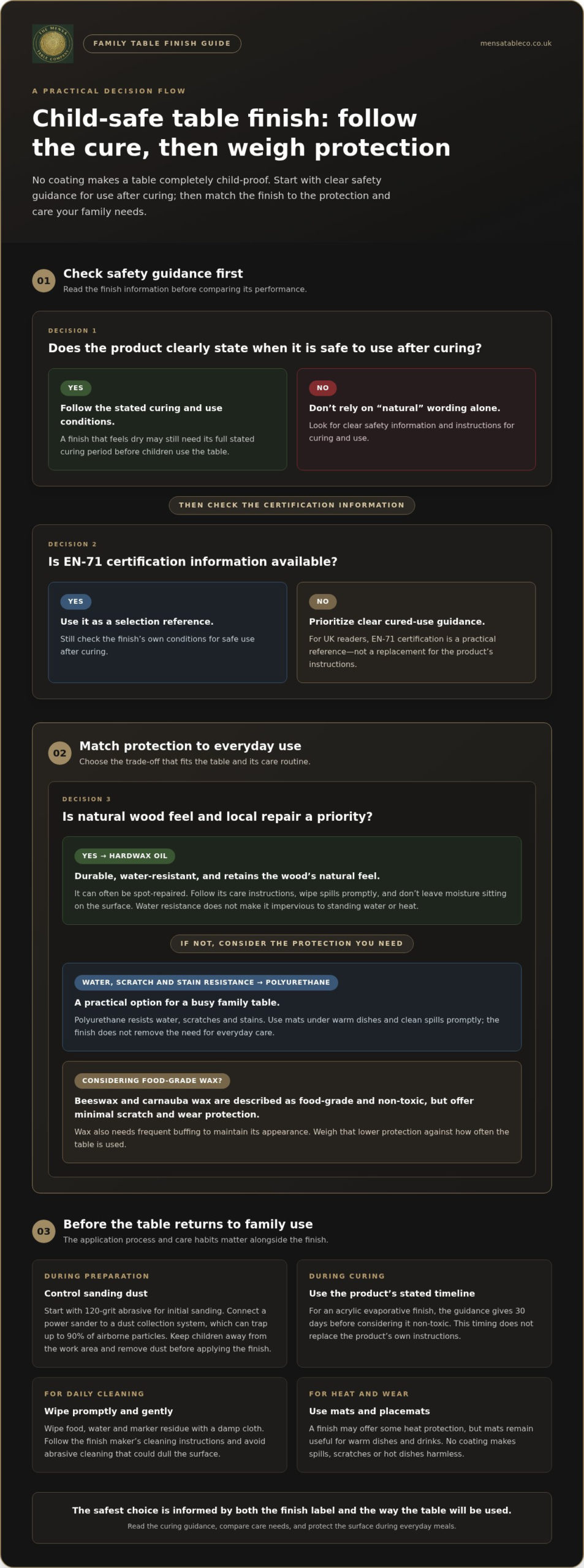
Choose a finish intended for frequently used furniture, then compare its resistance to spills, scratches, heat and moisture. Polyurethane resists water, scratches and stains, making it a practical option for a busy family table. Still, use mats under warm dishes and clean spills promptly. Some traditional finishes can cloud when exposed to certain cleaners, so don’t assume every household spray is suitable.
-
Consider Hardwax Oil for Water Resistance
Consider hardwax oil if you want a durable, water-resistant finish that retains the wood’s natural feel. It can be spot-repaired, which may help with localised wear on a frequently used table. Read the care instructions before choosing it, and don’t leave moisture sitting on the surface. Water resistance helps protect the wood, but doesn’t make the table impervious to standing water or heat.
- Match the finish to the table’s material and daily use. Oak and walnut can benefit from penetrating sealers or oil-based polyurethane for moisture and wear protection. Maple and birch pair with water-based polyurethane, while pine can use polyurethane or a stain-and-sealant product to help defend against dents and scratches. The wood and finish work together, so consider both when selecting family furniture.
- Consider heat resistance before setting down hot cookware. A table finish may offer some protection, but mats remain useful for warm dishes. Wax offers minimal scratch protection and needs frequent buffing to maintain its appearance. For everyday meals, choose a finish suited to routine spills and cleaning, then use placemats to reduce direct contact and wear.
- Compare a finished solid-wood top with sintered stone if durability is your main concern. Sintered stone is made by heating natural minerals to temperatures exceeding 1200 degrees and compressing them under intense pressure. That manufacturing process creates a hard surface, while a wood table’s performance depends on its finish and care. Choose according to the feel, upkeep and daily demands you prefer.
- Check the finish after regular family use, particularly around eating and activity areas. Wipe food, water and marker residue with a damp cloth, and avoid abrasive cleaning that could dull the surface. Use coasters or placemats for hot dishes and drinks. If a hardwax-oiled area becomes worn, a spot repair may address the patch; for other finishes, follow their specific maintenance instructions.
What wood finish is safe for kids?
Choose a finish based on its safety information after curing, not on a “natural” label alone. The coating, sanding process and items stored nearby all affect everyday protection.
For UK readers, practical guidance recommends looking for finishes certified under EN-71 standards for children’s toys. Treat this as a selection reference, and prioritise clear information that the finish is safe once cured.
-
Choose a Non-Toxic or Food-Safe Finish
Choose a coating described as non-toxic or food-safe, then read its instructions for curing and use. “Natural” doesn’t automatically mean suitable before a finish has cured. Beeswax and carnauba wax are described as food-grade and non-toxic, but provide minimal protection against scratches and wear. For a frequently used table, weigh that trade-off against how the surface will be used.
-
Review Coating Safety Guidance
Look for EN-71 certification information when comparing child-safe coatings, and check the stated conditions for safe use. A finish’s cured state matters: allow it to cure as directed before children use the table. For an acrylic evaporative finish, the guidance gives 30 days before considering it non-toxic. Don’t treat that timing as a substitute for the product’s own instructions.
- Put breakable items and sharp utensils out of children’s reach before meals or play. Store glassware, knives and small decorative pieces in a closed cupboard rather than on a low shelf nearby. A resistant tabletop helps with routine marks, but can’t make sharp objects or fragile items safe to handle. Keep the table clear when children are moving around it.
- Test any silicone guard or adhesive on a small, hidden area before fitting it to visible wood. This is particularly important on delicate oil or hardwax finishes, which adhesives may affect. Standard double-sided tape can pull away a table’s finish when removed. Check the test spot afterwards, and use the same approach elsewhere only if the finish remains intact.
- Control dust if sanding is needed before applying a coating. Start with 120-grit abrasive for initial sanding, and connect a power sander to a dust collection system. Such a system can trap up to 90% of airborne particles. Keep children away from the work area, and remove sanding dust before applying the finish so particles don’t become trapped in the surface.
- Follow the coating instructions during application and curing rather than relying on touch alone. A finish that feels dry may still need its stated curing period before use. Keep finishing supplies away from children, and return containers to secure storage after each step. This careful process supports safer use while preserving the wood’s everyday appearance.
Low-VOC and family-friendly finish options
Compare emissions information alongside a finish’s practical protection, then arrange the dining space to reduce everyday hazards.
- Check the finish label for information about volatile organic compounds (VOCs) and use the stated application guidance. Some imported furniture finishes release VOCs and chemicals into the home after purchase. A low-VOC label can help you compare products, but it doesn’t by itself describe scratch resistance, moisture protection or the conditions for safe use. Consider those features separately.
- Compare water-based and oil-based polyurethane if you want a clear protective coating. Water-based polyurethane is described as durable and water-resistant, with lower VOC emissions than oil-based polyurethane. Read the product guidance for application and curing, and keep children away while the finish is being applied. The lower-emission option still needs to suit the table’s everyday use.
- Consider 100% acrylic enamel as a house-paint option for children’s furniture. It can provide a painted surface when you want colour rather than visible wood grain. Check the product’s suitability for furniture and follow its instructions for use and curing. A bright finish can shape a dining space, but colour alone says nothing about resistance to spills, wear or cleaning.
- Plan for curing before returning a table to family use. Follow the finish maker’s instructions rather than relying on whether the surface feels dry. Move children’s dining activities away from the work area while coating and curing take place. This helps limit contact with wet finishes and keeps application materials away from everyday household hazards.
- Arrange the dining space with children’s movement in mind. Rounded edges can reduce the chance of injury from bumps, while transparent or wood-tone edge guards can blend with the finish. Test silicone guards on a hidden patch first, particularly on delicate oil or hardwax finishes. Avoid sticking standard double-sided tape directly onto visible wood, as it can pull away the finish.
- Keep the dining area easy to clean and move through. A transparent PVC table mat can protect a child’s place from scratches and water rings, but remove it periodically to reduce moisture buildup. Chair-leg caps or felt pads can protect floors and limit fast chair movement. Store small décor and sharp utensils out of reach, and supervise children as they learn to walk.
Ceramic-infused and UV-cured finishes
Compare these modern coating types by their stated performance and care requirements. Their names describe different features, but don’t establish child safety or suitability for every kitchen table.
- Understand the terms before comparing finishes. “Ceramic-infused” describes a coating containing ceramic material; “UV-cured” describes curing using ultraviolet light. A finish may use one feature or both, so the terms aren’t interchangeable. Read the product description to understand what it identifies, then look for specific claims about cleaning, moisture and wear.
- Decide whether the performance you need warrants considering a high-performance coating. For the demanding coating performance described in this guide, modern high-performance coatings are needed rather than oils, waxes or lacquers. That doesn’t mean every ceramic-infused or UV-cured finish offers identical results. Match the named coating’s documented properties to your table’s likely spills, marks and daily cleaning.
- Read the manufacturer’s instructions for the exact surface and material before choosing a finish. Look for stated resistance to spills, scratches, heat and moisture rather than relying on a label such as “ceramic” alone. Check the cleaning guidance too. A kitchen table wiped with a damp cloth has different practical demands from furniture used occasionally or kept mainly for display.
- Assess the whole table, not only its flat top. Inspect corners, edges and joints, where frequent contact and wiping can reveal differences in coating coverage. Check how the finish handles routine cleaning and which products its instructions permit. Surface performance matters most when the coating extends across the parts children touch and the areas where food or drink lands.
- Compare curing and use instructions before putting the table into family service. UV curing describes the method used to cure a coating, but the term alone doesn’t say when a particular finished table is ready to use. Follow the care directions for the named finish. Keep food, drink and cleaning products off the surface until its instructions allow normal use.
- Choose by weighing documented performance against the feel and maintenance you want. Ceramic-infused and UV-cured finishes belong to the modern high-performance coating category, while oils, waxes and lacquers take a different approach. Don’t treat a technical name as proof that a coating is child-safe. Compare its specific safety and care information with your family’s everyday use.
Hard wax oil and milk paint
Water-based polyurethane and hardwax oil are both durable, water-resistant finishes. Polyurethane suits a table that needs a protective coating, while hardwax oil can be spot-repaired. Choose according to the surface feel and upkeep you prefer.
- Choose hardwax oil if you want to retain the wood’s visible grain and tactile character. It provides a durable, water-resistant finish and allows localised spot repairs when wear appears. That may suit a dining table where some areas see heavier use. Follow the product’s application and care instructions, and wipe spills rather than leaving moisture on the surface.
- Choose water-based polyurethane if you prefer a durable protective coating with water resistance and lower VOC emissions than oil-based polyurethane. It can suit a table exposed to meals, cleaning and children’s activities. Compare the finish’s care directions with your household routine. Neither polyurethane nor hardwax oil makes a table immune to scratches, heat or standing liquid.
- Pair milk paint with a protective topcoat if you want a painted finish. Milk paint can change the colour while leaving the table’s shape and craftsmanship visible. A natural wax or oil topcoat improves protection against moisture and wear. Without that added layer, the painted surface may be less suited to repeated spills and everyday wiping.
- Consider the topcoat’s upkeep before choosing beeswax or carnauba wax. These waxes are described as food-grade and non-toxic, but offer minimal protection against scratches and wear. Beeswax takes 24 hours to cure, so keep the table out of use during that period. Wax can suit a decorative surface, but frequent buffing is needed to maintain its appearance.
- Compare repair needs as carefully as initial protection. A hardwax-oiled patch can be spot-repaired, potentially preserving more of the surrounding finish. Polyurethane is durable, but damaged areas can be more difficult to repair. For a busy family table, consider where marks are likely, how visible a local repair might be, and whether you prefer periodic care or a more coated surface.
- Test your cleaning routine on a small, hidden area before applying a finish or adhesive guard across the table. This matters especially with oil and hardwax finishes, which can react poorly to some adhesives. Follow the finish maker’s instructions for cleaning, curing and maintenance. This practical check helps you choose a surface that suits your home rather than relying on a label alone.
If you’re choosing a solid-wood dining table to suit your home and finish preferences, talk with our team about your table.
The Mensa Table Company: The Mensa Dining Table
The Mensa Table Company makes dining tables for shared meals, homework and everyday moments around the kitchen table. If you’re choosing a table alongside a family-friendly finish, consider how the top will be used and cared for, then match those needs with the finish guidance in this article.
The Mensa Dining Table, Spider Leg Dining Table, X-Frame Dining Table and U-Frame Dining Table offer distinct designs for a dining space. Choose based on your room and how your household gathers. Finish selection is a separate decision, guided by the protection and upkeep you want for the wood surface.
For help exploring a dining table, contact The Mensa Table Company.
Choose a table that fits your family’s next chapter
A child-proof finish for a kitchen table is one part of creating a surface ready for everyday family life. Consider how the table will be used, the care you’re comfortable giving it, and the atmosphere you want in the room. A well-chosen table can become the setting for shared meals, conversations and daily rituals.
The Mensa Table Company offers The Mensa Dining Table, The Spider Leg Dining Table and The X-Frame Dining Table, each with a distinct design for the dining space. As you choose a table, consider the finish and care routine you want so the wood can take its place naturally in your home.
Contact The Mensa Table Company to discuss your dining table and take the next step towards a welcoming place for family life.
Frequently Asked Questions
What finish is safest and most durable for a kitchen table used by children?
Choose a durable finish whose instructions clearly describe safe use once fully cured. Water-based polyurethane offers water resistance and lower VOC emissions than oil-based polyurethane, while hardwax oil can be spot-repaired. No finish is completely child-proof, so weigh the table’s expected wear against the upkeep you prefer. A finish’s safety information and its resistance to daily use are separate considerations.
Which wood finishes are food-safe once fully cured in the UK?
Beeswax and carnauba wax are described as food-grade and non-toxic, but offer limited scratch and wear protection. For other finishes, rely on the maker’s stated suitability and curing instructions rather than assuming “natural” means food-safe. EN-71 certification, a standard for children’s toys, can be a useful reference when comparing coatings for a family table, but it doesn’t replace checking the finish’s own directions.
How long do common kitchen-table finishes take to dry and fully cure?
Drying intervals vary: water-based polyurethane has a stated 2-4 hours between coats, while shellac has 30-60 minutes. Tung oil needs 24-48 hours per coat, and beeswax takes 24 hours to cure. An acrylic evaporative finish may need 30 days before it’s considered non-toxic. These timings describe different stages or products, so follow the specific label for recoating and safe use.
How resistant are table finishes to spills, heat, scratches and cleaning products?
Resistance depends on the finish and the exposure. Polyurethane resists water, scratches and stains, while epoxy resin is described as highly resistant to heat, scratches, chemicals and moisture. Some traditional finishes can cloud when exposed to certain cleaners. Use placemats for hot dishes, wipe liquids promptly, and avoid abrasive or unapproved cleaning products that could dull or damage the surface.
How do you prepare and apply a child-safe finish to a wooden kitchen table?
Start with clean, bare wood and sand in stages, using 120-grit for initial sanding, 150-180-grit for mid-stage work, then 220-grit for the final pass. Remove dust before applying the chosen coating. Work according to its label, including ventilation, recoat intervals and curing instructions. Keep children away from the work area and don’t return the table to use before the stated safe-use stage.
How many coats of finish should you apply to a kitchen table?
There isn’t one coat count for every finish; follow the product’s application directions and recoat schedule. One acrylic finish schedule calls for two coats of sanding sealer before sanding, but that doesn’t establish the number of topcoats for other products. Apply coats evenly and allow the specified interval between them. Extra coats without guidance can affect the finish’s appearance or application.
What are the risks of VOCs and fumes when finishing furniture around children?
Some furniture finishes release VOCs and chemicals into the home after purchase, so take care during application and curing around children. Water-based polyurethane is described as having lower VOC emissions than oil-based polyurethane, but it still needs to be used as directed. Keep children out of the work area, ventilate as instructed, and wait until the product’s stated curing requirements are met before normal use.

Leave a Reply