A handmade desk doesn’t have one set price: its specification matters more than the label. If you’re asking “how much does a handmade desk cost UK?”, the answer depends on what you want made, from the material and dimensions to the design and functional details.
It’s understandable to want a clear figure before comparing options. But two quotes can differ because one covers a straightforward design and another includes more custom work. Comparing the totals alone may not show what you’re getting or whether an extra feature is worth paying for.
This guide explains the main factors that shape a handmade desk quote and how to compare made-to-order and off-the-shelf options fairly. It also shows what to measure and include in a brief, so you can focus on a desk that suits your space and working habits. The Mensa Table Company makes handcrafted, made-to-order desks, with custom sizes, finishes and leg styles available on request.
Key Takeaways
- To answer “how much does a handmade desk cost UK”, start with the specification: material, dimensions and requested details all shape a project-specific quote.
- Compare like with like by recording each desk’s materials, footprint, construction and included features alongside the price.
- Separate practical must-haves from preferences to keep your brief focused on what you’ll use.
- Measure your space, prioritise essentials and compare quotes against the same specification.
- A clear brief gives the maker a practical starting point for discussing a made-to-order desk.
How much does a handmade desk cost in the UK? Start with the specification
There’s no single UK-wide price for every handmade desk. If you’re searching “how much does a handmade desk cost UK?”, the answer depends on the material, dimensions, design and details you choose. A compact writing desk with a straightforward layout is a different project from a broad workspace designed to fit an alcove, even if both are described as handmade.
It’s more useful to understand the choices behind a quote than to rely on a general price range. Material affects what needs to be sourced and worked; size affects the material required and how the piece is planned; features such as storage or cable access may add work. These are the details to compare when weighing up quotes.
The terms handmade, made-to-order and bespoke can mean different things. Handmade describes how a piece is made or finished, but doesn’t tell you whether its design is fixed or tailored. Made-to-order generally means production begins after an order, while bespoke often describes a piece developed around an individual brief. Look at the actual specification rather than relying on the label.
Why the phrase ‘handmade desk’ does not define one price
A desk may follow an established design with hand-finishing, offer a choice of sizes or details, or be planned around a customer’s specific requirements. Each approach involves a different degree of choice and planning. The wider history and types of furniture offer useful context, but a quote depends on the particular desk and its specification.
Compare the design, not just the word “handmade”. Two desks intended for home working may differ in footprint, storage and construction, making their quotes difficult to compare directly. A made-to-order desk can still follow an established design; a bespoke commission may involve developing more of the design around the brief.
What a headline price can and cannot tell you
A starting figure describes the base specification attached to it. It may not represent a desk with different materials, dimensions or requested details. Before using it as a comparison, identify what it covers and which choices would change the quote. That helps reveal whether a price difference reflects the desk itself or different inclusions.
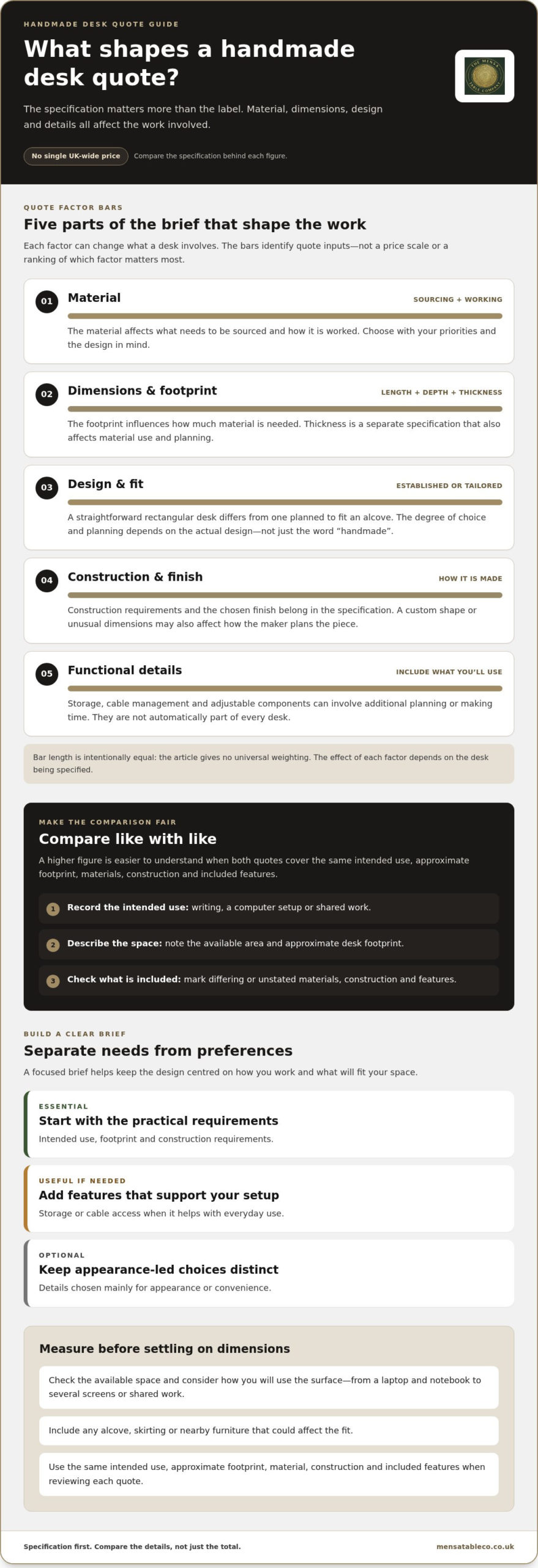
A like-for-like desk quote prices the same intended use, approximate footprint, materials, construction and included features. Use that as your comparison test. Note what each quote covers and mark details that differ or are unstated. Then you can decide whether a higher figure reflects a feature you value, rather than an option that doesn’t suit your space or routine.
- Record the intended use, such as writing, a computer setup or shared work.
- Describe the available space and approximate desk footprint.
- Separate essential features from preferences to keep the brief focused.
These details create a more useful basis for a project-specific quote. They also clarify whether you’re comparing an established design with selected options or a desk tailored more closely to your requirements.
Which handmade desk features influence the quote most?
A desk quote reflects more than the quantity of material used. Material, footprint, construction and requested details all shape the work involved. Considering each separately helps you decide where the specification needs to be precise and where a simpler choice may serve just as well.
Materials, dimensions and the amount of timber
Treat material, footprint and thickness as three distinct decisions. Material affects what must be sourced and how it is worked. The footprint, meaning the desk’s length and depth, influences how much material the design requires. Thickness is another specification that affects material use and how the finished desk is planned.
Custom dimensions can affect more than material use. A desk shaped to fit an alcove may need more planning than one with a straightforward rectangular footprint. An unusually deep or wide surface can also affect how the maker approaches its construction and handling. These details don’t automatically make one option better; they help explain why desks of different sizes may involve different work.
Measure the available space before settling on a size, then consider how you’ll use the surface. A desk for a laptop and notebook has different requirements from one for several screens or shared work. Include any alcove, skirting or nearby furniture that could affect the fit. When choosing a material, consider how it suits your priorities and the design rather than choosing by name alone. Wood species and grain quality dictate durability across all woodwork; whether evaluating indoor joinery or investing in handcrafted cedar outdoor furniture, understanding timber grades helps you assess long-term value.
Construction, finish and additional features
Once the basic form is clear, consider how the desk needs to function. Drawers, cable management and adjustable components are examples of features that can affect a quote, but they aren’t automatically part of every handmade desk. Additional joinery or mechanisms may involve more planning and making time, so include them when they solve a genuine need.
Separate functional requirements from preferences. A stable structure and a surface suited to your intended use are practical considerations; a particular finish or extra storage may depend on your room and habits. A clear brief makes that distinction visible, so the design can focus on what you’ll use.
- Essential: the footprint, intended use and construction requirements.
- Useful if needed: storage or cable access that supports your everyday setup.
- Optional: details chosen mainly for appearance or convenience.
The Mensa Table Company makes handcrafted, made-to-order desks, with custom sizes, finishes and leg styles available on request. Read about discussing a desk brief with our team when you’re ready to outline the space and features you have in mind.
How to compare handmade desk quotes without comparing unlike designs
A quote comparison is useful only if each figure describes a desk with broadly the same purpose and footprint. A compact writing desk and a larger workstation with extra storage aren’t equivalent, even if both are handmade. Keep the intended use consistent, then compare the details that explain what each price covers.
Build a like-for-like specification checklist
Before comparing figures, write down the desk you need. Include its intended use, approximate width, depth and height, plus workspace requirements such as room for a monitor or space to write. You don’t need a finished drawing: clear measurements and a description of the room make the comparison more meaningful.
Use the same checklist when reviewing desk options. A simple comparison sheet might include:
- Materials: the stated material for the desk and any differences in its components.
- Dimensions: width, depth and height, or the closest stated measurements.
- Construction: the described build and details that distinguish the design.
- Included features: storage, cable access or other details specified in the quote.
- Finish and extras: the stated finish, plus options priced separately or excluded.
Keep the feature list tied to your work and available room. If you need a clear writing surface, don’t compare it with a desk that includes storage you won’t use. If a quote doesn’t explain a detail, record it as unstated rather than assuming it matches another option. That gives you a fairer way to assess how much does a handmade desk cost UK without mistaking different specifications for different value.
Read the full quote, not just the desk figure
A headline figure is only one part of the comparison. Read the description and note whether custom work, accessories or delivery are itemised separately, included in the total, or not explained. The written quote should show what it covers and what would be an additional choice.
A lower headline figure isn’t directly comparable unless the specifications and included items match. If one quote describes a desk with a particular finish and another leaves the finish unstated, the totals may not describe the same finished piece. Check how each quote treats optional features and additional costs, then compare the same requirements rather than just the first number you see.
Record each quote under the same headings and keep the original descriptions beside your notes. Mark anything that differs, such as an omitted dimension or an accessory shown separately. This helps distinguish a genuine price difference from a difference in what’s being made.
If you’re preparing a brief for a made-to-order piece, see how to share desk requirements with our team as part of planning the space and use you have in mind.
How to set a realistic budget for a handmade desk
A realistic desk budget begins with a clear picture of the space and the work the desk needs to support. Set priorities before choosing options. This keeps attention on useful features and gives the maker a clear brief to work from.
Prioritise the workspace requirements first
Measure the available area and note anything that affects access or placement, such as doors, walkways, skirting and nearby furniture. Think through a typical working day: what equipment you use, how much surface area it needs and what else needs to fit. Separate non-negotiables from features you’d simply enjoy having.
- Define the space. Record the usable width, depth and height, allowing for doors, circulation and nearby furniture. Note whether the desk needs to fit an alcove or sit alongside existing pieces.
- Set your must-haves. Describe the work the desk will support and list requirements such as equipment space or a clear writing area. Keep the list to what you genuinely need.
- Choose options. Consider preferred materials, finish and additional features after the practical requirements are clear. Keep visual preferences separate from functional needs, and allow for a suitable design adjustment if it helps the desk fit your space or use.
- Compare itemised quotes. Use the same specification for each comparison. Review what each quote includes, what is priced separately and what remains unexplained.
This sequence makes “how much does a handmade desk cost UK?” easier to assess, because you’re comparing prices against a desk that meets your priorities. It can also help you avoid paying for details that don’t add practical value to your workspace.
Turn the brief into a useful comparison
Bring your measurements, intended use and prioritised features together in one concise specification. Use it consistently when reviewing desk options, and compare quotes against that brief rather than a general description. If a quote doesn’t explain a component or whether a choice is included, get the detail in writing so you can compare the full scope clearly.
You don’t need to settle every aesthetic choice before a conversation begins. A made-to-order desk can be discussed around your requirements, and a clear outline of what matters most gives the design process a practical starting point. Keep preferences flexible where possible, while being precise about the space and functions the finished desk needs to serve.
When you’re ready to turn your requirements into a project brief, learn how to discuss your handmade desk brief with the Mensa Table Company.
A handmade desk made around your brief: the Mensa Table Company
The Mensa Table Company makes handcrafted, made-to-order desks in its UK workshop. Custom sizes, finishes and leg styles are available on request. Starting with the intended use and the space helps shape a brief around the practical details that matter to your working day.
If you’ve been wondering “how much does a handmade desk cost UK?”, describe the desk you have in mind. A project-specific discussion can focus on the requirements behind the quote, rather than relying on a broad label such as “handmade”. The company’s approach centres on craftsmanship and furniture tailored to the customer, with the desk’s specification shaped by your brief.
What to include when discussing your desk
Start with the room and the desk’s everyday purpose. Is it for a home office, a shared space or a quiet corner for writing? Note the available area and anything that affects placement, such as an alcove, nearby furniture or a walkway. Approximate measurements are a helpful starting point, especially if the desk needs to fit a defined space.
Then describe what the desk needs to do. Mention essential dimensions, the equipment or materials you use, and any functional preferences that would make your routine easier. Divide your notes into essentials and preferences: the first group describes what the desk must accommodate, while the second captures choices you’re open to discussing. You don’t need to have every design decision settled.
- Room and available space: where the desk will sit and what may affect its placement.
- Everyday purpose: the work or activities it needs to support.
- Dimensions and function: the approximate size and practical requirements that matter most.
- Preferences: details you’d like to explore, kept distinct from must-haves.
From an initial idea to a considered desk choice
A clear brief gives the design conversation a useful centre. It keeps attention on practical fit, how the desk will be used and the craft involved in making a piece to order. If your needs are still taking shape, start with what you know: the space, the main task and the features that would make the desk work well for you. Other choices can be considered in context.
Thoughtful furniture earns its place through daily use as much as appearance. A well-described brief helps you consider whether a design serves your priorities and gives the maker a clearer understanding of the piece you’re imagining. The desk’s requirements provide a practical basis for discussing the project and its quote.
Ready to talk through your requirements? Talk to us about a handmade desk and share the space, purpose and details you have in mind.
Make space for a desk that feels like yours
“How much does a handmade desk cost UK?” is a useful starting point, but the next step is picturing how the finished piece will work in your home. A desk can support a morning routine, a creative practice or a shared family workspace. Let those everyday needs guide your choices.
At The Mensa Table Company, craftsmanship and furniture shaped around the customer are central to the approach to made-to-order desks. A considered brief can help turn an idea into a clearer direction, focused on a desk that fits your home and how you work.
Bring your notes, measurements and questions, even if the design is still taking shape. Begin a conversation about your handmade desk and take the next step towards a purposeful workspace.
Frequently Asked Questions
Is a handmade desk the same as a bespoke desk?
Not necessarily. “Handmade” describes how a desk is made, while “bespoke” usually suggests design choices developed for an individual buyer. The terms can overlap, so look at what the description means in practice: is the desk built to an established design, adapted from one or shaped around a specific commission? That distinction can affect the planning involved and what the quote covers.
Can I use a dining table as a desk?
Yes, a dining table can work as a desk if its height, footprint and leg position suit your chair and daily tasks. For instance, handcrafted pieces like the custom metal frame tables built by Chris’s Custom Creations offer sturdy, adaptable structures that easily double as expansive work surfaces. Consider the arrangement in the room: allow enough space to sit comfortably, move your chair and reach equipment without stretching. A dining table may offer a broad work surface, but it might not provide desk-specific storage or cable access, so consider how you’ll organise your work.
Does a handmade desk need special care?
Care depends on the desk’s material and finish, so don’t assume instructions for one piece apply to another. Follow care guidance for the particular desk and finish, especially before using cleaners or placing hot items on the surface. Wiping spills promptly and using a coaster are sensible precautions; the suitable cleaning method depends on the finish.
Should I choose a desk with drawers?
Choose drawers if you’ll regularly store items you want close at hand, such as stationery, notebooks or paperwork. If your work relies on a clear surface or you already use separate storage, drawers may take up space without adding much value. Consider what you need to reach while seated and whether drawers could interfere with your legs or chair. Let everyday use guide the decision, not the assumption that a desk needs storage.
Do handmade desks come with a chair?
Don’t assume a chair is included with a desk. The product description should clarify what the purchase covers; a chair shown in a room photograph may simply illustrate how the desk could be used. If you’re planning a whole workspace, consider chair height and legroom alongside the desk dimensions so the two pieces work comfortably together.
Can I request a particular desk size?
Yes. The Mensa Table Company makes custom-made desks, with custom sizes available on request. Share the available width, depth and height, plus details that affect placement, such as an alcove or nearby furniture. These measurements provide a practical starting point for discussing a desk suited to your room and working needs.

Leave a Reply