
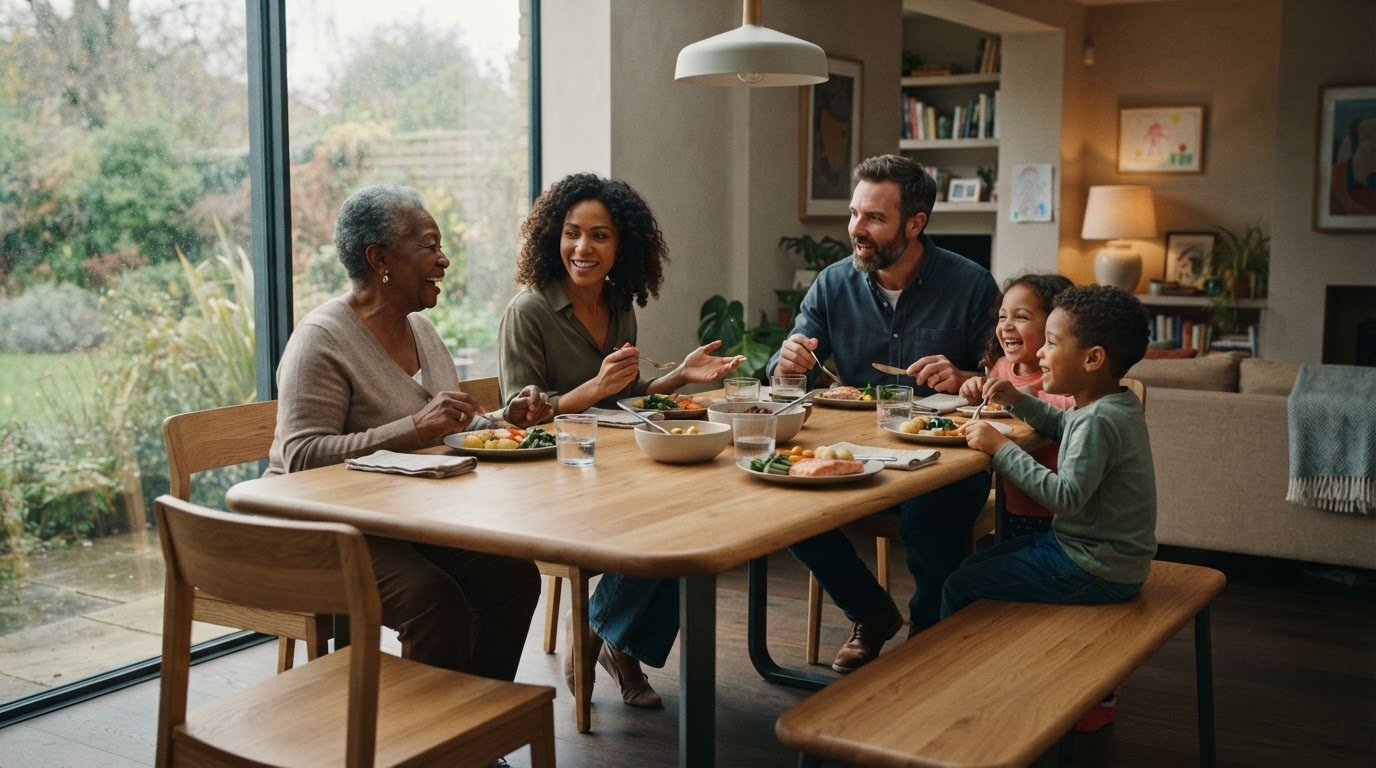
What if a more regular family meal starts with making the table a better place to gather? Busy schedules won’t always line up, and furniture can’t make them do so. But when people eat at different times or drift to other rooms, an uncomfortable or impractical dining space can make sitting down together feel harder than it needs to be. Understanding how a well-made table improves family meal times starts with that everyday difference.
Table quality won’t guarantee long conversations or shared dinners every night. But comfort, useful space and dependable construction can make sitting down more appealing. A thoughtfully made table can provide a familiar setting for simple meals and everyday family rituals.
This article looks at the qualities that make a table comfortable and practical for daily use, from seating and room to move to a surface that suits family life. It also offers realistic ways to make mealtimes more welcoming, even when schedules are busy.
Key Takeaways
- See how a well-made table improves family meal times by making the dining space more practical and welcoming for everyday use.
- Assess whether seating, table space and room to move suit the way your household gathers.
- Keep expectations realistic: a table can support shared meals, but routines and family dynamics matter too.
- Try a simple ritual, such as clearing the table and choosing one regular meal to share when schedules allow.
- Explore how a handcrafted dining table or matching bench could suit your home and the way your family prefers to sit.
How a well-made dining table gives family meals a place to happen
One person gets home as another is heading out; someone else eats later, perhaps with a plate balanced on the sofa. Family members may want to share more meals, yet work, school and other routines don’t always align. A dining table can’t clear everyone’s diary, but it can give the household a familiar place to come together whenever schedules do allow.
A well-made dining table is a thoughtfully constructed piece of furniture with a stable surface and practical comfort for everyday use. The table supports the occasion, but it doesn’t create the meal or guarantee connection. Understanding how a well-made table improves family meal times means seeing it as part of the setting, not a shortcut to perfect family life.
Why a regular place to gather can matter
A familiar dining place can make an invitation feel easy: “There’s food on the table,” rather than a formal event everyone has to prepare for. Sitting around the same surface gives people a shared focus, whether they’re catching up over a cooked meal, having a quick breakfast or sharing a simple supper. Conversation can come and go naturally. Not every meal needs to be long, elaborate or screen-free to feel worthwhile.
Meals have practical and cultural meaning beyond the food itself. For a concise overview of what makes a meal, see the Wikipedia entry, which describes meals as occasions shaped by food, time and social customs. A welcoming table is a practical setting for sharing a meal, not proof of a particular health or wellbeing outcome.
What ‘well-made’ means in everyday family use
For daily family life, quality is less about appearance alone and more about how the table serves its purpose. Look for a stable surface, sound construction and a design that works with the room. There should be enough usable tabletop space for the people eating, their plates and any shared dishes, without making it awkward to sit down or move around.
Dependable furniture can make repeated routines feel straightforward: setting places, sharing food, clearing away and returning the next day. A handcrafted dining table brings considered construction to that everyday role, but no table can promise a particular lifespan or transform a household’s schedule. The value lies in choosing a piece suited to real use, then letting it hold space for the meals that happen there.
How comfort, space and seating help everyone stay at the table
Even a welcoming meal can feel cramped if elbows meet, serving dishes have nowhere to go or someone has to shuffle sideways to reach a seat. Comfort is practical: people need room to settle, eat and move without turning every small action into an interruption. That’s one everyday way how a well-made table improves family meal times: it can make the space around a meal work better for the people using it.
Make room for people, plates and conversation
Think about how your household actually eats. Do you put shared dishes in the middle, keep drinks and condiments close by, or spread out breakfast items before everyone has finished? The tabletop needs to accommodate those habits while leaving enough personal space for plates and arms.
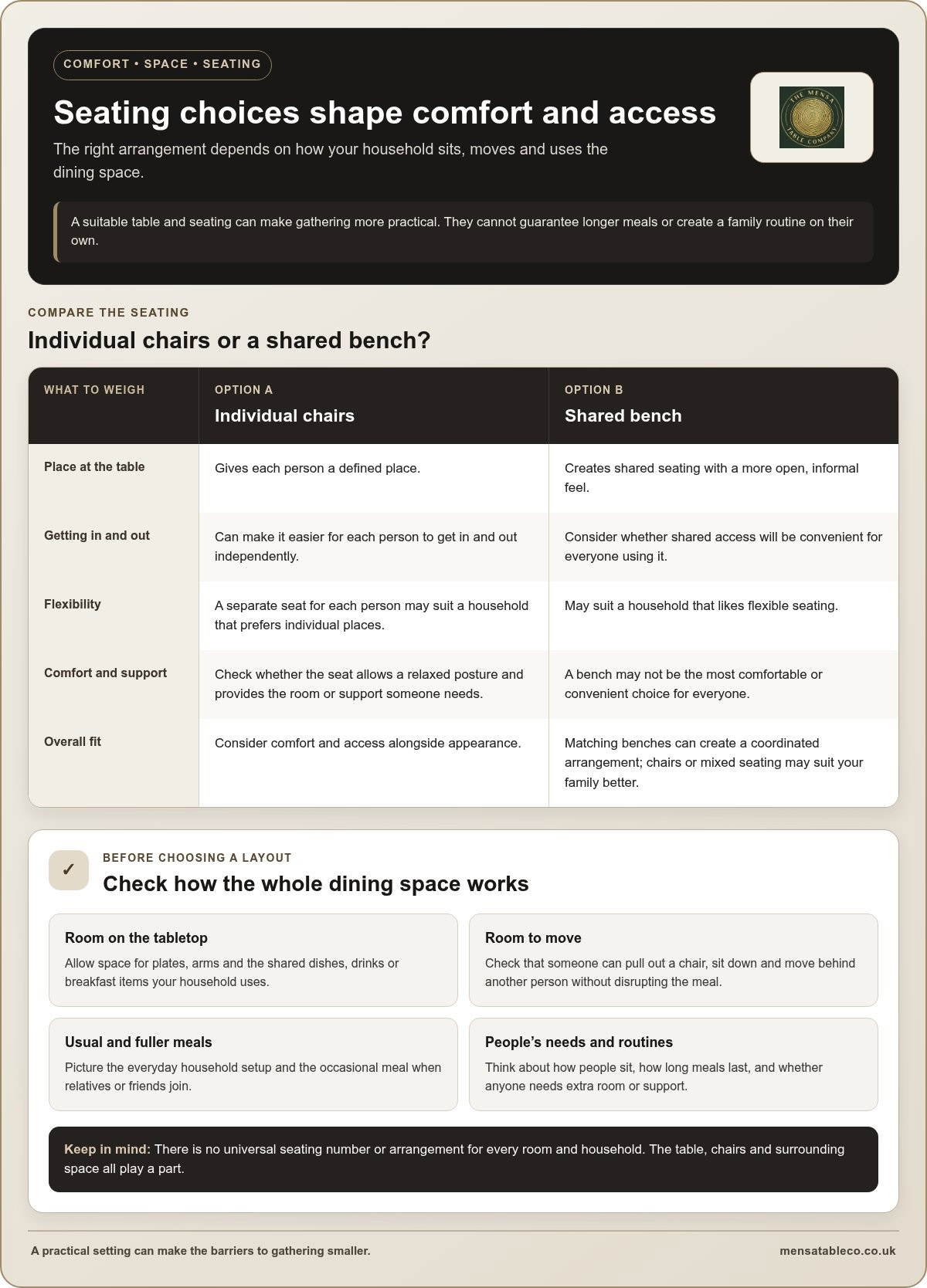
Room around the table matters, too. Check whether someone can pull out a chair, sit down and move behind another person without disrupting the whole meal. A layout that works for the usual household may feel different when relatives or friends join, so picture both a typical meal and the occasional fuller table before choosing a size or shape. There’s no universal seating number that suits every room: the table, chairs and surrounding space all play a part.
Choose seating that suits your household’s rhythm
Individual chairs give each person a defined place and can make it easier to get in and out independently. A shared bench can create a more open, informal feel and may suit a household that likes flexible seating, though it won’t be the most comfortable or convenient choice for everyone. Consider how people sit, how long meals usually last and whether anyone needs extra room or support. A seat that allows a relaxed posture can make lingering more pleasant, while awkward access can have the opposite effect.
Matching benches are one option for a coordinated arrangement. You can explore matching dining benches as you consider how seating will work with your table. Chairs or a mix of seating may suit your family better, so weigh comfort and access alongside appearance.
Comfort won’t guarantee longer meals, and no arrangement fits every household. But when there’s space to serve food, sit naturally and move without fuss, the practical barriers to gathering are smaller. The University of Florida’s resource on benefits for children’s development offers further context on family meals. Research provides context, but your first priority is a setting that works for your own routines.
A well-made table helps, but it cannot create family connection alone
A new table can make a dining space more comfortable and usable, but it can’t make everyone’s diary align or guarantee a peaceful conversation. Family meals are shaped by people, routines and circumstances as much as by furniture. The table is part of the setting, not a solution to every challenge around gathering.
Furniture can support a routine, but it cannot create one. A suitable table may remove small practical obstacles to sitting down together; whether people can gather, and what happens when they do, depends on the household.
What the table can make easier
A dining area that’s ready to use can make an invitation more straightforward. If the table is clear, there’s room to sit and the surface suits an ordinary meal, people don’t first have to move piles of belongings or find somewhere else to eat. A dependable table can also serve different moments: dinner, a quick cup of tea or a shared activity after a meal. These are possibilities, not guaranteed changes in behaviour.
Research can offer useful context without promising a result for every family. Harvard Graduate School of Education discusses the numerous benefits of family dinners, including associations with wellbeing. Such findings help explain why families may value time together, but they don’t mean buying furniture will produce those outcomes. A welcoming setting can make gathering more practical; conversation and connection come from the people around it.
What still depends on the people around it
Work shifts, school activities, caring responsibilities and different appetites can all shape when a household is able to eat. Even under one roof, people may need flexibility, and a meal together won’t always be possible. Nor does every shared meal have to be long or harmonious to count as time spent in the same place.
Rather than aiming for an ideal routine, look for a small opening that fits real life. Perhaps it’s breakfast before a particular school day, supper when schedules overlap or a weekend meal that’s easy to repeat. Keep the food simple and the invitation low-pressure. A handcrafted dining table provides a considered setting for those moments, but the routine grows from choosing to use it in ways that work for your family.
Simple ways to make family meal times more inviting
A welcoming meal doesn’t need an elaborate menu or a perfectly clear evening. Small, repeatable preparations can make it easier to gather when schedules allow and help the dining area feel ready for everyday use. The furniture matters, but so do the habits around it: together, they can turn a shared place into a familiar ritual.
Create a simple, repeatable mealtime ritual
Choose one meal or day that already has a reasonable chance of working, rather than expecting everyone to change their routine at once. It might be supper on a quieter evening or a weekend breakfast. Keep the plan flexible, so a change in shifts, school activities or family needs doesn’t make it feel like a failed promise.
A simple sequence is enough to get started:
- Clear the table of post, bags or other everyday clutter.
- Invite people to join with enough notice for them to finish what they’re doing.
- Share the preparation, perhaps by asking someone to set out plates or bring food to the table.
- Make room for conversation, without insisting that everyone has to talk or that the meal must last a set time.
Let family members contribute in ways that suit their age and energy. One person might choose what to eat, another might serve, and someone else may simply be glad to sit down. The aim is an easy point of connection, not another household task to get exactly right.
Make the dining area welcoming between meals
A little attention between meals can make the next gathering less of a production. Keep enough of the tabletop clear for plates and serving dishes, and put everyday dining essentials somewhere convenient. Comfortable seating and pleasant lighting can also help, whether the table is used for a quick breakfast or an unhurried evening meal.
Notice what makes your dining spot awkward. Perhaps chairs are difficult to pull out, the table becomes a dumping ground or there isn’t a clear place for shared food. A small change, such as moving an item that regularly gets in the way, may make the space easier to use. If you’re considering a different table, browse the handcrafted dining tables and compare the space each shape and frame leaves for chairs and movement.
Start with one realistic invitation and build from there if it feels right for your household. The contact page is available for questions about your dining space.
Choose a handcrafted dining table for the meals your family shares
The right dining table isn’t simply the one that looks striking in a room. It should suit the space you have, the people who usually gather and the way your household uses the table, from quick weekday meals to occasions when more people join. That practical fit is what gives a table a meaningful role in family life.
Match the table to how your family gathers
Before choosing, picture the room in use. Think about where people sit, how they move around the table and whether chairs can be pulled out without blocking a doorway or walkway. Consider what happens at mealtimes, too: if you regularly pass serving dishes around, the tabletop needs to work for that habit as well as everyday place settings.
Shape and leg style influence both a table’s presence and how it sits within the room. A frame that catches the eye may also affect where chairs can be placed, so assess the whole arrangement rather than the tabletop alone. The Mensa Table Company makes handcrafted dining tables in Mensa, Spider Leg, X-Frame, U-Frame, Trapezium, A-Frame and V-Frame styles. Compare the range with your household’s routines and room layout in mind.
Make craftsmanship part of the story
Handcrafted furniture reflects care in its making. Rather than treating a table as a temporary surface, it gives attention to construction and the details that shape a piece for daily use. The table still has an ordinary job: holding plates, cups and the small rituals that make a meal feel like time shared. Its significance grows through the moments a household gathers around it, not through any promise that it will change family routines on its own.
The Mensa Table Company focuses on craftsmanship and dining tables made to become part of the home. Choosing a table is a chance to consider how you want your shared space to feel and what will work for the people who use it. A well-chosen piece can provide a considered setting for familiar meals and meaningful occasions alike.
For help choosing a style that suits your home and the way your family gathers, get in touch with The Mensa Table Company.
Make space for the meals that matter
A welcoming dining space can make it easier to sit down together, but the table isn’t responsible for everyone’s schedule or family dynamics. How a well-made table improves family meal times comes down to practical support: comfortable seating, room to share food and a dependable place for everyday gatherings. Start with a routine that fits your household, even if that means sharing one meal when schedules allow.
The right table should suit your room and the way your family uses it. The Mensa Table Company makes handcrafted dining tables and matching benches, with a focus on craftsmanship rather than flat-pack alternatives. These pieces can provide a considered setting for weekday suppers, weekend breakfasts and the small rituals that grow around a shared table.
Ready to find a table that suits your home and routines? Talk to The Mensa Table Company about a handcrafted dining table.
Frequently Asked Questions
Can a dining table really bring a family closer?
A dining table can’t create closeness on its own, but it can offer a familiar, comfortable place to sit, share food and talk. Having a ready-to-use spot may make it easier to establish a shared-meal routine, even if only some meals fit everyone’s schedules. Family connection still depends on the people involved, their time and their circumstances. Think of the table as useful support, not a guarantee of more frequent or harmonious meals.
How does a well-made table improve family meals?
How a well-made table improves family meal times often comes down to everyday practical details. A stable surface, enough room for plates and shared dishes, and seating that suits your household can reduce small frustrations. A familiar dining place can also make it easier to invite everyone to sit down when routines overlap. Thoughtful construction and a good fit support shared meals, but they can’t determine how often people gather or how each meal goes.
Is a dining table important for family meals?
A dining table isn’t essential for every family, and households share food in different ways. For some, it provides a dedicated place to eat without balancing plates on laps or moving between rooms. The most useful setup is one that fits your available space and routines, whether meals are quick or unhurried. Focus on comfort and practicality rather than feeling that family dining has to follow one ideal arrangement.
What makes a dining table good for family meals?
A good family dining table fits the room and the people who regularly use it. Look for a stable surface with enough space for place settings and shared food, while allowing people to sit down and move around comfortably. Consider your household’s seating preferences and how meals happen at home. A table’s appearance matters, but the shape and leg design should work with the room’s layout as well as your daily needs.
Can sitting around a table improve conversation?
Sitting around a table can create an opportunity for conversation because people share a place and a moment together. It won’t mean everyone talks at every meal, and conversation shouldn’t feel forced. A comfortable setting and fewer distractions, when practical, can make it easier to focus on one another. Let the habit develop naturally: sometimes a meal brings lively conversation, while at other times simply sharing the space is enough.
How can we make family meals more enjoyable?
Start with one meal that fits your household’s schedule, then make the dining area easy to use. Clear the table, set out comfortable seating and invite people to contribute by preparing or serving food. Conversation can follow naturally, but quieter meals are welcome too. Keeping the routine flexible helps it adapt as work, school and family needs change. A simple shared meal can be a more achievable starting point than aiming for perfection.

Leave a Reply