

A sale price can still be poor value. The reasons why you should avoid high-street furniture sales are clearest when a headline discount distracts from a piece’s materials, construction or expected lifespan. You don’t need to rule out every sale, but assess the furniture itself before deciding the saving makes it worthwhile.
It’s understandable to be drawn to a lower price, especially when a new table or sofa will become part of everyday life at home. The better question is what you’re getting for the money: whether the item is ex-stock, how its finish and construction feel, and whether its durability suits the way you’ll use it.
This guide explains how outlet prices and discounts can affect value, what to look for in quality and longevity, and how to weigh a tempting deal against a piece made with care. By looking beyond the ticket, you can make a calmer choice about the furniture that will gather people around it for years to come.
Key Takeaways
- Look beyond the sale label and judge whether the stated saving reflects a meaningful reduction in the furniture’s value.
- For ex-stock pieces, understand what “ex-stock” means for the item’s condition, finish and suitability for your home.
- Assess materials and construction in light of everyday use, so a lower initial cost doesn’t outweigh durability.
- Compare the sale price with the item’s usual pricing context and consider whether the discount tells the whole story.
- Choose furniture for the years of meals, work and conversation it will support, not just the appeal of a short-term offer.
Outlet prices compared with high-street mark-ups
A lower ticket price doesn’t tell you whether furniture is good value. Compare the item, its stated reference price and the offer’s terms before deciding.
Furniture prices and advertised savings
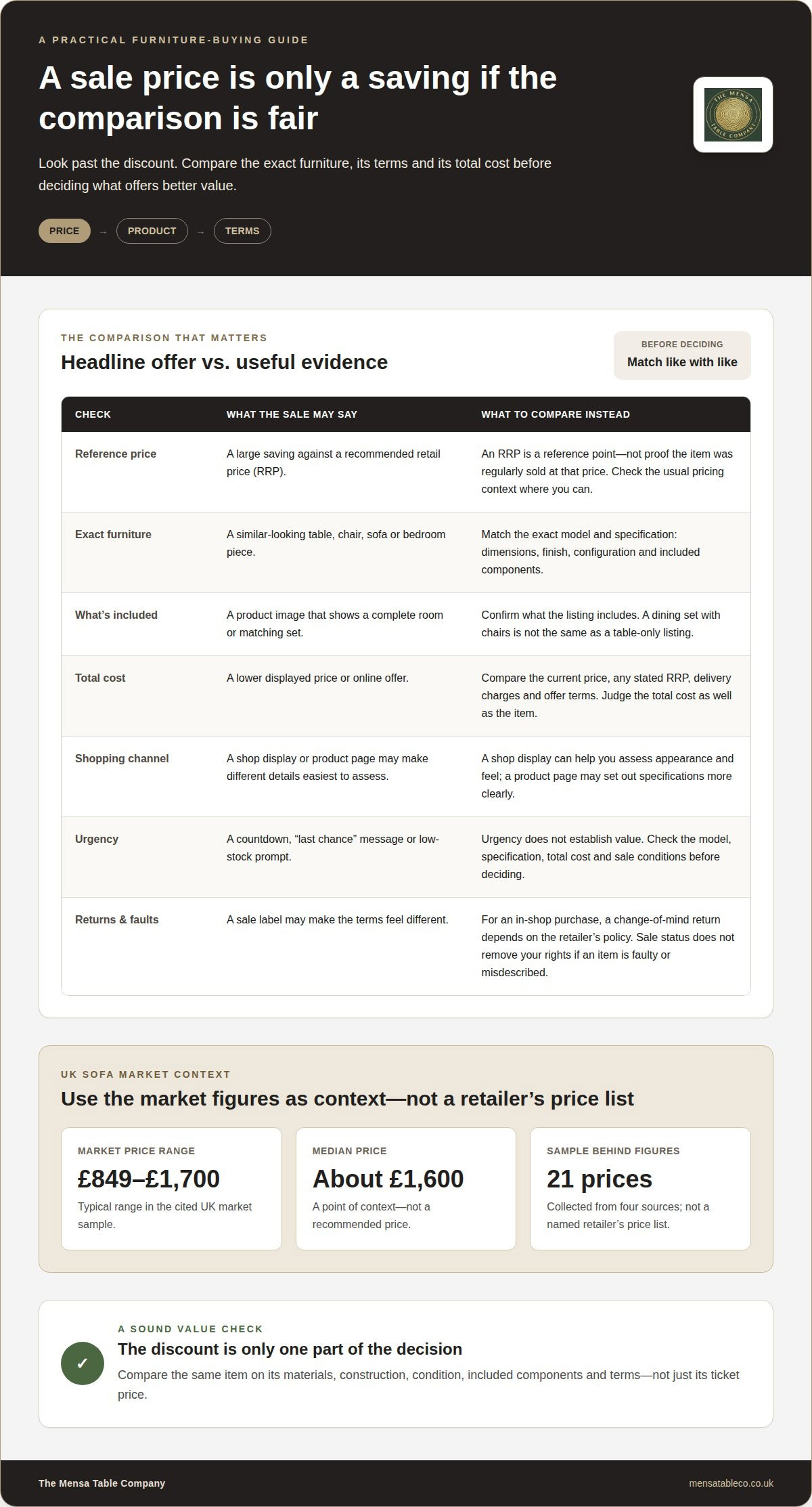
A recommended retail price (RRP) is a reference point, not proof that a product was regularly sold at that amount. An advertised saving can look striking while saying little about the furniture’s materials, construction or usual selling price. Compare the exact model and specification, not just the percentage reduction. Similar-looking dining tables, chairs or bedroom furniture may differ in size, finish or configuration.
For context, sofa prices on the UK market typically range from £849 to £1,700, with a median of about £1,600. This market range uses 21 price samples from four sources, collected on 10 November 2026, and is valid until 10 December 2026. It isn’t a named retailer’s price list. A sofa’s RRP and sale price are meaningful only when they refer to the same model and terms.
For furniture bought in a shop, changing your mind alone doesn’t create an automatic right to a refund; a change-of-mind return depends on the retailer’s policy. A sale label doesn’t remove your consumer rights if furniture is faulty or misdescribed. Raise the problem with the retailer and explain how the item differs from its description or expected quality.
High-street and online price comparisons
High-street and online prices can differ because retailers set their own offers and may sell different versions of a similar design. Compare the exact product name, dimensions, finish, included components and delivery terms. For example, a dining set with chairs isn’t directly comparable with a table-only listing, even if both photographs show a matching style.
Use the same checklist for each listing: note the current price, any stated RRP, what’s included and delivery charges. Then compare the total cost and the item itself, rather than treating a lower online price as proof of better value. A shop display can help you assess appearance and feel, while a product page may set out the specifications more clearly.
Genuine discounts and pressure-selling tactics
A genuine saving should relate to the same furniture item and a clear comparison price. A countdown, “last chance” message or claim that stock is nearly gone doesn’t establish that the discount is valuable. Pause, note the model and stated saving, then compare its specification and total cost before committing.
Pressure-selling can involve repeated prompts to decide immediately, limited-time offers or add-ons presented as necessary. Ask for the offer and any conditions in writing, and take time to consider whether the furniture suits your home. A Christmas promotion or seasonal sale still needs to stand up to careful comparison.
Don’t let urgency replace a considered decision. Check the product description, sale terms and returns policy before paying. These steps help distinguish a useful reduction from a headline designed to hurry you, whether you’re choosing a sofa or dining furniture.
Ex-stock furniture from high-street retailers
“Ex-stock” usually describes furniture already held in a retailer’s stock, rather than an item awaiting a new production run. It could be a display piece, a discontinued design or a standard model ready for dispatch. The label alone doesn’t explain which, so establish the item’s status before comparing it with made-to-order furniture.
Availability can make an ex-stock deal attractive when a room needs furnishing soon. A sofa shown as in stock may be ready to enter the retailer’s delivery process, while another colour or configuration may require a wait. “In stock” doesn’t specify a delivery date: the retailer’s stated arrangements and the item’s location matter.
Clearance stock can also be a changing selection. A particular size, fabric or finish may sell before another, and a replacement range may differ in small but important details. For example, two sofas can look similar online yet have different upholstery or dimensions. Match the exact model and specification, not just the photograph or broad product category.
Retailers also differ in what their stock represents. One may discount a display item; another may sell boxed furniture from a current range. The items may have different conditions, even when both appear under an outlet or clearance label. Look for a clear description of whether the item is new, displayed, damaged or missing components, and read any condition notes alongside the listing.
Before buying, use a short stock check:
- Identify the exact model, colour, finish and size.
- Read whether the listing describes a display, clearance or boxed item.
- Check what components are included, such as matching chairs with a dining table.
- Read the delivery terms and any conditions attached to the item.
This is why comparisons are more useful than relying on “available now”. For a living room, confirm that the sofas and chairs shown are the same versions being sold. For a bedroom, compare storage options and dimensions. A display can inspire a room, but the stock listing needs to describe the furniture you’ll actually receive.
Changing availability can create urgency, but urgency isn’t a measure of quality. If one clearance option disappears, assess another model based on its materials, condition and suitability. A carefully chosen item that fits the room may serve you better than a rushed purchase made only to secure immediate stock.
If you’re considering a dining table and want to talk through what would suit your space, discuss your requirements.
Furniture quality and durability
An attractive price and polished showroom lighting can make a piece appear more substantial than it feels. Judge the furniture itself, not the display around it. Look closely at the materials, joins, edges and finish. A dining table used every day faces different demands from an occasional table, so consider how each piece will serve in your home.
Start with the parts that carry weight. On a chair, examine where the legs meet the seat and whether the frame feels steady when gently moved. For a table, look underneath at how the legs connect to the top. A smooth surface matters, but a beautiful finish can’t compensate for a frame that flexes or uneven-looking joins.
Materials affect how furniture looks and feels over time. Compare a wood veneer surface with solid wood by examining the edge and product description: they are different constructions, not interchangeable labels. Check that the finish is even across the top and sides, and that exposed edges feel smooth. These details help you assess what you’re buying beyond its appearance.
In stores, use the display to assess the specific features you can see and feel:
- Press gently on a table edge and observe whether the frame shifts.
- Inspect chair joints and leg connections for gaps or uneven alignment.
- Look across the surface under different lighting for inconsistent finishes.
- Compare the displayed piece with its written material and care description.
- Consider whether the design suits daily use, rather than occasional display.
These checks don’t require luxury furniture or specialist tools. They help distinguish an affordable option from one that looks appealing only under showroom lighting. For example, a chair that feels firm on the shop floor may still differ in construction from another model with a similar shape. Assess each item on its own merits.
Durability also depends on where and how furniture will be used. A table in a busy family dining area may face repeated spills, movement and cleaning; a desk may hold equipment throughout the working day. Match the item’s stated care instructions and materials to that routine. If the cleaning guidance seems demanding for your household, factor that into your decision.
Finally, check the complete description before buying. Confirm the material, finish, dimensions and what the price includes. A sale tag can’t tell you whether an item suits a narrow room or whether its surface meets your needs. Take time to assess the construction and care requirements; a considered choice can matter more than a dramatic discount.
Why cheap furniture can be a false economy
Understanding why you should avoid high-street furniture sales means looking beyond the ticket price. Delivery, assembly, care and how well a piece suits your home can all shape its value over time.
Added delivery and assembly costs
Delivery and assembly may add costs to sale furniture, depending on the retailer’s terms and the services selected. Before buying, compare the checkout total with the displayed price, including delivery, carrying the item indoors and assembly where offered.
Consider the practical details too. A large wardrobe may need assembly, while a dining table could arrive in separate pieces. Check whether delivery reaches your room or stops at the entrance, and whether packaging removal is included. These terms matter especially when access involves stairs or narrow doorways.
Write down the full purchase cost: item price, delivery charge, assembly and any optional services. Then compare like with like. A discounted sofa that costs more to deliver and assemble may not be the lower-cost choice beside another offer. Customer service also matters if a delivery problem leaves parts missing or the furniture damaged.
Cheap prices and overall value
A low price can prove a false economy if a piece doesn’t suit its daily purpose or needs replacing sooner than expected. For example, a dining chair used at every meal faces different demands from one used occasionally. Consider construction, finish and intended use alongside the price, rather than treating “discounted” as a judgement of quality.
Care requirements can affect how much effort furniture takes to maintain. Delicate fabric on a family sofa may need more careful cleaning than your household can manage. Read the care information and compare it with your routine before choosing a material. The reason why you should avoid high-street furniture sales is not the sale itself, but letting urgency outweigh practical fit.
Think about the whole room, not just the single piece on offer. A discounted table may seem affordable, but it might not work with your existing chairs or the room’s proportions. Replacing mismatched items can outweigh the initial saving. Measure the space, identify what needs to work together and assess the sale item against those needs.
Use this comparison before paying:
- Write down the item price and every delivery or assembly charge.
- Match the materials and care instructions to the furniture’s expected use.
- Consider whether it fits your existing collection and room.
- Read the retailer’s terms for delivery, damage and customer service.
A pause can turn a rushed sale moment into a considered decision. Another reason why you should avoid high-street furniture sales is that a temporary offer can push you towards a piece that doesn’t fit your home. Choose for your needs first, and let the price inform your decision rather than make it for you.
Are furniture sale discounts genuine or are prices inflated beforehand in the UK?
A sale label alone can’t show whether a furniture discount is genuine. The advertised reduction may reflect a real change, but judge it against the same item’s price history and specification, not the size of the crossed-out figure.
Start by matching the product name, model, dimensions, finish and included parts. A retailer’s RRP is a recommended reference price, not proof that the item regularly sold at that amount. For example, a table advertised against an RRP may have a different finish or configuration from a similar table elsewhere. Compare like for like before treating the saving as meaningful.
Look for a clear explanation of the comparison price and the offer’s terms. A long-running “sale” or repeated countdown can create urgency without proving that the current price is unusually low. Note the product and price when you first see it, then compare later listings for the same model. This simple record helps distinguish a temporary reduction from a familiar advertised price.
Price changes don’t automatically mean a retailer has inflated an earlier price. Stock levels, product ranges and promotions can affect offers. The useful question is whether the furniture represents value at the price you’ll pay. Check the materials, delivery terms and condition alongside any claimed saving, because a percentage reduction says nothing by itself about construction or suitability.
Negotiation can also be part of a high-street purchase. In a November 2018 MoneySavingExpert poll of 1,575 people, 84% of those who had haggled in independent shops reported success. The poll included only retailers where at least 30 people had attempted to haggle. This is a historical poll, not a promise of success in a particular furniture shop. It does show why a polite request for a better price or included delivery may be worth making.
Compare calmly rather than deciding under pressure. Note the advertised price, stated RRP and any delivery charge; then ask whether the retailer can improve the overall offer. Consider whether an added service would be more useful than a further reduction. If the terms or comparison price are unclear, pause rather than letting a countdown dictate your choice.
For a dining space, focus on the table’s materials, finish and suitability for everyday meals, not just its sale badge. Discuss your furniture requirements when you’re ready to consider a more considered choice.
The Mensa Table Company
The Mensa Table Company offers a considered alternative when you’re choosing a dining table for everyday life, rather than judging a purchase by its sale label alone. Its range includes The Mensa Dining Table, The Spider Leg Dining Table, The X-Frame Dining Table and The U-Frame Dining Table.
Each is made with a focus on craftsmanship, giving you a chance to choose a table for its design and place in your home. If a lasting dining space matters more than a short-term discount, explore the dining table range and consider what suits your room and the moments you hope to share around it.
Contact The Mensa Table Company to discuss your dining table requirements.
Choose a table for the life around it
The next step is to picture how your home will feel in daily use. A dining table isn’t simply a surface; it becomes the setting for shared meals, conversation and the small rituals that make a room your own. Understanding why you should avoid high-street furniture sales can help you choose with intention, rather than letting a temporary offer decide for you.
The Mensa Table Company offers The Mensa Dining Table, The Spider Leg Dining Table and The X-Frame Dining Table. Each gives you a different design to consider as you shape a welcoming dining space. Focus on the table that suits your room and the way you gather, then let that choice guide your next step.
Contact The Mensa Table Company to discuss your dining table requirements. A thoughtful choice can make room for many good moments ahead.
Frequently Asked Questions
What should you consider when shopping for furniture?
Choose furniture that fits your room, routine and the people who’ll use it. Measure the space, including walkways and door openings, then compare those dimensions with the item’s assembled size. Consider how often it will be used, what it’s made from and the care it needs. For example, a dining chair used daily should suit both the table height and your household’s everyday habits.
What are the common drawbacks of high-street furniture sales in the UK?
The main drawback is that a sale label can draw attention away from what matters about the specific item. A display model, discontinued finish or limited selection may not suit your room or match other furniture. Promotional terms can also differ by product. Before deciding, read the listing carefully and consider whether you’d still want that exact piece without the discount or urgency of a promotion.
How can buyers check furniture quality, materials and durability before purchasing?
Inspect the parts that bear weight and the joints that hold the piece together. For a chair, look at the seat-to-leg connections; for a table, examine how its base attaches to the top. Read the material and care descriptions, and compare them with what you can see on the display model. If buying online, rely on the written specifications rather than photographs alone.
How do sale exclusions, limited stock and delivery delays affect furniture purchases?
Sale exclusions can mean an offer applies only to selected models, finishes or stock, so the item you want may not qualify. Limited stock can also narrow colour and size choices. Delivery timing matters if furniture needs to fit around a move or room project. Before paying, make sure the order summary identifies the chosen item and gives the relevant delivery arrangements, rather than assuming every sale item follows the same terms.
What should UK shoppers check before buying furniture in a high-street sale?
Check the exact model, dimensions, materials, condition and what the price includes. Read the retailer’s delivery, assembly, returns and sale-exclusion terms before completing the purchase. For furniture in a shop, ask for the product description to match the item being sold; for an online listing, keep the order details and description. If the furniture is faulty or differs from its description, contact the retailer about the problem.

Leave a Reply