
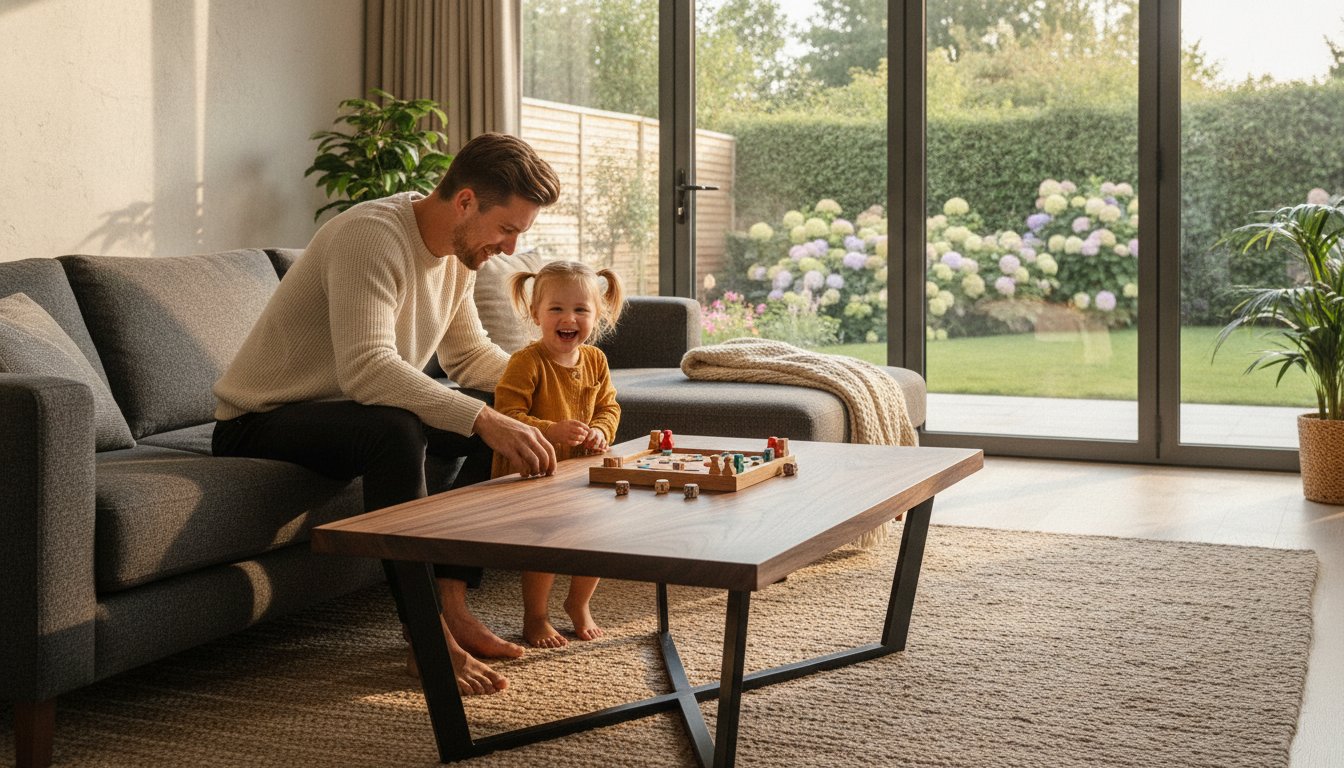
The most significant piece of furniture in your living room isn’t just a place to rest a coffee cup; it’s the anchor of your home’s daily stories. You’ve likely felt the frustration of browsing through mass-produced options, only to fear that a beautiful finish might actually be a thin veneer destined to peel and warp. It’s a valid concern when you’re looking for a focal point that fits your specific layout perfectly. Choosing a handmade walnut coffee table should be an intentional act of curation, moving away from the cycle of disposable furniture toward something with soul and substance.
We believe that your home deserves a centerpiece that matures alongside your family. In this guide, you’ll discover why solid Black Walnut is the pinnacle of furniture design and how to choose a handcrafted piece that becomes a lifelong heirloom. We’ll share our expertise on spotting genuine artisan joinery, selecting the ideal proportions for your space, and overcoming the anxiety of maintaining premium wood. From the first pour of morning coffee to evening gatherings with friends, we’ll show you how to find a table that serves as a beautiful backdrop for a lifetime of human connection.
Key Takeaways
- Understand why a handmade walnut coffee table serves as a lifelong investment, offering a level of durability and soul that mass-produced veneers simply cannot replicate.
- Learn to appreciate the natural evolution of solid Black Walnut, from its initial deep tones to the rich, honeyed patina it develops over decades of use.
- Master the proportions of your living space by applying the Golden Ratio, ensuring your table sits at the perfect height and length relative to your sofa.
- Discover the structural secrets behind heirloom quality furniture, including traditional joinery and architectural leg designs like the Spider and Trapezium frames.
- Gain practical confidence in wood care with simple maintenance rituals that protect your table’s organic finish against daily spills and wear.
Why a Handmade Walnut Coffee Table is the Ultimate Living Room Investment
A living room feels incomplete without a central hub, a place where books rest and morning coffee steam rises. Choosing a handmade walnut coffee table is about more than filling floor space; it’s an investment in a permanent piece of home history. While high-street retailers offer convenience, they often rely on hollow cores and thin veneers that fail within a few years. These mass-produced items are designed for the short term, often ending up in landfills when the edges begin to peel or the joints start to wobble. In contrast, solid wood construction offers a “cost per year” that far outweighs cheaper alternatives. If a table lasts forty years instead of four, the true value becomes clear. It’s a rejection of the “fast furniture” cycle in favor of environmental responsibility. By choosing a piece built to last generations, you reduce waste and bring a sense of permanence into your living space.
The Artisanal Philosophy
We don’t just build furniture; we create sites for human connection. Every piece begins as raw timber, selected for its unique character, before being guided through a manual production process that respects the material’s natural origins. Machines prioritize speed and uniformity, but the human eye recognizes the beauty in a specific grain swirl or a subtle knot. We intentionally avoid the flat-pack model because it prioritizes shipping efficiency over structural robustness. Our workshop focuses on permanent, robust construction that won’t weaken over time. Our goal is to provide a tactile piece of art that feels solid under your hand and serves as a reliable backdrop for social rituals, from late-night conversations to quiet Sunday afternoons.
Walnut: The Aristocrat of Timbers
Walnut has long held a prestigious place in British furniture history, prized for its strength and sophisticated aesthetic. The specific species we often work with, Black Walnut (Juglans nigra), is celebrated for its deep, chocolatey tones and exceptional grain patterns. When you run your hand across a solid black walnut surface, you feel a warmth and weight that machines cannot replicate. This sensory experience reflects the intentionality of the maker. Each curve and joint is a deliberate choice, ensuring that your handmade walnut coffee table isn’t just a commodity, but a meaningful life investment that anchors your home with quiet confidence. It represents a thoughtful alternative to the anonymous, mass-produced goods that dominate the market today.
By investing in a coffee table that matches the quality of our signature dining furniture, you create a cohesive narrative throughout your home. This continuity of material and craft speaks to a lifestyle that values substance over flashy marketing, ensuring your furniture remains relevant as your home evolves through the years.
The Unique Character of Solid Black Walnut Timber
The allure of a handmade walnut coffee table begins long before it reaches your living room. It starts with the careful selection of raw timber. We prioritize ethically sourced European and Black Walnut, ensuring that our work respects the environment from which it came. Black Walnut is prized for its intricate grain patterns that tell a story of growth and resilience. You might see straight, disciplined lines in some sections, while others reveal the dramatic, swirling chaos of a burl. These variations aren’t flaws. They’re the fingerprints of nature. Because we work with solid timber, every piece of wood we select carries its own unique visual rhythm. This ensures that no two tables leaving our workshop are ever identical.
Unlike many other hardwoods, walnut undergoes a fascinating transformation. While it begins its life with deep, chocolatey hues and occasional purple undertones, it gradually lightens over the years. This isn’t a sign of wear but a sign of character. Exposure to natural light coaxes out honey-toned highlights and a rich patina that only time can create. Understanding these Black Walnut Timber Properties helps you appreciate why this wood is so coveted. It’s a dense, durable material that matures alongside your home, standing up to the rigours of a high-traffic living room while maintaining its sophisticated air.
Solid Wood vs. Walnut Veneer
Distinguishing between solid timber and a clever imitation is vital for a lasting investment. Many high-street options use a thin slice of walnut glued over particle board, which lacks the structural integrity of the real thing. You can often perform a “tap test” to tell the difference. Solid wood produces a deep, resonant thud, whereas veneer sounds hollow and thin. Veneers are notoriously fragile; they don’t handle heat or moisture well, often leading to unsightly peeling at the edges. When you explore our Solid Black Walnut species guide, you’ll see why we commit exclusively to the real thing. Solid wood can be sanded and refinished, meaning an accidental scratch isn’t a disaster, but a part of the table’s history.
Timber Movement and Stability
Working with solid timber requires a deep respect for the material’s natural tendencies. Wood “breathes” by expanding and contracting with the humidity in your home. Professional makers account for this movement through specific joinery techniques that allow the wood to shift without cracking. We ensure all our timber is properly kiln-dried, a process that removes excess moisture and stabilizes the boards for the indoor climate of UK homes. This prevents the warping that often plagues lower-quality furniture. Whether you prefer the organic, flowing lines of a live-edge slab or the clean, architectural look of a square-cut table, the stability of the wood remains our priority. If you have a specific vision for your space, feel free to reach out to our team to discuss bespoke sizing and styles.
Craftsmanship Techniques: How We Build Tables That Last Generations
The making of a handmade walnut coffee table is a slow, deliberate process that honors the history of the timber. While mass-produced items are often held together by staples or hidden cam-locks, our workshop relies on traditional joinery that ensures structural integrity for decades. We treat every coffee table with the same level of care as our Signature Dining Tables, recognizing that a smaller footprint shouldn’t mean a compromise in quality. By understanding The Unique Character of Solid Black Walnut Timber, we adapt our techniques to work with the wood’s natural grain and density. This manual approach allows us to create furniture that remains stable and wobble-free. It’s a contrast to the marketplace “gifts” that often lack the substance required for a busy living room. We build for the long term, ensuring the table remains a reliable site for family gatherings and shared experiences.
Leg Designs and Industrial Influence
The architecture of the base defines the table’s personality. Our Spider Leg design offers a modern, sculptural statement that provides exceptional stability without overwhelming the room. For those who prefer a balance of rustic charm and clean lines, the X-Frame and Trapezium styles provide a timeless industrial aesthetic. We offer these in powder-coated steel for a contemporary contrast or matching timber legs for a more traditional, unified look. Each frame is designed to support the significant weight of solid walnut, ensuring the piece feels grounded and secure. This careful pairing of metal and wood reflects our commitment to creating furniture that feels both artisanal and permanent.
Surface Preparation and Sanding
A finished table should be as much a pleasure to touch as it is to see. Our multi-stage sanding process is exhaustive, moving through increasingly fine grits until the surface achieves our “smooth to the touch” standard. During this phase, we make intentional decisions about the wood’s natural features. We might fill deep voids with clear or tinted resin to create a perfectly level surface for your drinks, or we might leave character knots intact to celebrate a more rustic, organic feel. Finally, we apply high-quality oils and waxes. These finishes are chosen because they highlight the grain’s depth rather than hiding it under a thick, plastic-like layer of lacquer. This allows the wood to breathe and age naturally, ensuring that the table you buy today only looks better as the years pass.
Sizing and Styling Your Walnut Coffee Table in Your Home
Bringing a handmade walnut coffee table into your home is an act of intentionality that requires a balance of geometry and intuition. A table that is too small feels lost, while one that is too large can stifle the natural flow of the room. We often guide our clients toward the Golden Ratio for furniture placement. Ideally, your coffee table should measure between 1/2 and 2/3 of the total length of your sofa. This ensures that the piece feels anchored without being overwhelming. Height is equally critical for both comfort and aesthetics. Aim for a surface that sits level with your sofa’s seat cushions, creating a seamless line that makes reaching for a drink or a book feel effortless. To maintain a sense of space, leave roughly 45cm of clearance between the table and the seating. This “breathing room” allows for comfortable legroom and easy movement throughout the living area.
Finding the right proportions is the first step in creating a space that feels curated rather than cluttered. You can browse our full range of handcrafted coffee tables to see how different dimensions can transform a room’s atmosphere. Each piece we build is designed to serve as a functional sculpture that respects the boundaries of your home.
Shape Selection: Rectangular vs. Square
The silhouette of your table often dictates the social energy of the room. Rectangular tables are the classic choice for standard sofas and narrow living rooms, providing a long surface that is accessible from every seat. They maintain a sense of linear order and work well in traditional layouts. If your home features a large L-shaped sectional, a square walnut table often proves more effective. It fills the central “void” created by the corner seating, turning the area into a social hub where everyone is equidistant from the center. This shape encourages a more communal atmosphere, acting as a silent conductor for the flow of conversation.
Styling with Intention
Once your table is in place, styling it becomes the final layer of your home’s narrative. We recommend the “Rule of Three” to create a curated look that doesn’t hide the wood’s natural beauty. A stack of textured art books, a small green plant, and a single scented candle provide a balanced trio of heights and organic shapes. Because walnut has a deep, commanding presence, it often looks best when contrasted with lighter textiles. Placing your table on a cream or soft grey rug allows the rich grain to pop, preventing the room from feeling too dark. This surface isn’t just for decor; it’s a backdrop for shared experiences, from competitive board game nights to quiet morning rituals. If you need help determining the perfect fit for your layout, reach out to our team for a bespoke sizing consultation.
Protecting Your Heirloom: Maintenance and Care for Solid Wood
Bringing a handmade walnut coffee table into your home is the start of a decades-long relationship. While the wood is naturally resilient, maintaining its deep, lustrous glow requires a few simple, intentional habits. For daily care, we recommend nothing more than a soft, slightly damp cloth. Avoid harsh chemical sprays or silicone-based polishes, as these can build up a cloudy residue that masks the timber’s natural warmth. Spills are a part of life, but they require immediate attention. Because we use organic oil finishes, liquids should be blotted away quickly to prevent them from penetrating the grain. This proactive approach is the best defense for your table’s surface, ensuring that a stray glass of water doesn’t leave a lasting mark on your investment.
Environmental factors play a significant role in how your walnut ages. Solid wood is a living material that reacts to its surroundings. Direct sunlight can cause light-bleaching, where the chocolatey tones fade faster than intended. Similarly, placing your table too close to a radiator or a direct heat source can cause the wood to dry out too quickly, potentially leading to small cracks. By positioning your furniture thoughtfully, you protect the structural integrity we worked so hard to establish in our workshop. Every year or two, a light application of fresh hard-wax oil will nourish the timber and restore its original depth. This long-term view transforms maintenance from a chore into a ritual of preservation.
The Natural Finish Advantage
We choose hard-wax oils over thick, plastic-like lacquers for a specific reason: the sensory experience. A natural finish allows you to actually feel the wood grain under your fingertips, maintaining a tactile connection to the material. Lacquers create a cold, synthetic barrier that can chip or flake over time. If a lacquered table gets scratched, the entire surface usually needs to be sanded back and redone. With an oil finish, you have the advantage of spot-repairing. A minor scuff can often be buffed away and re-oiled in minutes, making it a much more practical choice for a busy household. It’s a finish that breathes with the wood and matures gracefully.
Signs of a Quality Build
A truly handcrafted piece reveals its quality in the details you might not notice at first glance. When inspecting a table, look for seamless joints and a smooth finish on the underside. Many mass-produced items leave the bottom of the table rough or unfinished, but we believe every inch deserves respect. We never use flat-pack fasteners or cam-locks that loosen over time. Instead, our construction relies on permanent joinery that grows stronger with age. This commitment to substance over flashy marketing ensures your furniture remains a stable focal point for generations. Ready to anchor your living room? Shop our handmade walnut collection to find a piece that matches your home’s unique story.
Anchor Your Home with Handcrafted Quality
Every home deserves a focal point that tells a story of intentionality and enduring craft. By choosing a handmade walnut coffee table, you move away from the cycle of disposable furniture and toward a piece of living room artistry that matures alongside your family. We’ve explored how solid Black Walnut offers a sensory richness and structural stability that veneers simply cannot replicate. From the architectural precision of our Spider and X-Frame leg designs to the multi-stage sanding process that ensures every surface is smooth to the touch, our work is defined by a refusal to take shortcuts.
Since 2018, our UK workshop has been dedicated to creating furniture that acts as a site for human connection and shared rituals. We don’t just build tables; we create future heirlooms that anchor your space with a quiet, grounded confidence. If you’re ready to find the perfect centerpiece for your layout, we’re here to help you navigate the details of sizing and design. Reach out to our team today to start your bespoke project. We look forward to helping you bring the warmth of solid walnut into the heart of your home.
Frequently Asked Questions
Is solid walnut a good wood for a coffee table?
Solid walnut is an ideal material because it combines high density with a sophisticated, natural aesthetic. It’s a heavy hardwood that provides a stable, sturdy surface capable of handling the daily activity of a busy living room. The wood’s natural oils and tight grain structure make it resilient against wear while offering a warmth that matures beautifully over time.
How do I identify a genuine handmade walnut coffee table?
Genuine artisan pieces are defined by their joinery and grain continuity. Look for traditional connections like mortise and tenon joints instead of hidden metal fasteners, staples, or cam-locks found in flat-pack furniture. A handmade piece will also feature a unique, non-repeating grain pattern that flows across the surface, whereas veneers often show repetitive or “mirrored” patterns.
Will my walnut coffee table change colour over time?
Walnut is distinctive among hardwoods because it tends to lighten as it ages. While the timber begins its life with deep, chocolatey hues and occasional purple undertones, exposure to natural light will gradually reveal honey-toned highlights. This rich patina is a sign of authentic timber maturing and shouldn’t be confused with fading; it’s a natural evolution of the wood’s character.
How do I protect my walnut table from water rings?
Immediate care is the most effective way to prevent water rings on an oil-finished surface. We recommend using coasters for all drinks and blotting away spills with a soft cloth as soon as they occur. Because our finishes are breathable, regular maintenance with hard-wax oil helps maintain a moisture-resistant barrier that protects the grain from occasional accidents.
What is the standard height for a handmade coffee table?
Most tables are built to a height of 40cm to 45cm to ensure they sit level with your sofa’s seat cushions. This standard height makes it easy to reach for items while seated and maintains a clean, linear look in your living room. We can always adjust these measurements to suit bespoke needs, such as deeper sofas or modern low-profile seating.
Can I get a custom size walnut coffee table made?
Yes, we provide bespoke sizing for every handmade walnut coffee table we create in our workshop. Since our team works in a localized setting, we can tailor the length, width, and height to fit your specific room layout perfectly. This ensures your table isn’t just a beautiful focal point, but a functional piece that respects the proportions of your home.
Why is handmade furniture more expensive than high-street brands?
The price reflects the use of premium solid timber and the time-intensive manual process required for heirloom quality. Unlike mass-produced items made from hollow cores or thin veneers, our tables are built to last for generations without peeling or wobbling. You’re investing in structural integrity, ethical sourcing, and artisanal expertise rather than a disposable commodity.
How often should I oil my walnut coffee table?
A light application of hard-wax oil every twelve to twenty-four months is usually sufficient to maintain the wood’s health. If the surface starts to look dull or feels dry to the touch, it’s a sign the timber requires nourishment. This simple ritual protects the wood from environmental changes and keeps the deep, chocolatey grain looking vibrant for decades.

Leave a Reply