
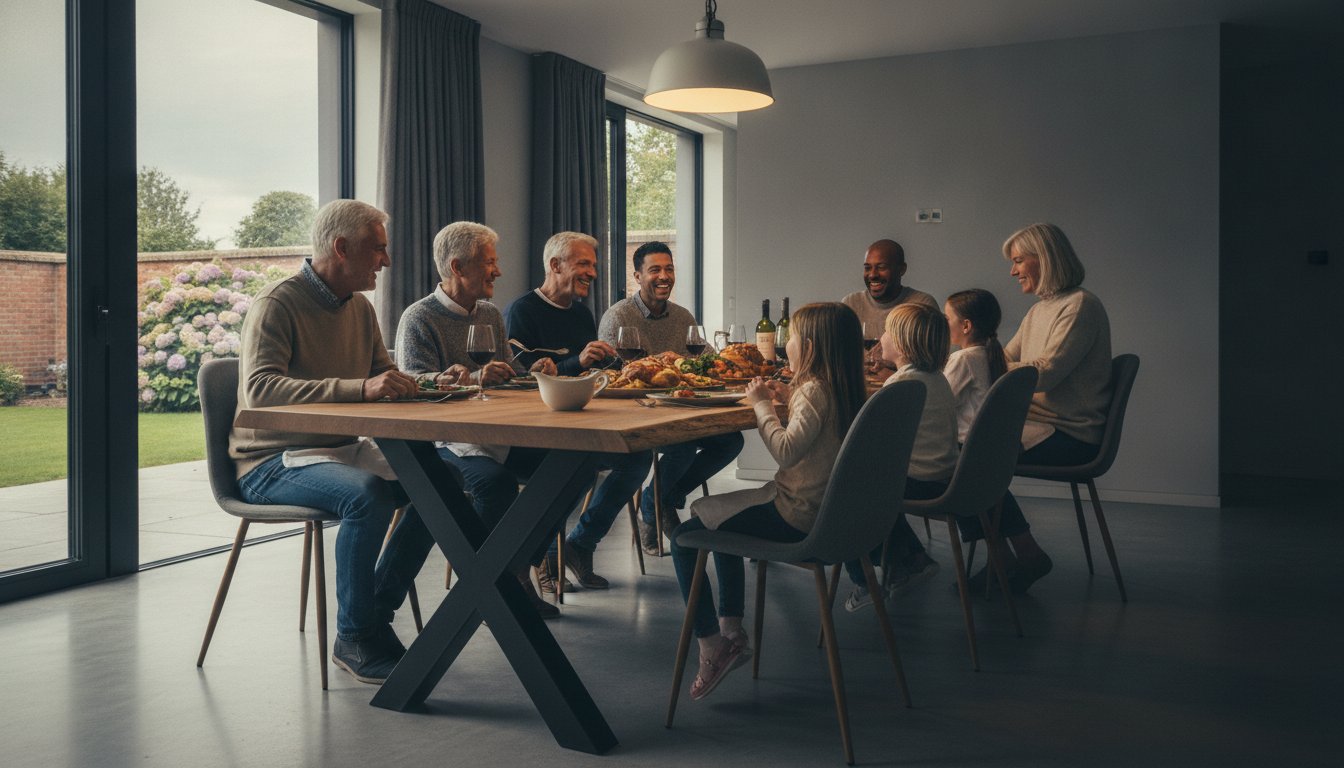
How many times have you stood over a wobbly table with an Allen key in hand, wondering why a piece of furniture that looked so sleek in the showroom feels so fragile in your dining room? It’s a common frustration in a world where convenience often trumps quality, but as we look toward 2026, the debate of handmade vs flat pack furniture is becoming about more than just assembly time. You deserve a centrepiece that doesn’t just fill a space but actually holds the weight of family Sunday roasts and late-night conversations without a hint of a shimmy.
We understand that you want a home filled with character and pieces that tell a story, rather than items that feel like disposable utilities. In this article, you’ll discover the definitive differences between artisanal solid wood craftsmanship and mass-produced alternatives to help you find a table that survives the rigours of daily life. We’ll explore the longevity of traditional joinery, the environmental impact of your choice, and how a bespoke commission can transform your living space into a site for genuine human connection.
Key Takeaways
- Learn why solid wood like European Oak and Black Walnut offers a sensory experience and lasting durability that engineered boards simply cannot match.
- Discover how signature designs like the Spider Leg and X-Frame provide architectural stability and a striking focal point for your dining room.
- Understand the long-term financial benefits of handmade vs flat pack furniture by seeing why a one-time investment in quality often costs less than frequent replacements.
- Explore the bespoke journey of creating a piece that fits your home perfectly, allowing you to move beyond the narrow sizing limitations of mass-produced items.
- Uncover why traditional joinery is the more sustainable path for the conscious UK homeowner looking to invest in heritage over disposable utility.
Defining the Divide: Handmade vs Flat Pack Furniture
We’ve reached a quiet revolution in the British home. After decades of “fast furniture” dominating our living rooms, a new wave of conscious consumers is pushing back against the culture of the disposable. The choice between handmade vs flat pack furniture has become a defining decision for those who value substance over convenience. For many, the realisation that a table should last longer than a mobile phone contract has shifted the focus back toward the workshop and the artisan.
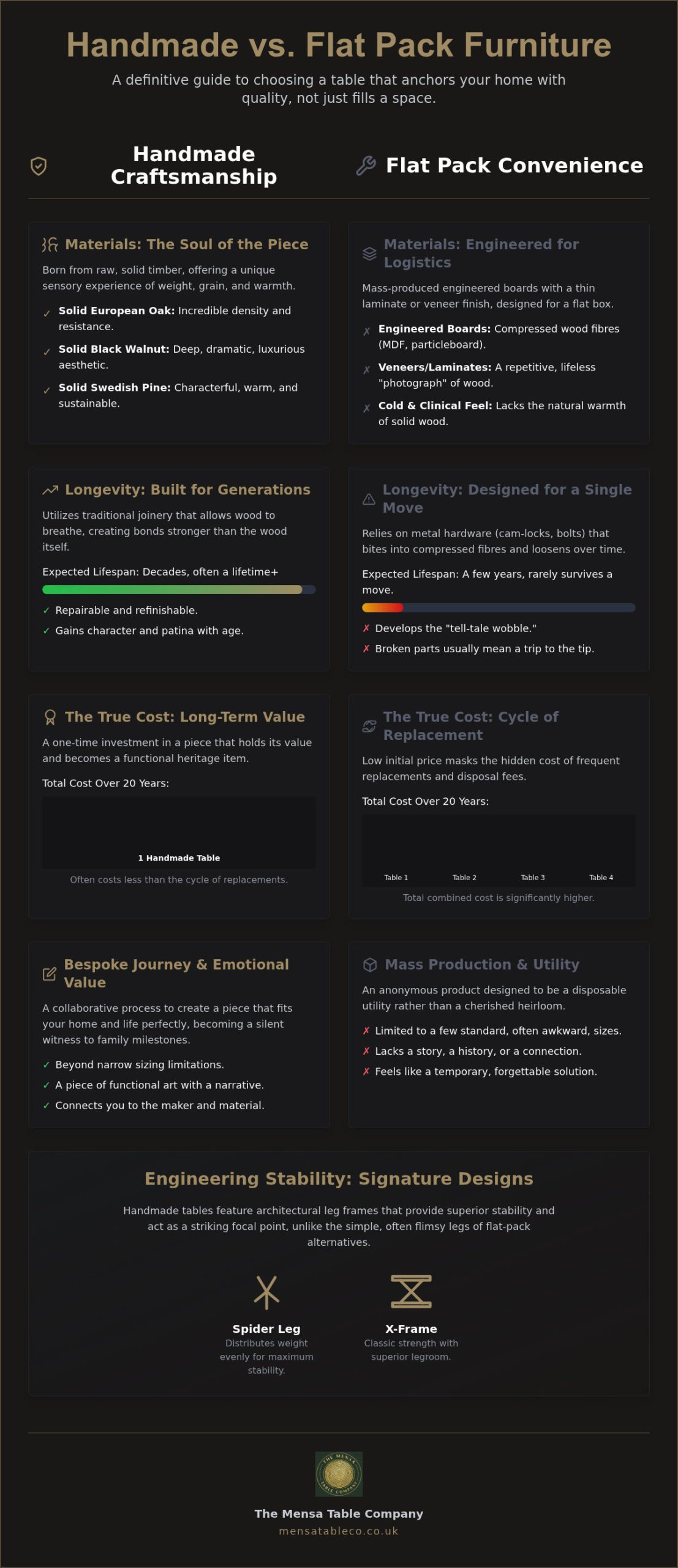
Flat-pack furniture is, at its core, a triumph of logistics rather than craftsmanship. It consists of mass-produced components, often made from engineered boards or veneers, held together by cam-locks and tension bolts. These pieces are designed to fit into a flat box for easy shipping, but they rarely survive the rigours of a second house move. In contrast, handmade furniture is born from raw, solid timber. Each piece is unique, crafted by hand using traditional joinery that respects the natural movement of the wood. At The Mensa Table Company, our philosophy is simple: the heart of your home deserves more than a cardboard box and an instruction manual.
The Longevity Gap
The structural integrity of a dining table depends entirely on how its parts are joined. Flat-pack items rely on metal hardware biting into compressed wood fibres. Over time, the constant micro-movements of daily use cause these cam-locks to loosen, leading to that tell-tale wobble that eventually signals the end of the table’s life. Handcrafted joints, such as those found in our solid wood designs, are different. We use techniques that allow the timber to breathe and settle, creating a bond that often becomes stronger than the wood itself. While a broken flat-pack rail usually means a trip to the local tip, a solid wood table can be sanded, refinished, and repaired for decades to come.
The Emotional Value of Craft
There is a profound difference between owning a mass-produced product and a piece of functional art. When you run your hand across a surface of Solid European Oak, you aren’t just feeling a material; you’re connecting with the history of the tree and the intent of the maker. A handmade table carries a narrative that flat-pack furniture can never replicate. It becomes a silent witness to your family’s milestones, from messy toddler breakfasts to candlelit anniversary dinners. This is the concept of “functional heritage.” By choosing quality over convenience, you’re investing in a piece that doesn’t just fill a room but anchors it, eventually passing down to the next generation as a cherished heirloom rather than a forgotten utility.
The Science of Materials: Solid Wood vs Engineered Boards
Step into any workshop and the first thing you’ll notice isn’t the sound of saws, but the scent of raw timber. This sensory experience is the foundation of why the debate between handmade vs flat pack furniture often begins and ends with the materials used. While mass-produced items rely on engineered boards hidden under a thin plastic laminate, our tables are born from the earth. The weight, the grain, and the temperature of the surface under your palm tell a story of growth that a factory-pressed board simply cannot replicate.
Solid European Oak remains a legendary choice for the British home due to its incredible density and resistance to the knocks of daily life. It’s a timber that ages with grace, developing a rich patina that reflects the years of use it has seen. For those seeking a deeper, more dramatic aesthetic, Solid Black Walnut offers a luxury that is impossible to mimic with veneers. The swirling, chocolatey tones and intricate grain patterns of walnut are deep and three-dimensional, whereas a flat-pack veneer often looks repetitive and lifeless because it’s essentially a photograph of wood glued onto compressed dust.
If your home leans toward a Scandi or rustic aesthetic, Solid Swedish Pine provides a characterful, warm alternative. It’s a sustainable timber that brings a sense of light and air to a room. Regardless of the species, the tactile difference is undeniable. Solid wood feels warm to the touch because it’s a natural insulator, unlike the cold, clinical feel of synthetic laminates. If you’re unsure which grain would best suit your space, feel free to reach out to our team for a chat about our current timber stocks.
Understanding Timber Movement
Timber movement is the natural expansion and contraction of wood fibres as they react to the shifting humidity and temperature within your home. Professional craftsmen allow for this breathing process by using traditional joinery techniques, such as slotted holes or floating tops, which prevent the wood from bowing or cracking. Flat-pack furniture, usually made from particle board or MDF, lacks this flexibility. When engineered boards are exposed to moisture or significant temperature shifts, they tend to swell and disintegrate because the glues holding the fibres together eventually fail.
Sustainability and Ethical Sourcing
The environmental cost of “disposable” furniture is a growing concern for the conscious UK homeowner. Mass-produced items are often designed with a short lifespan in mind, leading to a cycle of waste that clogs our landfills. By choosing responsibly sourced European timber, you’re embracing the “buy once, buy well” mantra. A handmade table isn’t just a purchase; it’s a long-term win for the planet. Because these pieces are built to last for generations, the carbon stored within the wood remains locked away in your home rather than being released when a flimsy alternative is replaced after only a few years.
Engineering Stability: Signature Leg Frames and Design
The foundation of a great table lies in the dialogue between the heavy, solid timber top and the frame that supports it. When we look at the structural differences in handmade vs flat pack furniture, the legs are often where the most significant compromises occur in mass-produced items. While a flat-pack table might arrive with hollow aluminium tubes or flimsy particle board legs, our workshop focuses on industrial-grade, powder-coated steel. These frames aren’t just supports; they’re architectural statements designed to withstand the weight of solid wood and the rigours of a busy UK household.
The Spider Leg Dining Table is perhaps our most striking example of this philosophy. It merges architectural modernism with the organic warmth of solid wood, creating a central hub that feels both light and incredibly grounded. For those who prefer a more traditional industrial aesthetic, our X-Frame and U-Frame designs offer a sense of permanence and strength. These frames are hand-welded and finished with a durable powder coating that resists the scuffs and kicks of daily life, ensuring the base remains as pristine as the day it was delivered.
Design choice also dictates how you use your space. The geometry of your table base directly impacts seating capacity and comfort. For instance, the Trapezium and V-Frame designs are engineered to maximise knee room, allowing you to tuck chairs in further and seat more guests during those large family gatherings. In contrast, the fixed, often bulky leg positions of mass-produced furniture can limit your seating options, forcing you to work around the table rather than letting the table work for you.
Choosing a Style for Your Space
Selecting the right frame is about balancing aesthetics with the practicalities of your room’s layout. A U-Frame or A-Frame provides a classic, sturdy look that anchors a large, open-plan kitchen-diner perfectly. If you’re working with a narrower room, a V-Frame or the central cluster of the Spider Leg can help maintain a sense of flow and space. Because we offer bespoke sizing across our range, you aren’t restricted by standard factory dimensions. We can scale the frame to suit your specific architectural quirks, ensuring a perfect fit for your home.
Load Bearing and Daily Use
Solid wood tops are remarkably heavy. A large oak or walnut top requires a frame that can support that weight without bowing or sagging over time. Our steel frames are engineered for high load-bearing capacity, providing a rock-solid surface that doesn’t wobble when you’re kneading dough or when children are leaning on the edges. This stability is a hallmark of quality craftsmanship. It’s the reason a handmade table remains a reliable centrepiece for decades, while a flat-pack alternative often begins to feel precarious after just a few years of honest use.
The True Cost: ROI and Long-Term Value
When assessing the initial price tag of a new table, it’s easy to fall into the trap of looking only at the immediate expense. However, the real conversation surrounding handmade vs flat pack furniture is one of cost-per-year rather than the upfront cost. A mass-produced table that requires replacement every few years due to structural fatigue or surface peeling represents a “false economy.” In contrast, a solid wood table is a one-time investment that anchors your home for decades. It doesn’t just hold its place in your dining room; it holds its value on the secondary market, often fetching a significant portion of its original price because quality materials never go out of style.
Choosing a bespoke piece also removes the hidden cost of compromise. Many homeowners spend months searching for a “standard” table that almost fits their room, only to settle for something that disrupts the flow of their home. By opting for a handcrafted piece, you gain the exact dimensions required for your specific architectural layout. This precision transforms a simple piece of furniture into a functional centrepiece that enhances the daily movement and social rituals of your household. If you’re ready to invest in a piece that grows with your family, get in touch with our workshop today to discuss your requirements.
Maximising Your Investment
To create a truly cohesive interior, many of our clients look beyond the table itself. Pairing your choice with matching benches offers a space-saving versatility that chairs cannot provide, allowing you to tuck seating away when it’s not in use. This artisanal aesthetic can be extended throughout the home with breakfast bars for morning coffee or coffee tables that bring the same industrial warmth to your living area. Surrounding yourself with high-quality, tactile materials creates a psychological sense of calm and order that flimsy, clutter-prone alternatives simply can’t match.
Maintenance vs. Neglect
The beauty of solid wood lies in its resilience. While a scratch on a laminate flat-pack surface is permanent and often signals the beginning of the end, a solid wood top can be sanded and refinished to look brand new. Simple care routines, like using a damp cloth for spills and an occasional application of high-quality wax or oil, keep the timber hydrated and protected. This ability to refresh the surface means your table can survive the messy reality of crafts, homework, and dinner parties, emerging from each decade with more character rather than more damage. It’s the difference between a product that wears out and a piece that wears in.
The Bespoke Journey: From Workshop to Your Home
The transition from choosing a design to seeing it in your home is a journey of collaboration. Unlike the impersonal transaction of buying mass-produced goods, the path to owning a piece from The Mensa Table Company starts with a conversation about your life and your space. When comparing handmade vs flat pack furniture, the most striking difference is the level of agency you have. You aren’t just selecting a product code; you’re determining the species of timber, the exact finish of the powder-coated steel, and the millimetre-perfect dimensions that will make the table feel at home in your specific room.
Once you’ve selected a base style, we begin the consultation process. This is where we discuss the tactile qualities of our materials, from the rugged charm of Swedish Pine to the deep elegance of Black Walnut. Inside our UK workshop, our tight-knit team gives every slab of timber the respect it deserves, ensuring that the natural history of the wood is preserved during the crafting phase. We take our time because high-quality output cannot be rushed. This deliberate pace is what allows us to create a bond between the creator and the end user, ensuring you feel the pride we take in every joint and weld.
Sizing Your Table Correctly
Measuring your space is the most critical step in ensuring your table becomes a functional hub rather than an obstacle. We recommend the “Golden Rule” of 90cm clearance between the table edge and the nearest wall or piece of furniture. This allows for comfortable movement and ensures guests can sit and stand without feeling cramped. Most standard UK dining tables sit at a height of approximately 75cm to 76cm, which is the sweet spot for ergonomic comfort when paired with standard chairs. If you’re planning for the future, consider a size that allows for extra seating as your family grows.
The Delivery Experience
We believe that the journey doesn’t end until the table is perfectly placed in your room of choice. Our national UK delivery service is handled by a team who understands the weight and value of the work. When we arrive, we don’t just leave a box at your door. We provide a full home setup, including final assembly and placement. This manual approach ensures that your centrepiece is level, stable, and ready for its first meal. If you have a specific vision for your dining space, contact us today to discuss your bespoke table requirements and let’s start the process together.
Investing in the Heart of Your Home
Choosing between handmade vs flat pack furniture is ultimately a decision about how you want to live. It’s the difference between a temporary fixture and a piece of functional heritage that ages alongside your family. We’ve explored how solid wood construction, entirely free from veneers or particle board, offers a tactile warmth and structural integrity that mass-produced items simply cannot match. Since 2018, our tight-knit team has been handcrafting these pieces in the UK, focusing on traditional joinery that respects the natural movement of the timber and ensures your table remains stable for decades.
A dining table isn’t just a surface; it’s the silent witness to a lifetime of shared meals and late-night stories. We’d love to help you create a centrepiece that fits your space and your life perfectly. Start your bespoke furniture journey by contacting our craftsmen to discuss your vision. With our national delivery and professional home setup, your new heirloom is ready to begin its story in your home. We look forward to building something beautiful that you’ll be proud to gather around for years to come.
Frequently Asked Questions
How do I care for a solid oak table from The Mensa Table Company?
Daily care for your solid oak table is straightforward and rewarding. Wipe the surface with a lint-free, slightly damp cloth to remove crumbs or dust, and avoid using abrasive sprays that can strip the natural finish. Every six to twelve months, we recommend applying a fresh coat of high-quality oil or wax to keep the timber hydrated and resilient against the dry air in your home.
Does the wood on a handmade table move over time?
Solid wood is a natural, breathing material, so it will certainly move as the seasons change. The fibres expand and contract in response to the humidity and temperature of your dining room. Our craftsmen account for this by using traditional joinery that allows the timber to shift slightly without cracking, which is a key structural advantage when comparing handmade vs flat pack furniture.
What is the standard delivery time for a bespoke dining table?
Because every table is handcrafted to order in our UK workshop, lead times depend on our current production schedule. We typically suggest allowing several weeks for the careful selection of timber and the manual assembly of your piece. We recommend reaching out to our team to confirm current delivery estimates for 2026 so you can plan your room’s transformation accordingly.
Can I order a custom size that isn’t listed on the website?
We believe your table should fit your room, not the other way around. Bespoke sizing is a fundamental part of what we do, and we’re happy to adjust dimensions to suit your specific architectural layout. Whether you need a particularly narrow breakfast bar or an extra-long dining table, we can scale our signature designs to your exact requirements.
Do you offer furniture restoration for older pieces?
We don’t offer restoration services for older furniture or third-party pieces. Our workshop is dedicated entirely to the creation of new, handcrafted solid wood tables and benches using our own signature designs. If you have a family heirloom that needs attention, we suggest contacting a local specialist who focuses on furniture repair and conservation.
What are the main differences between European Ash and Black Walnut?
European Ash is known for its light, pale tones and its bold, athletic grain patterns that bring a sense of airiness to a room. Black Walnut is its dramatic counterpart, offering deep chocolate hues and a swirling, intricate grain that feels incredibly luxurious. While both are exceptionally durable hardwoods, Walnut is often chosen for its sophisticated presence, while Ash suits a more modern, Scandi-inspired aesthetic.
How do I prevent water rings and heat damage on my wooden table?
Prevention is the best approach for protecting the natural surface of your table. Always use coasters for drinks and heat-resistant mats for hot plates to avoid marking the timber. If a spill does happen, wipe it away immediately with a dry cloth. This resilience is a primary reason why the debate of handmade vs flat pack furniture usually ends with a preference for solid wood.
Do you provide a warranty or guarantee on your handcrafted furniture?
We take deep pride in the quality of our work and the longevity of our traditional joinery. While specific terms can evolve, we stand behind the structural integrity of every table that leaves our workshop. We invite you to speak with our team directly about our current guarantees and the reassuring support we provide to all our customers after their table has been delivered.

Leave a Reply