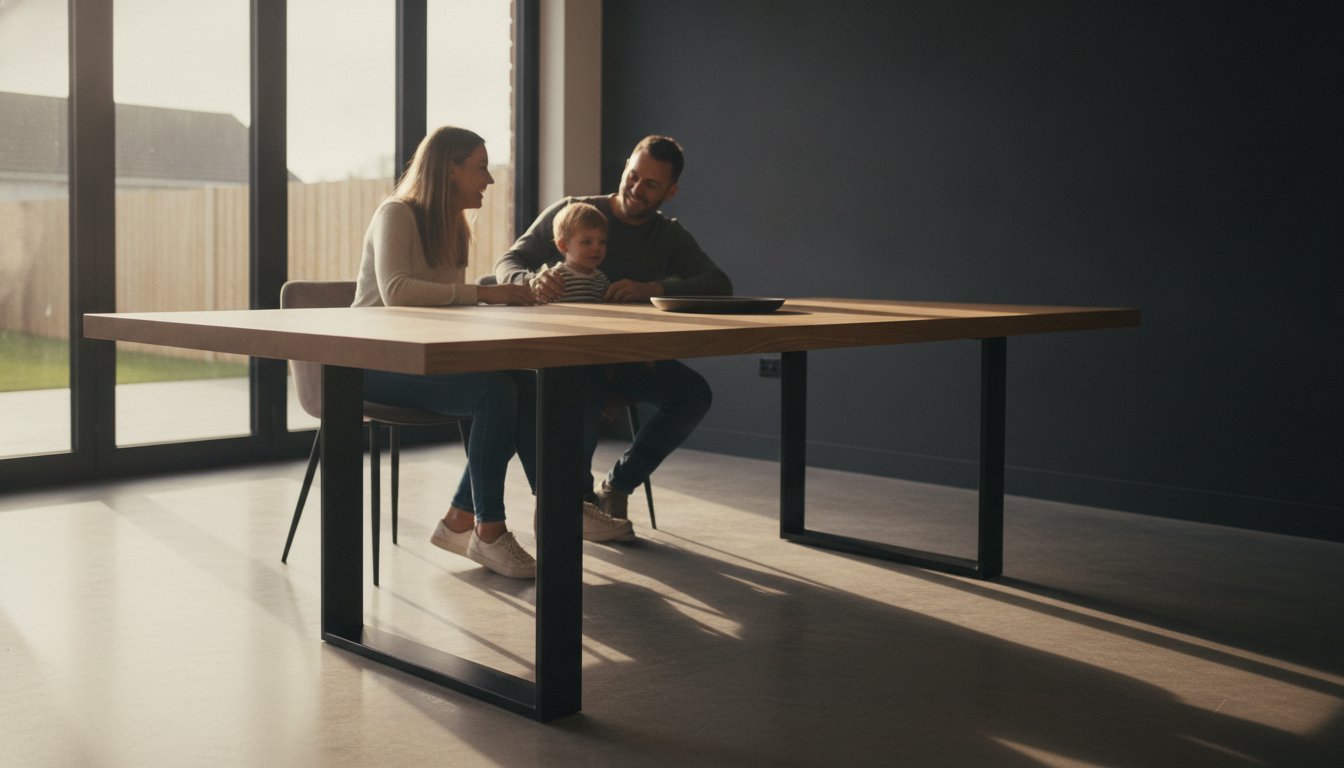
How many times has a meaningful conversation been cut short by the sharp jab of a table leg against a guest’s knee? It’s a common frustration that reminds us how mass-produced furniture often prioritizes shipping convenience over the actual human experience of dining. When you choose a handcrafted spider leg dining table, you aren’t just buying a surface for meals; you’re investing in a structural marriage of industrial strength and social fluidity that dictates the rhythm of your home.
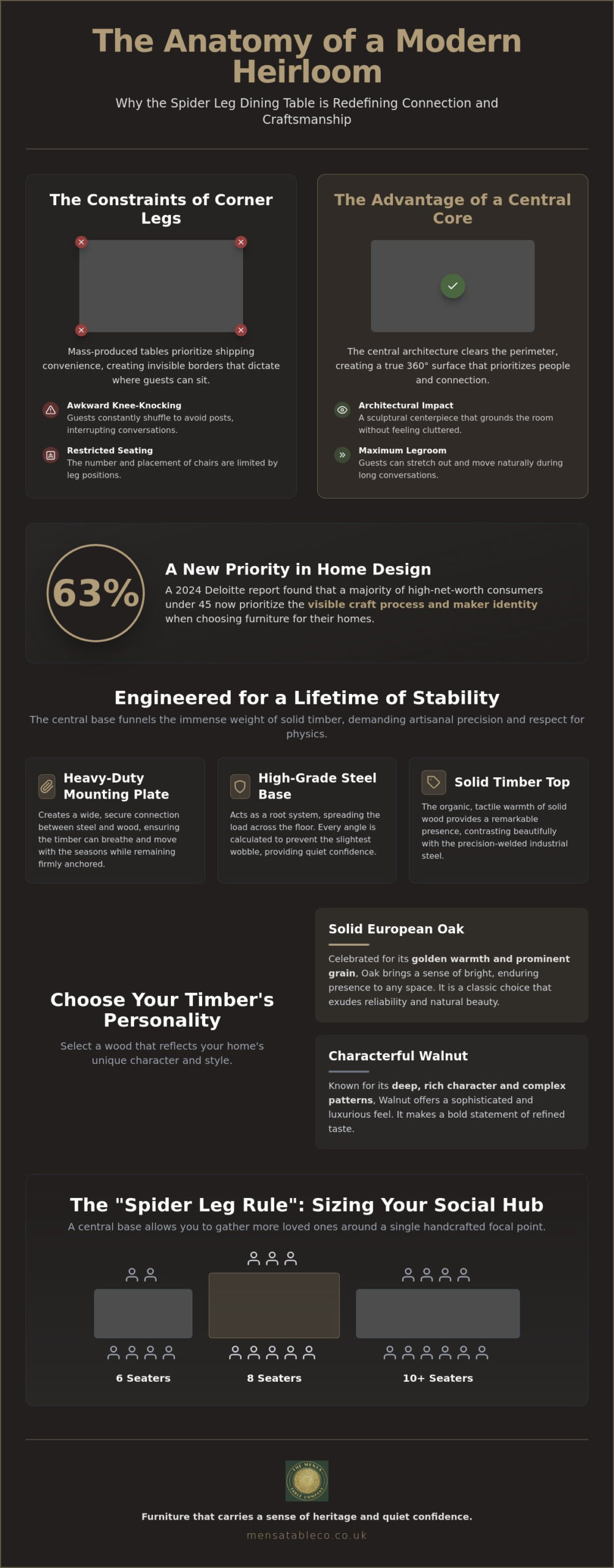
We know you value a home that feels authentic, yet it’s difficult to find furniture that matches that spirit when the market is flooded with flimsy, wobbling alternatives. According to a 2024 Deloitte report, sixty-three percent of high-net-worth consumers under the age of 45 now prioritize the visible craft process and maker identity when choosing pieces for their homes. This guide will help you discover how the architectural beauty of a bespoke spider leg design can transform your dining room into a sanctuary for connection while offering maximum legroom for your guests. We’ll walk through our manual production process, the enduring nature of solid wood, and how to select a unique statement piece that will serve as the backdrop for your family’s most cherished rituals for years to come.
Key Takeaways
- Discover how the central architecture of a spider leg dining table invites social fluidity and provides the generous legroom that traditional corner legs often restrict.
- Understand the honest engineering and precision required to balance heavy, solid wood surfaces for a lifetime of stable, wobble-free connection.
- Learn to choose between the golden warmth of Oak and the deep character of Walnut to best reflect your home’s unique personality.
- Use the “Spider Leg Rule” to find the perfect dimensions for your room, allowing you to gather more loved ones around a single, handcrafted focal point.
- Explore why our commitment to a slow, manual workshop rhythm creates furniture that carries a sense of heritage and quiet confidence.
The Evolution of the Anchor: What is a Spider Leg Dining Table?
A spider leg dining table features a central, multi-faceted base where high-grade steel legs radiate from a single point of origin. It represents a significant departure from the four-cornered constraints we’ve lived with for centuries. The Evolution of the Anchor in furniture design shows a steady progression toward pieces that prioritize human interaction over mere utility. This architectural shift replaces four peripheral legs with a singular, powerful core, creating a central gravity that pulls the room together.
The aesthetic appeal lies in the contrast of materials. We pair the cold, precision-welded industrial steel with the tactile, organic warmth of a solid wood top. This combination is intentional. It grounds the modern open-plan home by offering a visual weight that doesn’t feel cluttered; it provides a psychological anchor for the household, turning a simple piece of furniture into a landmark for daily life.
The Problem with Traditional Table Legs
Traditional corner legs often dictate your evening before it even begins. They act as invisible borders, telling your guests exactly where they can and cannot sit. We’ve all experienced the “knee-knocking” dilemma, that awkward shuffle to avoid a wooden post while trying to enjoy a meal. Mass-produced furniture sticks to this four-corner model for ease of shipping, but it sacrifices the comfort of the people using it.
The Spider Leg Advantage: Social Fluidity
The Spider Leg Dining Table solves this by clearing the perimeter. With the support moved to the center, you gain a true 360-degree seating surface. There are no “bad seats” here. This design allows for effortless chair placement or the seamless integration of matching benches. Despite its structural strength, the radiating legs create an airy, sculptural look that makes even a grand table feel light.
The benefits of this central architecture include:
- Flexible seating: You can tuck chairs in anywhere without hitting a leg.
- Bench compatibility: Benches can slide fully under the table when not in use.
- Architectural impact: The table becomes a piece of art rather than just a utility.
- Maximum legroom: Guests can stretch out and move naturally during long conversations.
It’s about freedom. It’s about making space for one more guest without compromise. By choosing a central base, you’re choosing a design that prioritizes the people gathered around it rather than the logistics of the factory floor.
Engineering Stability: The Craftsmanship Behind the Central Base
The structural integrity of a spider leg dining table begins with an understanding of equilibrium. Unlike traditional tables that lean on four corners, this design funnels the immense weight of a timber top into a singular, central hub. This requires more than just aesthetic flair; it demands a deep respect for the laws of physics. We use high-grade steel to create a base that acts as a root system, spreading the load across the floor while maintaining a perfectly level surface. Every angle is calculated by hand to prevent the slightest hint of a wobble, providing a quiet confidence that only comes from artisanal precision.
There is a specific rhythm to the way we work with metal. We don’t rush the cooling of a weld or compromise on the gauge of the steel. This patience ensures that the finished piece isn’t just a table, but a rock-solid foundation for your home’s social life. It’s an honest approach to furniture making where the strength of the base is as important as the beauty of the grain above it.
Balancing the Load: Supporting Solid Timber
Choosing a Solid European Oak top brings a remarkable presence to a room, but it also brings significant weight. A standard, mass-produced base simply isn’t built to handle the density of high-quality hardwood over several decades. We solve this by integrating a heavy-duty mounting plate that creates a wide, secure connection between the steel and the wood. This plate ensures the timber can breathe and move naturally with the seasons while the legs remain immovable. The footprint of the base is carefully calibrated: it must be wide enough to guarantee absolute stability yet narrow enough to stay out of the way of your guests’ feet.
The Artisan’s Touch vs. Mass Production
In a world of automated factories, there is a distinct difference in the soul of a hand-welded piece. Mass-market “flat-pack” spider legs often rely on bolts and thin-walled tubing to save on shipping costs. These joints are prone to structural fatigue, loosening over time as the table is used. Our process is different. We use manual welding techniques to fuse the steel into a single, monolithic structure. This eliminates the weak points found in bolted furniture. We then apply a finish that protects the metal while celebrating its raw, industrial character. If you have specific questions about how we tailor these bases for your space, you can speak with our workshop team about your requirements.
The result is a table that feels steadfast during daily use. Whether it’s a quiet morning coffee or a lively dinner party, the base remains an invisible, reliable support. It’s a testament to the idea that true beauty is found in the things that are built to last, honoring both the natural origin of the wood and the manual skill of the maker.
Selecting Your Timber: Oak vs. Walnut for Your Spider Leg Table
Choosing the wood for your spider leg dining table is a deeply personal decision that sets the narrative for your entire home. It’s the surface where your hands will rest during morning coffee and where your family will gather for years to come. We believe the timber should speak for itself, which is why we only source sustainably harvested, kiln-dried planks. This careful drying process is essential; it ensures the wood remains stable and resists warping as it adapts to the unique climate of your home. The bold, architectural lines of the steel base require a timber that can hold its own, creating a balanced dialogue between industrial strength and organic beauty.
Every species of wood carries its own energy and history. As the decades pass, your table will develop a unique patina, a soft sheen that comes from years of use and care. This aging process is one of the most rewarding aspects of owning solid wood furniture. It transforms a functional object into a family heirloom that carries the marks of your shared history.
Solid European Oak and Ash: Timeless Resilience
Solid European Oak remains the gold standard for the British home. It’s a timber that offers a sense of permanence and heritage, featuring a tight grain and natural knots that serve as a signature of authenticity. For those seeking a brighter, more modern energy, Solid European Ash is an exceptional alternative. It brings a lighter palette to the room while maintaining incredible structural resilience. We celebrate the natural “imperfections” in these woods, as they remind us that each table was once a living, breathing part of a forest.
Solid Black Walnut and Swedish Pine: Luxury and Warmth
If you’re looking for a piece that exudes quiet luxury, Solid Black Walnut is unmatched. Its deep, chocolate tones and swirling grain patterns create a sophisticated backdrop for formal gatherings and executive dining. On the other end of the spectrum, Solid Swedish Pine offers a rustic charm and accessible warmth that feels immediately lived-in. When it comes to finishing your spider leg dining table, we favor oils that allow the wood to breathe and lacquers that protect its history without masking its tactile soul. Your choice of finish will dictate how the wood feels under your fingertips, ensuring the table remains a sensory delight for generations.
- Sourcing: We prioritize ethical origins and the natural lifecycle of the forest.
- Durability: Kiln-drying prevents the movement that plagues mass-produced timber.
- Character: No two planks are identical, ensuring your table is a one-of-a-kind statement.
- Longevity: Solid wood can be refinished and repaired, unlike veneer alternatives.
Sizing Your Social Focal Point: From 6-Seaters to Grand 10-Seaters
Selecting the right dimensions for a spider leg dining table is about more than just measuring floor space; it’s about understanding the movement of your household. A table acts as a social anchor, and its size dictates how people gather, linger, and converse. While we’ve discussed the engineering that allows these tables to support massive timber tops, the physical footprint must also respect the walkways and natural flow of your room. You want enough presence to make a statement, yet enough clearance to move comfortably around the perimeter. Pairing your choice with Matching Benches can further enhance this communal feel, offering a rustic, inclusive seating arrangement that traditional chairs sometimes lack.
The “Spider Leg Rule” is a unique advantage of this central base design. Because there are no corner legs to navigate, you possess far more flexibility in how you arrange your seating. Guests can sit closer together or spread out without ever worrying about straddling a wooden post. This often means you can fit one or two extra people around a spider leg design compared to a traditional four-legged table of the same length, making it the superior choice for those who love to host spontaneous gatherings.
Calculating the Perfect Fit
To ensure every guest feels at ease, we recommend following the 60cm rule. This provides each person with enough elbow room for the social rituals of dining without feeling cramped. A 180cm table typically serves as a comfortable 6-seater, while a grand 240cm surface can easily accommodate up to 10 guests. Bespoke sizing is the only way to perfectly anchor a unique room. By tailoring the length and width to your specific layout, you ensure the table feels intentional rather than like an afterthought.
Integrating the Table into Your Home
When positioning your table, consider the placement of the spider base in relation to floor vents or architectural obstructions. The central cluster of legs is remarkably forgiving, but it’s worth planning the orientation to maximize legroom. For a truly cohesive design language, you might pair your dining piece with handcrafted Coffee Tables that echo the same timber and steel aesthetic. The visual impact of the table top thickness also plays a role in the room’s mood. A minimalist 24mm top feels light and contemporary, while a bold 50mm slab creates a sense of heritage and permanence that grounds the entire home.
Finding the right balance between seating capacity and room flow is a delicate process. If you’re unsure which dimensions will best serve your family’s needs, contact our workshop team today to discuss the ideal dimensions for your dining space.
The Mensa Table Company: A Legacy of Handcrafted Excellence
In our workshop, the pace is dictated by the materials, not a production quota. We believe that a spider leg dining table deserves a level of attention that mass-market brands simply cannot afford to give. While warehouses focus on next-day delivery and stock clearance, we focus on the grain of the oak and the integrity of the weld. This deliberate, steady rhythm is what allows us to create furniture that carries a quiet confidence and a sense of permanence. We reject the flat-pack philosophy because it strips the soul out of the home. Instead, we offer a manual approach that ensures your table is a site for human connection, not just a transactional exchange.
Choosing a specialist maker over a mass-market brand is an investment in longevity. Our pieces aren’t designed for a single season; they’re built to be passed down through generations. We select every piece of raw timber for its unique character and history, ensuring that the natural origins of the wood are always at the forefront of the design. This commitment to quality means your table will age beautifully, developing a patina that tells the story of your home’s social rituals.
From Raw Timber to Your Centrepiece
Our methodology leads with the raw materials and the manual skill of our team. Every spider leg table begins as a careful selection of timber, where we look for the knots and grain patterns that will give your piece its identity. Our collective of craftsmen works in a specific, localized setting, allowing for a level of quality control that automated factories can’t match. There is a deep emotional value in owning a piece of furniture with a known origin, knowing exactly whose hands shaped the steel and finished the wood. It transforms a commodity into a meaningful life investment.
Starting Your Bespoke Journey
Collaborating with us allows you to tailor your furniture to the specific needs of your space. We work closely with you to select the ideal wood species and dimensions, ensuring the final piece anchors your room perfectly. Beyond our signature dining tables, we also craft matching elements like Breakfast Bars to create a cohesive aesthetic throughout your living area. Every project we undertake is a partnership between the creator and the end user, rooted in transparency and a shared respect for natural elements. To begin crafting the focal point of your home, we invite you to Contact The Mensa Table Company and speak with our workshop team today.
Crafting the Heart of Your Home
Choosing a spider leg dining table is an intentional act of design that prioritizes the comfort of your guests and the longevity of your furniture. We’ve explored how moving the support to the center creates a fluid seating environment where no one is restricted by corner legs. By selecting premium, kiln-dried timbers like Solid European Oak or Black Walnut, you’re ensuring that your table ages with grace, carrying the story of your family through the decades.
Since 2018, our team has been handcrafting these pieces in the UK with a steadfast commitment to manual production. We are specialists in Solid European Oak and Black Walnut, and we remain dedicated to a process that rejects flat-pack alternatives in favor of raw, honest materials. Every weld and every finish is applied with the goal of creating a sanctuary for connection in your dining room. We invite you to contact us today to discuss your custom spider leg dining table and begin the journey toward a piece that feels uniquely yours. We look forward to helping you anchor your space with a work of art that will be cherished for generations.
Frequently Asked Questions
Is a spider leg dining table stable?
A spider leg dining table is exceptionally stable when engineered correctly with high-grade steel. The central hub acts as a root system, distributing the weight of a heavy solid wood top evenly across the floor. Unlike mass-produced furniture that might use thin tubing, our manual welding process creates a monolithic structure that eliminates wobbling. This design allows you to host lively dinner parties with the quiet confidence that your table remains rock-solid.
How much legroom do you get with a spider leg table?
You gain maximum legroom because the support is concentrated in the center of the table rather than at the corners. This architectural choice removes the common frustration of knocking knees against traditional table legs. Guests have the freedom to sit anywhere around the perimeter, making it easier to tuck in chairs or slide in and out of the seating area. It creates a fluid social space where everyone can stretch out comfortably.
What is the best wood for a spider leg dining table?
Solid European Oak and Black Walnut are the premier choices for this design. Oak offers a golden, resilient surface with a timeless grain that suits the British home perfectly. Black Walnut provides a deeper, chocolate-toned sophistication for those seeking a more luxurious focal point. Both woods are kiln-dried to ensure they age beautifully alongside the industrial strength of the steel base, creating a balanced and enduring piece of furniture for your home.
Can I use benches with a spider leg table?
Yes, matching benches are an ideal pairing for a central leg design. Because the perimeter is clear of obstructions, a bench can slide fully underneath the table top when it isn’t being used. This setup encourages a communal, rustic atmosphere and allows you to maximize the floor space in your dining area. It is a practical choice for families who value a relaxed and inclusive approach to shared meals and social rituals.
How do I care for a solid wood table top?
Caring for your solid wood top involves simple, regular maintenance to preserve its natural beauty. We recommend using coasters and placemats to protect the timber from heat and moisture. For daily cleaning, a soft, damp cloth is usually sufficient. Depending on the finish you choose, applying a fresh coat of oil every few years will help the wood breathe and maintain its tactile quality, allowing it to develop a unique patina over time.
What size spider leg table do I need for 8 people?
To comfortably seat 8 people, we recommend a table length between 210cm and 240cm. This sizing follows the 60cm rule, which ensures every guest has enough elbow room for dining. Because the spider leg dining table base doesn’t restrict the corners, you have more flexibility with chair placement than you would with a standard table. This allows you to gather your loved ones together without the space feeling cramped or overcrowded during long conversations.
Are spider leg tables better for small rooms?
Spider leg tables are excellent for smaller rooms because their architectural base creates a sense of openness. While a traditional four-legged table can feel visually heavy and block walkways, the radiating legs of a central base allow light and air to flow through the space. This makes the table feel less intrusive. The ability to tuck seating entirely under the table top also helps keep smaller dining areas feeling organized and spacious.
How long does a handcrafted dining table take to make?
Handcrafting a bespoke dining table is a deliberate process that typically takes several weeks to complete in our workshop. This timeline allows us to carefully select the raw timber, kiln-dry the wood to the correct moisture content, and precisely weld the steel base. We don’t rush these steps because high-quality output requires patience. This steady rhythm ensures that the finished piece you receive is a worthy, long-term investment that carries a sense of heritage.

Leave a Reply