
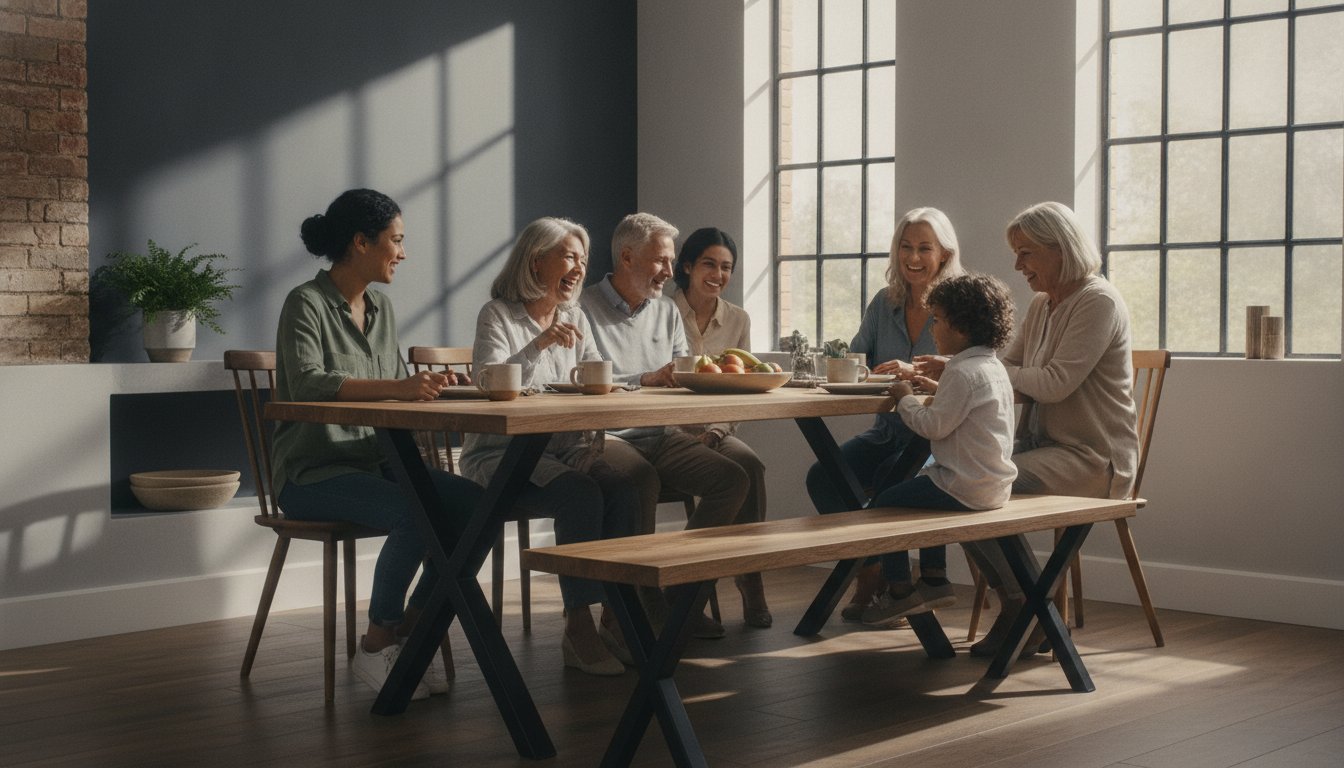
Imagine hosting a Sunday roast where the laughter flows easily, yet you aren’t constantly shifting to ignore a distracting wobble or the cold, thin feel of a synthetic finish. For many UK homeowners, the search for the perfect oak dining bench often ends in frustration when a supposedly solid piece arrives feeling flimsy or turns out to be nothing more than a clever veneer. You deserve furniture that truly reflects the heart of your home, providing a sturdy and reliable place for family to gather without the visual clutter of bulky, mismatched chairs.
We believe that a dining area is more than just a functional space; it’s a site for human connection and shared social rituals. This guide will help you discover how a bespoke, handcrafted bench can elevate your daily experience through artisanal craftsmanship and clever, space-saving functionality. You’ll learn how to select the right dimensions so your seating tucks perfectly under your table, and why choosing authentic European oak ensures a tactile piece that lasts for generations. We will walk you through the journey of creating a cohesive, high-quality focal point that brings organic warmth and a sense of heritage to your living space.
Key Takeaways
- Learn why the natural warmth and unique grain of solid timber foster a more intimate, communal atmosphere in the heart of your home.
- Understand the critical differences between solid European timber and thin veneers to ensure your oak dining bench remains a generational heirloom rather than a temporary fixture.
- Discover how to coordinate bespoke leg designs, such as X-Frame or U-Frame styles, to create a seamless and intentional look with your dining table.
- Master the “tuck-under” rule for measuring, allowing you to maximise floor space without compromising on seating capacity or comfort.
- Explore the journey of sustainably sourced timber from our UK workshop to your home, highlighting the enduring value of manual, artisanal production.
The Allure of the Oak Dining Bench: Why Seating Matters
Choosing the right seating for your home is an act of curation that defines how your family interacts every single day. An oak dining bench offers a unique blend of rugged durability and refined grace, serving as a quiet anchor for the room’s energy. Beyond its physical presence, the timber itself tells a story. When you run your hand across the surface, you feel the history of the tree, expressed through a grain that is as complex as it is beautiful. It is an invitation to sit, stay, and connect with the natural world from the comfort of your kitchen.
The properties of oak wood are what set it apart from softer, mass-produced alternatives. You’ll notice the distinctive medullary rays, those shimmering ribbons of cells that radiate through the trunk, which catch the light and prove the authenticity of the solid timber. These golden tones and intricate patterns allow an oak dining bench to sit comfortably in a minimalist Scandi flat or a textured, industrial-rustic barn. By investing in such a piece, you’re making a conscious choice for sustainability. A well-crafted bench is designed to last for generations, ensuring it never becomes part of the throwaway culture that leads to landfills.
Benches vs. Chairs: A Functional Comparison
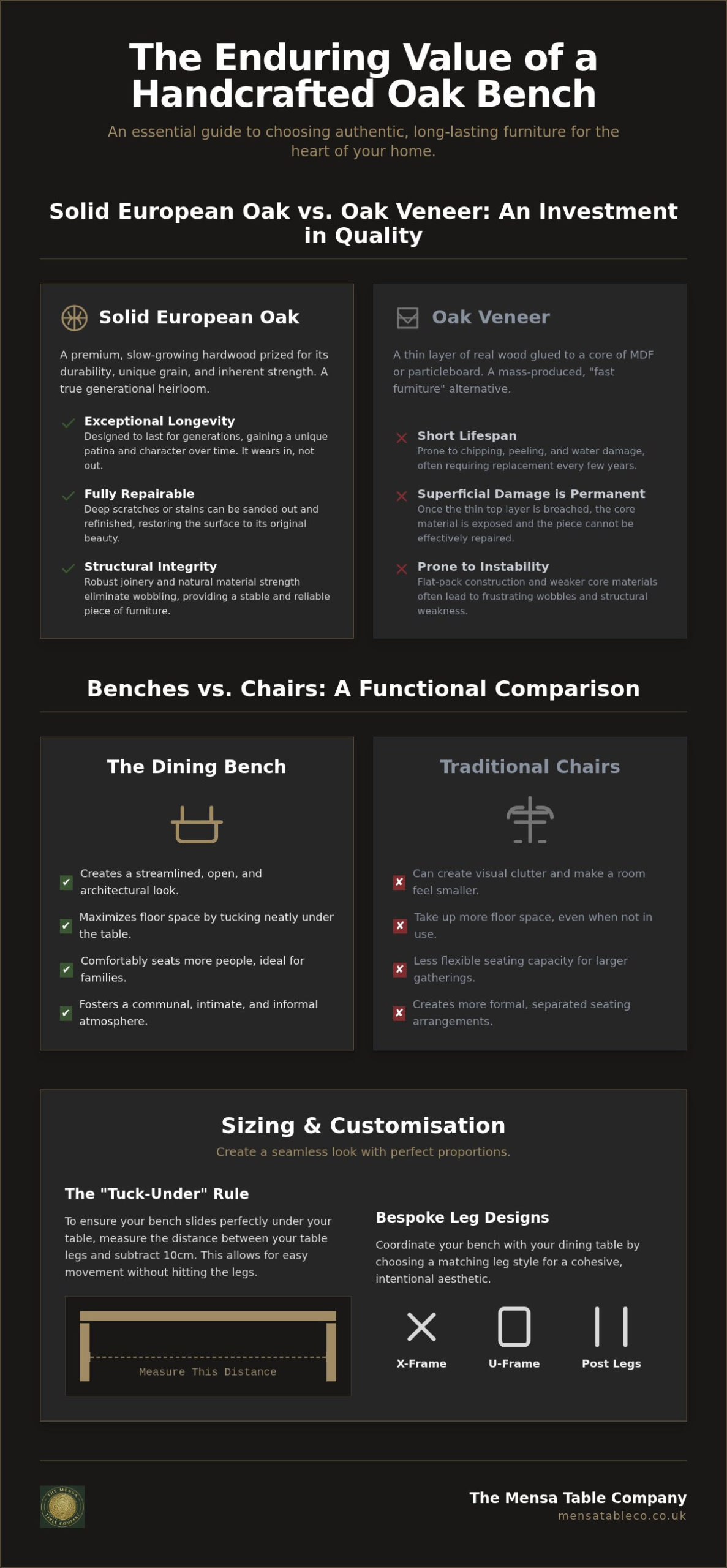
While chairs have their place, they often create visual noise in a smaller room. A bench provides a streamlined, architectural look that opens up the space, especially in modern open-plan layouts. It’s a practical triumph for large gatherings too. You can comfortably fit three children where two chairs would struggle, fostering an atmosphere of informal huddling and shared secrets during mealtime. When the dinner is over, many of our matching benches can simply slide out of sight, reclaiming your floor space instantly.
The Psychological Warmth of Solid Timber
Natural wood acts as a grounding element, softening the hard edges of glass, steel, or concrete often found in contemporary UK homes. There’s a profound emotional value in owning furniture that ages alongside your family. Instead of wearing out, solid oak wears in. It gains a unique patina; a map of every spilled glass of wine and every homework session, transforming a simple object into a cherished heirloom. It isn’t just a seat. It’s a welcoming centrepiece that invites people to slow down and appreciate the moment.
Solid European Oak vs. Oak Veneer: Investing in Quality
Solid European Oak is a premium, slow-growing hardwood prized for its durability and intricate grain patterns. It stands in stark contrast to the “oak effect” or “oak finish” items frequently found in high-street catalogues. These mass-produced pieces often hide a core of compressed sawdust or MDF behind a paper-thin layer of wood. While they might look the part on delivery day, they lack the soul and structural integrity of a genuine oak dining bench. Over time, veneers tend to peel or chip at the edges, revealing the unsightly artificial material beneath.
One of the most significant advantages of solid timber is its inherent repairability. If your bench suffers a deep scratch or a stubborn stain after years of family life, you can simply sand it back and refinish it. You can’t do that with a veneer; once the thin surface is breached, the piece is effectively ruined. Solid wood is a living material that evolves, gaining a rich character that tells the story of your home. It isn’t just furniture. It’s a canvas for your family’s history.
The Craftsmanship of Joinery
Our approach to building furniture is rooted in traditional methods that respect the natural origins of the material. By choosing solid European oak, we ensure every joint is robust enough to eliminate the frustrating “wobble” associated with mass-produced, flat-pack alternatives. We meticulously design our benches to allow for natural timber movement. This is a necessary process as wood breathes and reacts to the shifting humidity in your home. This attention to detail ensures the structure remains sound for decades, providing a stable and reliable seat for every meal.
Longevity as a Life Investment
It’s tempting to look at “fast furniture” as a bargain, but the true cost reveals itself when the item needs replacing every few years. A handcrafted heirloom is a one-time investment that holds its value, often becoming a cherished family legacy passed down to the next generation. There is also a distinct tactile satisfaction in the weight and the solid “thud” of genuine timber. It feels permanent. It feels like home. If you have specific requirements for your space or want to explore how a bespoke piece might fit, we’d love to discuss a commission with you.
Coordinating Your Space: Matching Bench Legs to Dining Table Styles
The silhouette of your furniture often speaks louder than the timber itself. While the tabletop provides the tactile surface we interact with, the leg design dictates the architectural mood of your dining room. Choosing the right frame for your oak dining bench is about more than just support; it is about creating a visual dialogue with your table. Whether you lean towards the rugged strength of an industrial X-Frame or the clean, minimalist profile of a U-Frame, the legs act as the anchor for your room’s aesthetic.
For those seeking a more geometric, contemporary statement, Trapezium and A-Frame designs offer sharp lines that feel both modern and intentional. These styles work particularly well in open-plan UK homes where furniture needs to look good from every angle. The choice between an “all-wood” look and powder-coated steel is another pivotal decision. All-wood frames suggest a timeless, heritage feel, while steel legs introduce a layer of industrial texture that can modernise even the most traditional space.
Coordinating Your Signature Table
When you are pairing a bench with a statement piece like the Spider Leg Dining Table, balance is essential. You want the frames to complement each other rather than clashing for attention. If your table features a complex, central leg design, a simpler U-Frame or Trapezium bench provides a calm, structural partner. You can also create a truly bespoke aesthetic by mixing timber species. Pairing an oak dining bench with a solid black walnut table creates a sophisticated contrast in grain and tone that feels curated and unique.
The Industrial Edge
Black steel legs have become a staple in modern British interiors for good reason. They are incredibly resilient. For busy households, powder-coated steel offers the ultimate durability, resisting the scuffs and knocks that come with daily family life. The real beauty of this style lies in the juxtaposition of materials. The cool, industrial metal provides a sharp, dark frame that makes the organic warmth and golden hues of the solid European oak top truly stand out. It is a marriage of the man-made and the natural that feels both grounded and effortlessly stylish.
Sizing and Placement: How to Measure for Your Oak Bench
Finding the right fit for your home is a balance of mathematics and intuition. While many retailers offer standard lengths that might almost work, a bespoke oak dining bench is crafted to harmonise perfectly with your specific table and room dimensions. The goal is to create a seating area that feels intentional rather than squeezed in. Whether you want to maximise floor space or create a grand visual statement, understanding how to measure is the first step in the journey.
The “Tuck-Under” Rule is perhaps the most vital consideration for modern UK living. It allows you to slide your bench completely beneath the table when it isn’t in use, instantly reclaiming your floor space. Conversely, a full-length bench matches the tabletop exactly, providing a more formal and imposing profile that anchors the room. Comfort is equally dictated by vertical space. We recommend maintaining a 25-30cm gap between the seat and the table’s underside to ensure guests have plenty of room for their legs without feeling cramped.
The Step-by-Step Measuring Guide
Start by measuring the internal distance between your table legs at the exact height where the bench seat will rest. It’s essential to subtract 5-10cm from this total to provide “breathing room”. This small allowance prevents the bench from scraping the legs and makes it much easier for people to slide in and out. You should also check your standard dining table height before choosing a bench thickness, as a thicker oak slab may require a slightly lower frame to maintain those vital ergonomic gaps. Depth is another factor; a 35-40cm seat depth usually provides the best balance between comfort and floor space.
Planning for People
Seating capacity is often the primary driver for choosing a bench. A 160cm oak dining bench comfortably seats three adults, while a 200cm model is ideal for four. However, it’s worth accounting for “elbow room” during long dinner parties. If you frequently host, consider a hybrid seating plan. Pairing a bench on one side with individual chairs on the other provides maximum flexibility for your guests. If you have a unique space that requires a non-standard length, we can help. You can request a quote for a bespoke size to ensure your new seating fits your home perfectly.
The Mensa Workshop: Handcrafting Your Bespoke Oak Bench
The journey of every oak dining bench begins with a single, carefully selected slab of European timber. In our UK workshop, we don’t believe in the hurried pace of modern manufacturing. Instead, we follow an artisanal philosophy where every piece is made to order, ensuring that the furniture in your home is as unique as the family that gathers around it. This manual approach allows us to honour the natural origins of the wood, transforming raw boards into functional art that serves as the heart of your dining experience.
Bespoke flexibility is at the very core of what we do. We understand that a dining space is rarely “standard,” which is why we tailor the length, width, and finish of our benches to complement your specific table model. Whether you’ve chosen a Spider Leg or an X-Frame design, we ensure the companion seating is a perfect match in both style and proportion. We invite you to explore our full range of matching benches to see how these elements come together.
Small-Batch Production vs. Mass Manufacturing
Mass manufacturing relies on speed, often sacrificing the soul of the timber for the sake of volume. In contrast, our small-batch production focuses on manual oversight. We hand-select each board, looking for the most evocative grain patterns and ensuring that every oak dining bench we build is a generational investment. Our joinery is designed to stand the test of time. It is a blend of professional expertise and a quiet, humble pride in our trade. We don’t build temporary fixes; we create heirlooms that will be passed down through your family for decades.
Designing Your Home’s Future
When you choose a piece from our workshop, you’re investing in more than just timber and steel. You’re creating the backdrop for your family’s most meaningful social rituals. From the quiet of a morning coffee to the boisterous energy of a holiday feast, our furniture is designed to hold those memories. Supporting UK-made, artisanal furniture provides a peace of mind that mass-produced imports simply cannot match. It is a commitment to quality and environmental responsibility. If you’re ready to start your journey, please contact us to discuss your bespoke bench requirements and let us help you design a piece that truly belongs in your home.
Investing in the Heart of Your Home
Choosing the right furniture is a quiet commitment to the social rituals and family gatherings that define your home life. By prioritising solid European oak over temporary veneers, you’ll ensure that your seating remains a durable, tactile focal point that gains character with every passing year. Whether you select a rugged X-Frame or a streamlined U-Frame, matching your leg design to your table creates a sense of intentional, architectural harmony that mass-produced pieces simply can’t replicate.
Every oak dining bench we handcraft in our UK workshop is a celebration of artisanal skill and manual production. We value the connection between the maker and the end user. This is why we offer bespoke sizing to ensure your new piece fits your space with absolute precision. If you’re ready to invest in a handcrafted heirloom that bridges the gap between functional strength and organic beauty, we’re here to help. You can get a quote for your bespoke oak bench today. We look forward to crafting a piece that will be part of your family’s story for generations.
Frequently Asked Questions
Is an oak dining bench as comfortable as a chair?
An oak dining bench offers a different kind of comfort rooted in stability and shared space. While it lacks the back support of a traditional chair, its solid, wide surface provides a grounding feel that encourages better posture. Many find the communal nature of a bench more relaxing for long, informal meals. You can always add high-density foam cushions or sheepskins to introduce a layer of softness without hiding the beautiful grain.
How do I know if a bench will fit under my dining table?
To ensure a perfect fit, you must measure the internal distance between your table legs rather than the tabletop length. We recommend subtracting at least 5cm from this measurement to provide enough “breathing room” for the bench to slide in and out without catching the frame. This “tuck-under” rule is essential for reclaiming floor space in smaller UK kitchens. Don’t forget to check the height of any low-hanging table skirts.
Can I use an oak bench with a different species of wood table?
Mixing timber species is a sophisticated way to add depth and visual interest to your dining room. An oak bench pairs beautifully with a darker walnut table or a lighter ash frame, creating a curated, eclectic look that feels intentional. The key is to find a common thread, such as a matching leg style or a similar finish, to ensure the different grains and tones feel like a cohesive set rather than a mismatch.
How do I clean and maintain the finish on my solid oak bench?
Cleaning your oak dining bench requires nothing more than a soft, slightly damp lint-free cloth to remove daily dust and crumbs. Avoid harsh chemical sprays or abrasive cleaners that can strip the natural oils and dull the finish over time. Because our furniture is made from solid timber rather than thin veneers, you have the unique advantage of being able to lightly sand and refinish the surface if it ever suffers a deep scratch.
Will the oak move or crack over time?
Solid wood is a living, breathing material that naturally reacts to shifts in humidity and temperature within your home. While minor movement is expected as the seasons change, our artisanal joinery is specifically designed to accommodate this “breathing” without compromising the bench’s structural integrity. This careful craftsmanship prevents the significant cracking often seen in mass-produced items where the timber is pinned too tightly or dried too quickly in industrial kilns.
What is the best leg style for a small dining room?
For smaller dining spaces, the U-Frame or Trapezium leg styles are often the most effective choices. These designs offer clean, vertical lines that create a sense of visual openness and prevent the room from feeling cluttered. Because the legs are positioned at the very ends of the bench, they allow for the maximum possible “tuck-under” space, ensuring you can slide the seating completely out of the way when you aren’t hosting guests.
How many people can sit on a 150cm oak bench?
A 150cm oak dining bench is the ideal size for comfortably seating three adults or four children during family meals. This length provides enough “elbow room” for guests to dine without feeling restricted, making it a popular choice for standard 1.8m to 2m tables. If you frequently host larger dinner parties, you might consider a slightly longer bespoke piece to ensure everyone has a dedicated space at the heart of the home.
Do you offer bespoke lengths for non-standard tables?
We specialise in creating bespoke furniture tailored to your exact requirements in our UK workshop. Because we don’t rely on pre-set templates or mass-produced components, we can adjust the length, width, and height of your bench to suit a non-standard table or a specific alcove. Every piece is made to order, allowing us to provide a truly personal service that ensures your new seating integrates perfectly with your existing home layout and table model.

Leave a Reply