
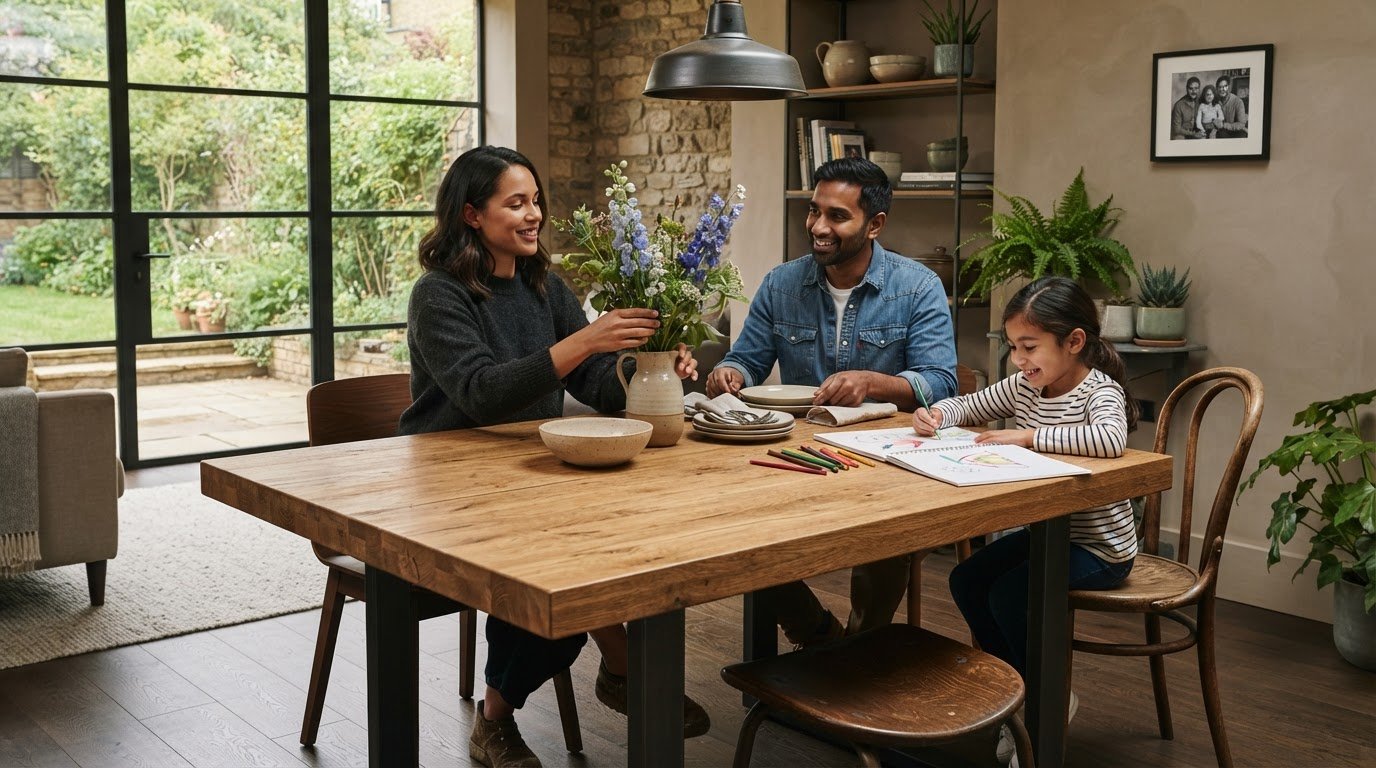
Furniture that feels authentic and personal starts with what matters to you, not what’s trending. It reflects your routines, memories and values while offering the comfort and usefulness you need every day. Materials help shape that character: the grain and warmth of wood, the clean lines of metal or the softness of upholstery all affect how a room feels to live in.
It’s natural to want a considered-looking home, but a polished room won’t feel like yours if every choice follows a passing trend. A meaningful piece can be practical as well as beautiful, giving you a place to gather, work or share everyday moments with the people who matter.
This guide explores how furniture can express identity, how materials reflect personal values and how to balance current styles with lasting comfort. Use these ideas to choose pieces that suit your home, your habits and the life you want them to hold.
Key Takeaways
- Choose pieces around how you live and what you value, rather than letting a passing trend set the direction.
- Use colour, arrangement and meaningful details to create a home that reflects your experiences and personality.
- Consider how a material feels and what it represents to you before deciding which furniture belongs in your space.
- Compare vintage character with the appeal of new furniture by thinking about the history and role you want each piece to have.
- Explore dining table designs that can become a natural gathering point for everyday meals and shared moments.
Balancing trends with individuality
Let your routines lead, then borrow selectively from current styles. A sculptural chair may catch your eye, but consider where it will go and how often you’ll use it. A dining table chosen for shared meals may matter more than a fashionable finish. Trends can inspire you without dictating the whole room.
Mix inherited, vintage and contemporary furniture by repeating an element such as wood tone, colour or shape. Pair a family sideboard with a contemporary table, for instance, and echo the sideboard’s warm wood in a frame or bowl. Keep other details simple so each piece has room to stand out.
Try a trend first in a small, changeable detail. Cushions, lampshades and artwork can introduce a current colour without committing to a large furniture purchase. If mustard suits your room, add a cushion beside neutral seating. You can change the accent later and keep the pieces you value.
Plan the room around its purpose, not a catalogue image. A living room arranged around a sofa can make conversation or family time feel natural. In a dining area, leave enough clear space around the table for people to sit and move. Defined zones can also bring order to an open-plan room.
Use spacing to create the atmosphere you want. Separated furniture leaves a more open flow, while grouped chairs can make a conversation area feel intimate. In a small flat, a piece with more than one function may offer useful flexibility. The right arrangement depends on your room and daily routines.
Give comfort as much attention as appearance. When testing a sofa, sit for longer than five minutes; a brief showroom trial may not reveal discomfort that emerges at home. A seat that’s too deep can encourage slumping and reduce back support. Medium- to high-density foam offers a balance between comfort and durability.
Let a room develop instead of buying every piece to match. Start with an anchor, such as a dining table or sofa, then add items that support its use. A contemporary table can work beside inherited chairs when their finishes or proportions share a visual link. Personal objects help the combination feel deliberate.
Before choosing a trend-led piece, picture it alongside furniture you already own. Ask whether its colour, material or shape has a lasting connection to your taste. Imagine it without trend-led accessories: does it still make sense? If it suits your space and habits, it can feel individual rather than temporary.
Keep personal style at the heart of your furniture choices instead of letting trends set the direction. A fashionable look need not dictate what you buy; choose it only if it fits your preferences and helps the room feel like yours.
Contemporary furniture can sit alongside personal touches, such as artwork or meaningful accessories, to express individuality. These details help a room feel personal without requiring every furnishing to follow one trend. Choose combinations that reflect your style, and use current influences only when they genuinely appeal.
Furniture as an expression of identity
Bespoke furniture in the UK has no single typical price. Cost depends on materials, dimensions, design complexity and the work involved. A compact side table and a made-to-measure dining table use different amounts of timber and require different making processes. Compare these details when deciding whether a piece suits your needs.
Your home can reflect your upbringing, culture, experiences and aspirations. A dining table inherited from family might recall Sunday meals, while a desk could support a creative ambition. These connections make furniture more than a backdrop: they give familiar rooms a sense of personal history, even when other furnishings are new.
Colour can help set the atmosphere you want. Grey, beige and white furniture can make a room feel calm and composed. Blue, green or mustard may bring more confidence, creativity or energy. A green chair in a quiet reading corner, for example, can add colour without changing the whole room.
Think about how colour works with the objects already in view. A blue cabinet might echo shades in a much-loved painting. A beige sofa can provide a quieter setting for patterned cushions collected during travels. These combinations make individual choices feel connected, rather than making the room look like a matching set.
Furniture placement is another way to express what matters to you. Carefully spaced pieces and an open route through the room can suit someone who values freedom and flow. A reading chair beside a lamp, with a small table within reach, signals a different priority: quiet time with a book or a cup of tea.
Let your routines shape the arrangement. If friends gather around the kitchen, a clear route between the worktop and dining area supports conversation and movement. If you work from home, place a desk where daily tasks feel separate from relaxation. A layout becomes personal when it supports the activities you repeat.
Your needs change, and furniture choices can change with them. Moving from a shared flat to a family home may shift your needs from compact seating to a larger gathering space. A nursery may later become a study. Choose pieces that suit your life now, then let the room evolve as your priorities do.
To make a choice, name what you want the piece to express. Write down three words, such as welcoming, calm and creative. Then compare its shape, colour and placement with those words. A carefully placed chair in a favourite colour may express them more clearly than a room full of decorative objects.
There is no standard price range for bespoke furniture. Costs vary with the materials, size, design and amount of work required.

Furniture materials and personal values
Reclaimed timber and solid wood can develop distinctive character with age. Their grain, small marks and changes in tone connect each surface to the material’s history.
Material choice can reflect what you want a room to say. Natural wood brings warmth, tradition and a connection to nature. Glass and metal can create a more modern, forward-looking feel. Upholstery in soft fabric, meanwhile, gives a chair or sofa a tactile invitation to rest.
Consider materials in light of your everyday habits. A timber dining table may suit a home where people gather for meals, games and conversation. Glass can help a compact room feel visually open. A fabric armchair may make a reading corner feel softer than one with a hard, polished surface.
Which sustainable furniture materials develop a distinctive patina over time? Reclaimed timber can retain marks and colour variations from earlier use, while solid wood can change in tone and appearance as it ages. These evolving details can make each piece feel more individual.
Personalise a piece with upholstery, finishes or hardware that suit your room. Choose a textured fabric for a chair, a natural-looking finish for timber or simple metal handles for a cabinet. Repeat one colour or material elsewhere to make the detail feel connected.
Consider touch as well as appearance. Compare a smooth finish with more visible grain, or hold fabric samples beside your curtains and cushions. Warm wood can sit comfortably with soft textiles, while metal adds a crisp contrast. Small choices like these help a room feel considered.
How can you care for solid wood and natural-material furniture? Dust with a soft cloth, clean up spills promptly and avoid harsh cleaning products. Follow the maker’s care guidance for the specific finish, since an oiled surface and a sealed surface may need different treatment.
Room conditions matter, too. Keep a wooden table away from direct heat, such as a radiator, and avoid leaving damp items on its surface. A coaster under a mug or a mat beneath a serving dish can help protect the finish during everyday use.
Your values can also shape what you choose to keep. A reclaimed timber surface may preserve visible traces of earlier use, while a newly made piece can offer a fresh start with a chosen material. Consider the story, feel and care each option brings to your home before choosing a finish.
Material choice is about more than appearance; it can also reflect the feeling you want a room to express. Glass and metal are associated with modernity and a forward-thinking mindset, while soft upholstery suggests comfort and relaxation. Let those associations help you decide which quality should lead. A room can feel contemporary, restful or bring both impressions together through its materials.
Consider how each choice works with the other pieces in the room. Glass and metal can create a forward-looking mood, while soft upholstery can make comfort more central. If both qualities matter, balance the materials so the room feels personal rather than governed by a single style. Choose pieces whose look and feel reflect what you value at home.
What makes furniture feel authentic and personal?
A piece feels authentic when it belongs in your real life. Picture a dining table used for weekday breakfasts, homework and Sunday lunch. Its value comes from those repeated moments, not simply its place in the room. Furniture that feels authentic and personal supports the life happening around it.
Start with the job a piece needs to do. A desk needs space for the work you actually do, while a hallway bench gives you somewhere to sit and remove your shoes. If a striking chair blocks the doorway, its appearance works against your routine. Fit matters both in the room and in everyday use.
Look for details that connect a piece to your household. A table with room for a favourite board game might invite longer evenings together. A shelf displaying a relative’s ceramics can bring those objects into everyday life. These choices give furniture a role beyond filling an empty space.
Personal meaning can come from the marks a piece carries. A scratch on a well-used table might recall years of family meals. A cabinet passed between relatives may hold stories alongside its contents. Keep the details that feel welcome, and consider whether visible wear suits the room you want.
Authenticity doesn’t require every item to share one style. A simple dining table can sit beside a distinctive lamp collected during a trip. Their connection might come from a repeated material, a shared colour or the way each object serves the room. Choose links that feel natural rather than forcing every finish to match.
Consider how the piece feels in ordinary use. Sit at the table, reach for nearby objects and notice whether movement feels easy. A chair for long meals should support the way you sit. A surface for crafts should leave room for tools without taking over the whole room.
The right fit is personal, too. Measure the available floor area, then mark the proposed footprint with paper or masking tape. Walk around the outline as you would during a normal day. This simple test helps show whether a piece will support the room’s flow or interrupt it.
Finally, let meaning build over time. A new table may become the place where friends gather for a regular meal. A bookcase might gradually collect novels, photographs and objects from different chapters of life. Choose with care, then let use and memory make the room distinctly yours.
How does vintage furniture compare with new furniture for character and authenticity?
Vintage furniture brings visible history into a room. A worn dining table may carry marks from earlier meals, while a painted cabinet can show layers of colour. These details create character because they belong to that particular piece. New furniture starts without that accumulated history, but can become meaningful through years of use.
Look closely at vintage furniture before deciding what its character means. A faded finish may feel beautifully lived-in, while loose joints or a damaged surface can affect everyday use. Notice whether wear appears on exposed edges, handles or the top. Those marks may tell a story, but condition still matters for how you plan to use the piece.
New furniture offers a different kind of authenticity. Its story begins with the materials, making process and reasons you chose it. A newly made dining table, for example, can become the centre of family meals and celebrations. Its meaning grows from the people gathered around it, rather than from previous owners.
Compare each piece with the role you have in mind. A vintage sideboard might bring warmth to a dining room, but its depth could make a narrow walkway awkward. A new table may fit the available space more closely. Measure the room and consider how people will move around chairs before choosing either option.
Vintage pieces can make a home feel individual without relying on a matching set. Try a distinctive wooden chair beside a plain table, or place an old cabinet against a freshly painted wall. Contrast lets the object’s shape and finish stand out. Repeating a colour nearby can make the combination feel deliberate.
New pieces can offer visual continuity when a room needs a calm foundation. A simple table can sit alongside inherited plates, framed photographs or collected ceramics. The personal character comes from that mixture, not from the age of every item. A considered room can bring old and new together without making either feel out of place.
There’s also a practical difference in what you can assess. A vintage item shows its existing finish, wear and proportions. With new furniture, you can judge its design and fit for your current needs. Either way, examine the edges, surfaces and joints, then imagine the piece in your daily routine.
Choose vintage when its history, shape or patina feels meaningful and its condition suits its purpose. Choose new when a particular size, material or fresh start matters more. Or combine both: let a new dining table anchor the room while a vintage cabinet holds family keepsakes. That balance makes a home feel personal without relying on age alone.
The Mensa Table Company: The Mensa Dining Table
The Mensa Table Company makes dining tables for homes shaped around shared meals and everyday routines. The Mensa Dining Table is a natural place to start if you want a considered design as the centre of your gathering space.
Compare it with the Spider Leg, X-Frame and U-Frame dining tables. Their distinct frame designs offer different looks, so consider which feels at home in your room and suits the character you want to create. Think, too, about how the table will serve your household, from weekday meals to longer gatherings with friends.
If you’re choosing a dining table that reflects your taste and suits your home, contact The Mensa Table Company to discuss your choice.
Make room for the moments ahead
The right table doesn’t need to tell your whole story at once. It can become part of it, bringing familiar faces together for weeknight meals, celebrations and conversations that run late. As you choose, picture the everyday moments you want your home to hold. That vision can guide you towards furniture that feels authentic and personal, not a piece chosen only for its current look.
The Mensa Table Company offers The Mensa Dining Table, the Spider Leg Dining Table and the X-Frame Dining Table. Each gives you a different design direction to consider for your dining space. Think about which form feels at home in your room and suits the way you gather around the table.
If you’re ready to explore a dining table for your home, contact The Mensa Table Company. Take the next step at your own pace, and choose a piece that can find meaning through the moments you share around it.
Frequently Asked Questions
How can I choose furniture that reflects my personality and lifestyle?
Choose furniture that feels authentic and personal by starting with what you do at home each day. Note whether you host meals, read in a quiet corner or need a dedicated place for hobbies. Then compare a piece’s shape, material and practical use with those habits. If you often host friends, for example, prioritise comfortable seating and a table suited to your gatherings over a design chosen purely for display.

Leave a Reply