

The most cost-conscious way to furnish a new home is to buy what you’ll use every day first, rather than trying to fill every room at once. An essential furniture checklist for new movers starts with a bed and bedding, kitchen basics for simple meals, and somewhere comfortable to sit. A dining table and chairs may also be early priorities, offering a practical place to eat, work and share a cuppa.
It’s tempting to picture a finished home from day one, but buying before you’ve lived in the space can leave you with furniture that doesn’t fit your rooms or routines. A little patience helps your budget go further and lets the character of your home take shape naturally.
This guide covers the bedroom, kitchen, living room and dining essentials to prioritise, along with a straightforward way to plan your spending. It also explains why a well-chosen dining table can do more than serve meals: it can become a useful, welcoming centre of everyday life.
Key Takeaways
- Start with a bed, mattress and bedding so your first nights feel settled; add storage and bedside furniture as your needs become clearer.
- Make the living room comfortable with the essentials first, then bring in lamps, storage and finishing touches as your budget allows.
- Measure each room and plan your spending before buying, so furniture suits the space and you can furnish gradually.
- Choose a dining table and chairs that fit your room and routines; this practical centre can support meals, work and time together.
- Prioritise what you’ll use every day, and leave non-essential pieces until you’ve had time to understand how your new home works.
Bedroom furniture and bedding
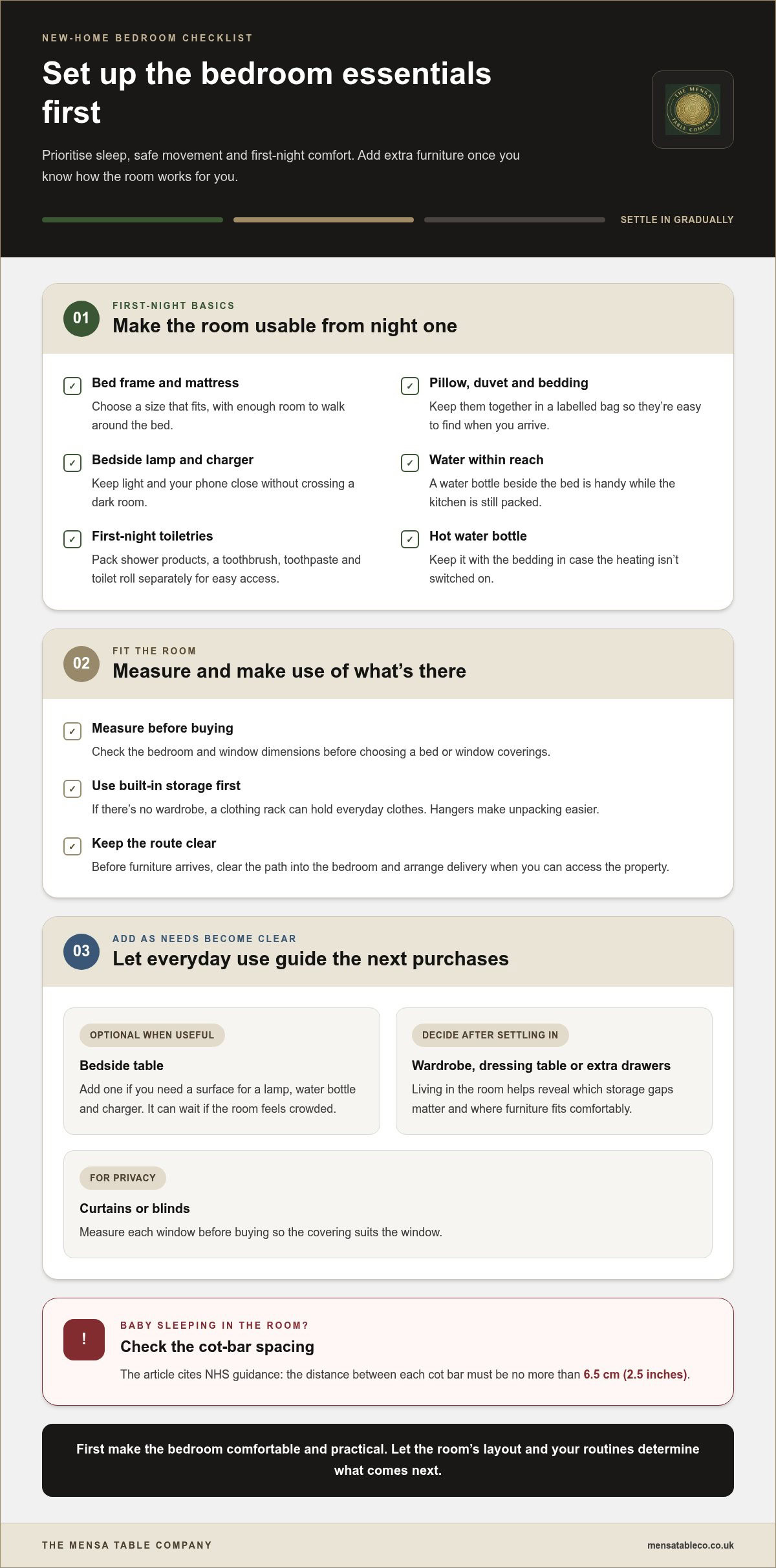
Start with the bedroom basics you need to sleep, dress and move safely around the room. A bed, mattress, bedding and suitable lighting matter more than decorative furniture because they support rest and everyday routines from your first night.
- Prepare a bed frame and mattress. Choose a size that fits the room and leaves space to walk around it, rather than buying before measuring the bedroom.
- Pack a pillow, duvet and bedding for the first night. Keep them together in a clearly labelled bag so you can make the bed without searching through moving boxes.
- Choose bedding that suits your preferences. A duvet with a comfortable weight and pillows that feel right can make the unfamiliar bedroom easier to settle into.
- Set aside a bedside lamp and charger. A lamp gives you light without crossing a dark room, while a charger keeps your phone close overnight.
- Keep water within reach of the bed. A water bottle beside your pillow is a simple first-night essential, especially when the rest of the kitchen is still packed.
- Pack first-night toiletries separately. Put shower products, a toothbrush, toothpaste and toilet roll in an easy-to-reach bag, rather than burying them in bathroom boxes.
- Keep a hot water bottle with your bedding. It can be useful on the first night if the heating isn’t switched on.
- Measure for curtains or blinds before buying. Window coverings can improve privacy, and measuring first helps you choose an option suited to each window.
- Use built-in storage before adding furniture. If the bedroom has no wardrobe, a clothing rack can hold everyday clothes; hangers make unpacking easier.
- Add a bedside table only if it solves a real need. A small surface can hold a lamp, water bottle and charger, but it can wait if the room feels crowded.
- Consider a wardrobe, dressing table or extra drawers later. Living in the room first shows which storage gaps matter and where furniture can fit comfortably.
- Check cot spacing if a baby will sleep in the room. According to NHS, the distance between each cot bar must be no more than 6.5cm (2.5 inches).
If furniture is arriving around moving day in the UK, schedule delivery for when you can access the property and receive the items. When ordering essentials from specialist providers such as Bennetts Bedrooms, confirm lead times early so your bed is ready for your first night. Clear the route into the bedroom first, and avoid arranging bulky deliveries while boxes block the doorway.
Pack a first-night bundle before the rest: bedding, toiletries, a lamp, charger and water bottle. This keeps the bedroom usable while you unpack and lets you delay buying lower-priority pieces until you understand the room’s layout.
Living room furniture, lighting and decor
Set up the living room around the activities you know you’ll do there. A sofa, window coverings, television and working ceiling light cover core needs; other pieces can wait until you’ve tested the layout. Before buying, measure the floor area and note doorways, windows, sockets and the route from the entrance. This helps prevent a sofa or cabinet from blocking a doorway, radiator or plug.
- Choose a sofa that fits the room and household. Measure its full footprint, including space needed to walk past it, so relaxing doesn’t mean squeezing through a narrow gap.
- Check the sofa’s delivery route. Measure the entrance, hallway turns and stairs, then compare them with the furniture dimensions to avoid an awkward arrival.
- Position the sofa with conversation in mind. Face it towards the people and activities that matter, such as visiting family or a television, rather than automatically pushing it against a wall.
- Install curtains or blinds for privacy and light control. Check each window’s measurements and opening direction, because a covering should work with the room’s windows and furniture.
- Make sure the ceiling light works. Test the switch and bulb before unpacking, so you can see clearly while arranging furniture and cleaning.
- Add a lamp where the room needs softer, focused light. A reading lamp beside a favourite chair makes that corner useful after daylight fades.
- Plan around sockets before placing the television. Keep the screen near suitable power and connection points, and avoid trailing cables across the usual walking route.
- Leave clear access to the windows and radiator. A chair or cabinet placed in front of either can make opening windows or cleaning harder.
- Use a rug to define the seating area. Set it beneath or beside the sofa and chairs, so the living space feels arranged rather than scattered.
- Add cushions and a throw after choosing the main furniture. These soft furnishings introduce colour and texture without committing to another large piece.
- Choose storage around what you need to put away. A cabinet for books, games or media keeps everyday belongings close and reduces clutter on other surfaces.
- Bring in plants, wall art or candles gradually. Place each item where it complements the furniture, leaving walls and surfaces open until you understand the room’s character.
- Keep a cleaning route around furniture. Leave space to reach the floor beneath seating and the corners behind cabinets, making routine vacuuming less awkward.
Once the sofa and lighting are in place, live with the arrangement before filling every corner. Notice where you naturally sit, where bags collect and which surfaces you reach for. These everyday habits will show whether an occasional chair or extra storage would help, rather than simply take up space.
A coffee table can be useful for mugs, books or shared snacks, but consider its position alongside the sofa and walking route. If you’re planning a made-to-measure dining or living space elsewhere in your home, discuss your furniture project when you’re ready.
Furniture spending and budgeting
Plan your furniture budget after measuring each room and noting what the property already contains. A bed may be urgent, while a spare armchair can wait until you know how the living room feels in daily use. Avoid buying too much before moving day: furniture chosen without seeing the space may not fit or suit your needs. The aim isn’t a fully furnished home immediately, but a practical one that develops around your routines.
Write down your available furniture budget, then divide it by room and priority. Separate essential pieces from items you’d enjoy but can postpone. This makes it easier to compare options without letting one attractive purchase use money needed for another daily requirement. Keep funds aside for the rest of the move too, including shower products, kitchen basics and cleaning supplies, rather than treating every pound as furniture money.
- List the furniture you already own. Record each item and its condition, so you don’t spend on a replacement before checking whether the existing piece suits the new room.
- Measure rooms before adding furniture to your list. A sofa or table must fit the available floor space and the route into the property, not just look appealing in a shop.
- Mark each item as essential, useful or optional. A bed belongs near the top; decorative pieces can wait while you settle into the home.
- Prioritise items that support daily routines. A comfortable place to sleep, prepare food and sit gives you more immediate value than filling an unused corner.
- Set a spending limit for each room. A written limit helps you compare options and preserve money for other essential rooms.
- Compare the full practical fit, not appearance alone. Check measurements, materials and how each piece will be used before deciding it deserves part of your budget.
- Keep delivery timing in your plan. Arrange furniture to arrive when you can access the property and receive it, rather than adding bulky items to a room still blocked by moving boxes.
- Leave optional purchases until after moving day. Living with the layout reveals whether you need another chair, a bedside table or extra storage.
- Track spending as you buy. Update your list after each purchase, so the remaining budget reflects what’s actually available.
- Make room for small practical essentials. A lamp, light bulbs or cleaning cloths can be easy to overlook when the list focuses only on large furniture.
Review your priorities before each purchase. If the kitchen already has a usable table, for example, you might put that part of the budget towards a missing bedroom item. If the living room feels crowded after the sofa arrives, hold off on an occasional chair. Adapting your list to the property is more useful than following a fixed shopping order.
For a clear spending plan, record each item, room, urgency, measurements and allocated amount in one place. Check the remaining balance before committing to another purchase. This simple routine ties each decision to your actual space and budget, while leaving room to add thoughtful pieces once you’ve learned how the home works.
Dining tables and chairs
A dining table and chairs can earn an early place on your list because they support meals, conversation and everyday tasks. In a compact home, the table may also provide a temporary spot for paperwork or a laptop. Choose for the room you have, not an imagined future layout. Measure the floor space and note doors, walkways, radiators and kitchen cupboards before choosing a shape.
- Measure the dining area and the table’s full footprint. Include room to pull chairs back and move around them, so people can sit comfortably without blocking the route through the room.
- Match the table shape to the room. A rectangular table can follow a long room, while a compact square or round shape may suit a more open arrangement.
- Count the seats your household regularly needs. Choose enough places for everyday meals, then consider how often guests join you before prioritising extra seating.
- Test chair comfort before making a choice. Sit at the table and check that the seat height and back support feel comfortable for a full meal, not just a brief visit.
- Check that chairs tuck beneath the table. This keeps the dining area easier to pass through when the chairs aren’t in use.
- Consider the table’s everyday surface. A clear, usable top gives you room for plates, mugs and shared dishes, while also handling occasional household tasks.
- Keep tea towels and oven mitts near the kitchen. These practical textiles help with serving hot food and drying dishes without turning the dining surface into storage.
- Plan for food storage and tableware. Keep containers, cutlery, plates and glasses organised nearby, so setting the table doesn’t mean searching through moving boxes.
- Check the route from the entrance to the dining area. Measure doorways and turns before arranging delivery, then clear the path so the table can reach its intended place.
- Leave room for light and movement. Position the table where chairs won’t obstruct doors, cupboards or the main walkway, and make sure the eating area has useful lighting.
- Delay decorative purchases until the table is in place. You’ll see how much usable surface remains before choosing a centrepiece, placemats or additional storage.
A dining table can become the home’s most useful shared surface, giving everyone a place to eat and making room for board games, homework or a quiet cup of tea. A matching bench may suit a narrower arrangement, while separate chairs are easier to reposition around the table. The right choice depends on how you use the room and how much space remains when people are seated.
The Mensa Dining Table, Spider Leg Dining Table, X-Frame Dining Table and U-Frame Dining Table offer distinct table designs to consider for your dining space. Compare their forms against your room measurements and preferred seating arrangement. If you’re planning a dining table for your new home, discuss your dining table requirements.
The Mensa Table Company: The Mensa Dining Table
The Mensa Table Company makes dining tables for movers who have measured their space and want a table for everyday meals. The Mensa Dining Table, Spider Leg Dining Table, X-Frame Dining Table and U-Frame Dining Table offer distinct designs to consider alongside your room layout and seating needs.
Match a table’s footprint to your dining area and think about how you’ll use its surface, from shared meals to working at home. A thoughtfully chosen table can become a lasting setting for conversation and daily routines, rather than a piece bought simply to fill an empty room.
When you’re ready to explore a dining table for your new home, contact The Mensa Table Company or visit mensatableco.co.uk.
Let your new home grow with you
Furnishing a home on a budget doesn’t mean every room must feel finished at once. Let your routines guide your next decision: notice where people gather, what gets used each day and which spaces need a practical focal point. Your essential furniture checklist for new movers is a starting point, not a demand to buy everything immediately. The best choices suit the room and become part of everyday life.
If a dining table is next on your list, The Mensa Table Company makes the Mensa Dining Table, Spider Leg Dining Table and X-Frame Dining Table. Each offers a distinct design for shaping a welcoming place to share meals and spend time together.
Contact The Mensa Table Company to discuss a dining table for your home, and take the next step at your own pace.
Frequently Asked Questions
How can I furnish my new property more cheaply?
Use furniture you already own, then buy only what fills a clear daily need. Check each room’s measurements and existing storage before making a shopping list, so you don’t pay for pieces that won’t fit or serve a purpose. The essential furniture checklist for new movers helps you separate necessities from later additions. Prioritise a comfortable bed, useful kitchen equipment and somewhere to sit, then add other furniture as your routines become clearer.
What order do you furnish a house?
Furnish the rooms you need for sleeping, eating and essential daily tasks first. Set up the bedroom, then make sure you can prepare simple meals and sit comfortably. Next, arrange the living room and dining space around how you use them. Leave decorative pieces and extra storage until you’ve moved in and seen where belongings collect. This order keeps the home functional without requiring every room to feel complete on arrival.
What furniture is essential for a first home in the UK?
Start with a bed and mattress, somewhere to sit, and a table with suitable seating if your home lacks a dining surface. Check which kitchen appliances and fixtures are already included before buying equipment. If you work from home, a desk and comfortable chair may be priorities. Essentials vary by household: a family with children may need storage sooner than someone living alone.
What furniture do you need for each room when moving into a new home?
In the bedroom, prioritise a bed and mattress, adding clothing storage if there’s no built-in space. In the kitchen, work out whether you need a dining surface and chairs, as well as room to prepare food. A living room generally needs seating, with a table or storage chosen to suit your routines. In the hallway, hooks or a shoe rack can help organise coats and footwear without taking up valuable living space.
What is the cheapest way to furnish a new home in the UK?
The most cost-conscious approach is to reuse suitable belongings, furnish gradually and avoid buying before measuring the property. Make an inventory of what you own, check what the home already contains, then list the gaps by urgency. Compare second-hand and new options that meet your needs, taking condition, transport and expected use into account. Spend first on essentials and postpone decorative pieces until the layout and daily routines are established.
How much does it cost to furnish a one-bedroom flat in the UK?
Your total spending depends on what the flat already includes, which belongings you bring, and the type and quality of furniture you choose. A home with a fitted kitchen and built-in wardrobes needs fewer purchases than one without them. To estimate your costs, list each required item, mark it essential or optional, and allocate your available budget across those needs. Include delivery and any other purchase-related charges in your plan.
Which furniture should you buy first when moving house?
Buy the pieces that make the first days workable: a bed and mattress, essential kitchen equipment, and seating. Check the property before purchasing, since an existing table, wardrobe or appliance may already meet your needs. If you work from home, a desk and suitable chair may be an early priority. Wait on occasional furniture until you’ve seen how you move through the rooms and where extra seating would genuinely help.
What furniture sizes should you measure before moving in?
Measure the room where each large piece will go, then compare the furniture’s width, depth and height with the available space. Also measure entrance doors, hallways, stairways and tight turns along the delivery route. For a dining table, allow room to pull out chairs and pass behind seated people. Check windows, radiators, sockets and cupboards too, so furniture won’t block access or disrupt everyday use.

Leave a Reply