
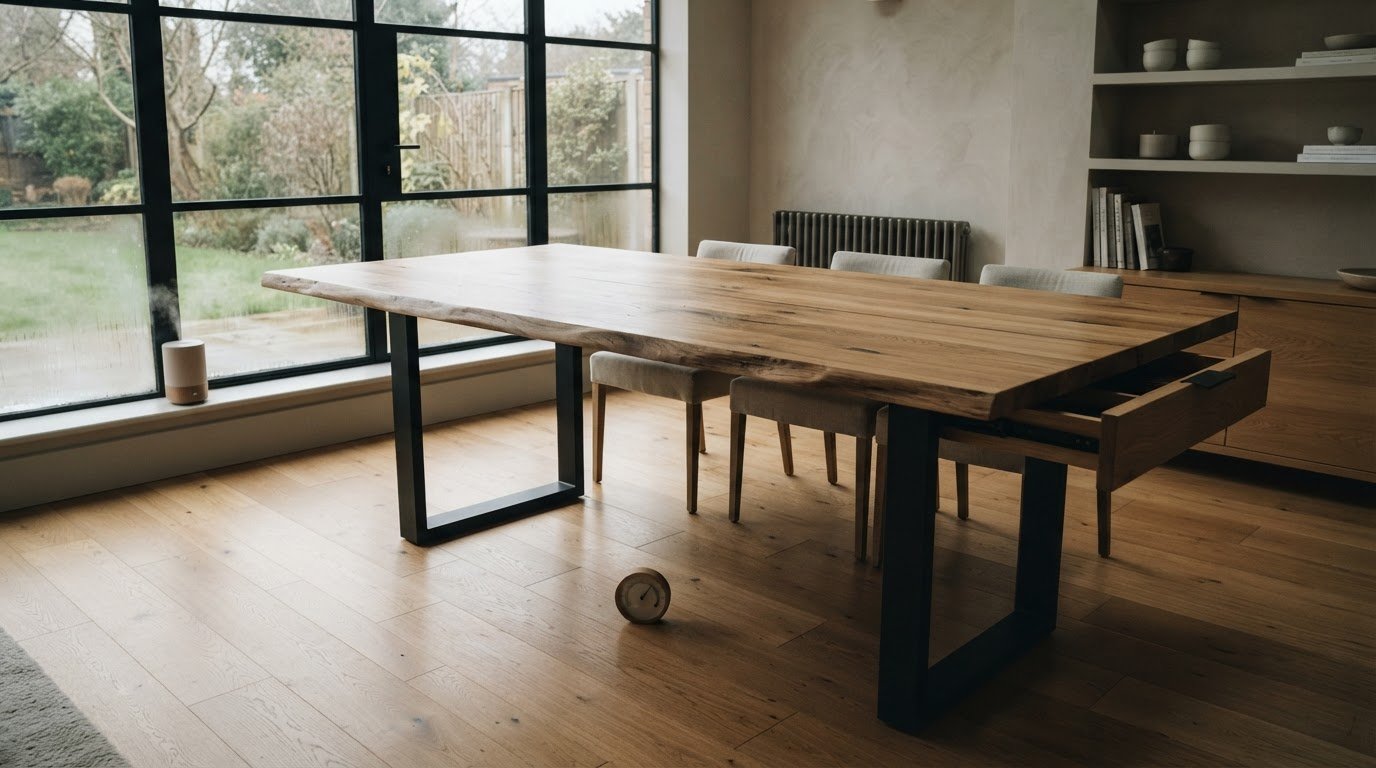
The effect of humidity on solid wood furniture can be managed by keeping indoor relative humidity around 40% to 60%. When levels stay below 30%, wood can shrink and develop cracks; prolonged humidity above 60% can make it swell, loosen joints or cause drawers to stick. Stable conditions matter more than chasing a perfect reading.
It’s natural to worry when a tabletop seems to shift with the seasons or a joint develops a small gap. Wood responds to moisture in the air: it absorbs moisture and expands when humidity rises, then releases moisture and contracts as the air dries. This movement is part of solid timber’s character, but sharp or prolonged changes can strain the wood and its finish.
Here, you’ll learn why cracks form, how humidity affects solid wood furniture, and why wood type and furniture design can influence movement. We’ll also cover when a humidifier or dehumidifier may help, how to monitor indoor moisture, and which everyday placement choices can help protect solid wood furniture.
Key Takeaways
- Aim for indoor relative humidity of 40% to 60% to help limit stress on solid wood.
- Very dry air can draw moisture from timber, while sustained humidity above 60% may lead to swelling and sticking drawers.
- Use a hygrometer to spot seasonal changes and decide whether adding or removing moisture may help.
- Learn how airflow, heat sources and furniture placement can influence moisture around a piece.
- Allow newly delivered furniture time to acclimatise gradually before settling it into place.
When and why do cracks appear in wood?
Low humidity causes solid wood to release moisture and shrink, which can lead to cracks or splits. Keeping indoor relative humidity steady helps limit the strain that sharp seasonal changes place on timber and its joints.
Recommended Indoor Humidity
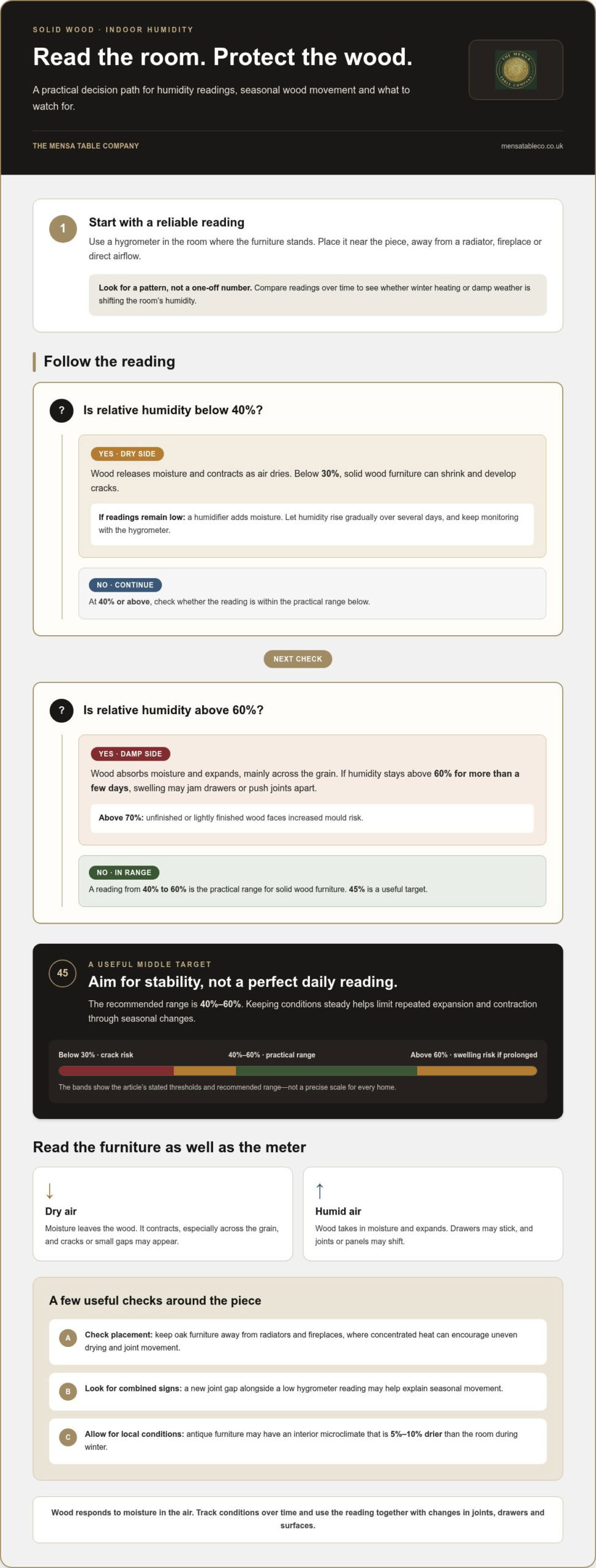
For solid wood furniture, a practical indoor relative humidity range is 40% to 60%, with 45% a useful target. This balance helps limit the repeated expansion and contraction that can affect a tabletop, joints or panels. A reading near the middle of the range gives you room to respond to seasonal changes without chasing every small fluctuation.
Stable conditions matter as much as any target reading. In UK homes, central heating can dry indoor air during colder months, while summer humidity may rise. Solid oak furniture responds to these shifts through natural movement, so aim for consistency rather than trying to maintain an exact reading every day.
Monitoring and Maintaining Indoor Humidity
A hygrometer measures relative humidity in the room where your furniture stands. Place it near the piece, away from a radiator, fireplace or direct airflow, and compare readings over time. One reading shows current conditions; repeated measurements reveal whether winter heating or damp weather is changing the room.
If readings remain low, a humidifier adds moisture to indoor air. When using one around natural materials, allow several days for humidity to rise gradually. Monitor the room with a hygrometer instead of relying only on the appliance setting. A bowl of water or a houseplant may offer mild support, but neither replaces a humidifier in very dry conditions.
Low Humidity and Wood Cracking
When the air is dry, wood releases moisture and contracts, especially across the grain. Relative humidity below 30% can cause shrinkage cracks in solid wood furniture. As a tabletop narrows, connected boards and joints may move differently, leaving small gaps or splits. These changes can appear gradually as indoor heating keeps the room dry.
Look for a combination of signs, such as a new gap at a joint and a low hygrometer reading. Antique furniture may have an interior microclimate that is 5% to 10% drier than the room during winter, so the surrounding air reading may not tell the whole story. Keep oak furniture away from radiators and fireplaces, where concentrated heat can encourage uneven drying and joint movement.
What humidity level is bad for wooden furniture?
Humidity becomes a concern when wood absorbs or loses moisture faster than it can adjust. The resulting movement can change its dimensions, stress joints and affect the surface finish.
Moisture Absorption and Grain Expansion
Wood absorbs moisture from humid air and expands, mainly across the grain rather than along its length. A solid tabletop can therefore widen as its moisture content changes, even when the change seems small. A shift of only a few percent in wood moisture content can cause noticeable movement.
Above roughly 50% relative humidity, wood absorbs moisture from the air more readily. Boards within one piece may move at different rates, depending on their grain and construction. That difference can open small gaps at joints or panels. Several independent market sources report that gaps in solid wood furniture joints may shrink again when the air becomes drier, such as in winter.
Equilibrium Moisture Content and Relative Humidity
Equilibrium moisture content is the point at which wood neither gains nor loses moisture in its surrounding air. Relative humidity influences that balance, so timber gradually adjusts as indoor conditions change. This explains why furniture can move after a seasonal change or a shift in heating patterns.
For example, a solid oak tabletop may feel slightly wider in spring than in winter. Room humidity affects the moisture held in the wood, while temperature and airflow influence how quickly it responds. Furniture does not instantly adjust to new conditions; movement follows the changing moisture balance over time.
Oak Moisture Absorption and Expansion
As relative humidity rises, solid oak absorbs moisture and expands slightly. Its grain may appear more prominent, and its colour can look different. A tabletop, frame and joints may respond differently, putting pressure on connections or creating small surface gaps.
A rough guide states that oak can change dimension by about 1% for every 4% shift in moisture content. This describes wood movement, not a precise prediction for every piece. Board width, grain direction and construction all affect the result. A few percent change in moisture content can therefore matter across a broad oak surface.
Sustained relative humidity above 60% for more than a few days can make wood swell enough to jam drawers or push joints apart. Above 70%, unfinished or lightly finished wood faces increased mould risk. The duration and the furniture’s finish both matter, so a brief humid spell differs from persistently damp indoor conditions.
Dry air causes the opposite movement: wood releases moisture, contracts and may develop cracks. A gap at a panel joint can reflect seasonal movement, while a split may indicate greater stress in the wood. Track room humidity alongside changes in drawers, joints and surfaces to understand how conditions are affecting a piece.
Using humidifiers, dehumidifiers and air conditioning
Humidity affects solid wood furniture by changing its moisture content: dry air encourages shrinkage, while damp air can make timber expand. In UK homes, heating often dries indoor air in winter, while summer heat waves can raise indoor humidity. These seasonal shifts can loosen joints, create cracks or make drawers stick.
High humidity makes wood absorb moisture and swell. If relative humidity stays above 60% for more than a few days, drawers may jam and joints may push apart. Poor airflow or furniture placed against a damp wall can also increase the risk of warping. Excess moisture encourages mould and mildew, which can mark wood and damage its finish.
Signs of humidity damage include new cracks, open joints, warped surfaces, sticky drawers and mould spots. Compare what you see with a hygrometer reading near the furniture. Unfinished or lightly finished wood faces mould risk when relative humidity rises above 70%, so persistent dampness deserves attention rather than a quick surface clean.
Use a humidifier when indoor air is persistently dry; it adds moisture to the room. A dehumidifier removes excess moisture and can help in very humid spaces. Make gradual adjustments and use a hygrometer to track the change. In a room with natural materials, a humidifier may take several days to bring humidity towards a more suitable level.
Air conditioning removes moisture from conditioned air, while heating systems usually dry indoor air. Either can affect wooden furniture, depending on the season and how long the system runs. Check the room reading after changing how you heat or cool it, rather than assuming the appliance keeps humidity stable.
Place furniture at least 12-18 inches from radiators, heaters and HVAC vents to reduce direct exposure to dry or warm airflow. Keep it away from poorly insulated exterior walls and windows that collect condensation. A dehumidifier can help manage a persistently damp room, but good airflow also helps balance moisture around wooden furniture.
During a humid summer spell, open windows during the coolest part of the day and close blinds or curtains when sunlight is strongest. This can help limit humidity swings and uneven heating. Direct fan airflow can dry wood too quickly, so avoid aiming a fan at a table or cabinet while improving circulation.
Respond to a pattern, not one isolated reading. If rising humidity coincides with swollen drawers, reducing excess moisture may help; if dry air coincides with fresh cracks, adding moisture may be appropriate. Stable indoor conditions reduce abrupt movement, while sudden changes can put extra strain on wood and its finish.
What Humidity Levels Actually Do Damage – and Which Woods Are Most Vulnerable?
Wood responds to its surroundings, so acclimatisation matters from workshop to home. Timber should reach equilibrium with the workshop climate before construction, and furniture should be designed to allow for expected expansion and contraction. These choices help reduce strain on joints when heating or seasonal humidity changes room conditions.
Humidity damage may be repairable, depending on whether the problem is a surface crack, loose joint or warped section. Repair costs in the UK depend on the extent of the damage, the finish and the work required; there is no single cost for every piece. Stabilise the surrounding moisture conditions before judging how much movement remains.
Gradually acclimatising new solid wood furniture gives it time to respond to its new environment. After delivery, leave doors and drawers open during the first few days to let air circulate inside the piece. This can help limit differences between room air and enclosed spaces, where moisture conditions may change more slowly.
Newly delivered furniture can also be left in its intended room for 48-72 hours before placing it against walls or loading it with weight. This gives the wood time to adjust before the piece settles into daily use. Avoid moving it straight beside a radiator after delivery, since a local heat source can create a different environment from the rest of the room.
Furniture makers also manage moisture before assembly. Timber is acclimatised to the workshop, while construction and finish details allow for movement in its eventual setting. For example, a board in a wide tabletop needs room to expand and contract across the grain without forcing joints apart.
Which woods are most vulnerable depends partly on their natural movement, board layout, finish and construction. Solid oak absorbs moisture and can expand; changes in colour and grain prominence may also reflect moisture absorption. Different species can respond differently, so the wood alone does not tell the whole story.
Rapid changes can be harder on furniture than gradual shifts. A relative-humidity rise from 40% to 65% over two weeks is less damaging than the same rise overnight. After a heatwave, allow furniture to acclimate slowly before inspecting it; a drawer that sticks during a sudden change may behave differently once the wood adjusts.
Consider the whole piece before interpreting one symptom. A new gap at a joint, sticking drawers, a surface split or visible warping can each point to movement, but they affect different parts of the furniture. Note room conditions and whether the issue changes as the climate stabilises, rather than forcing a joint or drawer back into place.
Humidity ranges for solid wood furniture
For solid wood furniture in UK homes, aim for indoor relative humidity between 40% and 60%, with 45% as a practical target. This range helps limit seasonal movement without requiring the room to hold one exact reading. The key is keeping levels reasonably stable across the year, rather than reacting to every small change.
Think of 40% to 60% as a working range, not a guarantee against movement. Below 30%, dry air can cause shrinkage cracks; sustained levels above 60% for more than a few days can make wood swell. Those thresholds help distinguish ordinary variation from conditions that may place greater strain on furniture.
A useful year-round aim is to keep relative humidity within a band of 20 percentage points. For example, readings moving between 40% and 60% stay within that band, while a home shifting from 28% in January to 72% in August has a much wider seasonal swing. Such extremes can encourage repeated expansion and contraction.
Use a hygrometer to track indoor humidity over time. Keep it near the furniture, but away from radiators, fireplaces, windows with condensation and direct airflow. A reading beside a radiator may not represent normal room conditions. Record measurements during colder heating periods and humid summer weather to see the pattern, not just one moment.
Respond to persistent readings rather than brief fluctuations. If winter heating repeatedly brings a room below the recommended range, a humidifier can add moisture; if damp summer conditions push levels high, a dehumidifier can remove it. Make gradual changes and take further readings, since sudden shifts can also prompt wood movement.
Furniture placement helps maintain stable conditions. Keep solid wood furniture away from radiators and fireplaces, where local heat can dry timber unevenly, and avoid placing it against a damp wall. Open windows during the coolest part of a hot day, then close blinds or curtains when sunlight is strongest to reduce abrupt changes around the piece.
Don’t treat every seasonal gap or change in surface feel as lasting damage. Wood naturally responds to moisture, and some movement may ease as indoor humidity returns to its usual range. Compare humidity readings with changes in drawers, joints or panels, and look for a pattern across several measurements before deciding whether conditions need adjusting.
For a new table intended for a room with changing humidity, consider how its location and seasonal conditions will affect daily use. Discuss your solid wood table requirements before choosing a piece for that space.
The Mensa Table Company: The Mensa Dining Table
The Mensa Table Company makes solid wood dining tables for homes where meals, work and conversation meet. If you’re choosing a table with humidity and seasonal movement in mind, consider The Mensa Dining Table, The Spider Leg Dining Table, The X-Frame Dining Table and The U-Frame Dining Table, each with a distinct design.
Placement matters as much as appearance: choose a spot away from radiators, fireplaces and persistent damp, then keep indoor humidity as steady as practical. These everyday conditions can limit stress on solid timber, though natural movement remains part of wood’s character. A well-chosen table becomes part of the home’s daily rhythm, from shared meals to quiet moments around its surface.
Explore the dining table options, or contact The Mensa Table Company to discuss your choice.
Make Room for Wood’s Natural Character
Understanding the effect of humidity on solid wood furniture can shape more than how you care for it; it can help you choose a piece that suits everyday life. Notice how the room is used, where sunlight falls and how the seasons change its atmosphere. These observations can guide where you place a table and the routines that grow around it.
A dining table is part of the home’s shared rhythm, from weekday meals to long conversations with friends. The Mensa Table Company offers The Mensa Dining Table, The Spider Leg Dining Table and The X-Frame Dining Table, each with a distinct design to consider as you picture a gathering place in your room.
Natural timber will always respond to its surroundings. Treating that movement as part of the material’s character helps you care for a table with patience, rather than expecting it to remain unchanged through every season. If you’re considering a dining table for your home, contact The Mensa Table Company to discuss your choice. A thoughtful choice can become the setting for years of everyday moments.
Frequently Asked Questions
Does humidity make wood swell?
Yes. As relative humidity rises, solid wood absorbs moisture and expands, mainly across the grain. A dining table may widen slightly, while a drawer can become harder to open if the change is substantial. The surrounding conditions matter: a brief humid spell differs from relative humidity above 60% lasting more than a few days. Check both the room reading and any new sticking or gaps.
How can you measure and control indoor humidity to protect wooden furniture?
Use a hygrometer to measure relative humidity in the room, placing it near the furniture but away from radiators, windows and direct airflow. Aim for 40% to 60%, then compare readings when heating or air conditioning use changes. A humidifier adds moisture when indoor air is persistently dry; a dehumidifier removes it when conditions remain damp. Adjust gradually and watch how the reading changes.
How should solid wood furniture be acclimatised after delivery or moving?
Let the piece adjust in the room where it will live. After delivery, leave it in that room for 48-72 hours before placing it against walls or loading it with weight. Open doors and drawers during the first few days to let air circulate inside. After moving furniture between rooms or homes, allow it to settle gradually before judging a new gap or tight drawer.
What steps can prevent humidity damage to solid wood furniture?
Keep indoor humidity steady, use a hygrometer, and avoid placing furniture beside radiators, fireplaces or condensation-prone windows. Leave at least 12-18 inches from heat sources and vents. During hot weather, shade furniture from strong sunlight and ventilate when the day is coolest. Coasters and placemats help protect surfaces from spills, while prompt cleanup prevents moisture sitting on the finish.

Leave a Reply