A dining table isn’t just a piece of furniture; it’s the silent witness to every birthday, late-night conversation, and Sunday roast your family will ever share. Many homeowners feel trapped between generic, mass-produced options and the fear that a bold design might clash with their existing decor. You deserve a piece that feels like it was grown for your room, not just dropped into it. With lumber prices rising by 5.92% as of May 2026, investing in a “forever” piece has never been more vital for your home’s value and your family’s comfort.
This dining table styles guide will give you the confidence to choose a handcrafted centerpiece that balances timeless British craftsmanship with your home’s unique character. We’ll help you understand the difference between timber types and explore how various leg designs, such as our signature Spider Leg or the industrial Trapezium, can transform your space. You’ll discover how to select a bespoke table that serves as a legacy for generations to come, ensuring the heart of your home is built on quality rather than a fleeting trend.
Key Takeaways
- Identify how the marriage of natural timber and architectural leg design creates a handcrafted centerpiece that anchors your living space.
- Use our dining table styles guide to find the perfect balance between bold statement frames and the practical seating requirements of your family.
- Learn to select wood grains and textures that complement your home’s unique character while promising the durability of a true legacy piece.
- Master the art of scaling your furniture by matching a table’s visual weight to your room’s proportions for a harmonious interior feel.
- Discover the benefits of a bespoke approach where we tailor every dimension and finish to your specific needs, moving beyond the limits of generic, mass-produced options.
Understanding Dining Table Styles: More Than Just Furniture
The dining table serves as the emotional anchor of the modern British home. It’s far more than a simple flat surface for plates; it’s the quiet stage where the most meaningful parts of our lives unfold. Whether it’s a Tuesday evening homework session or a festive Christmas dinner, the table holds the weight of our shared history. Looking back at the history of the dining table, we see that this piece of furniture has evolved from a basic utility into a vital hub for human connection. In our local workshop, we view “style” as the beautiful intersection where raw material, geometric shape, and leg design meet to create something truly personal.
We often see the market flooded with “fast furniture,” which relies on mass-produced composite materials that lack character and longevity. These pieces are designed for the short term, often ending up in landfills within a few years. We believe in “slow furniture.” This approach focuses on handcrafted legacy pieces that carry the “human touch” of the maker. Every piece of timber we select has its own story, told through its unique grain and natural imperfections. This dining table styles guide is designed to help you move away from generic options and find a piece that reflects your own values and aesthetic.
The Emotional Weight of Your Table Choice
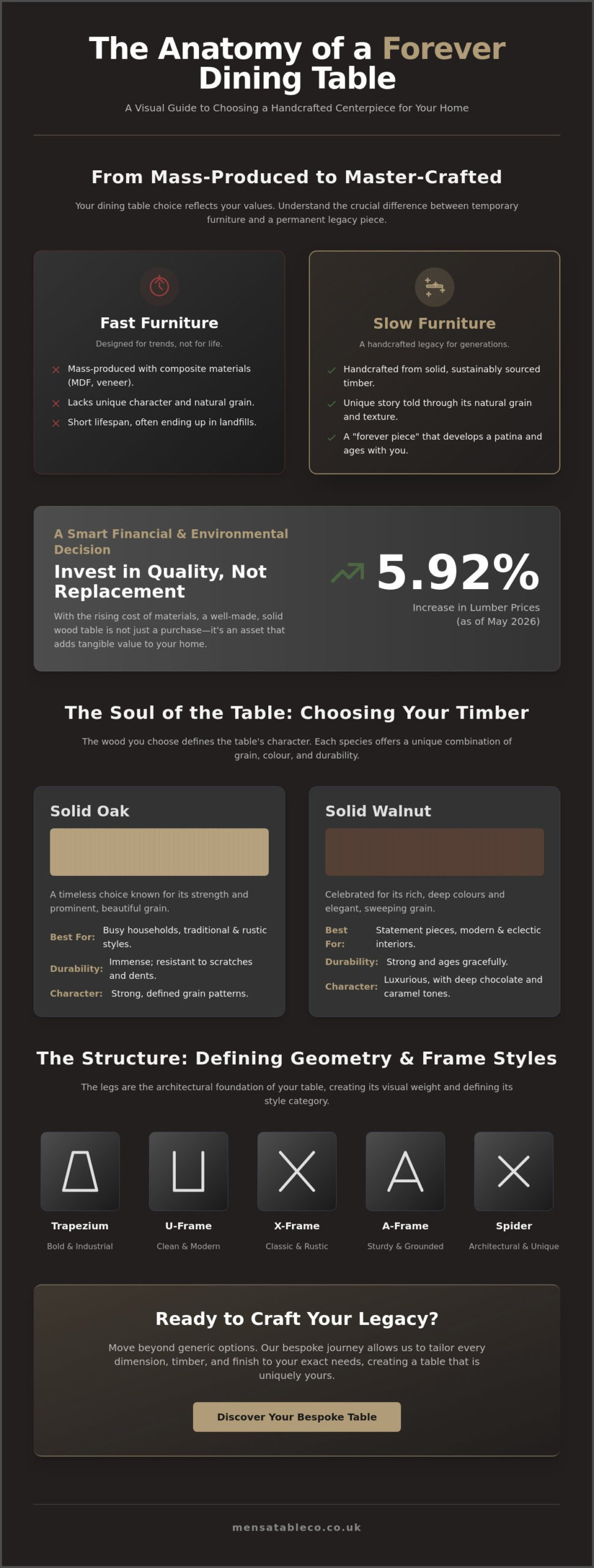
Your table is the backdrop for family milestones. The psychological impact of natural textures shouldn’t be underestimated; the feel of a solid wood grain brings a sense of groundedness to a busy living space. Choosing a “forever” style is also a deeply sustainable act. As of May 8, 2026, lumber prices have risen by 5.92% compared to the previous year, making the choice to invest in quality a smart financial and environmental decision. A well-made table doesn’t just fill a room; it creates a legacy that can be passed down through generations.
Defining the Core Style Categories
Identifying your home’s aesthetic helps narrow down the perfect design. Industrial styles often celebrate the marriage of wood and metal, featuring bold foundations like our Trapezium or U-Frame legs. Rustic designs lean into the raw, unrefined beauty of the wood itself, while Scandinavian aesthetics favour clean lines and lighter, airy tones. For those inspired by this minimalist approach, exploring the designer ranges at Attica House can provide excellent visual inspiration for how white finishes and light timbers can open up a room. Many UK homeowners are now moving toward “Eclectic Harmony.” This trend involves mixing a substantial, handcrafted timber table with a sleek, modern interior to create a space that feels both sophisticated and inviting. Understanding these categories allows you to choose a frame, such as our A-Frame or X-Frame, that complements your existing decor without feeling restricted by it.
The Foundation of Character: Choosing the Right Timber and Finish
If the frame provides the architectural structure, the timber provides the soul. Every plank we select in our workshop carries a unique narrative told through its grain, texture, and natural imperfections. This isn’t just about choosing a colour; it’s about selecting a living material that will age alongside your family. As we explore this dining table styles guide, it’s vital to remember that solid wood isn’t static. It breathes. It responds to the humidity of a British winter and the warmth of a summer afternoon. We respect this natural movement by using traditional techniques that allow the wood to shift without compromising the table’s integrity. Unlike the rigid, soul-less nature of veneers, solid timber develops a patina over time, making it a true legacy piece.
Sustainable sourcing is the heartbeat of our process. We believe that the ethics behind the wood are just as important as the final aesthetic. With hardwood prices for species like Black Walnut reaching up to £690 per thousand board feet in May 2026, the value of high-quality, ethically harvested timber is clear. Choosing sustainable wood ensures that your home’s centrepiece doesn’t come at the cost of the environment. Consulting a professional Buyer’s Guide to Dining Tables can help clarify how these material choices impact the longevity and feel of your furniture. You might find that the deep, rich tones of our bespoke walnut collections offer the perfect contrast to a light-filled kitchen.
Solid Oak vs. Walnut: A Tale of Two Grains
Oak remains the timeless choice for many UK homes. Its prominent grain and immense durability make it perfect for busy households where the table is used for everything from craft projects to dinner parties. Walnut, on the other hand, offers a more sophisticated, refined finish. Its darker chocolate hues and smoother texture create a sense of quiet luxury. When choosing between them, consider your room’s natural light. Oak can brighten a shadowed corner, while walnut adds a grounded, cosy feel to large, airy spaces.
Reclaimed Wood: Furniture with a Past Life
There’s a specific charm in wood that has lived a previous life. Reclaimed timber carries the scars of its history; nail holes, weathered textures, and unique colour variations that new wood simply cannot replicate. It’s the ultimate choice for an authentic rustic style. By choosing reclaimed materials, you’re giving old timber a second purpose and bringing a piece of history into your home. Each mark on the surface is a conversation starter, reminding us that beauty often lies in the stories told by imperfection.
Defining Your Space with Leg Geometry and Frame Styles
While the timber provides the soul of your table, the frame dictates its architectural language. In our workshop, we see the base as the foundation that determines how a piece interacts with the surrounding room. A comprehensive dining table styles guide must address “visual weight.” This is the concept of how much space a piece appears to take up. For example, a heavy X-Frame design feels grounded and substantial, perfect for large, open-plan kitchens. In contrast, a Trapezium or U-Frame offers cleaner, slimmer lines that allow light to pass through, making a compact dining area feel significantly more spacious. Handcrafted frames provide a level of structural integrity that mass-produced, bolt-together legs simply can’t match, ensuring your table remains rock-solid for decades.
Choosing the right base is also a matter of practical comfort. You need to balance the aesthetic impact with the actual legroom available for your guests. A survey of design industry respondents in 2026 showed that over 76% consider sculptural materials like travertine a leading trend, yet many homeowners find that these bulky stone bases sacrifice vital foot space. Our steel and timber frames are engineered to provide maximum stability without cluttering the area under the table. Consulting a Dining Room Furniture Buyer’s Guide can help you visualise how different shapes affect the flow of your room. Whether you’re drawn to the industrial strength of steel or the warmth of matching timber legs, the geometry of the base is what defines the table’s character.
The Industrial Edge: X-Frame and U-Frame Designs
The X-Frame remains a classic for those seeking a “farmhouse-meets-industrial” aesthetic. It’s a bold, structural statement that pairs beautifully with thick, reclaimed timber tops. For a more minimalist approach, our U-Frame and Trapezium designs offer sleek, geometric lines that complement modern, airy interiors. If you’re looking for a sense of movement, the A-Frame and V-Frame designs provide contemporary flair. These angled frames draw the eye inward, creating a sophisticated silhouette that feels both sturdy and refined.
The Statement Makers: Spider Leg Bases
The Spider Leg Dining Table is often the crowning jewel of our collection. This intricate, central masterpiece is more than just a support; it’s a work of art. Because the legs meet in the centre, it allows for maximum seating flexibility, as there are no corner posts to knock knees against. This makes central bases ideal for round or oval tables in smaller UK dining rooms where every centimetre counts. Balancing a heavy piece of solid walnut or oak on a geometric spider base requires precision craftsmanship, ensuring the table remains perfectly balanced while serving as a stunning focal point for your home.
Matching Your Table Style to Your Home’s Interior Aesthetic
Finding the right aesthetic is a delicate dance between the physical dimensions of your room and the emotional atmosphere you wish to create. A table shouldn’t just fit the floor space; it should fit the room’s energy. This dining table styles guide encourages you to consider the “bulk” of your chosen piece. If you have a high-ceilinged Victorian home with intricate cornicing, a substantial tabletop with an X-Frame base provides the necessary visual weight to hold its own. Conversely, for a modern extension with floor-to-ceiling glass, a slimmer profile with a V-Frame or Trapezium base allows the architecture to breathe. Scaling your furniture correctly ensures the room feels intentional rather than cluttered.
The choice between benches and chairs also shifts the table’s personality. Benches offer a communal, relaxed feel that invites people to squeeze in together, making them perfect for growing families. They also tuck neatly under the table when not in use, which is a practical win for narrower UK dining rooms. Chairs, however, allow for a more formal silhouette and provide an opportunity to introduce different textures like leather or fabric. When we apply the final finish in our workshop, we consider how it will interact with your existing woodwork. A natural hardwax oil protects the timber while keeping the sensory texture reachable; whereas a lacquer provides a harder, more resilient barrier for high-traffic breakfast bars and desks. To see how these finishes look on different timbers, you can explore our range of handcrafted frames and bespoke tops.
The Modern Industrial Loft
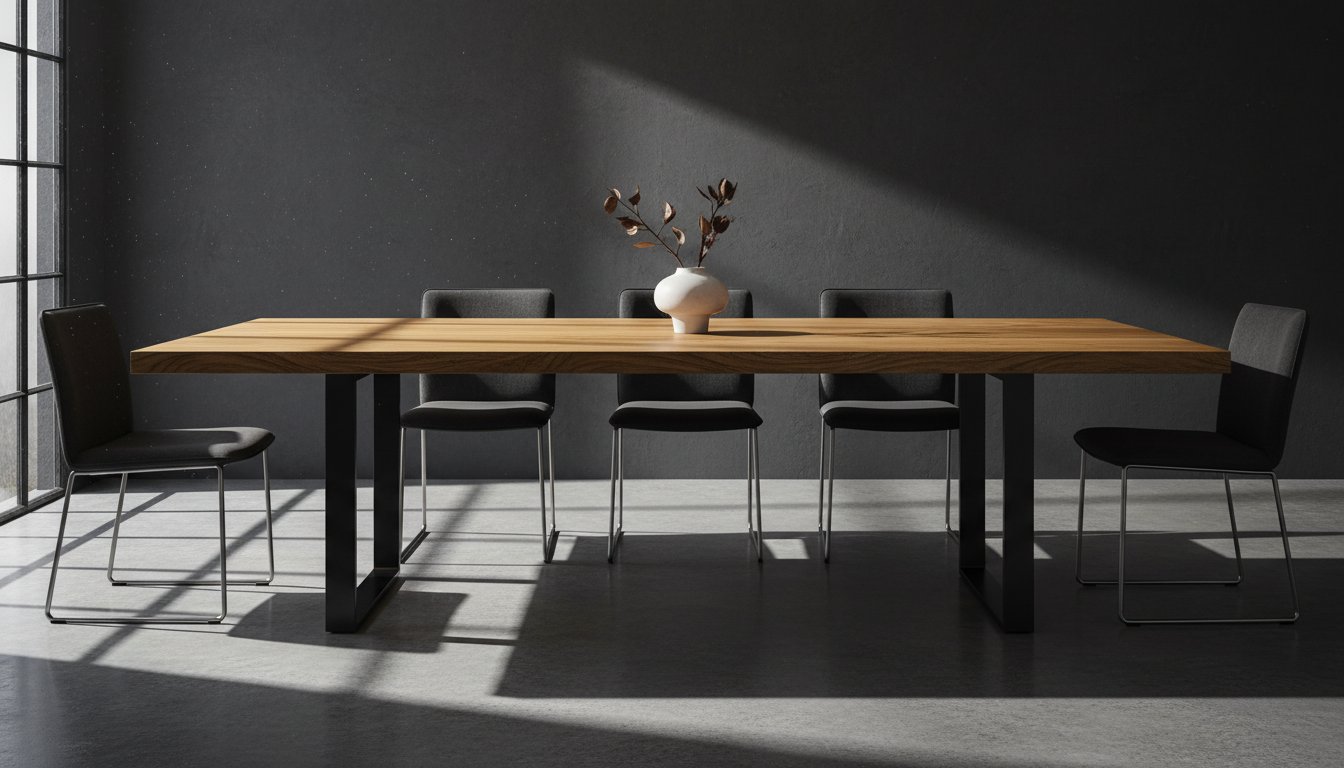
Creating a “loft” vibe relies on the raw contrast between cold metal and warm wood. Pairing dark steel frames, such as our Trapezium or U-Frame designs, with a raw-edged timber top creates an immediate focal point. This style thrives on honesty; the welds in the steel and the knots in the wood are celebrated rather than hidden. To complete the look, frame your table with oversized industrial lighting fixtures. The light reflecting off the grain and the matte steel creates a sophisticated, urban atmosphere that feels both edgy and inviting.
Rustic Charm and Contemporary Farmhouse
For a grounded, traditional feel, the X-Frame or A-Frame bases are the ideal choice. These designs evoke the spirit of a traditional farmhouse but with a refined, modern execution. Reclaimed wood is the star of this aesthetic, especially when placed in a light, neutral-toned room. The weathered textures and history of the timber provide a warmth that mass-produced furniture simply cannot replicate. Matching benches are the perfect partner here, reinforcing the rustic, handcrafted nature of the piece and creating a space designed for long, lingering Sunday roasts, which are often best enjoyed alongside a quality bottle from Mosse and Mosse.
The Bespoke Journey: Crafting a Style That Is Uniquely Yours
Choosing a style from a generic catalog is a simple transaction, but creating a bespoke piece is a partnership between you and the maker. While a dining table styles guide provides the visual vocabulary you need, the bespoke journey allows you to write the actual story. In our local workshop, we don’t just cut timber to a standard template. We study the specific grain of the oak or walnut and decide how it should flow across your tabletop. This personal touch ensures that the final piece isn’t just a functional object; it’s a reflection of your family’s character. Knowing that your table was built by hand adds a layer of pride that mass-produced items can never replicate. It turns a simple piece of furniture into a family legacy that will witness decades of connection.
The transition from selecting a style to owning a “forever” piece is where the true value lies. In May 2026, as hardwood lumber prices continue to reflect a 5.92% increase from the previous year, the wisdom of investing in quality becomes even clearer. We’ve seen production inventories drop over the last 18 months, making it more important than ever to choose substance over fleeting trends. A bespoke table isn’t just about the dimensions. It’s about the feel of the hand-finished surface and the reassurance that every joint was crafted to last for generations. This is the difference between a house filled with furniture and a home built around a handcrafted heart.
Why Mass-Produced Styles Often Fall Short
The hidden cost of flat-pack convenience is the inevitable loss of soul and durability. These generic items are often built from composite materials that cannot withstand the rigours of daily life. Standard sizes also fail to account for the unique flow of your specific UK home. Perhaps your dining room has a quirky alcove or a low window sill that a standard-height table would obstruct. When you choose mass-produced furniture, you’re forced to compromise your space to fit the furniture. In our workshop, we believe the furniture should be crafted to fit your life, respecting the architectural nuances of your room and the way your family moves through it.
Designing Your Legacy Piece with The Mensa Table Company
We invite you to explore how we bring these natural materials to life. Whether you’re drawn to the geometric complexity of the Spider Leg or the timeless elegance of the Mensa Dining Table, the process is entirely collaborative. We guide you through selecting the right timber, deciding on the frame’s visual weight, and choosing a hand-finish that feels right under your palm. This isn’t a rushed transaction; it’s a steady, deliberate craft. Every knot and swirl in the wood is a testament to its natural origin. You can discover our collection of handcrafted dining tables and begin the journey of finding the true heart of your home.
Bringing Your Handcrafted Vision to Life
Choosing the right table is about finding the perfect harmony between the natural story of the timber and the architectural geometry of its base. We’ve explored how different leg designs and timber types can transform your dining area from a simple room into a meaningful gathering place. This dining table styles guide serves as your roadmap to moving away from mass-produced furniture and toward a piece that reflects your own values. Since 2018, we’ve been dedicated to crafting these legacy pieces in our local workshop; we focus exclusively on the enduring beauty of solid oak and walnut.
Whether you’re drawn to the bold structural statement of an X-Frame, the sleek lines of a Trapezium, or the intricate artistry of a Spider Leg base, your choice will anchor your home for generations. Every piece we create is a testament to the human touch and the resilience of natural materials. Don’t settle for a temporary solution when you can invest in a centerpiece that grows with your family. Start your journey to a handcrafted centerpiece; explore our tables. We look forward to helping you find the piece that truly belongs in your home.
Frequently Asked Questions
What is the most popular dining table style for modern homes in 2026?
Sculptural, organic shapes and darker timber finishes like walnut are the leading choices for 2026. A survey from May 2026 showed that 76% of design professionals favour natural materials and warm wood tones over sterile, high-gloss finishes. Our Spider Leg design captures this trend perfectly by pairing a central, artistic base with the rich, chocolate textures of solid walnut.
How do I choose between a pedestal base and a four-leg table?
Choosing between a central base and a four-leg design depends on whether you value seating flexibility or a traditional, grounded silhouette. A central base, such as our V-Frame or Spider Leg, removes corner obstructions so you can fit more guests comfortably around the perimeter. Four-leg designs offer a classic, architectural stability that often suits larger, formal dining rooms where seating positions are fixed.
Can an industrial-style table work in a traditional dining room?
Mixing an industrial-style table with traditional decor creates a sophisticated aesthetic known as “Eclectic Harmony.” The natural grain of a solid oak top provides the warmth needed to bridge the gap between vintage architecture and modern steel legs. Using this dining table styles guide helps you select a frame, like the X-Frame, that feels grounded in both worlds without clashing.
What is the best wood style for a family with young children?
Solid Oak is the most resilient timber choice for families with young children because of its dense grain and immense durability. We recommend a high-quality hardwax oil finish rather than a standard lacquer. This allows you to spot-repair minor scratches or crayon marks at home, ensuring the table remains a beautiful part of your family’s daily life for years.
How do I know if a table style is too big for my dining space?
You should maintain a minimum of 90cm clearance between the table edge and your walls to ensure comfortable movement for your guests. If your space is tight, consider pairing your table with a matching bench that tucks fully under the surface. This simple adjustment can reclaim significant floor space in smaller UK dining rooms when the table isn’t in use.
What are the benefits of a bespoke dining table over a store-bought one?
Bespoke tables offer exact sizing and superior timber quality that mass-produced, flat-pack options simply cannot match. With lumber prices increasing by 5.92% as of May 8, 2026, investing in a handcrafted piece ensures your money goes toward high-grade materials rather than shipping logistics. You receive a piece built specifically for your home’s unique character and architectural flow.
Does the leg style affect how many people I can seat at the table?
Leg placement directly dictates your seating capacity and the comfort of your guests’ legs. Central frames like our Spider Leg or U-Frame allow for chairs to be placed anywhere around the table without hitting corner posts. This flexibility is vital during holiday gatherings when you need to squeeze in extra family members without anyone feeling cramped.
What is the difference between a live edge and a square edge style?
The difference lies in how we treat the natural perimeter of the timber planks. A live edge follows the original, organic curve of the tree, celebrating every knot and contour of the wood’s history. A square edge is precision-cut in our workshop for a clean, geometric finish that suits minimalist interiors or modern industrial aesthetics.

Leave a Reply