
A desk should fit your room and the way you work, not make you work around it. A custom wooden desk for home office use can be tailored to your space, setup and preferred look, making bespoke sizing a practical choice. The right design balances a useful work surface with natural timber you’ll enjoy seeing every day.
Looks matter, but dimensions and daily use matter just as much. This guide explains how to plan your desk’s size and setup, what to consider for different working needs, and how oak, walnut and pine bring distinct character to a home office. You’ll get a clearer idea of the choices that can shape a desk around your space and routine.
Key Takeaways
- Plan desk width and depth around the room, chair and equipment you use, so the work surface feels practical rather than cramped.
- Think through the details that shape everyday use, including storage, cable needs and the finish that suits your home.
- Choose between oak and walnut by considering the colour, grain and atmosphere you want the desk to bring to the room.
- Understand how timber, dimensions and design choices affect the cost of a bespoke desk, even when an exact price depends on the finished specification.
- See how a made-to-measure desk from The Mensa Table Company can bring your home-office requirements into a considered wooden design.
Why choose a bespoke wooden desk?
A bespoke desk can be designed around the room, the work it needs to support and the look you want. With a custom wooden desk for a home office, dimensions and material choices are part of the design, rather than fixed details you have to work around.
Desk Dimensions and Finish Choices
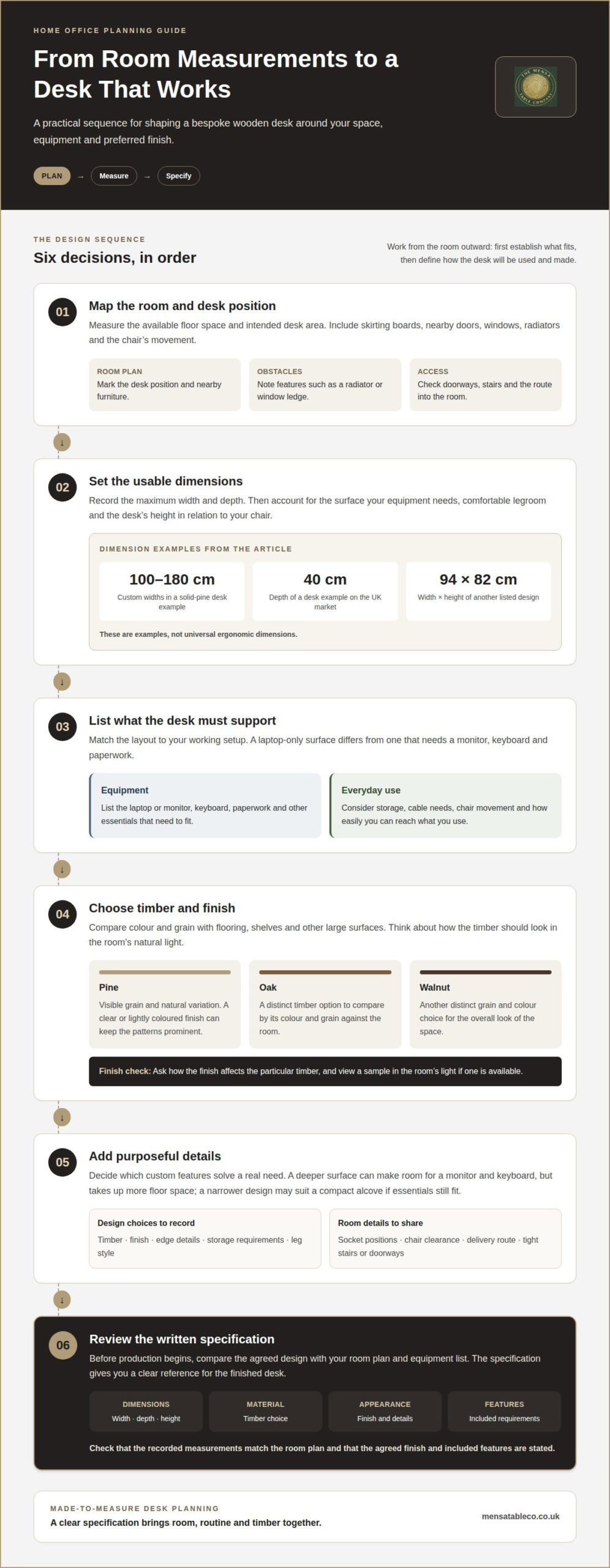
Start with the space: measure the intended width and depth, then account for the chair, drawers and routes through the room. A handmade solid-pine desk example offers custom widths from 100 to 180 cm, showing how dimensions can be tailored rather than selected from one fixed size. Consider the finish alongside the measurements, since colour and grain influence how the desk sits within the room.
Start by listing the equipment that needs to fit on the surface. A laptop-only setup calls for a different layout from one with a monitor, keyboard and paperwork. Allow space to move your chair and reach any storage comfortably. These details turn “the desk should fit” into a useful specification, with clear measurements and a finish that suits your existing furniture.
Solid Pine and Wood-Finish Options
Solid pine brings visible grain and natural variation to a desk surface. A clear or lightly coloured finish can keep those patterns prominent, while a darker finish changes the overall tone. Ask how the chosen finish affects the appearance of the particular timber, and view a sample in the room’s light if one is available.
Oak and walnut offer other distinct wood choices, each with its own grain and colour. Compare them against flooring, shelves and other large surfaces, rather than choosing from a small photograph alone. A wood-finish desk should suit both the room and the way you want the timber to look as it becomes part of daily work.
Which UK makers offer custom wooden desks for home offices? The Mensa Table Company makes desks to order, with custom sizes, finishes and leg styles available on request. When planning yours, consider the room measurements, equipment and timber you want, then discuss how to bring those requirements together in the design.
How long does a custom desk take to make and deliver in the UK? Timing depends on the design, timber selection, workshop schedule and delivery arrangements. A simpler specification involves fewer decisions than a desk with several customised details, so ask for the expected production and delivery stages before placing an order.
What should I check before buying? Read the written specification for dimensions, timber, finish and included features. Review the maker’s warranty and returns terms, especially how they apply to made-to-order furniture, before agreeing to the design.
Are custom wooden desks sustainable, and how can I check timber sourcing? Sustainability depends partly on where timber comes from and how it is used. Ask about the timber’s origin and whether reclaimed material is included. The Mensa Table Company makes its desks from solid wood, with ash, walnut, oak and Swedish pine among its listed timbers.
Bespoke desk sizes and customisation
A made-to-measure desk starts with the space it must occupy and the work it needs to support. Width, depth, height and placement all shape a useful specification.
Desk Dimensions and Ergonomic Features
Measure the available floor space, including skirting boards, nearby doors and the chair’s movement. Then consider the surface required for your equipment and paperwork. Desk examples on the UK market include a depth of 40 cm, while other listed designs measure 94 cm wide and 82 cm high. These are examples, not universal ergonomic dimensions.
Consider your height and chair together. Sit as you would during a normal working session, with your feet supported and shoulders relaxed, and note where the keyboard and screen need to sit. Desk height, legroom and usable depth all affect the arrangement. If more than one person will use the desk, discuss whose chair and working position should guide the dimensions.
Designing and Ordering a Made-to-Measure Desk
Draw a simple plan of the room, desk position and nearby furniture. Record the maximum width and depth, and mark obstacles such as a radiator or window ledge. List the equipment you’ll use, from a laptop to a monitor and keyboard, so the design can account for how the surface will work in practice.
Next, decide on the timber, finish, edge details and any storage requirements. Ask for these choices and the final measurements to be recorded in a written specification before production begins. This gives you a clear reference for the finished desk and makes it easier to spot a mismatch between the room plan and design before work starts.
Keep the measurements practical. A deeper surface can give a monitor and keyboard more room, but it also takes up more floor space. A narrower design may suit a compact alcove, provided your essentials still fit. Sketch the chair both pulled out and tucked in: the desk needs to work while you’re using it, not just when the room is empty.
For a desk against a wall, note the route into the room and the position of sockets. A tight staircase or doorway can affect how a large piece is made and delivered. Share access details during the design discussion so they’re considered from the outset.
Customisation works best when each choice has a purpose. For example, someone using a laptop and keeping paper files nearby may prioritise clear surface space and accessible storage. A single-screen setup may call for a simpler layout. The design process turns these everyday requirements into practical dimensions and details.
Before approving the specification, compare its measurements with your room plan and equipment list. Confirm that the stated width, depth and height match the agreed design, and that the chosen finish is recorded. This final review brings the practical details together, from the first measurement to the completed wooden desk.
Desk design for different work setups
A desk layout should reflect your equipment and the way you sit. A laptop, two monitors and paper files each place different demands on the surface. Plan around the items that stay on the desk, then consider how your chair and working position affect where your hands and screen need to be.
For a laptop setup, allow space for the computer and any separate keyboard or mouse you use. A laptop may take up less room than a monitor arrangement, but you might still need space for notes, a lamp or a cup. Sketch the items from above, including where each will sit, before settling on the desk’s usable width and depth.
Two monitors need a layout that accounts for both screens, their stands and the space between them. Mark the screens on your plan before adding a keyboard, mouse and paperwork. This helps you see whether the desk can support your usual tasks without crowding the work surface. If you switch between screens and documents, allow room to move papers into view.
Your height and chair matter as much as the equipment. Sit in your usual chair and note how your arms reach the keyboard, then consider the desk height that allows a relaxed working position. Anthropometric data can help determine a suitable keyboard level and support a desk design intended for long-term use. The aim is to match the working surface to the person, rather than choosing dimensions in isolation.
- Laptop only: Plan for the computer, keyboard and daily essentials.
- One monitor: Include its stand, keyboard and mouse in the surface layout.
- Two monitors: Map both screens before deciding how much space remains for paperwork.
- Shared desk: Consider the different users’ heights and chairs when setting the working level.
Storage also affects the layout. A drawer beneath the surface can reduce legroom, while a separate storage unit may leave the space under the desk open. Someone who keeps notebooks and stationery nearby may value easy-to-reach storage; a mostly digital worker may prefer a clearer surface. Match the arrangement to what you use each day.
Finally, consider where cables and sockets sit in relation to the desk. A monitor and laptop may need different connections from a writing-only setup, so note the equipment and its position on your room plan. Bring that plan, your chair details and a list of daily tasks to the design discussion. Together, these specifics help shape a desk around your actual working routine.
Walnut and oak desk styles
Oak, walnut and pine create different moods in a home office. Oak often has a lighter, warm appearance, while walnut is known for deeper brown tones. Pine has its own grain and colour variation. Compare the timber and finish with the atmosphere you want the desk to bring to the room.
An oak desk can sit comfortably alongside pale walls, natural fabrics and lighter flooring. Its visible grain adds texture without needing a strong colour contrast. For example, an oak desk can help a shared home office feel calm and coordinated. Matching desks in the same timber can also bring consistency to a shared workspace.
Walnut has a richer visual presence. Its deeper colour can anchor a room with light walls or complement darker shelves and furnishings. If the office already has several dark surfaces, consider how a walnut desk will relate to them. Compare the timber with the flooring and bookcase to see whether the tones blend or compete.
The finish changes how either wood reads. A clear finish keeps attention on the timber’s natural colour and grain, while a tinted finish can shift its appearance. Think about the desk’s surroundings before choosing: an oak surface beside pale flooring may feel subtle, while the same timber against a darker backdrop can stand out. Lighting also matters, so view samples in the room where you’ll work.
Style comes from more than timber colour. A simple rectangular top can keep the focus on oak or walnut grain, while contrasting legs create a more defined outline. For a restrained look, pair one wood tone with understated details. If you want the desk to become a focal point, let distinctive grain or a darker walnut surface carry more visual weight.
Before settling on a timber, consider how the desk will sit beside your existing furniture. Compare it with the chair, shelves and floor rather than judging it alone. Warm oak can echo wooden shelving, while walnut can add contrast to a pale room. Aim for a considered relationship between the desk and the other large surfaces.
Use this short comparison to guide your choice:
- Oak: Consider it for a lighter appearance and visible grain.
- Walnut: Choose it when a deeper tone suits the room’s palette.
- Finish: Compare samples in the office’s natural and evening light.
Finally, match the style to the room’s role. A desk in a shared living space may suit a timber that complements nearby furniture, while a dedicated office can accommodate stronger contrast. Oak, walnut and pine each bring natural character; the right choice is the one that works with the space you have.
How much does a bespoke wooden desk cost in the UK?
The Mensa Table Company offers custom desks made to order, with custom sizes, finishes and leg styles available on request. The cost depends on the specification, including the timber, dimensions and design details. Start by identifying what your home office needs, then discuss the design choices that will shape your desk.
Separate essential requirements from optional details. Write down the desk’s intended width, depth and height, then list the equipment it needs to hold. A surface for a laptop and notebook has different demands from one supporting two monitors, a keyboard and paper files. The desk’s size and structure determine its materials and construction.
Timber is another key factor. Oak and walnut have different appearances and material costs, while the amount of timber depends partly on the desk’s dimensions. Solid wood, board construction and reclaimed material are not interchangeable specifications. Ask for the proposed timber and construction method to be written clearly, so any estimate relates to the desk you’ve actually designed.
Design details can also affect the work involved. A plain top and simple legs create a different specification from a desk with drawers, shaped edges or tailored cable arrangements. Adding storage, for example, changes the design beneath the surface as well as the materials required. Prioritise features that solve a real need instead of adding details that won’t support your routine.
To understand a quote, request a written description of the agreed design. It should identify the dimensions, timber, finish, construction details and included features. Compare estimates only when they describe similar specifications. A quote for a smaller desk or different timber is not a like-for-like comparison with a larger oak or walnut design.
- Dimensions: Confirm the width, depth and height being priced.
- Timber: Check the named wood and construction method.
- Features: List drawers, cable details and other custom elements.
- Finish: Make sure the selected surface treatment appears in the specification.
Keep a written record of the final design and quote before approving the order. If you adjust the width, switch from oak to walnut or add storage, those changes can affect the materials and work involved. Reviewing each revision against the same specification makes it easier to understand why a quote has changed.
In short, the cost of a custom desk depends on its individual specification, not a universal rate. A clear design lets you see how timber, size and details contribute, and helps you decide which features matter most for your UK home office.
The Mensa Table Company: Desks
The Mensa Table Company makes custom desks for home offices, bringing your room measurements and working needs into the design. If a standard desk doesn’t suit your space, a made-to-measure option can help align the work surface with your setup and preferred timber.
To get started, gather the details that will guide the design: where the desk will sit, what you use on its surface and the look you want in the room. Clear measurements and a practical equipment list provide a useful starting point. This is the next step once you know which dimensions and design choices matter most to you.
If you’re ready to discuss a desk for your home office, contact The Mensa Table Company.
Make space for the way you want to work
A desk can be more than a place to set a laptop. It can mark a boundary between work and home, keep everyday tools within reach and bring the character of natural timber into a shared room. A custom wooden desk for home office use lets you shape that everyday setting around your own routine.
Before taking the next step, picture an ordinary working day at your desk. Think about what you want within reach, how you want the room to feel when work is finished and which details will still matter years from now. Those reflections can turn a furniture decision into a considered part of your home.
If you’re ready to explore a desk design that reflects your space and working life, contact The Mensa Table Company. Your ideas are a good place to begin.
Frequently Asked Questions
What types of custom wooden desks suit a home office?
The best desk type depends on the room’s layout and how you work. A compact writing desk may suit occasional laptop use, while a broader workstation can better accommodate a keyboard, monitor and paperwork. For two people sharing a workspace, consider whether one long surface or separate desks will make daily tasks easier. A made-to-measure design can help use an alcove or fit around existing furniture.
What wood types are best for a durable desk, and how do they compare?
Oak, walnut and pine create different looks and have care needs suited to their finishes. Pine is a softwood, while oak and walnut are hardwoods. Compare the grain, colour and intended use, then follow the care guidance for the finish on your desk. Durability also depends on how the desk is built and maintained.
What finishes protect a wooden desk and are easy to maintain?
The Mensa Table Company’s walnut desks have a protective oil finish, while its oak and pine desks have a high-wax-content oil finish. Follow the care guidance for your desk: wipe spills promptly, use coasters or placemats, avoid harsh chemicals and clean with a damp cloth and mild soap. Re-oil periodically as directed. Wood may change colour slightly over time, a natural characteristic.
Which UK makers offer custom wooden desks for home offices?
Independent furniture makers and specialist workshops in the UK offer made-to-measure wooden desks. The Mensa Table Company is also presented as a maker of bespoke home-office desks.

Leave a Reply