
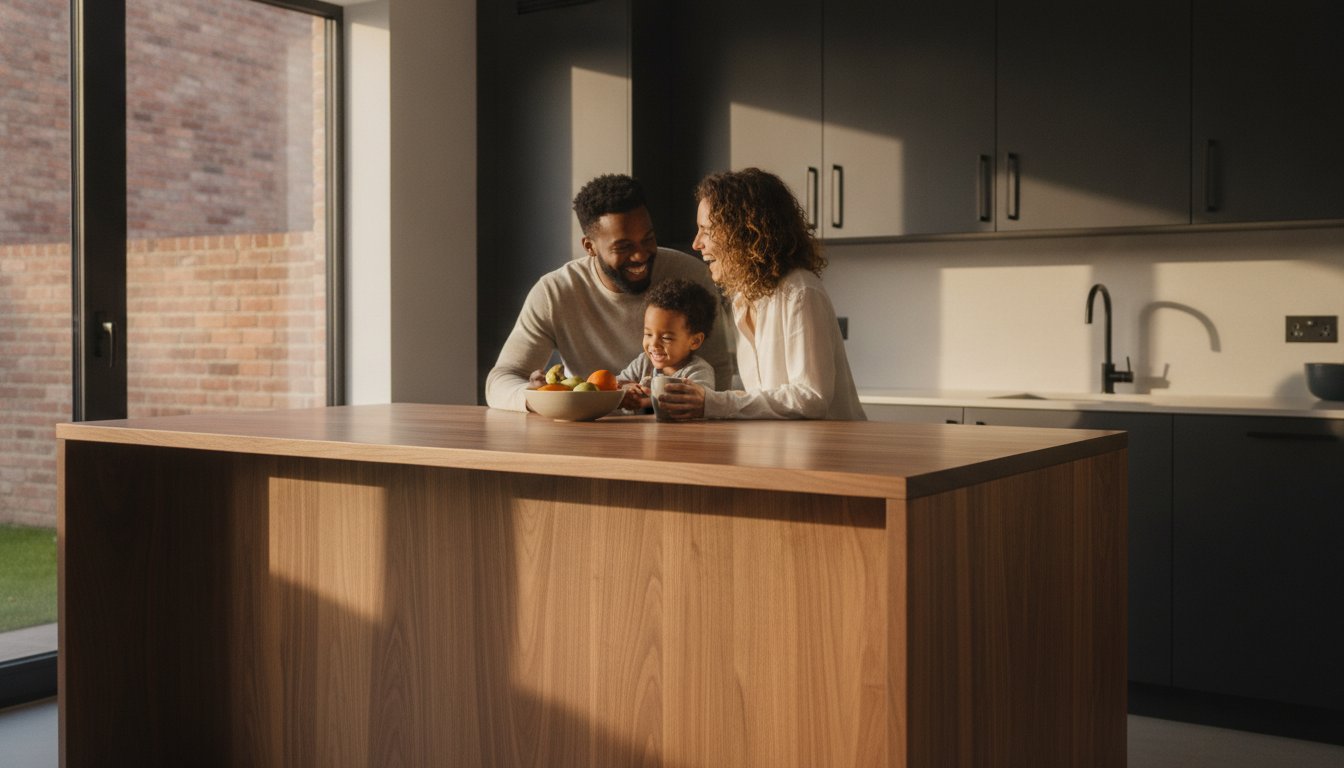
What if the most hard-working surface in your home felt less like a cold utility and more like a piece of living history? Many modern spaces struggle with a clinical, uninviting atmosphere, yet exploring the right custom kitchen breakfast bar ideas can instantly ground a room with the tactile warmth of natural timber. We know the fear of choosing materials that might fail the test of time, but there is a quiet confidence that comes from a surface designed to age beautifully alongside your family’s daily rituals.
You likely believe that your kitchen should be a welcoming social hub, even when space for a traditional dining table is limited. This guide will show you how to transform your home with bespoke designs that prioritise artisanal craftsmanship and the unique character of responsibly sourced wood. We will preview the textures and organic shapes defining 2026, offering a roadmap to a kitchen that feels intentional, durable, and perfectly tailored to your life.
Key Takeaways
- Learn how to transform your kitchen into a social hub by bridging the gap between functional cooking and casual, daily connection.
- Discover why solid timber like Oak, Ash, and Walnut provides a tactile, lasting soul for your home that outshines mass-produced alternatives.
- Explore custom kitchen breakfast bar ideas that solve awkward footprints, whether you require a floating peninsula or a standalone island.
- Master the critical ergonomics of height and overhang to ensure your bespoke surface is as comfortable as it is beautiful.
- Gain insight into a manual, artisanal design process that prioritises the unique character of natural materials and the beauty of human-centred design.
Beyond the Counter: Why a Custom Breakfast Bar is the Heart of the Modern Home
The kitchen has undergone a profound transformation. It is no longer a hidden room dedicated purely to utility; it has become the heart of the modern home where the boundaries between cooking, working, and relaxing have blurred. As we look toward 2026, home trends are shifting decisively away from formal, static dining rooms in favour of “casual connection.” This movement celebrates spaces that allow life to flow naturally. A bespoke surface acts as a vital bridge between the precision of the culinary zone and the comfort of the living area. When you begin to explore custom kitchen breakfast bar ideas, you are doing more than just adding a worktop. You are introducing a “furniture-first” design philosophy that treats this installation as a handcrafted heirloom rather than a mere structural extension of the cabinetry.
This approach prioritises the emotional weight of the materials used. While many modern kitchens can feel clinical or cold, a timber bar brings a sense of groundedness. It acts as a focal point that anchors the room, offering a visual and physical softness that invites people to gather. By choosing a breakfast bar designed with an artisanal spirit, you ensure that the most high-traffic area of your home feels intentional and warm.
The Social Ritual of the Breakfast Bar
There is a quiet magic in the concept of “parallel play” within the home. It is that effortless moment when one person is busy preparing a meal while another catches up on the day’s news or a child completes homework just a few inches away. These small, daily interactions are what turn a house into a home. A breakfast bar is a site for human connection and shared social rituals that define the rhythm of a family’s life, echoing the welcoming, community-focused atmosphere found at places like The White Bird. By creating a dedicated space for these moments, you elevate the kitchen from a place of work to a sanctuary of togetherness. The presence of a handcrafted timber surface in such a busy area provides a tactile reminder of the care and manual effort that went into its creation.
Timber vs. Stone: Choosing Warmth
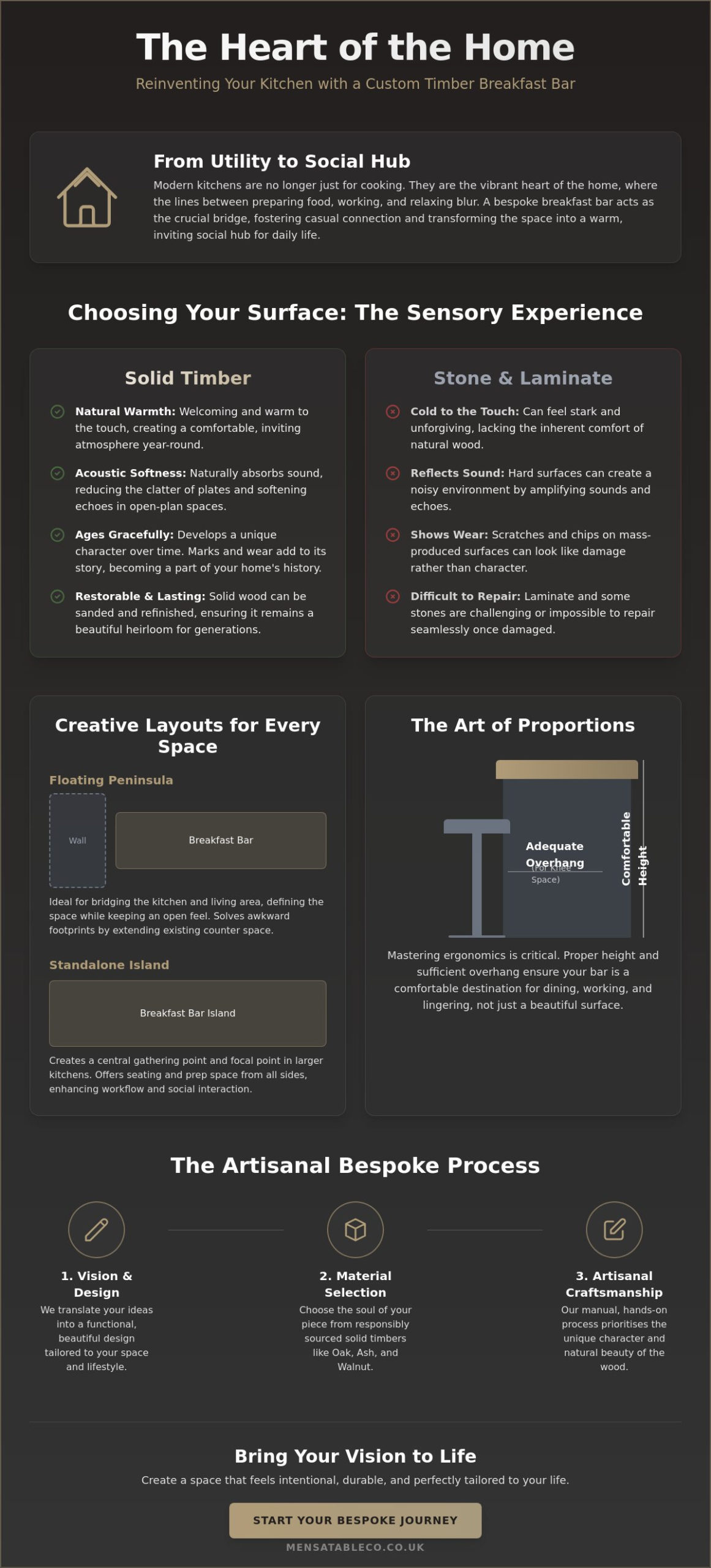
While stone and laminate are often praised for their sleekness, they can feel unforgiving and cold to the touch. Solid wood offers a sensory experience that these materials simply cannot replicate. It possesses a natural warmth that is welcoming even on the frostiest winter mornings. In open-plan layouts, the acoustic benefits of timber are also significant. Wood naturally absorbs sound, softening the clatter of ceramic plates and the sharp echoes of conversation that often bounce off harder surfaces. Unlike mass-produced materials that might wear down over time, a natural wood surface gains history. Every slight variation in the grain or subtle mark from years of use adds to its character, allowing the piece to age gracefully across generations. Selecting a material like solid European oak ensures your kitchen remains a soft, inviting space for decades to come.
Selecting the Soul of Your Bar: Solid Oak, Ash, and Walnut Ideas
Choosing the material for your surface is more than a design choice; it’s about selecting the very soul of the piece. As you gather custom kitchen breakfast bar ideas, the focus often lands on the physical footprint, yet the species of timber dictates the atmosphere of the entire room. We believe in using solid timber because it offers a depth and resilience that veneer or flat-pack alternatives simply can’t match. A solid plank is a living thing that breathes, ages, and holds the capacity for restoration, ensuring it remains a part of your home for decades. Every piece of wood we select carries a story of ethical sourcing and manual care, bringing a sense of integrity to your kitchen.
Matching the wood grain to your existing aesthetic requires a thoughtful look at the colours and textures already present. A well-chosen timber doesn’t just sit in the room; it converses with the cabinetry, the flooring, and the light. By prioritising the raw material, you ensure the bar feels like a permanent, intentional part of the architecture rather than a temporary addition.
The Timeless Appeal of Solid European Oak
The Timeless Appeal of Solid European Oak lies in its incredible durability and the familiar, comforting pattern of its grain. It’s often the workhorse of the kitchen because it stands up so well to the rigours of daily life. For those who prefer a raw, muted look, a natural finish preserves the pale, earthy tones of the wood. Alternatively, a deep oiling can bring out the amber warmth and intricate details of the grain. Oak fits effortlessly into almost any aesthetic, providing a reliable foundation for your morning coffee.
The Dark Elegance of Solid Black Walnut
For a more sophisticated or boutique feel, Solid Black Walnut offers a dark, chocolatey elegance that provides a stunning contrast against light-coloured cabinetry. There’s a sensory richness to walnut that feels inherently luxurious. Its smooth, tight grain and deep tones create a sense of calm, making it the perfect surface for quiet morning routines. It’s a choice for those who want their breakfast bar to make a bold, artisanal statement in a modern home.
Brightening Spaces with European Ash and Swedish Pine
If your space is smaller or lacks natural light, Solid European Ash is an excellent way to brighten the room with its pale, contemporary Scandi-inspired tones. For a more traditional or farmhouse feel, Solid Swedish Pine brings a rustic, honest charm that feels deeply grounded. Matching the right lightness of wood to your layout ensures the kitchen feels open and airy, turning these custom kitchen breakfast bar ideas into a practical reality. If you’re unsure which species best tells your story, we invite you to reach out to our workshop for a personal conversation about your project.
Creative Layouts for Every Space: From Floating Peninsulas to Integrated Islands
A kitchen layout is often dictated by the structural constraints of the building, yet the right design can turn a limitation into a defining feature. When exploring custom kitchen breakfast bar ideas, it’s helpful to look beyond the standard fitted cabinetry that defines most modern homes. Unlike a fixed unit that feels like a heavy extension of the wall, a timber bar can be designed with independent legs or a wall-mounted profile to create a lighter, more airy feel. This “furniture-first” approach allows the piece to stand as a distinct work of art, whether it is an extension of your existing worktop or a standalone station in the centre of the room. By prioritising the physical output and its natural origins, we can create a layout that feels both functional and evocative.
Every home has its own unique rhythm, and our role is to find a design that respects that flow. Whether you are dealing with a vast open-plan space or a narrow galley, the placement of your bar determines how people move and interact. A well-considered layout doesn’t just provide a seat; it directs the energy of the home toward a central, welcoming point.
The Peninsula Bar: Maximising the L-Shape
For many homes, the peninsula is the most natural way to introduce seating without requiring a vast amount of floor space. It creates a seamless flow that guides the eye from the functional cooking area into a more relaxed social zone. By using a “waterfall” timber edge, where the grain continues its journey down the side of the bar to the floor, you create a striking architectural silhouette. This layout is particularly effective at separating the busy “work zone” of the kitchen from the “rest zone” where guests or family members can sit and linger without being in the way of the cook.
Freestanding Islands and Breakfast Stations
There is a growing appreciation for the flexibility of freestanding furniture that isn’t bolted to the floor. A standalone island bar can be supported by characterful steel legs, providing a sense of weight and permanence without the bulk of a cabinet base. Using a Spider Leg or U-Frame style allows you to coordinate the bar perfectly with a Mensa Dining Table, creating a cohesive visual language across your home. These stations often serve as a dedicated morning retreat, perhaps housing a coffee machine or a collection of handmade ceramics, acting as a backdrop for quiet daily rituals.
Bespoke Solutions for Compact Kitchens
Small kitchens require a more thoughtful, manual approach to design. A wall-mounted “slimline” bar can transform a narrow galley kitchen into a functional dining space without obstructing the walkway. We often recommend using rounded corners in these tighter areas to improve the flow of movement and ensure safety. Choosing a light-coloured timber like Solid European Ash is a deliberate choice to keep the room feeling open. It prevents a compact layout from feeling “closed in,” ensuring that even the smallest kitchen can benefit from a handcrafted, natural focal point.
The Art of Proportions: Height, Overhang, and Ergonomics
Proportions are the silent language of furniture. While the visual grain of the wood captures the eye, the physical measurements of a piece determine how it feels to live with it every day. When gathering custom kitchen breakfast bar ideas, it’s easy to overlook the technical details of ergonomics, yet these are the factors that ensure your kitchen remains a comfortable place to linger. A bespoke approach allows us to move beyond standard factory settings. We focus on creating a balance between the sturdy presence of the timber and the delicate requirements of human comfort. This ensures that the bar is not just a surface, but an inviting extension of your home’s hospitality.
The stability of the piece is just as vital as its beauty. Solid timber tops, especially those with generous dimensions, require heavy-duty leg frames to prevent any movement or bowing over time. We pride ourselves on a manual, personal approach that considers the weight of the raw materials and the specific stresses they will face in a busy kitchen environment. This careful engineering allows the natural origins of the wood to take centre stage without compromising on the longevity of the design.
Calculating the Perfect Overhang
The “sweet spot” for knee comfort generally falls between 300mm and 400mm. This depth allows for a natural seating position where your legs don’t feel cramped against the cabinetry or the leg frame. The thickness of the timber also plays a vital role in the overall feel. A 40mm solid top provides a reassuring visual weight and ensures structural stability for the overhang. A bespoke bar allows for custom overhangs tailored specifically to the user’s height and the unique dimensions of their stools. This level of precision prevents the clinical feel of mass-produced units where one size is expected to fit all.
Counter Height vs. Bar Height
Seating and Benches
Your choice of seating is the final touch in the ergonomic puzzle. While stools are the traditional choice, Matching Benches can often provide a cleaner, more streamlined look that tucks away neatly when not in use. To ensure a comfortable experience, we recommend allowing 500mm to 600mm of width per person. This spacing prevents a crowded feeling during shared meals. Choosing stools or benches that provide a slight visual contrast to the timber top can also highlight the unique character of the wood grain. If you’re ready to discuss the specific proportions for your space, get in touch with us today to start the design process.
Bringing Your Vision to Life: The Mensa Table Co Bespoke Process
The transition from gathering custom kitchen breakfast bar ideas to seeing a finished piece in your home is a journey of transformation. It begins with the raw, untamed beauty of the timber and ends with a surface that carries the marks of careful, manual work. Unlike the transactional nature of high-street shopping, our process is a personal collaboration. We believe that a home’s focal point should be more than a utility; it should be a meaningful investment that reflects the history of the materials and the dedication of the makers. This manual approach ensures that every millimetre of your bar is considered, resulting in a perfect fit that mass-produced alternatives simply cannot replicate.
We take immense pride in the steady, deliberate rhythm of our workshop. Every plank is selected for its unique physical characteristics, from the depth of the grain to the tactile quality of the surface. This isn’t a process that can be rushed. It requires a deep respect for the natural elements and a commitment to creating something that will serve as a backdrop for your family’s social rituals for multiple generations.
Craftsmanship Over Convenience
Choosing a specialist maker over a “big box” kitchen retailer is a choice to prioritise substance over flashy marketing. While mass-produced bars often rely on cam-locks and flat-pack screws, our furniture is built using traditional joinery that ensures lasting durability. There is a quiet confidence that comes from knowing the specific craftsmen who built your furniture. This connection between the creator and the end user adds an emotional value to the piece that no factory-line product can offer. By avoiding the shortcuts of modern manufacturing, we create items that age with grace rather than wearing out.
Designing Your Custom Bar
Starting your design journey begins with a thoughtful look at your space. Measuring your layout and selecting a timber species are the first steps in bringing your vision to life. You can customise the feel of the piece by selecting from our range of hand-finished leg frames. Whether you prefer the architectural lines of a Trapezium frame, the classic strength of an X-Frame, or the clean simplicity of a U-Frame, each choice helps define the character of the room.
The final stage involves applying protective finishes that shield the wood from the rigours of kitchen life while highlighting its raw beauty. These oils and waxes are chosen for their ability to let the timber breathe, ensuring the surface remains tactile and inviting. If you’re ready to move from inspiration to execution, we invite you to explore our range of bespoke Breakfast Bars and start your design journey today. We look forward to helping you create a piece of furniture that truly feels like home.
Designing a Space for Life’s Best Moments
Your kitchen is more than a place for meal prep; it’s a sanctuary for the rituals that bind us together. By exploring custom kitchen breakfast bar ideas, you’ve taken the first step toward replacing clinical surfaces with the tactile warmth of solid timber. We’ve seen how the right choice of species, from the deep richness of Black Walnut to the airy light of European Ash, can redefine the atmosphere of a room. When you combine these natural materials with precise ergonomics and a layout tailored to your home, the result is a piece of furniture that feels like it has always belonged.
Handcrafted in the UK by our team of expert furniture makers, every item we create is built with traditional joinery and a personal touch. Whether you require a specific leg design or a unique size to fit an awkward corner, we are here to help you translate your vision into a durable, beautiful reality. We invite you to view our handcrafted Breakfast Bar collection and begin a conversation with our workshop about your project. We look forward to crafting a focal point that your family will cherish for generations to come.
Frequently Asked Questions
What is the best wood for a kitchen breakfast bar?
Solid European Oak is often considered the best choice because of its exceptional durability and timeless grain. For those seeking a darker, more boutique aesthetic, Solid Black Walnut offers a luxurious depth. If your kitchen is smaller or lacks natural light, Solid European Ash provides a bright, contemporary feel. Each species brings its own history and tactile quality to your home, ensuring your custom kitchen breakfast bar ideas feel grounded and authentic.
How much overhang should a breakfast bar have for seating?
An overhang of 300mm to 400mm is the ideal distance to ensure comfortable knee clearance while seated. This “sweet spot” prevents a cramped feeling and allows you to sit naturally without your legs pressing against the support structure. When working with a 40mm thick timber top, this depth also maintains a perfect visual balance. It ensures the piece feels sturdy and well-proportioned rather than precarious or top-heavy.
Can I add a breakfast bar to a small kitchen without an island?
You can absolutely introduce a breakfast bar into a compact space by opting for a wall-mounted “slimline” bar or a peninsula extension. These designs don’t require the footprint of a full island and can be tailored to the specific curves of your room. Using a lighter wood like Swedish Pine or European Ash helps keep the area feeling open. It turns a narrow walkway into a functional, inviting social hub without needing a major renovation.
What is the standard height for a kitchen breakfast bar in the UK?
The standard height for a kitchen counter in the UK is 914mm, while a true bar height surface typically sits between 1050mm and 1067mm. Choosing the lower counter height is practical if you intend to use the surface for food preparation. The taller bar height creates a distinct social perch that separates the cooking zone from the living area. It’s about finding the rhythm that fits your daily life and your choice of seating.
How do I maintain a solid wood breakfast bar in a kitchen?
Maintaining the soul of a solid wood surface requires regular oiling with a high-quality, food-safe finish to protect the grain from moisture. You should wipe up spills immediately and avoid placing hot pans directly onto the timber. Over time, these small acts of care allow the wood to gain a beautiful patina. This history of use turns a simple piece of furniture into a cherished family heirloom that ages gracefully alongside your home.
Is it better to have a freestanding or fitted breakfast bar?
A freestanding bar offers a unique furniture-first feel and the flexibility to adjust your layout, while a fitted bar provides a seamless, architectural look. Our Spider Leg or U-Frame designs allow the bar to stand as a distinct piece of artisanal craft. Fitted options are excellent for creating a permanent bridge between cabinets. Both approaches prioritise manual production and the honest expression of the raw materials to create a warm social focal point.
How many stools can I fit on a 2-metre breakfast bar?
You can comfortably fit three stools on a 2-metre breakfast bar by allowing approximately 600mm of width per person. This spacing ensures that guests have enough elbow room to eat and socialise without feeling crowded. If you prefer a cleaner look, matching benches can sometimes offer more flexible seating for children or larger groups. It’s a simple calculation that ensures the physical output of the design meets the needs of your daily social rituals.
Do I need a specialist to install a solid timber breakfast bar?
A specialist maker ensures that a heavy, solid timber bar is installed with the correct structural supports and heavy-duty leg frames. Solid wood is a living material that breathes and moves, requiring expert knowledge to prevent bowing or instability over time. A professional approach respects the weight of the raw components and the unique characteristics of the timber. It guarantees that your investment remains a safe and beautiful focal point for many generations.

Leave a Reply