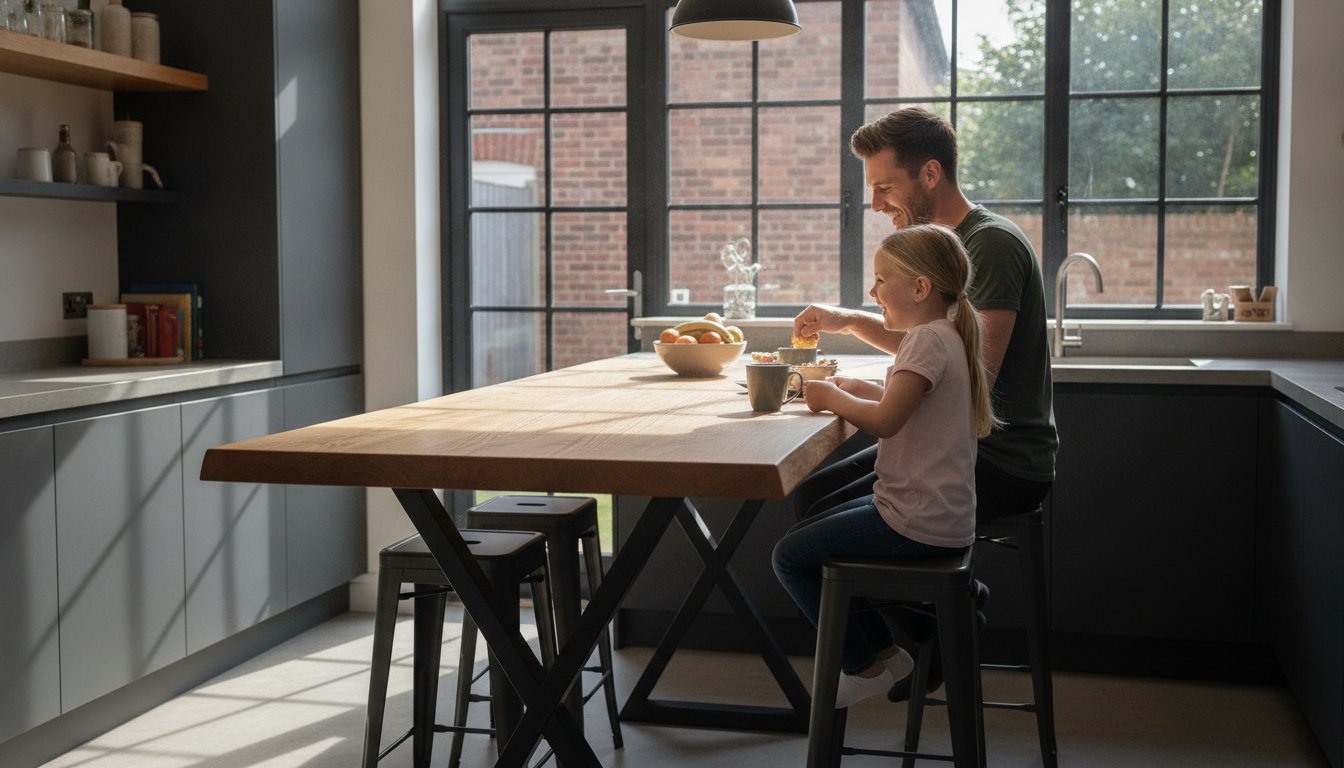
Why settle for a kitchen island that feels like an afterthought when you could own a piece of furniture that tells a story? Many homeowners find that standard units don’t respect the unique proportions of a British home, which is why exploring custom breakfast bar ideas becomes essential for creating a space that truly fits. You want more than just a surface; you’re looking for a tactile, sociable hub where coffee is shared and generations connect.
We understand that the right design must balance the raw beauty of solid timber with the practical needs of a modern layout. In this guide, we’ll help you bridge the gap between traditional craftsmanship and contemporary style. We’ll explore how to select the perfect European Oak or Walnut, navigate the latest UK building regulations for 2026, and choose signature steel frames that turn a simple worktop into a handcrafted legacy. You’ll gain the confidence to move from a vague inspiration to a functional, beautiful focal point that anchors your home.
Key Takeaways
- Understand how a bespoke breakfast bar shifts the kitchen from a place of utility to a social hub designed for family interaction.
- Learn to identify the unique tactile qualities of European Oak and Black Walnut to select a timber that ages beautifully in your home.
- Discover how architectural steel frames, such as the Spider or X-frame styles, create a striking industrial contrast with natural wood.
- Master the essential measurements for height and legroom to ensure your custom breakfast bar ideas provide genuine comfort for everyday use.
- Explore the value of the “anti-flat-pack” philosophy, where handcrafted joinery and ethically sourced materials ensure your furniture lasts for generations.
The Soul of the Kitchen: Why Choose a Custom Breakfast Bar?
The kitchen is often described as the heart of a home, but it’s the breakfast bar that acts as its pulse. While many retailers treat these surfaces as mere extensions of a worktop, we see them as handcrafted focal points that anchor a room. Choosing bespoke breakfast bars allows you to move away from the limitations of mass production. It’s an “anti-flat-pack” philosophy. We build for a lifetime, selecting every plank for its unique grain and story, ensuring the piece you bring into your home is as resilient as it is beautiful.
Historically, the Kitchen island history and design shows how our cooking spaces evolved from hidden sculleries into open, social environments. Today, the transition from pure utility to a social hub is complete. A custom breakfast bar encourages family interaction in a way a closed-off dining room never could. It’s where children do their homework while you prep dinner, or where friends linger with a glass of wine. It transforms a cooking area into a theatre of daily life.
Standard sizing rarely accounts for the beautiful architectural quirks found in British homes. Whether you’re working with a narrow galley kitchen or a sprawling barn conversion, custom breakfast bar ideas should always start with the space you actually have. Bespoke design gives you the freedom to wrap timber around a stubborn pillar or extend a surface just enough to accommodate an extra stool without blocking a doorway. You aren’t just buying furniture; you’re solving a spatial puzzle with artisanal skill.
The Tactile Connection
The “hand-feel” of solid wood changes the entire atmosphere of a kitchen. Unlike the cold, clinical feel of laminate or stone, timber is a living material that holds warmth. It grounds a modern interior design scheme, providing a soft counterpoint to the hard edges of steel appliances and tiled floors. When you run your hand across a finished oak edge, you’re connecting with a material that has spent decades growing, offering a sense of permanence and peace that synthetic materials simply cannot replicate.
A Multi-Functional Investment
A breakfast bar is arguably the most versatile piece of furniture in the modern home. In the morning, it’s a quiet spot for coffee and the news; by midday, it often serves as a dedicated home-working station. As we look toward the multi-functional hubs of 2026, the value of investing in a piece that ages with grace becomes clear. High-quality timber doesn’t wear out; it wears in, gaining character and a unique patina that tells the story of your family’s rituals for generations to come.
Selecting Your Timber: The Character of Oak, Walnut, and Ash
Choosing the right timber is the most personal step in bringing your custom breakfast bar ideas to life. Each species carries its own history and physical presence, dictated by the soil it grew in and the years it spent maturing. For those who value a heritage feel, Solid European Oak remains a staple in the British home. It is celebrated for its “cathedral” grain patterns, which create a sense of sweeping movement across the surface. It’s a dense, heavy wood that feels permanent and reassuring under your hands.
If your kitchen leans toward a more contemporary or luxurious aesthetic, Solid Black Walnut offers a sophisticated alternative. Its deep chocolate tones and occasional swirls of darker heartwood provide a moody finish that anchors an open-plan room. It doesn’t just sit in a space; it commands it. For a lighter, more modern artisan look, Solid European Ash is an excellent choice. It features a pale, creamy complexion with striking olive-coloured grain streaks that work beautifully in Scandi-inspired interiors.
We also offer Solid Swedish Pine for those seeking a rustic, lived-in aesthetic. It is a warm, approachable timber that develops a beautiful honey-coloured patina over time. While it is a softer wood than Oak, our handcrafted approach ensures the planks are thick and durable enough for the rigours of a busy household.
Understanding Grain and Tone
Timber is a living material that continues to react to its environment long after it leaves our workshop. Natural light is the primary driver of change. Oak tends to deepen into a richer amber, while Walnut might subtly mellow and brighten. Understanding the properties of popular hardwoods helps you predict how your breakfast bar will look in five or ten years. It’s about choosing a partner for your home that ages with you. The way the grain catches the light at different times of day can transform the mood of your kitchen entirely.
The Durability of Hardwoods
In a heavy-use kitchen environment, hardness is a practical necessity. Ash and Oak are remarkably resilient against the knocks and spills of daily life. While Ash is slightly more flexible, Oak’s sheer density makes it nearly impervious to the wear of a growing family. Every piece we create is finished to highlight these natural strengths, ensuring that your custom breakfast bar ideas result in a surface that remains smooth and tactile despite years of use. If you’re ready to see these textures for yourself, you can explore the unique characteristics of each species in our online shop.
Structural Statements: Leg Designs and Frame Styles
While the timber provides the tactile warmth of a kitchen, the frame provides its structural soul. It is the contrast between organic wood and industrial steel that makes custom breakfast bar ideas so compelling for the modern British home. We believe that the support structure should be as much of a design statement as the surface itself. By moving away from hidden cabinetry supports and toward exposed metalwork, you transform a simple counter into a piece of architectural art that anchors the entire room.
The Spider Leg design is a masterclass in engineering, acting as a bold, central focal point for peninsulas. Because the legs converge at a single point beneath the timber, it allows for maximum legroom and a striking visual profile that changes as you move around the room. For those who prefer a sense of grounded, rustic stability, the X-Frame and U-Frame styles offer a nod to traditional joinery but with a modern steel twist. These frames anchor the seating area, making the breakfast bar feel like a permanent, immovable part of your home’s history.
If your kitchen follows a minimalist philosophy, Trapezium and A-Frame designs offer clean, geometric lines. They provide immense strength without the visual bulk, allowing the natural grain of the wood to remain the undisputed star of the show. Every frame we produce is a testament to the “anti-flat-pack” movement, favouring manual production over mass-market speed.
Matching Your Aesthetic
Selecting the right leg style is about more than just support; it is about harmony. X-Frame designs are often the first choice for farmhouse-style kitchens, where the criss-cross pattern echoes the heritage of traditional cottage beams. Conversely, V-Frame and U-Frame legs are ideal for smaller layouts. Their open structures allow light to pass through the space, preventing the kitchen from feeling cluttered. Black powder-coated steel provides a universal, sophisticated contrast that complements every wood species from pale Ash to moody Walnut.
Stability Meets Style
We build our frames to endure the rigours of a busy household. Heavy-duty steel frames are fundamentally superior to the thin, screw-in furniture legs found in mass-market alternatives. Steel isn’t just for show. It plays a critical role in preventing natural timber movement over time, ensuring your worktop remains flat and true through changing seasons. The Mensa signature frame provides a generational foundation, built with the same level of care and precision as the timber it supports.
Practical Planning: Sizing, Overhangs, and Seating
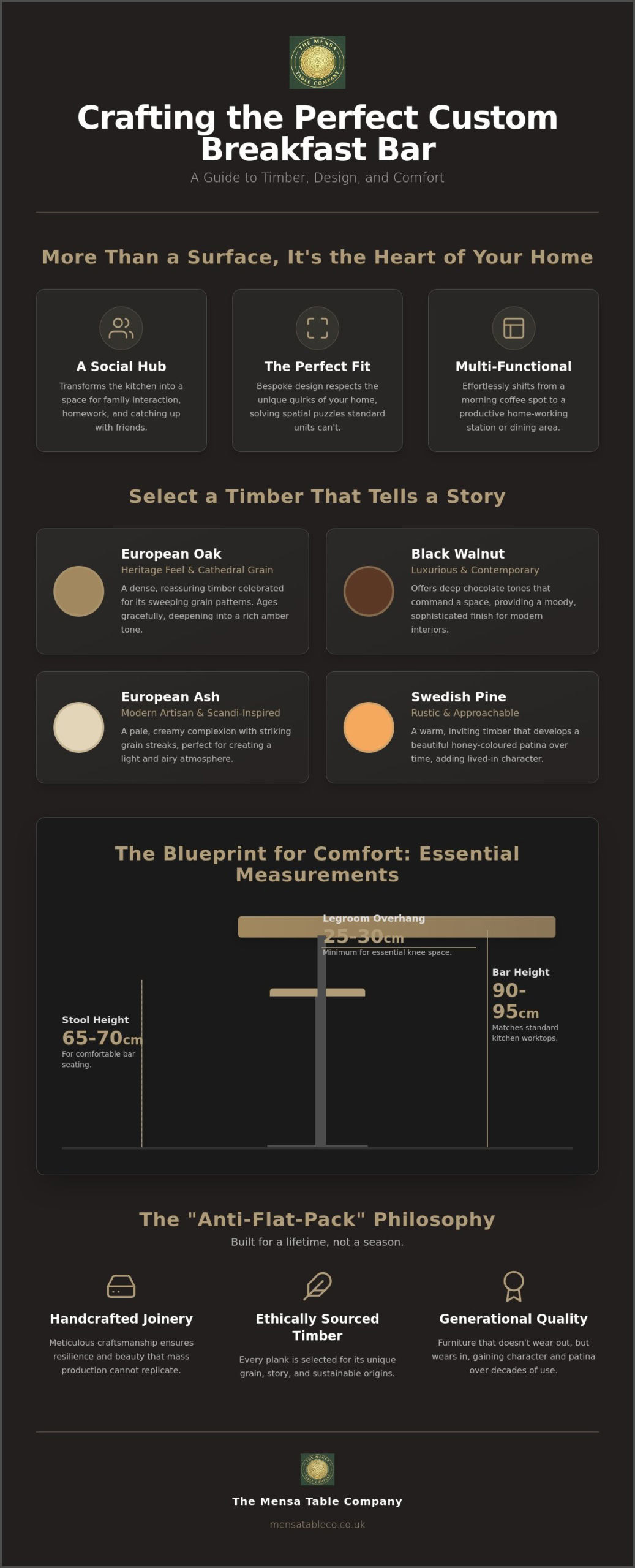
Moving from the inspiration of raw materials to the logic of your layout requires a careful eye for proportion. A breakfast bar that looks beautiful but feels cramped will never become the social hub you intended. When exploring custom breakfast bar ideas, the first decision often rests on height. Most standard kitchen counters sit at 900mm, providing a seamless extension of your workspace. However, a raised bar at 1050mm creates a distinct visual boundary, elevating the seating area and hiding the inevitable clutter of meal preparation from the rest of the room.
Integrating a bespoke surface with an existing kitchen island is a popular way to breathe new life into a home. We often create “bolt-on” solutions, where a thick slab of solid oak or walnut is joined to a stone or laminate island at a different level. This tiered approach adds architectural interest and allows you to mix textures, pairing the clinical efficiency of modern worktops with the organic warmth of handcrafted timber. It’s a practical way to gain extra seating without a full kitchen renovation.
The Art of the Overhang
Comfort is dictated by the “Golden Rule” of overhangs. For a dining experience that doesn’t feel like a compromise, you need a minimum depth of 300mm for your knees. If you plan to use the space for long Sunday brunches or evening work sessions, extending this to 400mm offers a far more relaxed posture. Supporting a deep timber overhang requires structural integrity. While our steel frames provide a robust foundation, we carefully calculate the thickness of the plank to ensure the wood remains stable and secure. You can choose a clean, square edge for a sharp modern look, or a live edge to preserve the natural, undulating silhouette of the tree.
Seating and Benches
Realistically, you should allow 60cm of width per person. This spacing ensures everyone has enough elbow room to eat and drink without feeling crowded. While stools are the traditional choice, many of our clients prefer matching benches to create a more communal, grounded feel. Benches can often be tucked completely under the bar when not in use, which is a clever way to keep walkways clear in narrower British kitchens. If you’re unsure how these dimensions will work in your specific space, get in touch with our workshop team for expert guidance on your project.
The Mensa Philosophy: Crafting Your Bespoke Breakfast Bar
Our process begins long before the first saw blade touches wood. Every slab of timber that enters our dedicated UK workshop is inspected for the unique character that will eventually define your home’s new focal point. When you move beyond mass-produced options to explore custom breakfast bar ideas, you’re looking for a piece that respects the natural life of the tree. We don’t believe in “standard” sizes because we don’t believe in standard homes. Whether it’s a specific knot in a piece of European Oak or the swirling heartwood of Black Walnut, we work with the material rather than against it.
The human touch is what separates an artisanal piece from a commodity. While industrial factories rely on automated sprayers and belt sanders, we favour the steady, deliberate pace of manual production. Every surface is hand-sanded through multiple grits until it achieves a tactile quality that invites you to touch it. We then apply finishes by hand, ensuring the oil or wax penetrates deep into the fibres to protect the wood while allowing its natural beauty to breathe. This commitment to manual craft is why we refuse to offer flat-pack alternatives; we build for longevity, not for convenience.
Sustainability isn’t a marketing slogan for our team; it is an environmental responsibility. We source our timber from ethically managed forests, ensuring that for every bar created, the natural cycle continues. This respect for raw materials ensures that the provenance of your furniture is as clear and honest as the joinery holding it together. By choosing handcrafted timber over synthetic substitutes, you’re making a choice that values the planet as much as your interior design.
Your Vision, Our Craft
Starting a project with us is as simple as a conversation. Our bespoke breakfast bar service is built on flexibility, allowing you to dictate the dimensions, the timber species, and the frame style that fits your life. We value the relationship between the maker and the end user, seeing ourselves as partners in creating a site for your family’s daily rituals. Whether you have a fully formed design or just a rough sketch of custom breakfast bar ideas, we help bridge the gap between inspiration and reality.
A Generational Piece
A piece of furniture should be an investment that ages with grace. By using traditional joinery techniques and heavy-duty steel, we ensure your bar remains a steadfast part of your home for decades. It is more than a surface; it’s a story told through grain and patina that only gets better with time. Ready to bring your kitchen to life? Contact us to discuss your custom breakfast bar project.
Bringing Your Vision to Life
A breakfast bar is more than a simple kitchen extension; it’s a site for shared rituals and a foundation for the stories your home will tell. By choosing solid European timbers and architectural steel frames, you’re investing in a piece that values substance over mass production. Whether you’ve been exploring custom breakfast bar ideas to solve a spatial puzzle or to introduce tactile warmth to a modern space, the right choice is one that respects the history of the materials and the future of your family.
Every piece is handcrafted in our UK workshop, where we focus on custom sizes tailored to your home’s unique layout. We don’t believe in the disposable nature of flat-pack furniture, preferring instead to create generational items that gain character with every passing year. If you’re ready to transform your kitchen into a sociable hub, we’re here to help you navigate the process from initial timber selection to the final hand-applied finish.
Discuss your custom breakfast bar ideas with our craftsmen today and take the first step toward a beautiful, functional focal point that you’ll be proud to own for a lifetime.
Common Questions About Custom Breakfast Bars
What is the standard height for a kitchen breakfast bar in the UK?
The standard height for a breakfast bar is usually 900mm if it’s designed as a seamless extension of your kitchen worktops. For those who prefer a tiered look that separates the cooking area from the social space, a raised height of 1050mm is the traditional choice. This taller profile allows you to use bar-height stools and effectively hides the bustle of meal prep from the rest of the room.
How much overhang do I need for a breakfast bar to sit comfortably?
A minimum overhang of 300mm is essential to ensure your knees have enough room when sitting. If you plan to spend longer periods at the bar, such as for morning work or evening socialising, we recommend a depth of 400mm for true comfort. This extra space allows for a more relaxed posture and makes your custom breakfast bar ideas feel like a genuine dining destination rather than a temporary perch.
Which wood is best for a kitchen breakfast bar: Oak or Walnut?
The choice depends on the atmosphere you wish to create, as both are exceptionally durable hardwoods. European Oak is a timeless, resilient option with a prominent grain that suits traditional and farmhouse aesthetics perfectly. Black Walnut offers a deeper, more luxurious chocolate tone that anchors a contemporary kitchen with its moody and sophisticated presence. Both timbers age beautifully, developing a unique patina that tells the story of your home.
Can I have a custom breakfast bar made to fit my existing kitchen island?
Yes, we frequently craft bespoke timber tops designed to integrate with existing stone or laminate islands. This “bolt-on” approach is a wonderful way to add tactile warmth and extra seating to a kitchen without a full renovation. Because we specialise in bespoke sizing, we can cut the timber to wrap around pillars or match the specific proportions of your current cabinetry exactly.
How do I maintain and clean a solid wood breakfast bar?
Maintaining the natural beauty of your timber is simple and requires only a soft, damp cloth for daily cleaning. You should avoid harsh chemical sprays that can strip the hand-applied oils we use in our workshop. To keep the wood protected and glowing, we suggest a light re-oiling once or twice a year, which helps the surface resist spills and preserves its tactile, velvety feel for generations.
Do I need a steel frame, or can the bar be wall-mounted?
While smaller surfaces can be wall-mounted with heavy-duty brackets, a steel frame provides the ultimate foundation for stability and style. Our signature frames, such as the Spider or X-Frame designs, prevent natural timber movement over time and turn the piece into a freestanding architectural statement. A frame ensures your breakfast bar remains a grounded, permanent focal point that can withstand the rigours of a busy family kitchen.
What is the difference between a live edge and a square edge breakfast bar?
A live edge preserves the natural, undulating silhouette of the tree, keeping the organic curves and textures of the outer trunk visible. This style creates a rustic, one-of-a-kind feel that celebrates the raw origins of the wood. In contrast, a square edge is precision-cut for a clean, geometric finish that suits minimalist or modern interiors where sharp lines and symmetry are preferred.
How long does the bespoke manufacturing process take?
Quality craftsmanship is a deliberate process that generally takes between six and eight weeks from the initial design to delivery. This timeframe allows us to hand-select the perfect planks, allow the timber to acclimatise to our workshop, and apply multiple layers of hand-finished protection. We don’t rush our makers, as the time invested in the workshop ensures your custom breakfast bar ideas result in a piece of furniture built to last a lifetime.

Leave a Reply