
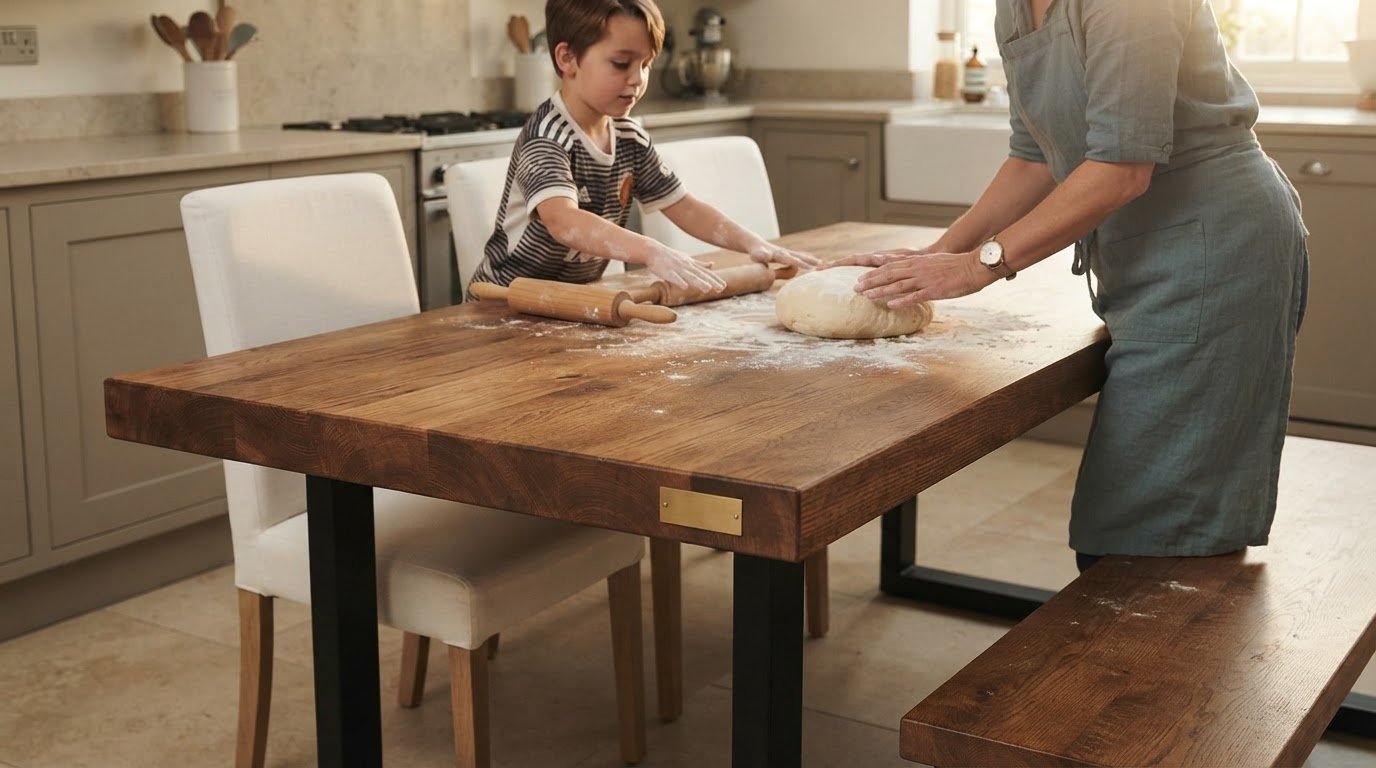
A family heirloom isn’t made by age alone. Creating a family heirloom with bespoke furniture begins with choosing durable materials, then shaping the piece around the people, routines and memories it will hold. Personal details and skilled craftsmanship give it meaning; thoughtful design helps it belong in your home for years to come.
It’s natural to want furniture that feels personal without sacrificing everyday usefulness. A well-considered design brings both together: solid wood provides a lasting foundation, while the right proportions, finish and details help a piece suit your home. This article explores ways to personalise furniture, choose materials and plan its place in a room. You’ll also find practical ideas for recording its story so its meaning can be shared across generations. The aim is to create something that serves daily life and gathers memories over time.
Key Takeaways
- Choose personal details, such as a plaque or considered finish, to give furniture a connection to your family’s story.
- Look for craftsmanship that supports everyday use as well as lasting character.
- Assess materials and construction together when deciding whether a piece is suited to becoming a family heirloom.
- Consider the room’s scale, colour and texture to help the furniture feel at home alongside existing pieces.
- Understand that bespoke furniture costs depend on choices such as material, design and the work involved.
1. Personalising furniture with plaques, upholstery or finishes
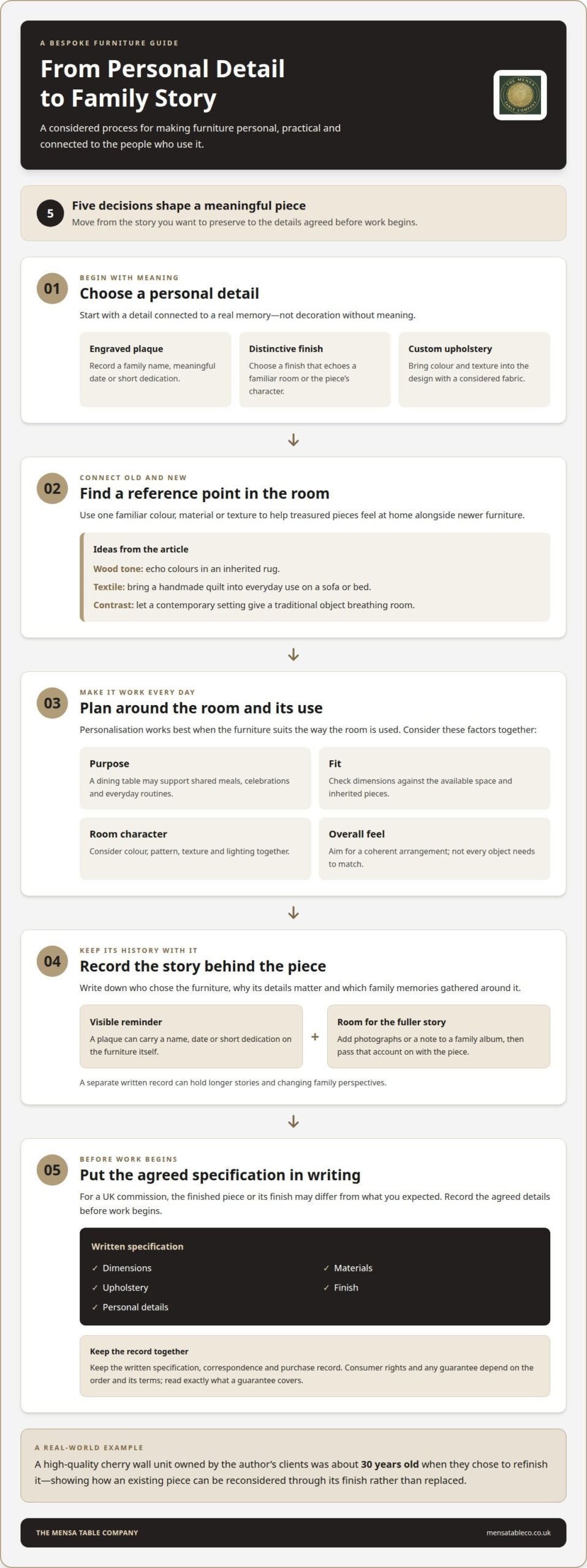
A family piece becomes more personal when its details carry a story. An engraved plaque can record a family name, a meaningful date or a short dedication. A distinctive finish can echo a familiar room, while custom upholstery can bring colour and texture into the design. Choose details that feel connected to real memories, rather than adding decoration without meaning.
Start with one reference point. For example, a table’s wood tone can pick up colours in an inherited rug and help new and old pieces sit together. A handmade quilt can add warmth to a sofa or bed instead of staying folded away. These choices bring treasured textiles into everyday life and help a room feel personal, practical and considered.
Personalisation works best when the furniture suits the room’s use. A dining table can support shared meals, celebrations and everyday routines. Its dimensions and finish should work with the room, including any inherited pieces. Consider colour, pattern, texture, lighting and available space together. The result can feel coherent without requiring every object to match.
Keep the story with the furniture. Write down who chose it, why its details matter and which family memories gathered around it. Add photographs or a note to a family album, then pass that account on with the piece. A plaque offers a visible reminder, while a separate written record leaves room for longer stories and changing family perspectives.
For a UK commission, the risks include a finished piece differing from the design you expected or the finish appearing different in your room. Record the agreed dimensions, materials, upholstery, finish and personal details in writing before work begins. Consumer rights and any guarantee depend on the order and its terms, so keep the written specification, correspondence and purchase record together, and read exactly what any guarantee covers.
Personal style needn’t erase inherited character. If a family treasure feels out of place, try it in another room, adjust its lighting or pair it with pieces you already love. A contemporary setting can give a traditional object breathing room, while a familiar colour or texture can tie the arrangement together. The aim is not to preserve a room unchanged, but to keep meaningful craftsmanship in use and let its story grow.
Engraved plaques, custom upholstery or distinctive finishes can personalise furniture as a family heirloom, giving a piece a treatment selected for its history and character. Upholstering a sofa in a fabric that draws tones from a vintage rug can create a subtle link between inherited and contemporary furnishings. A high-quality cherry wall unit owned by the author’s clients was about 30 years old when they decided to refinish it, showing how a substantial existing piece may be reconsidered through its finish rather than replaced.
2. Traditional craftsmanship combined with modern tools
Traditional joinery gives wooden furniture its character; modern tools can help shape a piece around its intended use. A craftsperson can use measured drawings to plan dimensions, then refine edges and surfaces by hand. That balance matters when an heirloom must fit a particular room without losing the details that make it feel distinctive. Careful planning also helps protect the proportions and visual rhythm of cherished objects nearby.
Consider a father’s wing-backed chair as the starting point for a warm living area. Its familiar form can guide the room’s scale and atmosphere, while contemporary seating or lighting makes the space useful for entertaining. An antique doesn’t need to dominate a modern interior. Instead, repeat one feature, such as its wood tone or curved outline, in a nearby table or frame to make the combination feel considered.
Modern needs can also shape how an older piece works. A vintage desk, for example, can become a home-office workstation when its surface and storage suit daily tasks. A heritage armoire can offer storage while retaining its original craftsmanship and character. Ask what the furniture needs to do in its new role, and which details should remain unchanged.
Custom cabinetry can frame a treasured mirror, turning it into a focal point while adding useful storage around it. In a dining space, a wooden table paired with streamlined metal chairs creates contrast between traditional warmth and a lighter modern silhouette. A vintage chandelier above a simple kitchen island offers another link between old and new. In each example, consider scale, proportion, colour and texture before adding more objects.
Preserving tradition doesn’t always mean keeping every piece exactly as it was. An inherited item that no longer suits its owners may be reworked or refinished, allowing its material and craftsmanship to remain part of family life. The right approach depends on what gives the object meaning and how it will be used. Any changes should support its function without disguising the features that connect generations.
For a new wooden piece, share the dimensions of the room and the objects it must sit beside. A photograph of a cherished chair or mirror can clarify the style you want to echo. If you’re developing a design around a particular piece or interior, talk through your design ideas as part of planning furniture that feels at home among both modern and inherited pieces.
3. Choosing durable furniture for a family heirloom
Solid wood is a practical choice for furniture intended for lasting use. Its grain, texture and natural variation give each piece distinct character. Oak, ash, walnut and pine each have a different appearance, so choose based on the room, intended use and finish. Consider where the furniture will stand and what it needs to support, whether that means daily meals in the kitchen or quieter moments in a living room.
Bespoke furniture can be designed for a particular space and purpose, while an antique brings an existing history and character. Mass-produced furniture varies in construction and materials, so its longevity depends on the individual piece. None is automatically the best value: consider condition, build, suitability and the meaning attached to it. A well-chosen piece gains value through years of serving its household, not simply through its original price.
Look closely at how the furniture is assembled. Joinery that can be accessed and repaired helps future maintenance, while parts that are permanently concealed can make later work harder. Ask for a design that allows worn components to be repaired or replaced without discarding the whole piece. A dining table, for example, should be considered as a working surface, with its legs and frame supporting regular use.
The finish matters too. Choose a surface treatment suited to how the furniture will be used and cared for. A dining table used for everyday meals has different demands from a display table. Ask how to clean and maintain the finish so the surface can remain part of daily life and be refreshed when needed.
Before commissioning, define the furniture’s job in plain terms. Note where it will stand, what it needs to hold and which existing pieces it must sit beside. A table for family meals may need room for serving dishes; a desk may need a clear working surface. These details turn an idea into practical design choices and help the finished piece stay useful as routines change.
Plan for care as part of preserving the furniture’s meaning. Keep the maker’s notes, material and finish details with family photographs or a written account of its history. If a surface needs attention later, that record can help the next generation understand its original appearance and care needs. A timeless piece isn’t frozen in one moment; it remains useful, repairable and connected to the people who gather around it.
4. Professional guidance on placement and materials
Good placement starts with the room’s real use, not a furniture trend. In a dining room, allow space for chairs to move and people to gather comfortably. In a living room, consider how a table or cherished vintage piece relates to seating, doorways and natural light. A room plan or photograph makes these relationships easier to discuss before settling on dimensions.
For a family dining table, connect the new design to a treasured piece through material or shape. Bespoke contemporary chairs that reference the table’s original design can bring old and new together without making them identical. Reviewing different dining table designs can also help clarify how a table’s form will suit the room and its role.
Colour offers another quiet link. If an inherited Persian rug has tones the family wants to retain, use them to guide the room’s palette, from wall colour to textiles. The rug needn’t dictate every choice: placing it in another room may work better if its colours or size feel more at home there. Lighting and surrounding furniture also affect how its pattern appears.
A useful design conversation brings together three details: where the furniture will stand, what it needs to do and which existing objects matter most. For example, a family may want a table near the kitchen for everyday meals while keeping a clear route through the room. A sketch, room measurements and photographs of heirlooms can help translate that intention into a practical design.
When choosing a furniture maker in the UK, look for a clear discussion of materials, dimensions, construction and intended use. The proposed design should respond to your room and cherished pieces, with the agreed details set out in writing. Ask specific questions about the timber’s appearance and care to decide whether it suits your home.
Material choice should suit both the room and the story you want the furniture to carry. A wood tone that echoes an existing table can create continuity, while a contrasting tone can help a treasured piece stand out. Consider how the finish will sit beside painted surfaces, textiles and other wooden furniture. Samples viewed in the room’s own light can reveal differences that are easy to miss elsewhere.
Design guidance is most useful when it connects appearance with daily life. A special object shouldn’t become awkward to use or block a well-used path. Considering layout, material, colour and function together can honour the past while giving family life a comfortable place to continue.
5. How much does bespoke furniture cost in the UK?
There isn’t one standard price for bespoke furniture in the UK. Cost depends on the piece’s dimensions, material, design, construction and finish. A dining table made for a particular room has different requirements from a compact coffee table, so a useful estimate starts with a clear description of the piece and its purpose.
Material is one of the choices that shapes a quote. Solid ash, oak, walnut and Swedish pine each have distinct grain, colour and working characteristics. The amount of timber needed depends on the table’s size and design. A larger top, distinctive base or particular grain preference can affect the materials and work involved.
Design detail matters too. A straightforward rectangular top and simple frame call for different work from a shaped top, intricate base or carefully matched components. Custom dimensions can help a table fit an awkward space, but measurements and construction need to be planned together. Drawings or a written specification help define exactly what the maker is pricing.
Finish and personal details influence the work too. A chosen surface treatment, engraved detail or upholstery element adds different requirements to a project. Be specific about the appearance and use you have in mind. For example, describe whether the table is intended for everyday family meals or occasional entertaining, and explain any details that should connect it to existing furniture.
To compare estimates fairly, provide the same information for each proposed design: furniture type, dimensions, timber, finish, construction details and custom features. Read each written quotation alongside that specification. It should make clear which piece and choices the price covers, so any change to dimensions or materials can be understood as a change in scope.
Consider the whole project, not just the initial figure. A table designed for a specific room may suit its intended use better than a standard size, while considered materials and construction support continued use. These qualities don’t guarantee a particular lifespan or future resale value. They help explain what the quotation includes and why particular design decisions matter.
If you’re shaping a table around a room, material preference or family use, discuss your furniture requirements and the details that matter to your design.
An heirloom can also help clarify what a room needs. If a family heirloom no longer feels right at home, letting it go can give someone else the chance to enjoy it. That choice can help you decide whether a new bespoke piece should complement the furniture you want to keep or serve a different purpose.
Before deciding an inherited item cannot work, try it in another room, change its lighting or pair it with pieces you already love. These simple changes let you reconsider the piece without treating its original arrangement as fixed. Once you know what belongs in the room, describe how a bespoke design should relate to those choices, or explain that you want a different look. Make decisions that feel right for the home, rather than keeping or commissioning furniture because you assume something ought to stay.
The Mensa Table Company
The Mensa Table Company makes handcrafted dining tables designed for everyday family life. If you’re choosing a central piece for shared meals and future memories, explore The Mensa Dining Table, The Spider Leg Dining Table, The X-Frame Dining Table and The U-Frame Dining Table. Consider each frame design alongside your room, preferred wood and the way your household gathers.
Consider where the table will stand and which routines it needs to support. A thoughtful choice can give family meals, conversations and celebrations a lasting place in the home.
Contact The Mensa Table Company to discuss which dining table may suit your home and family life.
Give Your Family Story a Place to Grow
A future heirloom begins with the role you want a piece to play in your home. Picture the conversations, meals and celebrations it might hold, then let that imagined future guide your choices. Creating a family heirloom with bespoke furniture means giving a piece purpose, character and a place in everyday family life, not making it feel old before its time.
For families, creating a family heirloom with bespoke furniture can begin with choosing a gathering place that suits the home. The Mensa Table Company offers The Mensa Dining Table, The Spider Leg Dining Table and The X-Frame Dining Table. Consider how each design fits your home and the way you live, so it can become part of your family story.
When you’re ready to explore the next step, contact The Mensa Table Company to discuss your furniture ideas. Creating a family heirloom with bespoke furniture is a thoughtful way to give future memories a place to begin.
Frequently Asked Questions
What bespoke furniture pieces are most suitable to become family heirlooms?
Choose furniture that serves a regular purpose and can remain useful as family routines change. A dining table can host shared meals, while a desk may accompany someone through changing stages of work or study. A bench or coffee table can also become familiar through everyday use. Think about where it will live, who will use it and whether its function can adapt over time.
What woods and materials are best for durable heirloom furniture?
Solid wood is a suitable choice for furniture intended for lasting use; oak, ash, walnut and pine offer different natural appearances. Choose a wood whose grain and colour feel right in the room, and consider how its finish will look in changing light. Natural grain, colour and texture vary between pieces. These differences are normal features of wood, not faults, and make each item individual.
What design details can make bespoke furniture personal and meaningful to a family?
Let a family ritual guide a practical design choice. If baking together is a favourite tradition, for example, consider how a table’s working area and position in the kitchen could support that activity. A shape or small design detail might also reflect a place, pastime or family tradition. The most personal touches connect with how relatives actually spend time together, rather than serving as decoration alone.

Leave a Reply