
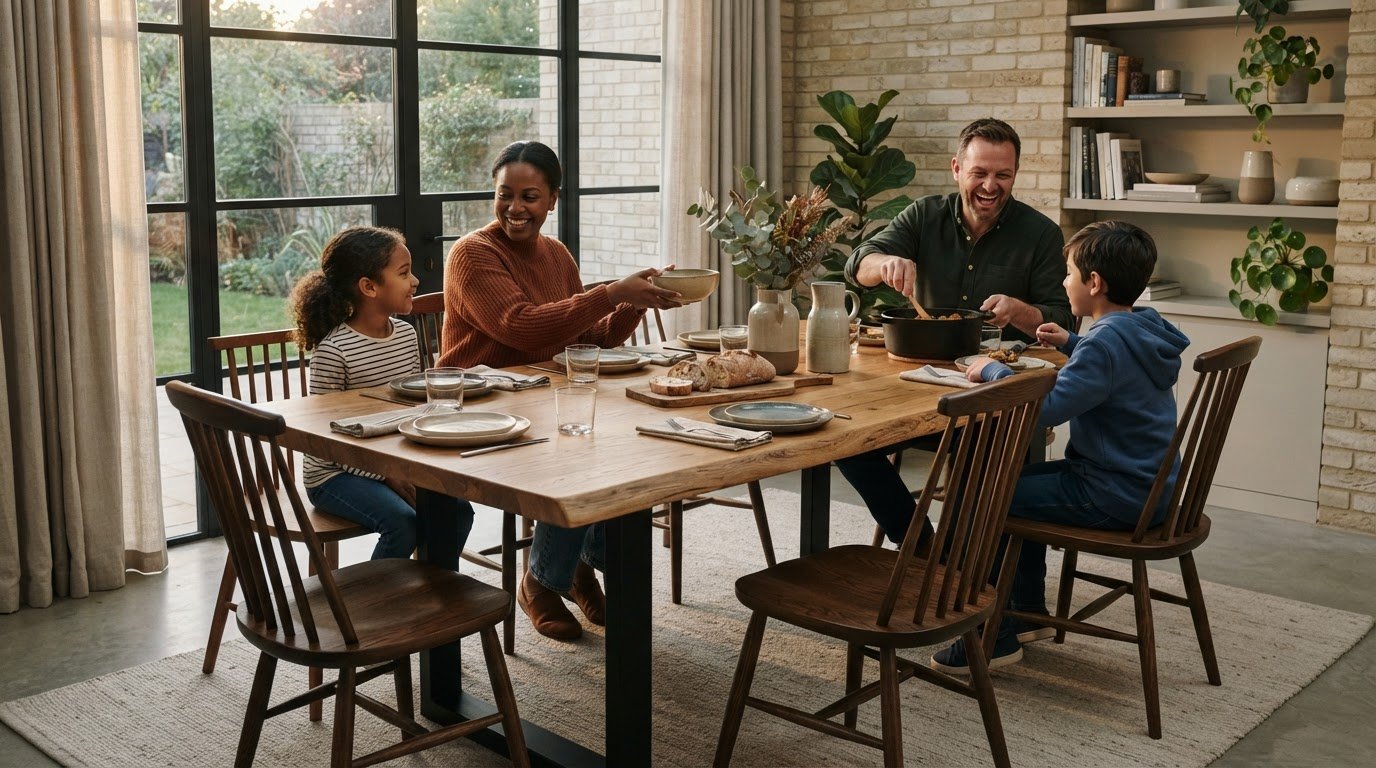
Timeless furniture doesn’t need to follow the latest trend. Classic furniture styles that never age combine simple silhouettes, lasting comfort and the flexibility to suit changing rooms and routines. Thoughtful materials and careful construction help a piece feel at home for years, rather than tied to a passing moment.
A striking colour or shape can catch the eye, but the pieces we return to are often those that work beautifully in everyday life. A dependable dining table, for instance, can host shared meals, celebrations and ordinary evenings alike.
This guide explains what gives furniture staying power and how to choose pieces with enduring appeal. Learn how to weigh craftsmanship, materials and proportions, and how classic dining furniture, balanced silhouettes and natural palettes can add lasting character while leaving room for your style to evolve.
Key Takeaways
- Prioritise comfort, adaptable design and thoughtful construction over details chosen only to match a passing trend.
- Assess a piece’s stability, materials and finish to understand how it may wear and fit into your home over time.
- Choose dining furniture that suits how you gather, and consider classic forms such as a Windsor chair for use beyond the dining room.
- Keep larger furniture in balanced shapes and natural or neutral tones, then bring in changeable colour through cushions, rugs and artwork.
- Look for furniture that earns its place through both proportion and purpose, offering useful function without overwhelming the room.
1. What Makes Furniture Timeless?
Timeless furniture balances simplicity, comfort and adaptability. Picture a dining table that could have suited a home 100 years ago and still feel at ease 75 years from now. Its appeal comes from proportion and purpose, not a short-lived interior design trend.
Trends can make a finish or shape feel dated within two or three years, and a particular look may fade after six months. That doesn’t make trends unwelcome. It means a large, expensive piece deserves more thought than a cushion or vase, which can be changed with less effort.
Think of a lasting purchase as a piece you’ll continue to use and enjoy for five, ten or even fifty years. Choose for the way you live: a comfortable chair for reading, or a sturdy table for meals and conversation. A useful piece earns its place through daily life, not novelty.
How much does classic furniture cost in the UK? There’s no single price for classic furniture. Cost depends on materials, construction, dimensions and the maker. Compare those details alongside the design to judge what a piece offers beyond its appearance.
Which materials and finishes age well in furniture? Natural materials and finishes that let their character show can develop a pleasing patina. Reclaimed pine hardens through reclamation, while elm’s grain becomes more pronounced with age, giving each material a distinct quality.
Look closely at how a piece is made. Visible joints and carefully finished edges suggest construction intended to be seen, rather than hidden beneath decoration. Check that furniture feels stable and its details suit its purpose; an elegant outline matters less if it doesn’t work well.
Keep larger pieces versatile, then bring trends into smaller details. A contemporary cushion, lamp or artwork can refresh a room without tying its central furniture to one moment. Try changing a wall colour or moving a piece to another room. If it still works, it has genuine flexibility.
Books add a lasting, personal layer to an interior. Well-loved hardbacks bring colour and texture, as well as a record of the people who live there. Group them on a side table or shelves, and let their changing spines add interest without replacing the room’s core furniture.
Where can you buy timeless furniture in the UK? Look to UK furniture makers and retailers, comparing the materials, construction and proportions of each piece. Clear descriptions of timber, joints and finish help you make a considered choice, while seeing furniture in person can reveal its scale and feel.
2. Choosing furniture pieces designed to last
Start with the role each piece needs to play. A dining table used for meals, homework and conversation needs a stable frame, a practical surface and room for everyday movement. A compact desk has different demands, so assess its storage and working space before choosing a finish or silhouette. Clear purpose helps separate a lasting purchase from a design that only suits the moment.
Next, assess construction rather than relying on appearance alone. Gently press a table edge to see whether it rocks or shifts. Open drawers fully and check that they move smoothly. Look underneath a chair or table to see how its components meet, and inspect corners for neat joins. These checks offer practical clues about how a piece is made.
Material matters, too. If a listing doesn’t make the composition clear, ask whether the furniture is solid timber or composite. Solid timber can be sanded and refinished when wear appears, giving its surface another life. A finish that sits close to the wood lets more natural texture show; a coating over the top creates a different look and feel. Consider how each surface will suit your home and use.
Classic lines give furniture room to move between interiors. A simple rectangular table or traditional chest can sit comfortably beside newer lighting, artwork or textiles. Mid-century modern furniture offers another enduring reference, with clean proportions that complement both vintage pieces and contemporary rooms. People drawn to classic furniture styles that never age can use these forms as a starting point, choosing a shape for balance and function rather than a detail tied to one moment.
Think about where the furniture might go next. A versatile chair can move from a bedroom corner to a sitting room, while a desk can remain useful as work routines change. Picture the piece with a different rug, wall colour or accessories. If it still feels at home, it has flexibility beyond its original setting. That adaptability is central to classic furniture styles that never age, because the piece can serve you as your rooms and needs evolve.
Finally, weigh the purchase across its useful life, not only its first impression. A well-chosen piece may continue to suit you for five, ten or even fifty years. That doesn’t mean every item must be traditional or plain; a distinctive form can still feel lasting when its scale, comfort and purpose are right. Choose furniture you’ll be glad to live with, and perhaps pass between generations.
For a considered choice, compare the designs and dimensions that suit your space, then explore furniture options that fit your home.
3. Classic dining room furniture
A dining room’s lasting centrepiece is usually a table that suits everyday meals as well as company. Classic furniture styles that never age begin with this practical balance: choose a shape to suit the room and the way people gather. A rectangular table can sit along a wall, while a round one encourages conversation across the surface. The Mensa Dining Table is one option to consider when comparing forms.
Brutalist dining furniture makes a bolder statement through weighty forms, strong geometry and an emphasis on material. A substantial-looking table can bring presence to a dining room, especially when simpler chairs balance its visual weight. To keep the setting comfortable, consider how the table’s shape relates to the room, the chairs and the clear routes people need around it.
A four-seat dining set can suit a smaller household or compact eating area. Picture four people sitting down together, then consider how chairs pull out and whether anyone needs to pass behind them. The arrangement should support a shared meal without making the rest of the room difficult to use. In a flexible space, a bench can be tucked away when it isn’t needed.
A six-seat dining table and chairs can make room for larger gatherings. A Windsor chair, with its spindled back and curved seat, brings a recognisable traditional detail to a dining room. It can also work elsewhere, so the chairs needn’t remain tied to one table if the room’s arrangement changes. That versatility suits the spirit of classic furniture styles that never age.
Look beyond matching sets. Pairing a straightforward table with chairs of a different shape or finish can make a room feel collected rather than overly coordinated. Keep one feature consistent, such as the wood tone or chair scale, so the contrast feels deliberate. Natural grain and careful craftsmanship add character without ornate decoration.
To compare table shapes, consider the dining area’s layout, seating needs and the visual effect you want. Browse dining table styles as part of that decision, then imagine each form in your own room. A classic dining space doesn’t need to look formal; a well-chosen table can support weekday breakfasts, family occasions and relaxed evenings with friends.

4. Simple silhouettes and neutral palettes
Simple lines give a room a clear foundation. A Parsons table, with its clean, uncomplicated shape, can anchor a dining space without competing with chairs, artwork or lighting. Its restrained outline leaves room for personal details to change, so the interior can evolve without replacing its central furniture. That balance helps timeless furniture stay relevant beyond a single fashion moment.
Consider a chair’s outline before choosing its colour. A slipper chair has no arms and a low profile, making it easier to place beside a bookcase or in a compact bedroom. Its shape suits different decorating schemes, from traditional rooms to pared-back contemporary interiors. For comfort, check that the seat height and depth suit how you’ll use it.
Neutral doesn’t have to mean stark white or cool grey. Warm, nature-inspired colours are replacing the cool greys and stark white interiors that dominated the previous decade. Soft earthy shades can connect furniture with timber floors, woven rugs and natural light, while leaving colourful accessories free to change. A neutral palette is a starting point, not a rule against character.
Solid wood adds visual texture to a simple silhouette. Its grain brings natural variation to a restrained shape, while a finish that shows the grain keeps that detail visible. Pair pale timber with cream or muted green for a calm effect, or use deeper wood tones against a warm, light wall. Aim for a relationship between surfaces, not an exact colour match.
Furniture can also balance lasting forms with a current detail. Curved, softer shapes are prominent in 2026, but a curved chair or lamp can bring that note without making every large piece follow the same trend. Mid-century modern design offers another reference: tapered wooden legs and organic shapes can soften a room’s geometry. Leather or teak adds material contrast within that vocabulary.
Keep colour flexible through cushions, rugs and artwork. A rust-coloured cushion on a neutral slipper chair can add warmth; changing it later refreshes the room without replacing the chair. A patterned rug can bring energy beneath a plain table, while artwork adds a focal point to a quiet wall. These smaller choices let the room shift with your taste.
For a room that can feel settled for a century, use contrast with care: pair a clean-lined table with a softer chair, or a pale wall with textured timber. Check the combination from the doorway and from the main seat. If the furniture’s shape remains easy to read and the palette feels restful, comfort and elegance can coexist without the room feeling staged.
5. Functional form and proportional harmony
A piece feels balanced when its size, shape and purpose suit the room. In a narrow sitting room, a bulky coffee table can obstruct the route between sofa and doorway. A lower, lighter-looking design keeps the space easier to move through while providing a surface for books or a cup. Judge furniture in relation to its surroundings, not in isolation.
Start with the room’s main purpose. In a living room used for reading, a chair and lamp should work together, with a nearby surface for a book. In a hallway, a slim console can hold keys without crowding the entrance. Function guides the choice, while proportion helps each piece feel at home.
Multifunctional furniture can make smaller spaces work harder. An antique trunk or blanket chest offers storage and can also serve as a coffee table or bench. Its solid presence may suit a generous room, while a lighter design can feel more at ease beside a compact sofa. Consider how often you’ll need to open it, and whether its lid or position will obstruct everyday movement.
For visual harmony, compare a piece’s height and mass with nearby furniture. A low sofa can look unbalanced beside a tall, narrow table, while a broad coffee table may dominate delicate seating. View the grouping from the doorway, then from the main seat. This change of perspective can reveal whether the shapes feel connected or compete for attention.
Natural materials add character without elaborate decoration. Timber grain, woven fibres and softly textured finishes give a minimalist room depth, while a neutral backdrop lets those details stand out. Pair a wooden chest with a plain sofa, for example, or place a woven basket beside a smooth side table. A small contrast in texture can make simple forms feel more personal.
Think about how furniture might adapt as your spaces change. A bench can move from an entrance to the end of a bed; a compact table might shift from a living room to a reading corner. Pieces with clear functions and uncomplicated shapes are easier to rearrange. Their usefulness outlasts a decorative detail tied to one particular fashion.
Before choosing, map the room’s natural routes and note where doors, windows and radiators sit. Then compare the furniture’s outline with the room’s strongest shapes, such as a long window sill or a square fireplace. A balanced arrangement leaves these features room to breathe. If you’re planning a timber table around a particular space, explore dining table options with the room’s proportions in mind.
The Mensa Table Company: The Mensa Dining Table
The Mensa Table Company makes handcrafted dining tables for homes and everyday routines. The Mensa Dining Table offers a considered centrepiece, while the Spider Leg, X-Frame and U-Frame Dining Tables have more distinctive forms. Comparing their designs can help you choose a table suited to your room’s proportions and the character you want around it.
Start with the practical details of your space: where the table will sit, how people move around it and how it will support your household’s dining habits. Then compare its design with the enduring qualities discussed above, including useful form and a look that feels at home beyond one passing trend.
Contact The Mensa Table Company to discuss a handcrafted dining table for your home.
Choose a centrepiece for the life you live
A dining table becomes part of a home’s rhythm: a place for a quiet breakfast, an evening meal or a conversation that runs late. Picture the moments you want it to hold and how it will fit into the room as your routines change. That personal connection gives classic furniture styles that never age meaning beyond appearance.
Let the room guide your final decision. Consider the space around the table, the chairs you already love and the materials you enjoy living with each day. A considered choice can make an interior feel like your own, rather than a display arranged for a passing fashion.
If you’re ready to find a dining table that feels right for your home, contact The Mensa Table Company to start the conversation. Take your time, trust your sense of what belongs, and choose a piece that welcomes people in.
Frequently Asked Questions
What Makes Furniture Timeless?
Furniture feels timeless when its design remains useful and comfortable as a home changes. Consider how a piece might work beyond its original setting: a dining chair could later suit a bedroom desk, while a well-proportioned cabinet can move between rooms. Ask whether its shape supports everyday use without relying on a decorative detail that dominates the interior. Lasting appeal comes from practical fit as much as appearance.
What is timeless interior design?
Timeless interior design makes a home feel considered without tying it to a specific fashion. It brings together furniture, lighting and finishes that suit the building and the people living there. A traditional fireplace, for example, can remain the room’s focal point while contemporary artwork adds a personal layer. The result can accommodate new belongings and changing routines without a complete redesign.
How can I identify trendy pieces that will look dated quickly?
Look for details that dominate a piece’s identity, such as an unusually vivid finish, a novelty shape or a motif repeated across every surface. Imagine the item beside different wall colours and furnishings. If it only works within one highly specific scheme, it may be trend-led. A statement lamp is easier to replace than a large sofa, so consider the effort involved if your taste changes.
How do I update my space without following every design trend?
Refresh one area rather than changing the whole room. Rearrange a sitting room around a different focal point, or use a new lampshade to alter the light’s warmth. Keep changes that suit how you use the space and remove anything that feels like visual clutter. This lets you experiment gradually, without making every new interior idea a permanent purchase.
What Styles Are Considered Timeless?
Traditional interiors, mid-century modern design and clean-lined minimalism can all have enduring appeal. Their looks differ, but each has a recognisable design language: traditional rooms often favour established forms, mid-century design uses organic shapes, and minimalist spaces rely on uncluttered lines. Rather than copying a style wholesale, select elements that suit your home. A single mid-century chair, for example, can sit comfortably in a traditional room.
What are the key elements of evergreen home decor?
Evergreen decor combines useful objects with personal details that can move or change. A ceramic bowl can hold keys in a hallway, while a framed print brings colour to a plain wall. Choose pieces with a purpose or personal meaning, then leave enough open space for each to be appreciated. In a small room, editing the display can make treasured objects stand out.
Why should I invest in classic design over current trends?
Classic design can suit furniture you expect to use regularly because its appeal doesn’t depend on one moment in fashion. Consider the piece’s role and how difficult it would be to replace: a dining table serves a different purpose from a decorative accent. Choose what best suits your home and daily life, rather than assuming a trend-led purchase will stay satisfying simply because it feels current.
What classic furniture styles are considered timeless?
Recognisable examples include the English roll-arm sofa, Chesterfield sofa and wingback chair. The English roll-arm sofa became popular in the 19th century; the Chesterfield is known for tufting and rolled arms, while the wingback chair pairs a high back with a cosy, stately presence. Mid-century modern lounge chairs offer another enduring reference. Each brings a different character, so consider how its form will suit your room.

Leave a Reply